
As a professional deeply entrenched in the advancements of energy storage technologies, I have witnessed a paradigm shift with the emergence of rechargeable solid-state battery solutions. The core innovation lies in replacing traditional organic liquid electrolytes with a solid electrolyte material. This fundamental change unlocks a multitude of advantages that are set to redefine power sources for countless applications, particularly in the Internet of Things (IoT). The solid-state battery is not merely an incremental improvement; it represents a foundational technology for enabling truly autonomous, safe, and miniaturized electronic systems. In this comprehensive analysis, I will delve into the technical merits, application landscapes, and market potential of this transformative technology, with a special focus on the often-overlooked micro-power solid-state battery domain.
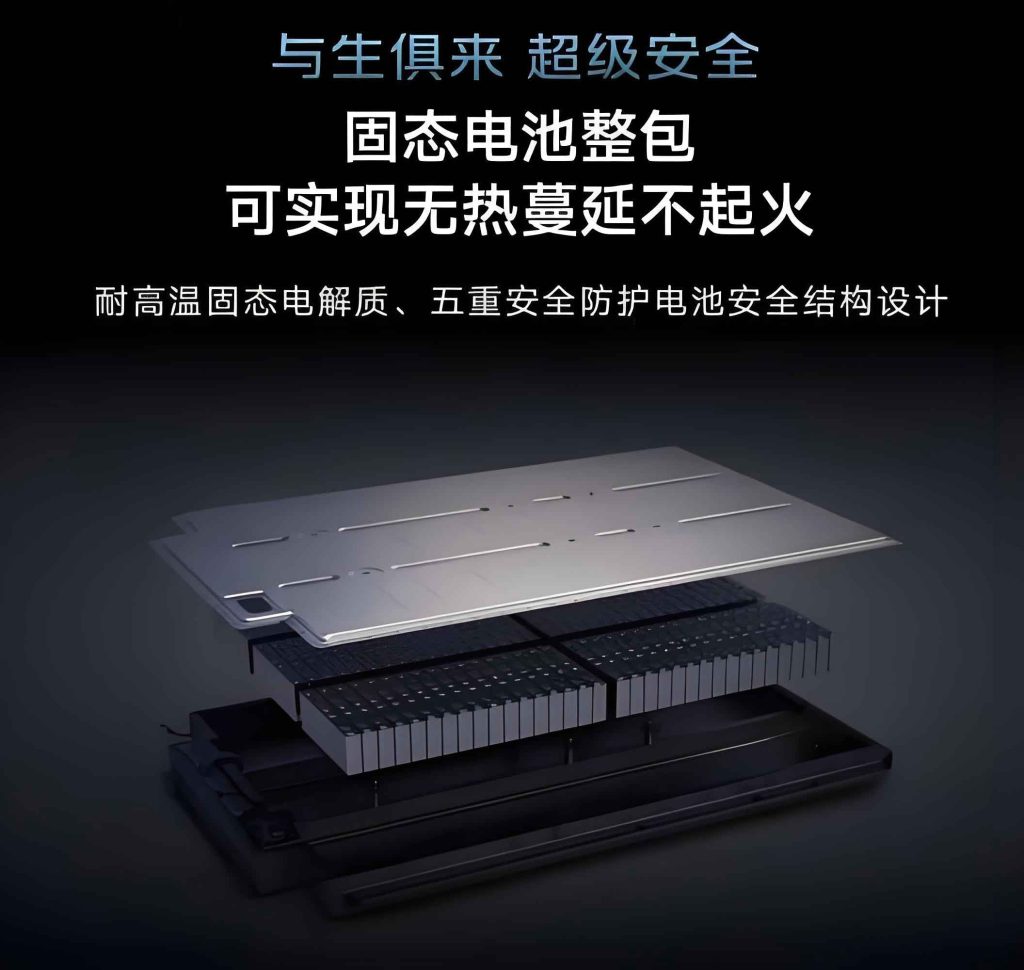
The primary driver for the adoption of solid-state battery technology is its enhanced safety profile. In conventional lithium-ion batteries, the organic electrolyte is flammable and can decompose under thermal stress, leading to risks of fire or explosion, especially during overcharging or internal short circuits. A solid-state battery eliminates this liquid component, thereby significantly mitigating thermal runaway risks. The solid electrolyte is inherently more stable, making the solid-state battery a fundamentally safer energy storage unit. This safety is paramount for applications where devices are embedded in critical infrastructure, worn on the body, or even implanted medically.
| Parameter | Rechargeable Solid-State Battery | Traditional Li-ion (Liquid Electrolyte) | Supercapacitor |
|---|---|---|---|
| Safety | Very High (Non-flammable, no leakage) | Moderate to Low (Flammable electrolyte risk) | High (No thermal runaway) |
| Energy Density | High (Potential for higher than Li-ion) | High | Low to Moderate |
| Power Density | High (Fast ion conduction in solids) | Moderate | Very High |
| Cycle Life | Very Long (>1000 cycles) | 500-1000 cycles | Extremely Long (>100,000 cycles) |
| Self-Discharge Rate | Very Low | Low | High |
| Operating Voltage | Can be higher (e.g., 3.6V-4.2V per cell) | ~3.7V per cell | Very Low per cell (2.5-2.7V) |
| Form Factor | Highly Flexible (thin-film, SMD compatible) | Rigid (requires robust casing) | Rigid, various sizes |
| Environmental Impact | Potentially lower toxicity (cell non-toxic) | Contains hazardous materials | Generally benign |
| Cost | Currently High (decreasing with scale) | Low to Moderate | Moderate |
Beyond safety, the solid-state battery offers superior performance characteristics. The ion conduction mechanism in a solid-state electrolyte can, with the right material science, rival or exceed that of liquids, enabling higher power delivery. This translates to a higher possible voltage output from a single cell, which is governed by the electrochemical potential difference between the electrodes. We can express the open-circuit voltage (OCV) of a solid-state battery as:
$$ V_{OC} = -\frac{\Delta G}{nF} $$
where $\Delta G$ is the Gibbs free energy change of the cell reaction, $n$ is the number of electrons transferred, and $F$ is Faraday’s constant. The use of high-voltage cathode materials is more feasible in a solid-state battery due to the wider electrochemical stability window of many solid electrolytes, potentially leading to $V_{OC}$ values exceeding 4.5V. Furthermore, the absence of liquid allows for radical simplification in packaging. The solid-state battery cell can be fabricated as an extremely thin, flexible layer, enabling direct surface-mount device (SMD) assembly onto printed circuit boards (PCBs). This integration capability is a game-changer, moving the power source from a bulky, discrete component to an embedded, almost invisible element of the system architecture.
The longevity of a solid-state battery is another critical advantage. Degradation mechanisms like electrolyte decomposition and interfacial layer growth (“solid electrolyte interphase” – SEI) are different and often slower in solid-state systems. The cycle life, which is the number of complete charge-discharge cycles a battery can undergo before its capacity falls below 80% of its initial value, is significantly extended. This reliability makes the solid-state battery ideal for applications where battery replacement is impractical or impossible. For instance, in embedded backup power for real-time clocks (RTC) and non-volatile memory, a solid-state battery can last the entire 10-20 year lifespan of the host system.
While much media attention focuses on high-capacity solid-state battery packs for electric vehicles (EVs), my expertise and the industry’s next frontier lie in micro-power solid-state battery solutions. These are chips-scale energy sources with capacities in the milliampere-hour (mAh) or even microampere-hour (µAh) range, operating at low voltages. The market for disposable coin cells and supercapacitors in backup and embedded power is enormous, estimated at billions of units annually. Yet, a mature, rechargeable solid-state battery alternative has been elusive. Our approach has been to integrate the rechargeable solid-state battery cell with power management, clock circuitry, and energy harvesting interfaces into a single chip or ultra-small module. This monolithic integration is key. The energy storage capability of a solid-state battery, when coupled with intelligent management, can be described by its usable energy capacity $E_{usable}$:
$$ E_{usable} = \int_{V_{min}}^{V_{max}} C(V) \, dV \approx \eta \cdot C_{nominal} \cdot V_{avg} $$
where $C(V)$ is the voltage-dependent capacity, $\eta$ is the discharge efficiency, $C_{nominal}$ is the nominal capacity, and $V_{avg}$ is the average discharge voltage. Our integrated power management maximizes $\eta$ and ensures operation within the optimal voltage window $[V_{min}, V_{max}]$, extracting every joule from the solid-state battery.
The application space for these micro solid-state battery solutions is vast and can be categorized into three primary domains:
| Application Domain | Key Requirements | How Solid-State Battery Excels | Example Products/Systems |
|---|---|---|---|
| 1. System Backup Power | Ultra-low self-discharge, long calendar life, stable voltage, small size. | Self-discharge rates < 1% per year, 20+ year lifespan, no leakage, SMD mounting. | Motherboard RTC/NVRAM backup, smart meters, industrial memory cards, automotive infotainment settings. |
| 2. Embedded Primary/Rechargeable Power | Miniaturization, safety (non-toxic), flexibility, high reliability. | Chip-scale packaging, biocompatible materials, flexible form factors, high cycle count. | Hearing aids, smart contact lenses, medical patches & implants, wearable health monitors, electronic smart locks. |
| 3. Energy Harvesting & IoT Power | Buffering intermittent energy, frequent micro-cycles, maintenance-free operation. | High cycle life (>1000 cycles), efficient charge acceptance at micro-currents, no maintenance. | Wireless sensor nodes (temperature, humidity, pressure), asset tracking tags, environmental monitoring systems. |
In the IoT sphere, the synergy between energy harvesting and solid-state battery technology is particularly potent. Most wireless sensor nodes are doomed to rely on disposable batteries, creating a maintenance nightmare and environmental burden. Energy harvesting—scavenging milliwatts from light, vibration, thermal gradients, or RF signals—offers a path to perpetual operation. However, harvested energy is intermittent and rarely matches the peak power demand of wireless transmission. This is where an integrated solid-state battery acts as an essential buffer. It stores energy during quiescent periods and delivers high-power pulses when needed. The power budget for such a node can be modeled. Let $P_{harvest}(t)$ be the harvested power, $P_{load}(t)$ the load power, and $E_{ssb}(t)$ the energy stored in the solid-state battery. The system must satisfy:
$$ \frac{dE_{ssb}(t)}{dt} = \eta_{charge} P_{harvest}(t) – \frac{P_{load}(t)}{\eta_{discharge}} $$
with the constraint $0 \le E_{ssb}(t) \le E_{max}$, where $E_{max}$ is the maximum energy capacity of the solid-state battery. Our integrated chips solve this management problem dynamically, enabling truly self-powered IoT devices. This capability is not just an enhancement; for dense, inaccessible sensor networks, it is an enabling technology that would otherwise be “fundamentally impossible” to deploy.
From a technical manufacturing perspective, the solid-state battery core we utilize is based on thin-film deposition techniques using special substrate materials. This allows for the creation of a battery that can be recharged thousands of times within a device’s lifecycle. A key metric is the capacity fade per cycle. For our solid-state battery, the fade rate is exceptionally low. The capacity retention after $N$ cycles can be approximated by:
$$ C_N = C_0 \cdot (1 – \alpha)^N $$
where $C_0$ is the initial capacity and $\alpha$ is the fade rate per cycle. For a high-quality solid-state battery, $\alpha$ can be on the order of 0.01% or less, enabling the long cycle life mentioned. Furthermore, the solid-state battery contains no harmful or volatile chemicals, is non-flammable, and exhibits no cell toxicity, making it safe for intimate human contact and even potential ingestible applications.
The market opportunity is staggering. Let’s quantify the incumbent markets our solid-state battery technology aims to address. The global annual consumption for backup and timing applications is dominated by disposable coin cells and supercapacitors.
| Device Type | Annual Shipments (Units) | Primary Function | Addressable by Solid-State Battery |
|---|---|---|---|
| Disposable Coin Cells (e.g., CR2032) | ~5 Billion | RTC backup, memory backup, low-power devices | Yes (Direct SMD replacement with rechargeable option) |
| Supercapacitors (for backup) | ~2 Billion | Short-term holdup, peak power support | Yes (For applications needing longer hold-up & lower self-discharge) |
| Custom Timer Batteries | ~1 Billion | Industrial timers, appliance clocks | Yes |
Our analysis indicates that over 60% of these units, particularly in the RTC/memory backup segment, are used in ways perfectly suited for a rechargeable solid-state battery solution. If even a fraction of this market converts, it represents a multi-billion unit opportunity. Furthermore, the energy harvesting and IoT market is forecast to grow exponentially, with shipments of energy harvesting-powered devices expected to reach billions of units within the next five years. A significant portion of these will require a reliable, rechargeable buffer—a role for which the solid-state battery is ideally suited.
Our product portfolio reflects this diverse application need. We offer not just bare solid-state battery cells, but fully integrated solutions. The categories include: 1) Standalone Rechargeable Solid-State Battery chips, 2) Solid-State Battery with Integrated Power Management (providing functions like voltage regulation, charge control, and power-fail indicators), and 3) Complete Energy Harvesting Power Manager modules with an integrated solid-state battery storage element. These can be supplied in standard SMD packages like chip-scale packages (CSP) or as bare die for ultra-compact designs. They can be placed alongside the main system processor or stacked vertically, offering immense flexibility to system designers. To accelerate development, we provide a range of evaluation kits and development boards for each product family.
Concrete examples illuminate the potential. Consider a smart contact lens concept for augmented reality or health monitoring. Such a device requires a micro-power source that is safe for the eye, incredibly thin, and capable of being recharged wirelessly. A solid-state battery, fabricated as a microscopic thin film and integrated with a solar cell, micro-power manager, and RF transceiver, makes this feasible. The solid-state battery stores energy from the integrated photovoltaic cell under ambient light, powers a micro-LED display or biosensor, and handles data communication—all within a biocompatible, flexible lens material. This is not science fiction; it’s an engineering challenge being solved today with solid-state battery technology. Similarly, in industrial settings, wireless condition monitoring sensors on rotating machinery can harvest energy from vibration, store it in a solid-state battery, and transmit data packets intermittently for years without any maintenance.
In conclusion, the transition to solid-state battery technology, especially in its miniaturized, rechargeable form, is more than a trend—it is an infrastructural shift for electronics. The unique combination of safety, longevity, miniaturization, and environmental friendliness positions the solid-state battery as the keystone for next-generation embedded systems. While challenges remain in scaling up high-capacity solid-state battery production for EVs cost-effectively, the micro-power solid-state battery sector is ripe for commercialization and disruption. It directly tackles the pain points of battery replacement, environmental waste, and design limitations in the exponentially growing world of IoT and portable electronics. As we continue to refine the materials and manufacturing processes, the performance of the solid-state battery will only improve, solidifying its role as the indispensable, intelligent energy storage component for a wirelessly connected, self-sustaining world. The future of power is not just solid; it is smart, safe, and seamlessly integrated, thanks to the solid-state battery.