
The pursuit of higher energy density and absolute safety in energy storage has propelled the development of all-solid-state batteries (ASSBs) to the forefront of battery research. Among the various solid electrolyte candidates, sulfide-based materials have emerged as one of the most promising pathways due to their exceptionally high ionic conductivity, often rivaling or exceeding that of conventional liquid electrolytes, and their favorable mechanical properties that enable good interfacial contact through cold pressing. The prospect of pairing these electrolytes with a lithium metal anode unlocks the potential for a step-change increase in energy density. However, the transition from liquid to solid-state systems introduces profound and complex challenges, primarily centered on the interfaces between different solid components. These solid-state battery interfaces are not merely points of contact but are dynamic regions where electrochemical, chemical, and mechanical interactions converge, often leading to increased impedance, parasitic side reactions, and mechanical degradation. In this article, I will delve into the fundamental causes of interfacial instability in sulfide-based solid-state batteries and systematically explore the innovative strategies being developed to engineer stable, low-resistance interfaces, which are the key to unlocking their commercial viability.
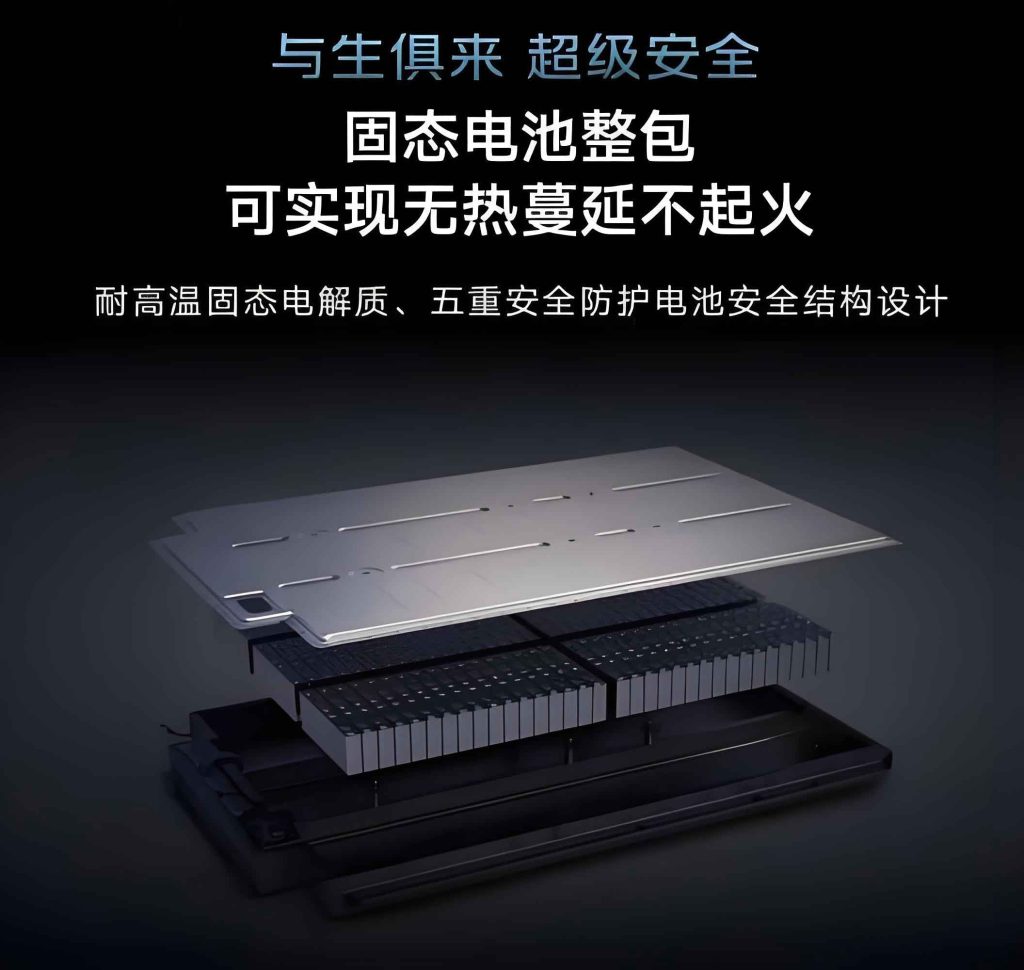
The allure of the sulfide-based solid-state battery is undeniable. Replacing the flammable organic liquid electrolyte with a solid ceramic sulfide eliminates the risk of leakage and thermal runaway, addressing a critical safety concern. Furthermore, the mechanical strength of the solid electrolyte is theoretically sufficient to suppress lithium dendrite growth, enabling the use of lithium metal. The ionic conductivity of sulfides like Li10GeP2S12 (LGPS) or argyrodites (Li6PS5X, X=Cl, Br, I) can reach >10-2 S cm-1 at room temperature, ensuring rapid ion transport within the electrolyte bulk. Yet, the promise of the solid-state battery is currently held hostage by its interfaces. Unlike in liquid systems, where the electrolyte can flow and wet the electrode surfaces, creating a near-perfect molecular-level contact, solid-solid contact is inherently poor. This leads to high interfacial resistance. More critically, many sulfide electrolytes are thermodynamically unstable against both the high-voltage cathode and the low-potential anode. This instability leads to the formation of resistive interphases, analogous to the solid electrolyte interphase (SEI) in liquid cells, but with far less favorable transport properties. These interphases can grow continuously, consuming active lithium and increasing impedance over time. Therefore, understanding and mastering these interfaces is not just an academic exercise; it is the central engineering challenge for the sulfide-based solid-state battery.
The Anode/Sulfide Electrolyte Interface: A Battle Against Instability and Dendrites
The anode side of a sulfide-based solid-state battery presents a formidable challenge, particularly when targeting the ultimate goal of using lithium metal. The issues are twofold: (1) the chemical and electrochemical instability of sulfides at low potentials, and (2) the propensity for lithium dendrite penetration even through solid materials.
Lithium Metal Anode: The Ultimate Goal and Its Pitfalls
The direct contact between lithium metal and a typical sulfide electrolyte (e.g., Li3PS4, LGPS) is highly unfavorable. The reduction potential of lithium is far below the stability window of most sulfides. Upon contact, an immediate chemical reduction occurs, forming a passivating layer. This layer, often composed of Li2S, Li3P, and various reduced species of other elements (like Ge or Sn), has poor ionic conductivity. Its formation can be described by a parasitic reaction:
$$ \text{Li}_x\text{PS}_y + 2x \text{Li} \rightarrow x\text{Li}_2\text{S} + \text{Li}_3\text{P} + \text{other reduced products} $$
This reaction consumes active lithium and creates a high interfacial resistance from the very first moment of cell assembly. During cycling, this interphase is dynamic. Lithium plating and stripping through this resistive layer leads to local current hotspots, non-uniform lithium flux, and eventually, the nucleation and growth of lithium filaments or dendrites. Contrary to early hopes, many sulfide electrolytes are not mechanically rigid enough to completely block lithium dendrites, which can propagate along grain boundaries or through micro-cracks.
Strategies to stabilize the lithium metal/sulfide interface are multi-pronged, as summarized below:
| Strategy | Approach | Mechanism & Example | Impact on Solid-State Battery |
|---|---|---|---|
| Anode Modification | Use of Lithium Alloys | Replaces pure Li with a higher-potential alloy (e.g., Li-In, Li-Al). Raises the anode potential, bringing it closer to the electrolyte’s stability window. | Reduces immediate reduction, improves cycling stability. Sacrifices energy density due to higher voltage and inactive alloying material. |
| Electrolyte Modification | Doping/Composition Tuning | Incorporating oxides (e.g., P2O5) or halides into the sulfide matrix. Increases electrochemical stability and ionic conductivity. | Enhances overall electrolyte robustness. May improve interfacial stability but not fully solve the Li metal reduction issue. |
| Interfacial Engineering | Artificial Protective Layers | In-situ or ex-situ formation of a stable, ion-conducting layer (e.g., LixSiSy, Li3N, LiF) between Li and the sulfide. | Physically separates Li from the sulfide, preventing direct reaction. Allows for stable Li plating/stripping. Critical for enabling Li metal. |
| Composite Anodes (Li/C) | Introducing a graphite or carbon interlayer. Lithium intercalates into carbon first, avoiding direct Li/sulfide contact and homogenizing Li+ flux. | Suppresses dendrite initiation, increases critical current density. Effective but adds complexity and weight. | |
| Mechanical Constraint | External/Internal Pressure | Applying stack pressure during cell operation. Maintains intimate contact, closes voids formed during Li stripping. | Essential for minimizing interfacial resistance and delaying failure. A key engineering requirement for practical cells. |
The effectiveness of an artificial interlayer can be quantified by the reduction in interfacial resistance $R_{int}$. If the pristine interface has a resistance $R_{int,0}$ and the protected interface has $R_{int,prot}$, the improvement factor $\alpha$ is:
$$ \alpha = \frac{R_{int,0}}{R_{int,prot}} $$
A successful protective layer aims for $\alpha \gg 1$, while also having a high Li+ transference number and mechanical toughness to block dendrites.
Alternative Anodes: Graphite and Composite Systems
Given the severe challenges with lithium metal, considerable work focuses on intercalation anodes like graphite. The composite anode in a solid-state battery is a mixture of graphite particles, sulfide electrolyte, and conductive carbon. The performance is highly sensitive to the microstructure. The percolation pathways for both Li+ (through the electrolyte) and electrons (through carbon) must be continuous. The capacity utilization $C_{util}$ of the graphite can be modeled as a function of the volume fractions of graphite ($\phi_G$), electrolyte ($\phi_E$), and carbon ($\phi_C$), and their respective effective conductivities:
$$ C_{util} \propto f(\sigma_{Li^+}^{eff}(\phi_E), \sigma_{e^-}^{eff}(\phi_G, \phi_C), \text{contact area}) $$
An optimal composition (often around 50-60 wt% graphite) maximizes this utilization. Too much graphite reduces ionic percolation, while too much electrolyte reduces electronic contact and energy density.
Innovative composite anodes, such as the Ag-C nanocomposite, represent a clever hybrid approach. Here, silver nanoparticles serve multiple functions: they enhance electronic conductivity, provide nucleation sites for lithium (forming a Li-Ag alloy), and facilitate uniform lithium deposition within the carbon matrix. This design essentially creates a “host” for lithium, preventing the formation of isolated, dendritic lithium metal that would contact the sulfide electrolyte directly. The reaction can be simplified as:
$$ \text{Ag} + x\text{Li}^+ + x e^- \leftrightarrow \text{Li}_x\text{Ag} \quad \text{(within the C matrix)} $$
This approach significantly raises the critical current density before dendrite formation and enables excellent long-term cycling, showcasing a viable intermediate step towards a pure Li metal solid-state battery.
The Cathode/Sulfide Electrolyte Interface: Managing Oxidation and Contact Loss
The cathode interface in a sulfide-based solid-state battery is equally critical and complex. The composite cathode is a three-dimensional porous structure comprising active material (e.g., NCM, NCA, LCO), sulfide electrolyte, and conductive carbon. Interfacial issues arise at two levels: between individual active material particles and the surrounding sulfide electrolyte, and at the macroscopic boundary between the composite cathode layer and the dense separator electrolyte layer.
Active Material Particle Interfaces: Space Charge and Degradation
At the nanoscale contact point between a high-voltage oxide cathode particle and a sulfide electrolyte, two primary phenomena occur:
1. Space Charge Layer Formation: Due to the large difference in Li+ chemical potential between the two materials, Li+ ions deplete from the sulfide electrolyte side of the interface, creating a space charge layer. This layer acts as a significant barrier to Li+ transfer. The resulting interfacial resistance $R_{sc}$ can be approximated by the Mott-Schottky model for ionic conductors:
$$ \frac{1}{C_{sc}^2} = \frac{2}{\epsilon \epsilon_0 e N_A} (V – V_{fb} – \frac{kT}{e}) $$
where $C_{sc}$ is the space charge capacitance, $\epsilon$ the dielectric constant, $N_A$ the acceptor density, and $V_{fb}$ the flatband potential. This effect is intrinsic and requires electronic insulation at the interface to mitigate.
2. Electrochemical Oxidation of the Sulfide: During charging, when the cathode potential is high (>3.8 V vs. Li/Li+), the sulfide electrolyte is vulnerable to oxidation. This decomposes the electrolyte into a resistive layer containing elemental sulfur, polysulfides, phosphorus-sulfur compounds, and phosphates. For an argyrodite Li6PS5Cl, the reaction might proceed as:
$$ \text{Li}_6\text{PS}_5\text{Cl} \xrightarrow[-Li^+-e^-]{\text{Oxidation}} \text{Li}_2\text{S}_n + \text{S} + \text{P}_2\text{S}_x + \text{Li}_3\text{PO}_4 + \text{LiCl} $$
This decomposition layer grows with cycling, increasing impedance and causing capacity fade.
The universal solution to both problems is the application of a thin, conformal coating on the cathode active material particles. This coating must be: (1) ionically conductive to allow Li+ passage, (2) electronically insulating to block the space charge effect, (3) electrochemically stable against both the high-voltage cathode and the sulfide electrolyte, and (4) mechanically compatible. Common coating materials include LiNbO3, Li2SiO3, Li2O-ZrO2 (LZO), and Li3PO4. The coating effectively decouples the cathode from the sulfide, creating a stable buffer zone. The total interfacial impedance $R_{cathode}$ with a coating of thickness $d$ and ionic conductivity $\sigma_{coat}$ becomes:
$$ R_{cathode} = R_{sc,mitigated} + \frac{d}{\sigma_{coat}} + R_{decomp,minimized} $$
A good coating minimizes the first and third terms while keeping the second term small via high $\sigma_{coat}$ and nanoscale $d$.
| Coating Material | Key Properties | Function in Solid-State Battery |
|---|---|---|
| LiNbO3 | Good Li+ conductivity, wide electrochemical window. | Classic buffer layer; prevents direct contact and reduces side reactions. |
| Li2SiO3 | Stable, prevents interdiffusion of ions. | Effectively suppresses Co, P, S interdiffusion at the interface, enabling high-rate cycling. |
| Li2O-ZrO2 (LZO) | Stable, forms a coherent layer on NCA surfaces. | Significantly lowers charge-transfer resistance, improves cycle life of Ni-rich cathodes. |
| Li3PO4 | Good stability at high voltage (>5V). | Enables the use of high-voltage spinel cathodes with sulfide electrolytes. |
Composite Cathode and Electrolyte Layer Interface: Microstructure is Key
Beyond the nanoparticle interface, the macroscopic quality of the composite cathode layer and its contact with the solid electrolyte separator dictate overall cell performance. Key factors include:
Particle Size and Morphology: The size distribution of both the active material and the sulfide electrolyte powder is crucial. A bimodal distribution, with small electrolyte particles filling the voids between larger active material particles, can maximize the contact area and packing density, improving Li+ percolation. The effective ionic conductivity $\sigma_{eff}^{cathode}$ of the composite is a complex function of the microstructure.
Processing and Binders: Fabrication methods (dry-pressing vs. solvent-based slurry casting) dramatically affect interface quality. Solvent-based wet processing can create smoother, more intimate contacts between the cathode composite layer and the separator layer. However, the choice of binder and solvent is limited because most polar solvents react with sulfide electrolytes. Non-polar solvents (e.g., p-xylene) with compatible binders like nitrile-butadiene rubber (NBR) are used. The binder must adhere well to both ceramic particles to prevent delamination and void formation during cycling, which increases impedance $R_{contact}$:
$$ R_{contact} \propto \frac{1}{\text{Actual Contact Area}} $$
Cycling-induced volume changes in the active material can break contacts, leading to a continuous increase in $R_{contact}$ over time, a primary failure mode in solid-state batteries.
Integration, Characterization, and Future Pathways
Building a high-performance sulfide-based solid-state battery requires integrating the solutions for both anode and cathode interfaces into a single, coherent cell design. This involves meticulous optimization of materials, processing parameters (especially stacking pressure), and cell architecture (e.g., bilayer or gradient electrolytes). Advanced characterization techniques are indispensable for probing these buried solid-solid interfaces. In-situ and operando methods like X-ray photoelectron spectroscopy (XPS), time-of-flight secondary ion mass spectrometry (TOF-SIMS), and electrochemical impedance spectroscopy (EIS) are used to decipher the chemical evolution and resistance growth at interfaces. Scanning electron microscopy (SEM) and focused ion beam (FIB) techniques reveal morphological changes and contact loss.
| Characterization Technique | Information Gathered | Role in Understanding Solid-State Battery Interfaces |
|---|---|---|
| XPS / TOF-SIMS | Chemical composition, depth profiling of interphases. | Identifies decomposition products (Li2S, Li3P, phosphates) and tracks their growth. |
| In-situ/Operando EIS | Evolution of bulk and interfacial resistances during cycling. | Decouples $R_{bulk}$, $R_{sei}$, $R_{ct}$. Pinpoints when interface degradation accelerates. |
| SEM/FIB-SEM | Morphology, cracks, voids, contact quality. | Visualizes particle contact, delamination, and lithium filament growth. |
| STEM-EDX | Elemental mapping at atomic/nano scale. | Reveals interdiffusion across coated interfaces, proves coating effectiveness. |
The future development of sulfide-based solid-state batteries hinges on a holistic approach. Material innovation will continue, seeking sulfide electrolytes with inherently wider electrochemical windows. Interface engineering will become more sophisticated, moving from simple coatings to multifunctional, graded, or self-healing interlayers. Processing technology must advance to enable the scalable manufacturing of thin, dense, and defect-free electrolyte layers and perfectly integrated electrodes. Computational modeling and AI will play a larger role in designing optimal microstructures and predicting interfacial stability.
In conclusion, the journey to realize a practical, high-energy-density sulfide-based solid-state battery is fundamentally a journey of interface mastery. The challenges at the anode and cathode are distinct but interrelated, demanding tailored solutions that address chemical stability, ionic transport, and mechanical integrity simultaneously. While significant hurdles remain, the rapid progress in protective layers, composite electrodes, and advanced manufacturing provides a clear path forward. By continuing to decode the complex science at these solid-solid junctions, we move closer to the day when the superior safety and energy density of the all-solid-state battery transition from laboratory promise to commercial reality.