
As a leader in precision manufacturing, we have embarked on a transformative journey to address the critical challenges in the electric vehicle industry, particularly in the mass production of aluminum alloy cooling plates for battery systems. The global surge in electric vehicle adoption, driven significantly by the China EV market, has intensified the demand for reliable and efficient thermal management solutions. In this article, I will share our firsthand experience in developing and scaling up a groundbreaking laser welding process that enables high-volume production of pressure-tight cooling plates, a key component for electric vehicle battery modules. Our approach combines innovative laser technologies with rigorous engineering principles, and we will illustrate this with detailed tables, formulas, and insights tailored to the evolving needs of the electric vehicle sector, including the booming China EV landscape.
The electric vehicle revolution, especially in regions like China, has placed immense pressure on manufacturing ecosystems to deliver components that meet stringent performance and safety standards. Battery thermal management is paramount, as it directly impacts the efficiency, longevity, and safety of electric vehicles. In China EV production, where scale and speed are crucial, traditional methods often fall short. We recognized early on that aluminum alloy cooling plates—used to dissipate heat from battery management controllers—require hermetic sealing through welding, a process fraught with difficulties like high reflectivity, cracking, and porosity. Our mission was to overcome these hurdles and establish a scalable solution for the electric vehicle industry, with a focus on supporting the China EV market’s exponential growth.
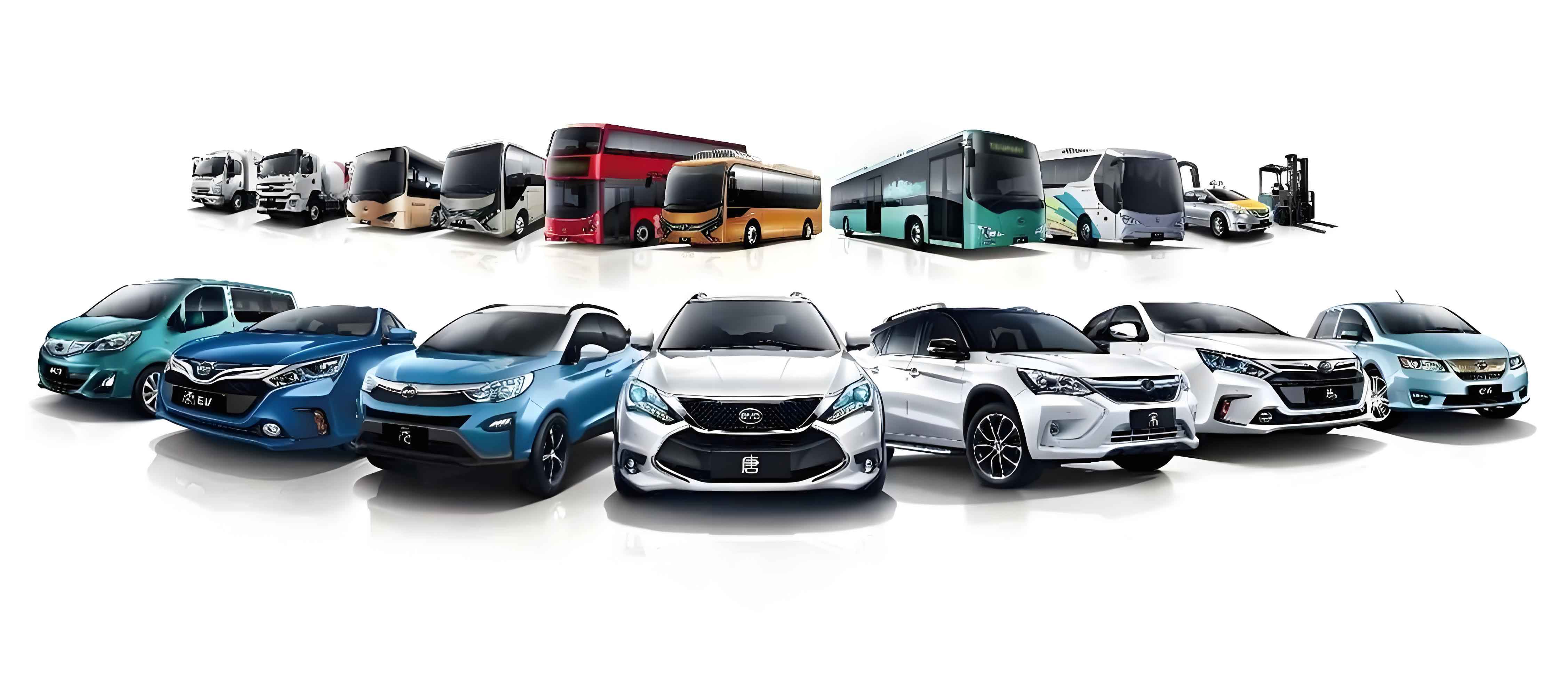
In the context of electric vehicle development, aluminum alloys are preferred for cooling plates due to their lightweight and thermal conductivity, but they pose significant welding challenges. Conventional laser welding techniques struggle with issues such as keyhole instability and gas entrapment, leading to defects that compromise pressure tightness. For electric vehicle applications, including those in the China EV sector, where batteries undergo rigorous cycling, a failure in cooling systems can result in reduced performance or safety hazards. We dedicated resources to refining laser welding processes, leveraging principles from heat transfer and fluid dynamics. For instance, the heat conduction during welding can be modeled using Fourier’s law: $$ q = -k \nabla T $$ where \( q \) is the heat flux, \( k \) is the thermal conductivity, and \( \nabla T \) is the temperature gradient. In electric vehicle cooling plates, maintaining a uniform temperature distribution is critical to prevent hotspots that could affect battery life.
Our breakthrough came from integrating a proprietary ring-core adjustable welding technology with a multi-focus optical system. This combination stabilizes the keyhole—a vapor cavity formed during laser welding—and minimizes porosity, which is essential for achieving pressure-tight seals in electric vehicle components. The process involves splitting the laser beam into an inner core and outer ring, coupled with multiple focal points, to enhance energy distribution. The keyhole dynamics can be described by the following equation, derived from conservation laws: $$ \frac{\partial \rho}{\partial t} + \nabla \cdot (\rho \mathbf{v}) = 0 $$ where \( \rho \) is the density of the molten material, \( t \) is time, and \( \mathbf{v} \) is the velocity vector. By optimizing these parameters, we achieved weld seams that withstand over 100,000 pressure pulsation cycles, a requirement for electric vehicle battery systems in demanding environments like China EV operations.
To quantify the advantages of our approach, we conducted extensive testing and compared it with traditional methods. The table below summarizes key performance metrics for welding aluminum alloy cooling plates, highlighting the benefits for electric vehicle applications, including those tailored to the China EV market:
| Parameter | Traditional Laser Welding | Our Advanced Method | Impact on Electric Vehicle Performance |
|---|---|---|---|
| Porosity Rate | High (5-10%) | Near Zero (<0.1%) | Enhances reliability of China EV battery thermal management |
| Weld Strength (MPa) | 150-200 | 250-300 | Supports durability in electric vehicle cycling conditions |
| Thermal Distortion (mm) | >2 | <1 | Ensures flatness for efficient heat dissipation in China EV systems |
| Production Scalability | Low | High | Facilitates mass production for growing China EV demand |
The electric vehicle industry, particularly in China, requires components that not only perform well but also integrate seamlessly into high-volume manufacturing lines. Our laser welding process achieves this by maintaining a low heat input, which reduces thermal distortion and preserves the dimensional accuracy of cooling plates. This is crucial for electric vehicle batteries, where precise alignment with electronic components ensures optimal heat transfer. The thermal strain induced during welding can be expressed as: $$ \epsilon = \alpha \Delta T $$ where \( \epsilon \) is the strain, \( \alpha \) is the coefficient of thermal expansion, and \( \Delta T \) is the temperature change. By controlling \( \Delta T \) through our multi-focus system, we limit strain to levels that keep flatness under 1 mm, a standard often referenced in China EV specifications.
In scaling up for electric vehicle production, we implemented a five-axis high-precision machine equipped with our advanced optical elements. This setup allows for flexible processing of large cooling plates, such as those measuring up to 900 mm × 200 mm, common in electric vehicle battery modules. The production workflow involves multiple stages, from material preparation to final inspection, all optimized for the electric vehicle sector. Below is a table outlining the key stages and their relevance to electric vehicle manufacturing, with an emphasis on China EV applications:
| Production Stage | Description | Role in Electric Vehicle Ecosystem |
|---|---|---|
| Design and Optimization | CAD-based simulation of weld paths and thermal profiles | Tailors solutions for diverse electric vehicle models, including China EV variants |
| Laser Welding | Application of ring-core and multi-focus technology | Ensures hermetic seals for electric vehicle battery safety |
| Quality Assurance | Pressure testing and non-destructive evaluation | Meets stringent standards for China EV certifications |
| Mass Production | High-volume output with automated systems | Supports the rapid expansion of the China EV market |
Electric vehicle manufacturers, especially in China, face the dual challenge of cost-effectiveness and performance. Our laser welding method addresses this by offering a process with high repeatability and low defect rates, which translates to reduced waste and higher throughput. The economic impact can be modeled using a simple cost function: $$ C = C_m + C_l + C_d $$ where \( C \) is the total cost per unit, \( C_m \) is material cost, \( C_l \) is labor cost, and \( C_d \) is defect-related cost. By minimizing \( C_d \) through our technology, we make electric vehicle components more affordable, supporting the accessibility goals of the China EV initiative. In our pre-production phase, we manufactured approximately 3000 cooling units, and over the next six years, we plan to produce over 600,000 units, catering to the escalating needs of the electric vehicle industry, with a significant portion allocated to China EV projects.
The success of our laser welding innovation extends beyond cooling plates to other electric vehicle applications, such as battery housings and motor casings. In the China EV context, where environmental regulations and consumer expectations are high, our technology enables the production of lightweight, durable components that contribute to overall vehicle efficiency. The heat dissipation efficiency of a cooling plate can be quantified using the Nusselt number: $$ Nu = \frac{h L}{k} $$ where \( h \) is the convective heat transfer coefficient, \( L \) is the characteristic length, and \( k \) is the thermal conductivity. By ensuring weld integrity, we maintain high \( Nu \) values, which is vital for electric vehicle batteries operating under variable loads in China EV usage scenarios.
Looking ahead, the electric vehicle landscape, particularly in China, is set to evolve with advancements in battery technology and autonomous driving. Our laser welding capabilities position us to support these trends by providing scalable solutions for complex geometries and materials. For instance, we are exploring applications in solid-state batteries for electric vehicles, which could revolutionize the China EV market. The relationship between welding parameters and joint strength can be described by empirical formulas, such as: $$ S = a P^b V^c $$ where \( S \) is the weld strength, \( P \) is laser power, \( V \) is welding speed, and \( a, b, c \) are constants derived from experimentation. Through continuous optimization, we aim to push the boundaries of what is possible in electric vehicle manufacturing.
In conclusion, our journey in perfecting laser welding for aluminum alloy cooling plates has not only solved a critical bottleneck in electric vehicle production but also set a new standard for the industry. The electric vehicle revolution, fueled by markets like China EV, demands innovation at every stage, and we are proud to contribute with a technology that combines precision, reliability, and scalability. As we continue to refine our processes, we remain committed to supporting the global electric vehicle ecosystem, with a keen focus on the dynamic China EV sector. The formulas and tables presented here underscore the scientific rigor behind our approach, and we believe that such advancements will drive the future of electric mobility, making electric vehicles safer, more efficient, and accessible to all.
The integration of our laser welding technology into electric vehicle supply chains, especially for China EV applications, exemplifies how manufacturing innovations can accelerate the transition to sustainable transportation. By addressing the core challenges of porosity, distortion, and scalability, we have enabled the mass production of components that meet the highest standards. As the electric vehicle industry grows, particularly in China, we anticipate further collaborations and advancements that will enhance performance and reduce costs. Our experience reaffirms that with the right technological foundation, the vision of a fully electric future is within reach, and we are excited to be at the forefront of this transformation for electric vehicles worldwide.