
In the pursuit of advanced energy storage systems, solid-state batteries have emerged as a promising frontier due to their potential for enhanced safety, higher energy density, and improved cycle life compared to conventional liquid electrolyte-based lithium-ion batteries. Among various solid electrolyte materials, lithium lanthanum titanium oxide (LLTO), specifically with the composition Li0.33La0.56TiO3, stands out for its remarkable room-temperature ionic conductivity, excellent thermal stability, and wide electrochemical window, making it an ideal candidate for next-generation solid-state battery applications. However, the traditional fabrication methods for LLTO ceramics often involve multiple high-temperature sintering steps, which lead to significant lithium loss, poor interfacial contact, and complex processing workflows, thereby hindering the practical deployment of LLTO-based solid-state batteries. To address these challenges, we have developed a novel one-step sintering approach to synthesize LLTO ceramics with a straight-hole structure, aiming to streamline production, minimize lithium volatilization, and enhance electrochemical performance. This article delves into the microstructural characteristics and electrochemical properties of these one-step sintered LLTO ceramics, highlighting their potential to revolutionize solid-state battery technology.
The development of solid-state batteries is driven by the need for safer and more efficient energy storage solutions. In a typical solid-state battery, the solid electrolyte serves as both ion conductor and separator, eliminating flammable liquid electrolytes and reducing risks of leakage or thermal runaway. LLTO-based solid electrolytes are particularly attractive due to their perovskite structure, which facilitates fast lithium-ion transport via interstitial sites. The ionic conductivity of LLTO can be expressed by the Arrhenius equation: $$\sigma T = A \exp\left(-\frac{E_a}{kT}\right)$$ where \(\sigma\) is the ionic conductivity, \(T\) is the absolute temperature, \(A\) is the pre-exponential factor, \(E_a\) is the activation energy, and \(k\) is the Boltzmann constant. For high-performance solid-state batteries, achieving a conductivity above \(10^{-4}\) S/cm at room temperature is crucial, and LLTO often meets or exceeds this threshold. However, conventional processing methods, such as solid-state reaction followed by separate sintering, result in porous microstructures with high grain boundary resistance and lithium deficiency due to evaporation at elevated temperatures. Our one-step sintering method integrates phase inversion for pore formation with a single thermal cycle for synthesis and densification, offering a simplified route to produce robust LLTO ceramics with aligned channels for electrode infiltration.
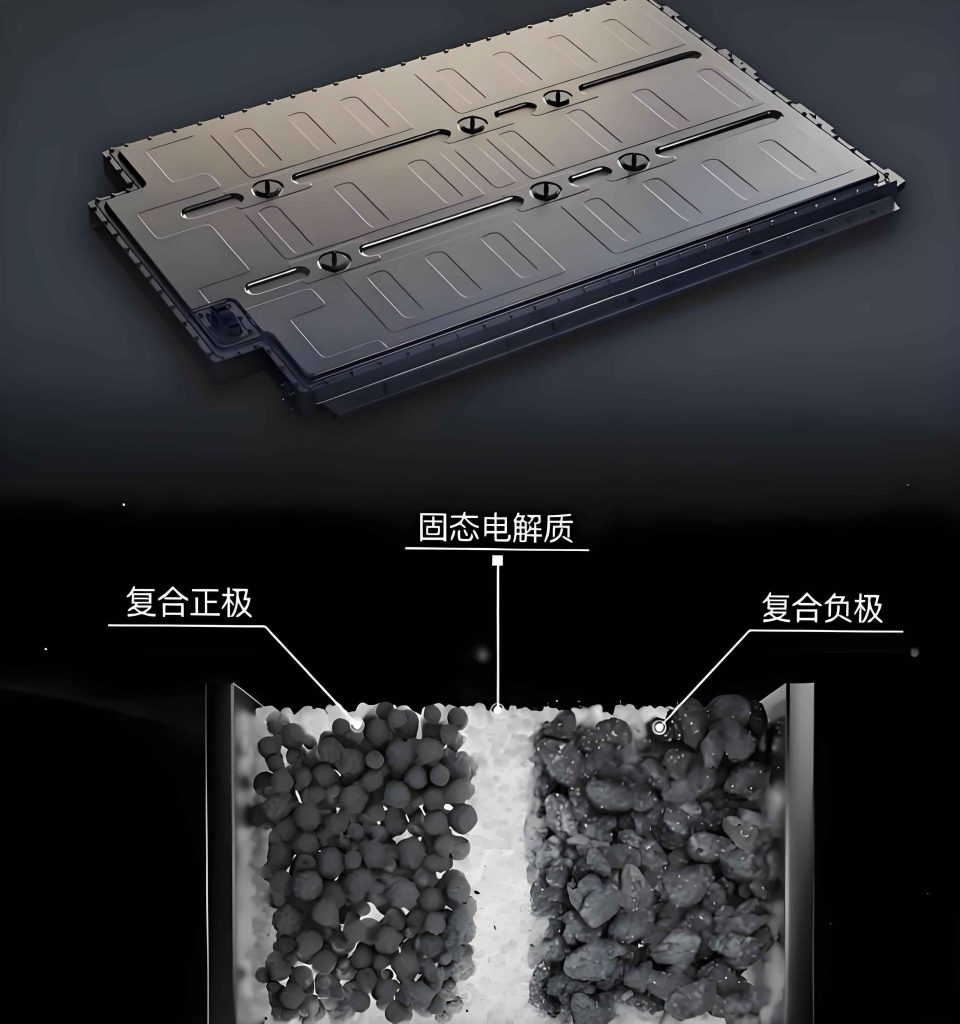
The fabrication process begins with preparing a slurry containing stoichiometric amounts of lithium carbonate (Li2CO3), lanthanum oxide (La2O3), and titanium dioxide (TiO2) as raw materials, mixed with a polyethersulfone (PES) binder in N-methyl-2-pyrrolidone (NMP) solvent. This slurry is ball-milled for homogeneity and then cast into a mold to form a green body via phase inversion, where immersion in a non-solvent (water) induces solvent exchange and solidification, creating straight pores aligned perpendicular to the membrane surface. The green body is dried and subjected to a one-step sintering protocol in a muffle furnace: first, a debinding step at 400°C to remove organic components, followed by solid-state reaction at 1050°C to form the LLTO phase, and finally sintering at 1280°C to achieve densification. This integrated thermal profile eliminates intermediate handling and reduces lithium loss, as the entire process occurs in a single heating cycle. For comparison, conventional methods involve separate synthesis of LLTO powder, followed by reshaping and resintering, which often requires lithium compensation steps. The resulting one-step sintered LLTO ceramic membranes have a thickness of about 1.5 mm with straight pores of approximately 100 μm in diameter, contrasting with larger pores (around 200 μm) in traditionally sintered counterparts.
Microstructural analysis reveals significant differences between one-step and conventionally sintered LLTO ceramics. Scanning electron microscopy (SEM) images show that the one-step sintered ceramics exhibit denser grain packing with fewer microvoids and larger grain sizes, typically in the range of 4–9 μm, compared to 1–3 μm grains in traditional samples. This enhanced densification reduces grain boundary density, which is a major contributor to ionic resistance in ceramic electrolytes. The porosity, measured via Archimedes’ method, averages 21.8% for one-step sintered ceramics versus 36.4% for conventional ones, confirming the improved compactness. Energy-dispersive X-ray spectroscopy (EDS) mapping confirms uniform distribution of La, Ti, and O elements throughout the ceramic matrix, with Fe from the infiltrated LiFePO4 cathode material localized within the straight pores, ensuring intimate electrode-electrolyte contact. The straight-hole architecture transforms the interface from a 2D planar contact to a 3D interpenetrating network, facilitating efficient lithium-ion transport and increasing active material utilization. X-ray diffraction (XRD) patterns confirm the phase purity of one-step sintered LLTO, with all peaks matching the standard perovskite structure without secondary phases, indicating successful synthesis under the optimized thermal conditions.
The electrochemical performance of the one-step sintered LLTO ceramics was evaluated through a series of tests to assess their suitability for solid-state battery applications. Ionic conductivity, a critical parameter for solid-state batteries, was determined from electrochemical impedance spectroscopy (EIS) using a symmetric cell configuration with stainless steel blocking electrodes. The total resistance \(R\) obtained from the Nyquist plot is related to conductivity \(\sigma\) by the formula: $$\sigma = \frac{L}{R \times A}$$ where \(L\) is the thickness and \(A\) is the electrode area. At room temperature (25°C), the one-step sintered LLTO ceramics achieved a conductivity of \(2.31 \times 10^{-4}\) S/cm, which is significantly higher than that of conventional sintered samples (\(4.2 \times 10^{-5}\) S/cm as reported in literature) and exceeds the threshold for practical solid-state batteries. This enhancement is attributed to reduced grain boundary resistance and improved densification. The activation energy \(E_a\) calculated from Arrhenius plots is 0.55 eV, indicating a low energy barrier for ion migration. At elevated temperatures, the conductivity increases further, reaching \(8.12 \times 10^{-4}\) S/cm at 60°C, demonstrating thermal stability essential for operational solid-state batteries. The following table summarizes key properties of one-step sintered versus conventional LLTO ceramics:
| Property | One-Step Sintered LLTO | Conventional Sintered LLTO |
|---|---|---|
| Average Grain Size (μm) | 4–9 | 1–3 |
| Porosity (%) | 21.8 | 36.4 |
| Room-Temperature Conductivity (S/cm) | \(2.31 \times 10^{-4}\) | \(4.2 \times 10^{-5}\) (typical) |
| Activation Energy (eV) | 0.55 | 0.65 (estimated) |
| Pore Diameter (μm) | ~100 | ~200 |
In addition to conductivity, the electrochemical stability window was assessed via linear sweep voltammetry (LSV), revealing an oxidation onset above 5.2 V versus Li/Li+, which is sufficient for high-voltage cathode materials like LiCoO2 or LiNi0.8Mn0.1Co0.1O2 in solid-state batteries. The lithium-ion transference number \(t_+\), measured by DC polarization method, was approximately 0.46, indicating predominantly ionic conduction with minimal electronic contribution, a desirable trait for suppressing dendrite growth in solid-state batteries. To evaluate interfacial stability, Li/LLTO/Li symmetric cells were assembled and cycled at a current density of 0.1 mA/cm2. The one-step sintered LLTO-based cells exhibited stable lithium plating/stripping for over 350 hours with a low polarization voltage of about 0.3 V, whereas conventional LLTO cells short-circuited within 42 hours due to lithium dendrite penetration through microporous defects. The critical current density (CCD), defined as the maximum current before failure, was determined to be 0.4 mA/cm2 for one-step sintered ceramics, underscoring their robustness under high-rate conditions. These results highlight the effectiveness of the one-step sintering approach in enhancing the mechanical and electrochemical integrity of LLTO electrolytes for durable solid-state batteries.
For full-cell evaluation, solid-state batteries were fabricated by infiltrating LiFePO4 cathode material into the straight pores of the one-step sintered LLTO ceramic, with lithium metal as the anode. The cell configuration, denoted as Li/LLTO/LiFePO4, was tested under various rates to assess performance in a practical solid-state battery setting. The discharge capacity at 0.2 C rate was 156.69 mAh/g initially, with excellent capacity retention of 94% after 200 cycles, coupled with coulombic efficiency exceeding 99%. In contrast, cells with conventional sintered LLTO electrolytes suffered from rapid capacity fading, dropping to 115.4 mAh/g after 100 cycles. The rate capability test showed that the one-step sintered LLTO-based solid-state battery delivered capacities of 153.79 mAh/g at 0.3 C, 145.14 mAh/g at 0.5 C, and 117.59 mAh/g at 1.0 C, with recovery to 151.70 mAh/g upon returning to 0.2 C, demonstrating reversible lithium-ion kinetics. The charge-discharge profiles exhibited flat plateaus with minimal polarization, indicating efficient charge transfer at the electrode-electrolyte interface. The improved performance can be rationalized by the straight-hole structure, which maximizes contact area and reduces ionic diffusion distances, as described by the effective conductivity model: $$\sigma_{\text{eff}} = \phi \sigma_{\text{LLTO}} + (1-\phi) \sigma_{\text{cathode}}$$ where \(\phi\) is the volume fraction of the electrolyte phase. This design mitigates issues common in solid-state batteries, such as poor interfacial adhesion and stress accumulation during cycling.
The one-step sintering method offers several advantages over traditional routes for fabricating LLTO-based solid-state batteries. Firstly, it simplifies manufacturing by combining synthesis and sintering into a single step, reducing energy consumption and processing time. Secondly, it minimizes lithium loss, as the integrated thermal cycle avoids repeated high-temperature exposures that cause volatilization; this can be quantified by the lithium retention ratio \(R_{\text{Li}}\), approximated as: $$R_{\text{Li}} = \frac{C_{\text{final}}}{C_{\text{initial}}} \times 100\%$$ where \(C\) represents lithium concentration. Thirdly, the straight-hole morphology enhances electrode-electrolyte integration, addressing a key challenge in solid-state battery assembly. From a microstructural perspective, the larger grain size and lower porosity reduce the number of grain boundaries, which act as barriers to ion transport. The grain boundary conductivity \(\sigma_{\text{gb}}\) can be modeled using the brick-layer model: $$\sigma_{\text{total}}^{-1} = \sigma_{\text{bulk}}^{-1} + \sigma_{\text{gb}}^{-1}$$ where \(\sigma_{\text{bulk}}\) is the intrinsic grain conductivity. Our results show that one-step sintering lowers \(\sigma_{\text{gb}}^{-1}\), thereby boosting overall conductivity. Furthermore, the straight pores facilitate uniform infiltration of cathode materials, ensuring homogeneous current distribution and mitigating localized overpotentials that can lead to dendrite formation in solid-state batteries.
Looking ahead, the one-step sintered straight-hole LLTO ceramics hold promise for scaling up in industrial solid-state battery production. Potential applications extend beyond lithium-metal batteries to include solid-state lithium-ion and lithium-sulfur configurations, where high ionic conductivity and stability are paramount. Future work could focus on optimizing pore size distribution through controlled phase inversion parameters, or exploring dopants to further enhance conductivity. For instance, partial substitution of Ti with Nb or Ta in the LLTO lattice may increase lithium-ion mobility, as suggested by the formula: $$\text{Li}_{0.33}\text{La}_{0.56}\text{Ti}_{1-x}\text{M}_x\text{O}_3$$ where M is a dopant. Additionally, integrating polymer electrolytes within the pores could form hybrid systems to improve flexibility and interface compatibility. The long-term cycling stability of these solid-state batteries under extreme temperatures and mechanical stress warrants further investigation to meet automotive and grid storage demands. In summary, our one-step sintering approach represents a significant stride toward practical, high-performance solid-state batteries, addressing key material and processing hurdles.
In conclusion, we have successfully developed a one-step sintering technique to fabricate LLTO ceramic electrolytes with a straight-hole structure for advanced solid-state batteries. This method streamlines production, reduces lithium loss, and yields denser microstructures with larger grains, leading to superior electrochemical properties. The one-step sintered LLTO ceramics exhibit a room-temperature ionic conductivity of \(2.31 \times 10^{-4}\) S/cm, a wide electrochemical window above 5.2 V, and stable lithium plating/stripping behavior in symmetric cells. When assembled into full solid-state batteries with LiFePO4 cathodes, they demonstrate high capacity retention, excellent rate capability, and long cycle life, outperforming conventional sintered counterparts. These findings underscore the potential of one-step sintered straight-hole LLTO ceramics as a viable electrolyte platform for next-generation solid-state batteries, contributing to safer and more efficient energy storage solutions. As research in solid-state batteries progresses, innovations in processing methods like ours will be crucial for realizing commercial viability and meeting the growing demand for reliable power sources.