
The evolution of portable electronics, electric vehicles, and grid-scale renewable energy storage is inextricably linked to advancements in electrochemical energy storage devices. Among these, lithium-ion batteries have dominated the landscape. However, the inherent limitations of conventional liquid electrolytes—including safety risks, electrochemical instability at high voltages, and restricted energy density—have propelled the search for superior alternatives. The solid-state battery emerges as the most promising successor, replacing flammable liquid electrolytes with a solid ionic conductor. This fundamental shift promises transformative improvements in safety, energy density, cycle life, and operational temperature range.
Despite their immense potential, the practical manufacturing and commercialization of solid-state battery systems face significant hurdles. A primary challenge lies in the high interfacial resistance at the rigid solid-solid contact points between electrodes and the solid electrolyte. Traditional manufacturing techniques, such as slurry casting and lamination, struggle to create and maintain intimate, low-resistance interfaces, especially as components expand and contract during cycling. Furthermore, crafting complex, three-dimensional architectures that optimize ion and electron transport paths is difficult with standard methods. This is where additive manufacturing, or 3D printing, presents a revolutionary opportunity.
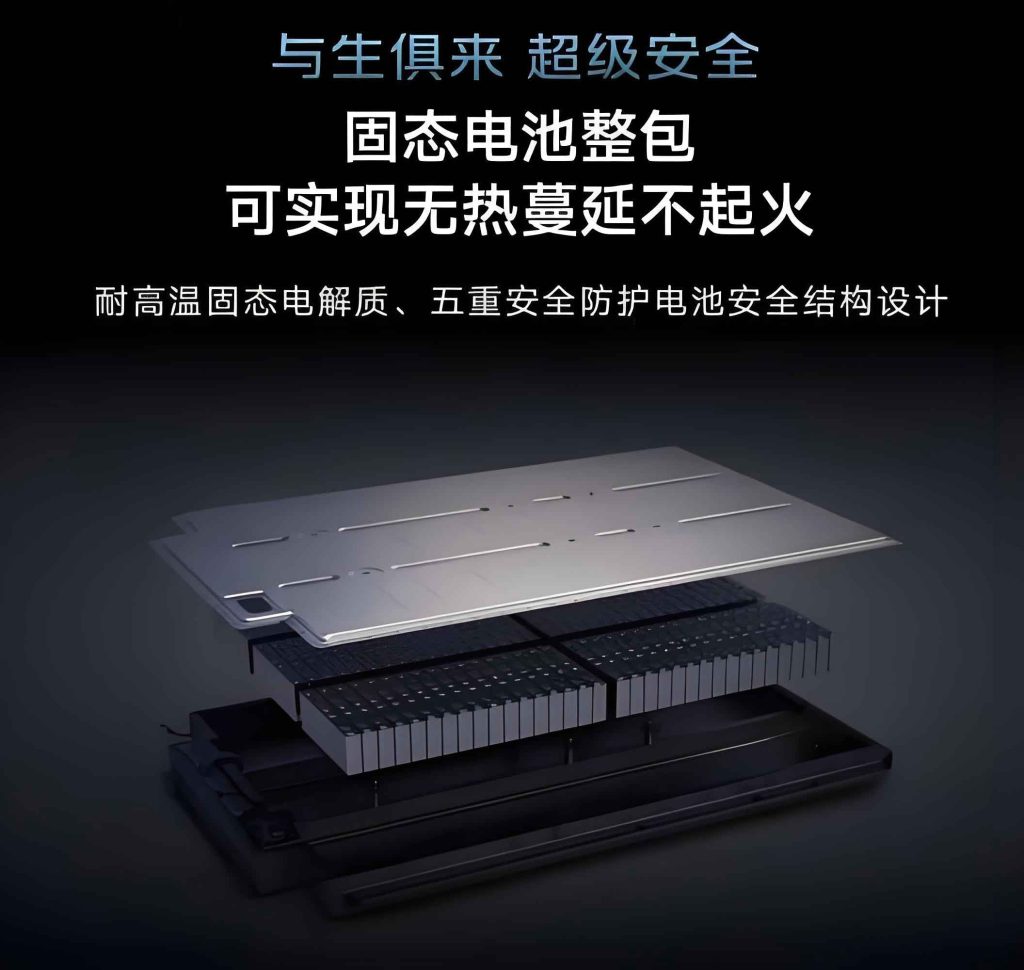
In my view, 3D printing transcends being merely a novel fabrication tool; it is a foundational technology that enables a design-for-performance philosophy for the solid-state battery. By allowing precise, layer-by-layer deposition of materials, it grants us unprecedented control over geometry, porosity, and composition at multiple scales. This capability is critical for overcoming the interfacial and architectural constraints that have hindered solid-state systems. I will explore the core 3D printing technologies adaptable to battery fabrication, delve into their specific applications for crafting each component of a solid-state battery, and discuss the future trajectory of this synergistic field.
Foundational 3D Printing Techniques for Energy Storage
Not all 3D printing modalities are suitable for fabricating functional electrochemical devices. The techniques must accommodate viscous composites containing active materials, preserve material functionality during processing, and achieve sufficient resolution for microstructural benefits. Several key methods have risen to the fore in the context of battery manufacturing.
Direct Ink Writing (DIW)
DIW, also known as robocasting or extrusion-based printing, is arguably the most versatile and widely adopted technique for printing battery components. The process relies on the formulation of a shear-thinning “ink.” Under the high shear stress within the printer nozzle, the ink’s viscosity decreases, allowing it to flow. Upon deposition, the stress is relieved, and the ink rapidly recovers its high viscosity, retaining the printed shape. A typical battery ink is a complex suspension comprising active material particles (e.g., cathode or anode powders), conductive additives (e.g., carbon black), solid electrolyte particles (for a solid-state battery), and a polymeric binder dissolved in a solvent.
The rheological properties of the ink are paramount and can be described by the Herschel-Bulkley model, which is effective for non-Newtonian fluids:
$$
\tau = \tau_0 + K \cdot \dot{\gamma}^n
$$
where \(\tau\) is the shear stress, \(\tau_0\) is the yield stress (necessary for shape retention), \(K\) is the consistency index, \(\dot{\gamma}\) is the shear rate, and \(n\) is the flow behavior index (\(n < 1\) for shear-thinning). A successful ink must possess a high enough \(\tau_0\) to prevent structural collapse but a low enough viscosity under shear to be extrudable through fine nozzles. Post-printing, thermal treatment (drying, curing, or sintering) is required to remove solvents and binders, and often to consolidate the structure.
The advantages of DIW are its material flexibility, relatively low cost, and ability to create free-standing, 3D lattice structures. The primary limitation is resolution; feature sizes are typically > 100 μm, constrained by nozzle diameter and particle size within the ink. Achieving sub-100 μm features while maintaining high solid loading for good electrochemical performance remains a significant challenge.
Fused Deposition Modeling (FDM)
FDM is one of the most common and accessible forms of 3D printing. It involves feeding a thermoplastic filament into a heated nozzle, where it is melted and extruded onto a build plate, solidifying upon cooling. For battery applications, the filament must be a composite, where active materials are mixed with a thermoplastic polymer like polylactic acid (PLA), acrylonitrile butadiene styrene (ABS), or polyethylene oxide (PEO).
The volume fraction of active material in the filament is a critical trade-off. Higher loading improves electrochemical capacity but can compromise the filament’s mechanical integrity and printability. A significant drawback of standard FDM for solid-state battery fabrication is the necessity of the polymer matrix, which is typically electrochemically inactive and ionically insulating. While polymers like PEO can function as solid polymer electrolytes, their ionic conductivity is low at room temperature. Furthermore, the relatively large layer height (usually >150 μm) and the presence of continuous, insulating polymer pathways limit ionic conductivity and rate capability. Post-processing to partially remove the polymer binder can improve performance but adds complexity.
Selective Laser Sintering (SLS)
SLS offers a binder-free approach to additive manufacturing. A thin layer of powder material (polymer, metal, or ceramic) is spread across a build chamber. A high-power laser (e.g., CO2 or fiber laser) then selectively scans the powder bed according to the digital design, sintering or melting the particles together to form a solid layer. The process repeats layer by layer.
For a solid-state battery, SLS holds the unique advantage of potentially creating dense, ceramic solid electrolyte layers or porous electrode layers without organic binders. This can lead to components with higher purity and better ionic/electronic percolation. The energy density of the laser beam and scanning parameters are crucial. They must be optimized to fully fuse particles for mechanical strength and electrical contact without causing detrimental phase changes, cracking, or excessive porosity. The process is particularly promising for sintering oxide-based solid electrolytes or fabricating 3D current collectors. However, the handling of fine, potentially reactive powder materials (like sulfides) in an inert atmosphere adds to the process complexity and cost.
The table below summarizes and compares these three pivotal techniques for fabricating solid-state battery components:
| Printing Technique | Material Form | Key Advantages | Major Challenges | Typical Resolution | Suitability for SSB* |
|---|---|---|---|---|---|
| Direct Ink Writing (DIW) | Shear-thinning paste/ink | High material flexibility, complex 3D structures, multi-material printing. | Ink rheology control, solvent removal, limited resolution (>20-50 μm). | 20 – 500 μm | Excellent for electrodes & composite electrolytes. |
| Fused Deposition Modeling (FDM) | Thermoplastic composite filament | Widely available, low-cost hardware, good mechanical properties. | Low active material loading, insulating polymer matrix, poor resolution. | 100 – 300 μm | Moderate, primarily for polymer-based electrolytes or prototypes. |
| Selective Laser Sintering (SLS) | Dry powder bed | Binder-free, high-purity components, good for ceramics/metals. | High equipment cost, thermal management, powder handling (inert atm). | 50 – 150 μm | Excellent for ceramic electrolytes & porous metal structures. |
*SSB: Solid-State Battery
Component-Level Engineering of the 3D-Printed Solid-State Battery
The true power of 3D printing for the solid-state battery lies in its ability to re-imagine and optimize each individual component—cathode, anode, and electrolyte—as well as their integration. Moving beyond flat, stacked layers to designed 3D architectures can dramatically enhance performance metrics.
Revolutionizing Cathode Design
In a conventional battery, thick electrodes increase energy density but cripple power density due to long, tortuous ion diffusion paths. 3D printing enables the fabrication of thick yet highly porous electrodes with designed, low-tortuosity channels. This architecture shortens the Li+ diffusion distance, facilitating rapid ion transport even at high active material loadings. The governing equation for discharge capacity at a given rate highlights the benefit of reduced tortuosity (\(\tau\)):
$$
C \propto \frac{D_{eff} \cdot A \cdot \Delta c}{L \cdot \tau}
$$
where \(C\) is capacity, \(D_{eff}\) is the effective diffusion coefficient, \(A\) is the electroactive area, \(\Delta c\) is the concentration gradient, and \(L\) is the electrode thickness. By designing a 3D electrode with \(\tau \approx 1\) (straight pores), the detrimental impact of increasing \(L\) is mitigated.
For the solid-state battery, the cathode ink is a composite of active material (e.g., NMC, LFP), solid electrolyte particles (e.g., LLZO, LATP, or argyrodite), conductive carbon, and a minimal, often sacrificial, binder. DIW is perfectly suited for this. Printing can create interdigitated structures, gyroidal pores, or vertical pillar arrays. These designs maximize the contact area between the solid electrolyte and the active material, which is critical for reducing interfacial impedance—a major bottleneck in any solid-state battery. Furthermore, graded architectures can be printed, where composition varies from current collector to electrolyte interface, optimizing electronic and ionic conductivity gradients.
Engineering Stable Anode Architectures
The anode presents unique challenges, especially for lithium metal-based solid-state battery systems. Lithium metal offers the highest theoretical capacity (3860 mAh g-1) but suffers from dendrite growth, infinite relative volume change, and poor solid-solid contact with the electrolyte. 3D printing provides a strategic solution by fabricating structured hosts or current collectors.
Instead of printing lithium metal directly (which is highly reactive and difficult to process), we print 3D scaffolds from materials like carbon, copper, or certain alloys. These scaffolds are then infused with molten lithium or subjected to electrochemical pre-lithiation. The 3D host provides:
- Reduced Local Current Density: The high surface area of a 3D scaffold lowers the effective current density (\(J = I / A\)), which is a primary driver for dendrite initiation according to models of electrodeposition instability.
- Confinement for Volume Change: The porous structure accommodates the expansion and contraction of lithium during cycling, maintaining mechanical integrity and contact.
- Guided Lithium Deposition: A lithiophilic coating on the scaffold can thermodynamically favor lithium plating within the pores, preventing surface dendrites.
For example, a DIW-printed graphene oxide lattice, once reduced to conductive graphene, forms an excellent lightweight host. The relationship between pore size (\(r\)), surface energy (\(\gamma\)), and the overpotential for Li nucleation (\(\eta\)) within a pore can influence deposition behavior:
$$
\Delta G_{nucleation} \propto \frac{\gamma^3}{(\eta z F)^2}
$$
By designing the 3D scaffold’s pore geometry and chemistry, we can modulate the energetics of lithium plating to favor smooth, uniform deposition—a critical advancement for the safe solid-state battery.
Fabricating and Integrating the Solid Electrolyte
The solid electrolyte is the heart of the solid-state battery. 3D printing allows us to move beyond fragile, thin films and create robust, architectured electrolytes. Key strategies include:
1. Direct Printing of Solid Electrolyte Layers: Using DIW with inks containing sub-micron solid electrolyte particles (e.g., LLZO, LGPS) and a temporary binder, dense or deliberately porous electrolyte layers can be printed. SLS can also directly sinter ceramic electrolyte powders into dense layers. The printed layer can be engineered with a graded porosity or specific surface texture to enhance adhesion with the electrodes.
2. Printing Composite Electrolytes: For polymer-ceramic hybrid systems, DIW or FDM can be used to print composites where ceramic fillers (e.g., LLZO, TiO2) are embedded in a polymer matrix (e.g., PEO, PVDF). This combines the processability of polymers with the enhanced ionic conductivity and mechanical strength of ceramics. The effective conductivity (\(\sigma_{eff}\)) of such a composite can be modeled percolation theory:
$$
\sigma_{eff} = \sigma_{ceramic} \cdot (V – V_c)^t \quad \text{for } V > V_c
$$
where \(V\) is the volume fraction of ceramic filler, \(V_c\) is the percolation threshold, and \(t\) is a critical exponent. 3D printing can ensure an optimal, homogeneous distribution of filler to exceed \(V_c\) reliably.
3. The Holy Grail: Monolithic Multi-Material Printing. The most transformative application is the single-step, multi-material printing of an integrated battery. Advanced DIW systems with multiple printheads can sequentially or simultaneously deposit anode, solid electrolyte, and cathode inks in a pre-designed, interdigitated 3D structure. This creates a monolithic device where the interfaces are formed in-situ during manufacturing, ensuring perfect contact and interlocking. This architecture eliminates delamination issues and minimizes interfacial resistance, unlocking the full potential of the solid-state battery.
Future Perspectives and Critical Challenges
The path toward commercially viable 3D-printed solid-state battery technology is exhilarating but strewn with challenges that require concerted interdisciplinary efforts.
Material Development for Printability
The library of “printable” materials specifically optimized for solid-state battery components must expand. This involves more than just dispersing existing powders in a solvent. We need novel ink formulations:
- For Cathodes/Anodes: Inks with ultra-high active solid loading (>70 wt%) that maintain excellent rheology for fine-feature printing. Binder systems that pyrolyze cleanly to leave minimal residual carbon, which can be detrimental for some solid electrolyte interfaces.
- For Solid Electrolytes: Stable ink formulations for air-sensitive materials like sulfide solid electrolytes. Development of photosensitive resin systems for high-resolution vat polymerization (e.g., stereolithography) of polymer or composite electrolytes.
- Multi-Material Interfaces: Development of compatible ink pairs for cathode-electrolyte and anode-electrolyte that co-sinter or co-cure without interdiffusion or deleterious interfacial reactions.
Advancements in Printing Technology and Resolution
To harness the benefits of micro-structuring, printing resolution must improve. While DIW is versatile, its resolution is fundamentally limited. Emerging techniques like electrohydrodynamic (EHD) printing or aerosol jet printing can achieve feature sizes below 10 μm and should be adapted for functional battery materials. Furthermore, hybrid manufacturing approaches that combine 3D printing for macroscale structuring with subsequent thin-film deposition or nanoscale patterning (e.g., atomic layer deposition) will be crucial for creating optimized hierarchical structures within the solid-state battery.
Scalability, Throughput, and Cost
Transitioning from lab-scale single-cell demonstrations to roll-to-roll or high-throughput parallel printing is essential for commercialization. This requires engineering advancements in print head design, drying/curing systems, and automation. The cost-benefit analysis must be favorable; the enhanced performance (energy density, power, safety, lifetime) of a 3D-printed solid-state battery must justify the likely higher manufacturing cost compared to standard cell production. This may first be realized in high-value niches like aerospace, medical devices, or customized wearable electronics before broader automotive or grid applications.
In-Depth Characterization and Modeling
As we design increasingly complex 3D architectures, advanced characterization tools (in-situ/operando tomography, synchrotron X-ray imaging) are needed to validate ion transport, stress evolution, and interfacial stability. Furthermore, multi-physics modeling—coupling electrochemical reactions, ion diffusion in solids, stress mechanics, and thermal effects—is indispensable for the intelligent design of next-generation 3D structures before they are ever printed. The goal is to move from empirical optimization to a model-driven design framework for the ultimate solid-state battery.
In conclusion, 3D printing is not merely an alternative manufacturing method; it is an enabling technology that dissolves the design constraints imposed by traditional battery fabrication. By providing meticulous control over the geometry and integration of the anode, solid electrolyte, and cathode, it offers a direct pathway to solve the most intractable problems plaguing the solid-state battery: interfacial resistance, lithium dendrite suppression, and the trade-off between energy and power density. While challenges in materials, resolution, and scalability remain, the trajectory is clear. The convergence of advanced materials science, innovative printing technologies, and sophisticated computational design is poised to make the high-performance, safe, and durable 3D-printed solid-state battery a commercial reality, ultimately powering a new era of energy storage.