
The pursuit of energy storage systems with higher energy density and intrinsic safety has driven the development beyond conventional lithium-ion batteries. In this context, the all-solid-state lithium metal battery stands as a transformative technology. The fundamental appeal of this configuration lies in its components: a high-capacity lithium metal anode and a non-flammable, dimensionally stable solid-state electrolyte (SSE). Theoretically, such a combination promises energy densities 2-5 times greater than current commercial cells while potentially eliminating the safety hazards associated with volatile liquid electrolytes. However, the practical implementation of this promising architecture is critically hindered by the persistent and complex challenge of uncontrolled lithium deposition, manifesting as dendrite growth, which can lead to cell short-circuit, rapid failure, and safety incidents.
My perspective on this issue has evolved from the early, simplistic view that a mechanically rigid SSE could physically block dendrites. While models suggested that a shear modulus roughly double that of lithium (~10 GPa) might be sufficient, empirical evidence consistently contradicts this. Dendrites readily penetrate high-modulus oxide ceramics and grow within seemingly robust polymer matrices. This discrepancy highlights that lithium deposition in a solid-state battery is governed by a complex interplay of thermodynamics, kinetics, interfacial chemistry, and microstructural defects, rather than by bulk mechanical properties alone. Understanding and controlling this phenomenon is therefore paramount. In this article, I will systematically explore the mechanisms of lithium deposition across different classes of SSEs, synthesize the primary strategies developed to control it, review advanced characterization techniques that have unveiled its secrets, and discuss design principles crucial for the practical application of lithium metal anodes in solid-state batteries.
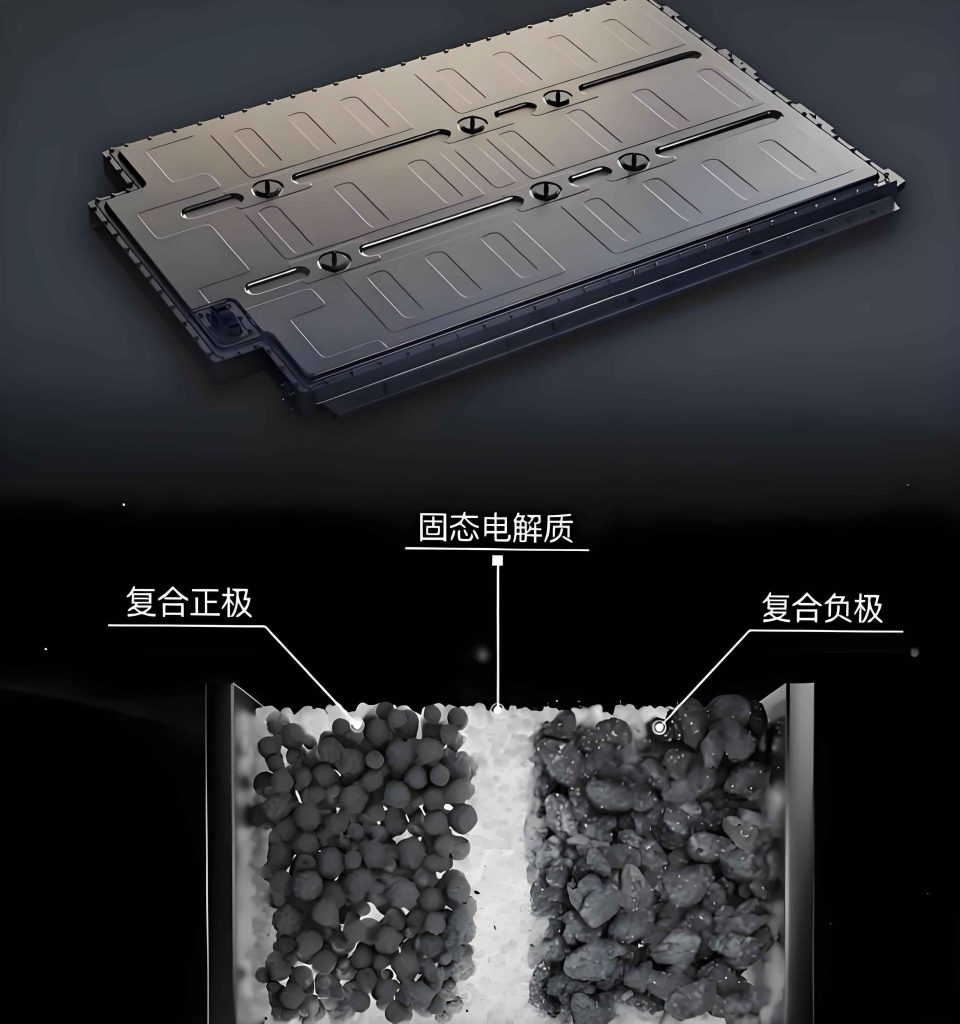
Mechanistic Insights into Lithium Deposition Across Solid Electrolytes
The mechanisms of lithium nucleation and growth differ significantly between organic/polymeric and inorganic SSEs, reflecting their distinct structural and transport properties.
Polymer-Based Solid-State Electrolytes
In polymer SSEs, such as those based on PEO, lithium transport occurs via segmental motion of polymer chains that coordinate and release Li⁺ ions. Lithium typically deposits at the Li/SSE interface, but the growth morphology is not uniform. Three primary modes are observed:
- Tip-Driven Growth: This is the classic dendrite initiation mode. Any pre-existing protrusion or asperity on the lithium anode surface creates a local geometric enhancement of the electric field ($\vec{E}_{local} \propto 1/r_{tip}$). This stronger field attracts a higher flux of Li⁺ ions, leading to accelerated deposition at the tip, which further sharpens the feature and creates a positive feedback loop. The deposition current density at a hemispherical tip of radius $r$ can be described by a simplified Butler-Volmer relation where concentration polarization is negligible:
$$ i_{tip} = i_0 \exp\left(\frac{\alpha n F}{RT} \eta_{tip}\right) $$
where $\eta_{tip}$ is the local overpotential, which is larger than on a flat surface due to the field concentration effect. - Lateral Growth: Filamentous lithium deposits may lose intimate contact with the SSE. In such cases, Li⁺ ions can transport laterally through a surface layer or diffuse to the sides of the dendrite, leading to thickening or “toothpaste-like” extrusion, rather than continued longitudinal penetration.
- Multidirectional & Subsurface Growth: Lithium deposition is not confined to the visible interface. Defects, impurities, or stress-induced cracks beneath the surface can act as preferential nucleation sites. Lithium can deposit at the root of a dendrite, within bulk electrode pores, or even at kink sites along an existing dendrite, leading to complex, three-dimensional growth patterns.
Inorganic Solid-State Electrolytes
The scenario in inorganic SSEs (oxides like LLZO, sulfides like LGPS) is more complex due to their polycrystalline nature and rigid structure. Lithium deposition can occur not only at the interface but also within the electrolyte bulk, which is a critical failure mode absent in liquids.
- Interfacial Deposition: The poor solid-solid contact between a rigid SSE and lithium metal often results in a non-uniform, “point-contact” interface. This leads to a highly heterogeneous distribution of local current density. Areas with better contact carry most of the current, leading to localized Li stripping and plating, which quickly exacerbates contact loss and promotes dendrite initiation at contact points.
- Grain Boundary Propagation: This is a dominant failure pathway in polycrystalline ceramics. Grain boundaries (GBs) typically possess higher ionic resistance, lower mechanical strength (Young’s modulus can be ~50% lower than the grain interior), and sometimes different chemical composition (e.g., dopant segregation). These factors make GBs “softer” pathways for lithium infiltration. Dendrites propagate preferentially along the GB network, eventually bridging the electrolyte.
- Bulk Deposition via Electronic Conductivity: Perhaps the most insidious mechanism is lithium plating within pores, cracks, or even the dense bulk of the SSE. This is thermodynamically driven by the presence of residual electrons. If the SSE possesses non-negligible electronic conductivity ($\sigma_e$), electrons can reduce Li⁺ ions that migrate through the lattice. The critical electronic conductivity threshold is low; SSEs with $\sigma_e > 10^{-10}$ S/cm are susceptible. The deposition within a pore can be modeled by considering the local potential, $\phi$, which is a function of ionic and electronic current. Lithium will plate where the electrochemical potential of Li ($\mu_{Li}$) exceeds that of the metallic Li anode:
$$ \mu_{Li} = \mu_{Li^+} + \mu_{e^-} = \mu_{Li^+}^0 + RT \ln(a_{Li^+}) + F\phi – F\phi_e $$
Deposition occurs when $\mu_{Li}(SSE) \geq \mu_{Li}(anode)$.
The following table summarizes the key mechanisms and their driving forces in different SSE types.
| SSE Type | Primary Deposition Loci | Key Driving Forces & Mechanisms |
|---|---|---|
| Polymer (e.g., PEO) | Anode/SSE Interface | 1. Field Enhancement: Tip effect concentrates Li⁺ flux. 2. Current Distribution: Non-uniform contact resistance. 3. Defect/Stress: Subsurface impurities or cracks act as nucleation sites. |
| Inorganic (e.g., LLZO, LPS) | 1. Anode/SSE Interface 2. Grain Boundaries 3. Bulk (Pores, Cracks) |
1. Poor Contact: “Point-contact” leads to local high current density. 2. GB “Softness”: Lower ionic/mechanical barrier along GBs. 3. Electronic Conductivity: Residual $\sigma_e$ enables bulk Li⁺ reduction: $Li^+ + e^- \rightarrow Li^0$. |
Strategic Framework for Controlling Lithium Deposition
Controlling lithium deposition in a solid-state battery requires a multi-faceted strategy targeting different stages of the process: preventing initiation, guiding uniform growth, and mitigating the effects of any non-uniform deposition. The overarching principles can be categorized as follows.
1. Improving Interface Contact and Homogeneity
A homogeneous interface with low impedance is the first line of defense. Strategies include:
- Surface Engineering: Removing passivation layers (e.g., Li₂CO₃ on LLZO via polishing or acid treatment) to improve lithium wettability.
- Interfacial Layers: Introducing a thin, compliant, and chemically stable interlayer between Li and the SSE. This can be an artificial coating (e.g., Al₂O₃ by ALD, Ge by sputtering) or an in-situ formed layer from controlled reactions.
- In-Situ Solidification: Using liquid precursors that infiltrate pores and polymerize in situ, creating an atomically close, conformal interface that accommodates volume changes.
- Applied Pressure & Temperature: External pressure improves physical contact, while elevated temperature enhances interface dynamics and reduces stiffness, promoting smoother plating.
2. Designing Materials and Structures to Guide Deposition
Rather than resisting deposition, this approach actively controls where and how lithium plates.
- Lithiophilic Sites: Decorating the anode or current collector with materials that have a low nucleation overpotential for lithium (e.g., Ag, Au, ZnO, Si). The nucleation overpotential $\eta_{nuc}$ is given by the Gibbs-Thomson effect:
$$ \eta_{nuc} = \frac{2\gamma V_m}{n F r^*} $$
where $\gamma$ is the interfacial energy, $V_m$ is the molar volume, and $r^*$ is the critical nucleus radius. Lithiophilic materials reduce $\gamma$, thereby reducing $\eta_{nuc}$ and promoting uniform nucleation. - 3D Host Structures: Using porous, conductive scaffolds (e.g., 3D Cu, carbon felt) to accommodate lithium deposition within their pores. This confines volume expansion and provides a high surface area to lower the effective current density. The effective current density $J_{eff}$ in a 3D host with surface area $A_{host}$ is:
$$ J_{eff} = \frac{I}{A_{host}} \ll \frac{I}{A_{geom}} $$
where $A_{geom}$ is the geometric area. - 3D SSE Architectures: Designing SSEs with graded or porous structures to increase the contact area with the anode and provide mechanical interlocking.
3. Eliminating Microstructural and Electronic Pathways
Targeting the internal weak points of the SSE itself is crucial.
- Densification: For ceramic SSEs, achieving high relative density (>99%) through advanced sintering (e.g., hot isostatic pressing) minimizes pores and voids that initiate bulk deposition.
- Grain Boundary Engineering: Using sintering aids, dopants, or optimized thermal profiles to modify GB composition and properties, increasing their resistance to lithium penetration.
- Single Crystals: Utilizing single-crystal SSEs eliminates GBs entirely, though cost and fabrication challenges remain.
- Suppressing Electronic Conductivity: Designing SSEs with ultra-low $\sigma_e$ (< 10⁻¹² S/cm) is fundamental to prevent thermodynamically-driven bulk plating.
4. Modulating Ion Transport Properties
The transport of ions within the SSE directly influences deposition stability.
- Single-Ion Conductors: In polymer systems, immobilizing the anion (e.g., by covalent bonding to the polymer backbone) forces the transference number $t_{Li^+}$ → 1. This suppresses space-charge formation at the anode, a key instability predicted by the Chazalviel model. The Sand’s time $\tau_S$, which estimates the onset of instability, diverges as $t_{Li^+}$ approaches 1:
$$ \tau_S = \frac{\pi D}{4} \left( \frac{e C_0 (1 – t_{Li^+})}{J} \right)^2 $$
where $D$ is the diffusion coefficient, $C_0$ the initial salt concentration, and $J$ the current density. - Multi-Layer/Hybrid Electrolytes: Combining layers with complementary properties (e.g., a polymer for good contact and a ceramic with $t_{Li^+} \approx 1$) can create a system with high overall $t_{Li^+}$ and stable interfaces.
5. Implementing Self-Healing and Resilience
Since perfect uniformity is challenging, strategies to repair damage are valuable.
- Self-Healing Polymers: Incorporating dynamic bonds (e.g., imine, hydrogen bonds) into polymer SSEs or coatings allows the material to flow and fill gaps created by lithium deposition, restoring the interfacial barrier.
- Electrochemically Adaptive Structures: Designing hosts with periodic conductive/dielectric layers. When a dendrite touches a conductive layer, the local potential equalizes, reducing the driving force for further growth at that tip (“self-correction”).
Advanced Characterization: Probing the Invisible
Understanding lithium deposition in opaque, solid-state systems demands innovative characterization. Key techniques include:
| Technique | Principle | Key Insights Provided | Challenges/Limitations |
|---|---|---|---|
| Operando Electrochemical (Impedance, Voltage Profile) |
Measures electrical response (R, C, V) to electrochemical stimuli. | Critical current density (CCD), interface resistance evolution, onset of short circuit. Indirect indicator of deposition behavior. | Provides indirect, volume-averaged data. Cannot visualize location or morphology. |
| Neutron Depth Profiling (NDP) | Bombards with neutrons; measures energy of emitted particles from $^6$Li(n,α)$^3$H reaction. | Quantitative, depth-resolved Li concentration profile. Can detect Li plating inside SSE before voltage drop. Operando capable. | Requires neutron source. Limited spatial resolution laterally (~µm). |
| Synchrotron X-ray Tomography | Uses high-energy, high-flux X-rays to perform computed tomography (CT). | 3D visualization of microstructural evolution (pores, cracks, Li filaments) at sub-µm resolution. Non-destructive. | Low contrast for Li. Requires heavy element (e.g., Zr in LLZO) for matrix contrast or uses pores filled by Li as negative contrast. |
| Cryogenic Electron Microscopy (Cryo-EM) | Electron microscopy on samples rapidly frozen to cryogenic temperatures. | Atomic/near-atomic resolution of Li metal morphology, crystallography, and SEI/interface structure. Minimizes beam damage. | Complex sample prep for cross-sections. Requires inert transfer for air-sensitive samples. |
| In Situ/Operando Microscopy (Optical, SEM) |
Direct visual observation during cycling in a specialized cell. | Real-time visualization of dendrite growth dynamics, initiation sites, and growth modes (tip vs. lateral). | Requires optically transparent or thin SSEs (e.g., LiPON). SEM requires vacuum and special cell design. |
Practical Design Considerations for the Lithium Anode
Translating laboratory successes into practical solid-state batteries requires anode-side design that meets application-level metrics. Many academic studies use excessively thick lithium anodes and SSEs, or very low areal capacity cathodes, which inflate performance metrics but are irrelevant for high energy density. Practical design must consider:
- Anode Architecture: Pure Li foil faces immense challenges from volume change. Composite anodes, where Li is hosted within a porous, conductive, and lithiophilic scaffold (e.g., 3D metal frameworks, carbon matrices), are essential to accommodate expansion and maintain interface contact.
- Balanced Cell Design: Key parameters must be optimized:
- N/P Ratio: The capacity ratio of negative to positive electrode should be minimal (e.g., 2-4) to maximize energy density, but sufficient to accommodate irreversible loss and maintain Li inventory.
- Areal Capacity: Cathode loading should be high (> 4 mAh/cm²) for practical energy density.
- SSE Thickness: The solid-state electrolyte layer must be as thin as possible (< 100 µm, ideally < 50 µm) to minimize its resistive and volumetric penalty.
- System-Level Integration: Cell and module designs must incorporate constant stack pressure to maintain interface contact as lithium cycles. Intelligent battery management systems (BMS) with pressure and thermal sensors are needed to monitor for “soft shorts” or localized heating, even in a solid-state battery.
Conclusion and Future Perspective
The journey towards a commercial, high-energy-density solid-state battery with a lithium metal anode is fundamentally a battle against inhomogeneous lithium deposition. This article has synthesized the current understanding that this phenomenon is not a simple mechanical piercing but a multifaceted electrochemical process driven by interfacial heterogeneity, microstructural defects, electronic leakage, and ion transport limitations. The strategies to combat it are equally multifaceted, spanning interface engineering, structural design, materials synthesis, and transport property control.
Significant progress has been made. We have moved from simply seeking harder materials to designing smarter interfaces (lithiophilic, self-healing), creating resilient 3D structures, and developing SSEs with near-unity Li⁺ transference numbers. Advanced characterization tools like NDP and cryo-EM have provided unprecedented views into the hidden world of lithium growth within solids.
However, immense challenges remain on the path to practicality. Controlling deposition is only one aspect; the long-term chemical and electrochemical stability of interfaces, the management of tremendous volumetric swings during cycling, and the cost-effective, scalable manufacturing of thin, dense, and defect-free SSEs and composite anodes are equally daunting. Future research must adopt a holistic, application-oriented approach. This involves setting standardized, realistic testing conditions (e.g., high areal capacity, low N/P, thin SSE) to bridge the gap between academic reports and industrial requirements. It also demands interdisciplinary efforts combining electrochemistry, materials science, mechanical engineering, and data science to develop predictive models and discover new material systems.
In conclusion, while the challenge is formidable, the reward—a safe, compact, and high-energy solid-state battery—justifies the endeavor. By building on the fundamental insights and strategic frameworks discussed here, and by focusing on integrated, practical solutions, the vision of a truly solid-state energy storage future comes closer to reality.