
As a researcher focused on sustainable energy storage, I recognize that solid-state batteries (SSBs) represent a transformative leap in battery technology due to their inherent safety and potential for higher energy density. By replacing flammable liquid electrolytes with solid electrolytes (SEs), solid-state batteries fundamentally mitigate thermal runaway risks. Moreover, when paired with lithium metal anodes, solid-state batteries promise significant improvements in energy density, positioning them as a cornerstone for next-generation electric vehicles and portable electronics. However, with the impending commercialization and eventual decommissioning waves of solid-state batteries, their end-of-life management poses a critical challenge. The recycling of solid-state batteries is far more complex than that of conventional lithium-ion batteries, necessitating innovative approaches to ensure resource circularity and environmental sustainability.
The core challenges in recycling solid-state batteries stem from their unique architecture and material chemistry. Unlike liquid-based batteries, solid-state batteries typically feature dense multilayer structures comprising a cathode layer, a solid electrolyte layer, and an anode layer, often tightly bonded to minimize interfacial resistance. This compact design complicates physical separation. Additionally, solid electrolytes, such as oxide-based (e.g., Li6.4La3Zr1.4Ta0.6O12, LLZTO) or sulfide-based compounds, exhibit high chemical stability, rendering traditional hydrometallurgical leaching processes inefficient. Furthermore, these components contain valuable strategic materials like lanthanum, zirconium, and high-nickel cathodes, underscoring the economic imperative for efficient recovery. Current recycling methods—pyrometallurgy, hydrometallurgy, and physical processes—are inadequate for solid-state batteries. Pyrometallurgy, for instance, operates at extremely high temperatures (often exceeding 1400°C), leading to co-melting of electrolytes and cathodes, which hinders component-specific recovery. Hydrometallurgy involves lengthy procedures, generates large volumes of waste, and struggles with the inert nature of solid electrolytes. Thus, there is an urgent need to develop tailored recycling strategies for solid-state batteries that address these limitations while being energy-efficient and environmentally benign.
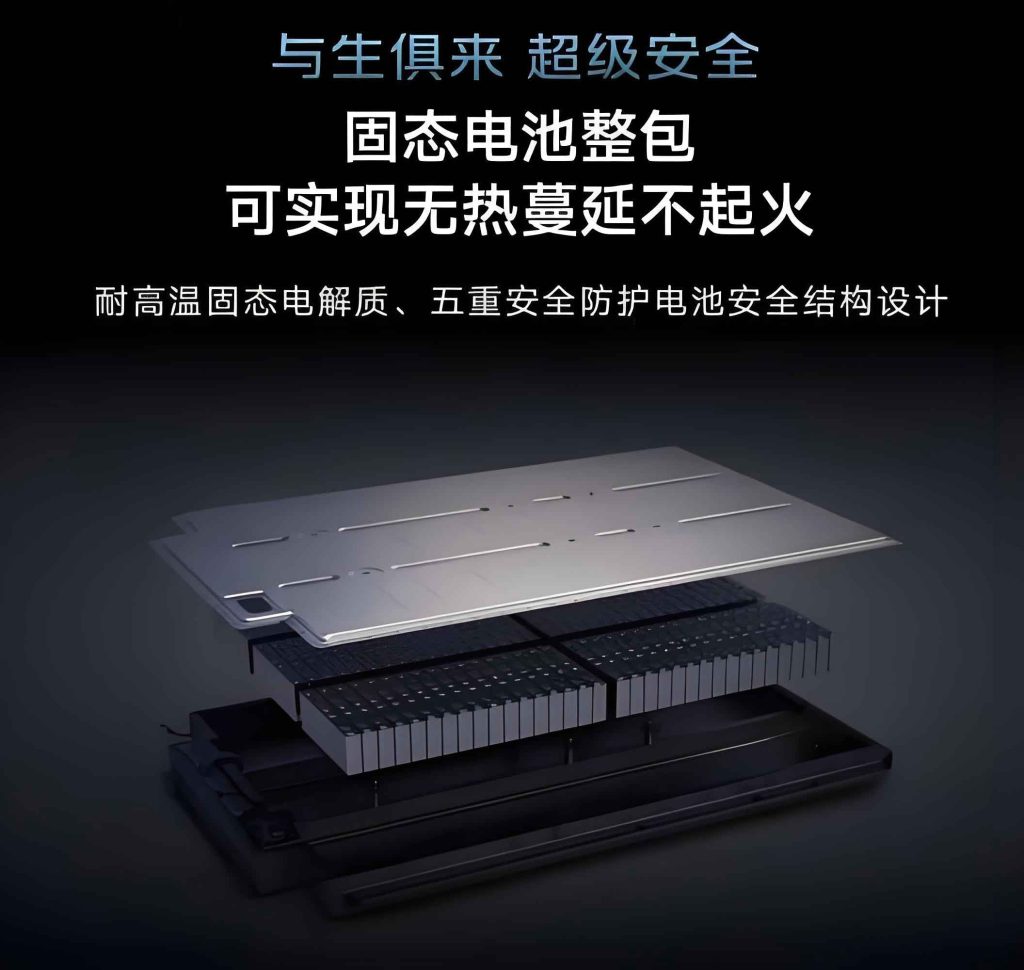
In this study, we propose and validate an integrated recycling process for solid-state batteries that synergistically combines mechanical disassembly with controlled thermal treatment. This approach aims to overcome the key bottlenecks in solid-state battery recycling by leveraging the complementary effects of physical size reduction and thermally induced separation mechanisms. We focus on oxide-based solid-state batteries, using LLZTO as a model solid electrolyte and NCM811 as the cathode material. Our process is designed to achieve high-purity recovery of both the solid electrolyte and cathode active materials, with minimal energy input and environmental impact. The rationale behind this strategy is to exploit the differential thermal expansion coefficients between components and the thermal decomposition of organic binders to facilitate clean separation. Throughout this article, we will delve into the experimental design, mechanistic insights, and performance evaluations, supported by tables and formulas to encapsulate key findings. The term “solid-state battery” will be frequently emphasized to underscore the specificity of our research to this emerging technology.
Experimental Design and Methodology
To systematically investigate the recycling of solid-state batteries, we designed experiments around laboratory-simulated end-of-life solid-state battery cells. These cells mimic the structure of commercial solid-state batteries, enabling controlled studies on recycling efficacy.
Materials and Cell Construction
We fabricated pouch-type solid-state battery cells with a trilayer configuration: a cathode layer, a solid electrolyte layer, and a lithium metal anode. The cathode sheet consisted of LiNi0.8Co0.1Mn0.1O2 (NCM811) as the active material, polyvinylidene fluoride (PVDF) as the binder, and Super P carbon as the conductive agent. The solid electrolyte layer was composed of LLZTO (Li6.4La3Zr1.4Ta0.6O12), prepared via solid-state sintering to achieve high ionic conductivity. The anode was metallic lithium foil. This construction is representative of oxide-based solid-state batteries, providing a relevant model for recycling studies. The properties of these materials are summarized in Table 1.
| Component | Material | Key Properties | Role in Solid-State Battery |
|---|---|---|---|
| Cathode | NCM811 | High specific capacity, layered structure | Active material for lithium storage |
| Binder | PVDF | Thermal decomposition range: 300-500°C | Adhesion of cathode components |
| Solid Electrolyte | LLZTO | Cubic garnet structure, ionic conductivity ~5×10⁻⁴ S/cm | Ionic conductor and separator |
| Anode | Lithium metal | High theoretical capacity | Negative electrode |
Innovative Recycling Process: A Two-Step Synergistic Strategy
Our recycling methodology centers on a sequential process that integrates mechanical disassembly with staged thermal treatment. This synergy is crucial for addressing the tight interfaces and stable materials in solid-state batteries.
Step 1: Precision Mechanical Disassembly. To avoid moisture and oxygen contamination, disassembly was conducted in an argon-filled glovebox (H2O and O2 levels < 0.1 ppm). We manually removed the battery casing, aluminum current collectors, and lithium metal anode. The remaining cathode-electrolyte composite block, which is intimately bonded, was then subjected to mechanical crushing. Using a controlled crusher, we reduced the block into uniform particles with sizes ranging from 1 mm to 5 mm. This size reduction increases the surface area, facilitating subsequent thermal processing. The disassembly step can be represented by the following efficiency equation, where the recovery yield of the composite block (Yblock) depends on the mechanical energy input (Emech):
$$ Y_{\text{block}} = k \cdot \ln(E_{\text{mech}}) $$
Here, k is a material-specific constant. For our solid-state battery components, we optimized Emech to achieve near-complete recovery of the composite.
Step 2: Graded Thermal Treatment Strategy. The crushed particles were placed in a tube furnace for a two-stage heat treatment under controlled atmospheres. This step is designed to remove the binder and induce interfacial separation via thermal stresses. The parameters are outlined in Table 2.
| Stage | Temperature Range | Atmosphere | Heating Rate | Holding Time | Primary Objective |
|---|---|---|---|---|---|
| Low-Temperature Pyrolysis | 300°C | N2 (inert) | 5°C/min | 60 min | PVDF binder decomposition |
| Mid-Temperature Separation | 450°C to 600°C (optimized at 550°C) | N2 (inert) | 3°C/min | 120 min | Interfacial separation via thermal expansion mismatch |
The thermal treatment process leverages the decomposition kinetics of PVDF, which follows an Arrhenius-type relationship:
$$ \frac{d\alpha}{dt} = A \exp\left(-\frac{E_a}{RT}\right) (1-\alpha)^n $$
where \(\alpha\) is the conversion degree, A is the pre-exponential factor, Ea is the activation energy, R is the gas constant, T is temperature, and n is the reaction order. For PVDF in solid-state batteries, we estimated Ea to be approximately 150 kJ/mol based on prior studies.
After thermal treatment, the products were cooled to room temperature and separated using sieving and air classification. The LLZTO solid electrolyte particles and NCM cathode materials were collected for further analysis.
Analytical and Characterization Techniques
To comprehensively evaluate the recycling process and the quality of recovered materials, we employed a suite of characterization tools. These include scanning electron microscopy (SEM) for morphology and interface analysis, X-ray diffraction (XRD) for phase identification, inductively coupled plasma optical emission spectrometry (ICP-OES) for metal content quantification, and electrochemical impedance spectroscopy (EIS) for ionic conductivity measurements of the solid electrolyte. The integration of these techniques allows for a multidimensional assessment of recycling efficiency and material integrity.
Results and Discussion: Unraveling the Synergistic Mechanisms
The effectiveness of our recycling process for solid-state batteries hinges on the interplay between mechanical disassembly and thermal treatment. We present detailed findings on temperature optimization, separation mechanisms, and product performance.
Precise Control of Thermal Treatment Temperature
Temperature is a critical parameter in the thermal treatment stage, directly influencing the separation efficiency and material stability. We conducted experiments across a range from 300°C to 600°C to identify the optimal conditions. The results, summarized in Table 3, highlight the trade-offs between separation purity and material degradation.
| Temperature (°C) | LLZTO Purity After Separation (%) | LLZTO Recovery Yield (%) | NCM Phase Integrity | Observations |
|---|---|---|---|---|
| 300 | 75.2 | 80.5 | Layered structure intact | Incomplete binder removal, poor separation |
| 450 | 92.1 | 94.3 | Layered structure intact | Moderate separation, some adhesion remains |
| 550 | 98.5 | 96.2 | Layered structure intact | Optimal separation, high purity and yield |
| 600 | 97.8 | 95.7 | Partial phase transformation to rock-salt | Good separation but cathode degradation |
At 550°C, we achieved an optimal balance: the LLZTO solid electrolyte was recovered with 98.5% purity and 96.2% yield, while the NCM cathode retained its layered structure without detectable phase changes. XRD patterns confirmed that the recovered LLZTO maintained its cubic garnet crystal structure, with no impurity peaks. In contrast, at 600°C, although separation remained effective, the NCM began to undergo undesirable phase transitions, reducing its suitability for direct regeneration. This underscores the importance of temperature control in recycling solid-state batteries to preserve material functionality.
The recovery efficiency can be modeled using a temperature-dependent function:
$$ \eta(T) = \eta_{\text{max}} \left[1 – \exp\left(-\frac{T – T_0}{\tau}\right)\right] $$
where \(\eta(T)\) is the recovery yield at temperature T, \(\eta_{\text{max}}\) is the maximum achievable yield, T0 is the threshold temperature for effective separation, and \(\tau\) is a time constant. For our solid-state battery system, T0 ≈ 450°C and \(\tau\) ≈ 50°C.
Deep Dive into Synergistic Separation Mechanisms
The success of our process stems from the synergistic effects between mechanical disassembly and thermal treatment. We break down the mechanisms into two interrelated aspects.
Role of Mechanical Disassembly. The initial crushing step reduces the composite block into small particles, dramatically increasing the specific surface area. This creates pathways for heat penetration and gas evolution during thermal treatment. Mathematically, the increased surface area (SA) can be expressed as:
$$ S_A = \frac{6}{\rho \cdot d} $$
where \(\rho\) is the material density and d is the average particle diameter. For d = 3 mm (our target), SA is sufficient to ensure uniform heating. This prevents localized overheating or pressure buildup from binder decomposition, which could otherwise cause material pulverization.
Dual Functions of Thermal Treatment. The thermal stage operates through combined chemical and physical processes:
- Low-Temperature Chemical Pyrolysis: In the inert N2 atmosphere, PVDF binder decomposes between 300°C and 400°C, producing volatile fluorinated gases and carbonaceous residues. This reaction eliminates the adhesive forces binding the solid electrolyte and cathode particles. The mass loss due to pyrolysis (Δm) follows:
$$ \Delta m = m_0 \cdot \left[1 – \exp(-k_p t)\right] $$
where m0 is the initial binder mass, kp is the pyrolysis rate constant, and t is time. We observed near-complete mass loss after 60 minutes at 300°C.
- Mid-Temperature Physical Delamination: The key to separation lies in the mismatch of thermal expansion coefficients (CTE) between LLZTO and NCM. LLZTO has a CTE of approximately 10 × 10-6 K-1, while NCM has a CTE of about 13 × 10-6 K-1. When heated from room temperature to 550°C, the differential expansion induces thermal stress (σ) at the interface, given by:
$$ \sigma = E \cdot \Delta \alpha \cdot \Delta T $$
where E is the effective Young’s modulus, Δα is the CTE difference, and ΔT is the temperature change. For our solid-state battery materials, σ exceeds the interfacial bonding strength, leading to clean剥离. Additionally, residual carbon from pyrolysis may induce minor carbothermal reduction, further weakening the interface. This synergy ensures efficient separation without damaging the solid electrolyte or cathode.
Comprehensive Performance Evaluation of Recovered Materials
We assessed the quality of recovered components to determine their suitability for reuse in solid-state batteries.
Solid Electrolyte (LLZTO). The recovered LLZTO particles exhibited clean surfaces and a narrow size distribution. We cold-pressed and sintered them into pellets for ionic conductivity measurements. Using EIS, the room-temperature ionic conductivity was calculated from the Nyquist plots. The conductivity (σion) is related to the resistance (R) and pellet dimensions by:
$$ \sigma_{\text{ion}} = \frac{L}{R \cdot A} $$
where L is the thickness and A is the cross-sectional area. The recovered LLZTO showed an ionic conductivity of 4.2 × 10⁻⁴ S/cm, comparable to that of freshly synthesized LLZTO (~5.0 × 10⁻⁴ S/cm). This indicates that our recycling process preserves the intrinsic electrochemical properties of the solid electrolyte, making it viable for direct reincorporation into new solid-state batteries.
Cathode Material (NCM811). The recovered NCM powder was subjected to acid leaching to extract valuable metals. ICP-OES analysis revealed leaching efficiencies exceeding 99% for Li, Ni, Co, and Mn. The high leaching efficiency confirms that the thermal treatment did not passivate the cathode surface. The metal recovery rate (RM) can be expressed as:
$$ R_M = \frac{C_{\text{leach}} \cdot V}{m_{\text{cathode}} \cdot w_M} \times 100\% $$
where Cleach is the metal concentration in the leachate, V is the volume, mcathode is the mass of cathode material, and wM is the mass fraction of the metal in the cathode. Our values for RM were consistently above 99%, demonstrating effective resource recovery from the solid-state battery cathode.
Preliminary Environmental and Economic Analysis
Our recycling process for solid-state batteries offers notable advantages over conventional methods. Environmentally, the maximum temperature of 550°C is significantly lower than the >1400°C required in pyrometallurgy, reducing energy consumption. The energy savings (ΔE) can be estimated using the heat capacity equation:
$$ \Delta E = m \cdot c_p \cdot (T_{\text{pyro}} – T_{\text{our process}}) $$
where m is the mass of processed material, cp is the specific heat capacity, and Tpyro and Tour process are the respective temperatures. Assuming typical values for solid-state battery components, ΔE represents a reduction of over 60%. Moreover, the process is conducted in a closed system, allowing for the capture and treatment of decomposition gases (e.g., HF from PVDF), minimizing atmospheric emissions. Economically, the high-value recovery of LLZTO solid electrolyte and NCM cathode materials enhances feasibility. A simplified cost-benefit analysis is presented in Table 4.
| Aspect | Traditional Pyrometallurgy | Our Synergistic Process |
|---|---|---|
| Operating Temperature | >1400°C | ≤550°C |
| Energy Consumption | High (≥100 kWh/kg battery) | Low (≈30 kWh/kg battery) |
| Component Separation | Poor (co-melting) | Excellent (clean separation of solid electrolyte and cathode) |
| Gas Emissions | Significant, often untreated | Controlled and treatable |
| Product Value | Low (mixed alloys) | High (pure solid electrolyte and cathode materials) |
| Applicability to Solid-State Batteries | Limited | Highly suitable |
The economic viability is further bolstered by the rising cost of raw materials like lithium, cobalt, and rare-earth elements used in solid-state batteries. By recovering these efficiently, our process can offset recycling costs and contribute to a circular economy for solid-state battery technologies.
Conclusions and Future Perspectives
In this work, we have developed and demonstrated an integrated recycling strategy for solid-state batteries that combines mechanical disassembly with graded thermal treatment. This synergistic approach effectively addresses the unique challenges posed by the dense structures and stable materials in solid-state batteries. Through precise temperature control at 550°C, we achieved high-purity separation of LLZTO solid electrolyte and NCM cathode, with recovery yields exceeding 96% and preserved material properties. The underlying mechanisms—binder pyrolysis and thermal stress-induced delamination—were elucidated using empirical data and theoretical formulas. Environmental and economic analyses suggest that this process is energy-efficient, reduces secondary pollution, and enhances resource circularity.
Looking ahead, further optimization could involve automating the disassembly step for large-scale application or adapting the process to sulfide-based solid-state batteries, which may require different thermal conditions. Additionally, life-cycle assessments could quantify the overall sustainability benefits. As solid-state battery adoption accelerates, innovative recycling methods like ours will be crucial for ensuring their environmental stewardship and economic viability. This research provides a foundational framework for advancing the recycling of solid-state batteries, contributing to the sustainable evolution of energy storage systems.