
We are proud to be at the forefront of the electric vehicle industry, driving innovation and excellence in component manufacturing. As a key player in the China EV market, our mission is to enhance the performance, efficiency, and sustainability of electric vehicles through cutting-edge technologies. The rapid growth of the electric vehicle sector in China has fueled our commitment to developing lightweight, high-strength solutions that meet the evolving demands of modern mobility. In this article, we delve into our advancements, supported by data, formulas, and detailed analyses, to illustrate how we are shaping the future of transportation.
The electric vehicle revolution is transforming global automotive landscapes, and China EV initiatives are leading this charge. Our focus on lightweighting—reducing the mass of vehicle components without compromising safety or functionality—has become a cornerstone of our strategy. By leveraging advanced materials and innovative processes, we contribute to extended driving ranges and improved energy efficiency in electric vehicles. For instance, the relationship between mass reduction and energy savings can be expressed as: $$ \Delta E = k \cdot \Delta m $$ where \(\Delta E\) represents the energy saved, \(\Delta m\) is the mass reduction, and \(k\) is a constant dependent on vehicle dynamics and driving conditions. This principle underpins our design philosophy, enabling electric vehicles to achieve superior performance while minimizing environmental impact.
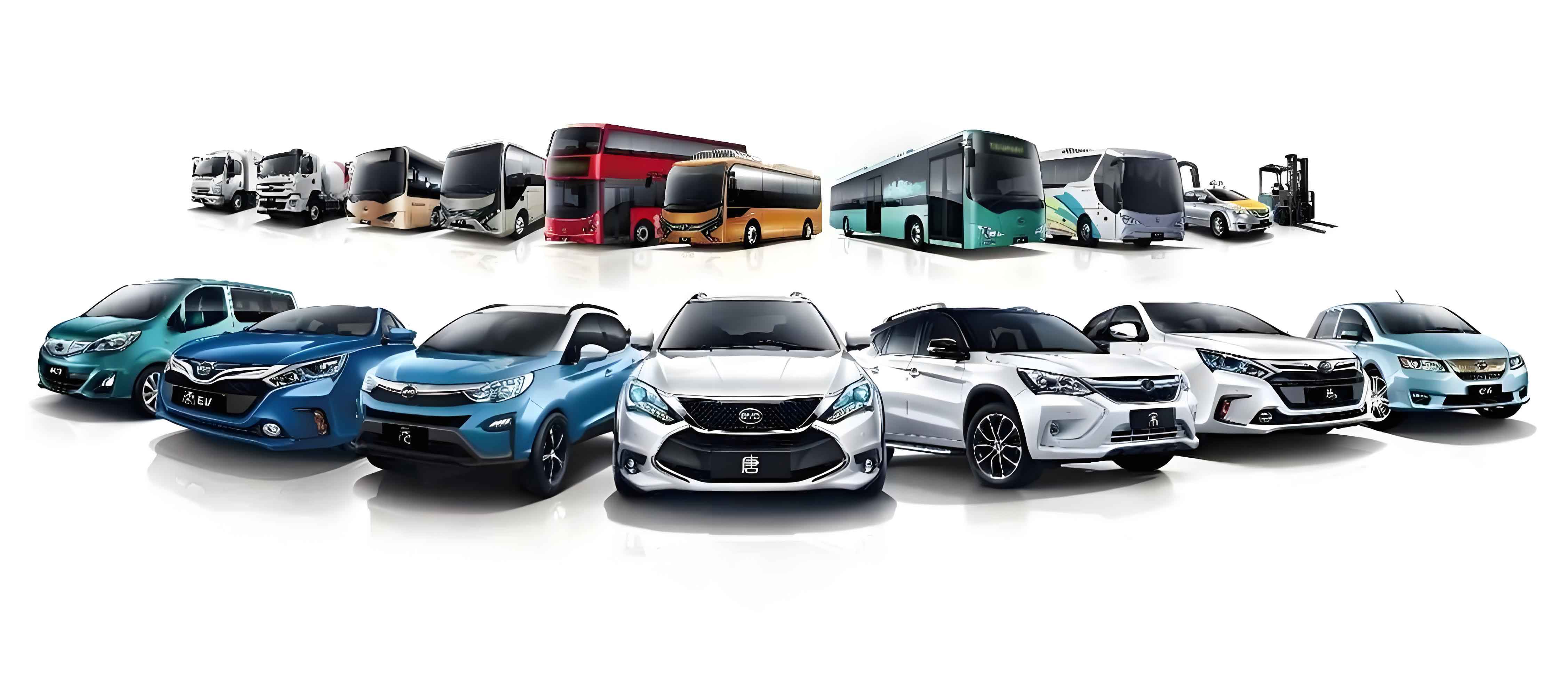
Our technological breakthroughs have set new benchmarks in the electric vehicle component industry. One of our most notable achievements is the development of ultra-thin aluminum alloy subframes, which are critical for chassis systems in electric vehicles. By reducing wall thickness to unprecedented levels, we have enabled significant weight savings. The structural integrity of these components is validated through stress-strain analysis, where the maximum stress \(\sigma_{\text{max}}\) under load must satisfy: $$ \sigma_{\text{max}} \leq \frac{S_y}{N} $$ Here, \(S_y\) is the yield strength of the material, and \(N\) is the safety factor. Our designs often incorporate finite element analysis (FEA) to optimize geometry, ensuring that electric vehicles benefit from enhanced durability and reduced mass. The following table summarizes key properties of our lightweight components compared to traditional steel counterparts, highlighting their advantages in the context of China EV applications:
| Component Type | Material | Weight (kg) | Strength (MPa) | Application in Electric Vehicle |
|---|---|---|---|---|
| Aluminum Subframe | Aluminum Alloy | 12.5 | 280 | Chassis system for improved range |
| Steel Subframe (Traditional) | Steel | 18.0 | 350 | Baseline for comparison |
| Control Arm | Aluminum Alloy | 3.2 | 260 | Suspension for weight reduction |
In our smart factories, we have integrated advanced manufacturing systems to produce high-quality components for electric vehicles. The adoption of Industry 4.0 technologies, such as digital twins and automated production lines, allows us to achieve precision and efficiency at scale. For example, our production throughput can be modeled using the formula: $$ P = \frac{N \cdot U}{T} $$ where \(P\) is the production rate, \(N\) is the number of units per cycle, \(U\) is the utilization rate, and \(T\) is the cycle time. This approach has enabled us to ramp up output for the booming China EV market, with annual production capacities exceeding millions of units. The table below outlines the efficiency metrics of our manufacturing processes, demonstrating how we support the electric vehicle ecosystem through scalable operations:
| Year | Production Volume (Units) | Efficiency Gain (%) | Energy Consumption (kWh/Unit) | Focus Area for Electric Vehicle |
|---|---|---|---|---|
| 2020 | 500,000 | 10 | 15.2 | Initial lightweight component rollout |
| 2023 | 1,200,000 | 25 | 12.8 | Expansion for China EV demand |
| 2025 (Projected) | 2,000,000 | 40 | 10.5 | Sustainability in electric vehicle parts |
Research and development form the backbone of our contributions to the electric vehicle industry. We have established a comprehensive R&D framework that emphasizes innovation in materials science and process engineering. Our portfolio includes numerous patents and intellectual properties, many of which address critical challenges in electric vehicle design, such as thermal management and vibration damping. The effectiveness of our R&D investments can be quantified through the innovation index: $$ I = \frac{P_a \cdot I_p}{C_r} $$ where \(I\) is the innovation index, \(P_a\) is the number of patents awarded, \(I_p\) is the impact factor of patents, and \(C_r\) is the R&D cost. This has allowed us to pioneer solutions like hollow casting techniques, which reduce weight while maintaining structural integrity—a key advantage for electric vehicles striving for longer ranges. The following table provides an overview of our R&D achievements, underscoring our role in advancing the China EV sector:
| R&D Category | Number of Patents | Key Innovation | Application in Electric Vehicle | Impact on China EV Market |
|---|---|---|---|---|
| Lightweight Materials | 45 | 3.5mm aluminum subframe | Chassis lightweighting | Enhanced efficiency and range |
| Manufacturing Processes | 30 | Automated casting lines | High-volume production | Cost reduction for mass adoption |
| Quality Assurance | 12 | Non-destructive testing methods | Durability validation | Improved reliability standards |
Collaboration with leading electric vehicle manufacturers has been instrumental in our growth. By working closely with partners in the China EV ecosystem, we have co-developed customized solutions that address specific performance requirements. For instance, the integration of our components into electric vehicle platforms often involves iterative testing, where performance metrics like fatigue life are evaluated using the formula: $$ N_f = C \cdot S^{-m} $$ Here, \(N_f\) is the number of cycles to failure, \(S\) is the stress amplitude, and \(C\) and \(m\) are material constants. This ensures that our products withstand real-world conditions, contributing to the reliability of electric vehicles on the road. Our efforts have been recognized through various awards, which reflect our commitment to excellence in the electric vehicle domain. The table below highlights some of our key collaborations and accolades, emphasizing our impact on the China EV landscape:
| Collaboration/Award | Year | Description | Relevance to Electric Vehicle | Contribution to China EV Growth |
|---|---|---|---|---|
| Strategic Partnership A | 2021 | Joint development of lightweight chassis | Enabled longer-range electric vehicles | Accelerated adoption of EVs in China |
| Innovation Award B | 2023 | Recognition for advanced manufacturing | Improved production efficiency for EV parts | Strengthened supply chain for China EV |
| Sustainability Honor C | 2024 | Award for eco-friendly processes | Reduced carbon footprint in EV production | Supported green initiatives in China EV |
Looking ahead, we are committed to pushing the boundaries of what is possible in the electric vehicle industry. The ongoing evolution of China EV standards and consumer expectations drives us to innovate continuously. We are exploring next-generation materials, such as composite alloys, which could further reduce weight and enhance performance. The potential benefits can be estimated using the specific strength ratio: $$ \text{Specific Strength} = \frac{\sigma}{\rho} $$ where \(\sigma\) is the tensile strength and \(\rho\) is the density. Higher values indicate better performance per unit mass, a critical factor for electric vehicles aiming to maximize efficiency. Additionally, we are investing in digitalization and AI-driven design tools to accelerate development cycles, ensuring that we remain a trusted partner for electric vehicle manufacturers worldwide.
In conclusion, our journey in the electric vehicle sector is a testament to the power of innovation and collaboration. As the China EV market continues to expand, we are dedicated to providing solutions that not only meet but exceed industry standards. Through rigorous R&D, smart manufacturing, and strategic partnerships, we are helping to build a sustainable future for electric mobility. The formulas and tables presented here illustrate the technical depth of our work, and we invite stakeholders to join us in driving the electric vehicle revolution forward. Together, we can unlock new potentials and create a world where electric vehicles are the norm, powered by advancements that started right here in the heart of the China EV movement.