
In the development of pure electric vehicles, the noise, vibration, and harshness (NVH) performance of the electric drive unit is critical to overall vehicle comfort. As the core component replacing traditional internal combustion engines, the electric drive unit’s electromagnetic whine noise becomes particularly prominent due to the absence of engine masking noise. This article details an experimental analysis and control method for motor whine noise encountered in a rear-wheel-drive pure electric coupe during high-energy recovery coasting around 45 km/h. Through systematic testing and theoretical investigation, we identified the root cause as electromagnetic 8th-order noise originating from stator concentricity deviation. By implementing precision manufacturing controls, we successfully mitigated the noise, offering valuable insights for NVH optimization in electric drive units.
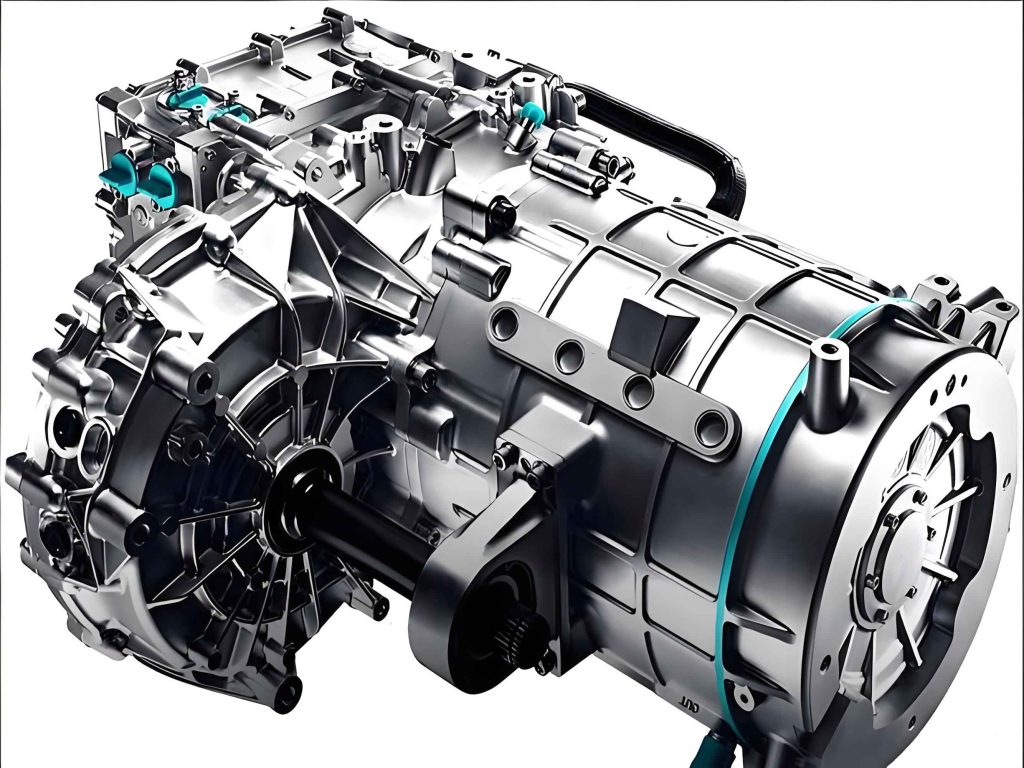
The electric drive unit integrates the motor, inverter, and gearbox, serving as the primary source of propulsion in electric vehicles. Its NVH characteristics directly influence passenger perception of quality and refinement. Electromagnetic whine, often manifesting as high-frequency tonal noise, is a common issue in permanent magnet synchronous motors (PMSMs) used in electric drive units. This noise stems from radial electromagnetic forces acting on the stator core, inducing vibrations that radiate as sound. In this study, we address a specific whine noise problem, exploring its mechanisms and practical solutions through rigorous experimentation.
Initial subjective evaluation of the vehicle indicated a pronounced whine noise during high regeneration coasting at approximately 45 km/h, significantly degrading the cabin sound quality. To objectively quantify the issue, we conducted NVH tests with microphones placed in the rear passenger area, synchronized with controller area network (CAN) signals to capture motor speed and torque data. Comparative tests were performed using two electric drive units: a problematic unit (Unit A) and a compliant unit (Unit B). The waterfall plot for Unit A revealed a distinct 8th-order noise signature in the motor speed range of 4,800 to 4,000 rpm, corresponding to the vehicle speed of 45 km/h. Order slicing analysis showed that the 8th-order sound pressure level peak exceeded surrounding levels by 10–15 dB(A), correlating with the subjective annoyance.
| Electric Drive Unit | Motor Speed Range (rpm) | Vehicle Speed (km/h) | Peak 8th-Order SPL (dB(A)) | Subjective Rating |
|---|---|---|---|---|
| Unit A (Problematic) | 4,800–4,000 | ~45 | 52 | Poor (5.5) |
| Unit B (Compliant) | 4,800–4,000 | ~45 | 40 | Acceptable |
| Unit C (Optimized) | 4,800–4,000 | ~45 | 37 | Good |
The electromagnetic noise in PMSMs is primarily driven by radial force waves in the air gap, derived from Maxwell’s stress tensor theory. The radial electromagnetic force density acting on the stator inner surface can be approximated as:
$$ p_n = \frac{1}{2\mu_0} \left[ \frac{B_0^2}{2} \cos(2p\theta – 2\omega_0 t – 2\phi_0) + \sum_{\nu,\mu} B_\nu B_\mu \cos\left((\mu \pm \nu)\theta – \left(\frac{\mu}{p} \pm 1\right)\omega_0 t – \phi_1\right) \right] $$
where \( p_n \) is the force density in N/m², \( \mu_0 \) is the permeability of free space (\(4\pi \times 10^{-7} \, \text{H/m}\)), \( B \) is the air-gap magnetic flux density in Tesla, \( p \) is the number of pole pairs, \( \omega_0 \) is the electrical angular frequency, \( \phi \) is the initial phase, and \( \nu \) and \( \mu \) are the spatial harmonic orders for stator and rotor fields, respectively. For integer-slot PMSMs (e.g., 8-pole, 48-slot design in this electric drive unit), the dominant whine noise often arises from interactions between stator and rotor harmonic fields. The force wave order \( r \) is given by:
$$ r = \nu \pm \mu = 2p(3k + n + 1) \quad \text{or} \quad 2p(3k – n) $$
with \( k \) and \( n \) as integers. The 8th-order noise (\( r = 8 \)) can originate from the fundamental field (2p-order) or harmonic interactions, necessitating detailed component analysis.
To isolate the contribution of individual components within the electric drive unit, we performed interchange tests between the stator and rotor assemblies of Unit A and Unit B. The results, summarized in Table 2, indicate that the stator assembly contributed approximately 11 dB(A) to the whine noise peak, while the rotor contributed about 5 dB(A). This clearly implicated the stator as the primary source of the issue.
| Configuration | Stator Source | Rotor Source | Peak 8th-Order SPL (dB(A)) | Change Relative to Unit B |
|---|---|---|---|---|
| Unit A (Baseline) | Problematic | Problematic | 52 | +12 dB(A) |
| Unit B (Baseline) | Compliant | Compliant | 40 | 0 dB(A) |
| Interchange 1 | Problematic | Compliant | 47 | +7 dB(A) |
| Interchange 2 | Compliant | Problematic | 46 | +6 dB(A) |
Subsequent dimensional inspection using a coordinate measuring machine (CMM) focused on the stator assembly’s concentricity and coaxiality. The stator core inner circle was divided into 12 axial layers, and the center coordinates of each layer were measured relative to the bearing bore datum. For the compliant stator, the centers were distributed across all quadrants, indicating uniform eccentricity that cancels out electromagnetic forces. In contrast, the problematic stator showed centers clustered in one quadrant, leading to biased air-gap eccentricity and amplified radial forces. The concentricity deviation was quantified as the maximum radial offset of layer centers from the datum, with the problematic unit exhibiting values beyond tolerance limits.
| Parameter | Compliant Stator (Unit B) | Problematic Stator (Unit A) | Tolerance Limit |
|---|---|---|---|
| Inner Circle Concentricity (mm) | 0.02 | 0.05 | ≤0.03 |
| Coaxiality with Bearing Bore (mm) | 0.01 | 0.04 | ≤0.02 |
| Cylindricity (mm) | 0.015 | 0.025 | ≤0.02 |
| Verticality (mm) | 0.01 | 0.03 | ≤0.02 |
The underlying mechanism relates to air-gap magnetic flux density non-uniformity caused by stator concentricity deviation. The effective air-gap length \( g(\theta) \) varies circumferentially, modulating the magnetic flux density \( B(\theta) \). According to Maxwell’s stress, the radial force density is proportional to the square of \( B \):
$$ p_r(\theta,t) \propto B^2(\theta,t) = \left( B_0 + \sum_h B_h \cos(h\theta – \omega_h t) \right)^2 $$
where \( h \) denotes harmonic orders. Eccentricity introduces additional low-order harmonics (e.g., 1st-order), which interact with fundamental and slot harmonics to amplify specific force waves, particularly the 8th-order in this electric drive unit. The force wave amplitude \( F_r \) can be modeled as:
$$ F_r = K_r \cdot \Delta e \cdot B_0^2 $$
where \( K_r \) is a constant dependent on motor geometry, \( \Delta e \) is the eccentricity magnitude, and \( B_0 \) is the fundamental flux density. This explains the excessive electromagnetic excitation in the problematic stator.
To control the whine noise, we implemented stringent manufacturing process controls for the stator assembly in the electric drive unit. Key measures included tightening tolerances for stator lamination stacking, improving alignment during press-fitting into the housing, and optimizing the thermal expansion assembly process to minimize distortion. The housing inner diameter cylindricity and coaxiality were also enhanced to ensure uniform interference fit. After process optimization, a new electric drive unit (Unit C) was tested, showing a reduction of approximately 15 dB(A) in the 8th-order whine noise peak at the problematic condition, with subjective evaluation confirming elimination of the annoyance.
The improvement is further analyzed by considering the vibration transmission path. The stator vibration acceleration \( a \) due to radial forces is given by:
$$ a(\omega) = \frac{F_r(\omega)}{Z_m(\omega)} $$
where \( Z_m(\omega) \) is the mechanical impedance of the stator-housing system. By reducing \( F_r \) through better concentricity, the vibration and subsequent noise radiation are diminished. Table 4 compares key NVH metrics before and after optimization for the electric drive unit.
| Metric | Unit A (Problematic) | Unit C (Optimized) | Improvement |
|---|---|---|---|
| 8th-Order Noise Peak at 45 km/h (dB(A)) | 52 | 37 | 15 dB(A) |
| Overall Cabin Noise at Coasting (dB(A)) | 58 | 42 | 16 dB(A) |
| Stator Vibration Acceleration (m/s²) | 12.5 | 4.2 | 66% reduction |
| Subjective Rating (1-10 scale) | 5.5 | 8.5 | 3-point gain |
In conclusion, this study demonstrates a systematic approach to diagnosing and controlling motor whine noise in electric drive units. The whine noise was traced to electromagnetic 8th-order forces exacerbated by stator concentricity deviation in the electric drive unit. Through interchange testing and dimensional analysis, we pinpointed the stator as the critical contributor, leading to targeted process controls that effectively mitigated the noise by 15 dB(A). This experience underscores the importance of precision manufacturing in electric drive unit NVH performance, offering a replicable methodology for similar issues in electric vehicle powertrains. Future work could explore advanced modeling techniques, such as finite element analysis, to predict whine noise during the design phase of electric drive units, further reducing development time and cost.
The successful noise reduction in this electric drive unit highlights the interplay between electromagnetic design and mechanical tolerances. For instance, the air-gap eccentricity not only increases radial forces but can also induce unbalanced magnetic pull, affecting bearing life. Therefore, maintaining concentricity within specified limits is crucial for overall reliability. Additionally, the test methodology employed here—combining objective measurements with subjective evaluations—provides a comprehensive framework for NVH validation of electric drive units across different operating conditions, such as acceleration, regeneration, and steady-state cruising.
Moreover, the role of the electric drive unit in vehicle-level NVH cannot be overstated. As electric vehicles evolve, integrating multiple electric drive units (e.g., in all-wheel-drive configurations) may introduce complex noise interactions, necessitating even tighter controls. The lessons from this case study, particularly on stator concentricity, can be extended to other components like rotors and gears within the electric drive unit, fostering a holistic approach to quiet electric powertrains. Ultimately, achieving superior sound quality in electric vehicles hinges on continuous refinement of the electric drive unit, making it a focal point for innovation in automotive NVH engineering.