
As a professional in the automotive industry, I have witnessed the widespread adoption of electronically controlled engine technology, which has significantly enhanced vehicle performance, fuel economy, and emission standards. However, this advancement has also increased the complexity of engine systems, making traditional experience-based diagnostic methods inadequate for handling the multi-parameter, strongly coupled fault characteristics of modern control systems. Precise and efficient fault diagnosis has become crucial for ensuring vehicle reliability and safety. Despite continuous updates in diagnostic equipment and techniques, practical applications still face challenges such as inaccurate fault localization, low diagnostic efficiency, and difficulties in troubleshooting complex faults. Therefore, optimizing the application of fault diagnosis technology for automotive motor control units is essential to improve diagnostic accuracy and efficiency.
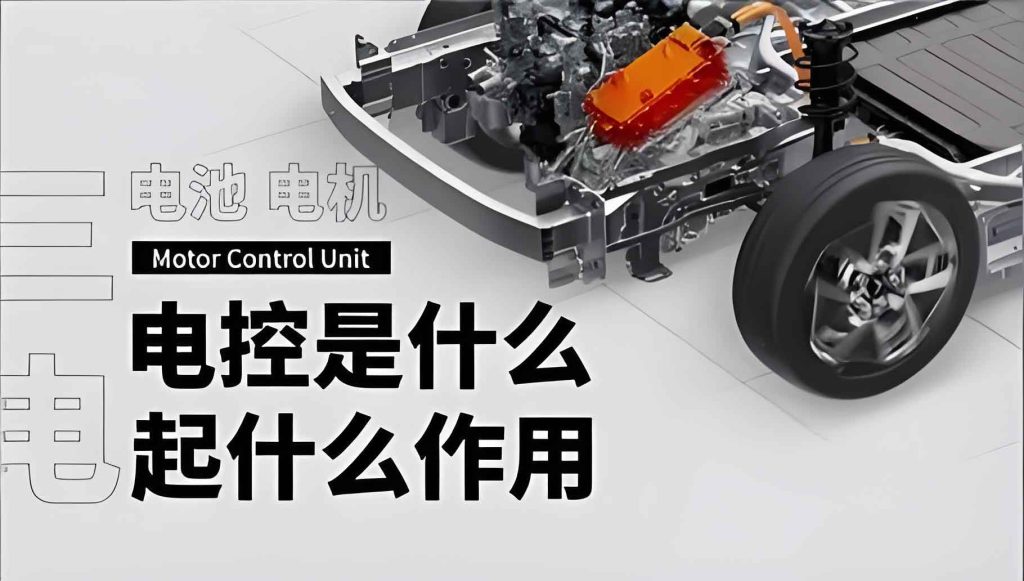
In my experience, the motor control unit serves as the brain of the engine, managing critical parameters like fuel injection timing, ignition advance angle, and air intake. Any malfunction in sensors or actuators can degrade engine performance or lead to safety hazards. Thus, fault diagnosis technology is not just a repair tool but a vital component of vehicle safety throughout its lifecycle. This article explores the value, challenges, and optimization strategies for fault diagnosis in automotive motor control units, emphasizing data-driven approaches and intelligent techniques.
Application Value of Fault Diagnosis Technology for Automotive Motor Control Units
The motor control unit is integral to modern engines, and its fault diagnosis technology offers immense value in ensuring vehicle safety, reducing costs, and supporting technological evolution. Below, I outline key aspects with supporting data and formulas.
Key Support for Ensuring Vehicle Power Performance and Driving Safety
Fault diagnosis technology for the motor control unit is fundamental to maintaining engine health. The motor control unit relies on precise control of parameters such as fuel injection volume and ignition timing. A single sensor failure, like an oxygen sensor or crankshaft position sensor, can cause performance drops or even power loss. Real-time monitoring through diagnosis allows early detection of anomalies. For instance, analyzing oxygen sensor voltage waveforms can identify deviations in air-fuel mixture concentration, enabling corrective actions before faults worsen. In high-speed or complex driving conditions, sudden engine failures can lead to accidents; thus, the motor control unit’s diagnostic capabilities trigger warning signals and activate fail-safe modes to limit engine output, preventing hazards.
To quantify this, consider the relationship between sensor signals and engine performance. Let \( S(t) \) represent a sensor signal at time \( t \), and \( S_{nominal} \) be its nominal value. The deviation \( \Delta S \) is given by:
$$ \Delta S = S(t) – S_{nominal} $$
If \( |\Delta S| \) exceeds a threshold \( \tau \), the motor control unit may flag a fault. For example, for an oxygen sensor, normal voltage ranges from 0.1V to 0.9V. A persistent deviation outside this range indicates mixture issues, which the motor control unit can correct by adjusting fuel injection. The diagnostic response time \( T_d \) is critical for safety, and it can be modeled as:
$$ T_d = f(\Delta S, \text{system latency}) $$
where lower \( T_d \) values enhance safety. The following table summarizes key sensors monitored by the motor control unit and their impact on safety:
| Sensor | Normal Range | Fault Impact | Diagnostic Action by Motor Control Unit |
|---|---|---|---|
| Oxygen Sensor | 0.1–0.9 V | Poor emission, engine knock | Adjust fuel mixture |
| Crankshaft Position Sensor | Frequency-based signal | Engine stall, misfire | Trigger fault code |
| Throttle Position Sensor | 0–5 V | Acceleration issues | Limit power output |
| Coolant Temperature Sensor | -40°C to 130°C | Overheating, performance loss | Activate cooling system |
As shown, the motor control unit’s diagnostic functions are indispensable for proactive safety measures, reducing risks on the road.
Effective Means to Reduce Maintenance Costs and Improve Service Efficiency
Efficient fault diagnosis technology centered on the motor control unit drastically cuts downtime and costs. Traditional trial-and-error repairs often involve replacing multiple parts, wasting resources and time. Modern diagnosis uses tools to read fault codes and analyze data streams, quickly pinpointing issues. For example, when an engine experiences idle vibration, the motor control unit can analyze data like injection pulse width and ignition timing per cylinder to identify a clogged injector or faulty coil. This precision minimizes unnecessary part replacements and labor hours.
The cost savings can be expressed mathematically. Let \( C_t \) be the total repair cost, \( C_p \) the cost of parts, \( C_l \) labor cost, and \( T \) repair time. Without diagnosis, costs may escalate due to multiple trials. With diagnosis, optimized costs are:
$$ C_t = \sum_{i=1}^{n} (C_{p,i} + C_{l,i}) \cdot \delta_i $$
where \( \delta_i \) is a binary indicator (1 if part i is replaced, 0 otherwise), and n is the number of parts. Diagnosis reduces n by accurately targeting faults, thus lowering \( C_t \). Additionally, diagnostic efficiency \( E_d \) can be defined as:
$$ E_d = \frac{1}{T} \cdot \log\left(\frac{1}{\text{error rate}}\right) $$
Higher \( E_d \) values indicate better performance. The table below compares traditional vs. diagnosis-enhanced repairs:
| Aspect | Traditional Repair | Diagnosis with Motor Control Unit |
|---|---|---|
| Average Repair Time | 4–6 hours | 1–2 hours |
| Part Replacement Rate | High (3–5 parts) | Low (1–2 parts) |
| Customer Satisfaction | Moderate | High |
| Cost per Repair | $300–$500 | $100–$200 |
By leveraging the motor control unit’s data, repair shops enhance their competitiveness and customer trust, which is vital in a growing automotive market.
Technical Foundation for Adapting to Smart and Connected Vehicle Development
As vehicles evolve toward electrification and connectivity, fault diagnosis technology for the motor control unit becomes a cornerstone for innovation. Even in new energy vehicles, the motor control unit’s complexity surpasses traditional engines, requiring advanced diagnosis. Hybrid vehicles, for instance, need to balance engine and motor power, involving data from multiple sources. Smart connected vehicles use onboard sensors and communication modules to enable remote diagnosis and predictive maintenance via cloud platforms.
The motor control unit transmits real-time data to the cloud, where big data analytics and AI algorithms predict faults. This shift from reactive to proactive maintenance is transformative. Let \( D(t) \) denote data from the motor control unit at time t, and \( F(t) \) be the fault probability estimated by an AI model:
$$ F(t) = \sigma\left( \sum_{i} w_i \cdot D_i(t) + b \right) $$
where \( \sigma \) is a sigmoid function, \( w_i \) are weights, and \( b \) is bias. This model allows early warnings, reducing breakdowns. The integration of the motor control unit with IoT devices enables continuous monitoring, as summarized in this formula for cloud-based diagnosis efficiency \( E_c \):
$$ E_c = \frac{\text{Number of predicted faults}}{\text{Total faults}} \times 100\% $$
High \( E_c \) values indicate effective remote diagnosis. The following table highlights how the motor control unit supports smart vehicle features:
| Vehicle Type | Motor Control Unit Role | Diagnostic Advancements |
|---|---|---|
| Hybrid Vehicles | Coordinates engine and motor control | Multi-source data fusion |
| Electric Vehicles | Manages battery and motor systems | Real-time energy monitoring |
| Connected Cars | Enables V2X communication | Remote fault analysis |
Thus, advancements in motor control unit diagnosis pave the way for future automotive services, supporting industry growth.
Problems in Applying Fault Diagnosis Technology for Automotive Motor Control Units
Despite its value, fault diagnosis for motor control units faces several challenges that hinder efficiency. Based on my observations, these issues stem from technical limitations and human factors.
Insufficient Accuracy in Fault Code Interpretation Leading to High Misdiagnosis Rates
Overreliance on fault codes is a common pitfall in diagnosing motor control unit issues. Technicians often replace parts immediately after reading a code, without understanding that codes are merely alerts from the motor control unit based on predefined logic, not definitive causes. For example, an oxygen sensor fault code might indicate sensor aging, exhaust leaks, or voltage instability. Misinterpretation wastes parts and time. Intermittent faults may not trigger codes at all, complicating repairs. Moreover, fault code definitions vary across vehicle models, requiring specialized knowledge.
The misdiagnosis rate \( R_m \) can be expressed as:
$$ R_m = \frac{\text{Number of incorrect repairs}}{\text{Total repairs}} $$
High \( R_m \) values often correlate with poor training. The root cause is a lack of deep understanding of the motor control unit’s workings. To illustrate, consider a scenario where a fault code indicates “engine misfire.” The motor control unit may flag this due to various reasons, as shown in the table below:
| Fault Code | Possible Causes | Common Misdiagnosis |
|---|---|---|
| P0300 (Random Misfire) | Spark plug failure, fuel injector issue, sensor error | Replacing all spark plugs unnecessarily |
| P0171 (System Too Lean) | Air leak, fuel pressure low, MAF sensor fault | Replacing oxygen sensor only |
| P0325 (Knock Sensor Fault) | Sensor damage, wiring issue, engine knock | Ignoring underlying engine problems |
Improving accuracy requires moving beyond codes to holistic analysis, which the motor control unit facilitates through data streams.
Weak Sensor Data Analysis Capabilities Affecting Diagnostic Efficiency
The core of motor control unit diagnosis lies in analyzing sensor data streams, but many technicians lack the skills to interpret complex data. Modern engines have dozens of sensors providing parameters like intake pressure and coolant temperature. Technicians often just check if values are within ranges, missing trends and correlations. For instance, during acceleration issues, low airflow readings might seem like a sensor fault, but combined with throttle position and oxygen sensor data, it could reveal an intake leak. This multi-parameter analysis demands expertise in control principles.
Let \( \mathbf{D} = [D_1, D_2, \dots, D_n] \) be a vector of sensor data from the motor control unit. Normal operation corresponds to a region \( R \) in n-dimensional space. A fault occurs when \( \mathbf{D} \notin R \). However, subtle faults may involve deviations in relationships, such as between air intake \( A \) and fuel injection \( F \). A healthy system maintains:
$$ A \propto F $$
with a constant ratio \( k \). Faults disrupt this, leading to:
$$ \Delta = |A – kF| > \epsilon $$
where \( \epsilon \) is a tolerance. Technicians unaware of such models struggle with efficiency. The diagnostic time \( T_{diag} \) increases with data complexity:
$$ T_{diag} = \alpha \cdot \text{data dimensions} + \beta $$
where \( \alpha \) and \( \beta \) are coefficients related to skill level. Training gaps exacerbate this, as shown in the table below:
| Skill Level | Average Diagnosis Time (hours) | Error Rate in Data Interpretation |
|---|---|---|
| Beginner | 3.5 | 25% |
| Intermediate | 2.0 | 15% |
| Expert | 1.0 | 5% |
Enhancing data analysis skills is crucial for leveraging the motor control unit’s full potential.
Limited Diagnostic Equipment Functionality Hindering Complex Fault Handling
Many diagnostic tools for motor control units lack advanced features needed for complex faults. While standard scanners read codes and data, they often miss waveform analysis, active testing, and calibration functions. For example, issues like crankshaft sensor signal distortion require oscilloscopes to capture voltage waveforms, but many shops lack such equipment. Similarly, active tests for injectors or throttles are model-specific and not universally supported. This fragmentation forces technicians to switch between devices, disrupting workflow.
The capability of diagnostic equipment can be quantified by a functionality score \( F_s \), defined as:
$$ F_s = \sum_{i=1}^{m} w_i \cdot f_i $$
where \( f_i \) are features (e.g., code reading, waveform analysis), and \( w_i \) are weights indicating importance. Low \( F_s \) values limit fault resolution. For complex faults involving the motor control unit, such as intermittent electrical issues, advanced tools are essential. The table below compares equipment types:
| Equipment Type | Key Features | Limitations in Motor Control Unit Diagnosis |
|---|---|---|
| Basic Scanner | Fault code reading, basic data stream | No waveform analysis, poor for sensor signals |
| Advanced Diagnostic Tool | Data logging, active tests | Costly, may lack model-specific functions |
| Oscilloscope | Waveform capture, signal analysis | Not integrated with code reading |
| Multi-function Platform | All-in-one features | Rare, requires high investment |
Investing in integrated tools that enhance the motor control unit’s diagnostic reach is necessary for tackling modern engine faults.
Optimization Strategies for Applying Fault Diagnosis Technology to Automotive Motor Control Units
To address these challenges, I propose strategies that leverage data-driven and intelligent approaches, focusing on the motor control unit as the central component.
Building a Comprehensive Diagnostic Analysis System Based on Data Streams
Moving beyond fault codes, a data-stream-centric system for the motor control unit can improve accuracy. This involves understanding standard parameter values across operating conditions and using logical correlations to pinpoint faults. For instance, at idle, normal oxygen sensor voltage is 0.1–0.9V, and short-term fuel trim should be within ±5%. Deviations indicate mixture problems, which can be traced via injection pulse width data. If the motor control unit increases pulse width but issues persist, fuel supply faults are likely.
Mathematically, let \( \mathbf{X} = [x_1, x_2, \dots, x_p] \) be a set of parameters from the motor control unit data stream. A fault is detected if a function \( g(\mathbf{X}) \) exceeds a threshold:
$$ g(\mathbf{X}) = \sqrt{\sum_{i=1}^{p} \left( \frac{x_i – \mu_i}{\sigma_i} \right)^2 } > \theta $$
where \( \mu_i \) and \( \sigma_i \) are mean and standard deviation for parameter i, and \( \theta \) is a threshold. This Mahalanobis distance approach helps identify anomalies. Repair shops should build databases of normal ranges for various models, as shown in this simplified table for a typical motor control unit:
| Parameter | Idle Range | Acceleration Range | Fault Indicator |
|---|---|---|---|
| Oxygen Sensor Voltage | 0.1–0.9 V | 0.2–0.8 V | Stuck high/low |
| Fuel Injection Pulse Width | 2.0–4.0 ms | 5.0–10.0 ms | Out of range |
| Intake Air Temperature | 10–50°C | 20–80°C | Abrupt changes |
| Engine RPM | 600–800 rpm | 1500–3000 rpm | Fluctuations |
By training technicians on these patterns, the motor control unit’s data becomes a powerful diagnostic tool, reducing guesswork.
Establishing a Typical Fault Pattern Library and Diagnostic Decision Model
Creating a fault pattern library for motor control unit issues can streamline diagnoses. This library should include cases with symptoms, fault codes, data anomalies, and solutions, forming a knowledge base. When technicians input data, the system matches patterns and suggests actions. For example, a pattern for “rough idle” might link to oxygen sensor faults or injector clogs, guiding repairs. Additionally, AI-based decision models, like decision trees, can automate reasoning.
Let \( P \) represent a fault pattern, with attributes \( A_1, A_2, \dots, A_k \). The similarity between a new case \( C \) and pattern \( P \) is computed as:
$$ \text{Similarity}(C, P) = \frac{\sum_{j=1}^{k} w_j \cdot \text{match}(A_j^C, A_j^P)}{\sum_{j=1}^{k} w_j} $$
where \( \text{match} \) is a function scoring attribute alignment, and \( w_j \) are weights. High similarity suggests likely causes. Decision models can be built using algorithms like ID3, with rules derived from motor control unit data. For instance, a decision tree for engine misfire might start with checking ignition data from the motor control unit. The table below outlines a sample fault pattern:
| Fault Pattern ID | Symptoms | Motor Control Unit Data Clues | Recommended Action |
|---|---|---|---|
| FP001 | Engine stalling at idle | Low RPM, erratic oxygen sensor voltage | Clean throttle body, check sensors |
| FP002 | Poor acceleration | High fuel trim, low airflow readings | Inspect for intake leaks |
| FP003 | Excessive fuel consumption | Rich mixture signals, faulty injector pulses | Test fuel injectors |
Regular updates to this library ensure it evolves with new motor control unit technologies, aiding long-term efficiency.
Applying Intelligent Diagnostic Technology Fusing Multi-Source Information
For complex faults, integrating multi-source information with the motor control unit data enhances precision. This fusion combines scanner data, waveforms, thermal imaging, and vibration signals, using algorithms for cross-validation. For instance, injector issues can be diagnosed by comparing current waveforms from oscilloscopes with temperature profiles from thermal cameras. AI models trained on historical data can detect early signs like bearing wear from vibration spectra.
Let \( \mathbf{M} = [M_1, M_2, \dots, M_q] \) be multi-source data, including motor control unit streams. A fusion function \( h(\mathbf{M}) \) outputs a fault probability:
$$ h(\mathbf{M}) = \text{NN}(\mathbf{M}) $$
where NN is a neural network. This approach improves detection rates. For example, to diagnose a misfire, we might use:
$$ \text{Fault Score} = \alpha \cdot \text{data deviation} + \beta \cdot \text{waveform anomaly} + \gamma \cdot \text{thermal mismatch} $$
with coefficients \( \alpha, \beta, \gamma \) tuned via machine learning. Shops should invest in integrated platforms that combine these tools. The benefits are summarized in the table below:
| Information Source | Role in Diagnosis | Integration with Motor Control Unit |
|---|---|---|
| Diagnostic Scanner | Provides fault codes and data streams | Core data source for analysis |
| Oscilloscope | Captures electrical waveforms | Validates sensor signals from motor control unit |
| Thermal Imager | Detects heat anomalies | Correlates with engine performance data |
| Vibration Sensor | Monitors mechanical vibrations | Supplements motor control unit for early warnings |
By adopting such technologies, the motor control unit’s diagnostic capabilities expand, enabling predictive maintenance and higher accuracy.
Conclusion
In summary, fault diagnosis technology for automotive motor control units is pivotal for vehicle safety and service quality. Through building data-stream systems, establishing fault libraries, and applying intelligent fusion techniques, we can overcome current limitations. The motor control unit remains at the heart of these advancements, requiring continuous investment in training and equipment. As vehicles become smarter, these strategies will drive the automotive aftermarket toward higher efficiency and reliability, fostering industry progress through innovation.