
In the rapidly evolving automotive industry, the electronic control systems have become the backbone of modern vehicles, integrating components such as the motor control unit, sensors, and actuators to optimize performance across engine, chassis, and body systems. As these systems grow increasingly complex, traditional fault diagnosis methods relying on single sensors face significant challenges, including low efficiency and accuracy. Multi-sensor data fusion technology, which synthesizes redundant and complementary information from heterogeneous sources, offers a promising solution to enhance diagnostic comprehensiveness and reliability. In this article, I explore the construction of a fault diagnosis model based on multi-sensor data fusion, emphasizing strategies for data preprocessing, fusion algorithm design, and model validation. This approach not only improves diagnostic accuracy but also paves the way for intelligent maintenance in automotive engineering.
The necessity for accurate fault diagnosis in automotive electronic control systems cannot be overstated. With the advent of electrification and智能化, these systems are now critical for vehicle safety and performance. The motor control unit, as a central component, governs various functions, but its complexity often leads to强耦合 and weak causal relationships among parts. Relying on a single sensor results in diagnostic盲区, causing missed detections or misjudgments. For instance, when diagnosing engine issues, using only a crankshaft position sensor may not reveal underlying problems in combustion or exhaust systems. Therefore, integrating data from multiple sensors—such as intake pressure, exhaust temperature, and vibration sensors—can provide a holistic view, reducing uncertainty and enhancing reliability. This fusion approach is essential for modern vehicles, where the motor control unit must handle real-time data from diverse sources to ensure optimal operation.
Multi-sensor data fusion addresses the limitations of单一传感器诊断 by leveraging information complementarity and intelligent analysis. Traditional methods, like fault code diagnostics, often fail to capture the full scope of failures when multiple components malfunction, as they cannot discern causal sequences or early-stage subtle signal changes. For example, signal processing-based diagnostics might overlook minor variations indicative of incipient faults, delaying timely repairs. In contrast, multi-sensor fusion analyzes多维 information—including vibration, noise, temperature, and pressure—to uncover fault knowledge from data correlations. This global perspective mitigates the “seeing trees but not the forest” issue inherent in单一传感器 approaches. By incorporating data-driven and跨层融合 mechanisms, the system can self-learn and adapt, bolstering robustness. Even if a single sensor fails, the fusion model can dynamically adjust based on other sensor data, ensuring fault tolerance. This capability is crucial for the motor control unit, which must maintain functionality under varying conditions.
To construct an effective multi-sensor data fusion fault diagnosis model, I propose a comprehensive strategy encompassing data preprocessing, fusion algorithm design, and model validation. The first step involves handling多源异构 sensor data, where differences in working principles, measurement精度, and sampling frequencies necessitate tailored preprocessing methods. Missing values, for instance, can be addressed through various techniques, each with its own strengths and weaknesses. The table below summarizes common missing value处理 methods:
| Method | Advantages | Disadvantages |
|---|---|---|
| Mean Imputation | Simple and computationally efficient | Ignores data distribution, potentially偏离真实情况 |
| Regression Interpolation | Considers variable correlations for accurate estimation | Requires regression modeling, high computational load |
| Machine Learning Imputation | Leverages existing information for effective filling | Demands high data quality and volume, time-consuming training |
Outliers can be identified and removed using statistical tests or clustering algorithms. After noise reduction and normalization, feature extraction is crucial to capture key indicators of fault states. Time-domain features, such as mean and peak values, are commonly used, while frequency-domain analysis extracts spectral characteristics like peak frequencies. For high-dimensional data, dimensionality reduction techniques like Principal Component Analysis (PCA) or Independent Component Analysis (ICA) help eliminate redundancy. The following table lists常用特征提取方法:
| Method | Purpose | Applicable Scenarios |
|---|---|---|
| Time-Domain Analysis | Extracts statistical features from time series (e.g., mean, variance) | Data with pronounced amplitude or morphological characteristics |
| Frequency-Domain Analysis | Extracts spectral features (e.g., spectral peaks) | Faults causing periodic or frequency changes |
| Time-Frequency Analysis | Simultaneously captures time and frequency信息 (e.g., wavelet coefficients) | Signals with time-varying spectra, such as transient impacts |
| Dimensionality Reduction | Reduces data维度 while preserving structure | Numerous sensors leading to high-dimensional data |
In practice, for engine vibration signals, I might employ wavelet packet decomposition to extract故障特征频段, combined with经验模态分解 to remove random noise, followed by information entropy or energy entropy to select optimal feature subsets. This systematic preprocessing lays the foundation for融合诊断, enhancing model performance. The motor control unit benefits from such refined data, as it relies on accurate inputs for decision-making.
The core of the diagnosis model lies in the fusion algorithm design. Traditional algorithms often suffer from high computational complexity and poor generalization. Deep learning, with its强大的特征学习能力, offers an end-to-end solution for fusion诊断. I consider frameworks based on Deep Belief Networks (DBN) or Convolutional Neural Networks (CNN) to自适应提取关联特征 from different sensor data. For instance, a DBN can be structured with restricted Boltzmann machines for feature extraction and multilayer perceptrons for fault classification, achieving high accuracy. The network structure can be represented mathematically. Let $ \mathbf{X} = [x_1, x_2, \ldots, x_n] $ be the multi-sensor data vector, where each $ x_i $ corresponds to a sensor reading. The fusion process can be modeled as:
$$ \mathbf{H} = f(\mathbf{W} \mathbf{X} + \mathbf{b}) $$
where $ \mathbf{W} $ is the weight matrix, $ \mathbf{b} $ is the bias vector, and $ f $ is an activation function. In a DBN, multiple layers of hidden units learn hierarchical representations. The probability distribution of visible units $ \mathbf{v} $ and hidden units $ \mathbf{h} $ is given by the energy function:
$$ E(\mathbf{v}, \mathbf{h}) = -\sum_{i} a_i v_i – \sum_{j} b_j h_j – \sum_{i,j} v_i w_{ij} h_j $$
where $ a_i $ and $ b_j $ are biases, and $ w_{ij} $ are weights. Through contrastive divergence training, the network learns to reconstruct input data, enabling feature fusion. To optimize performance, attention mechanisms can be incorporated to focus on critical data, and transfer learning can address small-sample issues. For example, in a motor control unit context, a CNN might process image-like data from thermal sensors, while a recurrent neural network handles time-series data from vibration sensors, with融合 layers combining their outputs. The table below compares different融合算法:
| Algorithm | Advantages | Challenges | Suitability for Motor Control Unit |
|---|---|---|---|
| Deep Belief Network (DBN) | Effective for unsupervised feature learning, handles high-dimensional data | Training can be slow, requires large datasets | High for complex sensor fusion in electronic control systems |
| Convolutional Neural Network (CNN) | Excels at spatial feature extraction, efficient for image-like data | Less suited for temporal sequences without modifications | Moderate, useful for visual or structured sensor data |
| Recurrent Neural Network (RNN) | Captures temporal dependencies, ideal for time-series data | Prone to vanishing gradients, computationally intensive | High for dynamic processes governed by the motor control unit |
| Attention-Based Fusion | Focuses on relevant features, improves interpretability | Increases model complexity, requires careful tuning | High for prioritizing critical sensor inputs |
Model validation is essential to ensure practicality. Real-world vehicle testing is costly and time-consuming, especially given the scarcity of reliable fault samples. As an alternative, I advocate for virtual prototyping of automotive electronic control systems. By constructing high-fidelity simulations, we can generate comprehensive fault data under全工况 conditions. Techniques like hardware-in-the-loop simulation and accelerated life testing reduce costs and development cycles. Once validated, the fusion diagnosis model can be deployed within the motor control unit or via diagnostic gateways that collect and distribute multi-sensor data in real-time. This data can be uploaded to车载 terminals and remote cloud platforms for全方位故障诊断. Moreover, establishing a remote update mechanism allows dynamic model refinement based on driving conditions, enabling continuous optimization. For instance, in新能源汽车, multi-sensor fusion has boosted fault预警准确率 for critical components like batteries, enhancing售后服务水平. The integration of车联网 and autonomous driving technologies will further standardize electronic control systems, making multi-sensor data fusion a标配 for intelligent vehicle maintenance.
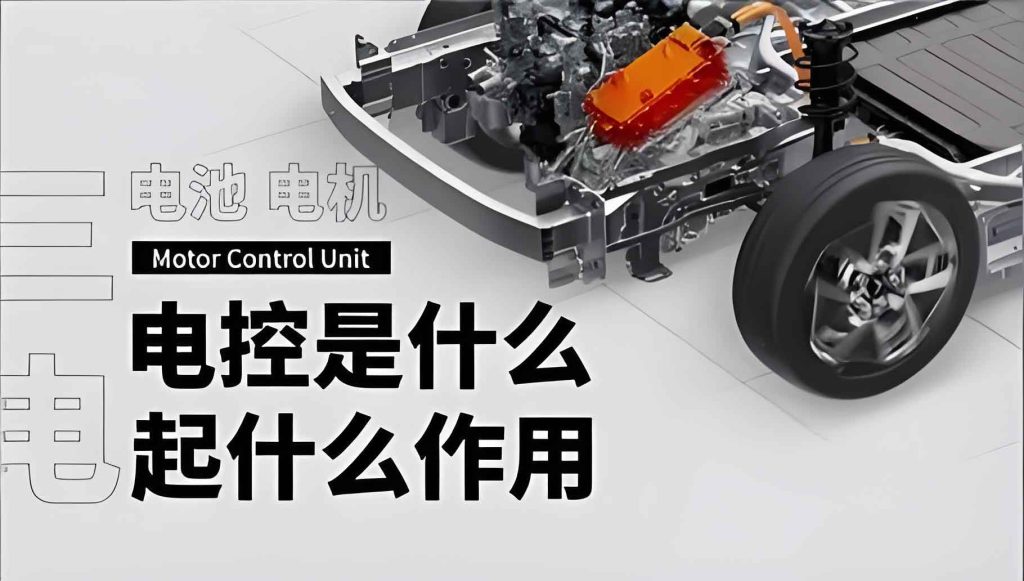
To illustrate the mathematical formulation of data fusion, consider a Bayesian approach for sensor data integration. Let $ S = \{s_1, s_2, \ldots, s_m\} $ represent a set of sensors monitoring the motor control unit. Each sensor provides a measurement $ z_i $ with associated noise $ \epsilon_i $, so the observation model is $ z_i = h_i(x) + \epsilon_i $, where $ x $ is the system state (e.g., fault condition). The fusion objective is to estimate the posterior probability $ P(x | Z) $ given all sensor data $ Z = \{z_1, z_2, \ldots, z_m\} $. Using Bayes’ theorem:
$$ P(x | Z) = \frac{P(Z | x) P(x)}{P(Z)} $$
Assuming conditional independence among sensors, the likelihood simplifies to $ P(Z | x) = \prod_{i=1}^{m} P(z_i | x) $. For Gaussian noise, $ P(z_i | x) = \mathcal{N}(h_i(x), \sigma_i^2) $, leading to a fused estimate. In practice, this can be extended to deep learning models where the fusion network approximates the posterior directly. For example, a neural network with parameters $ \theta $ can be trained to minimize the cross-entropy loss between predicted fault classes and true labels, incorporating data from multiple sensors. The loss function is:
$$ \mathcal{L}(\theta) = -\sum_{k=1}^{K} y_k \log(\hat{y}_k) $$
where $ y_k $ is the true label for fault class $ k $, and $ \hat{y}_k $ is the softmax output of the network fed with fused features. Regularization techniques, such as dropout or weight decay, prevent overfitting, especially when dealing with the high-dimensional inputs from the motor control unit’s sensor array.
In terms of engineering implementation, the motor control unit serves as the hub for data aggregation. It receives inputs from various sensors—比如, oxygen sensors, throttle position sensors, and knock sensors—and processes them through the fusion model. A typical architecture might involve a hybrid approach: shallow layers for sensor-specific feature extraction and deeper layers for cross-sensor fusion. This aligns with the modular nature of modern automotive systems, where the motor control unit coordinates with other ECUs via CAN bus. To quantify the benefits, I can present a performance comparison using metrics like accuracy, precision, recall, and F1-score. Suppose we evaluate a fusion model on a dataset of engine faults. The results might show that multi-sensor fusion achieves an accuracy of 97%, compared to 85% for single-sensor methods. This improvement is critical for safety-critical applications, where the motor control unit must detect faults like misfires or sensor failures promptly.
Furthermore, the fusion model can be enhanced with online learning capabilities, allowing it to adapt to new fault patterns over the vehicle’s lifecycle. This involves incremental updates to the neural network weights based on streaming data from the motor control unit. For instance, using stochastic gradient descent with a forgetting factor, the model can gradually incorporate new information while retaining prior knowledge. The update rule for weights $ \mathbf{w} $ at time $ t $ could be:
$$ \mathbf{w}_{t+1} = \mathbf{w}_t – \eta \nabla \mathcal{L}_t + \lambda (\mathbf{w}_t – \mathbf{w}_{t-1}) $$
where $ \eta $ is the learning rate, $ \nabla \mathcal{L}_t $ is the gradient of the loss at time $ t $, and $ \lambda $ is a momentum term. This ensures that the diagnosis model remains relevant as the motor control unit and its sensors age or undergo changes.
Looking ahead, the convergence of multi-sensor data fusion with emerging technologies like edge computing and 5G communication will revolutionize automotive diagnostics. The motor control unit could offload complex fusion computations to edge servers, reducing onboard computational burden and enabling real-time, cloud-assisted diagnosis. Additionally, standardized protocols for sensor data exchange will facilitate interoperability among different vehicle systems. In this context, the motor control unit will evolve into a more intelligent entity, capable of not only diagnosing faults but also predicting them through prognostic health management. By analyzing historical fusion data, predictive models can estimate剩余使用寿命 of components, scheduling maintenance proactively. This shifts the paradigm from reactive to preventive care, ultimately enhancing vehicle reliability and reducing downtime.
In conclusion, the construction of a multi-sensor data fusion fault diagnosis model for automotive electronic control systems is a multifaceted endeavor that addresses the limitations of traditional methods. Through meticulous data preprocessing, advanced deep learning algorithms, and rigorous validation, we can achieve higher diagnostic accuracy and robustness. The motor control unit, as the central coordinator, plays a pivotal role in this framework, benefiting from fused sensor inputs to make informed decisions. As the automotive industry strides toward greater intelligence, multi-sensor fusion will become indispensable, fostering innovations in smart maintenance and vehicle health management. By embracing this approach, we can ensure that electronic control systems operate reliably, safely, and efficiently throughout their lifecycle.