
In the rapidly evolving landscape of automotive technology, the proliferation of pure electric vehicles (EVs) has underscored the critical importance of maintaining and repairing their high-voltage electronic control systems. As an integral part of modern mobility, these systems demand meticulous attention due to their complexity and inherent safety risks. From my perspective, having engaged deeply with EV technology, I recognize that the motor control unit stands as a pivotal component, orchestrating the conversion and management of electrical energy to drive the vehicle. This article delves into the composition of high-voltage systems, identifies prevailing challenges in fault diagnosis and repair, and proposes a comprehensive optimization framework. By integrating standardized procedures, enhanced safety protocols, and intelligent diagnostic tools, we can significantly improve repair efficiency and ensure operator safety. The goal is to provide a actionable guide that addresses the nuances of high-voltage fault management, with a particular emphasis on the motor control unit, which is often at the heart of system failures.
The high-voltage system in a pure electric vehicle is a sophisticated network designed to store, convert, and distribute electrical energy efficiently. At its core, the motor control unit, also known as the inverter, serves as the brain of the drivetrain, regulating power flow from the battery to the motor. Other key components include the traction battery, DC-DC converter, onboard charger (OBC), and various auxiliary systems like PTC heaters and thermal management units. Each of these elements operates at voltages ranging from 350 V to 800 V, posing significant safety hazards during maintenance. To illustrate the interdependencies, consider the following table summarizing the primary high-voltage components and their functions:
| Component | Function | Typical Voltage Range | Key Parameters |
|---|---|---|---|
| Battery Pack | Energy storage and supply | 350-800 V DC | Capacity (kWh), State of Charge (SOC) |
| Motor Control Unit | Converts DC to AC for motor drive | High-voltage input/output | Switching frequency, Efficiency (η) |
| Drive Motor | Converts electrical to mechanical energy | Depends on motor type | Torque (Nm), Power (kW) |
| DC-DC Converter | Steps down voltage for low-voltage systems | High to 12V/48V DC | Conversion ratio, Output current |
| Onboard Charger (OBC) | Charges battery from AC grid | 220V/380V AC to DC | Charging power (kW), Power factor |
| High-Voltage Harness | Interconnects components | Same as system voltage | Insulation resistance, Current rating |
The motor control unit, in particular, is responsible for precise control of the drive motor. Its performance can be modeled using equations that relate input and output parameters. For instance, the output power of the motor control unit can be expressed as: $$P_{out} = \eta_{MCU} \times P_{in}$$ where \(P_{in}\) is the input power from the battery and \(\eta_{MCU}\) is the efficiency of the motor control unit, typically ranging from 95% to 98%. Furthermore, the relationship between voltage, current, and torque in the motor system can be described by: $$T = k_t \times I$$ and $$V = I \times R + k_e \times \omega$$ where \(T\) is torque, \(k_t\) is the torque constant, \(I\) is current, \(V\) is voltage, \(R\) is resistance, \(k_e\) is the back-EMF constant, and \(\omega\) is angular velocity. These formulas are essential for diagnosing faults related to the motor control unit, such as overheating or output degradation.
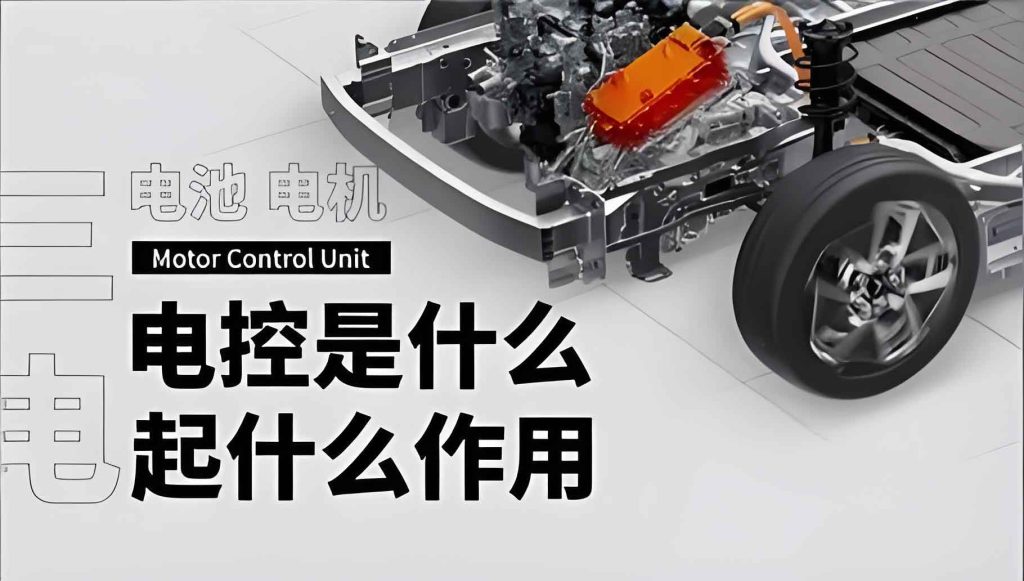
Despite advances in EV technology, the diagnosis and repair of high-voltage faults remain fraught with challenges. From my observations, a lack of standardized procedures across service networks leads to inconsistent practices, often relying on technician experience rather than systematic protocols. For example, when dealing with a faulty motor control unit, some technicians may bypass critical safety checks, such as verifying the isolation status or discharging high-voltage capacitors, increasing the risk of electrical shock. Additionally, the rapid technological evolution, including the adoption of SiC power modules in modern motor control units, outstrips the training available to many repair personnel, resulting in prolonged downtime and potential misdiagnoses. Common issues include insulation failures, relay malfunctions, and communication errors within the motor control unit, which can manifest as drivetrain warnings or reduced vehicle performance. To quantify these problems, consider the following table listing typical high-voltage faults and their root causes:
| Fault Type | Symptoms | Common Causes | Associated Component |
|---|---|---|---|
| Insulation Failure | Warning lights, system shutdown | Degraded insulation materials, moisture ingress | High-voltage harness, motor control unit |
| Relay Sticking | Inability to power on/off | Contact wear, overheating | Battery contactors, motor control unit |
| Communication Error | Loss of motor control, error codes | CAN bus faults, software glitches | Motor control unit, VCU |
| Overheating | Reduced power, thermal shutdown | Cooling system failure, high ambient temps | Motor control unit, drive motor |
| Voltage Imbalance | Unstable operation, battery alerts | Cell degradation, BMS faults | Battery pack, motor control unit input |
The complexity of these faults is exacerbated by inadequate diagnostic tools. Many service centers still use conventional multimeters, which are insufficient for measuring high-voltage parameters accurately. For instance, assessing the insulation resistance of a motor control unit requires specialized megohmmeters capable of applying test voltages up to 1000 V DC. The insulation resistance \(R_{ins}\) can be calculated using: $$R_{ins} = \frac{V_{test}}{I_{leakage}}$$ where \(V_{test}\) is the applied test voltage and \(I_{leakage}\) is the leakage current. Values below 1 MΩ often indicate a fault, necessitating further inspection of the motor control unit and associated wiring. Moreover, the absence of real-time data logging and analysis tools hinders the ability to predict failures proactively. As EVs incorporate more integrated systems, such as combined motor control unit and gearbox assemblies, the diagnostic process becomes even more intricate, demanding a holistic approach.
To address these challenges, I propose an optimized repair workflow that emphasizes standardization, safety, and intelligence. The first step involves developing a modular and standardized process framework, which can be broken down into discrete stages: pre-inspection, high-voltage shutdown, fault diagnosis, component testing, repair, verification, and final testing. Each stage should have clear checklists and acceptance criteria, particularly for the motor control unit, given its central role. For example, during high-voltage shutdown, a mandatory sequence includes sending a shutdown command via the vehicle’s VCU, confirming the open state of all relays, measuring residual voltage with a certified tool, and attaching safety tags. This reduces human error and ensures consistency across different service points. A detailed flow for motor control unit diagnosis might include steps like verifying input voltage, checking coolant flow, and analyzing CAN messages for fault codes. The table below outlines a standardized repair process for high-voltage systems:
| Stage | Key Actions | Tools Required | Safety Measures |
|---|---|---|---|
| Pre-inspection | Visual check, DTC scanning | Diagnostic scanner, thermal camera | Wear insulated gloves, secure work area |
| High-Voltage Shutdown | Disable power, discharge capacitors | Insulated voltage detector, discharge tool | Verify zero voltage, use lockout/tagout |
| Fault Diagnosis | Data logging, component isolation | Oscilloscope, CAN analyzer | Maintain safe distance, follow SOPs |
| Component Testing | Resistance, insulation, functional tests | Megohmmeter, power supply | Test one component at a time, ground properly |
| Repair | Replace or repair faulty parts | Insulated tools, torque wrenches | De-energize all sources, use PPE |
| Verification | Recheck parameters, clear codes | Diagnostic tool, multimeter | Conduct final safety inspection |
| Final Testing | System power-up, road test | Vehicle interface, data logger | Monitor for anomalies, have emergency plan |
Enhancing safety protocols is equally crucial. Beyond personal protective equipment (PPE) like class 0 insulated gloves and face shields, service environments should be equipped with dedicated high-voltage bays featuring isolated flooring, emergency cutoff switches, and clear signage. Regular training on the latest standards, such as ISO 6469-3 for EV safety, ensures that technicians remain competent, especially when handling the motor control unit, which may contain high-energy capacitors. Additionally, adopting smart diagnostic technologies can revolutionize fault identification. By leveraging machine learning algorithms, we can analyze historical data from motor control units to predict failures before they occur. For instance, a neural network model can be trained on parameters like temperature, current, and voltage ripples to flag anomalies. The prediction accuracy \(A\) can be expressed as: $$A = \frac{TP + TN}{TP + TN + FP + FN}$$ where \(TP\) is true positives, \(TN\) true negatives, \(FP\) false positives, and \(FN\) false negatives. Integrating such models with cloud-based platforms allows for remote diagnostics, where technicians can access real-time data from the motor control unit and receive repair recommendations, thereby reducing on-site time and improving accuracy.
The implementation of these optimized processes can be validated through practical case studies. Consider a scenario where an EV exhibits intermittent power loss and error codes related to the motor control unit. Using the standardized approach, technicians first perform a pre-inspection, logging data from the vehicle’s CAN bus. They then safely shut down the high-voltage system, confirming zero voltage at the motor control unit terminals. Insulation testing reveals a low resistance value of 0.5 MΩ between the power terminals and chassis, indicating a potential fault within the motor control unit. Further disassembly, conducted with proper tools and PPE, identifies a damaged insulation layer on a power module. After replacement and reassembly, the system is verified through functional tests, including a check of the motor control unit’s output waveform using an oscilloscope. The entire process, documented and shared across the service network, not only resolves the issue but also enriches the knowledge base for future cases. Another example involves using predictive analytics to monitor the motor control unit’s thermal performance. By analyzing temperature trends over time, the system can alert technicians to impending cooling failures, allowing for proactive maintenance. These cases demonstrate how optimization reduces repair time from days to hours while enhancing safety.
In conclusion, the evolution of pure electric vehicles necessitates a refined approach to high-voltage fault diagnosis and repair, with the motor control unit being a focal point due to its critical function. Through the adoption of standardized, modular workflows, rigorous safety measures, and intelligent diagnostic tools, we can overcome existing challenges and set new benchmarks for efficiency and reliability. As technology advances, with trends like higher voltage architectures and more integrated motor control units, continuous improvement of these processes will be essential. I believe that by fostering collaboration across the industry and investing in technician training, we can ensure that EV maintenance keeps pace with innovation, ultimately supporting the sustainable growth of electric mobility. The journey toward optimized repair is ongoing, but with the strategies outlined here, we are well-positioned to navigate the complexities of high-voltage systems safely and effectively.
To further elaborate on the technical aspects, let’s delve into the mathematical modeling of fault detection in the motor control unit. One common issue is switching loss in the power semiconductors, which can lead to overheating. The power loss \(P_{loss}\) in an IGBT or MOSFET within the motor control unit can be approximated by: $$P_{loss} = P_{cond} + P_{sw}$$ where \(P_{cond}\) is conduction loss and \(P_{sw}\) is switching loss. These can be broken down as: $$P_{cond} = I_{rms}^2 \times R_{ds(on)}$$ and $$P_{sw} = f_{sw} \times (E_{on} + E_{off})$$ where \(I_{rms}\) is the root-mean-square current, \(R_{ds(on)}\) is the on-state resistance, \(f_{sw}\) is the switching frequency, and \(E_{on}\) and \(E_{off}\) are the energy losses per switching cycle. Monitoring these parameters allows for early detection of inefficiencies in the motor control unit. Additionally, for insulation faults, the time-dependent dielectric breakdown (TDDB) model can predict failure based on electric field stress: $$t_{fail} = A \times e^{\frac{B}{E}}$$ where \(t_{fail}\) is time to failure, \(E\) is the electric field, and \(A\) and \(B\) are material constants. Integrating such models into diagnostic software enhances the predictive capabilities for motor control unit maintenance.
Moreover, the integration of the motor control unit with other vehicle systems adds layers of complexity. For example, in regenerative braking, the motor control unit must coordinate with the battery management system (BMS) to manage energy recapture. A fault in this interaction can be diagnosed by analyzing the energy flow equation: $$E_{regen} = \int_{t_1}^{t_2} V_{batt}(t) \times I_{batt}(t) \, dt$$ where \(E_{regen}\) is the regenerated energy, and \(V_{batt}\) and \(I_{batt}\) are the battery voltage and current, respectively. Discrepancies between expected and actual values may point to issues in the motor control unit’s control algorithms. To streamline such analyses, automated diagnostic platforms can use statistical methods, such as principal component analysis (PCA), to reduce the dimensionality of data from the motor control unit and identify outlier patterns. The PCA transformation for a dataset \(X\) can be expressed as: $$Y = X \times W$$ where \(W\) is the matrix of eigenvectors from the covariance matrix of \(X\). This helps in visualizing faults that might otherwise be obscured in raw data.
In terms of safety, the risk assessment for high-voltage work on the motor control unit can be quantified using a hazard score \(H\), defined as: $$H = \frac{V_{operating} \times I_{max}}{R_{isolation}} \times t_{exposure}$$ where \(V_{operating}\) is the operating voltage, \(I_{max}\) is the maximum current, \(R_{isolation}\) is the isolation resistance, and \(t_{exposure}\) is the exposure time. By keeping \(H\) below a threshold through proper procedures, technicians can minimize danger. Furthermore, the use of augmented reality (AR) tools can guide repairs on the motor control unit by overlaying digital information on physical components, reducing errors and training time. These technological integrations, combined with the optimized processes, pave the way for a more resilient EV ecosystem.
Ultimately, the success of these optimizations hinges on continuous feedback and adaptation. By establishing a centralized database of fault cases involving the motor control unit, service networks can share insights and refine protocols. Regular audits of repair processes, based on key performance indicators (KPIs) like mean time to repair (MTTR) and first-time fix rate (FTFR), ensure ongoing improvement. As EVs become more prevalent, the lessons learned from optimizing high-voltage fault management will not only enhance operational efficiency but also build consumer trust in electric vehicle technology. Through collaborative efforts and a commitment to innovation, we can navigate the challenges and harness the full potential of pure electric mobility.