
As an automotive technology specialist with years of experience in engine diagnostics, I have encountered numerous cases where insufficient fuel pressure in electronically controlled engines leads to performance issues such as power loss, poor acceleration, and starting difficulties. The fuel system in modern vehicles is a critical component that ensures precise fuel delivery to the engine, controlled by the motor control unit for optimal combustion. In this article, I will delve into the causes, diagnostic methods, and resolution strategies for fuel pressure deficiencies, emphasizing the role of the motor control unit in monitoring and regulating system parameters. My goal is to provide a comprehensive guide that leverages tables and formulas to summarize key concepts, aiding technicians in efficient troubleshooting.
The electronically controlled engine fuel system is designed to deliver fuel from the tank to the engine via a fuel pump, with injectors spraying fuel at precise intervals and quantities based on signals from the motor control unit. Fuel pressure is a vital parameter that affects injection quality and combustion efficiency. When pressure drops below specifications, it can result in lean mixtures, reduced power output, and increased emissions. Understanding the underlying factors is essential for accurate diagnosis. The motor control unit continuously processes data from sensors to adjust fuel injection, making its interaction with the fuel system paramount. For instance, if the motor control unit detects anomalies in fuel trim values, it may indicate pressure-related issues.
To systematically address fuel pressure problems, I categorize the primary causes into four areas: fuel pump malfunctions, fuel filter blockages, fuel pressure regulator failures, and injector faults. Each of these can be linked to feedback from the motor control unit, which often stores fault codes for further analysis. Below, I present a table summarizing these causes and their typical symptoms, highlighting how the motor control unit responds to each scenario.
| Cause | Symptoms | Motor Control Unit Indicators |
|---|---|---|
| Fuel Pump Failure | Low pressure, engine stalling, noise from tank | Fault codes for fuel pump circuit or pressure sensor |
| Fuel Filter Clogging | Gradual pressure loss, poor acceleration | Long-term fuel trim deviations |
| Fuel Pressure Regulator Fault | Pressure fluctuations, rich or lean mixtures | Oxygen sensor errors and fuel pressure codes |
| Injector Malfunction | Misfires, uneven idle, fuel smell | Injector circuit codes or cylinder imbalance data |
Fuel pump failures often stem from wear, electrical issues, or contamination. The pump’s performance can be modeled using fluid dynamics principles. For example, the theoretical flow rate $$ Q_{theoretical} = \pi \cdot r^2 \cdot v $$ where \( r \) is the pump rotor radius and \( v \) is the rotational speed, but actual flow may reduce due to inefficiencies. The motor control unit monitors pump operation via current draw; a deviation from expected values can trigger alerts. In practice, I measure pump resistance using Ohm’s law: $$ R = \frac{V}{I} $$ where \( V \) is voltage and \( I \) is current, comparing it to specifications—typically 2-5 ohms for healthy pumps. If resistance is out of range, the motor control unit may log a fault, necessitating replacement.
Fuel filter blockages impede flow, leading to pressure drops. The pressure loss across a filter can be approximated by Darcy’s law: $$ \Delta P = \frac{k \cdot \mu \cdot L \cdot Q}{A} $$ where \( \Delta P \) is pressure drop, \( k \) is a constant, \( \mu \) is fuel viscosity, \( L \) is filter thickness, \( Q \) is flow rate, and \( A \) is cross-sectional area. As clogging increases, \( \Delta P \) rises, causing the motor control unit to compensate by adjusting injection times. Regular replacement is crucial, as shown in the table below for recommended intervals based on vehicle mileage.
| Vehicle Mileage (km) | Filter Replacement Frequency | Typical Pressure Drop (bar) |
|---|---|---|
| 0-30,000 | Every 2 years | 0.1-0.3 |
| 30,000-60,000 | Annually | 0.3-0.5 |
| 60,000+ | Every 6 months | 0.5-1.0 |
Fuel pressure regulator faults involve diaphragm leaks, spring fatigue, or valve sticking. The regulator maintains pressure via a balance of forces: $$ P_{fuel} = P_{spring} + P_{manifold} $$ where \( P_{fuel} \) is fuel rail pressure, \( P_{spring} \) is spring force per area, and \( P_{manifold} \) is intake manifold pressure. If the diaphragm ruptures, pressure bleeds off, causing the motor control unit to detect inconsistencies via the fuel pressure sensor. I often use a pressure gauge to measure \( P_{fuel} \) under various engine loads, comparing it to the motor control unit’s reference values. A common formula for expected pressure is $$ P_{expected} = P_{base} + \alpha \cdot RPM $$ where \( P_{base} \) is idle pressure and \( \alpha \) is a coefficient from the motor control unit’s calibration.
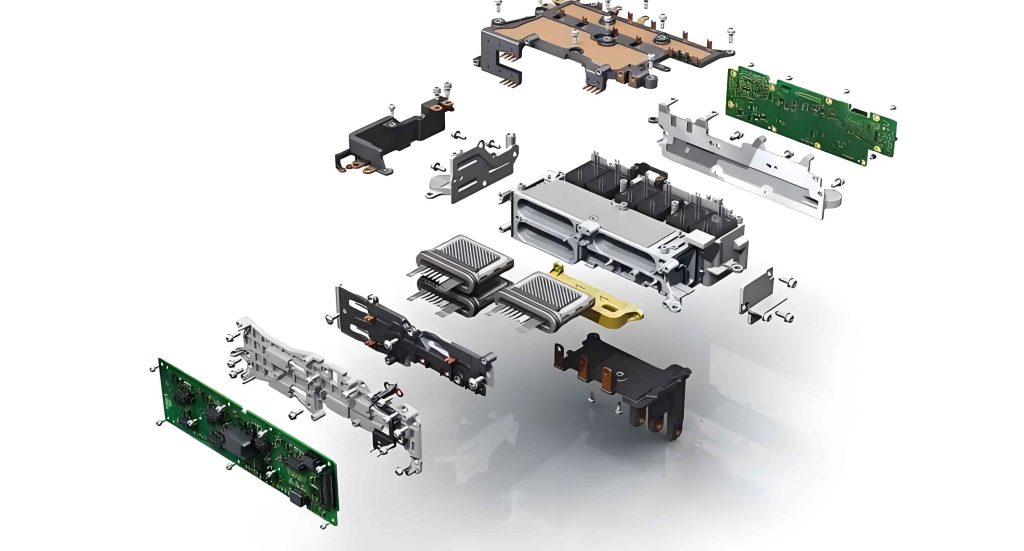
Injector problems include clogging, leakage, or electrical faults. The injector flow rate is critical and given by $$ Q_{injector} = C_d \cdot A \cdot \sqrt{2 \cdot \frac{\Delta P}{\rho}} $$ where \( C_d \) is discharge coefficient, \( A \) is orifice area, \( \Delta P \) is pressure differential, and \( \rho \) is fuel density. The motor control unit controls injector pulse width based on this flow; if injectors are faulty, the motor control unit may adapt by enriching or leaning mixtures, leading to fault codes. In diagnostics, I perform injector balance tests using a scan tool that communicates with the motor control unit to measure flow variations.
Moving to diagnostic methods, I employ a multi-faceted approach that integrates observation, measurement, substitution, and scan tool analysis. The motor control unit is central to this process, as it provides real-time data and fault codes. Below is a table outlining these methods with examples of how the motor control unit aids each step.
| Diagnostic Method | Procedure | Role of Motor Control Unit |
|---|---|---|
| Observation | Visual inspection for leaks, listen for pump noise | Check for stored codes related to fuel system |
| Measurement | Use pressure gauge to measure fuel rail pressure | Compare with sensor data streamed from motor control unit |
| Substitution | Swap components like pump or regulator | Clear codes and monitor if issues persist via motor control unit |
| Scan Tool Analysis | Connect OBD-II scanner to read codes and data | Direct interface with motor control unit for detailed diagnostics |
The diagnostic workflow begins with connecting a scan tool to the motor control unit to retrieve any fault codes, such as P0087 (fuel rail/system pressure too low). I then verify physical components, using formulas to assess performance. For instance, to calculate expected fuel pressure at idle, I reference the motor control unit’s specifications: $$ P_{idle} = P_{atmospheric} + \beta \cdot T $$ where \( \beta \) is a temperature compensation factor and \( T \) is fuel temperature. If measured pressure deviates, I proceed with component tests. The motor control unit’s data stream includes parameters like fuel pump duty cycle, which should align with commanded values; a mismatch indicates electrical issues.
For fuel pump diagnostics, I measure voltage at the pump connector. Using Kirchhoff’s law, the circuit should satisfy $$ V_{source} – I \cdot R_{wire} = V_{pump} $$ where \( V_{source} \) is battery voltage, \( I \) is current, and \( R_{wire} \) is wiring resistance. If \( V_{pump} \) is low, the motor control unit might have triggered a fault due to excessive current draw. Additionally, I check the pump’s flow rate by timing fuel delivery into a container, comparing it to the motor control unit’s expected volume based on engine speed.
When examining fuel filters, I compute the pressure differential using a gauge before and after the filter. The formula $$ \Delta P_{filter} = P_{in} – P_{out} $$ should be below 0.5 bar for most vehicles. If higher, the motor control unit may log a code for restricted flow. I recommend replacement based on mileage, as shown earlier, to prevent the motor control unit from overcompensating with fuel trims.
Fuel pressure regulator testing involves measuring pressure at different manifold vacuums. The relationship $$ P_{rail} = P_{regulator} + P_{vacuum} $$ is monitored by the motor control unit via sensors. If the regulator is faulty, pressure won’t adjust correctly, causing the motor control unit to set codes like P0190 (fuel rail pressure sensor circuit). I use a vacuum pump to simulate manifold conditions and observe pressure changes, ensuring they match the motor control unit’s calibration.
Injector diagnostics include checking resistance and leakage. Each injector’s coil resistance should be consistent, typically 10-20 ohms, calculated as $$ R_{injector} = \frac{V_{battery}}{I_{injector}} $$ during activation. The motor control unit controls injector pulse width via a duty cycle formula: $$ Duty\ Cycle = \frac{Pulse\ Width}{Period} \times 100\% $$ Deviations can indicate clogging, leading the motor control unit to flag misfire codes. I also perform a leak-down test by pressurizing the fuel rail and monitoring pressure drop, which the motor control unit can detect through its pressure sensor.
Resolution strategies involve targeted repairs based on diagnostic findings. For fuel pump failures, I replace the pump and inspect the wiring harness. The motor control unit must be reset to clear adaptation values; I often use a scan tool to reprogram the motor control unit’s fuel pump control module. In cases of persistent issues, I verify the motor control unit’s software updates, as outdated calibrations can cause pressure mismatches.
Fuel filter replacement is straightforward, but I always check for compatibility with the motor control unit’s pressure thresholds. After replacement, I test drive the vehicle while monitoring live data from the motor control unit to ensure pressure stabilizes. The motor control unit should show fuel trim values returning to within ±10%.
Fixing a faulty pressure regulator requires installing a new unit and adjusting the set pressure. I use a gauge to set \( P_{regulator} \) according to the motor control unit’s specifications, often found in service manuals. The motor control unit then relearns the pressure curve through drive cycles. I also inspect vacuum lines connected to the regulator, as leaks can mislead the motor control unit’s calculations.
Injector repairs may involve cleaning or replacement. After servicing, I perform an injector calibration using a scan tool that communicates with the motor control unit to reset fuel trim and injection timing. The motor control unit’s adaptive learning process can be modeled as $$ New\ Trim = Old\ Trim + \gamma \cdot Error $$ where \( \gamma \) is a learning rate and \( Error \) is the difference between expected and actual air-fuel ratios. This ensures the motor control unit optimizes performance post-repair.
To illustrate, consider a hypothetical case of a sedan with 80,000 km exhibiting hesitation during acceleration. I connected a scan tool to the motor control unit and found code P0087, indicating low fuel pressure. Pressure measurements showed 2.5 bar versus the expected 3.5 bar at idle. Using substitution, I replaced the fuel filter, but pressure remained low. Further inspection revealed a weak fuel pump; its current draw was 8 amps, below the 10-amp standard. After pump replacement, I reset the motor control unit’s adaptations and tested pressure, which normalized to 3.5 bar. The motor control unit’s data stream then showed stable fuel trims, confirming resolution.
Preventive maintenance is key to avoiding fuel pressure issues. I advise regular checks of the fuel system, including scanning the motor control unit for pending codes. The motor control unit’s diagnostic capabilities allow early detection; for example, trend analysis of fuel pressure sensor data can predict failures. Using formulas like $$ Pressure\ Trend = \frac{\sum_{i=1}^{n} P_i}{n} $$ where \( P_i \) are periodic pressure readings, technicians can monitor degradation. Additionally, ensuring clean fuel and timely filter changes reduces strain on the motor control unit’s control algorithms.
In conclusion, diagnosing and resolving insufficient fuel pressure in electronically controlled engines requires a systematic approach that integrates mechanical, electrical, and computational aspects. The motor control unit serves as a central hub for monitoring and adjusting fuel delivery, making its data invaluable for troubleshooting. By employing tables and formulas, technicians can standardize procedures and enhance accuracy. Regular interaction with the motor control unit through scan tools and adherence to manufacturer specifications will ensure reliable engine performance and longevity. As technology evolves, the motor control unit’s role will only expand, underscoring the need for continuous learning in automotive repair.
To further aid understanding, I summarize common fault codes related to fuel pressure and their implications for the motor control unit in the table below.
| Fault Code | Description | Motor Control Unit Action |
|---|---|---|
| P0087 | Fuel Rail/System Pressure Too Low | Limits engine power, adjusts injector pulse |
| P0190 | Fuel Rail Pressure Sensor Circuit | Uses default pressure values, logs error |
| P0230 | Fuel Pump Primary Circuit Malfunction | Disables pump relay, triggers warning light |
| P0171 | System Too Lean (Bank 1) | Increases fuel delivery, monitors oxygen sensors |
Throughout this article, I have emphasized the interconnectedness of fuel system components with the motor control unit. From pump to injector, each element influences pressure, and the motor control unit’s algorithms work to maintain equilibrium. By applying the discussed methods and formulas, technicians can effectively diagnose and fix issues, ensuring vehicles run efficiently. Remember, the motor control unit is not just a controller but a diagnostic partner that, when properly utilized, simplifies complex repairs. As I continue my work, I find that staying updated with motor control unit software and diagnostic techniques is essential for tackling modern automotive challenges.