
From my perspective as a researcher deeply involved in automotive diagnostics, the evolution of the internal combustion engine into a highly precise, software-controlled machine is one of the most significant technological shifts in modern transportation. At the heart of this transformation lies the intricate network of sensors that serve as the engine’s sensory organs, feeding critical data to the central nervous system—the engine control unit (ECU) or motor control unit. The flawless operation of these sensors is non-negotiable for achieving the stringent modern demands of performance, fuel efficiency, emissions compliance, and reliability. This article delves into the classification, operational principles, and, most importantly, the systematic methodologies for detecting and diagnosing faults within these vital components. The accuracy of sensor data directly dictates the quality of commands issued by the motor control unit, making sensor health paramount.
The impetus for advancing sensor detection technology is multifaceted. Primarily, it is driven by escalating safety requirements. A single erroneous signal from a critical sensor, misinterpreted by the motor control unit, can lead to improper fuel delivery, ignition timing faults, or loss of drivability, potentially creating hazardous driving conditions. Secondly, modern vehicles are expected to deliver exceptional reliability over extended periods. Sensors, due to their exposure to harsh environmental conditions (extreme temperatures, vibrations, chemical contaminants), are among the most susceptible components to degradation. Proactive and accurate detection techniques are essential for predictive maintenance and avoiding roadside failures. Thirdly, the global emphasis on environmental protection has led to extraordinarily strict emissions regulations. Sensors like the oxygen sensor are directly responsible for enabling closed-loop fuel control, ensuring optimal catalytic converter operation. A fault here can cause emissions to skyrocket, leading to regulatory non-compliance and environmental harm. Finally, in a fiercely competitive market, a brand’s reputation for quality and durability is crucial. Mastery over sensor diagnostics enhances a manufacturer’s or service provider’s capability to deliver superior vehicle uptime and customer satisfaction, representing a significant competitive advantage.
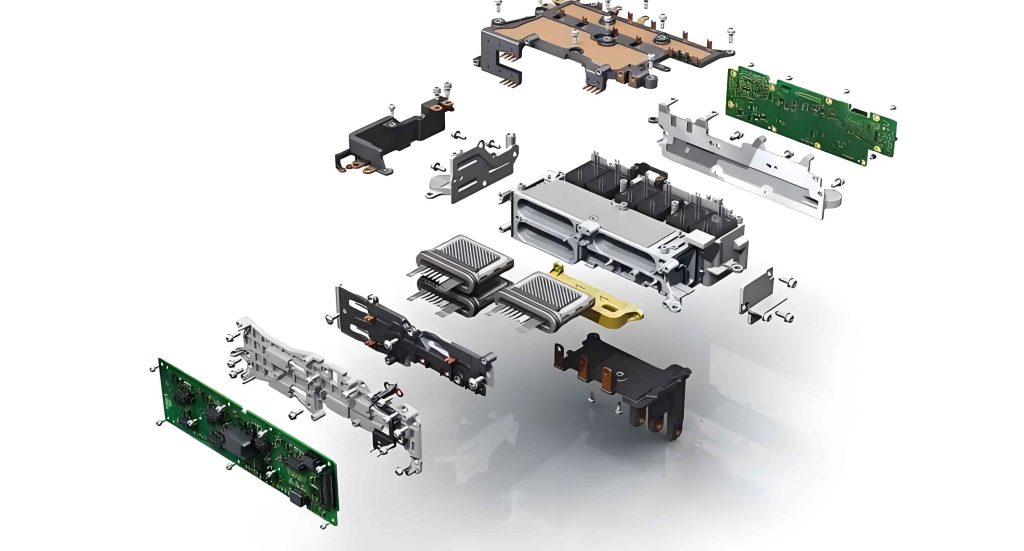
The modern motor control unit relies on inputs from a diverse array of sensors. These can be broadly categorized by their measured parameter, as summarized in the table below.
| Sensor Category | Primary Examples | Key Function for Motor Control Unit |
|---|---|---|
| Airflow & Intake | Mass Airflow (MAF) Sensor, Manifold Absolute Pressure (MAP) Sensor | Determines engine load by measuring the mass/volume of incoming air, which is the primary parameter for calculating base fuel injection pulse width. |
| Temperature | Coolant Temperature Sensor (ECT), Intake Air Temperature (IAT) Sensor | Provides corrections for fuel mixture (cold enrichment), ignition timing, idle speed control, and activation of cooling fans. |
| Position & Speed | Crankshaft Position Sensor (CKP), Camshaft Position Sensor (CMP), Throttle Position Sensor (TPS) | Provides essential timing signals for sequential fuel injection and ignition, and indicates driver demand via throttle plate angle. |
| Exhaust & Emissions | Heated Oxygen Sensor (HO2S – upstream & downstream), Nitrogen Oxide (NOx) Sensor | Monitors oxygen content in exhaust to enable closed-loop fuel control (upstream) and monitors catalytic converter efficiency (downstream). |
| Pressure | Fuel Rail Pressure Sensor, Barometric Pressure (BARO) Sensor | Ensures correct fuel delivery pressure and provides altitude/pressure correction for air density calculations. |
| Knock Detection | Knock Sensor (KS) | Detects engine detonation (pinging), allowing the motor control unit to retard ignition timing to protect the engine. |
The cornerstone of effective diagnosis is a robust methodological approach. Before sophisticated tools are deployed, a visual and physical inspection is always the first step. This involves checking for:
- Connector Integrity: Ensuring connectors are fully seated, locked, and free of corrosion, moisture, or bent pins.
- Wiring Harness: Inspecting for chafing, cuts, burns, or shorts to ground or voltage.
- Sensor Mounting: Verifying proper torque and seating, especially for sensors like the MAP or knock sensor where sealing or correct coupling to the engine is critical.
- Contamination: Checking for oil, fuel, or coolant fouling on sensor elements (e.g., on MAF or MAP sensors).
Following this, diagnostic procedures leverage a combination of live data analysis, actuator tests, and signal measurement.
Theoretical Foundations and Diagnostic Methods for Key Sensors
1. Hot-Wire/Film Mass Airflow (MAF) Sensor
This sensor directly measures the mass of air entering the engine. A heated element (wire or film) is maintained at a constant temperature differential above the incoming air temperature. The electrical current required to maintain this temperature is proportional to the mass airflow rate, as the cooling effect of the air stream increases with mass flow. The fundamental thermal balance can be expressed as:
$$ P = I^2 R_h = h A (T_h – T_a) $$
Where \( P \) is the heating power, \( I \) is the heating current, \( R_h \) is the resistance of the hot element, \( h \) is the heat transfer coefficient, \( A \) is the surface area, \( T_h \) is the hot element temperature, and \( T_a \) is the intake air temperature. The motor control unit converts this current or its corresponding voltage signal into a grams-per-second (g/s) reading.
Diagnostic Procedure:
- Live Data Monitoring: Using a scan tool, observe the MAF sensor reading (in g/s or Hz) at various engine speeds (idle, 1500 RPM, 2500 RPM) with transmission in Park/Neutral. Compare readings to manufacturer specifications. A typical relationship between engine speed (RPM) and MAF reading is non-linear but should be smooth and progressive. A common specification check is the MAF reading at idle versus at a higher RPM.
- Voltage/ Frequency Signal Check: Connect an oscilloscope or multimeter to the sensor signal wire.
- For analog voltage sensors: Key ON, engine OFF, signal voltage should typically be around 0.8-1.2V. At idle, it may rise to ~1.5-2.0V, increasing smoothly with engine acceleration.
- For digital frequency sensors: Measure the output frequency (Hz), which should increase proportionally with airflow.
- Contamination Test: A contaminated hot element often reads lower than actual airflow. A quick test is to gently tap the sensor housing while observing the live data or voltage; an unstable or jumping signal suggests a faulty or dirty element.
- Voltage Drop Test: Check for excessive resistance in the sensor’s power and ground circuits. Even a small voltage drop can skew readings significantly.
| Engine Condition | Expected MAF Signal (Analog Type) | Expected MAF Reading (g/s) | Potential Fault if Out of Range |
|---|---|---|---|
| Key On, Engine Off (KOEO) | 0.8 – 1.2 V | 0.0 – 1.5 g/s | Sensor bias fault, wiring short |
| Idle (Hot Engine) | 1.5 – 2.2 V | 3.0 – 7.0 g/s | Vacuum leak (low), restricted intake (high), contamination |
| 2500 RPM (No Load) | 2.5 – 3.5 V | 15 – 30 g/s | Under-reporting (lean mixture, lack of power) or over-reporting (rich mixture) |
2. Throttle Position Sensor (TPS)
This sensor, typically a potentiometer, informs the motor control unit of the throttle valve angle, which represents driver demand. It provides a voltage signal that varies from a minimum (closed throttle) to a maximum (wide open throttle – WOT). Modern sensors often incorporate dual tracks for redundancy. The output voltage \( V_{out} \) is given by:
$$ V_{out} = V_{ref} \cdot \frac{R_{2}}{R_{1} + R_{2}} $$
Where \( V_{ref} \) is the 5V reference supplied by the motor control unit, and \( R_{1} \) and \( R_{2} \) are the portions of the potentiometer track, their ratio changing with throttle angle.
Diagnostic Procedure:
- Live Data Analysis: View the TPS percentage or angle reading. It should read 0% (or a specified low angle like 10%) at closed throttle and move smoothly to 85-100% at WOT without any sudden jumps or flat spots.
- Signal Waveform Analysis: Using an oscilloscope is the gold standard. Probe the signal wire and slowly sweep the throttle from fully closed to fully open and back.
- The waveform should be a clean, linear ramp voltage with no glitches, dropouts, or flat spots.
- Any erratic spikes or noise indicates a worn potentiometer track.
- Reference and Ground Check: Measure the 5V reference from the ECU and ensure a solid sensor ground (less than 0.1V drop to battery negative).
- Idle Learn Reset: After replacement, many vehicles require an idle relearn or throttle adaptation procedure so the motor control unit can recalibrate its baseline.
3. Heated Oxygen Sensor (HO2S)
The upstream oxygen sensor is critical for stoichiometric air-fuel ratio (λ=1) control. It generates a voltage based on the difference in oxygen partial pressure between the exhaust gas and the ambient air, following the Nernst equation:
$$ E = \frac{RT}{4F} \ln\left(\frac{P_{O_2,\text{air}}}{P_{O_2,\text{exhaust}}}\right) $$
Where \( E \) is the generated EMF, \( R \) is the universal gas constant, \( T \) is the sensor temperature, \( F \) is Faraday’s constant, and \( P_{O_2} \) is the oxygen partial pressure. In practice, it produces a voltage between roughly 0.1V (lean mixture, high oxygen) and 0.9V (rich mixture, low oxygen).
Diagnostic Procedure:
- Live Data Monitoring: Observe the upstream O2 sensor voltage in closed-loop mode. It should switch rapidly between rich and lean thresholds (e.g., 0.3V to 0.6V). The cross-count rate (switches per second) is a key parameter; a lazy sensor has a low cross-count.
- Oscilloscope Waveform Analysis: This provides the most accurate diagnosis.
- The waveform should show sharp transitions between high and low voltage.
- The maximum voltage should reach above 0.8V, and the minimum should drop below 0.2V.
- The frequency and amplitude are critical for the motor control unit to make precise fuel corrections.
- Heater Circuit Check: The integrated heater brings the sensor to operating temperature quickly. Check heater resistance (usually 5-20 Ω) and verify power and ground to the heater circuit.
- Response Time Test: Create an artificial rich condition (propane enrichment) or lean condition (induction vacuum leak) and measure the time the sensor takes to respond. A slow response indicates aging.
- Downstream O2 Sensor Analysis: The downstream sensor’s signal should be a relatively steady, mid-range voltage (e.g., 0.45-0.65V) if the catalytic converter is functioning properly. A waveform that mimics the upstream sensor indicates a failed catalyst.
Comprehensive Diagnostic Case Studies
Case Study 1: Oxygen Sensor Failure Leading to Poor Fuel Economy and Check Engine Light
Symptoms: A vehicle presents with a illuminated Malfunction Indicator Lamp (MIL) and driver complaints of gradually worsening fuel economy. No drivability issues are reported under normal driving conditions.
Diagnostic Process:
- Code Retrieval: Using a scan tool, I retrieve persistent Diagnostic Trouble Codes (DTCs): P0131 (O2 Sensor Circuit Low Voltage Bank 1 Sensor 1) and P0171 (System Too Lean Bank 1).
- Live Data Analysis: Monitoring the upstream HO2S (Bank 1, Sensor 1) voltage shows it is stuck at a low voltage, around 0.12V, even during various engine load conditions. The fuel trims (Long Term Fuel Trim – LTFT) are excessively positive (+25% to +28%), indicating the motor control unit is continuously adding fuel to compensate for a perceived lean condition.
- Active Testing: To rule out an actual lean condition (vacuum leak, low fuel pressure), I perform a propane enrichment test. Introducing propane into the intake manifold causes the engine speed to increase, but the O2 sensor voltage barely moves, peaking only at 0.18V. This confirms sensor failure; a functional sensor should jump to over 0.8V.
- Circuit Verification: Before condemning the sensor, I check the wiring. The 5V reference from the ECU is present, and the sensor ground has minimal resistance. The heater circuit resistance measures 12Ω, within specification.
Root Cause & Solution: The Nernst cell within the oxygen sensor has failed, causing it to output a fixed, low-biased voltage. The motor control unit interprets this constant “lean” signal and enriches the mixture, leading to excessive fuel consumption. Replacing the upstream oxygen sensor cleared the codes. Post-repair, live data showed normal switching activity, and fuel trims returned to a normal range of ±5%. This case highlights how a single faulty sensor input can cause the motor control unit to make system-wide compensatory actions that degrade performance and efficiency.
Case Study 2: Mass Airflow Sensor Contamination Causing Intermittent Stalling and Lack of Power
Symptoms: A vehicle suffers from intermittent engine stall at idle, hesitation upon acceleration, and a general lack of power. The MIL may or may not be illuminated.
Diagnostic Process:
- Code Retrieval: Codes may include P0101 (MAF Performance) or P0102 (MAF Circuit Low Input), but often, in early stages, there are no hard codes, only pending codes or none at all.
- Live Data & Graph: I graph the MAF sensor reading (g/s) and engine RPM simultaneously. At idle, the reading fluctuates erratically instead of being stable. During a test drive, when the hesitation occurs, the MAF signal shows momentary drops or “glitches.”
- Physical Inspection: Upon removing the MAF sensor from the intake air duct, I observe a fine layer of dust and oil film coating the hot-wire or sensing elements. This contamination insulates the element, slowing its response and causing it to under-report the true mass of incoming air.
- Signal Verification with Oscilloscope: Probing the MAF signal wire confirms the instability seen in the scan data. The DC voltage is noisy and non-linear with throttle input.
- Comparative Test: As a functional test, I temporarily disconnect the MAF sensor connector. The motor control unit will default to a calculated airflow based on RPM and MAP sensor input (speed-density). If the drivability improves noticeably with the MAF disconnected, it strongly points to a faulty or contaminated MAF sensor.
Root Cause & Solution: The contamination likely originated from a poorly maintained or defective air filter, or from oil vapors from a positive crankcase ventilation (PCV) system. While specialized MAF sensor cleaners exist, heavy contamination often necessitates sensor replacement. After installing a new, properly specified MAF sensor and a new air filter, the idle stabilizes, power is restored, and all sensor readings return to their expected smooth, progressive curves. This case underscores the importance of the MAF sensor as the primary load input; its corruption directly misleads the motor control unit’s fueling and ignition calculations.
Advanced Diagnostic Techniques and the Role of the Motor Control Unit
Modern diagnostics extend beyond checking individual sensors. The motor control unit itself performs continuous rationality tests, known as “component monitoring” within the On-Board Diagnostics II (OBD-II) framework. These tests compare correlated sensor signals to identify implausible scenarios. For instance, the motor control unit compares the signal from the MAF sensor with a calculated airflow value derived from the MAP sensor and engine speed. A significant, persistent discrepancy between these two values will trigger a diagnostic trouble code related to MAF performance. This system-level diagnosis is crucial for pinpointing faults that may not be apparent when testing a sensor in isolation.
Furthermore, network communication adds a layer of complexity. Many sensors are now “smart sensors” with their own microcontrollers, communicating with the central motor control unit via controller area network (CAN) or other serial data protocols. Diagnosing these involves checking not just analog voltages but also digital message frames, which requires specialized tools capable of interpreting the relevant communication protocols.
Conclusion and Future Perspectives
The science of sensor detection in automotive electronic control engines is a dynamic field that sits at the intersection of physics, electrical engineering, and software diagnostics. A methodical approach—starting with fundamental electrical checks, progressing through live data analysis, and culminating in detailed signal analysis with tools like oscilloscopes—is essential for accurate diagnosis. As I have detailed, understanding the underlying operational principles, such as the Nernst equation for oxygen sensors or the thermal transfer model for MAF sensors, empowers the diagnostician to move beyond mere code reading and part swapping to true root-cause analysis.
The central role of the motor control unit cannot be overstated. It is not merely a passive recipient of data but an active diagnostician, cross-validating sensor inputs, performing rationality checks, and storing contextual fault information. Future trends point toward even greater integration, with sensor fusion algorithms combining data from multiple sources for higher accuracy and redundancy, and with over-the-air (OTA) updates allowing the motor control unit software to adapt its diagnostic strategies. The goal remains constant: to ensure that the engine’s sensory inputs are flawless, allowing the central control system to execute its commands with precision, thereby guaranteeing the safety, efficiency, reliability, and cleanliness of the modern automobile.