
The relentless electrification of automotive systems, including steering control, is a dominant trend. As a design engineer focused on power electronics, I have been deeply involved in the development of core control units. Among these, the motor control unit (MCU) for Electro-Hydraulic Power Steering (EHPS) systems presents a significant thermal management challenge. This motor control unit is the computational and power-delivery heart of the EHPS, orchestrating the precise torque of a permanent magnet synchronous motor which then drives a hydraulic pump. Ensuring the reliability and longevity of this motor control unit under all vehicle operating conditions, especially the thermally stressful ones, is paramount. This article details the comprehensive thermal analysis, simulation, and validation process undertaken for one such motor control unit, focusing on the methodologies for predicting and managing the temperature of its critical power semiconductors.
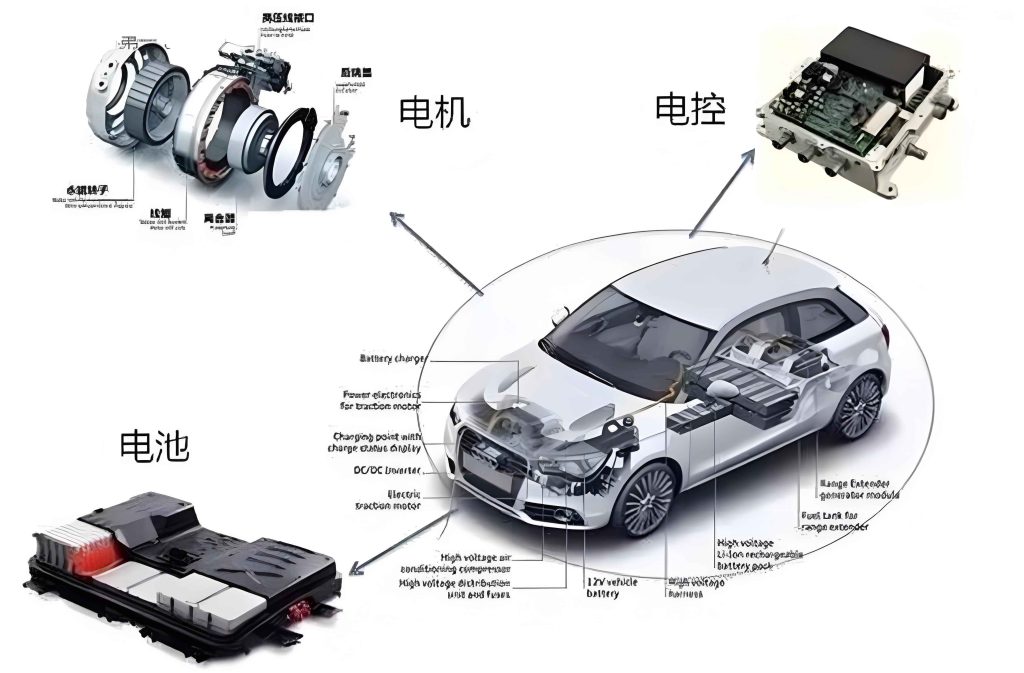
The primary function of the motor control unit is to execute a Field-Oriented Control (FOC) algorithm to drive a three-phase PMSM. The power stage of this motor control unit is a classic three-phase full-bridge inverter composed of six N-channel power MOSFETs. In an EHPS system, the operational profile is characterized by distinct modes: parking, low-speed, and high-speed maneuvering. Thermal analysis revealed that the parking maneuver, particularly under high-load conditions like turning the steering wheel while stationary, represents the worst-case scenario for the motor control unit. During this phase, the motor may be required to deliver high phase currents for extended durations, leading to sustained power dissipation within the inverter’s MOSFETs. Consequently, the thermal design was centered on this demanding parking cycle.
Thermal Source Analysis and Power Loss Calculation
The principal heat sources within the motor control unit are undoubtedly the six power MOSFETs in the inverter bridge. To perform an accurate thermal analysis, the first and most crucial step is to calculate their power dissipation. The total power loss for a MOSFET in such an application is the sum of three main components: conduction loss, switching loss, and the loss from the body diode’s reverse recovery. The driver loss is typically negligible.
The total power loss $$P_{tot_{M}}$$ is given by:
$$P_{tot_{M}} = P_{C_{M}} + P_{SW_{M}} + P_{SW_{D}}$$
where:
$$P_{C_{M}}$$ = Conduction loss
$$P_{SW_{M}}$$ = MOSFET switching loss
$$P_{SW_{D}}$$ = Body diode reverse recovery loss.
Conduction Loss
The conduction loss is dominant. For our motor control unit employing Space Vector Pulse Width Modulation (SVPWM), the RMS current through each MOSFET and its conduction loss can be calculated. The conduction loss for a high-side or low-side MOSFET is:
$$P_{C_{M}} = R_{DS(on)} \cdot I_{D_{rms}}^2$$
$$I_{D_{rms}}^2 = I_o^2 \cdot \left( \frac{1}{8} + \frac{m_a \cdot \cos \phi_1}{3\pi} \right)$$
where:
$$R_{DS(on)}$$ = On-state drain-to-source resistance at the junction temperature.
$$I_o$$ = Peak phase current of the motor.
$$m_a$$ = Modulation index.
$$\cos \phi_1$$ = Power factor.
Switching Loss
The switching loss encompasses the energy dissipated during the turn-on and turn-off transitions of the MOSFET and its intrinsic body diode. The energy losses per switching cycle are:
Turn-on energy loss (MOSFET):
$$E_{on_M} = \int_{0}^{t_{ri}+t_{fv}} u_{DS}(t) \cdot i_{D}(t) dt \approx U_{DD} \cdot I_{D_{on}} \cdot \frac{t_{ri}+t_{fv}}{2} + Q_{rr} \cdot U_{DD}$$
Turn-off energy loss (MOSFET):
$$E_{off_M} = \int_{0}^{t_{rv}+t_{fi}} u_{DS}(t) \cdot i_{D}(t) dt \approx U_{DD} \cdot I_{D_{off}} \cdot \frac{t_{rv}+t_{fi}}{2}$$
Diode reverse recovery energy loss:
$$E_{on_D} \approx \frac{1}{4} \cdot Q_{rr} \cdot U_{Drr}$$
The corresponding power losses are obtained by multiplying the energy loss per cycle by the switching frequency $$f_{sw}$$:
$$P_{SW_{M}} = (E_{on_M} + E_{off_M}) \cdot f_{sw}$$
$$P_{SW_{D}} = E_{on_D} \cdot f_{sw}$$
The voltage transition times $$t_{fv}$$ (turn-on fall time) and $$t_{rv}$$ (turn-off rise time) require careful estimation due to the non-linear gate-drain capacitance $$C_{GD}$$. A two-point approximation method is used, dividing the voltage swing from $$U_{DD}$$ to $$R_{DS(on)} \cdot I_D$$ into two segments:
$$t_{fv} = \frac{t_{fv1} + t_{fv2}}{2}, \quad t_{rv} = \frac{t_{rv1} + t_{rv2}}{2}$$
where:
$$t_{fv1} = \frac{(U_{DD} – R_{DS(on)}\cdot I_{D_{on}}) \cdot C_{GD}(U_{DD})}{I_{G_{on}}}, \quad t_{fv2} = \frac{(U_{DD} – R_{DS(on)}\cdot I_{D_{on}}) \cdot C_{GD}(U_{DD}/2)}{I_{G_{on}}}$$
$$t_{rv1} = \frac{(U_{DD} – R_{DS(on)}\cdot I_{D_{off}}) \cdot C_{GD}(U_{DD})}{I_{G_{off}}}, \quad t_{rv2} = \frac{(U_{DD} – R_{DS(on)}\cdot I_{D_{off}}) \cdot C_{GD}(U_{DD}/2)}{I_{G_{off}}}$$
The gate current $$I_G$$ is derived from the gate driver voltage and the gate resistor.
Applying these calculations to the defined parking cycle profiles (100%, 70%, 60% load for repeated “Parking Cycle 1” and a final “Parking Cycle 2”) yielded the power dissipation for each MOSFET. The results for the worst-case 100% load segment are summarized below. Note that MOSFETs Q1, Q2, Q9, Q10, Q11 are part of the pre-driver and power supply circuits and were calculated for continuous conduction.
| MOSFET Group | Motor Speed (RPM) | Modulation Index (ma) | Conduction Loss PC_M (W) | Switching Loss PSW_M (W) | Diode Loss PSW_D (W) | Total Loss Ptot_M (W) |
|---|---|---|---|---|---|---|
| Q1, Q2 | 0 | 0.285 | – | – | – | 1.721 |
| Q3-Q8 (Inverter) | 1000 | 0.714 | 0.534 | 0.768 | 0.003 | 1.305 |
| Q9-Q11 | 0 | 0.285 | – | – | – | 1.063 |
This detailed loss breakdown forms the essential heat load input for the subsequent thermal simulation of the motor control unit.
Thermal Path Analysis and Mechanical Design
With the heat load quantified, the next step in designing the motor control unit was to define an efficient path to dissipate this energy into the ambient environment. Given the automotive application’s demand for high reliability, low acoustical noise, and minimal maintenance, a natural convection cooling approach was selected. This relies on conduction, convection, and radiation without fans or liquid coolants.
The primary thermal path for the MOSFETs is as follows:
- Heat generated at the silicon die (junction) conducts through the package to the case.
- From the case, heat flows through a Thermal Interface Material (TIM) into the printed circuit board (PCB) and/or a dedicated heatsink.
- The heatsink, designed with fins to increase surface area, then transfers the heat to the surrounding air via convection and radiation.
The critical element in this chain is the TIM, typically a thermally conductive grease. Its purpose is to fill microscopic air gaps between the component case and the heatsink, drastically reducing the contact thermal resistance. The heat flow $$Q$$ through the TIM is governed by Fourier’s law:
$$Q = \frac{T_1 – T_2}{H} \cdot k \cdot A$$
where $$T_1$$ and $$T_2$$ are the temperatures on either side, $$H$$ is the thickness, $$k$$ is the thermal conductivity, and $$A$$ is the area. This is analogous to electrical current flow, defining a thermal resistance $$R_{th} = H / (k \cdot A)$$. To minimize this resistance, we selected a high-performance grease with a conductivity of $$4 \, W/(m \cdot K)$$ and specified a controlled, minimal application thickness of $$0.4 \, mm$$ over the maximum possible area.
For the heatsink integrated into the motor control unit housing, material selection was key. While copper offers superior conductivity, aluminum alloys provide an excellent balance of thermal performance, weight, and cost. The housing was therefore designed using the die-cast aluminum alloy AlSi9Cu3 (ADC12), incorporating substantial finning on the exterior to enhance heat rejection to the engine compartment air.
Computational Fluid Dynamics (CFD) Thermal Simulation
To predict the temperature distribution within the motor control unit before building physical prototypes, a detailed CFD simulation was performed using Ansys Icepak. The process involved setting up a virtual model with accurate boundary conditions and material properties.
Model Setup and Simplification
Boundary Conditions: The maximum ambient temperature was set to $$85^\circ C$$, based on the under-hood/vehicle cabin specifications relevant for the motor control unit‘s installation location. A transient analysis was configured to run for $$810$$ seconds, matching the duration of the complete parking cycle test profile, to capture the temperature evolution over time.
Model Simplification: To reduce computational complexity while maintaining accuracy, the 3D model was simplified:
- PCB Assembly: Only high-power components (MOSFETs, current-sense resistors) and the bare PCB were modeled. Small passive components (resistors, capacitors) were omitted as their thermal mass and dissipation are negligible for the board-level temperature field.
- Enclosure: Small cosmetic features, screw holes, and fillets were removed. The enclosure was simplified to a sealed rectangular box with the external finning preserved, as it is crucial for convection.
Material Properties: Accurate properties were assigned:
| Material | Thermal Conductivity (W/m·K) | Density (kg/m³) | Specific Heat (J/kg·K) |
|---|---|---|---|
| ADC12 (Housing) | 96 | 2700 | 900 |
| FR4 (PCB) | 0.3 (in-plane), 0.15 (through-plane) | 1900 | 1369 |
| Thermal Grease (TIM) | 4.0 | 2800 | 1100 |
| Copper (PCB Traces) | 400 | 8933 | 385 |
Simulation Results and Analysis
The transient thermal simulation predicted the temperature contours at the end of the worst-case parking cycle. The results clearly identified the power MOSFETs on the right side of the PCB as the hottest spots, with a predicted maximum case temperature of approximately $$141^\circ C$$.
The temperature distribution was largely symmetrical, reflecting the PCB layout. MOSFETs located towards the center of the board showed slightly higher temperatures than those near the edges, due to less effective heat spreading. A significant temperature gradient was visible from the MOSFET cases down to the base of the external heatsink fins, confirming that the designed thermal path was functional and effectively moving heat away from the critical components. Crucially, the peak temperature of $$141^\circ C$$ was below the derated target of $$145^\circ C$$ (derated from the absolute maximum junction temperature of $$175^\circ C$$ per component reliability standards), indicating a theoretically sound design for the motor control unit.
Experimental Validation and Correlation
Simulation provides critical insight, but physical validation is indispensable. A prototype motor control unit was assembled and subjected to rigorous bench testing under simulated real-world conditions.
Test Setup: The motor control unit and its associated PMSM were installed as the Device Under Test (DUT) in a climate chamber set to $$85^\circ C$$. A load machine, coupled to the DUT motor’s shaft, simulated the steering resistance torque according to the defined parking cycle profile. K-type thermocouples were carefully attached to the center of the case (top-side) of each power MOSFET to record temperature in real-time.
Test Results: The measured peak case temperatures for each MOSFET during the test are tabulated below. Two sets of data (from two prototype units) are shown to account for unit-to-unit variations.
| MOSFET | Unit 1 Peak Temp. (°C) | Unit 2 Peak Temp. (°C) | Simulation Prediction (°C) |
|---|---|---|---|
| Q1 | 138.2 | 136.7 | ~137 |
| Q2 | 140.4 | 141.2 | ~140 |
| Q3 | 134.9 | 131.6 | ~133 |
| Q4 | 135.7 | 132.1 | ~134 |
| Q5 | 133.3 | 132.3 | ~132 |
| Q6 | 134.2 | 133.6 | ~133 |
| Q7 | 132.2 | 132.6 | ~131 |
| Q8 | 133.5 | 132.7 | ~132 |
| Q9 | 134.0 | 128.7 | ~130 |
| Q10 | 134.2 | 131.8 | ~131 |
| Q11 | 133.7 | 130.7 | ~130 |
Correlation and Conclusion: The correlation between simulation and measurement was excellent. The deviation for all monitored points was less than $$5\%$$, and the thermal trend across the MOSFETs was accurately captured—the same devices were identified as the hottest in both simulation and reality. Most importantly, all measured temperatures remained safely below the $$145^\circ C$$ derated limit. This close agreement validates the accuracy of the power loss models, the material property assumptions, and the overall CFD simulation methodology. The experimental results confirm that the thermal design of the motor control unit is robust and meets the stringent reliability requirements for automotive applications.
Conclusion
This systematic approach to the thermal design of an automotive motor control unit demonstrates a viable and effective engineering process. It begins with a precise analysis of power loss in the key switching devices under the worst-case operational scenario. This quantitative heat load is then used to inform the mechanical design, focusing on creating a low-impedance thermal path to ambient via intelligent material selection and interface management. Computational simulation serves as a powerful tool to visualize temperature distributions, identify hotspots, and iterate the design virtually long before hardware is committed.
The final and critical step is empirical validation through controlled testing, which not only verifies the design but also calibrates the simulation models for future projects. For this EHPS motor control unit, the successful correlation between simulated and measured temperatures underlines the maturity of the design. The methodologies outlined—from detailed semiconductor loss calculation using formulas like $$P_{C_{M}} = R_{DS(on)} \cdot I_{D_{rms}}^2$$ to practical heatsinking and validation—provide a comprehensive reference framework for engineers tackling similar thermal challenges in high-reliability automotive power electronics, ensuring that the vital motor control unit operates reliably over the vehicle’s entire service life.