
In my engineering practice, the evolution of automotive technology has been predominantly driven by the increasing sophistication of its Electrical and Electronic (E/E) architectures. These systems, encompassing everything from powertrain management to advanced driver-assistance systems, represent a complex network of interacting software and hardware components. The central nervous system of these functions is often a dedicated motor control unit or a network of domain controllers. Developing and validating such intricate systems presents a monumental challenge, making robust modeling and simulation not just beneficial but essential for reducing development cycles, identifying design flaws early, and managing costs. While data-driven or manual coding approaches were once the norm, the industry’s shift towards model-based systems engineering has made graphical, structure chart-oriented modeling the de facto standard. This article details the application and research into a dedicated, visual structure chart methodology tailored for automotive E/E systems, moving beyond the constraints of general-purpose tools to offer a more integrated and intuitive development environment.
The fundamental advantage of a structure chart-oriented approach lies in its intuitive abstraction. It allows engineers, including those specializing in the motor control unit, to represent complex system dynamics through interconnected blocks, where each block encapsulates a specific function, algorithm, or physical component. This visual paradigm offers several key benefits over traditional methods. Firstly, it provides a clear and concise description that is more familiar to system architects and control engineers. Secondly, it enables straightforward analysis of how parameter variations within individual modules, such as a PID controller in a motor control unit, affect overall system performance. Finally, it excels at handling systems composed of heterogeneous and complex sub-components, allowing for a “divide and conquer” design strategy. The process involves abstracting the real-world system into a structural diagram, implementing this diagram within a software environment, and then performing simulations to predict system behavior and optimize control strategies, all under a unified visual interface.
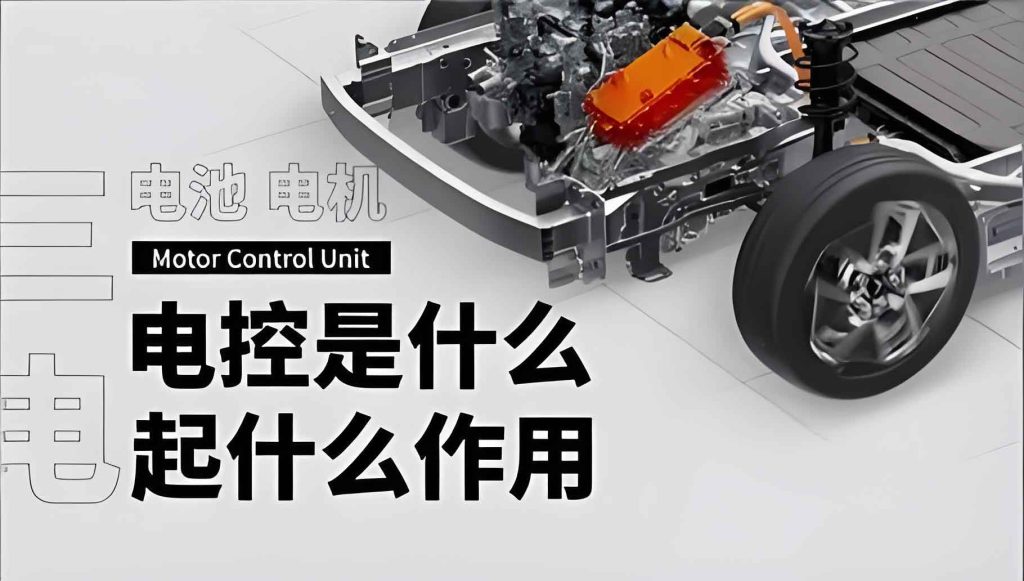
Automotive E/E systems possess distinct characteristics that must be reflected in any effective modeling paradigm. These characteristics directly influence the design of a motor control unit and its integration:
- Purposefulness: Each system is designed to solve specific vehicular challenges unaddressed by purely mechanical means (e.g., ABS for stability, engine control for efficiency).
- Interrelatedness: Systems are not isolated; the motor control unit for the electric power steering interacts with the suspension and braking systems, requiring co-simulation capabilities.
- Hierarchy: A clear hierarchy exists, from the top-level vehicle coordination system down to domain controllers (like a dedicated motor control unit) and further to actuator/sensor layers.
- Stochasticity: Systems must operate under highly random and dynamic external conditions (road surfaces, driver input, weather), demanding robust and adaptive control algorithms within the motor control unit.
A tailored modeling process for automotive systems can be effectively summarized in the following stages, which move from library creation to final analysis.
| Phase | Core Activities | Key Artifacts & Techniques |
|---|---|---|
| 1. Model Library Development | Abstraction of physical/components into classes; Implementation of functional and visual properties. | Object-Oriented Programming (C++); Class inheritance; Dynamic Link Libraries (DLLs). |
| 2. Visual Model Construction | Drag-and-drop assembly from library; Interconnection of modules; Parameter configuration. | Graphical User Interface (GUI); Document-View architecture; Visual editing operations (copy, paste, delete). |
| 3. Simulation & Control | Execution of the assembled model; Application of control logic; Data generation over time. | Numerical solvers (e.g., Runge-Kutta); Event handling; Real-time or faster-than-real-time simulation. |
| 4. Result Visualization & Analysis | Graphical presentation of output signals; Performance metric calculation. | Virtual instruments (scopes, gauges, plots); Data export for post-processing. |
Model Library Architecture and Object-Oriented Foundation
The cornerstone of a flexible modeling environment is a well-structured, extensible model library. In my implementation, this is achieved through rigorous Object-Oriented Programming (OOP) principles. A base model class, `Module`, is defined to encapsulate all common attributes and operations. From this base class, specialized modules are derived. This hierarchy is crucial for managing the complexity of a modern motor control unit and its surrounding systems.
| Model Class Level | Examples | Description & Purpose |
|---|---|---|
| Base Class (Module) | `CBaseModule` | Defines universal properties: graphical dimensions, input/output ports, serialization methods, and a common execution interface. It acts as the abstract parent for all components. |
| Derived: Signal Source | `CStepSignal`, `CSineSignal`, `CSignalFromFile` | Generates input signals for simulation (e.g., throttle position, road profile, sensor noise). |
| Derived: Processing & Control | `CPIDController`, `CLowPassFilter`, `CLogicSwitch` | Represents algorithms. This is where the logic for a motor control unit, such as field-oriented control (FOC) for an electric motor, would be implemented as a dedicated module class. |
| Derived: Plant / Physical | `CVehicleDynamics`, `CTireModel`, `CBrushedDCMotor` | Models the physical behavior of the system under control (e.g., vehicle body, wheel dynamics, electrical motor itself). |
| Derived: Sink / Visualization | `CScopeView`, `CDigitalGauge`, `CDataToFile` | Captures and displays simulation outputs for analysis. |
The functional core of each module is separated from its graphical representation. A “simulation engine” class, often a friend class to the `Module` hierarchy, manages the numerical execution. For a control module like a PID block, its critical function is defined by its transfer function or time-domain equations. For instance, the continuous-time representation of a PID controller within a motor control unit module would be:
$$ G\_{PID}(s) = K\_p + \frac{K\_i}{s} + K\_d s $$
where \( K\_p \), \( K\_i \), and \( K\_d \) are the proportional, integral, and derivative gains, respectively. During discrete-time simulation, this is converted to a difference equation, such as the velocity form commonly used in digital motor control unit implementations:
$$ u[k] = u[k-1] + K\_p(e[k]-e[k-1]) + K\_i T\_s e[k] + \frac{K\_d}{T\_s}(e[k]-2e[k-1]+e[k-2]) $$
Here, \( u[k] \) is the control output at time step \( k \), \( e[k] \) is the error signal, and \( T\_s \) is the sampling time. This logic is encapsulated within the module’s `calculateOutput()` method.
The Visual Modeling Environment and Simulation Integration
The modeling environment is built on a standard Document-View architecture. The “Document” manages the entire model’s data structure—the collection of all module objects, their connections, and parameters. The “View” handles the graphical rendering and user interaction. Users build systems through intuitive drag-and-drop operations from the library palette onto the modeling canvas. Connecting modules is as simple as drawing wires from an output port of one module to an input port of another. This visual assembly directly mirrors the system’s block diagram, making it an ideal tool for designing and prototyping a motor control unit strategy before any hardware is committed.
Once the model is constructed, the simulation phase begins. The environment compiles the network of modules into an execution schedule, typically sorting them to respect data dependencies (an acyclic graph is required). A numerical solver then iterates over time. For a system involving a motor control unit controlling a motor, the simulation loop at each time step involves:
1. Reading inputs from signal sources and upstream modules.
2. Executing the control algorithm in the motor control unit module to compute a command (e.g., torque request, PWM duty cycle).
3. Executing the plant model (e.g., motor and load dynamics) to compute the new state (e.g., speed, position).
4. Updating all virtual instruments with the new data for real-time visualization.
The output is managed through configurable virtual instruments. These are not mere post-processors; they are active modules within the simulation. A scope can display signals like motor current or wheel speed, a gauge can show vehicle speed, and a plot can chart efficiency over a drive cycle. This tight integration of modeling, simulation, and visualization creates a seamless workflow for analyzing the performance of a motor control unit under various conditions.
Extended Application Case Study: Anti-lock Braking System (ABS) with Integrated Motor Control
To illustrate the practical application, let’s consider a more detailed model of an Anti-lock Braking System (ABS), now incorporating an electric brake booster (eBooster) whose operation is managed by a dedicated motor control unit. This expands the traditional ABS model into a comprehensive mechatronic system.
The system can be decomposed into four primary interacting sub-models:
1. Vehicle Dynamics Model: Represents the longitudinal and rotational motion of the vehicle body and wheels.
2. Tire-Road Interaction Model (Magic Formula): A non-linear model calculating the braking force based on wheel slip. The longitudinal force \( F\_x \) is often given by:
$$ F\_x = D \sin(C \arctan(B \kappa – E(B \kappa – \arctan(B \kappa)))) $$
where \( \kappa \) is the longitudinal slip ratio, and \( B, C, D, E \) are tire parameters.
3. Brake Actuation Model: Includes the eBooster, master cylinder, and hydraulic circuit. The eBooster’s motor control unit translates the brake pedal demand and ABS commands into a precise motor torque.
4. ABS Controller Model: The core algorithm, typically implemented as a state machine or a sliding-mode controller that modulates brake pressure to maintain optimal slip (~10-30%).
The slip ratio \( \kappa \), the critical variable for ABS, is defined as:
$$ \kappa = \frac{\omega\_w R\_w – V\_x}{\max(V\_x, \omega\_w R\_w)} $$
where \( \omega\_w \) is the wheel angular velocity, \( R\_w \) is the wheel radius, and \( V\_x \) is the vehicle longitudinal speed. The controller in the ABS motor control unit acts to regulate this ratio.
Using the structure chart-oriented tool, the model is assembled visually. A “Vehicle Dynamics” module is connected to four “Magic Formula Tire” modules. The calculated wheel speeds are fed into a “Slip Calculation” module. The slip values are inputs to the “ABS Controller” module, which outputs a pressure modulation command. This command goes to the “eBooster Actuator” module, which contains the logic for the booster’s motor control unit. The resulting brake torque is fed back into the vehicle and tire dynamics, closing the loop. Signal generators simulate initial vehicle speed and brake pedal application, while scopes monitor slip, speed, pressure, and eBooster motor current.
A simulation run on a low-μ (coefficient of friction) surface would clearly show:
– Without ABS: Wheel speed drops to zero rapidly (lock-up), vehicle speed decreases slowly due to low friction, and slip jumps to 1.0.
– With ABS: The motor control unit for the eBooster rapidly modulates pressure, causing wheel speed to oscillate near the optimal slip point. Vehicle deceleration is higher, and steering control is maintained. The following table summarizes key comparative metrics:
| Performance Metric | Without ABS (Locked Wheels) | With ABS (Controlled) |
|---|---|---|
| Stopping Distance (from 100 km/h) | Longer (e.g., 120m on wet asphalt) | Shorter (e.g., 85m on wet asphalt) |
| Wheel Slip (\( \kappa \)) | Remains at ~1.0 (100%) | Regulated around 0.2 (20%) |
| Vehicle Deceleration | Low, limited by sliding friction (\( \mu\_s \cdot g \)) | High, near peak tire capability (\( \mu\_p \cdot g \)) |
| Steerability | Lost (front wheels locked) | Maintained |
| eBooster Motor Control Unit Activity | Constant high current (if applied) | High-frequency, pulsed current profile |
This modeling exercise demonstrates the power of the approach. It allows engineers to not only design the high-level ABS logic but also to co-simulate and stress-test the associated motor control unit for the electromechanical actuator, evaluating its response time, current loads, and thermal implications under extreme cycling conditions—all before prototyping.
Conclusion and Future Trajectory
The adoption of a dedicated, structure chart-oriented visual modeling methodology for automotive E/E systems represents a significant step forward in managing design complexity. By leveraging object-oriented principles to create a hierarchical, extensible model library and providing an intuitive graphical assembly interface, this approach delivers a tailored environment that aligns closely with the thought processes of automotive systems and software engineers. It enables the rapid construction, modification, and simulation of complex systems—from a standalone motor control unit algorithm to a full-vehicle network of interacting controllers.
The benefits are tangible: accelerated design iteration, early validation of multi-domain interactions, and a executable specification that can bridge the gap between system design and software implementation. As automotive systems evolve towards centralized domain and zone architectures with even more software-defined functionality, the role of such integrated modeling and simulation platforms will only grow. Future enhancements will likely involve tighter integration with architectural design tools (like SysML), automatic code generation for production motor control unit software, and links to hardware-in-the-loop (HIL) test benches, forming a complete toolchain from virtual design to physical validation. The ultimate goal is a seamless digital thread, where a model of the motor control unit and its controlled plant evolves continuously from concept to deployment, ensuring robustness, safety, and performance in the increasingly software-defined vehicle.