
The pursuit of enhanced active safety is a paramount objective in the evolving landscape of vehicle electrification and automation. For contemporary electric vehicles (EVs), the Electro-Hydraulic Braking System (EHB) represents a mature and widely adopted technology, offering a foundation for precise, rapid, and stable brake force modulation. This study focuses on developing and validating an advanced control strategy for the Anti-lock Braking System (ABS) within such an EHB framework for a domestic EV model. The core objective is to improve braking efficacy and directional stability, particularly on challenging surfaces like split-μ roads, by preventing wheel lock-up. The proposed strategy centers on a Proportional-Integral-Derivative (PID) controller designed to regulate the wheel slip ratio to an optimal target value. The validation is performed through a sophisticated co-simulation environment integrating MATLAB/Simulink for control system modeling and CarSim for high-fidelity vehicle dynamics simulation. This approach allows for a comprehensive evaluation of the controller’s performance against a baseline vehicle without ABS, assessing key metrics such as stopping distance, slip rate behavior, and vehicle stability.
The fundamental operational principle of an ABS in an EV’s hydraulic-electronic architecture involves continuous monitoring of individual wheel speeds via sensors. These signals are processed by the vehicle’s central motor control unit or a dedicated brake control unit, which calculates the real-time slip ratio for each wheel. Based on this calculation and a predefined control law, the unit issues command signals to the hydraulic pressure modulator. This modulator executes precise cycles of pressure increase, hold, and decrease at each wheel brake caliper, thereby adjusting the braking torque to maintain the wheel slip within a narrow, optimal band that maximizes longitudinal adhesion while retaining sufficient lateral force for steering control. The system described in this context utilizes a four-channel configuration, allowing independent control for each wheel, which is crucial for stability on uneven grip surfaces.
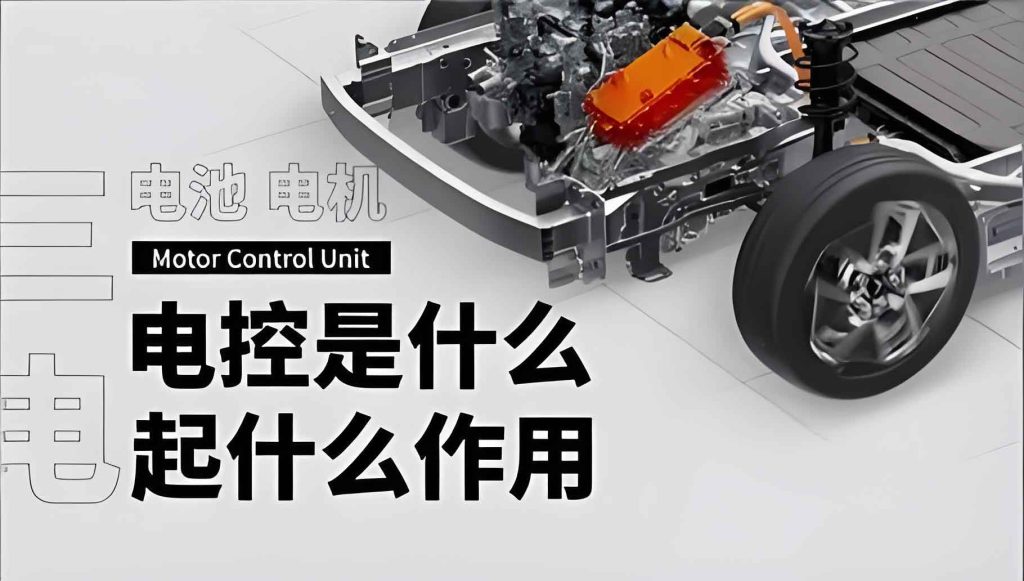
The control logic adopted here is a slip-rate-based PID strategy. The reference input is the optimal slip ratio (λ_opt), typically around 0.2 (20%). The controller acts on the error (e) between this target and the measured actual slip ratio (λ) to compute a required braking pressure or torque adjustment. The PID output is defined as:
$$ u(t) = K_p e(t) + K_i \int_0^t e(\tau) d\tau + K_d \frac{de(t)}{dt} $$
where \( u(t) \) is the control signal (e.g., desired brake pressure), \( e(t) = \lambda_{opt} – \lambda(t) \) is the slip error, and \( K_p \), \( K_i \), and \( K_d \) are the proportional, integral, and derivative gains, respectively. This computed signal is processed by the motor control unit to command the hydraulic actuator, forming a closed-loop control system aimed at minimizing the slip error and preventing lock-up.
Dynamics Modeling of the Electro-Hydraulic Braking System
The co-simulation’s accuracy relies on the fidelity of the underlying mathematical models integrated within Simulink. These models encapsulate the core dynamics of the wheel, tire-road interaction, and the hydraulic brake actuator.
Wheel Dynamics Model
A quarter-car model is employed to analyze the longitudinal dynamics during braking, providing a foundational block for the full-vehicle simulation. The model assumes braking in a straight line and neglects load transfer for simplicity at this component level. The governing equations derived from force and torque balance are:
Vehicle longitudinal motion:
$$ m \frac{dv}{dt} = -F_b $$
Wheel rotational dynamics:
$$ I \frac{d\omega}{dt} = F_b R – T_b $$
In these equations, \( m \) is the quarter-car mass, \( v \) is the vehicle longitudinal velocity, \( F_b \) is the braking force generated at the tire-contact patch, \( I \) is the wheel’s moment of inertia, \( \omega \) is the wheel angular velocity, \( R \) is the effective rolling radius, and \( T_b \) is the braking torque applied by the brake caliper. The braking force is related to the vertical load \( T \) and the tire-road friction coefficient \( \mu \) by \( F_b = \mu T \).
Tire-Road Interaction: A Bilinear Slip Rate Model
The relationship between slip ratio and the friction coefficient is critical for ABS performance. The slip ratio \( \lambda \) is defined as:
$$ \lambda = \frac{v – \omega R}{v} \times 100\% $$
A bilinear model is adopted to approximate the nonlinear \( \mu-\lambda \) curve, providing a computationally efficient yet sufficiently accurate representation for control design. This model is characterized by a linear increase to a peak friction coefficient \( \mu_{g\_max} \) at the optimal slip ratio \( \lambda_{opt} \), followed by a linear decrease to the sliding friction coefficient \( \mu_{g\_0} \). The mathematical representation is:
$$
\mu_g(\lambda) =
\begin{cases}
\frac{\mu_{g\_max}}{\lambda_{opt}} \lambda, & \text{if } 0 \leq \lambda \leq \lambda_{opt} \\
\mu_{g\_max} – \frac{(\mu_{g\_max} – \mu_{g\_0})}{(\lambda_{opt} – 1)} (\lambda – \lambda_{opt}), & \text{if } \lambda_{opt} < \lambda \leq 1
\end{cases}
$$
For this study, \( \lambda_{opt} \) is set to 0.2. This model allows the motor control unit algorithm to target the slip value that yields maximum deceleration.
Hydraulic Brake Actuator Model
The relationship between the commanded brake pressure from the controller and the actual braking torque at the wheel is modeled. The steady-state relationship is linear:
$$ T_b = K_f P $$
where \( K_f \) is the brake gain coefficient and \( P \) is the hydraulic pressure at the wheel cylinder. To account for the dynamic response and delay inherent in the hydraulic system (e.g., due to fluid compressibility and valve actuation), a first-order lag is introduced. The transfer function between the commanded pressure \( P_{cmd} \) and the achieved pressure \( P \) is modeled as:
$$ G(s) = \frac{P(s)}{P_{cmd}(s)} = \frac{K}{Ts + 1} $$
where \( K \) is the system gain (set to 100) and \( T \) is the time constant (set to 0.01 s). This dynamic block is essential for simulating the realistic response that the slip controller must manage.
Development of the Co-Simulation Platform
Simulink Control and Plant Model
The wheel dynamics, tire model, and hydraulic actuator are integrated into a Simulink subsystem representing a single braked wheel. A separate subsystem calculates the vehicle velocity based on the total braking force. These models are combined with a PID controller block, where the error between the target slip (0.2) and the calculated real-time slip is minimized. The output of the PID controller is the commanded brake pressure, which feeds into the hydraulic model and subsequently generates the braking torque \( T_b \). This torque, along with the calculated braking force \( F_b \), drives the wheel and vehicle dynamics equations, closing the loop. Initial validation of this integrated single-wheel model with the parameters listed in Table 1 confirmed the controller’s basic functionality, showing effective slip regulation and prevention of lock-up compared to an uncontrolled case.
| Parameter | Symbol | Value | Unit |
|---|---|---|---|
| Quarter Vehicle Mass | \( m \) | 55 | kg |
| Wheel Moment of Inertia | \( I \) | 0.45 | kg·m² |
| Wheel Effective Radius | \( R \) | 0.298 | m |
| Brake Gain Coefficient | \( K_f \) | 1661 | Nm/kPa |
| Initial Speed | \( v_0 \) | 16.67 (≈60 km/h) | m/s |
Full-Vehicle Model in CarSim
To evaluate system performance under realistic and complex conditions, a full-vehicle model was built in CarSim. A B-Class Hatchback template was selected and its parameters were modified to match the specific EV under study. Key vehicle parameters are summarized in Table 2. The tire model was specified with detailed parameters, and the baseline brake system was configured with an X-split dual-circuit layout. The interface for the co-simulation was established by defining specific input and output variables within CarSim. The inputs to CarSim are the four wheel-cylinder pressures (IPM_PBK_L1, L2, R1, R2), commanded by the Simulink controller. The outputs from CarSim to Simulink are the four wheel speeds (Vx_L1, L2, R1, R2), the vehicle longitudinal velocity (Vx_SM), and the master cylinder pressure (Pbk_Com).
| Parameter | Value | Unit |
|---|---|---|
| Sprung Mass | 1110 | kg |
| Distance from CG to Front Axle | 1.040 | m |
| Height of CG | 0.540 | m |
| Wheelbase | 2.560 | m |
| Front/Rear Wheel Radius | 0.310 | m |
| Front Brake Gain | 150 | Nm/MPa |
| Rear Brake Gain | 150 | Nm/MPa |
CarSim/Simulink Integration via S-Function
The bidirectional communication between the Simulink control model and the CarSim vehicle dynamics model is facilitated by an S-Function block. This block serves as the interface, mapping the output variables from CarSim (wheel speeds, vehicle speed) to the inputs of the Simulink slip calculation and PID controller. Subsequently, the four brake pressure commands generated by the Simulink controller are fed back into the S-Function, which passes them as inputs to the CarSim model. This integrated co-simulation platform enables the evaluation of the multi-channel ABS controller managing the complex interactions of a full vehicle during braking maneuvers on various road surfaces.
Simulation Results and Analysis
A demanding split-μ braking maneuver was simulated to rigorously test the controller’s performance. The vehicle was initialized at 60 km/h on a road where the left-side wheels experience a high coefficient of friction and the right-side wheels a significantly lower one. The steering wheel angle was held at zero. Two scenarios were compared: (1) the baseline vehicle with ABS disabled, and (2) the vehicle equipped with the proposed slip-rate PID-based ABS, with its logic running in the integrated motor control unit.
The simulation animations clearly illustrated the superiority of the controlled system. The vehicle without ABS exhibited pronounced yaw instability almost immediately after brake application, veering towards the high-friction side due to the unequal braking forces on the left and right wheels. In contrast, the vehicle with the PID-based ABS maintained a much straighter trajectory, demonstrating significantly improved directional stability. Quantitative data extracted from the co-simulation further substantiates these observations.
Slip Ratio Regulation: Figure 12a (conceptual) shows the slip ratios for all four wheels under PID control. The controller successfully regulated each wheel’s slip ratio rapidly to the vicinity of the 0.2 target. The slip curves exhibit the characteristic pressure cycle “sawtooth” pattern, indicating active modulation by the motor control unit to prevent lock-up. This precise regulation allows each tire to operate near its peak longitudinal friction capability.
Braking Distance and Time: A critical performance metric is the stopping distance. The simulation results are summarized in Table 3.
| Metric | Vehicle without ABS | Vehicle with PID-based ABS | Improvement |
|---|---|---|---|
| Stopping Distance | 15.78 m | 12.02 m | ≈ 24% reduction |
| Total Braking Time | 2.38 s | 1.59 s | ≈ 33% reduction |
| Wheel Lock-up Time | Occurs at ~0.18 s | No sustained lock-up | Complete prevention |
The PID-based ABS system achieved a significantly shorter braking distance and a faster overall stop. More importantly, while the uncontrolled wheels locked up approximately 0.18 seconds after brake initiation, the ABS-controlled wheels never experienced sustained lock-up. The wheel speeds (Fig. 12d) decreased gradually alongside the vehicle speed, confirming that the tires remained in a rolling state, which is essential for maintaining vehicle stability and steerability.
Vehicle Stability (Yaw Rate Analysis): On a split-μ surface, a key indicator of stability is the generated yaw rate. An uncontrolled brake application typically induces a large yaw moment. The integrated control of individual wheel pressures by the motor control unit mitigates this effect. Comparative data is presented in Table 4.
| Stability Metric | Vehicle without ABS | Vehicle with PID-based ABS |
|---|---|---|
| Peak Yaw Rate | High (Significant deviation) | Low (Minimal deviation) |
| Path Deviation | Large, uncontrollable pull | Small, maintained intended path |
| Steerability | Lost after wheel lock-up | Maintained throughout braking |
The vehicle equipped with the proposed ABS system demonstrated a markedly lower peak yaw rate and minimal deviation from its initial straight path, confirming the effectiveness of the independent wheel-slip control in preserving directional stability.
Conclusion
This study successfully developed and validated a slip-rate-based PID control strategy for the Anti-lock Braking System of an electric vehicle equipped with an electro-hydraulic brake unit. A high-fidelity co-simulation platform was constructed by integrating a detailed Simulink model (encompassing wheel dynamics, a bilinear tire model, hydraulic actuator dynamics, and the PID controller) with a full-vehicle CarSim model. The simulation results from challenging split-μ braking maneuvers conclusively demonstrate the superior performance of the proposed system. Compared to a vehicle without ABS, the PID-controlled system achieved a substantial reduction in braking distance (approximately 24%) and braking time (approximately 33%) by effectively preventing wheel lock-up and maintaining tire slip near the optimal value. Most importantly, the system provided exceptional directional stability, keeping the vehicle on its intended path despite the severe road adhesion imbalance. This research underscores the efficacy of model-based design and co-simulation for developing advanced chassis control algorithms. The implemented logic, suitable for execution in a modern vehicle’s motor control unit, offers a practical and effective solution for enhancing the active safety and braking performance of electric vehicles.