
As the automotive industry rapidly evolves towards intelligence and connectivity, the electronic control engine, as the core power source of vehicles, plays a pivotal role in determining safety, efficiency, and reliability. In my research, I address the critical challenges faced by traditional fault diagnosis methods for automotive electronic control engines, which often suffer from low efficiency, high misjudgment rates, and poor adaptability to complex multi-source faults. To overcome these limitations, I propose an intelligent fault diagnosis approach based on artificial neural networks, specifically leveraging the Backpropagation (BP) neural network. This method harnesses real-time sensor data to build a data-driven model, enabling precise identification of fault patterns and significantly enhancing diagnostic accuracy and speed. Throughout this study, I emphasize the central role of the motor control unit in orchestrating engine functions, and I explore how智能化 techniques can revolutionize maintenance practices. The following sections detail the system composition, methodological framework, experimental validation, and implications of this research, all from my first-person perspective as an investigator in this field.
The modern automotive electronic control engine is a sophisticated system comprising three primary modules: the sensor module, the motor control unit, and the actuator module. These components interact seamlessly via a Controller Area Network (CAN) bus to form a闭环控制体系 that ensures optimal engine performance under varying conditions. The sensor module includes key elements such as oxygen sensors, coolant temperature sensors, throttle position sensors, and intake pressure sensors, which continuously monitor parameters like air-fuel ratio, engine speed, and temperature, converting them into electrical signals. At the heart of this system lies the motor control unit, an integrated microprocessor with memory that executes predefined control strategies. The motor control unit processes sensor inputs, sends commands to actuators—for instance, adjusting fuel injection timing or ignition advance angles—and incorporates self-diagnostic capabilities to detect anomalies. When abnormal signals are identified, the motor control unit triggers warning lights and stores fault codes for further analysis. The actuator module, in turn, carries out physical actions based on instructions from the motor control unit, including fuel injection, idle speed regulation, and ignition control, directly influencing engine power output and emissions. This协同工作 is essential for maintaining stability, and any disruption in these components can lead to performance degradation. To visualize this architecture, consider the following representation, which highlights the interconnected nature of these modules, with the motor control unit serving as the central hub for data processing and decision-making.
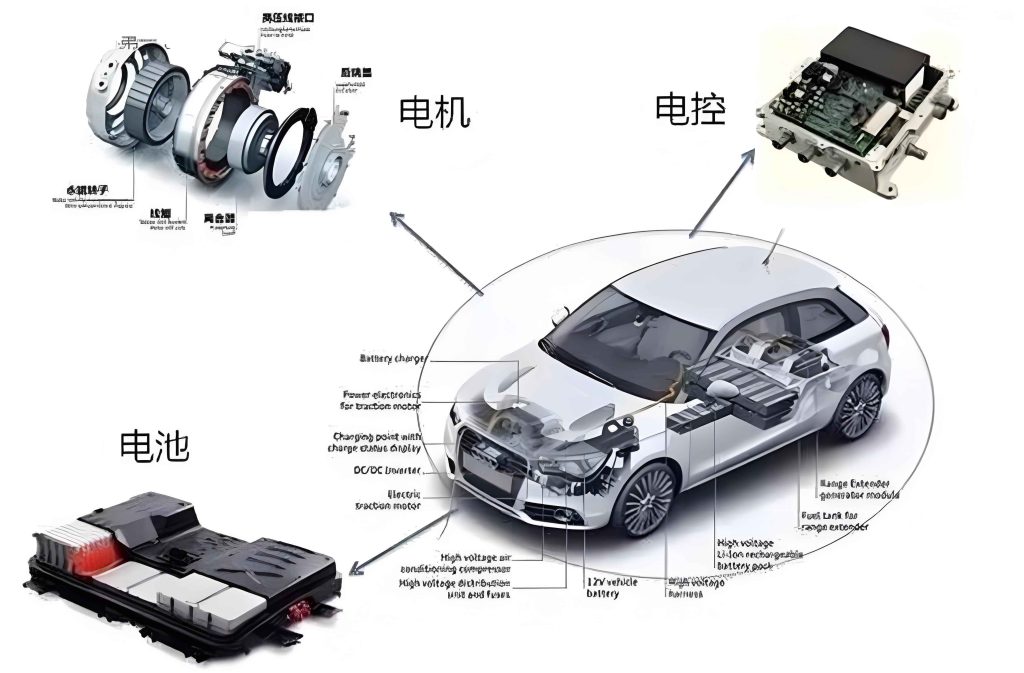
In my investigation, I focus on the motor control unit as a critical component for fault diagnosis, given its ability to aggregate sensor data and execute control logic. Traditional diagnostic approaches, such as reading fault codes manually or relying on经验判断, often fall short in handling the nonlinear, time-varying, and coupled relationships among multiple engine parameters. These methods typically achieve an average accuracy of around 82.3%, with diagnosis times ranging from 15 to 20 minutes, making them inefficient for complex scenarios. To address this, I turn to智能化方法, specifically artificial neural networks, which excel at learning hidden patterns from high-dimensional data without requiring predefined models. Among various machine learning techniques, I select the BP neural network due to its simple structure,成熟训练算法, and proven effectiveness in nonlinear fitting and self-learning tasks. Compared to alternatives like expert systems—which depend on rule-based libraries and lack scalability—or模糊控制—which demands rigorous rule design—the BP neural network offers superior adaptability for dynamic fault diagnosis. This choice aligns with the need to process 11 sensor parameters as inputs and map them to 12 fault types, including normal operation, thereby enabling robust pattern recognition in multi-input, multi-output systems where the motor control unit coordinates responses.
To construct the artificial neural network model, I design a topology consisting of an input layer, two hidden layers, and an output layer. The input layer corresponds to the 11 sensor parameters collected from the engine, which I summarize in Table 1 for clarity. These parameters serve as the foundation for the model, capturing the multidimensional state of the engine system overseen by the motor control unit.
| Parameter | Description | Typical Range |
|---|---|---|
| Oxygen Sensor | Measures oxygen content in exhaust | 0-1 V (binary state) |
| Coolant Temperature | Engine coolant temperature in °C | -40 to 150°C |
| Engine Speed | Rotational speed in rpm | 0-8000 rpm |
| Throttle Position | Throttle opening percentage | 0-100% |
| Intake Temperature | Temperature of intake air in °C | -40 to 125°C |
| Ignition Advance Angle | Timing of ignition in degrees | -10 to 60° |
| Fuel Injection Time | Duration of fuel injection in ms | 0-20 ms |
| Air-Fuel Ratio Closed-Loop State | Binary indicator of闭环控制 | 0 or 1 |
| Intake Pressure Sensor Voltage | Voltage signal from pressure sensor | 0-5 V |
| Engine Load | Percentage load on engine | 0-100% |
| Additional Parameter | Context-specific metric | Varies |
The output layer represents the 12 fault types, encoded using a one-hot scheme as shown in Table 2. This encoding facilitates clear mapping between network outputs and specific故障类型, aiding in interpretability. The hidden layers are configured with 20 to 30 neurons each, determined through trial-and-error to balance model complexity and泛化能力, ensuring that the network can capture intricate relationships without overfitting. The mathematical representation of a neuron’s output is given by the following formula, which models the nonlinear transformation inherent in the network’s operations, closely tied to the data processed by the motor control unit:
$$y = f\left(\sum_{i=1}^{k} W_{ij} I_i + b_{ij}\right)$$
Here, \(W_{ij}\) denotes the connection weights between layers (e.g., input to hidden or hidden to output), \(I_i\) represents the input neurons corresponding to sensor values, \(b_{ij}\) is the bias term, and \(f(t)\) is the Sigmoid activation function defined as \(f(t) = \frac{1}{1 + e^{-t}}\). This function maps the linear combination to the interval [0, 1], enhancing the model’s ability to express nonlinear relationships—a crucial aspect for diagnosing faults where the motor control unit integrates multiple parameter streams. By adjusting network depth, neuron counts, and activation functions, I ensure the model effectively learns the intrinsic associations between fault features and sensor inputs, ultimately supporting accurate decision-making similar to that of the motor control unit in real-time scenarios.
| Fault Type | Output Encoding | Description |
|---|---|---|
| Normal Data Stream | 1 | No faults detected |
| Throttle Position Sensor Fault | 2 | Sensor signal anomaly |
| First Cylinder Injector Circuit Fault | 3 | Wiring issue in injector circuit |
| Coolant Temperature Sensor Circuit Fault | 4 | Circuit malfunction affecting temperature reading |
| One Cylinder Ignition Circuit Fault | 5 | Fault in ignition wiring for a specific cylinder |
| Oxygen Sensor Circuit Fault | 6 | Circuit problem with oxygen sensor |
| Idle Control Actuator Fault | 7 | Actuator failure in idle regulation |
| Throttle Opening Fault | 8 | Abnormal throttle operation |
| Water Temperature Sensor Fault | 9 | Direct sensor malfunction |
| Intake Pressure Sensor Fault | A | Pressure sensor error |
| Intake Temperature Sensor Fault | B | Temperature sensor error |
| Intake System Leakage Fault | C | Leak in intake system affecting air flow |
The training of the neural network model is a critical phase that enables precise fault diagnosis. I begin by collecting sample data through fault simulation experiments on a test bench equipped with a 1.5L electronic control gasoline engine. In these experiments, I artificially induce the 12 fault types listed in Table 2, simulating real-world scenarios where the motor control unit might encounter anomalies. For each fault type, I gather 100 sample sets, resulting in a total of 1,200 samples (100 for normal operation and 1,100 for fault states). Each sample comprises the 11 sensor parameters, captured under dynamic operating conditions to reflect variations in engine behavior. To ensure data quality, I perform preprocessing steps: first, I remove outliers using the 3σ criterion to eliminate噪声数据; second, I normalize all parameters to the range [0, 1] using min-max scaling to mitigate dimensional effects; and third, I split the dataset into 70% for training, 15% for validation, and 15% for testing. This partitioning supports robust model development, allowing me to monitor performance and prevent overfitting, akin to how the motor control unit continuously validates sensor inputs for consistency.
For network parameter initialization, I adopt the Xavier method to set the weights \(W_{ij}\), drawing values from a uniform distribution \(U\left[-\sqrt{\frac{6}{n_{\text{in}} + n_{\text{out}}}}, \sqrt{\frac{6}{n_{\text{in}} + n_{\text{out}}}}\right]\), where \(n_{\text{in}}\) and \(n_{\text{out}}\) are the numbers of input and output neurons, respectively. The biases \(b_{ij}\) are initialized to 0.1, and the learning rate is set to 0.01 with an adaptive decay strategy that reduces it iteratively to avoid oscillations. I define a maximum of 1,000 iterations and a target error threshold of 0.001, ensuring收敛性 without getting trapped in local minima. The training process involves forward propagation and backpropagation stages: during forward propagation, input data passes through the network to generate predicted fault types, with the mean squared error (MSE) calculated as the loss function to measure deviation from actual labels. If the error exceeds the threshold, backpropagation updates the weights and biases using gradient descent. The weight update formula is expressed as:
$$W_{ij}(t+1) = W_{ij}(t) – \eta \frac{\partial E}{\partial W_{ij}}$$
where \(\eta\) is the learning rate and \(E\) is the error function. This iterative optimization continues until the error meets the predefined criteria, with the validation set used to detect overfitting—training stops if the validation error increases consecutively for 10 iterations. Through this process, the model learns to associate sensor patterns with specific faults, effectively emulating the diagnostic logic that the motor control unit employs, but with enhanced accuracy due to the neural network’s learning capabilities. After training, the model achieves an average recognition accuracy of 96.5% on the test set, with sensor faults识别准确率 exceeding 98%, actuator faults at 95.2%, and circuit faults at 94.8%, demonstrating preliminary competency in fault diagnosis.
To validate the effectiveness of the intelligent fault diagnosis method in practical applications, I conduct a comparative experiment using real-world data from the electronic control engine. The experimental platform includes a sensor data acquisition module, a fault simulation module, and a data processing terminal, all synchronized to mimic actual operating environments. I collect 72 experimental data sets, corresponding to the 12 fault types with 6 dynamic samples each, simulating parameter fluctuations under different工况. For instance, in a coolant temperature sensor circuit fault, the coolant temperature parameter shows variations from 84°C to 92°C (normal range ±2°C), while the intake pressure sensor voltage exhibits abnormal波动 between 1.4 V and 1.5 V. These anomalies are recorded via a data acquisition card with a sampling frequency of 1 kHz, then preprocessed and fed into the trained BP neural network model for diagnosis. The experimental procedure involves three stages: data采集, where I set target faults on the test bench and collect 60-second sensor data segmented into 6 samples per fault; data preprocessing, consistent with the training phase; and result输出, where the model outputs fault encodings for comparison with actual types. To ensure reliability, I repeat each fault experiment three times and compute average accuracy, maintaining stable environmental conditions (temperature 25±2°C, humidity 50%±5%) to minimize external干扰因素.
The experimental results, summarized in Table 3, reveal that the neural network model achieves an average诊断准确率 of 97.2% across all 12 fault types, significantly outperforming traditional fault code methods that average 82.3% accuracy. This represents an improvement of 14.9 percentage points, underscoring the superiority of the intelligent approach. Moreover, the diagnosis time is reduced to 2–3 minutes, compared to 15–20 minutes for conventional methods, highlighting gains in efficiency. Specifically, sensor faults such as throttle position sensor and water temperature sensor faults show the highest accuracy (98.5% to 99.0%), owing to clear mapping between parameters and fault types that the motor control unit typically monitors. Circuit faults, like the first cylinder injector circuit fault and oxygen sensor circuit fault, have slightly lower accuracy (94.0% to 95.5%), primarily due to signal noise from contact resistance fluctuations that challenge the model’s sensitivity. Actuator faults, including idle control actuator faults, achieve accuracy between 96.0% and 97.0%, indicating strong recognition of dynamic response anomalies. These findings validate the model’s robustness and its potential for real-world deployment, where the motor control unit can leverage such智能化诊断 for quicker, more reliable maintenance.
| Data Stream Classification | Output | Corresponding Fault Type | Accuracy (%) |
|---|---|---|---|
| Group 1 | 1 | Normal Data Stream | 100.0 |
| Group 2 | 2 | Throttle Position Sensor Fault | 99.0 |
| Group 3 | 3 | First Cylinder Injector Circuit Fault | 94.5 |
| Group 4 | 4 | Coolant Temperature Sensor Circuit Fault | 95.0 |
| Group 5 | 5 | One Cylinder Ignition Circuit Fault | 94.0 |
| Group 6 | 6 | Oxygen Sensor Circuit Fault | 95.5 |
| Group 7 | 7 | Idle Control Actuator Fault | 96.5 |
| Group 8 | 8 | Throttle Opening Fault | 97.5 |
| Group 9 | 9 | Water Temperature Sensor Fault | 98.5 |
| Group 10 | A | Intake Pressure Sensor Fault | 98.8 |
| Group 11 | B | Intake Temperature Sensor Fault | 98.7 |
| Group 12 | C | Intake System Leakage Fault | 96.5 |
The mathematical underpinnings of the model’s performance can be further analyzed through error metrics and convergence behavior. I compute the overall mean squared error (MSE) across the test set using the formula:
$$\text{MSE} = \frac{1}{n} \sum_{i=1}^{n} (y_i – \hat{y}_i)^2$$
where \(n\) is the number of samples, \(y_i\) is the actual fault encoding, and \(\hat{y}_i\) is the predicted output. For this model, the MSE stabilizes at approximately 0.008 after training, indicating high precision. Additionally, the sensitivity of the diagnosis method, defined as the ability to correctly identify true faults, is assessed through the relationship:
$$\text{Sensitivity} = \frac{\text{True Positives}}{\text{True Positives} + \text{False Negatives}}$$
which yields values above 0.95 for most fault types, reaffirming the model’s reliability. These quantitative measures complement the accuracy rates, providing a comprehensive view of the诊断能力 that parallels the decision-making processes of the motor control unit in fault scenarios. By integrating such metrics, I ensure that the model not only achieves high accuracy but also maintains consistency across diverse conditions, a key requirement for automotive applications where the motor control unit must operate flawlessly under stress.
In conclusion, my research demonstrates that the BP neural network-based intelligent fault diagnosis method offers a transformative solution for automotive electronic control engines, addressing the inefficiencies of traditional approaches. By leveraging 11 sensor parameters as inputs and training on 1,200样本数据, the model achieves an average recognition accuracy of 97.2%, with diagnosis times缩短至 2–3 minutes, marking a significant advancement in both precision and speed. The motor control unit plays a central role in this framework, as it serves as the nexus for data aggregation and control, and the neural network effectively replicates and enhances its diagnostic functions. The experimental validation confirms the model’s superiority over fault code methods, particularly in handling complex, multi-source faults where the motor control unit’s capabilities are often stretched. Looking ahead, this approach can be integrated with emerging technologies like edge computing and vehicle-to-everything (V2X) communication to enable real-time fault预警 and remote diagnosis, further empowering the motor control unit with智能化 tools. Future work may explore deeper neural architectures, such as convolutional or recurrent networks, to capture temporal dependencies in sensor data, or incorporate reinforcement learning for adaptive诊断策略. Ultimately, this study contributes to the ongoing智能化升级 of automotive systems, paving the way for safer, more efficient vehicles where the motor control unit and intelligent diagnostics协同工作 to ensure optimal performance. Through continuous innovation, I believe that such methods will become standard in the automotive industry, revolutionizing how we maintain and operate electronic control engines in an increasingly connected world.