
In recent years, the rapid adoption of electric vehicles has been driven by global efforts to address energy crises and environmental concerns. However, issues such as short driving range and long charging times have led to range anxiety and charging anxiety among consumers, significantly limiting the widespread adoption of electric vehicles and their potential to replace traditional internal combustion engine vehicles. To overcome these challenges, manufacturers have focused on increasing battery capacity and enhancing charging rates. While larger batteries can extend range, they also raise costs, vehicle weight, and energy consumption. Notably, tests like the New European Driving Cycle (NEDC) indicate that many modern electric vehicles already achieve ranges comparable to a full tank of fuel in conventional cars. Thus, the key to alleviating charging anxiety lies in reducing charging times and expanding charging infrastructure availability.
According to the fundamental power equation, charging power is given by $$ P = U \times I $$, where \( P \) is power, \( U \) is voltage, and \( I \) is current. To increase charging speed, one can either raise the current or the voltage. High-current approaches, such as those used in some models, enable fast charging but face significant drawbacks. For instance, Joule’s law states that heat generation is proportional to the square of the current: $$ Q = I^2 R t $$, where \( Q \) is heat, \( R \) is resistance, and \( t \) is time. This results in excessive energy loss, increased cooling requirements, and heavier wiring, ultimately reducing efficiency and raising costs. In contrast, high-voltage platforms, such as 800V systems, allow for higher power with lower current, minimizing these issues. This has made 800V technology a preferred solution for many automakers aiming to achieve ultra-fast charging, with targets like adding 200 km of range in just 5 minutes.
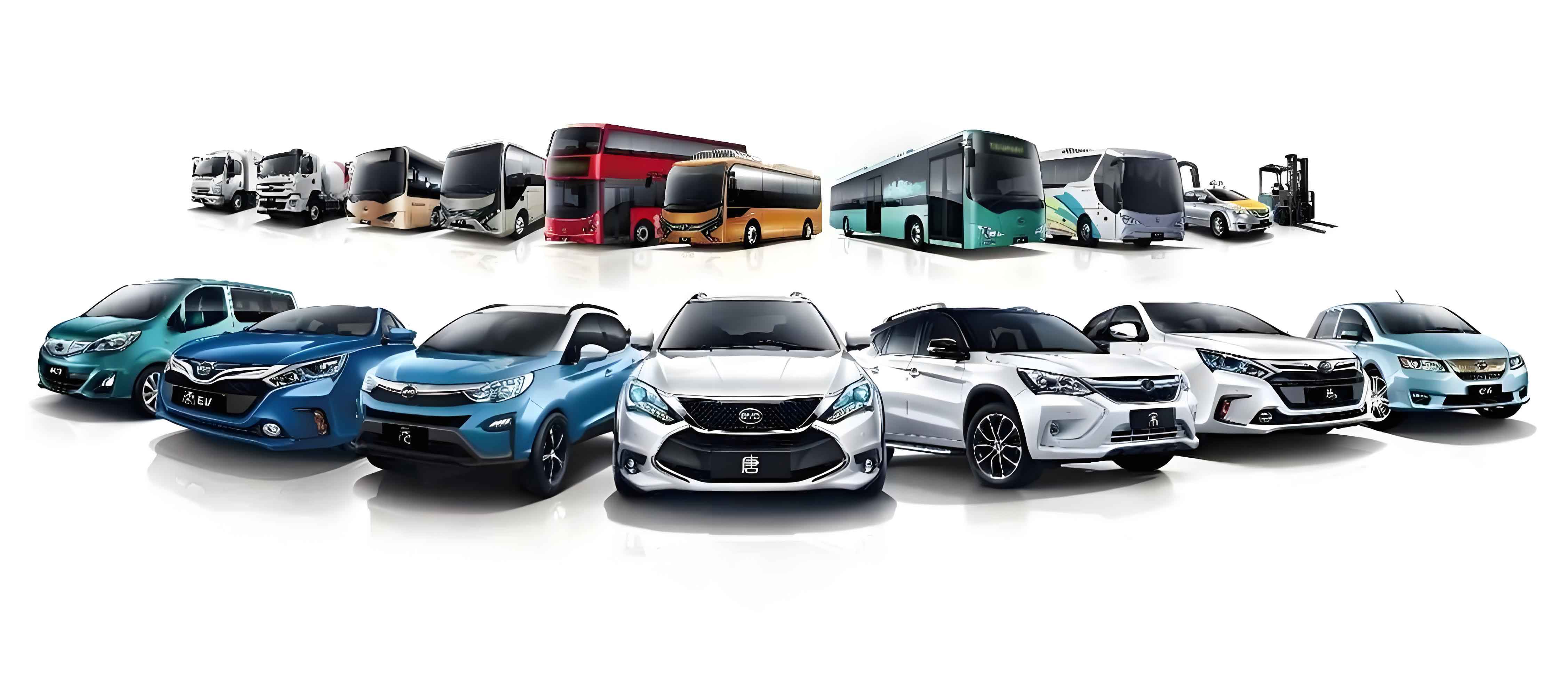
The transition to 800V high-voltage platforms represents a significant shift in the electric vehicle industry, particularly in regions like China where the electric vehicle market is expanding rapidly. China EV manufacturers have been at the forefront of this innovation, driven by consumer demand for faster charging and longer ranges. This article explores the current state of 800V platform adoption, the technical challenges it presents, and its implications for the future of electric vehicles. We will analyze aspects such as vehicle architecture, high-voltage components, charging infrastructure, and standardization efforts, using formulas and tables to summarize key points. The focus is on how this technology can transform the electric vehicle landscape, with repeated emphasis on the growth of China EV markets and the broader electric vehicle ecosystem.
Development and Adoption of 800V High-Voltage Platforms
The push for 800V high-voltage platforms stems from the need to achieve charging powers of at least 400 kW, which is essential for reducing charging times to match refueling stops for gasoline vehicles. Compared to the prevalent 400V systems, 800V platforms can double the voltage, thereby halving the current for the same power output and reducing resistive losses. This has led to a wave of innovation among electric vehicle manufacturers, especially in China, where companies are competing to deploy 800V technology. For example, several China EV brands have introduced models capable of charging from 10% to 80% in under 15 minutes, leveraging high-power charging stations.
To illustrate the progress, Table 1 summarizes the key milestones in 800V platform development, highlighting charging performance and infrastructure support. Note that specific company names are avoided to adhere to content guidelines, focusing instead on general trends in the electric vehicle sector.
| Feature | 400V Platform | 800V Platform | Impact on Electric Vehicle Adoption |
|---|---|---|---|
| Typical Charging Power | Up to 120 kW | 400 kW and above | Reduces charging time significantly, enhancing convenience for electric vehicle users |
| Current Levels | High (e.g., 300 A) | Lower for same power (e.g., 150 A) | Decreases heat loss and cable weight, improving efficiency in electric vehicles |
| Charging Time (10-80%) | 30-40 minutes | 15 minutes or less | Addresses range anxiety, boosting electric vehicle sales |
| Infrastructure Requirements | Standard charging stations | High-power charging stations | Requires investment, but supports growth of China EV market |
The adoption of 800V systems is not limited to passenger cars; it extends to commercial electric vehicles, further driving the evolution of the electric vehicle industry. In China, government policies and incentives have accelerated this trend, with initiatives aimed at building a robust charging network. For instance, the deployment of ultra-fast charging stations has expanded in urban and highway areas, supporting the rapid charging capabilities of 800V-equipped electric vehicles. This aligns with global efforts to reduce carbon emissions and promote sustainable transportation.
From a technical perspective, the benefits of 800V platforms can be quantified using efficiency equations. For example, the power loss in a system due to resistance is given by $$ P_{\text{loss}} = I^2 R $$. By doubling the voltage to 800V, the current is halved for the same power, reducing power loss by a factor of four: $$ P_{\text{loss, 800V}} = \left( \frac{I}{2} \right)^2 R = \frac{I^2 R}{4} $$. This demonstrates why 800V systems are more efficient, making them ideal for high-performance electric vehicles. Moreover, the reduced current allows for thinner and lighter wiring harnesses, which contributes to overall vehicle weight reduction and energy savings—a critical factor for extending the range of electric vehicles.
Technical Challenges in Implementing 800V High-Voltage Platforms
While the shift to 800V high-voltage platforms offers numerous advantages for electric vehicles, it introduces several technical challenges that must be addressed to ensure safety, reliability, and compatibility. These challenges span standardization, vehicle architecture, high-voltage components, and charging infrastructure, each requiring innovative solutions to support the widespread adoption of electric vehicles, particularly in growing markets like China EV.
Standardization and Regulatory Frameworks
The current standards for electric vehicle charging, such as those based on 400V systems, are inadequate for 800V platforms. Higher voltages necessitate stricter safety protocols to prevent electrical hazards like arcing and insulation breakdown. For instance, the dielectric strength requirements for components must increase, as breakdown voltage is proportional to the gap and material properties, described by $$ V_b = k \cdot d $$, where \( V_b \) is breakdown voltage, \( k \) is a constant, and \( d \) is distance. Regulatory bodies are working on updates, such as new national standards for conduction charging systems, which include tests for high-voltage safety. However, the pace of standardization must keep up with technological advancements to avoid bottlenecks in the deployment of electric vehicles.
Table 2 outlines key areas where standards need revision for 800V electric vehicle systems, emphasizing the global and China-specific contexts.
| Aspect | Current Standards (400V-based) | Required Updates for 800V | Impact on Electric Vehicle Safety and Interoperability |
|---|---|---|---|
| Charging Connectors | Rated for lower voltages | Higher voltage ratings and enhanced insulation | Ensures safe charging for all electric vehicle models, including China EV brands |
| Component Testing | Basic high-voltage tests | Rigorous dielectric and thermal tests | Reduces risks of failures in electric vehicle systems |
| Grid Integration | Limited to moderate power | Support for high-power demands | Facilitates ultra-fast charging infrastructure for electric vehicles |
Vehicle Architecture and High-Voltage Components
Implementing 800V platforms requires reevaluating the entire electric vehicle architecture. Two primary approaches have emerged: full 800V systems, where all high-voltage components operate at 800V, and hybrid systems that use DC/DC converters to interface between 400V and 800V levels. The full 800V architecture, as seen in some pioneering models, demands that components like batteries, motors, and onboard chargers (OBCs) withstand higher voltages. This involves upgrading insulation materials and thermal management systems to handle increased electrical stress. The power handling capacity of semiconductors, such as silicon carbide (SiC) devices, becomes crucial, as they offer better efficiency at high voltages. The efficiency of a SiC-based inverter can be modeled as $$ \eta = \frac{P_{\text{out}}}{P_{\text{in}}} $$, where higher voltages reduce switching losses, improving overall electric vehicle performance.
In contrast, hybrid architectures incorporate DC/DC converters to step up voltage from 400V to 800V, allowing compatibility with existing charging infrastructure. However, this adds complexity, cost, and weight, which can offset some benefits of the 800V system. The power conversion efficiency in such systems is given by $$ \eta_{\text{conv}} = \frac{V_{\text{out}} I_{\text{out}}}{V_{\text{in}} I_{\text{in}}} $$, where losses must be minimized to maintain electric vehicle efficiency. Table 3 compares the two architectural approaches, highlighting their implications for electric vehicle design and China EV applications.
| Architecture Type | Description | Advantages | Disadvantages | Relevance to Electric Vehicle Markets |
|---|---|---|---|---|
| Full 800V System | All components operate at 800V | Higher efficiency, reduced current losses | Higher cost, limited component availability | Ideal for premium electric vehicle segments, including high-end China EV models |
| Hybrid System with DC/DC | Uses converters for voltage step-up | Compatibility with existing infrastructure | Added weight and complexity | Useful for transitioning electric vehicle fleets in regions like China EV markets |
High-Voltage Wiring Harnesses
High-voltage wiring harnesses are critical components in electric vehicles, responsible for transmitting power between batteries, motors, and charging ports. In 800V systems, while standard harnesses may suffice for general applications,直流快充 (DC fast charging) cables face heightened challenges due to elevated power levels. The heat generation in cables during fast charging can be derived from $$ Q = I^2 R t $$, where for a given power, higher voltages reduce \( I \), but the sheer power magnitude still causes significant heating. To mitigate this, liquid-cooled cables have been proposed, integrating cooling systems within the cable structure. However, these solutions are heavier and lack standardized regulations, posing hurdles for electric vehicle manufacturers. The resistance of a cable can be expressed as $$ R = \rho \frac{L}{A} $$, where \( \rho \) is resistivity, \( L \) is length, and \( A \) is cross-sectional area. Thinner cables for 800V systems must balance reduced weight with adequate current-carrying capacity, ensuring reliability in diverse electric vehicle operating conditions.
Charging Infrastructure
The success of 800V high-voltage platforms hinges on the availability of compatible charging infrastructure. Currently, high-power charging stations supporting 800V are scarce, and many existing networks are designed for 400V electric vehicles. While some automakers are building proprietary networks, this fragmentation can lead to “vehicle waiting for charger” scenarios, undermining the benefits of fast charging. Standardizing charging stations is essential to create a seamless experience, similar to gasoline refueling. The power delivery of a charging station can be modeled as $$ P_{\text{charge}} = U_{\text{station}} \times I_{\text{station}} $$, where for 800V systems, stations must handle voltages up to 1000V and currents over 500A. In China, efforts to expand ultra-fast charging networks are underway, but interoperability remains a challenge for the broader electric vehicle ecosystem.
To quantify infrastructure needs, consider the charging time equation: $$ t = \frac{E}{P} $$, where \( t \) is time, \( E \) is energy capacity, and \( P \) is power. For an electric vehicle with a 100 kWh battery, achieving a 10-80% charge in 15 minutes requires $$ P = \frac{0.7 \times 100 \text{ kWh}}{0.25 \text{ h}} = 280 \text{ kW} $$, which is feasible with 800V systems but demands robust grid support. Table 4 summarizes the infrastructure challenges and solutions for 800V electric vehicle charging.
| Infrastructure Aspect | Current State | Future Needs for 800V | Impact on Electric Vehicle Usability |
|---|---|---|---|
| Charging Station Power | Up to 350 kW for some networks | 400-500 kW or higher | Enables ultra-fast charging for electric vehicles, reducing downtime |
| Grid Capacity | Strained in high-demand areas | Upgrades for high-power loads | Essential for supporting dense electric vehicle adoption, e.g., in China EV hotspots |
| Interoperability | Brand-specific networks common | Universal standards and open access | Promotes equitable access for all electric vehicle users |
Future Outlook and Conclusion
The transition to 800V high-voltage platforms represents a pivotal advancement in the electric vehicle industry, offering a pathway to overcome range and charging limitations. By enabling higher power charging with reduced losses, this technology can significantly enhance the appeal of electric vehicles, particularly in markets like China where demand for efficient transportation is rising. However, the journey is fraught with challenges, including the need for updated standards, component upgrades, and expansive charging infrastructure. As manufacturers continue to innovate, collaboration among stakeholders—such as automakers, suppliers, and regulators—will be crucial to address these hurdles.
From a technical standpoint, the efficiency gains of 800V systems can be summarized using overall vehicle efficiency metrics. For example, the total energy consumption of an electric vehicle per kilometer can be expressed as $$ E_{\text{km}} = \frac{P_{\text{total}}}{v} $$, where \( P_{\text{total}} \) includes propulsion and auxiliary losses, and \( v \) is velocity. With 800V platforms, reduced resistive losses and lighter components lower \( P_{\text{total}} \), improving \( E_{\text{km}} \) and extending range. This underscores the potential of high-voltage systems to revolutionize electric vehicle performance.
In conclusion, while 800V high-voltage platforms present technical and infrastructural challenges, their benefits in terms of faster charging and improved efficiency make them a cornerstone of the future electric vehicle landscape. For China EV and global markets, overcoming these obstacles through standardization and innovation will accelerate the adoption of electric vehicles, contributing to a sustainable transportation ecosystem. As research progresses, we anticipate further refinements in materials, such as advanced semiconductors and cooling technologies, that will make 800V systems more accessible and reliable for all electric vehicle segments.