
In this article, I investigate how closed-loop supply chains for vehicle traction battery recycling should be designed when a vehicle-battery separation business model is adopted. The growing wave of retired vehicle traction battery packs has placed enormous pressure on Chinese electric-vehicle manufacturers to design economically and environmentally efficient collection, reuse, and material-recovery strategies. Rather than treating power-battery recycling as a purely technical problem, I model the economic interactions among battery manufacturers, vehicle brand owners, battery asset companies, and consumers. I use Stackelberg games, closed-loop supply-chain theory, and numerical simulation to compare several recycling strategies under different ownership structures and alliance configurations.
Vehicle-battery separation is a particularly important innovation because it changes the ownership of the vehicle traction battery. When a vehicle brand owner sells the car body separately and leases the battery, the battery remains in the hands of an industrial player throughout its useful life. Therefore, at the end of its first life, the retired vehicle traction battery can be recovered with almost complete certainty. This property makes vehicle-battery separation attractive not only for reducing the initial purchasing cost of electric vehicles, but also for facilitating formal recycling, cascade utilisation, and material closure in the battery supply chain.
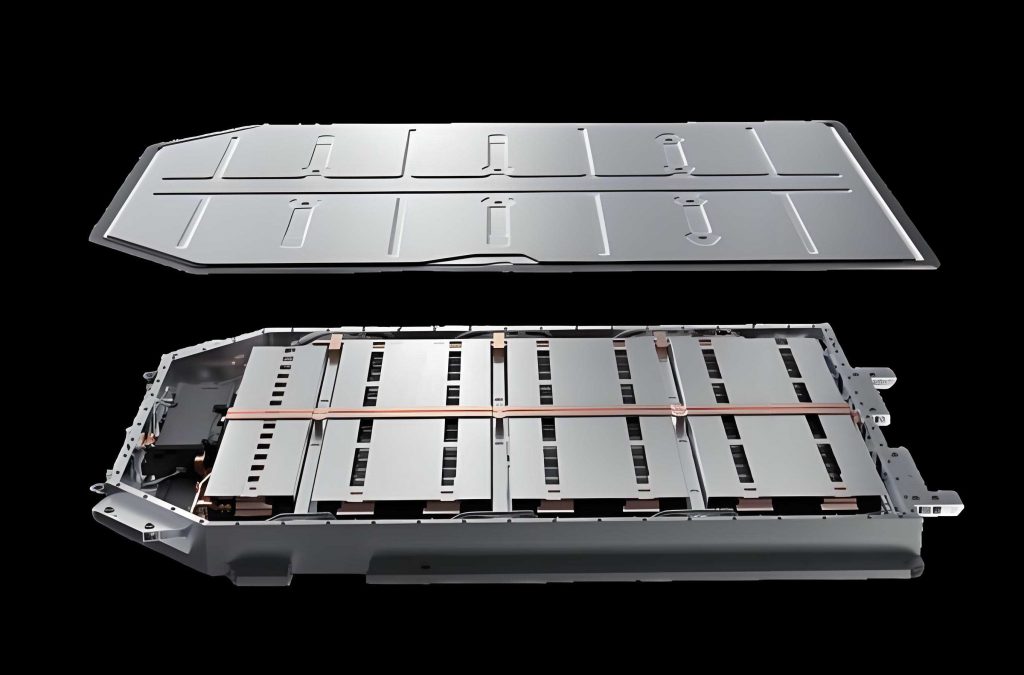
My analytical work is divided into two broad settings. In the first setting, the vehicle brand owner coordinates the reverse channel. I compare three strategies: independent recycling by the brand owner, cooperative recycling with the battery manufacturer, and cooperative recycling under vehicle-battery separation. In the second setting, a battery-asset company is introduced as an independent owner and lessor of vehicle traction battery packs. The battery-asset company works under an industrial alliance with the battery manufacturer and vehicle brand owner. I study three alliance modes: no maintenance and no recycling, maintenance only, and recycling with second-life utilisation. In both settings, I explicitly include cascade utilisation, or tiered reuse, so that a retired vehicle traction battery that still has enough capacity can be used in less demanding energy-storage applications before it is finally dismantled.
Motivation and policy background
In order to meet its carbon-peak and carbon-neutrality commitments, China has treated electric vehicles as one of the most important strategic industries. National statistics show that the domestic sales of new energy vehicles have ranked first in the world for several consecutive years. Nevertheless, the phase-out of purchase subsidies has forced vehicle brand owners to search for business-model innovations that can sustain demand. Vehicle-battery separation has emerged as one such innovation because it lowers the upfront price paid by consumers, relieves battery-replacement anxiety, and permits battery swapping or leasing in the future.
At the same time, the first large cohort of original vehicle traction battery packs is approaching retirement. A typical lithium-ion power pack is usually retired when its usable capacity falls to about eighty percent of the initial value. A retired vehicle traction battery can still offer hundreds of useful cycles in less demanding applications. If all such batteries are sent immediately to a recycling furnace, much of their remaining economic value is wasted. For this reason, the Chinese government has promoted a two-stage approach. The first stage is cascade utilisation; the second stage is dismantling and hydrometallurgical or pyrometallurgical recovery of valuable materials, including lithium, nickel, cobalt, and manganese.
Table 1 summarises the recent Chinese policy framework that underlies my modelling assumptions. Although many papers discuss government subsidies, I do not make subsidies the main variable. Instead, I let the supply-chain contracts themselves, including leasing, repair, collection commissions, and alliance arrangements, create endogenous incentives for vehicle traction battery recovery.
| Year | Policy orientation |
|---|---|
| 2018 | Administrative measures for collection and recycling of traction batteries are introduced. |
| 2019 | Local governments are required to accelerate construction of collection networks. |
| 2020 | Guidance is issued on building a complete recycling system for traction batteries. |
| 2021 | Greater investment is directed toward formal recycling facilities. |
| 2022 | A long-term plan for 2022-2030 is published, with emphasis on cascade utilisation. |
| 2023 | Implementation schemes promote extended producer responsibility and regional cooperation. |
From a managerial standpoint, the relevant question is not only how to recover more vehicle traction battery packs, but also which player should be responsible for collection, who should pay for it, and how recovered value should be shared. In the rest of this article, I use game-theoretic models to provide quantitative insight into these questions.
Theoretical foundations and modelling method
Closed-loop supply-chain management extends the ordinary forward supply chain with reverse flows of used products, spare parts, or materials. A well-designed closed-loop supply chain internalises the residual value of a used product and reduces the need for virgin materials. In the case of a vehicle traction battery, the closed-loop logic is visible in two directions. In the forward direction, the battery manufacturer sells a new battery to a brand owner or battery-asset company, which then makes it available to the consumer in a vehicle. In the reverse direction, the retired battery is collected from the consumer, tested, sorted, and eventually divided into two streams. The first stream, usually a high-capacity retired battery or module, enters cascade utilisation in stationary storage or similar low-intensity duties. After the second life is completed, the same battery is dismantled. The second stream, which consists of damaged or heavily degraded packs, goes directly to material recovery.
Throughout the article, I rely on a leader-follower framework. The battery manufacturer, because of technological intensity and upstream concentration, acts as the Stackelberg leader. The brand owner or battery-asset company acts as the follower. The decisions are made sequentially. I assume that the battery manufacturer can foresee how the follower will respond to its wholesale price, lease price, or collection contract. I then solve the model by backward induction and use the first-order optimality conditions to derive closed-form equilibria.
Since this is an economic model rather than an engineering simulation, I make several simplifying assumptions. First, the market demand for vehicles and batteries is linear in the total consumer cost. Second, the number of retired vehicle traction battery packs returned by consumers increases with the collection price and with the collection effort. Third, I do not model depreciation over the calendar life of the battery. Instead, I use the eight-year battery life as a unit, and I treat the cascaded-use value as a deterministic parameter. These assumptions keep the model tractable while preserving the key strategic interactions.
Model notation and demand system
Table 2 lists the principal parameters and decision variables used in this article. Because the chapter-3 model and chapter-4 model differ slightly in institutional details, I interpret the symbols in the context of each model. The key parameters are deliberately expressed in monetary units per battery or per vehicle, so all supply-chain profits can be compared directly.
| Symbol | Meaning |
|---|---|
| $a$ | Maximum market size of electric vehicles |
| $b$ | Price sensitivity of forward demand |
| $g$ | Voluntary return volume of retired batteries |
| $h$ | Collection-price sensitivity of reverse supply |
| $c_1$ or $c_M$ | Unit production cost of a new vehicle traction battery |
| $c_2$ or $c_B$ | Vehicle assembly and body production cost |
| $f_0$ | Fixed setup cost of collection or dismantling facility |
| $\lambda$ | Fraction of retired batteries suitable for cascade utilisation |
| $t$ | Unit leasing revenue from second-life application |
| $v$ | Unit material-recovery value after dismantling |
| $m$ | Battery wholesale price, decided by the battery manufacturer |
| $p$ | Retail price of a complete vehicle, decided by the brand owner |
| $u$ | Collection price paid to the consumer for a retired battery |
Let the consumer utility of buying an electric vehicle be inversely related to the total cost. In the classical brand-owner model, the total consumer cost is simply the retail vehicle price $p$, because the battery is embedded in the car. Hence the demand is $D=a-bp$. When the battery is leased under vehicle-battery separation, the consumer pays separately for the car body and for the battery lease. Suppose that the car body has a price $p_c$ and the lease premium over the life of the battery is $F$. Then the corresponding demand is $D=a-b(p_c+F)$.
In the reverse channel, the quantity of returned vehicle traction battery packs is an increasing function of the monetary reward received by consumers. In the independent-recycling model, I write the reverse supply as $Q=g+h u$. In the cooperative-recycling model, the manufacturer pays a per-unit commission to the brand owner in addition to the consumer collection price, so the reverse volume reacts to a richer incentive variable.
Brand-owner-centric recycling under vehicle-battery separation
In this section, I consider a closed-loop supply chain composed of a battery manufacturer, a vehicle brand owner, and consumers. The battery manufacturer sells vehicle traction battery packs to the brand owner. The brand owner assembles the vehicle and sells it to the consumer. In the reverse direction, the brand owner is responsible for collecting the retired battery. I compare three strategies. In the first strategy, the brand owner independently collects, sorts, cascades, and dismantles the retired packs. In the second strategy, the brand owner and the battery manufacturer sign a cooperative reverse contract. In the third strategy, the vehicle brand owner uses vehicle-battery separation, so the battery manufacturer retains ownership and leases the battery to the consumer. I denote these three strategies by subscripts $A$, $B$, and $C$, respectively.
| Strategy | Owner of the battery during use | Who performs recovery | Forward contract |
|---|---|---|---|
| $A$: independent recycling | Consumer purchases complete vehicle | Brand owner | $p=m+\text{margin}$ |
| $B$: cooperative recycling | Consumer purchases complete vehicle | Manufacturer and brand owner | $p=m+\text{margin}$ |
| $C$: vehicle-battery separation | Battery manufacturer or asset company | Manufacturer and brand owner | $p=p_c+F$ |
Strategy A: independent recycling by the brand owner
Under Strategy A, the battery manufacturer first announces the wholesale price $m$ of the vehicle traction battery. The brand owner then chooses the vehicle retail price $p$ and the consumer collection price $u$. The forward market demand is $D=a-bp$. The reverse supply function is $Q=g+hu$. For each collected battery, the brand owner earns two types of residual value. A share $\lambda$ of the retired vehicle traction battery packs is suitable for second-life applications and is leased to an echelon user for a unit revenue $t$. The remaining share is dismantled immediately, yielding material value $v$. Therefore, the brand owner also receives $(\lambda t+v)Q$ from the reverse operation. The fixed setup cost of the collection and sorting facility is $f_0$.
The profit functions of the manufacturer and brand owner are:
$$
\max_{m}\;\pi_{M}^{A}=(m-c_1)(a-bp),
$$
$$
\max_{p,u}\;\pi_{B}^{A}=(p-c_2-m)(a-bp)+(\lambda t+v-u)(g+hu)-f_0.
$$
Solving the Stackelberg game, I obtain the equilibrium:
$$
m^{A}=\frac{a+b c_1-b c_2}{2b},
\qquad
p^{A}=\frac{3a+b c_1+b c_2}{4b},
$$
$$
u^{A}=\frac{h(\lambda t+v)-g}{2h},
\qquad
Q^{A}=\frac{g+h(\lambda t+v)}{2}.
$$
The corresponding equilibrium profits can be written as:
$$
\pi_{M}^{A}=\frac{(a-bc_1-bc_2)^2}{8b},
$$
$$
\pi_{B}^{A}=\frac{(a-bc_1-bc_2)(a-bc_1-5bc_2)}{16b}
+\frac{[h(\lambda t+v)+g]^2}{4h}-f_0.
$$
It is apparent from the expression for $u^{A}$ that the brand owner pays a positive collection price only when the residual value $\lambda t+v$ is sufficiently high relative to the voluntary return supply. If the residual value is too low, the brand owner has weak economic motivation to collect retired vehicle traction battery packs.
Strategy B: cooperative recycling by brand owner and manufacturer
Under Strategy B, the battery manufacturer does not simply wait for the brand owner to recycle independently. Instead, the manufacturer pays a cooperation subsidy $s$ for every vehicle traction battery pack returned through the brand-owner channel. The manufacturer receives the collected packs, carries out sorting, cascade utilisation, and final dismantling, and captures the residual value. The brand owner remains responsible for establishing the reverse channel and for motivating consumers to return used packs.
I model the reverse volume as a function of both the collection price and the cooperation subsidy. In the cooperative model, the subsidy creates an extra incentive for the brand owner to enlarge the collection channel. Using the same backward-induction logic, the forward-channel variables are unaffected by the reverse-channel contract:
$$
m^{B}=m^{A}, \qquad p^{B}=p^{A}.
$$
This result is important because it indicates that a well-designed reverse contract can improve collection without distorting the retail decisions in the forward market. The equilibrium collected quantity in the cooperative strategy is higher than the independent-strategy quantity. In particular, with the linear return function described above, the cooperative reverse channel yields:
$$
Q^{B}=\frac{3}{4}\left[g+h(\lambda t+v)\right]\;=\;\frac{3}{2}Q^{A}.
$$
Because the quantity of returned retired vehicle traction battery packs increases, consumer participation in the formal recycling system also increases. This is a useful insight for extended producer responsibility. Rather than forcing both upstream and downstream firms to build duplicate facilities, the manufacturer and the brand owner can jointly use the existing vehicle sales network as a collection network.
I further compare the profits of the two strategies. The manufacturer earns a larger profit under cooperative recycling if its fixed cost of establishing an independent recycling division is sufficiently small, meaning that its costs do not exceed the additional reverse surplus generated by cooperation. The brand owner earns a larger profit in the cooperative contract when the subsidy parameter lies in an intermediate range. If the manufacturer’s cooperation subsidy is too low, the brand owner cannot cover its collection channel costs. If the subsidy is too high, the manufacturer claims too much reverse value and leaves little channel incentive for the brand owner.
Strategy C: vehicle-battery separation combined with cooperative recycling
Strategy C is the most distinctive business model. The vehicle brand owner no longer sells a vehicle traction battery to the consumer together with the car body. Instead, the brand owner sells the car body alone at a retail price $p_c$, while the battery manufacturer leases the battery to the consumer through the vehicle brand owner. Let $F$ be the total lease fee over the eight-year design life of the battery. The total monetary cost paid by the consumer across the entire vehicle life is $p_c+F$, and forward demand is $D=a-b(p_c+F)$.
Because the battery manufacturer is still the owner of the vehicle traction battery, the battery has a definite owner after it is retired. This is the key theoretical advantage of vehicle-battery separation. In principle, one hundred percent of the retired packs can be returned because the consumer does not own the physical battery. The manufacturer also collects the residual value $\lambda t+v$ from every retired battery after it completes the lease.
The manufacturer’s profit is:
$$
\pi_{M}^{C}=(F-c_1+\lambda t+v)D-f_0.
$$
The brand owner’s profit arises only from the car body:
$$
\pi_{B}^{C}=(p_c-c_2)D.
$$
The equilibrium battery lease fee is:
$$
F^{C}=\frac{a+b c_1-b c_2-b(\lambda t+v)}{2b},
$$
and the equilibrium price of the battery-free car body is:
$$
p_c^{C}=\frac{a+3bc_2-b c_1+b(\lambda t+v)}{4b}.
$$
I now compare the three strategies. The most compelling results are as follows. First, cooperative recycling does not hurt the forward market; the wholesale price and retail price of the complete vehicle are the same in Strategy A and Strategy B. Second, cooperative recycling improves the recovery rate of retired vehicle traction battery packs relative to independent recycling. Third, when the reverse value is positive, Strategy C can motivate a higher collection rate than either Strategy A or Strategy B because the battery remains under a professional owner. This indicates that vehicle-battery separation is not only a sales tool but also a collection mechanism.
However, the reverse residual value also affects vehicle pricing. When the cascade value $t$ and material value $v$ are very large, the lease fee $F^{C}$ falls. If the residual value is high, the manufacturer can afford to give up some initial lease revenue because it expects to recover value at the end of the battery’s life. In contrast, the car body price $p_c^{C}$ may increase with residual value. This counter-intuitive result arises because the brand owner receives a smaller battery-related margin in the separation model, so the brand owner must price the car body based on the car body cost and the residual leakage from the vehicle-battery separation.
Numerical observations for the brand-owner-centric model
I use numerical experiments to illustrate the effect of $\lambda$, which is the fraction of retired vehicle traction battery packs suitable for cascade utilisation. A larger $\lambda$ means that more retired batteries enter the second-life market rather than being immediately dismantled. In my simulations, a higher $\lambda$ generally raises the total reverse surplus. Both the independent-recycling and cooperative-recycling strategies then produce larger profits for the brand owner and manufacturer.
Figure 4 visually confirms that the collection-price sensitivity parameter $h$ and the cooperation-subsidy sensitivity are important moderators. When $h$ is large, consumers are reactive to price incentives, so the cooperative collection strategy is very effective. When $h$ is small, consumers bring their used packs infrequently and fixed convenience matters. In that case, the vehicle-battery separation model has an edge because it removes the need for the consumer to decide whether to return the battery.
Alliance-based recycling with a battery asset company
In the second part of my research, I introduce a battery asset company as an independent owner of the vehicle traction battery. This structure is closer to practice because vehicle-battery separation often requires a special-purpose company to manage battery purchasing, leasing, maintenance, and recycling. The battery asset company purchases vehicle traction battery packs from the battery manufacturer, leases them to electric-vehicle consumers, and coordinates with both the brand owner and the manufacturer for maintenance and recovery. The brand owner still sells the vehicle without a battery. I denote the price of the car body by $\theta p_0$, where $\theta$ captures the ratio between the car-body price and the battery price.
The battery manufacturer acts as the Stackelberg leader and sets the battery price $p_0$. The battery asset company, as the follower, sets the annual lease fee $F$. Consumers purchase or lease the car body from the brand owner but pay the battery lease fee to the asset company. The total consumer cost determines demand: $D=a-b(\theta p_0+F)$.
In this alliance setting, I distinguish between two reverse decisions. The first is maintenance: when a consumer returns a vehicle traction battery that has experienced a local fault, the battery asset company can repair it by replacing some battery cells or modules. The second is recycling: after the battery is retired, the asset company sorts it into a cascade-utilisation stream and a dismantling stream. I denote the fraction of retired packs that can be channelled into cascade use by $\lambda$. The remaining packs are dismantled or sold to the manufacturer for material recovery.
| Mode | Maintenance of used battery | Recycling of retired battery |
|---|---|---|
| X: NMNR | No | No |
| Y: MNR | Yes | No |
| Z: NMR | No | Yes |
Mode X: no maintenance and no recycling
Mode X is the benchmark. The battery manufacturer sells a new vehicle traction battery to the battery asset company at price $p_0$ and incurs production cost $c_M$. The brand owner sells the car body and pays assembly cost $c_B$. The battery asset company receives a rental profit $(F-p_0)$ for each battery, where $F$ is the total lease revenue over a normalised lease horizon.
The profit functions are:
$$
\pi_{M}^{X}=(p_0-c_M)D,\qquad
\pi_{B}^{X}=(\theta p_0-c_B)D,\qquad
\pi_{A}^{X}=(F-p_0)D.
$$
Using backward induction, I solve the battery asset company’s lease fee for a given battery price $p_0$:
$$
F^{X}(p_0)=\frac{a+b(1-\theta)p_0}{2b}.
$$
Substituting this reaction into the manufacturer’s problem, I obtain the equilibrium battery price and lease fee, which I denote by $p_0^{X}$ and $F^{X}$. In the numerical analysis, I set the car-body price parameter $\theta$ in a realistic range and show that a higher $\theta$ reduces the equilibrium lease fee if the manufacturer keeps the same battery price. The reason is that a high car-body price lowers demand; the asset company compensates by lowering the battery lease fee, although the lease fee cut is insufficient to keep demand unchanged.
Mode Y: maintenance without recycling
Mode Y introduces maintenance into the closed-loop supply chain. A fraction of the leased vehicle traction battery packs are subject to local faults before the end of their life. The battery asset company collects the faulted battery from the consumer, charges a maintenance fee, and requests a replacement battery module or battery pack from the manufacturer. The manufacturer produces the replacement module and receives a payment from the asset company.
I let $\alpha$ be the share of batteries that do not require maintenance. Equivalently, $(1-\alpha)$ is the faulty share that enters maintenance. The manufacturer’s profit in Mode Y is:
$$
\pi_{M}^{Y}=p_0D-c_MD+(1-\alpha)p_1D-c_r(1-\alpha)D,
$$
$$
\pi_{B}^{Y}=\theta p_0D-c_BD,
$$
$$
\pi_{A}^{Y}=FD+s(1-\alpha)D-p_0D-(1-\alpha)p_1D,
$$
where $p_1$ is the transfer price of a replacement battery module in the maintenance channel, $c_r$ is the cost of producing a replacement module, and $s$ is the maintenance fee charged to the consumer.
The closed-form equilibrium is algebraically more complicated than in Mode X, but the managerial implications are clear. I summarise them in two propositions.
Proposition 1. Suppose the maintenance fee $s$ charged to the consumer is not too high. Then a longer average battery-lease duration raises the equilibrium market demand because consumers are willing to use the maintenance service to extend the useful life of the vehicle traction battery. The battery asset company should control the maintenance price $s$ so that battery leasing remains attractive. If the maintenance fee is greater than a threshold, the long lease horizon becomes a source of consumer anxiety rather than a value-adding feature.
Proposition 2. In Mode Y, an increase in the non-faulty share $\alpha$ reduces the manufacturer’s profits from the maintenance business. Although the manufacturer receives fewer replacement-pack orders when the battery is reliable, the demand for new vehicle traction battery packs may still rise because consumers perceive the system as more reliable. The exact effect depends on the price margin of the replacement pack and the repair fee.
Numerical simulations show that the maintenance strategy tends to increase the wholesale battery price and lower the battery rental price relative to Mode X when $\alpha$ is high. The intuition is straightforward. Maintenance extends the expected lifetime of the vehicle traction battery, which allows the asset company to spread its fixed acquisition cost over a longer stream of lease revenues. The asset company is thus willing to reduce the rental fee. At the same time, the manufacturer captures additional revenue through replacement modules, so it can maintain a profitable wholesale price without losing market share.
Mode Z: recycling with cascade utilisation
Mode Z is the most complete closed-loop mode. The battery asset company collects retired vehicle traction battery packs from consumers and sends them to a sorting station. A fraction $\lambda$ of those packs is classified as suitable for second-life applications and is sold to an echelon-user at a unit price $t$. The remaining fraction $(1-\lambda)$ is sent to the battery manufacturer for dismantling. The battery manufacturer pays the asset company a transfer price $w$ for each retired pack and earns material value $v$ after dismantling. The asset company also incurs a fixed inspection and storage cost $c_A$.
The profit functions are:
$$
\pi_{M}^{Z}=p_0D-c_MD+v(1-\lambda)D-w(1-\lambda)D-f_0,
$$
$$
\pi_{B}^{Z}=\theta p_0D-c_BD-c_1,
$$
$$
\pi_{A}^{Z}=FD-p_0D+\lambda tD+(1-\lambda)wD-c_A.
$$
As before, the equilibrium prices are obtained by backward induction. I analyse how the cascade ratio $\lambda$, the echelon price $t$, and the manufacturer’s buyback price $w$ affect the decisions of the alliance members.
Proposition 3. In Mode Z, when the echelon value $t$ is high, an increase in the cascade ratio $\lambda$ raises the wholesale price of a new vehicle traction battery and lowers the rental fee charged by the battery asset company. The high second-life revenue gives the manufacturer an incentive to price the new battery more aggressively in the forward market, because part of the total return on the battery is deferred to the end of its life. At the same time, the asset company can lower the rental fee because it expects larger revenue from selling retired packs to echelon users.
Proposition 4. In Mode Z, a higher buyback price $w$ paid by the manufacturer for retired packs does not necessarily increase the asset company’s profit. Although the asset company receives higher income per scrap pack, the manufacturer responds by increasing the selling price $p_0$ of new vehicle traction battery packs. This higher battery price increases the asset company’s acquisition cost and reduces its lease-based profit. Therefore, I advise the battery asset company to control the scrap-transfer price $w$ below a profit-maximising threshold; the highest possible $w$ is not always the best for the asset company.
Numerical analysis of the alliance modes
I parameterise the model in a way that reflects the Chinese electric-vehicle market. I let the market size be $a=30000$, the price sensitivity be $b=0.1$, the battery production cost be $c_M=20000$, and the vehicle assembly cost be $c_B=6000$. For these parameter values, I compare the three modes X, Y, and Z with respect to the total demand, battery wholesale price, lease fee, and profit distribution.
The simulations show that Mode Z, which includes cascade utilisation and final dismantling, gives the largest market demand among the three modes. This is because recycling reduces the manufacturer’s exposure to raw-material cost volatility and provides a second stream of value. The demand advantage of Mode Z becomes more visible when $\lambda$ is high. The maintenance mode Y, in contrast, may have the smallest demand when repair costs are high. A high repair fee frightens consumers and reduces their willingness to lease the vehicle traction battery over a long horizon.
I also investigate how the lease duration interacts with the non-faulty share $\alpha$ in Mode Y. A longer lease duration gives the battery asset company more rental income, so the asset company’s profit increases. At the same time, more batteries reach the point where local faults appear, generating maintenance revenue. The manufacturer’s total profit is the sum of the revenue from the initial vehicle traction battery sale and the revenue from replacement packs. Hence the manufacturer benefits from a longer lease duration if the maintenance price margin is sufficiently large. In contrast, the brand owner’s profit is determined mainly by the car-body margin; it is less sensitive to the maintenance decision.
For Mode Z, I plot the manufacturer’s profit and the asset company’s profit against $\lambda$ and $w$. The result confirms Proposition 4. When the cascade ratio $\lambda$ is higher, the manufacturer’s profit increases because more retired vehicle traction battery packs are used in profitable second-life services. The asset company also obtains a higher profit through the sale of retired batteries to the cascade operators. However, when the transfer price $w$ rises, the manufacturer’s marginal cost of acquiring retired packs rises, and the manufacturer compensates by increasing the wholesale battery price $p_0$. The asset company therefore suffers a higher upstream cost and a lower margin in the leasing business. This interesting interaction shows why a unilateral increase in scrap prices can hurt the party that asks for it.
Comparison of practical strategies
Drawing the results together, I can rank the strategies according to two criteria: profit and recovery of retired vehicle traction battery packs. For the brand-owner-centric model, the following conclusions stand out.
First, independent recycling is the least effective from the viewpoint of collection. In the absence of upstream cooperation, the brand owner must finance the entire reverse infrastructure from its own residual-value income. If the residual value is uncertain, the brand owner may underinvest in collection. Cooperative recycling therefore provides a natural improvement because it shares the fixed setup cost and allows the manufacturer to use its technological expertise in sorting and dismantling.
Second, vehicle-battery separation creates a structural advantage because the battery is not sold to the consumer. In the separation model, the manufacturer or battery asset company is already the owner of the vehicle traction battery when the lease ends. Therefore, the recovery rate can be much closer to one hundred percent. From the perspective of environmental policy, vehicle-battery separation cannot be evaluated solely as a financial scheme; it should be considered a powerful tool for reducing leakage of retired batteries into informal recyclers.
Third, cascade utilisation has a double dividend. It increases the residual value of retired packs, and it stimulates the collection effort. In all numerical scenarios, a higher $\lambda$ increases either the collection quantity or the profit of the collector. Therefore, policies that help standardise retired-battery testing and certification for second-life applications are valuable complements to recycling mandates.
For the alliance-based model, the comparison is more nuanced. If the purpose is to increase demand, the recycling mode Z is the best of the three modes. If the purpose is to increase the manufacturer’s total sales revenue and to support high battery reliability, maintenance mode Y may be preferred. The battery asset company should not simply maximise the buyback price at which it sells scrap batteries to the manufacturer. Because the manufacturer internalises the recycling cost through the battery wholesale price, an extremely high scrap price is only a transfer of profit from the asset company to the battery manufacturer in the forward channel.
Managerial implications
The findings of this article can be translated into several managerial recommendations for firms in the vehicle traction battery industry.
First, battery manufacturers should design reverse-supply contracts before retiring waves arrive. Instead of establishing new collection networks from scratch, they should use the distribution networks of vehicle brand owners as collection points. A per-unit commission contract is a simple but effective way to align brand owners’ incentives with the manufacturer’s recycling goal.
Second, vehicle brand owners should not regard recycling as a pure legal burden. By cooperating with battery manufacturers, brand owners can transform their sales networks into profit centres. However, brand owners should evaluate the subsidy coefficient carefully. If the cooperation subsidy is too small, cooperative recycling is not profitable enough. If it is too large, the brand owner may face excessive collection obligations and suffer a decline in profit.
Third, the vehicle-battery separation strategy is especially attractive when the battery price is a large component of the total vehicle price. Battery leasing lowers the consumer’s one-time expenditure, protects the battery owner’s claim on residual value, and increases the recovery rate. Firms should therefore price the car body independently and communicate the total cost of ownership clearly to consumers.
Fourth, battery asset companies should measure not only the average lease duration but also the failure profile of their battery portfolio. A short lease duration can damage the profitability of the leasing model. If the repair fee is high, consumers will avoid long lease contracts and the demand for electric vehicles will fall. Thus the repair fee should be treated as a strategic instrument rather than a cost-recovery surcharge.
Fifth, cascade utilisation should be developed as a core service in the battery-alliance model. The existence of a credible second-life market raises the value of retired vehicle traction battery packs and permits the asset company to lower lease fees in the consumer market. Without a well-regulated cascade market, the economic reason for battery collection is weak and formal recyclers are easily crowded out by illegal dismantlers.
Limitations and future research
My models rely on deterministic linear demand and supply functions. In practice, consumer demand for electric vehicles is stochastic, and the physical condition of a retired vehicle traction battery is highly heterogeneous. Future research should use quality-dependent return functions to capture the fact that high-quality retired packs command higher echelon prices and require different handling costs.
In addition, I do not model competition among multiple battery manufacturers or among multiple battery asset companies. The fast-growing electric-vehicle market contains several large players, and the equilibrium may be different when both horizontal and vertical competition are present. A future extension could introduce two competing battery manufacturers with different cost structures, or two brand owners with different market segments.
Another extension is to model the battery-swapping mode, which is closely related to vehicle-battery separation. In a battery-swapping station, consumers can replace a discharged vehicle traction battery with a fully charged one in minutes. Battery swapping changes the consumer’s valuation of battery capacity, reduces range anxiety, and creates an additional physical channel for inspecting the health of the battery. This deserves a separate treatment.
Conclusion
In this article, I have examined the economics of vehicle traction battery recycling in closed-loop supply chains under the vehicle-battery separation business model. My analysis covers two different governance structures. In the first structure, the vehicle brand owner is the principal collector and either recycles independently or cooperates with the battery manufacturer. In the second structure, a battery asset company owns the vehicle traction battery and coordinates with the battery manufacturer and the brand owner under an industrial alliance. In each structure, I compare multiple recycling strategies and evaluate the effect of cascade utilisation.
The key conclusion is that ownership matters. When the vehicle traction battery is separated from the vehicle body and retained by a professional owner, its retirement can be planned, monitored, and monetised. The manufacturer can use the residual value to reduce the effective cost of the battery over its full life cycle, and the asset company can use maintenance and cascade services to lengthen the profitable life of the pack. Cooperative collection outperforms independent collection because it shares fixed costs and joins the respective advantages of the manufacturer and the brand owner. Recycling with cascade utilisation delivers the highest market demand in the alliance model, while maintenance is most valuable when the repair fee is controlled at a level that consumers are willing to pay.
The results provide useful pricing and recovery decision support for stakeholders in the electric-vehicle vehicle traction battery industry. I hope this research can inform the design of policies and contracts that simultaneously increase profitability, resource efficiency, and environmental protection.