
I have followed the global solid state battery race long enough to see that it is no longer a single technology contest. It is a contest among materials science, manufacturing physics, supply chain design, capital allocation, and national industrial strategy. When I look at the latest annual solid state battery summit, I do not see one winning formula. I see several competing formulas, each with its own performance envelope, cost curve, and failure mode. I see sulfide, oxide, and halide electrolytes advancing in parallel. I see silicon-based anodes, lithium metal anodes, and high-voltage cathodes being redesigned around the solid state battery interface. I see warm isostatic pressing, dry electrode processing, and stack-level densification becoming as important as the chemistry itself.
My first-person view is simple. The solid state battery will not arrive as a sudden replacement for conventional lithium-ion cells. It will arrive as a family of cells, first in semi-solid form, then in all-solid form, and eventually in application-specific packages. The question I keep asking is not whether a solid state battery can work in a laboratory. The question I keep asking is whether a solid state battery can be manufactured at automotive scale, validated under automotive conditions, and sold at an automotive price. That question is much harder, and it is the question that now dominates every serious solid state battery roadmap.
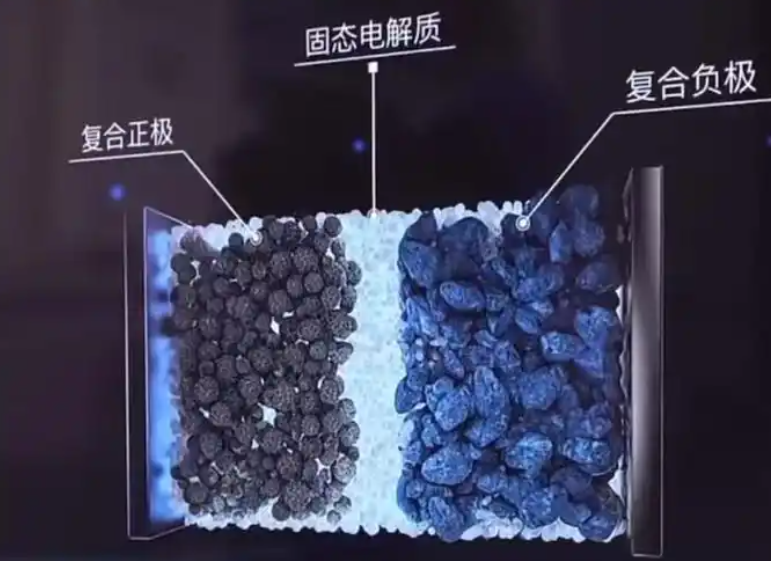
I frame the solid state battery challenge through five linked layers. The first layer is the electrolyte, where ionic conductivity, electrochemical stability, mechanical modulus, and processability must be balanced. The second layer is the anode, where silicon or lithium metal can raise capacity but can also destroy the interface. The third layer is the cathode, where high voltage and high areal capacity increase energy density but accelerate degradation. The fourth layer is the cell stack, where pressure, porosity, and layer alignment determine whether the solid state battery can cycle. The fifth layer is the factory, where yield, throughput, and capital intensity determine whether the solid state battery can scale.
| Layer | Primary Goal | Key Metric | Common Failure |
|---|---|---|---|
| Electrolyte | Fast ion transport with stability | Ionic conductivity, electrochemical window | Interfacial resistance, dendrite penetration |
| Anode | High capacity and stable plating | Specific capacity, volume expansion | Pulverization, dead lithium, contact loss |
| Cathode | High voltage and high loading | Areal capacity, voltage fade | Oxygen release, cracking, side reactions |
| Cell stack | Uniform contact and dense packing | Stack pressure, porosity, alignment | Current constriction, short circuits |
| Factory | High yield and low cost | Cycle time, scrap rate, capex per GWh | Low throughput, contamination, poor reproducibility |
I use a simple set of formulas to compare solid state battery concepts. Ionic conductivity is the first gate. If an electrolyte cannot move ions quickly enough, the solid state battery will fail at power, not at energy. I define conductivity as:
$$\sigma = \frac{1}{R} \frac{L}{A}$$
Here, sigma is ionic conductivity, R is resistance, L is thickness, and A is area. I care about this formula because a solid state battery electrolyte is often a thin membrane. A small improvement in thickness can reduce resistance, but a thin membrane also raises the risk of short circuits. That trade-off is central to every solid state battery design.
I also use the Arrhenius relationship to understand temperature dependence:
$$\sigma T = A \exp\left(-\frac{E_a}{k_B T}\right)$$
In this equation, A is a pre-exponential factor, E sub a is activation energy, k sub B is the Boltzmann constant, and T is temperature. A solid state battery with high activation energy may perform well at elevated temperature but poorly in cold weather. That matters for electric vehicles, because a solid state battery must operate across a wide climate range.
I then connect conductivity to diffusion using the Nernst-Einstein relation:
$$D = \frac{\sigma k_B T}{n q^2}$$
Here, D is the diffusion coefficient, n is carrier concentration, and q is charge. I use this relation because a solid state battery is not only an ion conductor. It is a coupled mechanical and electrochemical system. If ions diffuse slowly, concentration gradients build up, overpotential rises, and lithium can plate in unwanted places. That is how a promising solid state battery becomes a short circuit.
| Electrolyte Family | Ionic Conductivity | Stability | Processability | Main Challenge |
|---|---|---|---|---|
| Sulfide | Very high | Poor against moisture and high voltage | Good for cold pressing | Hydrogen sulfide generation, interfacial instability |
| Oxide | Moderate | Good thermal and chemical stability | Hard and brittle | High interfacial resistance, sintering energy |
| Halide | High to very high | Good voltage stability | Improving | Anode interface, scalable synthesis |
| Polymer | Low at room temperature | Flexible and stable | Roll-to-roll compatible | Low conductivity, oxidation limit |
| Composite | Tunable | Balanced | Complex | Phase compatibility, percolation pathways |
I see the sulfide route as the most aggressive path toward a high-performance solid state battery. Sulfide electrolytes can deliver ionic conductivity comparable to liquid electrolytes, and they can be densified by cold pressing. That makes them attractive for a solid state battery that must compete on power. However, I also see the weakness. Sulfide solid state battery materials are sensitive to moisture, and they can release undesirable gases if handled poorly. They also face electrochemical stability limits against high-voltage cathodes and lithium metal anodes. I would not dismiss sulfide, but I would not treat it as a solved solid state battery platform either.
I see the oxide route as the most stable path. Oxide solid state battery electrolytes are thermally robust and less sensitive to air. That is a major manufacturing advantage. But oxide particles are hard and brittle, and achieving intimate contact with electrodes often requires high-temperature sintering. Sintering consumes energy and can cause unwanted chemical reactions. I therefore view oxide as a strong candidate for stationary storage or specialized solid state battery applications, but a challenging candidate for low-cost automotive solid state battery cells unless the interface problem is solved.
I see the halide route as the most interesting emerging path. Halide solid state battery electrolytes can combine high ionic conductivity with good voltage stability. Some amorphous halide and oxyhalide systems have shown exceptionally high conductivity, which makes them appealing for high-voltage solid state battery designs. The unresolved issue is the anode interface. A halide solid state battery must still survive contact with lithium metal or a silicon-based anode. If that interface can be stabilized, I expect halide electrolytes to become a serious competitor in the solid state battery race.
| Metric | Sulfide | Oxide | Halide | Polymer |
|---|---|---|---|---|
| Room-temperature conductivity | High | Medium | High | Low |
| Moisture sensitivity | High | Low | Medium | Low |
| High-voltage tolerance | Medium | Medium to high | High | Low |
| Mechanical ductility | Good | Poor | Moderate | Excellent |
| Scalability | Medium | Medium | Medium | High |
| Solid state battery readiness | Advanced | Advanced | Emerging | Limited |
I now turn to the anode, because I believe the anode is where the most difficult solid state battery trade-offs appear. Silicon offers a theoretical specific capacity of about 4200 mAh/g, which is more than ten times that of graphite. That number excites every solid state battery developer. But silicon expands dramatically during lithiation. I estimate volume expansion with the following expression:
$$\epsilon_V = \frac{V_{\text{lithiated}} – V_{\text{pristine}}}{V_{\text{pristine}}}$$
For silicon, epsilon sub V can reach 300 percent to 400 percent. That expansion can crack particles, break electronic contacts, and consume electrolyte. In a conventional liquid-electrolyte cell, some expansion can be accommodated by the binder and electrolyte. In a solid state battery, the mechanical constraint is different. The solid electrolyte may suppress expansion, but it may also fracture. I see this as a central paradox. A solid state battery needs pressure to maintain contact, but too much pressure can damage the silicon anode and the electrolyte.
| Anode Type | Specific Capacity | Volume Change | Solid State Battery Challenge |
|---|---|---|---|
| Graphite | About 372 mAh/g | Low | Limited energy gain |
| Silicon blend | 450 to 1500 mAh/g | Moderate to high | Particle cracking, contact loss |
| Silicon dominant | 1500 to 3000 mAh/g | Very high | Stack pressure management |
| Lithium metal | 3860 mAh/g | Infinite plating source | Dendrites, interfacial reactions |
| Anode-free | Cell-level gain | Plating-dependent | Uniform nucleation, cycle life |
I see silicon-based anodes as the more pragmatic near-term route for a solid state battery. They can increase energy density without requiring a pure lithium metal anode. They also fit better with existing roll-to-roll and slurry-based manufacturing, especially in semi-solid solid state battery designs. But I do not think silicon is easy. I think it requires a systems approach: particle architecture, binder design, electrolyte modulus, stack pressure, and formation protocol must all be tuned together.
I see lithium metal as the ultimate anode for a high-energy solid state battery, but also the hardest. Lithium metal offers the highest capacity and the lowest anode potential. If a solid state battery can use a thin lithium metal anode, the cell-level energy density can rise sharply. The problem is that lithium plating is not uniform. Dendrites can grow through grain boundaries, pores, and weak points in the solid electrolyte. I use the following simplified expression for critical current density:
$$J_{cc} = \frac{i_{\text{limit}}}{A}$$
When the applied current density exceeds J sub cc, the solid state battery is more likely to form dendrites. I therefore judge every solid state battery electrolyte not only by conductivity but by its Critical Current Density. A material with high conductivity but low J sub cc is not necessarily a good solid state battery material.
I also look at the cathode side. A solid state battery with a high-capacity anode still needs a high-voltage, high-loading cathode. I calculate cell-level gravimetric energy density as:
$$E_g = \frac{V_{\text{avg}} Q_{\text{cell}}}{m_{\text{cell}}}$$
Here, V sub avg is average voltage, Q sub cell is cell capacity, and m sub cell is cell mass. I calculate volumetric energy density as:
$$E_v = \frac{V_{\text{avg}} Q_{\text{cell}}}{V_{\text{cell}}}$$
These formulas tell me that a solid state battery cannot win on electrolyte alone. It must reduce inactive mass and volume. That means thinner separators, thinner current collectors, higher cathode loading, and fewer packaging overheads. It also means that the solid state battery must be designed as a complete cell, not as a materials demonstration.
| Design Variable | Effect on Energy Density | Effect on Manufacturing | Risk |
|---|---|---|---|
| Thinner electrolyte | Increases | Harder to handle | Short circuits |
| Higher cathode loading | Increases | Harder to coat and densify | Cracking, slow ion transport |
| Silicon anode | Increases | Moderate change | Volume expansion |
| Lithium metal anode | Strongly increases | Major change | Dendrites, safety |
| Bipolar stacking | Increases | Complex | Sealing, thermal management |
I view manufacturing as the true bottleneck of the solid state battery race. A solid state battery is not simply a lithium-ion cell with a solid electrolyte. The process changes. The stack must be densified. The interfaces must be maintained. The pressure must be controlled. I use a basic pressure formula to describe stack compression:
$$\sigma_p = \frac{F}{A}$$
Here, sigma sub p is applied pressure, F is force, and A is area. In a solid state battery, stack pressure is not a minor parameter. It is a functional variable. Too little pressure creates voids and high interfacial resistance. Too much pressure causes cracking, creep, and short circuits. I see warm isostatic pressing as one of the most important process innovations because it applies uniform pressure in multiple directions, which helps densify complex multilayer stacks.
| Process Step | Purpose | Key Parameter | Solid State Battery Impact |
|---|---|---|---|
| Electrolyte synthesis | Create pure ion conductor | Particle size, phase purity | Conductivity, stability |
| Electrode mixing | Distribute active material and electrolyte | Homogeneity, binder content | Ion percolation, mechanical integrity |
| Coating | Form thin layers | Wet thickness, uniformity | Energy density, yield |
| Calendering | Increase density | Pressure, temperature | Contact, porosity |
| Stacking | Assemble layers | Alignment, tension | Short-circuit risk |
| Warm isostatic pressing | Densify uniformly | Temperature, pressure, time | Interface quality, reliability |
| Formation | Activate and stabilize | Current, voltage, temperature | Cycle life, safety |
I use a porosity relationship to think about densification:
$$\phi = 1 – \frac{\rho_{\text{bulk}}}{\rho_{\text{theoretical}}}$$
Here, phi is porosity, rho sub bulk is measured density, and rho sub theoretical is theoretical density. A solid state battery with high porosity may have poor ionic contact and low mechanical strength. A solid state battery with very low porosity may have high density but also high internal stress. I therefore look for a process window, not a single optimum.
I also consider yield. A solid state battery factory cannot succeed if every cell requires perfect laboratory handling. I estimate factory yield as:
$$Y = Y_{\text{material}} Y_{\text{coating}} Y_{\text{stack}} Y_{\text{pressing}} Y_{\text{formation}}$$
Each term is between zero and one. In a solid state battery, the stack and pressing steps can dominate yield loss. A single misaligned layer or a single void can create a short circuit. That is why I believe solid state battery scale-up will be slower than many optimistic timelines suggest.
| Yield Factor | Typical Concern | Detection Difficulty | Cost Consequence |
|---|---|---|---|
| Material purity | Moisture, impurities, phase defects | Medium | Lower conductivity |
| Coating uniformity | Pinholes, thickness variation | Medium | Local hot spots |
| Stack alignment | Edge mismatch, contamination | High | Short circuits |
| Pressing uniformity | Density gradients, cracks | High | Poor cycling |
| Formation | Incomplete activation | Low | Capacity loss |
I see the global solid state battery race as a three-region race with different philosophical approaches. Chinese producers have moved faster into semi-solid solid state battery production because they can leverage a complete lithium-ion supply chain. Japanese and Korean producers have focused on all-solid solid state battery technologies because they want a technology jump. North American and European players include both established manufacturers and venture-backed innovators, and they often focus on lithium metal anodes, ceramic electrolytes, and advanced manufacturing. I do not think one region has a permanent advantage, but I do think each region has a different bottleneck.
| Region | Main Strategy | Strength | Weakness | Solid State Battery Approach |
|---|---|---|---|---|
| China | Semi-solid first, rapid iteration | Supply chain, cost control, scale | All-solid technical gaps | Pragmatic solid state battery transition |
| Japan | All-solid premium launch | Materials research, automotive integration | Cost, supply chain speed | High-performance solid state battery |
| Korea | All-solid mass production | Cell manufacturing, battery expertise | Material maturity | Next-generation solid state battery |
| United States | Innovation-driven startups | Venture capital, advanced materials | Manufacturing scale | Lithium metal solid state battery |
| Europe | Industrial partnerships | Automotive OEM demand, equipment | Fragmented investment | Sovereign solid state battery capacity |
I believe the Chinese semi-solid strategy is often misunderstood. It is not a rejection of the all-solid solid state battery. It is a bridge. A semi-solid solid state battery still contains some liquid or gel-like phase, but it uses a solid or quasi-solid electrolyte to improve safety and energy density. It can be produced on modified lithium-ion lines, which reduces capital risk. I see this as a smart way to learn about solid state battery interfaces, formation, and pack integration before moving to a fully solid system.
I believe the Japanese and Korean all-solid strategies are more ambitious but also more exposed to manufacturing risk. An all-solid solid state battery requires a new stack, new pressing steps, new binders, and new formation protocols. If the solid electrolyte is sulfide-based, the factory must control moisture and oxygen at very low levels. If the anode is lithium metal, the factory must control pressure and temperature with extreme precision. These requirements are not impossible, but they are expensive. I therefore expect the first all-solid solid state battery vehicles to be premium, low-volume, and carefully monitored.
I believe North American and European innovation is strongest at the material and equipment level. Several startups have shown impressive solid state battery cells, but the challenge is transferring those cells into high-volume production. The equipment ecosystem matters. A solid state battery needs mixers, coaters, calenders, stackers, pressers, and formation systems that are designed for solid interfaces. I see warm isostatic pressing as a good example of an equipment-led enabler. It can improve density and contact without the anisotropic pressure gradients of conventional pressing.
| Year Window | Semi-Solid Solid State Battery | All-Solid Solid State Battery | Main Application |
|---|---|---|---|
| Near term | Pilot and early commercial | Prototype and validation | Premium electric vehicles, aerospace |
| Mid term | Scale-up in multiple regions | Small-volume production | High-end vehicles, specialty systems |
| Long term | Cost reduction and integration | Mass production if cost permits | Mainstream electric vehicles |
I now consider standards and validation. A solid state battery is not commercial until it passes automotive-grade tests. Those tests include cycle life, calendar life, fast charging, cold cranking, crush, overcharge, thermal propagation, and vibration. I use a reliability expression to think about failure probability:
$$R(t) = \exp\left(-\left(\frac{t}{\eta}\right)^\beta\right)$$
Here, R is reliability, t is time, eta is scale parameter, and beta is shape parameter. For a solid state battery, beta is particularly important. If beta is less than one, failures decrease over time, suggesting infant mortality. If beta is greater than one, failures increase over time, suggesting wear-out. I want to know which mode dominates in a solid state battery, because it determines warranty cost.
| Validation Area | Test Example | Solid State Battery Challenge | Pass Criterion |
|---|---|---|---|
| Cycle life | Charge-discharge cycling | Interface degradation | Capacity retention target |
| Fast charge | High-rate charging | Lithium plating, heat | No dendrite growth |
| Cold start | Low-temperature operation | High activation energy | Usable power |
| Safety | Thermal propagation | Sulfide gas, lithium reactivity | No fire, no explosion |
| Mechanical | Vibration, shock, crush | Brittle electrolyte fracture | No internal short |
| Manufacturing | Process capability | Uniform pressure and alignment | High yield |
I see cost as the final gate. Many solid state battery designs are technically impressive but economically difficult. I use a simplified cell cost formula:
$$C_{\text{cell}} = \frac{C_{\text{mat}} + C_{\text{proc}} + C_{\text{equip}}/N}{Q_{\text{cell}}}$$
Here, C sub cell is cost per unit energy, C sub mat is material cost, C sub proc is processing cost, C sub equip is equipment cost, N is production volume, and Q sub cell is cell capacity. This formula shows why scale matters so much. A solid state battery with expensive materials can still become affordable if processing is efficient and volume is high. But a solid state battery with low yield will suffer because scrap cost is multiplied across the factory.
| Cost Driver | Effect on Solid State Battery | Reduction Pathway |
|---|---|---|
| Electrolyte material | High for some sulfides and halides | Cheaper precursors, recycling, scale |
| Lithium metal | Handling and safety cost | Thin foils, anode-free design |
| Equipment | High for pressing and dry rooms | Higher throughput, automation |
| Yield | Scrap increases effective cost | Inline inspection, process control |
| Energy density | Lower cost per kWh if cell-level gain is real | Reduce inactive mass |
I also use a learning curve to project cost:
$$C_N = C_0 N^{-\alpha}$$
Here, C sub N is cost at cumulative production N, C sub 0 is initial cost, and alpha is the learning exponent. For a solid state battery, alpha may be smaller than for conventional lithium-ion because the process is more complex. If alpha is small, cost declines slowly even as volume grows. That is why I am cautious about claims that a solid state battery will quickly match conventional lithium-ion cost.
I see supply chain as a hidden constraint. A solid state battery may require lithium, sulfur, phosphorus, chlorine, iodine, germanium, indium, lanthanum, zirconium, and other elements. Some are abundant, but some are not. Some are byproducts, and some are geographically concentrated. I use a supply risk index in my own analysis:
$$SRI = w_1 \frac{D}{P} + w_2 G + w_3 R + w_4 T$$
Here, D/P is demand-to-production ratio, G is geographic concentration, R is recycling readiness, and T is substitution difficulty. I do not need exact weights to see the pattern. A solid state battery that depends on a scarce element may be technically excellent but strategically vulnerable.
| Material | Role in Solid State Battery | Supply Concern | Mitigation |
|---|---|---|---|
| Lithium | Anode and electrolyte | Moderate, growing | Recycling, diversified sources |
| Sulfur | Sulfide electrolyte | Abundant but byproduct-linked | Process optimization |
| Phosphorus | Sulfide and phosphate systems | Moderate | Material efficiency |
| Germanium | Some sulfide electrolytes | High cost and scarcity | Substitution with tin or silicon |
| Lanthanum | Oxide electrolyte | Concentrated supply | Recycling, alternative oxides |
| Zirconium | Oxide electrolyte | Moderate | Thin layers, lower loading |
I now examine safety, because safety is often the public reason for pursuing a solid state battery. A solid state battery can reduce flammable liquid electrolyte, which may lower fire risk. But a solid state battery is not automatically safe. Sulfide electrolytes can react with moisture and produce toxic gas. Lithium metal can react violently if exposed to air or water. High-voltage cathodes can release oxygen at high temperature. I use a thermal balance expression:
$$Q_{\text{gen}} = I^2 R_{\text{int}} + Q_{\text{side}} + Q_{\text{thermal runaway}}$$
Here, Q sub gen is heat generation, I is current, R sub int is internal resistance, Q sub side is side reaction heat, and Q sub thermal runaway is runaway heat. In a solid state battery, R sub int may be higher at low pressure, and Q sub side may be dominated by interface reactions. I therefore see safety as an engineering system property, not a single material property.
| Safety Dimension | Conventional Lithium-Ion | Solid State Battery | Key Test |
|---|---|---|---|
| Flammable liquid | Present | Reduced or eliminated | Puncture, overcharge |
| Lithium metal | Usually absent | Possible | Crush, thermal propagation |
| Gas release | Organic vapors | Sulfide or halide species | Sealed cell gas analysis |
| High-temperature stability | Separator shutdown possible | Material-dependent | Hot box, thermal ramp |
| Mechanical fracture | Separator puncture risk | Electrolyte cracking risk | Vibration, shock, indentation |
I think the most useful way to compare solid state battery programs is a scorecard. I do not want to rank companies by press release. I want to rank them by demonstrated cell performance, demonstrated process capability, and demonstrated supply chain readiness. I use the following qualitative scale in my own notes: one means laboratory concept, three means prototype, five means pilot line, seven means automotive validation, and nine means mass production. I apply this to different dimensions because a solid state battery can be strong in one dimension and weak in another.
| Dimension | Question I Ask | Low Readiness | High Readiness |
|---|---|---|---|
| Electrolyte | Can it conduct and survive? | Only button cells | Large-format cells |
| Anode | Can it cycle without damage? | Half-cell data | Full-cell data |
| Cathode | Can it run at high voltage? | Low loading | High loading |
| Stack | Can it be built uniformly? | Manual assembly | Automated stacking |
| Process | Can it be reproduced? | Batch process | Roll-to-roll and pressing |
| Validation | Can it pass automotive tests? | No vehicle data | Fleet demonstration |
| Cost | Can it be sold? | Unknown | Modeled and audited |
I see several technical equations that will determine the winner. One is the Butler-Volmer equation, which describes charge transfer kinetics:
$$i = i_0 \left[\exp\left(\frac{\alpha_a F \eta}{RT}\right) – \exp\left(-\frac{\alpha_c F \eta}{RT}\right)\right]$$
Here, i is current density, i sub 0 is exchange current density, alpha sub a and alpha sub c are transfer coefficients, F is Faraday constant, eta is overpotential, R is gas constant, and T is temperature. In a solid state battery, the exchange current density depends on the contact area between the electrode and the solid electrolyte. If contact is poor, i sub 0 falls, overpotential rises, and the solid state battery loses power. This is why stack pressure and interfacial engineering matter so much.
I also look at overpotential decomposition:
$$\eta = \eta_{\text{act}} + \eta_{\text{conc}} + \eta_{\text{ohm}}$$
Here, eta sub act is activation overpotential, eta sub conc is concentration overpotential, and eta sub ohm is ohmic overpotential. In a solid state battery, eta sub ohm can be large if the electrolyte is thick or the interface is resistive. Eta sub conc can be large if the cathode is too thick or the electrolyte has low transference number. I therefore judge a solid state battery by its ability to keep all three overpotentials low at high current.
I see stack pressure as a variable that appears in many equations, even when it is not written explicitly. Pressure changes contact area, which changes resistance. Pressure changes porosity, which changes conductivity. Pressure changes mechanical stress, which changes fracture probability. I use a contact resistance approximation:
$$R_{\text{contact}} \propto \frac{1}{A_{\text{real}}} \propto \frac{1}{F^m}$$
Here, A sub real is real contact area, F is applied force, and m is a material-dependent exponent. As pressure increases, real contact area increases, and resistance falls. But if pressure becomes too high, fracture occurs. I therefore view stack pressure as a Goldilocks variable. It must be high enough for contact and low enough for survival.
| Pressure Regime | Benefit | Risk | Solid State Battery Outcome |
|---|---|---|---|
| Very low | Little mechanical stress | Voids, high resistance | Poor power and cycling |
| Moderate | Good contact, manageable stress | Gradual creep | Best operating window |
| High | Low resistance | Cracking, short circuits | Early failure |
| Cycling pressure | Adapts to expansion | Complex system | Improved life if controlled |
I think the solid state battery race will be decided by integration, not by one miracle material. I expect the first widely used solid state battery cells to be semi-solid or hybrid systems. I expect the first all-solid solid state battery cells to appear in premium vehicles and specialized applications. I expect costs to fall slowly at first, then faster as equipment throughput improves. I expect China to lead in semi-solid solid state battery commercialization. I expect Japan and Korea to remain strong in all-solid solid state battery materials and cell design. I expect the United States and Europe to contribute critical equipment, materials, and startup innovation.
I use a simple scenario model to organize my expectations. I define three scenarios: base case, accelerated case, and delayed case. In the base case, semi-solid solid state battery production grows steadily, and all-solid solid state battery production remains limited to premium applications. In the accelerated case, a major breakthrough in halide or sulfide electrolytes enables faster all-solid solid state battery scale-up. In the delayed case, interface and manufacturing problems push all-solid solid state battery mass production beyond the expected window.
| Scenario | Key Assumption | Semi-Solid Solid State Battery | All-Solid Solid State Battery | Cost Outlook |
|---|---|---|---|---|
| Base case | Incremental progress | Strong growth | Premium niche | Slow decline |
| Accelerated case | Material and process breakthrough | Rapid growth | Faster mainstream entry | Faster decline |
| Delayed case | Interface and yield problems persist | Moderate growth | Prototype only | High cost persists |
I also use a net present value expression to judge solid state battery investment:
$$NPV = \sum_{t=0}^{T} \frac{CF_t}{(1+r)^t} – I_0$$
Here, CF sub t is cash flow in year t, r is discount rate, I sub 0 is initial investment, and T is project life. A solid state battery factory has high initial investment, uncertain yield, and uncertain selling price. That makes NPV very sensitive to assumptions. If yield is low, cash flow is negative. If yield improves, NPV can turn positive quickly. I therefore believe pilot lines are valuable even when they lose money, because they generate process knowledge that improves future NPV.
I see another critical equation in manufacturing throughput:
$$Q_{\text{annual}} = \frac{L_{\text{line}} v_{\text{line}} t_{\text{available}} Y}{E_{\text{cell}}}$$
Here, Q sub annual is annual energy output, L sub line is line length, v sub line is line speed, t sub available is available time, Y is yield, and E sub cell is energy per cell. A solid state battery line may have slower line speed because pressing and stacking are more complex. It may also have lower yield because interfaces are sensitive. Both factors reduce annual output and raise cost per kWh.
| Scale-Up Factor | Conventional Lithium-Ion | Solid State Battery | Implication |
|---|---|---|---|
| Line speed | High | Lower | More capex per GWh |
| Yield | Mature | Developing | Higher scrap cost |
| Dry room | Sometimes required | Often required | Higher operating cost |
| Pressing | Calendering only | Warm isostatic pressing | New equipment and cycle time |
| Formation | Established | Material-specific | Longer optimization |
I think the solid state battery industry must solve four hard problems simultaneously. The first is the electrolyte-electrode interface. The second is stack-level pressure management. The third is high-volume manufacturing yield. The fourth is cost reduction. Solving only one problem is not enough. A solid state battery with perfect conductivity but poor yield will fail. A solid state battery with excellent yield but low energy density will not justify the investment. A solid state battery with high energy density but unsafe behavior will not reach the market.
I use a simple multi-objective function to express this:
$$F_{\text{score}} = w_E E + w_P P + w_S S + w_C C + w_Y Y + w_R R$$
Here, E is energy density, P is power, S is safety, C is cost, Y is yield, and R is reliability. The weights depend on the application. For a premium electric vehicle, I might put more weight on E and P. For a mass-market electric vehicle, I might put more weight on C and Y. For an aerospace application, I might put more weight on S and R. A solid state battery that wins in one application may not win in another.
| Application | Energy Density | Power | Safety | Cost | Cycle Life | Solid State Battery Fit |
|---|---|---|---|---|---|---|
| Premium electric vehicle | High | High | High | Medium | High | Strong |
| Mass-market electric vehicle | Medium | Medium | High | Very high | High | Conditional |
| Aerospace | Very high | High | Very high | Low | Medium | Strong |
| Grid storage | Medium | Low | Very high | Very high | Very high | Conditional |
| Consumer electronics | High | Medium | High | Medium | Medium | Strong |
I now focus on the interface, because I believe it is the single most important failure point in a solid state battery. The interface between a solid electrolyte and an electrode is not a simple contact. It is a chemical, electrochemical, and mechanical boundary. Chemical reactions can form interphases that block ions. Electrochemical reactions can decompose the electrolyte. Mechanical stress can open voids or cracks. I use a fracture criterion:
$$K_I = Y \sigma \sqrt{\pi a}$$
Here, K sub I is stress intensity factor, Y is geometry factor, sigma is stress, and a is crack length. If K sub I exceeds the fracture toughness of the solid electrolyte, a crack propagates. In a solid state battery, cracks can create current constriction, which accelerates dendrite growth and failure.
| Interface | Main Issue | Detection Method | Mitigation |
|---|---|---|---|
| Electrolyte-cathode | Chemical decomposition, contact loss | Impedance, spectroscopy | Coatings, compliant interlayers |
| Electrolyte-anode | Dendrites, reduction reactions | Voltage profile, microscopy | Interlayers, pressure control |
| Electrolyte-electrolyte | Grain boundary resistance | Impedance, imaging | Sintering, doping, composite design |
| Electrode-current collector | Delamination | Mechanical testing | Adhesion layers, temperature control |
I think one of the most underappreciated aspects of the solid state battery race is metrology. If I cannot measure interfacial resistance, porosity, crack density, and lithium plating in a non-destructive way, I cannot control the process. A solid state battery factory needs inline inspection at every critical step. It needs X-ray, ultrasound, thermal imaging, and electrochemical impedance tools that can operate at production speed. Without metrology, yield will remain low and cost will remain high.
I use a measurement uncertainty expression:
$$\sigma_{\text{total}} = \sqrt{\sigma_{\text{instrument}}^2 + \sigma_{\text{sampling}}^2 + \sigma_{\text{process}}^2}$$
Here, sigma sub total is total measurement uncertainty, and the terms come from instrument, sampling, and process variation. In a solid state battery, process variation can be large because interfaces are sensitive to humidity, temperature, and pressure. Reducing measurement uncertainty is therefore not a luxury. It is a requirement for scaling.
| Metrology Need | What It Measures | Why It Matters for Solid State Battery |
|---|---|---|
| X-ray computed tomography | Porosity, voids, alignment | Detects hidden defects |
| Ultrasound imaging | Delamination, contact | Inline stack quality |
| Electrochemical impedance | Resistance, interfaces | Predicts cycle life |
| Thermal imaging | Hot spots | Detects current constriction |
| Gas analysis | Sulfide or solvent emissions | Confirms safety and sealing |
I also want to emphasize the role of recycling. A solid state battery may contain valuable materials such as lithium, nickel, cobalt, manganese, and specialized elements in the electrolyte. If recycling is not designed early, the solid state battery could face the same material constraints as conventional lithium-ion. I use a circularity index:
$$CI = \frac{M_{\text{recovered}}}{M_{\text{input}}} \times \frac{Q_{\text{recycled}}}{Q_{\text{original}}}$$
Here, CI is circularity index, M sub recovered is recovered material mass, M sub input is input material mass, Q sub recycled is recycled material quality, and Q sub original is original material quality. A high CI reduces primary supply pressure and improves the long-term economics of the solid state battery.
| Recycling Step | Conventional Lithium-Ion | Solid State Battery | Challenge |
|---|---|---|---|
| Disassembly | Established | Developing | Sealed stacks, pressure |
| Electrolyte separation | Liquid handling | Solid separation | Moisture sensitivity |
| Metal recovery | Hydrometallurgy | Adaptable | New chemistries |
| Material reuse | Increasing | Uncertain | Phase purity |
I see policy and standards as accelerators and filters. A national standard for vehicle solid state battery cells can clarify testing, labeling, and safety requirements. It can also force companies to move from demonstration to validation. I expect standards to focus on terminology, performance testing, cycle life, thermal propagation, and transport safety. I also expect standards to evolve as the solid state battery industry learns more about failure modes.
I think the most important near-term question is not which solid state battery chemistry wins. The most important near-term question is which solid state battery manufacturing process can be repeated at high yield. I would invest in process control before I invest in a new chemistry. I would invest in metrology before I invest in a larger factory. I would invest in interface engineering before I invest in a higher-capacity anode. This order matters because a solid state battery is a system, and a weak link can negate a strong material.
I use a bottleneck function to express this:
$$V_{\text{system}} = \min\left(V_{\text{electrolyte}}, V_{\text{anode}}, V_{\text{cathode}}, V_{\text{stack}}, V_{\text{factory}}\right)$$
Here, V sub system is the overall value of the solid state battery, and each term represents the maturity of a subsystem. The minimum term limits the whole. If the electrolyte is excellent but the factory yield is poor, the solid state battery is not commercial. If the anode is excellent but the stack pressure control is poor, the solid state battery is not reliable. I therefore judge solid state battery programs by their weakest link, not their strongest claim.
| Weakest Link | Symptom | Consequence | Required Fix |
|---|---|---|---|
| Electrolyte | Low conductivity or instability | Poor power or short life | New composition or composite |
| Anode | Expansion or dendrites | Capacity fade or short | Host structure or interlayer |
| Cathode | Cracking or oxygen release | Safety and life loss | Coating or doping |
| Stack | Non-uniform pressure | Hot spots and failure | Isostatic pressing |
| Factory | Low yield | High cost | Automation and metrology |
I expect the solid state battery race to produce several winners rather than one. I expect a sulfide-based all-solid solid state battery to lead in premium electric vehicles if moisture handling and cost can be controlled. I expect an oxide-based solid state battery to find a role in applications where thermal stability matters more than room-temperature power. I expect a halide-based solid state battery to emerge as a high-voltage option if anode interfaces improve. I expect semi-solid solid state battery designs to dominate early commercialization because they fit existing manufacturing lines. I expect silicon-based anodes to be the first major anode upgrade in solid state battery cells, followed later by lithium metal.
I also expect the solid state battery supply chain to become a strategic asset. Countries and regions that control electrolyte precursors, high-purity lithium, advanced pressing equipment, and dry-room infrastructure will have an advantage. I expect equipment makers to play a larger role than many people realize. A solid state battery is not only a chemical invention. It is a manufacturing invention. The company that can build the best pressing, stacking, and inspection tools may shape the entire industry.
I use a final system equation to summarize my view:
$$SSB_{\text{success}} = \frac{M_{\text{performance}} \times P_{\text{process}} \times Y_{\text{yield}} \times S_{\text{safety}}}{C_{\text{cost}} \times T_{\text{time}}}$$
Here, SSB sub success is the probability of commercial success for a solid state battery, M sub performance is material performance, P sub process is process capability, Y sub yield is manufacturing yield, S sub safety is safety margin, C sub cost is cost per kWh, and T sub time is time to market. I like this expression because it captures the trade-offs I see every day. A solid state battery with high performance but low yield and high cost will not succeed. A solid state battery with moderate performance but high yield and low cost may succeed in the market.
I conclude that the global solid state battery race is entering a more realistic phase. The debate is shifting from whether the solid state battery can work to whether the solid state battery can be manufactured, validated, and sold. I see semi-solid solid state battery cells as the near-term bridge. I see all-solid solid state battery cells as the long-term prize. I see sulfide, oxide, and halide electrolytes as parallel paths, each with distinct advantages and disadvantages. I see silicon and lithium metal anodes as the two main routes to higher energy density. I see warm isostatic pressing, dry processing, and inline metrology as critical enablers. I see cost, yield, and supply chain as the final filters.
My first-person conclusion is that the solid state battery will not be a single event. It will be a sequence of engineering milestones. The first milestone is a reliable semi-solid solid state battery in a vehicle. The second milestone is an all-solid solid state battery with automotive validation. The third milestone is an all-solid solid state battery with high yield and acceptable cost. The fourth milestone is mass adoption in mainstream vehicles. I do not know exactly when each milestone will arrive. I do know that the solid state battery race will reward the organizations that integrate materials, process, equipment, and supply chain better than their competitors.
| Milestone | Proof Point | Main Barrier | My Expected Sequence |
|---|---|---|---|
| Semi-solid solid state battery commercialization | Vehicle launch and fleet data | Cost and pack integration | First |
| All-solid solid state battery validation | Automotive test completion | Interface life and safety | Second |
| All-solid solid state battery pilot production | Yield and throughput data | Pressing, stacking, metrology | Third |
| All-solid solid state battery mass production | Cost parity with advanced lithium-ion | Supply chain and scale | Fourth |
I believe the next few years will separate solid state battery aspirants from solid state battery producers. The winners will not be the ones with the loudest claims. The winners will be the ones with the most repeatable cells, the highest yield, the strongest safety data, and the most credible cost model. I will continue to watch the solid state battery race through that lens. I will continue to compare every announcement against the same equations, the same tables, and the same manufacturing reality. I will continue to ask whether the solid state battery is not only possible, but producible, affordable, and dependable at scale.