
In my assessment, the accelerating penetration of wind and solar generation has turned peak shaving into a central operational problem for modern power systems. The net load curve is becoming sharper, less predictable, and more sensitive to weather and time-of-day effects. I view the solid state battery as one of the most consequential emerging options for grid-scale energy storage because it promises a rare combination of high safety, high energy density, long cycle life, and wide-temperature operation. Conventional lithium-ion batteries, which use liquid organic electrolytes, have improved rapidly, but they still face thermal runaway risk, limited cycle life under deep cycling, and temperature-dependent degradation. A solid state battery replaces the flammable liquid electrolyte with a solid electrolyte, and this single material substitution changes the safety, energy, and lifetime boundaries of electrochemical storage. In this article, I examine the working principles of the solid state battery, compare it with conventional lithium-ion technology, analyze its technical advantages and bottlenecks, evaluate its role in peak shaving, frequency regulation, voltage support, and emergency backup, and assess its economic feasibility using levelized cost models. I also discuss demonstration trends, innovation modes, and policy and engineering pathways that could accelerate deployment.
The core challenge can be expressed through a simple net-load relationship. If I denote load demand by \(P_{\mathrm{load}}(t)\) and renewable generation by \(P_{\mathrm{ren}}(t)\), then the net load seen by dispatchable resources is
$$P_{\mathrm{net}}(t)=P_{\mathrm{load}}(t)-P_{\mathrm{ren}}(t).$$
The peak-valley difference and the peak-to-valley ratio are
$$\Delta P_{\mathrm{net}}=\max_t P_{\mathrm{net}}(t)-\min_t P_{\mathrm{net}}(t),$$
$$R_{\mathrm{PV}}=\frac{\max_t P_{\mathrm{net}}(t)-\min_t P_{\mathrm{net}}(t)}{\max_t P_{\mathrm{net}}(t)}.$$
When \(R_{\mathrm{PV}}\) rises, conventional peaking plants are forced into inefficient and emission-intensive operation. Pumped hydro can help, but it is geographically constrained. A solid state battery offers a modular, fast-responding, and potentially safer alternative. The energy that must be shifted from peak periods to valley periods can be approximated as
$$E_{\mathrm{shift}}=\int_{T_{\mathrm{peak}}}\left(P_{\mathrm{net}}(t)-P_{\mathrm{threshold}}\right)dt,$$
where \(P_{\mathrm{threshold}}\) is the threshold above which peak shaving is required. The ability of a solid state battery to absorb and release this energy depends on its rated capacity, depth of discharge, round-trip efficiency, and cycle life.
Technical principles and cell architecture. I begin with the fundamental architecture. A conventional lithium-ion cell contains a graphite anode, a lithium-containing cathode, a porous separator filled with liquid electrolyte, and current collectors. During charging, lithium ions move from the cathode to the anode through the liquid electrolyte, while electrons travel through the external circuit. During discharging, the process reverses. A solid state battery has the same conceptual structure, but the liquid electrolyte is replaced by a solid electrolyte. The solid electrolyte can also serve as the separator, blocking electronic transport while permitting ionic transport. In many solid state battery designs, a lithium metal anode replaces graphite. Because lithium metal has a theoretical specific capacity of about \(3860\ \mathrm{mAh/g}\), compared with roughly \(372\ \mathrm{mAh/g}\) for graphite, the energy density ceiling is much higher. The anodic and cathodic reactions can be represented generically as
$$\mathrm{Li}^{+}+e^{-}\rightleftharpoons \mathrm{Li}(s),$$
$$\mathrm{Li}_{1-x}\mathrm{MO}_{2}+x\mathrm{Li}^{+}+xe^{-}\rightleftharpoons \mathrm{LiMO}_{2}.$$
Ionic transport in the solid electrolyte is governed by coupled diffusion and migration. The Nernst-Planck equation gives the flux of species \(i\) as
$$J_i=-D_i\nabla c_i-\frac{z_iF}{RT}D_ic_i\nabla\phi,$$
where \(D_i\) is the diffusion coefficient, \(c_i\) is concentration, \(z_i\) is charge number, \(F\) is the Faraday constant, \(R\) is the gas constant, \(T\) is temperature, and \(\phi\) is electric potential. The ionic conductivity of the electrolyte is
$$\sigma=\frac{L}{RA},$$
where \(L\) is thickness, \(R\) is resistance, and \(A\) is area. A useful link between conductivity and diffusion is the Nernst-Einstein relation,
$$D=\frac{RT}{F^2}\sigma.$$
The energy density of a cell can be written as
$$\rho_E=\frac{V_{\mathrm{cell}}Q}{m_{\mathrm{cell}}},$$
where \(V_{\mathrm{cell}}\) is average cell voltage, \(Q\) is capacity, and \(m_{\mathrm{cell}}\) is cell mass. The theoretical capacity of an electrode material is
$$Q_{\mathrm{th}}=\frac{nF}{3.6M},$$
where \(n\) is the number of electrons transferred, \(F\) is the Faraday constant, and \(M\) is molar mass. These equations explain why a solid state battery with a lithium metal anode can surpass the energy density of a graphite-based lithium-ion battery.
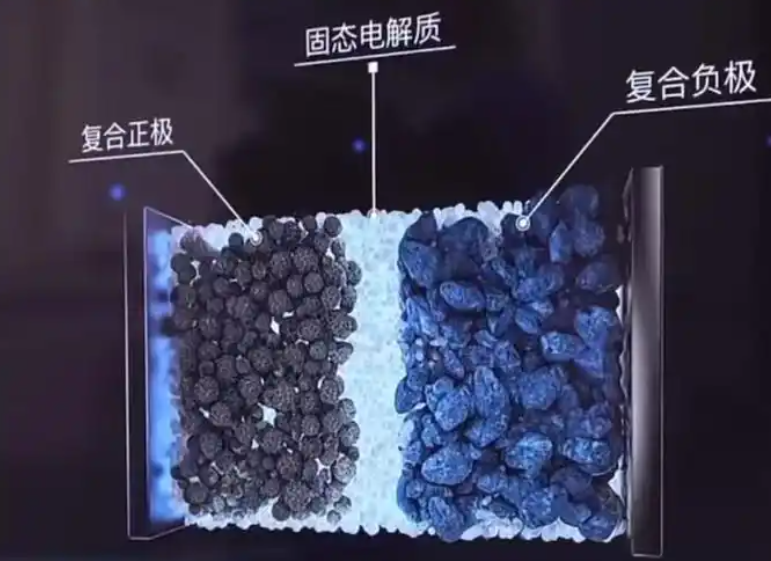
Half-solid-state designs as a transition. I recognize that a fully solid state battery is not yet deployed at broad commercial scale. A half-solid-state battery, sometimes called a semi-solid-state battery, uses a gel or composite electrolyte with a small amount of liquid or gel phase. This design retains some interfacial wettability while introducing solid electrolyte phases to improve thermal stability and suppress lithium dendrite growth. A common effective conductivity approximation for a composite electrolyte is
$$\sigma_{\mathrm{eff}}=\sigma_0(1-\phi)^\alpha,$$
where \(\phi\) is the volume fraction of solid filler and \(\alpha\) is a tortuosity exponent. The half-solid-state route is attractive because it can use existing manufacturing infrastructure with limited modification. However, I treat it as a bridge technology rather than the final goal. The fully solid state battery remains the ultimate target because it eliminates flammable liquid electrolyte entirely and enables higher lithium metal utilization.
Performance comparison. I compare conventional lithium-ion and solid state battery systems in the table below. The values are representative ranges from current research and demonstration experience. They are not universal specifications, but they illustrate the direction and magnitude of expected improvements.
| Parameter | Conventional Lithium-Ion Battery | Solid State Battery |
|---|---|---|
| Electrolyte | Liquid organic electrolyte, flammable | Solid electrolyte, inorganic ceramic or polymer |
| Separator | Porous polymer separator required | Solid electrolyte can serve as separator |
| Anode | Graphite or silicon blend | Lithium metal or lithium alloy possible |
| Gravimetric energy density | About 150 to 250 Wh/kg | About 250 to 500 Wh/kg theoretical |
| Cycle life at 80 percent capacity | About 3000 cycles | Greater than 5000 cycles |
| Operating temperature | 0 to 40 degrees Celsius with strict thermal management | -20 to 60 degrees Celsius possible |
| Thermal runaway risk | Present under abuse or internal short circuit | Substantially reduced or eliminated |
| Fast charging | Limited by lithium plating and polarization | Potentially 15 minutes or less in some designs |
| Interface behavior | Wet solid-liquid contact, good wettability | Solid-solid contact, higher interfacial resistance |
The table shows why I consider the solid state battery to be a system-level opportunity, not merely a cell-level substitution. Safety, energy density, temperature tolerance, and cycle life all interact with grid planning, land use, fire protection, and lifetime cost.
Safety advantage. From my perspective, safety is the first qualifying criterion for urban and substation-level storage. A solid state battery uses a nonflammable solid electrolyte, so it avoids electrolyte leakage and reduces the likelihood of chain thermal events. The thermal runaway threshold can be much higher than that of a liquid-electrolyte cell. If I express degradation and runaway kinetics using an Arrhenius form,
$$k=A\exp\left(-\frac{E_a}{RT}\right),$$
then a higher activation energy \(E_a\) and a more stable interface shift the onset temperature upward. In practical terms, a solid state battery can tolerate abuse conditions such as puncture, crush, and external heating with a lower probability of ignition. This matters for underground substations, high-rise buildings, dense urban load centers, and renewable energy sites where fire suppression and separation distances are expensive.
Energy density advantage. I expect the solid state battery to enable more capacity in the same footprint. If a conventional containerized system provides capacity \(C_0\) at volume \(V_0\), then the volumetric energy density is
$$\rho_V=\frac{C_0V_{\mathrm{cell}}}{V_0}.$$
A solid state battery with higher \(\rho_V\) can increase \(C_0\) for the same \(V_0\), or reduce \(V_0\) for the same \(C_0\). In grid peak shaving, this has direct implications. A smaller physical footprint can be sited closer to load centers, which reduces transmission and distribution losses. The reduced need for cooling and ventilation also improves auxiliary power consumption. If auxiliary power is \(P_{\mathrm{aux}}\), the net discharge efficiency is
$$\eta_{\mathrm{net}}=\eta_{\mathrm{rt}}-\frac{P_{\mathrm{aux}}}{P_{\mathrm{dis}}}\Delta t.$$
A solid state battery with lower thermal management demand can maintain a higher \(\eta_{\mathrm{net}}\), especially in hot or cold climates.
Cycle life and degradation. I model capacity fade with a simple exponential or power-law expression. A common empirical form is
$$Q(n)=Q_0\exp(-\lambda n),$$
or alternatively,
$$Q(n)=Q_0\left(1-\beta n^{z}\right),$$
where \(n\) is cycle number, \(\lambda\) and \(\beta\) are fade parameters, and \(z\) is an exponent. The state of health is
$$\mathrm{SOH}(n)=\frac{Q(n)}{Q_0}.$$
Because a solid state battery uses a more stable solid interface and reduces electrolyte side reactions, I expect lower \(\lambda\) or \(\beta\). In peak shaving, the system may cycle once or more per day. Over a 15-year project life, this can mean 5000 to 8000 deep cycles or more. A conventional lithium-ion battery may require replacement or augmentation within the project period, whereas a solid state battery may remain within acceptable state of health. The levelized impact is significant.
Fast charging and discharging. The characteristic diffusion time is
$$t_{\mathrm{diff}}\approx\frac{L^2}{D}.$$
If the solid electrolyte and electrode particles are thin and the ionic conductivity is high, \(t_{\mathrm{diff}}\) can be small. A solid state battery can therefore respond quickly to dispatch signals. The rate capability can be described by the Butler-Volmer equation,
$$i=i_0\left[\exp\left(\frac{\alpha_aF\eta}{RT}\right)-\exp\left(-\frac{\alpha_cF\eta}{RT}\right)\right],$$
where \(i_0\) is exchange current density, \(\alpha_a\) and \(\alpha_c\) are transfer coefficients, and \(\eta\) is overpotential. A well-designed solid-solid interface can support a high \(i_0\), enabling high power density and fast frequency response. For grid application, this is valuable because frequency regulation requires sub-second to second-level response, while peak shaving requires sustained energy delivery over hours.
Temperature tolerance. The temperature dependence of resistance can be written as
$$R(T)=R_0\exp\left[\frac{E_a}{R}\left(\frac{1}{T}-\frac{1}{T_0}\right)\right].$$
A solid state battery with a high activation energy for parasitic reactions and a stable electrolyte can operate over a wider temperature range. I view this as a major advantage for outdoor installations, desert solar farms, cold wind sites, and unheated substations. The reduced need for heating, ventilation, and air conditioning lowers auxiliary load and improves round-trip efficiency. The round-trip efficiency itself can be defined as
$$\eta_{\mathrm{rt}}=\frac{E_{\mathrm{dis}}}{E_{\mathrm{ch}}}=\eta_{\mathrm{ch}}\eta_{\mathrm{dis}}\eta_{\mathrm{aux}}.$$
Even a few percentage points of improvement in \(\eta_{\mathrm{rt}}\) can materially change operating cost and revenue in an energy-shifting application.
Challenges and bottlenecks. I do not assume that the solid state battery is free of difficulties. The most important challenges are interfacial resistance, ionic conductivity, mechanical stability, manufacturing cost, and material selection. The total cell resistance can be decomposed as
$$R_{\mathrm{total}}=R_{\mathrm{bulk}}+R_{\mathrm{gb}}+R_{\mathrm{interface}}+R_{\mathrm{contact}},$$
where \(R_{\mathrm{bulk}}\) is bulk electrolyte resistance, \(R_{\mathrm{gb}}\) is grain-boundary resistance, \(R_{\mathrm{interface}}\) is charge-transfer resistance, and \(R_{\mathrm{contact}}\) is contact resistance. Solid-solid contacts are often less conformal than liquid-solid contacts, so \(R_{\mathrm{interface}}\) and \(R_{\mathrm{contact}}\) can be high. This increases polarization and reduces rate capability. I can express the voltage drop as
$$\Delta V=IR_{\mathrm{total}}+\eta_{\mathrm{conc}}+\eta_{\mathrm{act}},$$
where \(\eta_{\mathrm{conc}}\) is concentration overpotential and \(\eta_{\mathrm{act}}\) is activation overpotential. High interfacial resistance raises all three terms under load.
Lithium metal anodes also undergo volume changes during plating and stripping. If the solid electrolyte cannot accommodate strain, voids and cracks can form. The critical current density for dendrite penetration depends on the shear modulus \(G\) and the interfacial energy \(\gamma\). A simplified stability criterion is often written as
$$J_{\mathrm{crit}}\propto\frac{G\gamma}{L_{\mathrm{defect}}},$$
where \(L_{\mathrm{defect}}\) is a characteristic defect size. Improving mechanical properties and reducing defects are therefore central to solid state battery reliability.
Ionic conductivity remains another bottleneck. Many solid electrolytes have room-temperature conductivity that is one to two orders of magnitude lower than liquid electrolytes. The conductivity Arrhenius relationship is
$$\sigma(T)=\sigma_0\exp\left(-\frac{E_a}{k_BT}\right),$$
where \(k_B\) is the Boltzmann constant. Some solid state battery systems require elevated temperature or applied pressure to achieve acceptable performance. The pressure requirement can be expressed as a contact resistance reduction,
$$R_{\mathrm{contact}}\propto\frac{1}{P^\alpha},$$
where \(P\) is stack pressure and \(\alpha\) is an empirically determined exponent. External pressure increases system complexity and may reduce reliability in large stationary installations.
Material families. I summarize the main solid electrolyte families in the following table. Each has distinct trade-offs.
| Family | Advantages | Challenges | Grid Suitability |
|---|---|---|---|
| Sulfide solid electrolyte | Highest room-temperature ionic conductivity among many candidates | Reacts with moisture and air, can release toxic gas, requires dry-room manufacturing | Promising for high-performance cells but needs robust packaging |
| Oxide solid electrolyte | Good chemical stability, wide electrochemical window, nonflammable | High sintering temperature, brittle, poor interfacial contact, pressure requirements | Attractive for safety-critical stationary storage if interface engineering improves |
| Polymer solid electrolyte | Flexible, scalable, mature processing, good mechanical compliance | Low ionic conductivity at room temperature, limited high-voltage stability | Useful for medium-temperature or lower-power applications |
| Composite or hybrid electrolyte | Combines polymer flexibility with ceramic reinforcement | Complex morphology control, uneven current distribution | Practical transition route for semi-solid-state systems |
From my engineering viewpoint, the optimal material family depends on the grid service. For long-duration peak shaving, energy density and cost per kilowatt-hour dominate. For frequency regulation, power density and response speed dominate. For urban siting, safety and footprint dominate. A single solid state battery chemistry may not optimize all services simultaneously, so I expect a portfolio of solid state battery designs.
Grid peak shaving and valley filling. The most direct application is peak shaving and valley filling. During low-load hours, the solid state battery charges. During high-load hours, it discharges. The power dispatch can be written as
$$P_b(t)=
\begin{cases}
-\eta_c P_{\mathrm{charge}}(t), & t\in T_{\mathrm{valley}},\\
\frac{P_{\mathrm{discharge}}(t)}{\eta_d}, & t\in T_{\mathrm{peak}},\\
0, & t\in T_{\mathrm{normal}},
\end{cases}$$
where \(T_{\mathrm{valley}}\), \(T_{\mathrm{peak}}\), and \(T_{\mathrm{normal}}\) are time sets. The state of charge evolves as
$$\mathrm{SOC}(t)=\mathrm{SOC}(t-1)+\frac{\eta_cP_c(t)\Delta t}{C_{\mathrm{rated}}}-\frac{P_d(t)\Delta t}{\eta_dC_{\mathrm{rated}}}.$$
The stored energy available for peak shaving is
$$E_{\mathrm{usable}}=C_{\mathrm{rated}}\left(\mathrm{SOC}_{\max}-\mathrm{SOC}_{\min}\right)\eta_{\mathrm{rt}}.$$
A solid state battery with a wide allowable depth of discharge can increase \(E_{\mathrm{usable}}\) without increasing \(C_{\mathrm{rated}}\). This reduces capital cost per delivered kilowatt-hour. The peak reduction achieved at time \(t\) is
$$\Delta P_{\mathrm{peak}}(t)=\min\left(P_{b,\max},P_{\mathrm{net}}(t)-P_{\mathrm{target}}\right).$$
If the target peak is \(P_{\mathrm{target}}\), the residual peak is
$$P_{\mathrm{res}}(t)=P_{\mathrm{net}}(t)-\Delta P_{\mathrm{peak}}(t).$$
I can optimize the dispatch using a cost function such as
$$\min\sum_{t=1}^{T}\left[C_{\mathrm{gen}}(P_g(t))+C_{\mathrm{deg}}(P_b(t))+C_{\mathrm{loss}}(P_b(t))\right],$$
subject to
$$P_g(t)+P_b(t)=P_{\mathrm{net}}(t),$$
$$0\leq P_b(t)\leq P_{b,\max},$$
$$\mathrm{SOC}_{\min}\leq \mathrm{SOC}(t)\leq \mathrm{SOC}_{\max}.$$
The degradation cost \(C_{\mathrm{deg}}\) is crucial for a solid state battery. If the cycle life is long, \(C_{\mathrm{deg}}\) per cycle is lower, so the optimizer can dispatch the solid state battery more aggressively. This creates a positive feedback: longer life enables more frequent use, which increases revenue and improves economics.
Frequency regulation. Frequency regulation requires rapid active power adjustment. The frequency deviation is
$$\Delta f=f_{\mathrm{meas}}-f_{\mathrm{nom}}.$$
A common droop control law is
$$\Delta P=-\frac{P_{\mathrm{rated}}}{R}\frac{\Delta f}{f_{\mathrm{nom}}},$$
where \(R\) is the droop constant. A more complete controller may use proportional-integral-derivative action,
$$P_{\mathrm{reg}}=K_p\Delta f+K_i\int\Delta f\,dt+K_d\frac{d\Delta f}{dt}.$$
A solid state battery can provide high \(K_p\) and fast \(K_d\) response because its solid electrolyte does not suffer from the same liquid-phase mass-transport delays as a conventional lithium-ion cell. The battery can charge when frequency is high and discharge when frequency is low. The energy requirement for frequency regulation is usually smaller than for peak shaving, but the power requirement is larger. Therefore, a solid state battery designed for high power density is attractive. The state of charge must be maintained near a mid-range setpoint,
$$\mathrm{SOC}_{\mathrm{ref}}\approx 50\%,$$
so that the battery can respond symmetrically in both directions. I can write the available regulation energy as
$$E_{\mathrm{reg}}=C_{\mathrm{rated}}\left(\mathrm{SOC}_{\max}-\mathrm{SOC}_{\mathrm{ref}}\right)\eta_{\mathrm{dis}}+C_{\mathrm{rated}}\left(\mathrm{SOC}_{\mathrm{ref}}-\mathrm{SOC}_{\min}\right)\eta_{\mathrm{ch}}.$$
Voltage support and reactive power. A grid-connected solid state battery can also provide voltage support through reactive power injection or absorption. The apparent power is
$$S=P+jQ,$$
and the power factor is
$$\mathrm{PF}=\frac{P}{\sqrt{P^2+Q^2}}.$$
A voltage controller can use a reactive power reference such as
$$Q_{\mathrm{ref}}=K_v\left(V_{\mathrm{ref}}-V_{\mathrm{meas}}\right).$$
Because a solid state battery inverter can respond quickly, it can participate in automatic voltage regulation, dynamic reactive support, and power oscillation damping. The battery itself does not directly store reactive power, but the power electronics can exchange reactive power with the grid while the solid state battery supplies or absorbs active power. This dual capability improves the value proposition of a solid state battery in weak grids and renewable-rich areas.
Emergency backup and islanding. I also consider emergency backup. When the main grid fails, the solid state battery can transition to island mode and supply critical loads. The ride-through time is
$$t_{\mathrm{ride}}=\frac{E_{\mathrm{usable}}}{P_{\mathrm{critical}}}.$$
If the critical load is \(P_{\mathrm{critical}}\) and the usable energy is \(E_{\mathrm{usable}}\), the solid state battery can maintain supply until the main grid recovers or until other resources start. The high safety of a solid state battery is especially valuable in this mode because the system may be located near hospitals, data centers, communication hubs, or emergency shelters. The reduced fire risk simplifies permitting and insurance. I can model reliability improvement with a loss-of-load probability metric,
$$\mathrm{LOLP}=\Pr\left(E_{\mathrm{usable}}<e_{\mathrm{required}}\right).$$
A solid state battery with higher usable energy and lower degradation can reduce \(\mathrm{LOLP}\) over time.
Application matching. I summarize the match between solid state battery characteristics and grid services in the following table.
| Grid Service | Primary Requirement | How Solid State Battery Helps | Key Metric |
|---|---|---|---|
| Peak shaving | Energy capacity, cycle life, low cost per kWh | High energy density and long cycle life reduce footprint and replacement frequency | Levelized cost of storage |
| Valley filling | Charging flexibility, efficiency | Wide temperature range and low auxiliary load improve round-trip efficiency | Round-trip efficiency |
| Frequency regulation | Fast response, high power, symmetric cycling | Solid electrolyte supports rapid ionic transport and high rate capability | Response time and regulation mileage |
| Voltage support | Reactive power, dynamic response | Power electronics combined with solid state battery provide fast active and reactive control | Voltage deviation and power factor |
| Emergency backup | Reliability, safety, islanding | Low thermal runaway risk and high usable energy improve resilience | Loss-of-load probability |
| Renewable smoothing | Frequent charge and discharge, ramp control | Long cycle life and wide temperature tolerance reduce degradation | Power ramp rate and curtailment reduction |
Innovative deployment models. I see several deployment models emerging for the solid state battery. The first is peak shaving as a service. A third party owns and operates a solid state battery system, and the grid or load serving entity pays for capacity and energy services. The contract can be based on availability, delivered energy, or performance. The second is contract storage, where the battery is leased to a commercial or industrial customer and dispatched to reduce peak demand charges. The third is a centralized plus distributed architecture. High-density solid state battery stations are placed in urban cores, while smaller modular units are placed at distribution feeders. The fourth is integration with virtual power plants. A solid state battery can be aggregated with rooftop solar, electric vehicle chargers, and flexible industrial loads. The virtual power plant dispatch problem can be written as
$$\min\sum_{i=1}^{N}\sum_{t=1}^{T}\left[C_i(P_i(t))+\lambda_{\mathrm{grid}}(t)P_{\mathrm{grid}}(t)\right],$$
subject to
$$\sum_{i=1}^{N}P_i(t)+P_{\mathrm{grid}}(t)=P_{\mathrm{load}}(t),$$
$$P_i^{\min}\leq P_i(t)\leq P_i^{\max},$$
$$E_i^{\min}\leq E_i(t)\leq E_i^{\max}.$$
A solid state battery with low degradation and high safety can participate more frequently than a conventional battery, which increases the value of aggregation.
Matching with grid operating conditions. I analyze the match between solid state battery performance and grid operating conditions in the next table.
| Operating Condition | Conventional Battery Challenge | Solid State Battery Advantage |
|---|---|---|
| High daily cycling | Capacity fade and replacement cost | Long cycle life reduces levelized cost |
| High ambient temperature | Cooling load and accelerated aging | Wide temperature tolerance reduces thermal management |
| Low ambient temperature | Reduced power and charging difficulty | Operation possible at lower temperatures in many designs |
| Urban siting | Fire separation and suppression requirements | Lower thermal runaway risk improves permitting |
| Fast regulation | Mass transport limitations | Fast ionic transport supports high-rate response |
| Space-constrained substation | Large footprint and cooling equipment | Higher energy density and compact design |
Economic analysis. I now turn to economics. The capital cost of a battery system can be decomposed as
$$C_{\mathrm{sys}}=C_{\mathrm{cell}}+C_{\mathrm{BMS}}+C_{\mathrm{PCS}}+C_{\mathrm{thermal}}+C_{\mathrm{installation}}+C_{\mathrm{soft}},$$
where \(C_{\mathrm{cell}}\) is cell cost, \(C_{\mathrm{BMS}}\) is battery management system cost, \(C_{\mathrm{PCS}}\) is power conversion system cost, \(C_{\mathrm{thermal}}\) is thermal management cost, \(C_{\mathrm{installation}}\) is installation cost, and \(C_{\mathrm{soft}}\) includes permitting, controls, and financing. At present, I observe that a solid state battery has a higher \(C_{\mathrm{cell}}\) than a conventional lithium-ion battery because of materials, dry-room manufacturing, high-temperature sintering, and low production scale. However, the system-level cost depends on more than \(C_{\mathrm{cell}}\). A solid state battery may have lower \(C_{\mathrm{thermal}}\) and lower replacement cost.
The learning curve effect can reduce cost over time:
$$C_t=C_0\left(\frac{Q_t}{Q_0}\right)^{b},$$
where \(Q_t\) is cumulative production, \(Q_0\) is initial cumulative production, and \(b\) is the learning exponent. If the learning rate is \(LR\), then
$$b=\frac{\log(1-LR)}{\log 2}.$$
A higher learning rate means faster cost decline. I expect solid state battery costs to fall as manufacturing scale increases, material utilization improves, and yields rise. The same learning curve applies to conventional lithium-ion batteries, but the solid state battery is earlier on the curve, so its relative rate of decline may be faster for a period.
The levelized cost of energy for storage is
$$\mathrm{LCOE}=\frac{C_{\mathrm{cap}}+\sum_{t=1}^{N}\frac{C_{\mathrm{om},t}+C_{\mathrm{rep},t}}{(1+r)^t}}{\sum_{t=1}^{N}\frac{E_t}{(1+r)^t}},$$
where \(C_{\mathrm{cap}}\) is initial capital cost, \(C_{\mathrm{om},t}\) is operation and maintenance cost in year \(t\), \(C_{\mathrm{rep},t}\) is replacement cost in year \(t\), \(E_t\) is discharged energy in year \(t\), \(r\) is discount rate, and \(N\) is project life. The annual discharged energy can be estimated as
$$E_t=C_{\mathrm{rated}}\mathrm{DOD}\eta_{\mathrm{rt}}N_{\mathrm{cycles},t}(1-\delta_t),$$
where \(C_{\mathrm{rated}}\) is rated capacity, \(\mathrm{DOD}\) is depth of discharge, \(\eta_{\mathrm{rt}}\) is round-trip efficiency, \(N_{\mathrm{cycles},t}\) is annual cycles, and \(\delta_t\) is degradation loss. If I substitute a solid state battery with higher \(N_{\mathrm{cycles},t}\) and lower \(\delta_t\), the denominator increases. If \(C_{\mathrm{rep},t}\) is also lower, the numerator decreases. Both effects lower \(\mathrm{LCOE}\).
I compare a solid state battery and a lithium iron phosphate battery in the following table using representative assumptions for a peak-shaving duty cycle.
| Parameter | Solid State Battery | Lithium Iron Phosphate Battery |
|---|---|---|
| Initial investment cost | 3000 currency units per kWh | 1500 currency units per kWh |
| Cycle life | 8000 cycles | 3000 cycles |
| Annual operating cycles | 350 cycles per year | 350 cycles per year |
| Operation and maintenance cost | 20 currency units per kWh per year | 30 currency units per kWh per year |
| Round-trip system efficiency | 85 percent | 88 percent |
| Discount rate | 6 percent | 6 percent |
| Project life | 15 years | 15 years |
| Estimated levelized cost | About 0.51 currency units per kWh | About 0.58 currency units per kWh |
Even though the solid state battery has a higher initial investment cost, its longer cycle life and lower replacement frequency give it a lower levelized cost in this high-frequency, deep-cycle peak-shaving scenario. I emphasize that this result depends on duty cycle. If the battery is used only a few times per year, the capital cost dominates and the solid state battery may not yet be competitive. If the battery is used daily and deeply, the solid state battery economics improve substantially.
I can also evaluate project profitability using net present value, internal rate of return, and payback period. The net present value is
$$\mathrm{NPV}=\sum_{t=1}^{N}\frac{R_t-C_t}{(1+r)^t}-C_0.$$
The internal rate of return is the discount rate that makes
$$\mathrm{NPV}=0.$$
The simple payback period is
$$\mathrm{PBP}=\frac{C_0}{R_{\mathrm{annual}}-C_{\mathrm{annual}}}.$$
For a solid state battery, \(R_{\mathrm{annual}}\) may include energy arbitrage, capacity payments, frequency regulation, voltage support, and avoided reliability costs. The revenue stack is
$$R_{\mathrm{annual}}=R_{\mathrm{energy}}+R_{\mathrm{capacity}}+R_{\mathrm{regulation}}+R_{\mathrm{voltage}}+R_{\mathrm{resilience}}.$$
I find that stacking multiple services is essential for solid state battery economics. A single service may not justify the current capital cost. A stacked service model improves utilization and spreads fixed costs over more revenue streams.
Sensitivity analysis. I examine sensitivity to key parameters. The partial derivatives of levelized cost with respect to capital cost and cycle life are approximately
$$\frac{\partial \mathrm{LCOE}}{\partial C_{\mathrm{cap}}}>0,$$
$$\frac{\partial \mathrm{LCOE}}{\partial N_{\mathrm{cycle}}}<0.$$
A simplified levelized cost approximation is
$$\mathrm{LCOE}\approx\frac{C_{\mathrm{cap}}}{N_{\mathrm{cycle}}\mathrm{DOD}\eta_{\mathrm{rt}}N_{\mathrm{years}}}+\frac{C_{\mathrm{om}}}{E_{\mathrm{annual}}}.$$
This expression makes the trade-off clear. A solid state battery can tolerate a higher \(C_{\mathrm{cap}}\) if \(N_{\mathrm{cycle}}\) is sufficiently larger than that of a conventional battery. If the cycle life ratio is greater than the capital cost ratio, the solid state battery can be economically superior even before considering safety and footprint benefits. I can express the break-even condition as
$$\frac{C_{\mathrm{cap,SSB}}}{C_{\mathrm{cap,Li}}}<\frac{N_{\mathrm{cycle,SSB}}}{N_{\mathrm{cycle,Li}}}.$$
In the example above, the capital cost ratio is 2.0, while the cycle life ratio is about 2.67, so the break-even condition is satisfied. This is a useful first-order screen for project developers.
Technology trends. I observe several technology trends that will shape solid state battery deployment. First, industrialization is accelerating. Many developers target initial mass production between 2025 and 2028, with broader scale expected around 2030. As production capacity expands, cell cost should decline. Second, technology routes are diversifying. Polymer, sulfide, oxide, and composite electrolytes are being pursued in parallel. Some designs prioritize room-temperature operation, while others accept moderate temperature operation to gain manufacturability. Third, standards and testing methods are maturing. Safety tests, cycle-life protocols, and performance metrics are being developed for solid state battery systems. Fourth, integration with renewable generation is deepening. A solid state battery can be co-located with solar and wind farms to reduce curtailment and smooth output.
| Trend | Expected Direction | Grid Impact |
|---|---|---|
| Manufacturing scale-up | Pilot lines to gigafactories | Lower capital cost and shorter lead times |
| Material diversification | Sulfide, oxide, polymer, composite | Application-specific solid state battery designs |
| Standardization | Safety, performance, and test standards | Reduced deployment risk and insurance cost |
| Renewable integration | Co-location with solar and wind | Lower curtailment and improved dispatchability |
| Digital control | Advanced battery management and forecasting | Higher utilization and longer life |
| Second-life and recycling | Material recovery and reuse | Lower lifecycle cost and environmental impact |
I expect the solid state battery to be particularly attractive in applications where safety, temperature tolerance, and long life are valued. In cold climates, the solid state battery can reduce heating demand. In hot climates, it can reduce cooling demand. In dense cities, it can reduce fire separation requirements. In remote renewable sites, it can reduce maintenance visits. These system-level benefits are often not captured in a simple cell cost comparison, but they are real and measurable.
Engineering and policy recommendations. From my perspective, several actions can accelerate solid state battery deployment in grid peak shaving. First, demonstration projects should be designed to measure not only cell performance but also system-level availability, round-trip efficiency, fire risk, and maintenance cost. Second, grid codes should include performance-based incentives for fast response, high round-trip efficiency, and low thermal runaway risk. Third, capacity markets should recognize long-duration and high-cycle-life storage. Fourth, standards should define test methods for solid state battery abuse tolerance, cycle life, and state-of-health estimation. Fifth, financing mechanisms should account for the lower replacement risk of a solid state battery. Sixth, manufacturing policy should support pilot lines and material supply chains. Seventh, digital tools should optimize dispatch across multiple revenue streams.
I can express the value of a solid state battery in a multi-service framework as
$$V_{\mathrm{total}}=V_{\mathrm{energy}}+V_{\mathrm{capacity}}+V_{\mathrm{regulation}}+V_{\mathrm{voltage}}+V_{\mathrm{resilience}}+V_{\mathrm{environment}}.$$
If \(V_{\mathrm{total}}\) exceeds the levelized cost, the project is viable. The environmental value \(V_{\mathrm{environment}}\) may include avoided emissions from peaking plants, reduced curtailment of renewables, and lower fire risk. The resilience value \(V_{\mathrm{resilience}}\) may include avoided outage costs for critical loads. These values are often location-specific, but they can be quantified with outage cost models and emissions factors.
Comparison with alternative storage technologies. I also compare the solid state battery with other storage options. Pumped hydro has low cost per kilowatt-hour but is geographically constrained. Compressed air storage has similar constraints. Flow batteries have long duration and independent power and energy scaling, but lower energy density and higher complexity. Sodium-ion batteries have lower material cost but lower energy density. Lithium iron phosphate batteries have good safety and low cost but limited cycle life under deep cycling. The solid state battery occupies a distinctive position: high safety, high energy density, long cycle life, and wide temperature range. Its main weakness is current cost and manufacturing maturity.
| Technology | Energy Density | Cycle Life | Safety | Geographic Constraint | Current Cost Position |
|---|---|---|---|---|---|
| Solid state battery | High | Very high | Very high | Low | High but falling |
| Lithium iron phosphate battery | Medium | Medium to high | High | Low | Low |
| Sodium-ion battery | Medium to low | Medium | High | Low | Low to medium |
| Flow battery | Low | Very high | High | Low | Medium to high |
| Pumped hydro | Very low | Very high | High | Very high | Low |
| Compressed air | Low | High | Medium | High | Medium |
Operational risk and mitigation. I identify several operational risks for a solid state battery in grid service. The first is interface degradation under high-rate cycling. Mitigation includes optimized stack pressure, compliant interlayers, and advanced formation protocols. The second is manufacturing defects that lead to early failure. Mitigation includes inline inspection, partial discharge testing, and statistical quality control. The third is thermal management in extreme environments. Although a solid state battery has a wide temperature range, power electronics and controls still require thermal design. The fourth is state-of-health estimation. Because solid-solid interfaces can change over time, advanced impedance-based diagnostics are needed. The fifth is supply chain risk for lithium metal, solid electrolytes, and rare materials. Mitigation includes material substitution, recycling, and diversified sourcing.
I can model the probability of failure using a Weibull distribution,
$$F(t)=1-\exp\left[-\left(\frac{t}{\eta}\right)^\beta\right],$$
where \(\eta\) is the scale parameter and \(\beta\) is the shape parameter. A solid state battery with a higher \(\eta\) and a lower \(\beta\) for wear-out failure can have a longer useful life and more predictable maintenance. Reliability-centered maintenance can then be scheduled based on condition rather than fixed intervals.
Future outlook. In my view, the solid state battery will not replace all lithium-ion batteries immediately. Instead, it will enter the market where its advantages are most valued. These include high-safety urban storage, wide-temperature renewable sites, high-cycle peak shaving, and premium backup power. As manufacturing scale increases and costs decline, the solid state battery will move into broader peak-shaving and energy-shifting applications. I expect a portfolio future in which solid state batteries, lithium iron phosphate batteries, sodium-ion batteries, and flow batteries coexist. The solid state battery will be chosen when safety, energy density, cycle life, and temperature tolerance justify a higher upfront cost. The conventional lithium-ion battery will remain competitive for cost-sensitive, moderate-cycle applications.
I also expect the solid state battery to enable new grid architectures. For example, a distributed solid state battery network can provide local peak shaving and voltage support without large centralized plants. A virtual power plant can aggregate thousands of solid state battery units and bid into frequency regulation markets. A renewable microgrid can use a solid state battery to store excess solar energy and provide overnight power. An electric vehicle charging hub can use a solid state battery to buffer high-power charging and avoid transformer upgrades. These applications share a common requirement: high safety, long life, and fast response. The solid state battery is well matched to that requirement.
Conclusion. I conclude that the solid state battery is a promising and potentially transformative technology for grid peak shaving. Its solid electrolyte eliminates flammable liquid, raises the thermal runaway threshold, and enables lithium metal anodes with high theoretical capacity. It offers higher energy density, longer cycle life, wider temperature tolerance, and faster response than conventional lithium-ion batteries. These advantages translate into smaller footprint, lower thermal management load, lower replacement frequency, and improved safety in urban and substation environments. At the same time, I recognize that the solid state battery faces challenges in interfacial resistance, ionic conductivity, mechanical stability, manufacturing cost, and material selection. These challenges are significant but not insurmountable. With continued advances in materials, cell design, manufacturing, and standards, the solid state battery can become a mainstream option for grid-scale energy storage.
My economic analysis shows that under high-frequency, deep-cycle peak-shaving duty, the solid state battery can achieve a lower levelized cost than a conventional lithium iron phosphate battery despite a higher initial capital cost. The break-even condition depends on the ratio of capital cost to cycle life. When the cycle life advantage exceeds the capital cost penalty, the solid state battery is economically superior. When multiple services are stacked, including peak shaving, frequency regulation, voltage support, and emergency backup, the value proposition improves further. I therefore recommend that grid planners, regulators, and investors evaluate the solid state battery not only on cell cost but on total system value, including safety, land use, thermal management, replacement risk, and resilience.
In the coming decade, I expect the solid state battery to move from demonstration to commercial deployment. Pilot projects will validate performance, standards will reduce uncertainty, and manufacturing scale will lower cost. The solid state battery will likely become a key building block of a flexible, resilient, and low-carbon power system. It will help integrate renewable energy, reduce peak demand, support frequency and voltage stability, and provide backup power. For these reasons, I view the solid state battery as a strategic technology for grid peak shaving and for the broader energy transition.