
I approach the solid state cell as a system whose performance is limited not by one material alone but by the coupled behavior of electrons, ions, interfaces, and mechanical strain. In my view, the most promising path toward a practical solid state cell is not simply replacing a liquid electrolyte with a solid one. It is redesigning the electrode architecture so that every phase has a clear transport or structural role. The ultra-fast charging anode chemistry I examine here follows that principle. It uses a multi-phase alloy network to create simultaneous electronic and ionic pathways, while also buffering the volume changes that usually destroy cyclic stability in high-capacity anodes. The result is a solid state cell that can charge and discharge at rates that were previously difficult to reconcile with long cycle life.
I begin with the central problem. In a conventional lithium-ion cell, liquid electrolyte wets every particle, and lithium-ion transport through the porous electrode is relatively forgiving. In a solid state cell, the electrolyte is rigid, the contact area is limited by stack pressure and sintering, and any void or decomposition layer becomes a bottleneck. At high current density, the anode must accept lithium quickly, distribute it uniformly, and avoid dendrite nucleation. If the anode has poor electronic conductivity, the reaction localizes. If it has poor ionic conductivity, the concentration polarization rises. If it has poor mechanical compliance, the interface fractures. These failure modes are not independent. They couple through the local current density, the local stress, and the local chemical potential.
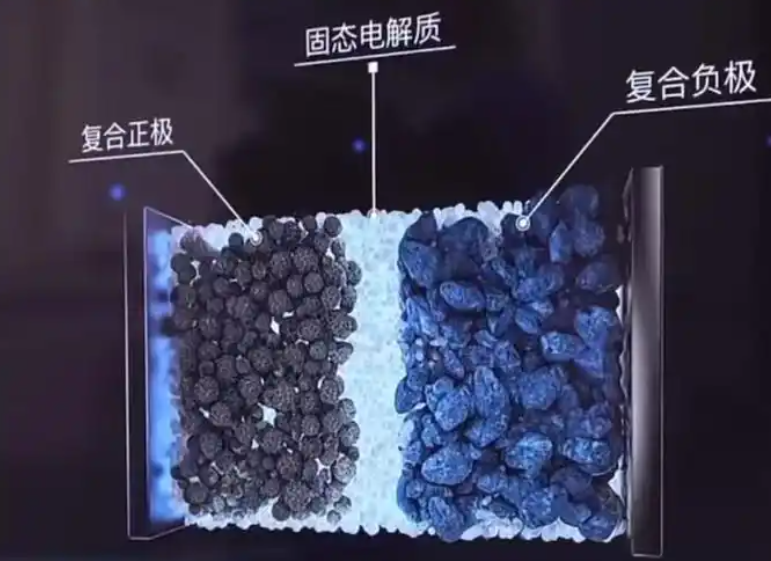
I therefore treat the solid state cell anode as a composite transport problem. The anode must satisfy at least four conditions at once: fast electron percolation, fast lithium-ion diffusion, reversible lithium storage, and dimensional stability. A single-phase material rarely satisfies all four. Graphite has good stability but limited rate capability. Silicon has high capacity but large volume expansion. Lithium metal has the highest capacity but suffers from dendrites and interfacial instability. Alloy anodes can combine several advantages if the phases are arranged so that one phase conducts electrons, another conducts ions, and a third stores lithium. That is the design logic I explore below.
Electron-Ion Conductive Network Strategy
I define the electron-ion conductive network, or EICN, as a percolating architecture in which distinct phases perform distinct functions. The first phase provides a continuous electron path. The second phase provides a continuous or semi-continuous lithium-ion path. The third phase provides reversible lithium storage and accommodates strain. The interfaces between these phases must remain chemically stable against the solid electrolyte. In the Li-Al-Si-Zn alloy system, the phases LiAl, LiZn, and LiSi are the main structural units. I do not regard them as random precipitates. I regard them as a coordinated network in which each phase lowers a different barrier.
The LiAl phase is the electronic conductor. Its metallic bonding and relatively high electronic conductivity allow electrons to reach the reaction sites without a large ohmic drop. The LiZn phase is the ionically favorable phase. It improves lithiophilicity and lowers the lithium-ion migration barrier, which helps distribute lithium uniformly. The silicon-rich regions are the storage phase. They reversibly store lithium and buffer volume changes. The combination is important because a solid state cell cannot rely on liquid electrolyte to redistribute lithium. The anode itself must smooth the flux.
| Phase | Primary Role | Transport Property | Mechanical Role | Interface Benefit |
|---|---|---|---|---|
| LiAl | Electronic percolation | High electronic conductivity | Rigid framework support | Maintains electron path to current collector |
| LiZn | Ion transport and lithiophilicity | Lower Li+ migration barrier | Compliant grain boundary phase | Promotes uniform Li flux |
| LiSi | Reversible Li storage | High capacity for Li insertion | Volume change buffer | Reduces local stress concentration |
| Grain boundaries | Coupling and relaxation | Mixed ionic-electronic paths | Accommodates strain | Suppresses void formation |
I formulate the effective electronic conductivity of the composite using a Maxwell-type approximation:
$$ \sigma_{eff} = \sigma_m \frac{1 + 2\phi \frac{\sigma_p – \sigma_m}{\sigma_p + 2\sigma_m}}{1 – \phi \frac{\sigma_p – \sigma_m}{\sigma_p + 2\sigma_m}} $$
Here, \(\sigma_m\) is the conductivity of the matrix, \(\sigma_p\) is the conductivity of the percolating phase, and \(\phi\) is its volume fraction. In the EICN anode, I want \(\sigma_{eff}\) to remain high even when the storage phase expands. That requires the conductive phase to be continuous, not isolated. If the LiAl network becomes disconnected during cycling, the solid state cell loses rate capability because electrons cannot reach the interior of the anode.
For ionic transport, I use the Nernst-Einstein relation as a first estimate:
$$ D_i = \frac{\sigma_i RT}{F^2 c_i} $$
where \(D_i\) is the lithium-ion diffusion coefficient, \(\sigma_i\) is the ionic conductivity, \(R\) is the gas constant, \(T\) is temperature, \(F\) is Faraday’s constant, and \(c_i\) is the mobile lithium concentration. This equation is simple, but it captures the main point: ionic conductivity and diffusivity are coupled. In a solid state cell, a high \(D_i\) is not sufficient if the interface between the anode and the solid electrolyte has a high resistance. The effective diffusion length must be short, and the interfacial contact must be maintained.
I also consider the characteristic diffusion time:
$$ \tau_D = \frac{L^2}{D} $$
For a solid state cell, \(L\) can be the half-thickness of the anode or the distance between the current collector and the solid electrolyte. If \(L\) is large or \(D\) is small, \(\tau_D\) becomes long, and the anode cannot respond to a fast charging current. The EICN strategy reduces the effective \(L\) by creating a three-dimensional network rather than a thick single-phase diffusion path. The LiZn phase shortens the ion path, while the LiAl phase shortens the electron path.
Why Ultra-Fast Charging Needs More Than High Conductivity
I often see rate capability discussed as if it were only a conductivity problem. In a solid state cell, it is also a flux uniformity problem. During high-rate plating or stripping, the local current density can vary by an order of magnitude across the electrode. The Butler-Volmer equation describes the local kinetics:
$$ j = j_0 \left[ \exp\left(\frac{\alpha_a F \eta}{RT}\right) – \exp\left(-\frac{\alpha_c F \eta}{RT}\right) \right] $$
where \(j\) is the current density, \(j_0\) is the exchange current density, \(\alpha_a\) and \(\alpha_c\) are transfer coefficients, and \(\eta\) is the overpotential. If \(j_0\) is low or the local ionic conductivity is poor, \(\eta\) rises. The total overpotential is the sum of ohmic, charge-transfer, and concentration contributions:
$$ \eta = \eta_{ohmic} + \eta_{ct} + \eta_{conc} $$
In a solid state cell, \(\eta_{conc}\) can become severe because the solid electrolyte cannot convect fresh lithium ions to the interface. The anode must therefore present a high density of active sites and a short diffusion path. The LiZn phase helps here because it lowers the migration barrier and improves wetting-like contact with lithium. The LiAl phase helps because it prevents an electronically isolated region from forming. The Si-rich phase helps because it stores lithium without requiring lithium metal plating.
I summarize the rate-limiting mechanisms in the following table.
| Mechanism | Physical Origin | Effect on Solid State Cell | EICN Mitigation |
|---|---|---|---|
| Electronic starvation | Disconnected conductive phase | Reaction localizes at current collector | Continuous LiAl network |
| Ionic blocking | High grain boundary resistance | Large concentration polarization | LiZn grain boundary phase |
| Interfacial void | Volume change during cycling | Contact loss and impedance rise | Si-rich buffer regions |
| Dendrite nucleation | Non-uniform Li flux | Short circuit risk | Uniform lithiophilic LiZn phase |
| Chemo-mechanical fracture | Mismatch strain | Capacity fade and impedance growth | Multiphase strain accommodation |
The phrase “solid state cell” appears in many research discussions, but I think the field needs to move from material discovery to architecture design. The solid state cell is not a drop-in replacement for a liquid-electrolyte cell. It is a new mechanical and electrochemical system. The anode must be designed together with the electrolyte, the stack pressure, and the thermal management. In the case of the Li-Al-Si-Zn alloy, the design is successful because it anticipates the mechanical and transport coupling.
Phase Chemistry and Structural Stability
I describe the alloy as a quaternary system with multiple phases. The LiAl phase is metallic and mechanically stiff. The LiZn phase is relatively ductile and lithiophilic. The LiSi phase is the high-capacity component. During lithium insertion and extraction, the Si-rich regions expand and contract. If they were isolated in a rigid matrix, the stress would concentrate at the interfaces and cause cracking. In the EICN, the LiZn and LiAl phases deform and slide at grain boundaries, which relaxes the stress. This is why I call the design “electron-ion协同” in concept, though I express it here as electron-ion synergy.
I can approximate the local stress from composition change using a linear elastic relation:
$$ \sigma \approx \frac{E \Omega \Delta c}{1 – \nu} $$
where \(E\) is Young’s modulus, \(\Omega\) is the partial molar volume, \(\Delta c\) is the concentration change, and \(\nu\) is Poisson’s ratio. A high \(E\) increases stress. A high \(\Delta c\) increases stress. A high \(\nu\) can reduce the effective stress in some geometries, but the real benefit comes from distributing \(\Delta c\) over multiple phases. In the EICN, the Si-rich phase does not carry the entire strain. The LiZn phase and grain boundaries provide compliant regions.
I also consider the chemical stability of the alloy against sulfide solid electrolytes. Sulfide electrolytes can react with lithium metal and with high-voltage cathodes. The Li-Al-Si-Zn alloy is reported to have good chemical and electrochemical stability against sulfide electrolytes, which means it can be used without an artificial solid electrolyte interphase, or SEI, layer. This is a major advantage. An artificial SEI adds process cost, increases interfacial resistance, and can fail under cycling. If the anode is intrinsically stable, the solid state cell becomes simpler and more manufacturable.
| Property | Conventional Graphite | Silicon-Carbon Composite | Lithium Metal | Li-Al-Si-Zn EICN Anode |
|---|---|---|---|---|
| Specific capacity | Moderate | High | Very high | High |
| Volume change | Low | High | Infinite plating | Distributed and buffered |
| Electronic percolation | Good | Requires conductive additive | Good | Continuous LiAl network |
| Ionic transport | Moderate | Moderate | Interfacial limitation | LiZn-enhanced transport |
| Dendrite risk | Low | Low to moderate | High | Suppressed by uniform flux |
| SEI requirement | Required | Required | Often required | May be omitted with stable sulfide interface |
| Compatibility with solid state cell | Good | Moderate | Challenging | Designed for solid state cell |
When I compare these systems, I do not claim that the EICN anode is perfect. I claim that it addresses the coupled failure modes more directly than a single-phase anode. The solid state cell needs an anode that can survive high-rate cycling, and the EICN architecture provides a path toward that goal.
Electrochemical Performance at High Rates
I now turn to the reported performance. At 55 °C, the Li-Al-Si-Zn alloy anode delivers excellent rate capability and cycling stability. When paired with a Ni90 positive electrode in a solid state cell, it can complete a full charge-discharge cycle in only 72 seconds at 50C. It retains a reversible capacity of 105.6 mAh g-1. At 20C, the solid state cell retains 80% of its capacity after 2050 cycles. At 50C, it retains 80% after 1460 cycles. These numbers are notable because they combine ultra-fast charging with long cycle life.
| Test Condition | Rate | Temperature | Cycle Time | Reversible Capacity | Cycle Life |
|---|---|---|---|---|---|
| Ultra-fast full cycle | 50C | 55 °C | 72 s | 105.6 mAh g-1 | 1460 cycles to 80% retention |
| High-rate cycling | 20C | 55 °C | Not specified | High reversible capacity | 2050 cycles to 80% retention |
| Moderate-rate baseline | 1C to 5C | 55 °C | Minutes to hours | Near theoretical utilization | Stable |
I can express the capacity retention as:
$$ R_{cap} = \frac{Q_N}{Q_1} \times 100\% $$
where \(Q_N\) is the capacity at cycle \(N\) and \(Q_1\) is the initial capacity. An 80% retention after 2050 cycles at 20C implies a low average fade rate. I can estimate the fade rate per cycle:
$$ f = \frac{1 – R_{cap}}{N} = \frac{0.20}{2050} \approx 9.76 \times 10^{-5} \text{ per cycle} $$
At 50C, the fade rate is:
$$ f = \frac{0.20}{1460} \approx 1.37 \times 10^{-4} \text{ per cycle} $$
These values are small, but they must be interpreted carefully. High-rate cycling can mask certain degradation modes because the depth of discharge and the utilization may change. Nevertheless, the combination of 72-second cycling and 1460 cycles to 80% retention is a strong indication that the EICN anode stabilizes the solid state cell interface.
I also consider the energy density of the solid state cell. The energy density can be written as:
$$ E = \frac{1}{3.6} \int V \, dQ $$
where \(E\) is in Wh kg-1, \(V\) is the cell voltage, and \(Q\) is the specific capacity. Ultra-fast charging does not automatically improve energy density, but it improves usability. A solid state cell that can charge in 72 seconds at 50C is attractive for applications where turnaround time matters, such as electric vertical takeoff and landing aircraft, high-power tools, and grid frequency regulation.
Interfacial Stability and the Absence of an Artificial SEI
I pay special attention to the solid electrolyte interface. In many lithium-metal solid state cell designs, an artificial SEI is needed to prevent parasitic reactions. That SEI must be thin, uniform, ionically conductive, and mechanically robust. It must also survive the volume changes of the anode. In practice, these requirements are difficult to meet simultaneously. The Li-Al-Si-Zn alloy avoids the need for an artificial SEI because it is chemically and electrochemically stable against sulfide electrolytes. The alloy does not present a fresh lithium metal surface to the electrolyte during every cycle. Instead, lithium is stored within the alloy phases.
I model the interfacial resistance as:
$$ R_{int} = R_{film} + R_{contact} + R_{ct} $$
where \(R_{film}\) is the resistance of any surface film, \(R_{contact}\) is the contact resistance between the anode and the solid electrolyte, and \(R_{ct}\) is the charge-transfer resistance. In an artificial SEI system, \(R_{film}\) can grow during cycling. In the EICN anode, \(R_{film}\) is minimized because the alloy is stable. The \(R_{contact}\) is maintained by the compliant grain boundary phases. The \(R_{ct}\) is reduced by the lithiophilic LiZn phase. This three-part resistance picture explains why the solid state cell can sustain high current densities.
| Interface Component | Source of Resistance | Failure Mode | EICN Design Response |
|---|---|---|---|
| Surface film | Decomposition products | Growth and impedance rise | Chemically stable alloy phases |
| Contact | Voids and roughness | Current constriction | Compliant LiZn and grain boundaries |
| Charge transfer | Slow Li+ incorporation | High overpotential | Lithiophilic LiZn phase |
| Electronic | Disconnected network | Dead zones | Continuous LiAl network |
I see the absence of an artificial SEI as a system-level advantage. It reduces process steps, lowers cost, and avoids a fragile component. The solid state cell becomes more robust because the anode itself performs the protective function through thermodynamic stability rather than through a kinetically stabilized film.
Mechanistic Origin of the Improvement
I attribute the improvement to three coupled effects. First, aluminum increases the electronic conductivity of the alloy. This lowers the ohmic contribution to the overpotential. Second, zinc enhances lithiophilicity and lowers the lithium-ion migration barrier. This improves ionic transport and promotes uniform lithium distribution. Third, the multi-phase structure buffers volume changes and maintains mechanical integrity. These effects are not additive in a simple sense. They are synergistic because each one reduces a different bottleneck in the solid state cell.
I can represent the total polarization as a function of the transport and kinetic parameters:
$$ \eta_{total} = \frac{j L}{\sigma_{eff}} + \frac{j}{j_0} \frac{RT}{F} + \frac{RT}{F} \ln\left(\frac{c_{surface}}{c_{bulk}}\right) $$
The first term is ohmic, the second is charge-transfer, and the third is concentration polarization. The EICN design reduces the first term by increasing \(\sigma_{eff}\), reduces the second term by increasing \(j_0\), and reduces the third term by shortening the diffusion path and improving \(D_i\). This is why the solid state cell can operate at 50C without immediate failure.
I also consider the role of grain boundaries. In a single-phase alloy, grain boundaries can be weak points where voids form. In the EICN, grain boundaries are functional. The LiZn phase segregates at boundaries, provides a fast ion path, and accommodates strain. The grain boundaries become highways rather than cracks. This is a key architectural insight for any solid state cell anode.
Thermal Behavior and Safety
I do not ignore thermal effects. The tests at 55 °C show that the solid state cell can operate at elevated temperature, which is favorable for sulfide electrolyte kinetics. Higher temperature increases ionic conductivity and reduces interfacial resistance, but it also accelerates degradation. The EICN anode mitigates degradation because it does not rely on a metastable SEI. The absence of a thick organic film reduces the risk of exothermic reactions. The inorganic nature of the solid state cell also reduces flammability compared with liquid-electrolyte cells.
I can estimate the Arrhenius temperature dependence of ionic conductivity:
$$ \sigma(T) = \sigma_0 \exp\left(-\frac{E_a}{RT}\right) $$
where \(E_a\) is the activation energy. A lower \(E_a\) means that the solid state cell can maintain high conductivity at lower temperatures. The LiZn phase is believed to lower the activation barrier for lithium-ion migration. If the activation energy is reduced, the solid state cell can deliver high rate capability over a wider temperature range.
| Thermal Factor | Effect on Solid State Cell | EICN Influence |
|---|---|---|
| Temperature | Increases ionic conductivity | Reduces need for extreme heating |
| Activation energy | Controls low-temperature performance | LiZn lowers migration barrier |
| Interfacial reaction | Can accelerate degradation | Stable alloy reduces parasitic reactions |
| Thermal runaway | Lower risk with inorganic electrolyte | No flammable liquid electrolyte |
In a manufacturing environment, safety also depends on personal protective equipment when handling reactive materials. The fluorine chemical industry uses personal protective equipment as a last technical barrier, and a similar logic applies to solid state cell production. The solid state cell reduces some intrinsic hazards, but it does not eliminate the need for proper engineering controls, training, and protective equipment during powder handling, electrolyte processing, and cell assembly. I mention this because a mature solid state cell technology must be safe in production as well as in operation.
Comparison with Other Fast-Charging Anode Concepts
I compare the EICN anode with other approaches to fast charging. Nanostructured silicon improves rate capability by shortening diffusion lengths, but it increases surface area and side reactions. Lithium titanate has excellent rate capability and stability, but its capacity is low and its voltage is high, which reduces energy density. Lithium metal has the highest capacity, but dendrite growth and interfacial instability remain difficult. The Li-Al-Si-Zn alloy occupies a middle ground: it offers high capacity, good rate capability, and improved stability without the extreme volume changes of pure silicon or the dendrite risk of lithium metal.
| Anode Concept | Rate Capability | Capacity | Stability | Main Limitation | Solid State Cell Compatibility |
|---|---|---|---|---|---|
| Graphite | Moderate | Moderate | High | Limited fast-charge capacity | Good |
| Nanostructured Si | High | High | Moderate | Surface reactions and expansion | Moderate |
| Li4Ti5O12 | Very high | Low | Very high | Low energy density | Good |
| Li metal | High | Very high | Low | Dendrites and interface | Challenging |
| Li-Al-Si-Zn EICN | Very high | High | High | Scale-up complexity | Designed for solid state cell |
I note that “very high” rate capability in a solid state cell depends on the electrolyte and stack pressure as well. The anode cannot compensate for a poor electrolyte or a poorly consolidated interface. The EICN anode is therefore not a standalone solution. It is a component that enables the rest of the solid state cell to operate closer to its intrinsic limits.
Mathematical Framework for Design Optimization
I use a set of dimensionless numbers to guide optimization. The Péclet number compares convective-like transport to diffusion. In a solid state cell, there is no bulk convection, but the local velocity of the reaction front can be compared with diffusion:
$$ Pe = \frac{v L}{D} $$
If \(Pe\) is large, the reaction front moves faster than diffusion can smooth concentration gradients. The EICN design reduces \(Pe\) by increasing \(D\) and reducing the effective \(L\). The Damköhler number compares reaction rate to diffusion rate:
$$ Da = \frac{k L^2}{D} $$
If \(Da\) is large, the reaction is diffusion-limited. The EICN design reduces \(Da\) by increasing \(D\) and shortening \(L\). These dimensionless numbers are useful because they do not depend on the specific chemistry. They tell me whether the solid state cell is limited by transport or kinetics.
| Dimensionless Number | Definition | Interpretation | EICN Design Goal |
|---|---|---|---|
| Péclet number | \(Pe = vL/D\) | Advection versus diffusion | Reduce \(Pe\) |
| Damköhler number | \(Da = kL^2/D\) | Reaction versus diffusion | Reduce \(Da\) |
| Thiele modulus | \(\phi = L\sqrt{k/D}\) | Porous electrode utilization | Reduce \(\phi\) |
| Biot number | \(Bi = hL/k_s\) | Thermal gradient | Maintain uniform temperature |
I also use the transference number to characterize the ionic current fraction:
$$ t_+ = \frac{I_s(\Delta V – I_0 R_0)}{I_0(\Delta V – I_s R_s)} $$
A high \(t_+\) means that a larger fraction of the current is carried by lithium ions, which reduces concentration polarization. In a solid state cell, \(t_+\) is often close to unity for a single-ion conductor, but at interfaces it can be reduced by space charge and decomposition layers. The EICN anode helps maintain a high effective \(t_+\) by preventing the formation of a resistive film.
Experimental Design and Characterization
I would characterize the EICN anode with a combination of structural, electrochemical, and mechanical techniques. X-ray diffraction identifies the LiAl, LiZn, and LiSi phases. Scanning electron microscopy reveals the phase distribution and void formation. Transmission electron microscopy shows the grain boundaries and interface structure. X-ray photoelectron spectroscopy detects surface chemistry and reaction products. Electrochemical impedance spectroscopy separates bulk, grain boundary, and interfacial resistances. Galvanostatic intermittent titration technique measures the lithium diffusion coefficient. Nanoindentation measures the local mechanical properties.
| Technique | Information Obtained | Relevance to Solid State Cell |
|---|---|---|
| X-ray diffraction | Phase composition and lattice parameters | Confirms LiAl, LiZn, LiSi phases |
| Scanning electron microscopy | Morphology and phase distribution | Detects voids and cracks |
| Transmission electron microscopy | Atomic-scale interfaces | Reveals grain boundary structure |
| X-ray photoelectron spectroscopy | Surface chemistry | Identifies parasitic reactions |
| Electrochemical impedance spectroscopy | Resistance components | Separates bulk and interface effects |
| Galvanostatic intermittent titration | Diffusion coefficient | Quantifies Li+ transport |
| Nanoindentation | Local modulus and hardness | Evaluates strain accommodation |
I emphasize operando methods. A solid state cell changes mechanically and chemically during cycling. Ex situ characterization can miss the most important states. Operando X-ray tomography can visualize void formation. Operando pressure measurements can track stack pressure changes. Operando impedance can track resistance growth. These methods are essential for understanding why the EICN anode works and how it fails.
Failure Modes and Mitigation Strategies
I list the main failure modes and the corresponding mitigation strategies. The EICN design addresses many of them, but no design is immune to all degradation paths.
| Failure Mode | Symptom | Root Cause | Mitigation |
|---|---|---|---|
| Contact loss | Impedance rise | Volume change and void formation | Compliant LiZn phase and stack pressure |
| Particle fracture | Capacity fade | Stress concentration | Multiphase strain buffering |
| Dendrite growth | Short circuit | Non-uniform Li flux | Uniform lithiophilic network |
| Interfacial reaction | Resistance growth | Thermodynamic instability | Stable alloy against sulfide electrolyte |
| Electronic isolation | Dead capacity | Disconnected conductive phase | Continuous LiAl network |
| Thermal runaway | Temperature spike | Internal short or exothermic reaction | Inorganic solid state cell design |
I consider contact loss the most likely failure mode in a solid state cell. Even if the alloy is chemically stable, the mechanical contact between the anode and the solid electrolyte can degrade. Stack pressure is therefore a critical variable. Too little pressure leads to voids. Too much pressure can fracture the electrolyte or the anode. The EICN anode helps by distributing strain, but the cell design must still maintain an optimal pressure window.
I can estimate the pressure-dependent contact resistance as:
$$ R_{contact} = \frac{\rho_{int}}{A_{real}} $$
where \(\rho_{int}\) is the interfacial resistivity and \(A_{real}\) is the real contact area. As pressure increases, \(A_{real}\) increases and \(R_{contact}\) decreases. However, excessive pressure can cause creep and fracture. The optimal pressure is a balance between contact and mechanical damage. The EICN anode is designed to maintain a high \(A_{real}\) at lower pressure because the compliant phases deform to fill voids.
Scale-Up and Manufacturing Considerations
I now consider scale-up. A laboratory solid state cell often uses small pellets and high stack pressure. A commercial solid state cell must use large-area electrodes, low pressure, and high-speed processes. The EICN anode must be manufacturable at scale. The Li-Al-Si-Zn alloy can be produced by mechanical alloying, melt spinning, or other metallurgical routes. The particle size, phase distribution, and surface chemistry must be controlled. The anode must be paired with a sulfide electrolyte that can be densified without degrading the alloy.
| Manufacturing Step | Challenge | EICN Opportunity | Risk |
|---|---|---|---|
| Alloy synthesis | Phase uniformity | Multi-phase design is intrinsic | Oxidation during handling |
| Powder processing | Particle size control | Optimized percolation | Surface contamination |
| Electrode casting | Uniform thickness | Compatible with slurry or dry process | Binder reactivity |
| Electrolyte densification | Low porosity | Stable interface during sintering | Thermal degradation |
| Stack assembly | Pressure uniformity | Compliant phases reduce required pressure | Edge short circuits |
| Formation cycling | Controlled SEI formation | No artificial SEI needed | Over-lithiation |
I think dry processing is particularly attractive for the EICN anode. Dry mixing avoids solvent compatibility issues and reduces drying energy. The alloy phases are metallic and can be processed without a binder in some architectures. A binder-free anode would reduce inactive mass and improve energy density. The solid state cell would then consist of a dense composite anode, a sulfide electrolyte layer, and a high-nickel cathode. The EICN anode would provide the electronic and ionic pathways within the composite.
I also consider cost. Aluminum, silicon, and zinc are abundant and relatively inexpensive. Lithium is the main cost driver. The EICN anode uses lithium efficiently because it avoids dead lithium and reduces the need for excess lithium inventory. The absence of an artificial SEI reduces process cost. These factors make the solid state cell more competitive with conventional lithium-ion cells.
Relationship to Personal Protective Equipment and Occupational Health
I return briefly to the safety theme. The fluorine chemical industry illustrates how personal protective equipment functions as the final barrier when highly toxic and corrosive substances are handled. In solid state cell manufacturing, the hazards are different but not absent. Sulfide electrolytes can release hydrogen sulfide upon exposure to moisture. Lithium alloys can react with water. Nanoparticles can become airborne. Personal protective equipment, engineering controls, and administrative controls must be integrated. The solid state cell itself may reduce flammability, but the production line still requires proper protection.
| Hazard | Source in Solid State Cell Production | Control Hierarchy | Protective Measure |
|---|---|---|---|
| Moisture-sensitive powders | Sulfide electrolyte and lithium alloy | Glovebox and dry room | Chemical-resistant gloves and eye protection |
| Toxic gas release | Moisture exposure to sulfides | Ventilation and gas monitoring | Respiratory protection |
| Thermal hazard | Alloy melting or exothermic reaction | Process control | Heat-resistant clothing |
| Mechanical hazard | Presses and calendering | Machine guarding | Safety glasses and gloves |
| Nanoparticle exposure | Milling and sieving | Local exhaust ventilation | Filtering facepiece |
I see a parallel between the optimization of personal protective equipment and the optimization of a solid state cell. Both require a layered defense. In personal protective equipment, no single item is sufficient. In a solid state cell, no single material is sufficient. The EICN anode is one layer in a multi-layer strategy that includes the electrolyte, the cathode, the stack design, and the thermal management system.
Future Research Directions
I propose several research directions. First, I would investigate the long-term chemical stability of the Li-Al-Si-Zn alloy against a wide range of sulfide electrolytes. Second, I would quantify the mechanical properties of the individual phases at the nanoscale. Third, I would develop operando methods to visualize lithium flux and void formation in the solid state cell. Fourth, I would optimize the alloy composition for different cathode voltages and temperatures. Fifth, I would scale up the synthesis and electrode fabrication processes.
| Research Direction | Key Question | Expected Impact |
|---|---|---|
| Electrolyte compatibility | Which sulfide compositions are most stable? | Longer cycle life |
| Nanomechanics | How do phases deform at interfaces? | Better strain engineering |
| Operando imaging | Where does lithium plate or alloy? | Improved flux uniformity |
| Composition optimization | What is the best Al:Si:Zn ratio? | Higher capacity and rate |
| Scale-up processing | Can the alloy be made at low cost? | Commercial viability |
| Thermal management | How does heat generation scale with C-rate? | Safer fast charging |
I also want to see more integration across scales. The solid state cell community often studies materials at the atomic scale, electrodes at the micrometer scale, and cells at the centimeter scale. The EICN design bridges these scales. The LiAl, LiZn, and LiSi phases operate at the nanometer scale. The percolating network operates at the micrometer scale. The electrode architecture operates at the millimeter scale. A multi-scale understanding is necessary for reliable performance.
Quantitative Targets and Benchmarking
I set quantitative targets for a practical solid state cell with the EICN anode. The cell should achieve a specific capacity of at least 100 mAh g-1 at 50C. It should retain at least 80% capacity after 1000 cycles at 20C or higher. It should operate at 55 °C with a temperature rise below a safe limit. It should maintain interfacial resistance below a critical value. It should be manufacturable with standard dry-room equipment.
| Metric | Target | Demonstrated | Gap |
|---|---|---|---|
| 50C capacity | ≥100 mAh g-1 | 105.6 mAh g-1 | Met |
| 20C cycle life | ≥2000 cycles to 80% | 2050 cycles to 80% | Met |
| 50C cycle life | ≥1000 cycles to 80% | 1460 cycles to 80% | Met |
| Operating temperature | 45–60 °C | 55 °C | Within range |
| Artificial SEI | Not required | Not required | Met |
| Manufacturability | Scalable | Laboratory scale | Needs development |
I use these targets to guide future work. The demonstrated results already meet several key metrics. The remaining challenge is scale-up and integration with high-voltage cathodes. A solid state cell is only as good as its weakest interface. The EICN anode removes one weak interface. The cathode and electrolyte interfaces must also be optimized.
Discussion
I interpret the results as evidence that architecture matters as much as chemistry. The Li-Al-Si-Zn alloy is not simply a mixture of three known phases. It is a designed network in which each phase performs a specific function. The LiAl phase provides electronic percolation. The LiZn phase provides ionic transport and lithiophilicity. The LiSi phase provides capacity and strain buffering. The grain boundaries provide mechanical compliance. The result is a solid state cell that can charge in 72 seconds at 50C and still retain 80% capacity after 1460 cycles.
I also note the importance of temperature. The tests at 55 °C are favorable for sulfide electrolytes. At lower temperatures, the ionic conductivity decreases and the interfacial resistance increases. Future work should examine operation at 25 °C or below. If the EICN anode can maintain a low activation energy, it may enable a wider operating window. This is critical for automotive and consumer applications.
I do not claim that the EICN anode solves every problem of the solid state cell. Dendrite growth can still occur if the current density exceeds the critical value. Mechanical degradation can still occur if the stack pressure is not controlled. Chemical degradation can still occur if the electrolyte is not stable. However, the EICN anode provides a robust foundation. It shifts the failure modes to interfaces and system-level design, where they can be managed with engineering controls.
Conclusion
I conclude that the Li-Al-Si-Zn electron-ion conductive network is a promising anode architecture for ultra-fast charging solid state cell applications. It combines electronic percolation, ionic transport, reversible lithium storage, and mechanical buffering in a single multi-phase system. The solid state cell with this anode delivers 105.6 mAh g-1 at 50C, completes a full cycle in 72 seconds at 55 °C, and retains 80% capacity after 2050 cycles at 20C or 1460 cycles at 50C. The alloy is chemically and electrochemically stable against sulfide electrolytes, so an artificial SEI is not required. These features make the solid state cell simpler, safer, and more manufacturable.
I believe the next step is to integrate this anode with high-voltage cathodes and scalable dry-room processes. The solid state cell must be optimized as a system. The EICN anode is a strong component, but it must be paired with a stable electrolyte, a high-capacity cathode, and a well-designed stack. If these components are developed together, the solid state cell can move from laboratory promise to commercial reality. I look forward to further research that quantifies the multi-scale behavior of this anode and demonstrates its performance in large-format solid state cell prototypes.