
I view the resource utilization of an electric vehicle battery pack not as a waste-management afterthought but as a strategic node in the transition toward carbon neutrality. Every electric vehicle battery pack contains embedded carbon, critical minerals, engineered polymers, electrolyte, copper, aluminum, graphite, and active cathode materials. When such an electric vehicle battery pack reaches the end of its first service life, the decisions made about collection, testing, disassembly, second-life deployment, material recovery, and final refining determine whether the pack becomes an environmental liability or a low-carbon asset. I argue that the only credible pathway is to treat the electric vehicle battery pack as a circular carbon carrier whose value must be preserved across multiple lifecycles.
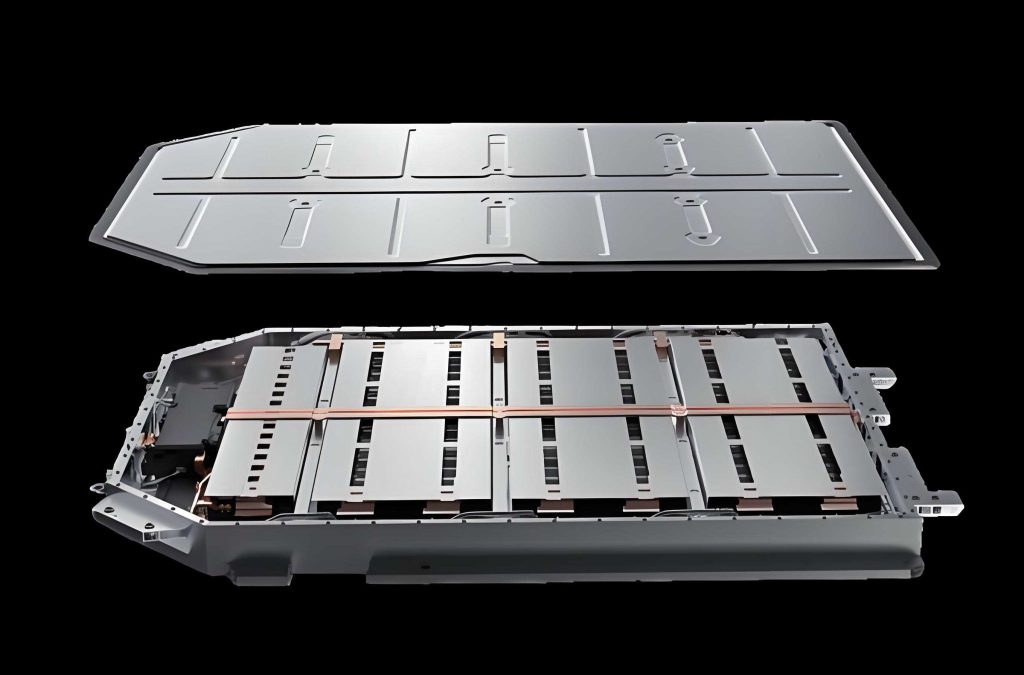
My central proposition is that carbon neutrality imposes a stricter design constraint than conventional recycling economics. It is not enough to recover lithium, nickel, cobalt, and manganese at high mass efficiency. I must also ask how much energy is consumed, what greenhouse gases are emitted, how far materials travel, how much secondary waste is generated, and whether recovered materials can displace virgin production in a new electric vehicle battery pack. The carbon-neutral resource utilization of an electric vehicle battery pack therefore requires an integrated optimization of technology, logistics, policy, data, and markets.
From Linear Disposal to Circular Carbon Logic
I compare two paradigms. In the linear paradigm, an electric vehicle battery pack is produced, used, discarded, and perhaps partially dismantled for metal scrap. In the circular carbon paradigm, the same electric vehicle battery pack is designed for disassembly, tracked through its service life, graded for second life, and then returned to material flows that feed new battery production. The difference is not merely waste diversion. It is a reduction in lifecycle carbon intensity because recycled materials avoid the mining, refining, and manufacturing emissions of virgin inputs.
| Dimension | Linear pattern | Carbon-neutral resource utilization | Key indicator |
|---|---|---|---|
| Design | Electric vehicle battery pack designed for performance only | Electric vehicle battery pack designed for disassembly, traceability, and material recovery | Disassembly time; material separability index |
| Collection | Informal channels dominate; pack loses identity | Reverse logistics with digital identity and custody transfer | Formal collection rate |
| Testing | Limited state-of-health assessment | Rapid grading for second life or direct recycling | State-of-health accuracy |
| Dismantling | Manual, unsafe, low-yield | Low-temperature, automated, non-destructive dismantling | Energy per electric vehicle battery pack |
| Material recovery | Focus on nickel and cobalt only | Full-component recovery including lithium, graphite, electrolyte, and polymers | Material recovery ratio |
| Carbon accounting | Scope 1 and 2 only; recycling omitted | Lifecycle carbon footprint including avoided emissions | Net carbon benefit |
| Market | Commodity scrap pricing | Low-carbon material premium and verified carbon assets | Green premium |
I formalize the carbon intensity of resource utilization for an electric vehicle battery pack as follows:
$$CI_{RU} = \frac{E_{col}EF_{col} + E_{dis}EF_{dis} + E_{sep}EF_{sep} + E_{reg}EF_{reg} + E_{trans}EF_{trans}}{M_{rec}}$$
Here, \(CI_{RU}\) is the carbon intensity per unit of recovered material, \(E\) represents energy or fuel consumption in collection, disassembly, separation, regeneration, and transport, \(EF\) represents emission factors, and \(M_{rec}\) is the mass of recovered material. I can reduce \(CI_{RU}\) by lowering energy intensity, using low-carbon electricity, shortening transport distance, increasing material yield, and avoiding high-temperature pyrometallurgical steps when hydrometallurgical or direct regeneration routes are feasible.
I also define the net carbon benefit of recycling an electric vehicle battery pack as the difference between the emissions avoided by displacing virgin materials and the emissions caused by the recycling chain:
$$NCB = CI_{virgin} – CI_{RU} = \left(\sum_m m_m EF_m\right) – \left(CI_{col} + CI_{dis} + CI_{sep} + CI_{reg} + CI_{trans}\right)$$
If \(NCB > 0\), the resource utilization of the electric vehicle battery pack delivers a carbon-neutral or carbon-negative contribution. If \(NCB \le 0\), the process may be economically profitable but climatically questionable. I therefore insist that carbon neutrality must be measured, not assumed.
Challenge One: Low-Carbon Processing Technology Lags
The first major challenge I observe is that conventional recycling technology for an electric vehicle battery pack was developed around metal recovery efficiency rather than carbon efficiency. Pyrometallurgical smelting can recover nickel, cobalt, and copper, but it is energy-intensive and often fails to recover lithium, electrolyte, and graphite. Hydrometallurgical processes can achieve high purity, but they consume acids, bases, water, and energy. Mechanical pretreatment can reduce volume, but it may mix materials and create black mass that is difficult to refine. The result is a recycling system that recovers some valuable metals while losing other materials and generating a significant carbon footprint.
| Process stage | Conventional approach | Carbon problem | Low-carbon alternative |
|---|---|---|---|
| Discharge and storage | Slow natural discharge or brine discharge | Energy loss; wastewater; safety risk | Controlled low-energy discharge with recovered energy |
| Dismantling | Manual cutting and crushing | Dust, fire risk, material contamination | Low-temperature robotic disassembly |
| Separation | Wet density separation | Water use and effluent treatment | Dry electrostatic and magnetic separation |
| Leaching | Strong acid full dissolution | High reagent consumption and emissions | Targeted leaching of cathode metals |
| Regeneration | Precipitation to salts then resynthesis | Long route; high energy; material downgrade | Direct regeneration of cathode material |
| Electrolyte handling | Incineration or uncontrolled release | Fluorinated gas emissions; resource loss | Low-temperature extraction and purification |
I calculate the specific energy intensity of treating an electric vehicle battery pack as:
$$EI = \frac{E_{total}}{m_{pack}}$$
where \(E_{total}\) is total energy consumed and \(m_{pack}\) is the mass of the electric vehicle battery pack. A low-carbon process should minimize \(EI\) while maximizing the material recovery ratio:
$$MRR = \frac{\sum_i m_{r,i}}{\sum_i m_{f,i}} \times 100\%$$
I do not accept a high \(MRR\) if it comes with excessive \(EI\). The carbon-neutral target requires a joint optimum. In my assessment, the most promising technical directions are low-temperature dismantling, dry physical separation, targeted leaching, direct cathode regeneration, and closed-loop electrolyte recovery. These directions are especially important for new chemistries such as lithium iron phosphate and high-nickel layered oxides, because a single generic process cannot optimally treat every electric vehicle battery pack.
Challenge Two: Full-Chain Coordination Is Missing
The second challenge I identify is the fragmentation of the value chain. An electric vehicle battery pack passes through mining, refining, cell production, module assembly, pack assembly, vehicle integration, consumer use, repair, replacement, collection, testing, disassembly, recycling, and remanufacturing. In practice, these stages are often managed by different actors with different data systems, incentives, and legal responsibilities. The battery producer may not know where its electric vehicle battery pack ends up. The vehicle manufacturer may not share state-of-health data with the recycler. The recycler may not receive design information that would simplify disassembly. The result is a system that loses value at every handover.
| Lifecycle stage | Critical data | Current gap | Carbon consequence |
|---|---|---|---|
| Design | Material composition, joining methods, safety architecture | Recyclers receive little design data | Higher dismantling energy and lower yield |
| Manufacturing | Cell chemistry, electrode formulation, carbon footprint | Data not linked to pack identity | Poor matching of recycling route to chemistry |
| Use | Charge cycles, temperature history, state of health | Data held by vehicle or fleet operator | Second-life potential is wasted |
| Collection | Custody, location, condition, ownership | Informal channels break the chain | Uncontrolled transport and unsafe handling |
| Recycling | Process energy, reagent use, emissions, yield | Inconsistent reporting | No credible carbon accounting |
| Remanufacturing | Secondary material quality, purity, performance | Weak traceability of recycled content | Limited displacement of virgin materials |
I use a traceability coverage indicator to measure how much of the electric vehicle battery pack flow is visible:
$$TC = \frac{N_{tracked}}{N_{total}} \times 100\%$$
When \(TC\) is low, carbon accounting becomes unreliable, reverse logistics becomes inefficient, and policy enforcement becomes expensive. I therefore recommend a digital product passport for every electric vehicle battery pack. The passport should not be a static label. It should be a secure, interoperable record that follows the electric vehicle battery pack from cell birth to final material recovery. It should contain chemistry, capacity, voltage, manufacturing carbon footprint, repair history, state-of-health data, and recycling process data. I recognize that data ownership and privacy are sensitive, so I propose tiered access: public data for regulators and recyclers, restricted data for manufacturers, and private data for owners.
Challenge Three: High-Value Utilization Is Underdeveloped
The third challenge I emphasize is that too many valuable materials in an electric vehicle battery pack are treated as low-value scrap. The cathode contains lithium, nickel, cobalt, and manganese. The anode contains graphite. The current collectors contain copper and aluminum. The electrolyte contains lithium salts and organic solvents. The separator contains polyolefin. The housing contains aluminum or steel. Yet many recycling systems focus only on nickel, cobalt, and copper. Lithium is often recovered as a low-value salt or lost in slag. Graphite is burned or landfilled. Electrolyte is incinerated. This is a resource tragedy and a carbon problem, because virgin production of these materials carries substantial emissions.
| Material in electric vehicle battery pack | Typical recycling fate | High-value pathway | Carbon benefit |
|---|---|---|---|
| Lithium | Slag, low-purity salt, or loss | Battery-grade lithium carbonate or hydroxide | Displaces energy-intensive brine and hard-rock refining |
| Nickel | Alloy or mixed sulfate | High-purity sulfate for cathode precursor | Avoids mining and refining emissions |
| Cobalt | Alloy or mixed sulfate | Battery-grade cobalt sulfate | Reduces social and carbon risks of primary supply |
| Manganese | Slag or low-value residue | High-purity manganese sulfate | Reduces primary ore processing |
| Graphite | Landfill or incineration | Purified battery-grade graphite | Avoids mining and high-temperature graphitization |
| Copper | Scrap metal | High-conductivity copper foil | Low-carbon secondary copper |
| Aluminum | Scrap metal | Alloy for battery housing | Secondary aluminum saves large energy |
| Electrolyte | Incineration | Solvent and lithium salt recovery | Avoids fluorinated emissions and virgin salt production |
| Separator | Incineration | Polyolefin recovery or energy recovery with capture | Reduces virgin polymer demand |
I define a circularity index for the electric vehicle battery pack as:
$$C_{circ} = \sum_i w_i \frac{R_i Q_i T_i}{1 + L_i}$$
where \(R_i\) is the recovery rate of material \(i\), \(Q_i\) is the quality of the recovered material, \(T_i\) is the traceability level, \(L_i\) is the lifecycle loss or downgrade penalty, and \(w_i\) is the carbon or economic weight of material \(i\). I use this index because mass-based recovery rates alone can be misleading. A process that recovers 90% of the mass but downgrades the cathode into a low-value alloy is not equivalent to a process that recovers 80% of the mass but returns battery-grade material to a new electric vehicle battery pack.
An Integrated Carbon-Neutral Framework
I propose an integrated framework that combines technology, coordination, and high-value utilization. The framework has four layers: physical layer, data layer, economic layer, and policy layer. The physical layer includes collection, testing, disassembly, separation, regeneration, and remanufacturing. The data layer includes the digital product passport, state-of-health analytics, carbon accounting, and material flow analysis. The economic layer includes reverse logistics costs, recovered material prices, carbon prices, green premiums, and financing. The policy layer includes extended producer responsibility, recycling targets, carbon disclosure, standards, and enforcement.
| Layer | Core elements | Decision variable | Carbon-neutral objective |
|---|---|---|---|
| Physical | Electric vehicle battery pack collection, testing, dismantling, separation, regeneration | Process route, energy source, yield | Minimize \(CI_{RU}\) and maximize \(MRR\) |
| Data | Digital passport, state-of-health, carbon footprint, material composition | Data sharing, access, verification | Maximize \(TC\) and accounting accuracy |
| Economic | Reverse logistics, material markets, carbon markets, green procurement | Price, contract, investment | Maximize \(NCB\) and economic viability |
| Policy | EPR, targets, standards, enforcement, incentives | Regulation, subsidy, penalty | Align private incentives with carbon neutrality |
I express the lifecycle carbon balance of an electric vehicle battery pack as:
$$LCE = E_{min} + E_{man} + E_{use} + E_{col} + E_{rec} + E_{disp} – E_{avoid}$$
where \(E_{min}\) is mining and refining, \(E_{man}\) is manufacturing, \(E_{use}\) is operational use, \(E_{col}\) is collection, \(E_{rec}\) is recycling, \(E_{disp}\) is disposal, and \(E_{avoid}\) is avoided virgin production. For carbon neutrality, I want \(LCE\) to be as low as possible and ideally negative when credits for avoided emissions are included. The resource utilization of the electric vehicle battery pack directly affects \(E_{rec}\), \(E_{disp}\), and \(E_{avoid}\). A poor recycling route increases \(E_{rec}\) and reduces \(E_{avoid}\). A high-value route decreases both.
Recommendation One: Build Low-Carbon Technology Portfolios
My first recommendation is to make carbon intensity a primary design criterion for every recycling process. I would not evaluate a process only by nickel recovery or cobalt recovery. I would require a carbon footprint per kilogram of recovered battery-grade material. I would also require a water footprint, chemical hazard score, and secondary waste index. The electric vehicle battery pack is not homogeneous, so I recommend a portfolio approach rather than a single universal process.
| Technology | Best-fit electric vehicle battery pack chemistry | Expected carbon advantage | Key barrier |
|---|---|---|---|
| Low-temperature robotic dismantling | All pack architectures | Reduces fire risk, dust, and material contamination | High capital cost; pack variability |
| Dry electrostatic separation | Shredded modules and black mass | Avoids water and effluent treatment | Separation purity |
| Targeted leaching | Lithium iron phosphate and ternary cathodes | Reduces acid and energy consumption | Selectivity and scalability |
| Direct cathode regeneration | Stoichiometric layered oxides | Avoids dissolution and resynthesis | Impurity control; feedstock homogeneity |
| Solid-phase regeneration | Lithium iron phosphate | Short route; lower energy | Performance restoration |
| Electrolyte extraction | All liquid-electrolyte packs | Recovers lithium salt and solvent; avoids incineration | Safety; low-temperature separation |
| Graphite purification | Anode-dominated black mass | Displaces virgin graphite and graphitization | Cost; purity |
I calculate the carbon abatement cost of a technology as:
$$MAC = \frac{C_{tech} – C_{base}}{\Delta GHG}$$
where \(C_{tech}\) is the annualized cost of the low-carbon technology, \(C_{base}\) is the cost of the baseline technology, and \(\Delta GHG\) is the greenhouse gas reduction. I would rank technologies by \(MAC\). A negative \(MAC\) means the low-carbon option saves money and carbon. A positive \(MAC\) means policy support or carbon markets are needed. I believe that direct regeneration and electrolyte recovery often have favorable \(MAC\) when high-purity products can be sold into battery supply chains.
Recommendation Two: Create Full-Chain Coordination
My second recommendation is to create a full-chain coordination architecture for the electric vehicle battery pack. This architecture should connect battery manufacturers, vehicle manufacturers, fleet operators, service networks, collection points, recyclers, refiners, and regulators. I would start with a shared data model that identifies every electric vehicle battery pack by a unique identifier. The identifier should be linked to chemistry, capacity, manufacturing date, carbon footprint, and state-of-health history. When the electric vehicle battery pack is removed from a vehicle, the identifier should trigger a custody transfer event. When it is tested, the result should be written back to the record. When it is dismantled, the recycling route and material outputs should be recorded.
| Actor | Responsibility in electric vehicle battery pack circularity | Data contribution | Incentive |
|---|---|---|---|
| Battery manufacturer | Design for disassembly; declare material composition and carbon footprint | Cell chemistry, embedded carbon, joining methods | Compliance; green market access |
| Vehicle manufacturer | Facilitate collection; share state-of-health data | Pack identity, service history, warranty data | Brand value; EPR compliance |
| Owner or fleet operator | Return electric vehicle battery pack to formal channel | Usage history, location, condition | Deposit refund; residual value |
| Collection network | Safe handling, storage, and transport | Custody, weight, visual condition | Service fee; certified volume |
| Recycler | Test, grade, dismantle, recover materials | Process energy, yield, emissions | Material revenue; carbon credits |
| Refiner or remanufacturer | Produce battery-grade materials | Purity, performance, recycled content | Green premium |
| Regulator | Set targets, verify data, enforce rules | National material flow and carbon accounts | Carbon neutrality goals |
| Platform operator | Operate digital passport and matching system | Interoperable records and analytics | Transaction fees; data services |
I would measure coordination performance with a supply-demand matching rate:
$$SDR = \frac{Q_{matched}}{Q_{available}} \times 100\%$$
where \(Q_{matched}\) is the quantity of retired electric vehicle battery pack capacity matched to a verified second-life or recycling pathway, and \(Q_{available}\) is the total retired capacity. A high \(SDR\) means fewer packs are idle, lost, or informally processed. I would also track the average transport distance per electric vehicle battery pack, because logistics emissions can undermine the carbon benefits of recycling.
Recommendation Three: Scale High-Value Resource Recovery
My third recommendation is to scale high-value recovery for all major components of the electric vehicle battery pack. I would not accept a recycling system that focuses only on nickel and cobalt. I would require recovery targets for lithium, graphite, copper, aluminum, electrolyte, and separator. I would also require quality targets, because the recovered material must be able to re-enter battery production. The goal is not merely to recover mass. The goal is to recover function.
| Recovery target | Quality requirement | Analytical method | Carbon-neutral contribution |
|---|---|---|---|
| Lithium | Battery-grade carbonate or hydroxide | ICP-OES; titration; XRD | Displaces primary lithium refining |
| Nickel | Battery-grade sulfate; low impurity | ICP-MS; XRF | Reduces mining and smelting emissions |
| Cobalt | Battery-grade sulfate | ICP-MS; XRF | Reduces primary cobalt supply risk |
| Manganese | High-purity sulfate | ICP-OES | Avoids ore processing |
| Graphite | Battery-grade purity and particle size | XRD; BET; particle size analysis | Avoids mining and graphitization |
| Copper | High-conductivity foil or cathode copper | Assay; conductivity testing | Secondary copper has lower carbon intensity |
| Aluminum | Housing-grade alloy | Spectrometry; mechanical testing | Secondary aluminum saves energy |
| Electrolyte | Solvent purity and lithium salt concentration | GC-MS; NMR; titration | Avoids incineration and virgin production |
| Separator | Polymer purity or controlled energy recovery | FTIR; DSC | Reduces plastic incineration |
I define the value recovery ratio of an electric vehicle battery pack as:
$$VRR = \frac{\sum_i m_{r,i} p_i}{\sum_i m_{f,i} p_i}$$
where \(m_{r,i}\) is recovered mass of material \(i\), \(m_{f,i}\) is feed mass, and \(p_i\) is the economic or carbon value per unit mass. This metric prevents a common error: a process may report a high mass recovery rate while producing low-value mixed salts. I want the electric vehicle battery pack to yield battery-grade materials, not just recovered atoms.
Second-Life Utilization as a Carbon Bridge
I see second-life utilization as a carbon bridge between the first life of an electric vehicle battery pack and its eventual material recovery. A retired electric vehicle battery pack may retain 70% to 80% of its original capacity. If it is directly dismantled, that remaining capacity is lost. If it is graded and redeployed in stationary storage, it can displace new battery manufacturing for several years. This delay also provides time for recycling technology to improve and for material markets to mature.
| Grading parameter | Second-life threshold | Recycling threshold | Measurement |
|---|---|---|---|
| Capacity retention | Greater than 70% | Less than 70% | Capacity test at standard rate |
| Internal resistance | Less than 1.5 times initial | Greater than 1.5 times initial | DC resistance test |
| Cycle life | More than 500 equivalent cycles | Less than 500 equivalent cycles | Accelerated aging |
| Voltage consistency | Cell delta less than 50 mV | Cell delta greater than 50 mV | Module voltage scan |
| Safety | No swelling, leakage, or abnormal heat | Any safety defect | Visual, thermal, and insulation tests |
| Data completeness | Full state-of-health history | Incomplete or unknown history | Digital passport audit |
I model the carbon benefit of second-life use as:
$$CB_{SL} = E_{new} – E_{reuse} – E_{test} – E_{BOS}$$
where \(E_{new}\) is the emissions of manufacturing a new stationary battery, \(E_{reuse}\) is the emissions of preparing the retired electric vehicle battery pack for second life, \(E_{test}\) is testing energy, and \(E_{BOS}\) is balance-of-system emissions. If \(CB_{SL} > 0\), second life reduces carbon emissions. I would only support second-life deployment when safety, warranty, and data transparency are guaranteed. Otherwise, the electric vehicle battery pack should go directly to high-efficiency material recovery.
Carbon Accounting and Market Design
I argue that carbon accounting must be standardized for the resource utilization of an electric vehicle battery pack. Without a common methodology, a recycler can claim low carbon intensity by excluding transport, ignoring reagent production, or using a favorable grid factor. I would require a cradle-to-gate boundary for recycled materials and a cradle-to-grave boundary for the electric vehicle battery pack. I would also require allocation rules for co-products, because a recycling process may produce multiple materials with different values and emissions.
| Accounting element | Recommended boundary | Data source | Verification |
|---|---|---|---|
| Collection | Collection point to recycling facility | Logistics records; fuel or electricity use | Third-party audit |
| Disassembly | Facility gate to separated components | Electricity, heat, labor, consumables | Metered data |
| Separation | Black mass and component outputs | Energy, water, chemicals | Mass balance |
| Regeneration | Recovered material ready for battery production | Energy, reagents, yield | Lifecycle assessment |
| Avoided emissions | Virgin material displacement | Market data; industry averages | Conservative crediting |
| Carbon credit | Net additional reduction | Project baseline and monitoring | Registry verification |
I define the carbon credit generated by an electric vehicle battery pack recycling project as:
$$CC = \max(0, NCB_{project} \times M_{pack})$$
where \(NCB_{project}\) is the net carbon benefit per unit mass and \(M_{pack}\) is the mass of the electric vehicle battery pack processed. I would apply a conservatism factor to avoid over-crediting. I would also require additionality: the project should not be business as usual. If recycling is already profitable without carbon credits, the credit should be limited or redirected toward higher-cost but higher-impact activities such as electrolyte recovery or graphite purification.
Policy and Regulatory Recommendations
I recommend a policy mix that makes carbon-neutral resource utilization of the electric vehicle battery pack the default business model. Extended producer responsibility is necessary but not sufficient. I would combine it with carbon pricing, green public procurement, mandatory data sharing, minimum recycled content, and strict enforcement against informal recycling.
| Policy instrument | Design feature | Expected effect on electric vehicle battery pack circularity | Risk |
|---|---|---|---|
| Extended producer responsibility | Battery and vehicle manufacturers finance collection and recycling | Internalizes end-of-life cost | Free riders; weak enforcement |
| Minimum recycled content | Require battery-grade recycled lithium, nickel, cobalt, graphite | Creates demand for high-value recovery | Supply shortage; quality concerns |
| Digital product passport | Mandatory unique identifier and data fields | Improves traceability and carbon accounting | Data privacy; interoperability |
| Carbon disclosure | Report embedded carbon and recycled content | Rewards low-carbon electric vehicle battery pack supply chains | Methodological inconsistency |
| Carbon market | Allow verified recycling credits | Monetizes carbon reductions | Over-crediting; additionality |
| Green procurement | Government fleets and storage projects prefer low-carbon materials | Creates early market for recycled materials | Higher short-term cost |
| Informal sector enforcement | Strict penalties for unsafe dismantling and illegal exports | Shifts volume to formal recyclers | Enforcement cost; displacement |
I calculate the effective recycling rate of an electric vehicle battery pack as:
$$RR_{eff} = \frac{M_{formal} + M_{reuse} + M_{remanufactured}}{M_{retired}} \times 100\%$$
where \(M_{formal}\) is formally recycled mass, \(M_{reuse}\) is mass entering second life, \(M_{remanufactured}\) is mass returning to battery production, and \(M_{retired}\) is total retired mass. I prefer this metric over a simple collection rate because it rewards high-value pathways and penalizes informal or destructive processing.
Digital Infrastructure and Data Standards
I believe the digital infrastructure for the electric vehicle battery pack must be as robust as the physical infrastructure. A digital product passport should use open standards, cryptographic identifiers, and application programming interfaces. It should support offline operation in areas with poor connectivity. It should allow authorized parties to update records without overwriting history. It should also support automated carbon accounting, so that every step in the reverse supply chain contributes to a verified carbon balance.
| Data field | Purpose | Update frequency | Access level |
|---|---|---|---|
| Unique identifier | Track the electric vehicle battery pack | At manufacture and ownership change | Regulator; recycler; manufacturer |
| Chemistry and capacity | Select recycling route | At manufacture | Recycler; regulator |
| Carbon footprint | Calculate embedded emissions | At manufacture | Public summary; regulator |
| State of health | Grade for second life | At service events | Owner; service provider; recycler |
| Repair history | Assess safety and residual value | At repair | Owner; service provider |
| Custody transfer | Prevent leakage | At each transfer | Regulator; platform operator |
| Recycling process data | Verify carbon accounting | At batch completion | Regulator; auditor |
| Material output | Certify recycled content | At sale of recovered material | Manufacturer; regulator |
I would measure the completeness of the digital record as:
$$DC = \frac{\sum_j w_j I_j}{\sum_j w_j} \times 100\%$$
where \(I_j\) is an indicator that field \(j\) is complete and verified, and \(w_j\) is the field weight. I would require a minimum \(DC\) before an electric vehicle battery pack qualifies for second-life deployment or carbon credit issuance. This prevents unverifiable claims.
Economics of Carbon-Neutral Resource Utilization
I recognize that carbon neutrality must be financially sustainable. The economics of recycling an electric vehicle battery pack depend on material prices, processing costs, logistics, capital expenditure, carbon prices, and policy support. High nickel and cobalt prices favor recycling. Low lithium and graphite prices can discourage investment in full-component recovery. I therefore recommend stabilizing revenue through long-term offtake agreements, recycled content mandates, and carbon contracts for difference.
| Economic factor | Effect on electric vehicle battery pack recycling | Policy lever | Carbon outcome |
|---|---|---|---|
| Nickel and cobalt prices | High prices improve revenue | Market transparency | Supports metal recovery |
| Lithium price | Low prices reduce lithium recovery incentive | Minimum recycled content | Prevents lithium loss |
| Graphite price | Low prices discourage purification | Green procurement | Reduces virgin graphite demand |
| Logistics cost | Long distances reduce net benefit | Regional hubs | Lowers transport emissions |
| Energy price | High electricity cost reduces viability | Low-carbon electricity access | Reduces processing emissions |
| Carbon price | Adds revenue for verified reductions | Carbon market inclusion | Rewards low-carbon routes |
| Capital cost | High for automation and clean processes | Green finance | Enables technology upgrade |
I evaluate project viability with net present value:
$$NPV = \sum_{t=0}^{T} \frac{B_t – C_t}{(1+r)^t}$$
where \(B_t\) includes material sales, recycling fees, carbon credits, and green premiums, \(C_t\) includes collection, processing, energy, labor, maintenance, and compliance, and \(r\) is the discount rate. I would integrate carbon benefits directly into \(B_t\) so that low-carbon projects are not disadvantaged by market prices that ignore externalities.
Risk Management and Quality Control
I identify several risks in the resource utilization of an electric vehicle battery pack. Technical risk includes process failure, low yield, and impurity problems. Safety risk includes thermal runaway, fire, and toxic exposure. Market risk includes volatile metal prices and uncertain demand for recycled materials. Regulatory risk includes changing standards and delayed enforcement. Data risk includes incomplete records, cyberattacks, and privacy breaches. I recommend a risk management system that combines redundancy, insurance, real-time monitoring, and third-party certification.
| Risk | Cause | Mitigation | Indicator |
|---|---|---|---|
| Thermal runaway | Damaged electric vehicle battery pack | Controlled discharge; fire-suppressed storage | Temperature alarms |
| Low material purity | Mixed chemistries; incomplete separation | Chemistry sorting; quality control | Impurity concentration |
| Market volatility | Metal price swings | Long-term contracts; hedging | Revenue variance |
| Data loss | Incompatible systems | Open standards; backups | Data completeness \(DC\) |
| Informal competition | Lower compliance costs | Enforcement; deposit refunds | Formal collection share |
| Carbon over-crediting | Weak baseline | Conservative accounting; audits | Verified \(NCB\) |
I also recommend that every batch of recovered material from an electric vehicle battery pack be tested for electrochemical performance. A recovered cathode material should be assembled into a test cell and evaluated for capacity, rate capability, and cycle life. This closes the loop between recycling and battery manufacturing. Without performance testing, recycled materials remain a commodity of uncertain value.
Implementation Roadmap
I propose a three-phase roadmap for carbon-neutral resource utilization of the electric vehicle battery pack. The first phase focuses on data and collection. The second phase focuses on low-carbon processing and high-value recovery. The third phase focuses on full circular integration and carbon-negative operation.
| Phase | Time horizon | Priority actions | Success metric |
|---|---|---|---|
| Foundation | 0–2 years | Digital passport; formal collection network; chemistry sorting; carbon accounting standard | Traceability coverage \(TC > 80\%\) |
| Scale-up | 2–5 years | Low-temperature dismantling; dry separation; targeted leaching; direct regeneration | Material recovery ratio \(MRR > 90\%\) |
| Integration | 5–10 years | Full-component recovery; battery-grade闭环 supply; carbon market linkage | Net carbon benefit \(NCB > 0\) for all major chemistries |
I would track progress with a composite index:
$$CPI = \alpha TC + \beta MRR + \gamma VRR + \delta \frac{NCB}{NCB_{target}} – \epsilon \frac{CI_{RU}}{CI_{baseline}}$$
where \(\alpha, \beta, \gamma, \delta, \epsilon\) are weights. This index prevents success in one dimension from hiding failure in another. For example, a high collection rate is not sufficient if the electric vehicle battery pack is shredded and lithium is lost. A high metal recovery rate is not sufficient if the process uses coal-fired electricity. A low carbon intensity is not sufficient if the recovered material cannot be used in a new electric vehicle battery pack.
Conclusion
I conclude that the carbon-neutral resource utilization of an electric vehicle battery pack is a systemic challenge that cannot be solved by isolated technical fixes. It requires low-carbon processing technologies, full-chain coordination, high-value material recovery, digital traceability, robust carbon accounting, and supportive policy. The electric vehicle battery pack should be treated as a valuable carbon and material reservoir, not as waste. Every decision—from design to collection to regeneration—should be evaluated against its lifecycle carbon balance.
I recommend that industry and policymakers adopt a common framework with measurable indicators: carbon intensity \(CI_{RU}\), net carbon benefit \(NCB\), material recovery ratio \(MRR\), value recovery ratio \(VRR\), traceability coverage \(TC\), circularity index \(C_{circ}\), and effective recycling rate \(RR_{eff}\). These indicators should be reported transparently and verified independently. When they are combined with low-carbon electricity, short reverse logistics, high-value recovery, and strong enforcement, the electric vehicle battery pack can become a cornerstone of a carbon-neutral materials economy.
My final position is that carbon neutrality and resource security are not competing goals. They reinforce each other. A well-designed recycling system for the electric vehicle battery pack reduces dependence on primary mining, lowers lifecycle emissions, creates green jobs, and strengthens supply chain resilience. The transition will require investment, innovation, and coordination, but the alternative—continued loss of critical materials and unnecessary carbon emissions—is far more costly. I therefore urge a shift from incremental recycling to integrated carbon-neutral resource utilization, with the electric vehicle battery pack at the center of the circular economy.