
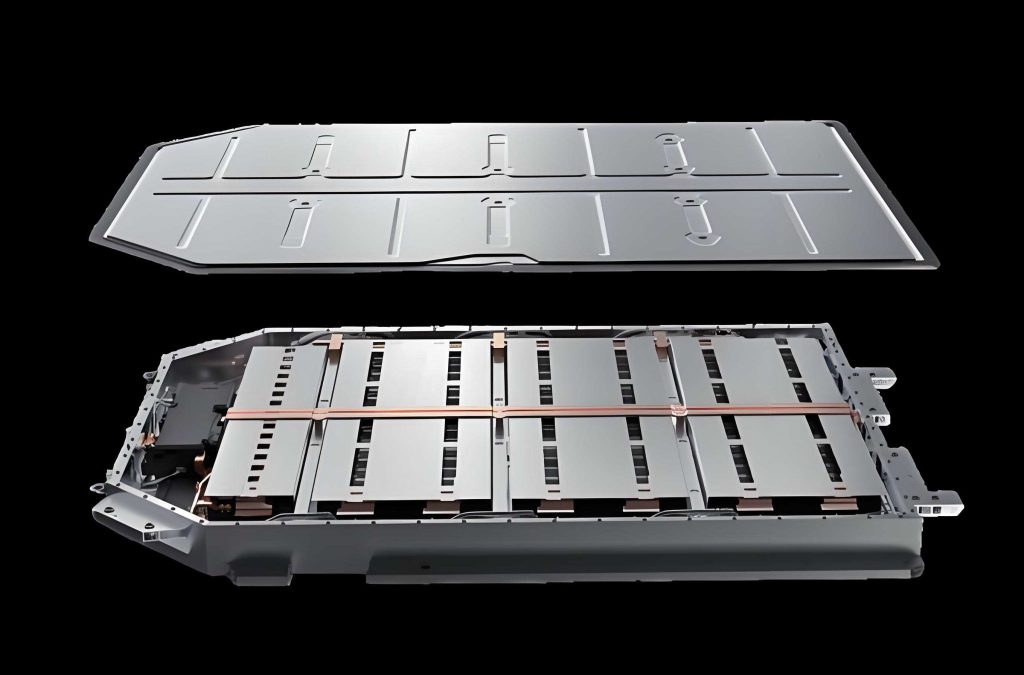
I study how firms in the electric vehicle supply chain should design research and development strategies for the electric vehicle battery pack and how they should organize recycling and remanufacturing once large numbers of electric vehicle battery packs reach retirement. My motivation is straightforward. The electric vehicle battery pack is one of the most valuable and technologically sensitive components of an electric vehicle. It determines driving range, durability, safety, charging performance, and resale value. When consumers worry about range and resale value, demand for electric vehicles can be suppressed. When retired electric vehicle battery packs are not collected and processed properly, valuable materials are lost and environmental risks increase. Therefore, I build game-theoretic supply chain models to examine two connected decisions: how much to invest in electric vehicle battery pack research and development, and how to structure recycling and remanufacturing for the electric vehicle battery pack.
1. Research Questions and Overall Logic
My research is organized around three questions. First, when consumers experience anxiety about range and resale value, how does that anxiety affect the optimal research and development level for the electric vehicle battery pack? Second, which research and development mode best motivates supply chain members to improve electric vehicle battery pack performance? Third, when retired electric vehicle battery packs are recovered, which recycling entity should lead the reverse flow, and how does that choice affect remanufacturing research, pricing, quantity, and profit?
To answer these questions, I separate the analysis into two connected models. The first model focuses on forward supply chain research and development for the electric vehicle battery pack. The second model focuses on closed-loop supply chain remanufacturing for the electric vehicle battery pack. In both models, I consider a supplier, a manufacturer, and consumers. I assume risk-neutral firms that maximize expected profit. I use backward induction to solve the sequential games. I then compare equilibrium outcomes under different institutional arrangements.
2. Model Primitives and Notation
For the research and development model, I describe consumer demand for electric vehicles as a linear function of price and electric vehicle battery pack performance. Let \(q_j\) be demand, \(p_j\) be the retail price, \(\theta_j\) be the research and development level of the electric vehicle battery pack, and \(\alpha\) be consumer anxiety. I write demand as
$$q_j = m – b p_j + (1-\alpha)\theta_j.$$
For analytical convenience, I set market size \(m=1\) and price sensitivity \(b=1\). Thus,
$$q_j = 1 – p_j + (1-\alpha)\theta_j.$$
The term \((1-\alpha)\theta_j\) captures the demand-enhancing effect of research and development. When \(\alpha=0\), consumers have no anxiety, and research and development fully contributes to demand. When \(\alpha=1\), anxiety is maximal, and research and development no longer expands demand. This specification allows me to study how consumer anxiety weakens the incentive to improve the electric vehicle battery pack.
The cost of research and development for the electric vehicle battery pack is convex. If the research level is \(\theta_j\), the investment cost is
$$C_{R\&D,j} = I \theta_j^2,$$
where \(I>0\) is the research investment cost coefficient. A larger \(I\) means that improving the electric vehicle battery pack is more difficult or more expensive. I assume that research always succeeds once the investment is made. Production costs for the electric vehicle battery pack and the electric vehicle are normalized to zero when they do not affect the main conclusions.
Table 1 summarizes the main notation for the research and development model.
| Symbol | Meaning |
|---|---|
| \(m\) | Market size for electric vehicles |
| \(b\) | Consumer price sensitivity |
| \(\alpha\) | Consumer anxiety regarding range and resale value |
| \(\theta_j\) | Research and development level of the electric vehicle battery pack |
| \(p_j\) | Retail price of the electric vehicle |
| \(q_j\) | Demand for electric vehicles |
| \(w\) | Wholesale price of the electric vehicle battery pack |
| \(I\) | Research investment cost coefficient |
| \(S\) | Initial fixed cost for manufacturer-led research |
| \(\lambda\) | Cost-sharing ratio borne by the manufacturer under supplier-led research |
| \(\pi_{ij}\) | Profit of member \(i\) under model \(j\) |
3. Research and Development Investment Strategies for the Electric Vehicle Battery Pack
I consider three research and development modes for the electric vehicle battery pack. In the manufacturer research mode, the manufacturer independently develops the electric vehicle battery pack. In the supplier research mode, the supplier independently develops the electric vehicle battery pack, but the manufacturer shares part of the research cost. In the collaborative research mode, the supplier and the manufacturer jointly develop the electric vehicle battery pack and each performs part of the research work.
3.1 Manufacturer Research Mode
In the manufacturer research mode, the manufacturer chooses the research level \(\theta_d\) and the electric vehicle price \(p_d\). The manufacturer also bears an initial fixed cost \(S\) because it must build new capabilities for the electric vehicle battery pack. The manufacturer’s optimization problem is
$$\max_{p_d,\theta_d} \pi_{md} = p_d\bigl(1-p_d+(1-\alpha)\theta_d\bigr) – I\theta_d^2 – S.$$
This mode reflects a strategy in which the manufacturer seeks to control the core technology of the electric vehicle battery pack. The advantage is internal coordination and rapid response to consumer anxiety. The disadvantage is a high fixed cost and a heavy research burden.
3.2 Supplier Research Mode
In the supplier research mode, the supplier chooses the research level \(\theta_u\), while the manufacturer chooses the retail price \(p_u\) and the cost-sharing ratio \(\lambda\). The supplier bears \((1-\lambda)\) of the research cost, and the manufacturer bears \(\lambda\) of the research cost. The supplier’s problem is
$$\max_{\theta_u} \pi_{su} = w\bigl(1-p_u+(1-\alpha)\theta_u\bigr) – (1-\lambda)I\theta_u^2.$$
The manufacturer’s problem is
$$\max_{p_u,\lambda} \pi_{mu} = (p_u-w)\bigl(1-p_u+(1-\alpha)\theta_u\bigr) – \lambda I\theta_u^2.$$
This mode reduces the manufacturer’s direct research burden, but it creates a risk that the supplier may underinvest in the electric vehicle battery pack. Cost sharing is intended to align incentives.
3.3 Collaborative Research Mode
In the collaborative research mode, the supplier and the manufacturer jointly determine the research level of the electric vehicle battery pack. The manufacturer performs part of the research work and bears part of the cost, while the supplier performs the remaining work. The supplier’s problem is
$$\max_{\theta_s} \pi_{sc} = w\bigl(1-p_c+(1-\alpha)(\theta_s+\theta_m)\bigr) – I\theta_s^2.$$
The manufacturer’s problem is
$$\max_{p_c,\theta_m} \pi_{mc} = (p_c-w)\bigl(1-p_c+(1-\alpha)(\theta_s+\theta_m)\bigr) – I\theta_m^2.$$
Here, \(\theta_s+\theta_m=\theta_c\) is the total research level of the electric vehicle battery pack. This mode combines the supplier’s technical expertise with the manufacturer’s market knowledge.
3.4 Comparative Results for Research and Development Modes
Table 2 summarizes the main strategic comparisons for the electric vehicle battery pack under the three research modes.
| Comparison | Result | Interpretation |
|---|---|---|
| Research level | \(\theta_u < \theta_d = \theta_c\) | Supplier-only research leads to the lowest electric vehicle battery pack research. Manufacturer involvement raises research. |
| Retail price | \(p_d < p_u < p_c\) | Collaborative research has the highest price due to coordination and additional process costs. Manufacturer research has the lowest price. |
| Demand | \(q_u < q_c < q_d\) | Manufacturer research generates the highest demand because price is lower and market response is faster. |
| Supplier profit | \(\pi_{su} < \pi_{sc}\) | The supplier prefers collaborative research because it lowers research cost and expands the market. |
| Manufacturer profit | Depends on \(S\), \(w\), and \(I\) | The manufacturer may prefer independent research, cost sharing, or collaboration depending on fixed cost, wholesale price, and research difficulty. |
I find that consumer anxiety always reduces the research level of the electric vehicle battery pack. As \(\alpha\) increases, the demand-enhancing effect of research becomes weaker, so firms invest less. This is a critical insight for the electric vehicle industry. If consumers remain anxious about range and resale value, the private incentive to improve the electric vehicle battery pack is weakened, even though social value may be high.
I also find that the manufacturer’s profit is sensitive to the initial fixed cost \(S\). When \(S\) is low, the manufacturer is more likely to conduct independent research for the electric vehicle battery pack. When \(S\) is high, the manufacturer prefers to transfer part or all of the research work to the supplier. The wholesale price \(w\) also matters. If \(w\) is high, the manufacturer has less room to benefit from collaborative research. If research difficulty \(I\) is low, collaboration is attractive. If \(I\) is high and \(w\) is high, the manufacturer may withdraw from research entirely and leave the electric vehicle battery pack development to the supplier.
3.5 Numerical Insights for Electric Vehicle Battery Pack Research
I use numerical analysis to verify the analytical results. I set consumer anxiety at a moderate level, wholesale price at a moderate level, and then vary the research investment cost coefficient. The numerical results confirm that:
- As consumer anxiety increases, the research level of the electric vehicle battery pack decreases under all three modes.
- The supplier-only research mode consistently produces the lowest research level and the lowest demand.
- The manufacturer research mode produces the lowest price and the highest demand.
- The collaborative research mode produces the highest price but also benefits the supplier.
- Higher research difficulty reduces both price and demand, because lower research leads to lower performance and weaker consumer willingness to pay.
These results suggest that policies and business strategies should not treat the electric vehicle battery pack as a simple component. It is a strategic asset whose development depends on who controls the research, how costs are shared, and how consumers perceive the value of improved performance.
4. Remanufacturing Strategies for the Electric Vehicle Battery Pack
Once electric vehicles are widely adopted, retired electric vehicle battery packs become a major resource and a major responsibility. I model a closed-loop supply chain with a supplier, a manufacturer, and consumers. I compare two recycling modes. In the supplier recycling mode, the supplier collects retired electric vehicle battery packs and conducts remanufacturing research. In the manufacturer recycling mode, the manufacturer collects retired electric vehicle battery packs and sells them back to the supplier, while the supplier conducts remanufacturing research.
I use an inverse demand function for electric vehicles:
$$p_f = a – q_f.$$
For convenience, I set \(a=1\), so
$$p_f = 1 – q_f.$$
The quantity of recycled electric vehicle battery packs is assumed to equal the quantity of electric vehicles produced, because I focus on a steady-state closed-loop system. The recycling cost is quadratic:
$$C_R(q_f) = h q_f^2,$$
where \(h>0\) is the recycling difficulty coefficient. A larger \(h\) means that collecting retired electric vehicle battery packs is more costly.
The supplier performs remanufacturing research. The variable cost of remanufacturing is reduced by research. I specify
$$C_r(x_f) = c_r(1-\eta x_f),$$
where \(c_r\) is the pre-research remanufacturing cost, \(x_f\) is the remanufacturing research level for the electric vehicle battery pack, and \(\eta\in[0,1]\) is the research conversion rate. A larger \(\eta\) means that research is more effective in reducing the cost of remanufacturing the electric vehicle battery pack. The research investment cost is
$$C_{RD}(x_f) = K x_f^2,$$
where \(K>0\) is the research investment cost coefficient. A larger \(K\) means that remanufacturing research is more difficult.
Table 3 summarizes the notation for the remanufacturing model.
| Symbol | Meaning |
|---|---|
| \(a\) | Market size for electric vehicles |
| \(p_f\) | Retail price of electric vehicles under recycling mode \(f\) |
| \(q_f\) | Quantity of electric vehicles and recycled electric vehicle battery packs |
| \(w_f\) | Wholesale price of remanufactured electric vehicle battery packs |
| \(g\) | Transfer price paid by the supplier to the manufacturer for retired electric vehicle battery packs |
| \(h\) | Recycling difficulty coefficient |
| \(c_r\) | Pre-research remanufacturing cost |
| \(\eta\) | Research conversion rate for remanufacturing |
| \(K\) | Remanufacturing research investment cost coefficient |
| \(x_f\) | Remanufacturing research level for the electric vehicle battery pack |
4.1 Supplier Recycling Mode
In the supplier recycling mode, the supplier collects retired electric vehicle battery packs and conducts remanufacturing research. The supplier chooses the research level \(x_s\) and the wholesale price \(w_s\). The manufacturer chooses the production quantity \(q_s\). The supplier’s problem is
$$\max_{x_s,w_s} \pi_{ss} = \bigl(w_s – c_r(1-\eta x_s)\bigr)q_s – h q_s^2 – K x_s^2,$$
subject to
$$x_s \le \frac{1}{\eta}.$$
The manufacturer’s problem is
$$\max_{q_s} \pi_{ms} = (p_s – w_s)q_s.$$
This mode creates a closed loop in which the supplier controls both the forward wholesale price and the reverse flow of the electric vehicle battery pack.
4.2 Manufacturer Recycling Mode
In the manufacturer recycling mode, the manufacturer collects retired electric vehicle battery packs and sells them to the supplier at transfer price \(g\). The supplier still conducts remanufacturing research for the electric vehicle battery pack. The supplier’s problem is
$$\max_{x_m,w_m} \pi_{sm} = \bigl(w_m – c_r(1-\eta x_m)\bigr)q_m – g q_m – K x_m^2,$$
subject to
$$x_m \le \frac{1}{\eta}.$$
The manufacturer’s problem is
$$\max_{q_m} \pi_{mm} = (p_m – w_m)q_m – h q_m^2 + g q_m.$$
In this mode, the manufacturer uses its retail and service network to collect the electric vehicle battery pack. However, the transfer price \(g\) becomes an additional cost for the supplier.
4.3 Comparative Results for Remanufacturing the Electric Vehicle Battery Pack
Table 4 summarizes the main comparisons between the supplier recycling mode and the manufacturer recycling mode.
| Comparison | Result | Interpretation |
|---|---|---|
| Research level | \(x_s \ge x_m\) | The supplier invests at least as much in remanufacturing research when it also controls recycling of the electric vehicle battery pack. |
| Retail price | \(p_s < p_m\) | The supplier recycling mode leads to a lower price for electric vehicles. |
| Quantity | \(q_s > q_m\) | The supplier recycling mode leads to higher demand and a larger closed-loop flow. |
| Supplier profit | \(\pi_{ss} > \pi_{sm}\) | The supplier always prefers to be the recycling leader for the electric vehicle battery pack. |
| Manufacturer profit | Depends on \(h\) and \(K\) | The manufacturer may prefer either mode. When recycling is easy and research difficulty is moderate, the manufacturer can benefit from supplier recycling. |
I find that when research difficulty is low, an increase in the research conversion rate can actually reduce the research level. The reason is that when research is already effective, the supplier can achieve the same cost reduction with less effort. When research difficulty is high, a higher conversion rate increases the research level because the supplier needs every possible efficiency gain to reduce the cost of remanufacturing the electric vehicle battery pack.
I also find that the transfer price \(g\) in the manufacturer recycling mode increases the wholesale price of the electric vehicle battery pack. This is intuitive: the supplier must pay the manufacturer for retired electric vehicle battery packs, so the supplier raises the wholesale price. This effect can reduce demand and harm the closed-loop system.
4.4 Numerical Insights for Electric Vehicle Battery Pack Remanufacturing
I set the research conversion rate at a moderate value, the pre-research remanufacturing cost at a moderate level, and the recycling difficulty at a moderate level. I then vary the research investment cost coefficient. The numerical results show that:
- As \(K\) increases, the remanufacturing research level for the electric vehicle battery pack decreases under both recycling modes.
- The supplier recycling mode always generates a research level at least as high as the manufacturer recycling mode.
- The supplier recycling mode always generates a lower electric vehicle price and a higher quantity.
- The supplier’s profit is always higher under supplier recycling.
- The manufacturer’s profit is higher under supplier recycling only when recycling difficulty is low and research difficulty is moderate.
These results indicate that the allocation of recycling responsibility has a direct effect on the innovation incentive for the electric vehicle battery pack. When the supplier controls recycling, the supplier internalizes more of the benefit of remanufacturing research and avoids paying a transfer price. This strengthens the incentive to reduce remanufacturing costs. When the manufacturer controls recycling, the transfer price creates a double marginalization problem in the reverse flow and weakens the research incentive.
5. Integrated Findings and Managerial Implications
My research connects forward research and development with reverse remanufacturing for the electric vehicle battery pack. Table 5 presents an integrated summary.
| Dimension | Forward R&D for the electric vehicle battery pack | Reverse remanufacturing for the electric vehicle battery pack |
|---|---|---|
| Key driver | Consumer anxiety about range and resale value | Recycling difficulty and remanufacturing research difficulty |
| Main decision | Who conducts R&D and how much to invest | Who collects retired electric vehicle battery packs |
| Main finding | Manufacturer involvement raises research; supplier-only research is lowest | Supplier recycling raises research; manufacturer recycling often weakens research |
| Pricing effect | Manufacturer R&D gives the lowest price; collaborative R&D gives the highest price | Supplier recycling gives a lower price than manufacturer recycling |
| Profit effect | Supplier prefers collaboration; manufacturer depends on \(S\), \(w\), and \(I\) | Supplier prefers supplier recycling; manufacturer depends on \(h\) and \(K\) |
For suppliers, the message is clear. A supplier should avoid relying solely on independent research for the electric vehicle battery pack when consumer anxiety is high. The supplier should also seek to participate in or lead the recycling of retired electric vehicle battery packs. By controlling the reverse flow, the supplier can reduce remanufacturing costs and set a more attractive wholesale price. This supports a virtuous cycle in which better remanufacturing research lowers costs, lowers prices, increases demand, and generates more retired electric vehicle battery packs for future remanufacturing.
For manufacturers, the message is more nuanced. The manufacturer should actively participate in research and development for the electric vehicle battery pack when the fixed cost is manageable and when consumer anxiety requires rapid market response. The manufacturer should also consider the transfer price carefully when it controls recycling. A high transfer price for retired electric vehicle battery packs raises the supplier’s cost and ultimately raises the retail price. If recycling is difficult or if remanufacturing research is very costly, the manufacturer may prefer to let the supplier handle recycling, provided that the supplier has a strong research capability.
For the supply chain as a whole, the results suggest that coordination is valuable. Collaborative research for the electric vehicle battery pack can improve supplier profit, but it may not always maximize manufacturer profit. Supplier-led recycling for the electric vehicle battery pack can improve total system performance, but the manufacturer may resist if it loses the opportunity to profit from reverse logistics. Therefore, contracts, cost-sharing agreements, and transfer price rules matter. A well-designed mechanism can align the incentives of the supplier and the manufacturer and promote both innovation and sustainability.
6. Conclusion and Future Research
I have examined how supply chain members should make research, production, pricing, and recycling decisions for the electric vehicle battery pack. In the forward chain, I show that consumer anxiety reduces the incentive to improve the electric vehicle battery pack. Manufacturer participation in research raises the research level. Supplier-only research leads to the lowest research level and the lowest demand. Collaborative research benefits the supplier but may not always benefit the manufacturer. The manufacturer’s optimal choice depends on the initial fixed cost, the wholesale price, and the difficulty of research.
In the reverse chain, I show that remanufacturing research for the electric vehicle battery pack depends on the research conversion rate, the research investment cost coefficient, the remanufacturing cost, and the recycling difficulty. The supplier recycling mode always produces a research level at least as high as the manufacturer recycling mode. It also produces a lower price and a higher quantity. The supplier always earns more under supplier recycling. The manufacturer’s preference depends on recycling difficulty and research difficulty. When recycling is easy and research difficulty is moderate, the manufacturer can also benefit from supplier recycling.
These findings offer practical guidance. Firms should treat the electric vehicle battery pack as a strategic object that links forward innovation and reverse recovery. Policymakers should recognize that consumer anxiety can suppress private research and development, so information provision, standards, and support for battery performance and resale value can have indirect innovation effects. Recycling regulations should also consider who controls the reverse flow, because the allocation of recycling responsibility shapes the incentive to invest in remanufacturing research for the electric vehicle battery pack.
Future research can extend my work in several directions. One direction is to include manufacturer selling effort in the forward model, because sales effort may interact with research and pricing for the electric vehicle battery pack. Another direction is to build a two-period model in which new and remanufactured electric vehicle battery packs compete. In such a model, the supplier would decide in the first period whether to design the electric vehicle battery pack for easier disassembly, which would reduce future remanufacturing costs. A third direction is to introduce uncertainty in research outcomes, because research for the electric vehicle battery pack is often risky and may not succeed with certainty. These extensions would provide a richer understanding of how firms should manage the electric vehicle battery pack across its entire life cycle.
Overall, my analysis shows that the electric vehicle battery pack is not only a technical component but also a strategic bridge between consumer adoption, supply chain innovation, and circular economy performance. When firms align research and remanufacturing strategies, they can improve profitability, reduce environmental impact, and support the long-term development of the electric vehicle industry.