
I approach the problem of retired electric vehicle battery pack recovery as an educator, a technical researcher, and a partner to industry. In my daily work, I see a widening gap between laboratory capability and shop-floor practice. Electrochemical impedance spectroscopy, which I will call EIS throughout this article, has become one of the most promising tools for rapid, non-destructive, and information-rich grading of retired electric vehicle battery pack modules and cells. Yet the path from a clean laboratory curve to a dusty recycling bay is not linear. The technology is mature enough to demonstrate, but not yet mature enough to deploy at scale without deliberate institutional support. In the following sections, I set out the practical barriers I have observed, the formulas that clarify them, and the strategies that vocational and technical colleges can adopt. My central claim is simple: the rapid grading of retired electric vehicle battery pack assets depends not only on better instruments, but also on better people, better standards, and better bridges between classrooms and recycling lines.
EIS works by applying a small alternating voltage or current signal across an electric vehicle battery pack cell or module and measuring the frequency-dependent response. The resulting impedance spectrum contains information about ohmic resistance, charge-transfer resistance, double-layer capacitance, and diffusion behavior. For a retired electric vehicle battery pack, these parameters act as fingerprints of aging. They can reveal lithium inventory loss, active material degradation, electrolyte depletion, and contact resistance growth. Compared with a full constant-current charge-discharge capacity test, EIS is faster, less energy-intensive, and less destructive. However, speed in the laboratory does not automatically become speed in the field. The industrial setting introduces temperature swings, electromagnetic noise, mechanical vibration, dust, and human variability. These factors can distort the spectrum and reduce the confidence of any automated grading decision.
I use the term rapid grading to mean a workflow that classifies retired electric vehicle battery pack modules into reuse, remanufacture, recycle, or reject categories within minutes rather than hours. A rapid EIS workflow typically compresses the frequency window, uses simplified equivalent circuits, and applies machine learning or rule-based classification. This compression creates a trade-off. If the frequency window is too narrow, low-frequency diffusion features disappear, and the method may fail to distinguish mild aging from severe aging. If the frequency window is too wide, the test becomes slow and impractical for high-throughput sorting. Balancing speed and accuracy is therefore a core engineering and pedagogical challenge. It is also a workforce challenge, because the person operating the instrument must understand what the curve means and when the algorithm is likely to be wrong.
Key Variables and Their Meaning
Before examining barriers and strategies, I find it useful to define the variables that appear repeatedly in EIS grading. Table 1 summarizes the notation I use in this article. The table is not merely a glossary. It is a design aid for curriculum development, because students who cannot explain these variables cannot responsibly grade a retired electric vehicle battery pack.
| Symbol | Meaning | Role in Retired Electric Vehicle Battery Pack Grading |
|---|---|---|
| Z | Complex impedance | Primary measured quantity from EIS |
| Z’ | Real part of impedance | Resistive behavior, often linked to ohmic and charge-transfer resistance |
| Z” | Imaginary part of impedance | Reactive behavior, linked to capacitance and diffusion |
| omega | Angular frequency | Determines the depth of electrochemical probing |
| R_ohm | Ohmic resistance | Reflects electrolyte, separator, and contact resistance |
| R_ct | Charge-transfer resistance | Reflects interfacial kinetics and aging of active materials |
| C_dl | Double-layer capacitance | Reflects interfacial area and surface degradation |
| sigma | Warburg coefficient | Reflects diffusion limitations and lithium transport |
| SOH | State of health | Summary indicator for reuse potential |
| RUL | Remaining useful life | Estimated service horizon for second-life use |
| SOC | State of charge | Must be controlled because it shifts the spectrum |
| T | Temperature | Strongly affects kinetics and impedance |
The fundamental EIS relationship is expressed as a complex impedance:
$$Z(\omega)=Z'(\omega)+jZ”(\omega)$$
where omega is the angular frequency and j is the imaginary unit. The magnitude and phase are related by:
$$|Z|=\sqrt{(Z’)^2+(Z”)^2}$$
$$\phi=\arctan\left(\frac{Z”}{Z’}\right)$$
For a simplified Randles-type equivalent circuit, I often use the following expression to explain the main features of a retired electric vehicle battery pack spectrum:
$$Z_{total}=R_{ohm}+\frac{R_{ct}}{1+j\omega R_{ct}C_{dl}}+\sigma(1-j)\omega^{-1/2}$$
This equation is not a complete physical model of every retired electric vehicle battery pack, but it is pedagogically powerful. It shows students how a single curve can contain multiple processes that occur at different time scales. It also shows why an algorithm trained on one chemistry may fail on another. A retired electric vehicle battery pack may contain lithium iron phosphate, nickel manganese cobalt, nickel cobalt aluminum, or other chemistries. Each chemistry has a different impedance signature and a different aging trajectory.
To convert impedance features into a health indicator, I introduce a general mapping:
$$SOH_{EIS}=f(R_{ohm},R_{ct},C_{dl},\sigma,T,SOC)$$
The function f can be a regression model, a neural network, a support vector machine, or a physics-informed model. In my teaching, I emphasize that f is never universal unless it is trained and validated across many electric vehicle battery pack variants, operating histories, and environmental conditions. This point becomes a recurring theme in the barriers discussed below.
Remaining useful life can be approximated by a degradation rate model:
$$RUL=\frac{C_{current}-C_{EOL}}{k_{deg}}$$
where C_current is the current capacity or performance metric, C_EOL is the end-of-life threshold, and k_deg is the degradation rate. For a retired electric vehicle battery pack intended for second-life stationary storage, the end-of-life threshold may be defined by capacity, power, or safety limits. The EIS advantage is that k_deg can be inferred from impedance growth without waiting for a full aging test.
The Industrial Context and the Bottleneck
The growth of electric vehicle adoption has produced a corresponding growth in retired electric vehicle battery pack volume. Early fleets are now reaching the end of their first service life. Many of these packs still retain substantial capacity. Sending them directly to shredding wastes embedded value and increases the environmental burden of manufacturing new cells. Second-life applications, such as stationary energy storage, backup power, and low-speed electric vehicles, can extend the useful service of a retired electric vehicle battery pack. However, second-life deployment requires trustworthy grading. A pack with hidden degradation may fail early, create safety risks, and damage the reputation of the entire second-life market.
Traditional grading relies on constant-current charge-discharge capacity testing. This method is accurate but slow. It requires significant floor space, expensive power electronics, and careful thermal management. It also cannot easily explain why a retired electric vehicle battery pack has degraded. EIS addresses these limitations by providing rapid, non-destructive, and mechanism-sensitive information. In principle, EIS can reduce grading time from hours to minutes. In practice, however, adoption is slow. I have observed five major categories of barriers: weak scenario adaptability, high equipment and maintenance costs, missing or fragmented standards, disordered market incentives, and a shortage of hybrid talent. These barriers interact. For example, missing standards increase the cost of validation, which discourages small and medium enterprises, which in turn reduces the data available for algorithm improvement. I summarize the interaction in Table 2.
| Barrier | Immediate Effect | Secondary Effect | Long-Term Consequence |
|---|---|---|---|
| Weak scenario adaptability | Data drift and false grading | Operator distrust | Technology abandonment in field conditions |
| High equipment cost | Low adoption by small firms | Concentration of technology in large firms | Uneven recycling quality across regions |
| Missing standards | Incomparable results | No shared database | Slow algorithm improvement |
| Disordered market | Informal channels dominate | Low-price, low-quality grading | Safety and environmental risks |
| Talent shortage | Equipment underuse | Poor maintenance and calibration | Persistent gap between lab and industry |
Barrier One: Weak Scenario Adaptability
The first barrier I encounter is the mismatch between controlled laboratory conditions and real recycling environments. A retired electric vehicle battery pack may arrive with dust, moisture, mechanical deformation, and unknown history. The ambient temperature may vary across a warehouse. Nearby motors, welders, and power converters may introduce electromagnetic noise. These conditions affect the measured impedance. Temperature, in particular, changes the kinetics of the electrochemical interface. A spectrum measured at one temperature cannot be directly compared with a spectrum measured at another temperature unless a correction is applied.
I explain this to students using a temperature-dependent resistance model:
$$R(T)=R_0\exp\left(\frac{E_a}{k_B T}\right)$$
where R_0 is a reference resistance, E_a is an activation energy, k_B is the Boltzmann constant, and T is absolute temperature. If temperature is not controlled or corrected, the apparent state of health of a retired electric vehicle battery pack can shift significantly. The same pack may appear healthier on a cold morning and less healthy on a hot afternoon. This variability undermines confidence.
Noise is another issue. I use a simple signal-to-noise ratio to illustrate the problem:
$$SNR=\frac{P_{signal}}{P_{noise}}$$
When SNR falls, the phase angle becomes noisy, especially at low frequencies. Low-frequency data are often the most diagnostic for diffusion and aging. If those data are discarded to save time, the rapid EIS method loses one of its strongest advantages. I summarize the common environmental stressors and possible mitigations in Table 3.
| Stress Factor | Effect on EIS | Practical Mitigation | Curriculum Implication |
|---|---|---|---|
| Temperature fluctuation | Shifts R_ct and diffusion behavior | Temperature correction, short measurement window, insulated fixture | Teach Arrhenius correction and thermal control |
| Electromagnetic noise | Distorts phase and low-frequency data | Shielding, twisted cables, common grounding, filtering | Teach grounding, shielding, and noise diagnostics |
| Dust and moisture | Creates leakage paths and contact resistance | Sealed connectors, cleaning protocol, insulation checks | Teach safety and connector maintenance |
| Vibration | Changes contact pressure and impedance | Rigid fixture, torque control, repeated measurements | Teach mechanical fixture design |
| Chemistry diversity | Shifts spectral shape and model parameters | Chemistry identification, adaptive models, multi-model ensembles | Teach cell chemistry and model selection |
| Pack-to-pack variation | Reduces transferability of algorithms | Stratified datasets, domain adaptation, uncertainty quantification | Teach data ethics and model validation |
Chemistry diversity makes the problem harder. A retired electric vehicle battery pack from one manufacturer may use a different electrode formulation, separator, electrolyte additive, and cell format than a pack from another manufacturer. Even within the same manufacturer, generation-to-generation changes can alter the impedance spectrum. A model trained on one family may produce systematic errors on another. I have seen this lead to false positives, where a usable electric vehicle battery pack is rejected, and false negatives, where a risky pack is approved. Both errors are costly. The first wastes resources. The second creates safety hazards.
Rapid EIS modes often compress the frequency range. This reduces test time but also removes low-frequency information. I describe the trade-off with a simple objective function:
$$J=t_{test}+\lambda E_{classification}$$
where t_test is test time, E_classification is classification error, and lambda is a weighting factor chosen by the application. A high-throughput sorting line may prioritize low t_test, while a safety-critical second-life application may prioritize low E_classification. There is no single optimum. This is why vocational education must teach students to select a method based on context, not to memorize one procedure.
Finally, I note that a retired electric vehicle battery pack is not a homogeneous object. It contains many cells connected in series and parallel. The impedance of the pack is a network response. Weak cells can be masked by stronger cells. Localized degradation can be hidden in an average measurement. Therefore, pack-level rapid grading should be complemented by module-level or cell-level sampling. I represent the network effect conceptually as:
$$Z_{pack}=\sum_{i=1}^{n}Z_i+\sum_{j=1}^{m}Z_{connector,j}$$
This equation is simplified, but it reminds students that connectors, busbars, and welds contribute to the measured impedance. A high-resistance joint can look like a degraded cell. Without careful interpretation, the diagnosis can be wrong.
Barrier Two: High Equipment and Maintenance Costs
The second barrier is economic. A complete EIS grading system for a retired electric vehicle battery pack includes a high-precision impedance analyzer, a potentiostat or galvanostat, fixtures, cables, shielding, environmental sensors, a workstation, and analysis software. The capital cost is significant. The operating cost includes calibration, maintenance, software updates, operator training, and quality control. For small and medium enterprises, these costs can be prohibitive. Many prefer low-cost, low-precision methods such as terminal voltage measurement or simple internal resistance checks. These methods are fast and cheap, but they provide limited information about the internal condition of a retired electric vehicle battery pack.
I use total cost of ownership to structure the discussion:
$$TCO=C_{capex}+\sum_{t=1}^{T}\frac{C_{opex,t}+C_{training,t}+C_{compliance,t}}{(1+r)^t}$$
where C_capex is initial capital cost, C_opex is operating cost, C_training is training cost, C_compliance is compliance and documentation cost, r is the discount rate, and T is the planning horizon. This formula helps decision-makers see that a cheap instrument with high maintenance and poor reliability may be more expensive over time than a more capable instrument. It also helps students understand that technology adoption is a financial decision, not only a technical one.
A related metric is net present value:
$$NPV=-C_0+\sum_{t=1}^{T}\frac{R_t}{(1+r)^t}$$
If NPV is positive, the investment in EIS rapid grading for a retired electric vehicle battery pack workflow is financially justified. If NPV is negative, the firm needs either a lower-cost solution, a higher throughput, or an external incentive. Break-even volume is given by:
$$BEP=\frac{C_{fixed}}{p-c_{var}}$$
where C_fixed is fixed cost, p is price per graded pack or module, and c_var is variable cost per test. This formula shows why throughput matters. High-throughput recycling centers can justify EIS more easily than low-volume workshops. However, if standards are missing and results are not trusted, the price p that customers are willing to pay remains low. The economic barrier is therefore linked to the standards barrier.
I summarize the major cost components in Table 4. The table can be used as a teaching tool for cost engineering.
| Cost Category | Typical Elements | Driver of Cost | Possible Reduction Strategy |
|---|---|---|---|
| Capital cost | Impedance analyzer, fixtures, shielding, computer | Precision, frequency range, channel count | Shared equipment, modular fixtures, leasing |
| Installation cost | Electrical work, grounding, environment control | Site conditions | Standardized containerized test station |
| Calibration cost | Reference resistors, calibration services | Accuracy requirements | In-house calibration training, scheduled maintenance |
| Operating cost | Power, consumables, labor | Throughput, labor rate | Automation, batch processing, ergonomic workflow |
| Training cost | Operator training, software training | Skill gap | Vocational partnerships, modular micro-courses |
| Compliance cost | Documentation, traceability, audits | Regulatory requirements | Digital records, standard templates |
| Downtime cost | Repairs, recalibration, software failure | Reliability | Redundant instruments, preventive maintenance |
The cost barrier is not only about purchase price. It is also about the cost of uncertainty. If a firm cannot trust the EIS result, it may still need to perform a capacity test to confirm the grade. In that case, EIS becomes an additional cost rather than a replacement. I call this the confirmation trap. To escape it, the EIS workflow must be validated against a reference method, and the uncertainty must be quantified. I use the following uncertainty expression:
$$U=k\sqrt{u_{cal}^2+u_{fit}^2+u_{sample}^2+u_{model}^2}$$
where k is a coverage factor, u_cal is calibration uncertainty, u_fit is equivalent-circuit fitting uncertainty, u_sample is sampling uncertainty, and u_model is model uncertainty. When students understand this formula, they stop treating a single impedance curve as absolute truth. They learn to report confidence intervals and to design quality control around them.
Barrier Three: Incomplete Standards and Weak Comparability
The third barrier is the absence of a coherent standards framework for EIS rapid grading of a retired electric vehicle battery pack. Existing general standards may define basic safety, labeling, and performance requirements, but they often do not specify EIS test conditions, frequency ranges, excitation amplitudes, temperature control, equivalent-circuit models, feature extraction methods, or grading thresholds. As a result, two laboratories can test the same retired electric vehicle battery pack and produce different grades. This lack of comparability damages trust.
I use a simple comparability index to explain the problem:
$$\kappa=\frac{I_{repeat}}{I_{ref}}$$
where I_repeat is the agreement between repeated tests and I_ref is the agreement between different laboratories. If kappa is low, the method is not ready for contractual use. In my experience, comparability improves when the following are standardized: state of charge at test, temperature, rest time before measurement, frequency range, excitation amplitude, cable arrangement, fixture torque, and data processing steps. Table 5 lists the main gaps and the desired standard elements.
| Standard Gap | Consequence | Desired Standard Element | Benefit for Retired Electric Vehicle Battery Pack Trade |
|---|---|---|---|
| No unified test conditions | Results vary by laboratory | Specify SOC, temperature, rest time, and excitation | Comparable grades across buyers and sellers |
| No unified frequency range | Different features are captured | Define minimum and optional frequency bands | Consistent aging signatures |
| No unified model | Different parameter values from same data | Recommend reference equivalent circuits and reporting templates | Transparent parameter extraction |
| No unified grading thresholds | Same pack receives different labels | Define reuse, remanufacture, recycle, and reject boundaries | Reduced transaction disputes |
| No data sharing format | Algorithms cannot be benchmarked | Define metadata schema and anonymized data exchange | Faster model improvement |
| No uncertainty reporting | Overconfidence in results | Require uncertainty intervals and confidence levels | Safer second-life deployment |
| No traceability requirement | Pack history is lost | Link test data to pack identity and usage history | Better lifetime prediction |
Standards are not only technical documents. They are coordination mechanisms. When a standard exists, equipment makers can design to it, software developers can build to it, insurers can price risk against it, and vocational colleges can teach to it. Without standards, every firm must invent its own protocol. This raises costs and slows learning. I often tell my students that a standard is a public good for a circular economy. For a retired electric vehicle battery pack, a good standard reduces transaction costs and increases the residual value of the pack.
I also emphasize that standards must be dynamic. Battery chemistry evolves. Cell designs change. Second-life applications diversify. A standard that is too rigid will become obsolete. A standard that is too loose will not solve the comparability problem. The right approach is a tiered standard: a mandatory core for safety and basic comparability, plus optional modules for advanced EIS features, uncertainty quantification, and machine learning. This tiered structure can accommodate innovation while preserving trust.
Barrier Four: Disordered Market Incentives
The fourth barrier is market disorder. In many regions, formal recycling channels do not capture all retired electric vehicle battery packs. Informal workshops may offer higher immediate prices because they externalize safety, environmental, and quality costs. They often grade packs by appearance, terminal voltage, or crude internal resistance. These methods are cheap but unreliable. They can misclassify a dangerous electric vehicle battery pack as suitable for reuse. They can also underpay for high-quality packs, reducing the incentive for owners to use formal channels.
I model the choice between formal and informal grading as an expected value problem:
$$EV_{formal}=p_{reuse}V_{reuse}+p_{recycle}V_{recycle}-C_{grading}-C_{compliance}$$
$$EV_{informal}=p’_{reuse}V_{reuse}+p’_{recycle}V_{recycle}-C’_{grading}$$
If EV_informal is greater than EV_formal for the seller, informal channels will attract the retired electric vehicle battery pack, even if the social outcome is worse. The difference between p_reuse and p’_reuse reflects the accuracy of grading. If formal grading is more accurate, it should create more value. But that value may not accrue to the seller unless the market rewards traceability and quality. This is a classic market failure. Policy, standards, and industry coordination are needed to correct it.
I summarize the actors and incentives in Table 6.
| Actor | Primary Incentive | Current Constraint | Desired Alignment |
|---|---|---|---|
| Vehicle owner or fleet operator | Maximize resale value, minimize disposal cost | Limited information about pack condition | Transparent grading and fair price |
| Formal recycler | Recover value safely and legally | High compliance cost, uncertain demand | Stable standards and traceable supply |
| Informal workshop | Low cost, quick profit | Weak enforcement, low accountability | Inclusion in formal system or enforcement |
| Second-life integrator | Obtain reliable packs at low cost | Inconsistent grading, safety concerns | Certified grading and warranties |
| Equipment supplier | Sell instruments and software | Fragmented customer requirements | Standard interfaces and scalable products |
| Insurer | Price risk accurately | Lack of historical data | Standard data and failure statistics |
| Vocational college | Produce employable graduates | Outdated curriculum and equipment | Industry partnerships and updated labs |
Market disorder also affects data. When a retired electric vehicle battery pack passes through informal channels, its history is often lost. No one records the vehicle mileage, climate exposure, charging pattern, or previous repairs. Without this metadata, even the best EIS algorithm has limited predictive power. I represent the value of metadata as a reduction in model uncertainty:
$$U_{model|M}=U_{model}-I(M;SOH)$$
where M is metadata and I(M;SOH) is the mutual information between metadata and state of health. In plain language, metadata makes the prediction sharper. A traceable electric vehicle battery pack is more valuable than an anonymous one. This insight should be embedded in vocational education, because technicians who understand data provenance can help build the circular economy.
Barrier Five: Shortage of Hybrid Talent
The fifth barrier is human. EIS rapid grading requires a hybrid skill set: electrochemistry, materials science, instrumentation, automation, data analysis, safety, and communication. In my experience, many technicians are strong in one area but weak in others. A technician may be able to connect the instrument but unable to interpret the Nyquist plot. An engineer may understand the model but not know how to clean a corroded connector. A data scientist may build a model but not understand why the temperature sensor was placed incorrectly. The result is a system that works in a demonstration but fails in daily operation.
I use a competency gap formula to make the issue concrete:
$$G=S_d-S_r$$
where S_d is the desired skill level and S_r is the realized skill level. The total competency gap across a team is:
$$G_{total}=\sum_{i=1}^{n}w_i(S_{d,i}-S_{r,i})$$
where w_i is the importance weight of skill i. This formula can be used in curriculum design, hiring, and training evaluation. Table 7 presents a skill matrix for EIS rapid grading of a retired electric vehicle battery pack.
| Skill Domain | Specific Skill | Desired Level | Common Gap | Teaching Response |
|---|---|---|---|---|
| Electrochemistry | Interpret Nyquist and Bode plots | Advanced | Weak mechanistic understanding | Case-based curve interpretation |
| Battery materials | Relate chemistry to aging | Intermediate | Limited chemistry knowledge | Materials modules with retired cells |
| Instrumentation | Calibrate and operate EIS equipment | Advanced | Button-pressing without understanding | Hands-on calibration labs |
| Fixture design | Control contact resistance | Intermediate | Ignoring torque and surface condition | Mechanical lab and torque exercises |
| Data analysis | Fit equivalent circuits | Advanced | Blind reliance on software | Manual fitting and residual analysis |
| Machine learning | Train and validate classifiers | Intermediate | No understanding of overfitting | Dataset splitting and model auditing |
| Safety | Handle high-voltage packs | Advanced | Underestimating residual energy | Safety drills and lockout procedures |
| Communication | Explain grading results | Intermediate | Overuse of jargon | Report writing and customer scenarios |
| Quality control | Track repeatability and uncertainty | Advanced | No uncertainty reporting | Measurement system analysis |
The talent shortage is not only a numbers problem. It is a distribution problem. Even when trained people exist, they may not be in the right place. Recycling centers are often located away from technology hubs. Vocational colleges can help by providing local training and by partnering with regional employers. They can also help by upgrading the skills of existing workers, who already understand the practical constraints of handling a retired electric vehicle battery pack.
Vocational College Strategy One: Reconstruct the Curriculum Around Modules
My first strategic recommendation is to reconstruct the curriculum around modules that connect theory, technology, and practice. A traditional course on battery systems may cover chemistry, pack architecture, and safety. It may not cover impedance spectroscopy, equivalent-circuit modeling, or machine learning for grading. I propose a modular structure with three layers: foundation, core, and practice. The foundation layer builds scientific literacy. The core layer builds EIS-specific competence. The practice layer builds operational and problem-solving skills. Table 8 outlines the modules and their learning outcomes.
| Layer | Module | Key Content | Learning Outcome |
|---|---|---|---|
| Foundation | Electrochemistry for Battery Systems | Redox reactions, interfaces, diffusion, impedance concepts | Explain how aging changes electrochemical behavior |
| Foundation | Battery Materials and Cell Chemistry | LFP, NMC, NCA, electrolytes, separators | Identify chemistry-specific aging signatures |
| Foundation | High-Voltage Safety | Isolation, lockout, PPE, emergency response | Handle a retired electric vehicle battery pack safely |
| Core | EIS Principles and Instrumentation | Frequency response, excitation, calibration, noise | Acquire valid impedance spectra |
| Core | Equivalent-Circuit Modeling | Randles circuit, Warburg element, CPE, fitting | Extract physically meaningful parameters |
| Core | Battery State and Health Estimation | SOC, SOH, RUL, feature engineering | Map impedance features to health indicators |
| Core | Data Analysis and Machine Learning | Regression, classification, validation, uncertainty | Build and audit grading models |
| Practice | EIS Measurement Laboratory | Cell, module, and pack measurements | Operate equipment and diagnose faults |
| Practice | Rapid Grading Workflow | Sorting, batching, labeling, reporting | Complete a grading cycle within time targets |
| Practice | Industrial Project | Real retired electric vehicle battery pack cases | Solve open-ended industry problems |
I emphasize that the curriculum should not be a one-time design. It should be updated as standards evolve and as new equipment becomes available. I use a curriculum refresh index:
$$CRI=\frac{N_{updated}}{N_{total}}\times 100\%$$
where N_updated is the number of modules updated in the last cycle and N_total is the total number of modules. A low CRI indicates that the curriculum is drifting away from industry. In my view, a CRI above a defined threshold should be required for program accreditation. This is a governance mechanism, not just an academic exercise.
I also recommend integrating uncertainty and ethics into the curriculum. A technician who grades a retired electric vehicle battery pack makes decisions that affect safety, economics, and the environment. The curriculum should include case studies of false positives and false negatives, the cost of misclassification, and the importance of transparent reporting. Students should learn to say, “I do not know” when the data are insufficient, and to recommend additional testing when necessary.
Vocational College Strategy Two: Deepen Industry-Education Integration
My second recommendation is to build deep, long-term partnerships with recycling companies, equipment manufacturers, and second-life integrators. These partnerships should not be limited to internships. They should include joint curriculum development, shared equipment, joint research, and co-designed standards. A virtual and physical laboratory platform can provide students with repeated practice without risking expensive equipment. A physical platform can provide realistic experience with a retired electric vehicle battery pack. The two should be connected by a common data model and assessment rubric.
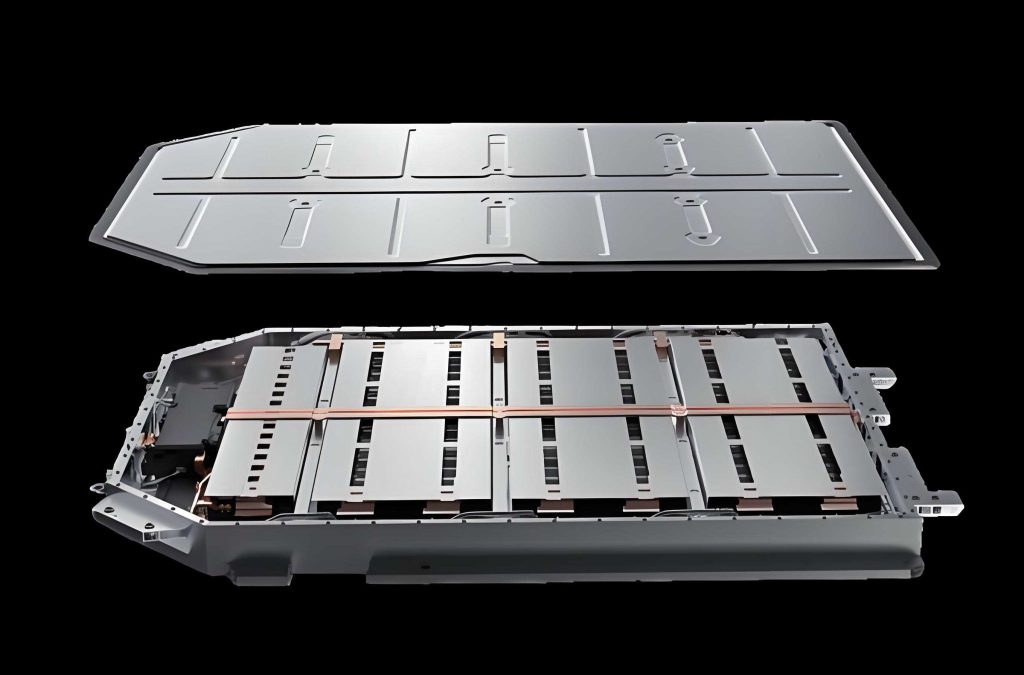
I propose a platform with four layers: simulation, bench, pilot, and field. The simulation layer allows students to explore equivalent circuits and noise effects. The bench layer uses small cells and modules. The pilot layer uses full modules from a retired electric vehicle battery pack. The field layer places students in a real recycling line. Table 9 describes the platform layers and their functions.
| Layer | Equipment | Activity | Assessment |
|---|---|---|---|
| Simulation | Circuit simulation software, synthetic spectra | Model fitting, noise injection, classification experiments | Accuracy, interpretation, uncertainty report |
| Bench | Small cells, potentiostat, temperature chamber | Measure impedance under controlled conditions | Calibration, repeatability, safety |
| Pilot | Module fixtures, portable EIS analyzer, shielding | Grade modules from a retired electric vehicle battery pack | Workflow time, accuracy, documentation |
| Field | Industrial sorting line, enterprise mentor | Participate in real grading and reporting | Professionalism, problem-solving, communication |
Industry-education integration also creates a feedback loop for research. Companies gain access to student projects, faculty expertise, and low-cost experimentation. Colleges gain access to real data, real problems, and employment pathways. I use a partnership value equation:
$$V_{partnership}=B_{college}+B_{industry}-C_{coordination}$$
If the coordination cost is too high, the partnership fails. Therefore, successful partnerships need clear governance, shared intellectual property rules, and simple communication channels. In my experience, the most durable partnerships are those with a joint steering committee, a shared annual plan, and a small number of well-defined projects.
I also recommend that colleges help small and medium enterprises adopt EIS by developing low-cost fixtures and simplified software. This is a service role, but it is also a learning role. When students design a fixture for a retired electric vehicle battery pack, they learn mechanical tolerance, electrical contact, and human factors. When they build a simplified grading app, they learn software usability and data integrity. These projects are not peripheral. They are central to the mission of a vocational college.
Vocational College Strategy Three: Build a Dual-Capability Faculty
My third recommendation is to build a faculty team that can teach, operate equipment, and solve industry problems. I call this dual capability. It combines pedagogical competence with industrial practice. A teacher who has never calibrated an EIS instrument will struggle to teach calibration. A teacher who has never seen a corroded electric vehicle battery pack will struggle to teach fault diagnosis. A teacher who has never worked with a dataset from a recycling line will struggle to teach machine learning for grading.
I use a faculty capability index:
$$FCI=\alpha T_{ped}+\beta T_{tech}+\gamma T_{ind}+\delta T_{research}$$
where T_ped is pedagogical training, T_tech is technical training, T_ind is industrial experience, T_research is research activity, and the Greek letters are weights. The weights should reflect the mission of the program. A program focused on technician training may weight T_tech and T_ind more heavily. A program focused on applied research may weight T_research more heavily. Table 10 presents a faculty development plan.
| Development Area | Activity | Duration | Output |
|---|---|---|---|
| Equipment mastery | Factory training on EIS analyzers | Short intensive | Certified operator status |
| Industrial practice | Placement in a recycling or second-life company | Several weeks | Case studies and process maps |
| Data skills | Workshop on Python, R, and machine learning | Modular | Teaching datasets and notebooks |
| Standards literacy | Participation in standards workshops | Ongoing | Curriculum alignment with standards |
| Safety certification | High-voltage safety training | Renewed periodically | Safe laboratory operation |
| Applied research | Joint project on EIS grading | One academic year | Publication, prototype, or guideline |
| Mentoring | Pairing new teachers with experienced ones | Continuous | Faster onboarding and quality consistency |
I also recommend flexible hiring. Industry engineers can serve as adjunct instructors, guest lecturers, and project mentors. They bring current problems and current solutions. However, colleges should not rely on them for core teaching without support. Adjunct instructors need orientation, teaching resources, and assessment guidance. The goal is not to replace full-time faculty but to enrich the ecosystem.
Vocational College Strategy Four: Integrate Jobs, Courses, Competitions, and Certificates
My fourth recommendation is to align job requirements, course content, competition tasks, and certificate assessments. This alignment makes learning more relevant and gives students clear milestones. For a retired electric vehicle battery pack, the job may involve receiving, inspection, de-energization, module removal, EIS measurement, data analysis, grading, labeling, and reporting. The course should teach each step. The competition should simulate a realistic workflow. The certificate should verify competence.
I represent the alignment as a mapping:
$$A=\sum_{i=1}^{n}w_i M(job_i,course_i)$$
where M is a match score between a job task and a course element, and w_i is the importance weight. A high A indicates strong alignment. A low A indicates that students are learning content that is not used or missing content that is critical.
Table 11 provides an example of alignment for EIS rapid grading.
| Job Task | Course Module | Competition Element | Certificate Check |
|---|---|---|---|
| Receive and identify a retired electric vehicle battery pack | Safety and Logistics | Pack identification and hazard assessment | Safety procedure |
| De-energize and isolate the pack | High-Voltage Safety | Lockout and verification | Isolation competence |
| Inspect connectors and modules | Inspection and Maintenance | Fault finding | Visual and electrical inspection |
| Set up EIS measurement | EIS Instrumentation | Calibration and cable routing | Instrument setup |
| Acquire impedance data | Measurement Laboratory | Noise reduction challenge | Data quality check |
| Fit equivalent circuit | Modeling | Parameter extraction race | Model validity |
| Classify health state | Health Estimation | Grading decision | Classification accuracy |
| Report and communicate | Technical Communication | Customer briefing | Report quality |
Competitions are particularly valuable because they create time pressure and uncertainty. A real recycling line does not always provide clean data or perfect samples. A competition can introduce missing labels, sensor drift, or an unusual electric vehicle battery pack variant. Students must adapt. This builds resilience and professional judgment. I also encourage innovation competitions focused on low-cost fixtures, rapid screening algorithms, and user-friendly dashboards. These projects can produce practical solutions for small enterprises.
Vocational College Strategy Five: Provide Technical Services and Support Standards
My fifth recommendation is for colleges to serve the industry beyond the classroom. This includes technical training, consulting, process improvement, and participation in standards development. Many small recycling companies do not have the resources to send staff to long courses. A college can offer short, modular training on EIS operation, safety, and data interpretation. It can also provide calibration services, measurement audits, and troubleshooting. These services generate income, build relationships, and keep faculty current.
I also believe that colleges should participate in standards discussions. They can contribute measurement data, educational perspectives, and pilot results. They can help translate complex technical requirements into teachable procedures. They can also help disseminate standards to small enterprises through accessible guides. Table 12 summarizes service activities and their impact.
| Service Activity | Target Audience | Output | Impact on EIS Adoption |
|---|---|---|---|
| Short courses | Recycling technicians | Certificates and skill badges | Faster equipment adoption |
| On-site training | Small workshops | Customized procedures | Improved data quality |
| Measurement audit | Formal recyclers | Repeatability report | Increased trust in grading |
| Fixture design support | Equipment users | Low-cost fixture drawings | Reduced capital cost |
| Data analysis clinic | Second-life integrators | Model validation report | Better risk management |
| Standards workshop | Industry associations | Draft recommendations | Harmonized testing |
| Public seminar | Policy makers and public | Plain-language guide | Greater market awareness |
When colleges provide services, they must protect academic integrity and avoid conflicts of interest. I recommend clear policies on data ownership, confidentiality, and publication. Industry partners should know what will be shared and what will remain proprietary. Students should work on real problems but not be exploited as unpaid labor. A fair partnership is a sustainable partnership.
An Implementation Roadmap
I have described five barriers and five strategies. To make them actionable, I propose a phased roadmap. The roadmap begins with awareness and capacity building, moves to pilot implementation, and ends with scale and influence. Table 13 presents the phases, activities, and milestones.
| Phase | Focus | Key Activities | Milestone |
|---|---|---|---|
| Phase 1: Foundation | Curriculum and faculty | Form industry advisory group, train faculty, procure bench equipment | Approved modular curriculum and trained team |
| Phase 2: Pilot | Laboratory and partnership | Run EIS labs, test retired modules, establish data protocol | Validated measurement procedure |
| Phase 3: Integration | Work-based learning | Launch internships, competitions, and certificate pathways | First cohort of certified students |
| Phase 4: Service | Industry support | Offer short courses, audits, and consulting | Regional training hub recognized |
| Phase 5: Influence | Standards and scale | Join standards committees, publish guidelines, expand partnerships | Adopted procedures and broader adoption |
The roadmap should be reviewed annually. I use a simple progress metric:
$$P_{phase}=\frac{\sum_{j=1}^{m}w_j a_j}{\sum_{j=1}^{m}w_j}$$
where a_j is the achievement level of activity j and w_j is its weight. This metric helps leaders identify delays and reallocate resources. It also encourages transparency. A roadmap without measurement is only a wish list.
Evaluating Success
How do we know whether these strategies are working? I propose a balanced scorecard with four dimensions: learning, employment, industry impact, and innovation. Each dimension has indicators and targets. Table 14 presents an example.
| Dimension | Indicator | Formula or Method | Target Direction |
|---|---|---|---|
| Learning | Competency pass rate | $$P=\frac{N_{qualified}}{N_{total}}$$ | Increase |
| Learning | Practical assessment score | Rubric average | Increase |
| Employment | Placement in battery-related roles | Placement rate | Increase |
| Employment | Employer satisfaction | Survey score | Increase |
| Industry impact | Grading time reduction | $$E=\frac{T_{trad}-T_{EIS}}{T_{trad}}$$ | Increase |
| Industry impact | Classification error | $$Q=\frac{1}{N}\sum_{i=1}^{N}(y_i-\hat{y}_i)^2$$ | Decrease |
| Innovation | Prototypes and publications | Count | Increase |
| Innovation | Standards contributions | Count | Increase |
I also recommend measuring uncertainty and repeatability as core quality indicators. A grading system that is fast but not repeatable is not useful. The coefficient of variation is a simple metric:
$$CV=\frac{\sigma}{\mu}$$
where sigma is the standard deviation and mu is the mean of repeated measurements. For a retired electric vehicle battery pack, a high CV indicates that the measurement process is unstable. This may be due to fixture problems, temperature drift, or operator technique. By tracking CV, colleges and companies can identify training needs and process improvements.
A composite KPI can combine several dimensions:
$$KPI=w_1P+w_2E+w_3(1-Q)+w_4S$$
where P is competency pass rate, E is time reduction, Q is classification error, S is stakeholder satisfaction, and the weights sum to one. This formula is not a substitute for judgment. It is a communication tool. It helps diverse stakeholders see how their priorities fit into a shared vision.
Addressing the Confirmation Trap
One of the most practical problems I see is the confirmation trap. A company invests in EIS, but because the results are not trusted, it continues to perform capacity tests. The EIS result becomes an extra data point rather than a replacement. To escape this trap, the EIS workflow must be validated. I propose a validation protocol with four steps: reference testing, repeatability testing, reproducibility testing, and field validation. Table 15 describes these steps.
| Validation Step | Purpose | Method | Success Criterion |
|---|---|---|---|
| Reference testing | Compare EIS grading with capacity grading | Test the same retired electric vehicle battery pack using both methods | High correlation and low bias |
| Repeatability | Assess short-term consistency | Repeat measurements on the same pack | Low CV |
| Reproducibility | Assess between-laboratory consistency | Exchange samples and protocols | Acceptable kappa |
| Field validation | Assess real-world performance | Deploy in a recycling line for a defined period | Throughput and error targets met |
When validation succeeds, the company can reduce or eliminate redundant capacity testing for certain grades. This reduces cost and increases throughput. When validation fails, the company learns where the problem lies. Is it the instrument, the fixture, the model, or the operator? This diagnostic mindset is exactly what vocational education should cultivate.
The Role of Data Infrastructure
Data infrastructure is a cross-cutting requirement. EIS rapid grading generates spectra, metadata, model parameters, and decisions. If these data are stored in inconsistent formats, they cannot be aggregated. If they are not linked to a specific electric vehicle battery pack, they lose traceability. If they are not shared under clear rules, they cannot support collective learning. I propose a minimal data schema with four categories: identity, history, measurement, and decision. Table 16 outlines the schema.
| Data Category | Example Fields | Purpose | Privacy or Ownership Consideration |
|---|---|---|---|
| Identity | Pack ID, chemistry, format, manufacturer code | Traceability | Anonymize manufacturer if required |
| History | Vehicle type, mileage, climate, charging pattern, repairs | Context for aging | Aggregate or anonymize sensitive data |
| Measurement | Temperature, SOC, frequency range, impedance spectra, calibration date | Reproducibility | Define access rights |
| Decision | Grade, confidence, operator, time stamp, notes | Accountability | Retain for audit |
Vocational colleges can help build this infrastructure by teaching data management alongside EIS. Students should learn to create a metadata record, check for missing values, and document the measurement chain. They should also learn about data ethics. A retired electric vehicle battery pack may come from a vehicle with personal data stored in its battery management system. Technicians must handle that data responsibly.
Cost Reduction Through Design
Cost reduction is not only about buying cheaper equipment. It is also about designing a better workflow. I have seen several practical improvements that reduce cost without sacrificing quality. First, use a shared fixture that can accommodate multiple module formats. Second, use a temperature-compensated measurement protocol to avoid the need for a full environmental chamber. Third, use a staged approach: a very fast screen for all packs, followed by a more detailed EIS test for packs near a decision boundary. Fourth, use open-source analysis tools where appropriate. Fifth, train operators to perform first-line maintenance and calibration checks.
I model the staged approach as a decision tree. The expected cost is:
$$E[C]=C_{screen}+p_{detail}C_{detail}+(1-p_{detail})C_{no-detail}$$
where p_detail is the probability that a pack requires detailed testing. If the screen is effective, p_detail is small, and the average cost falls. This is a powerful concept for small enterprises. It means they do not need to buy the most expensive instrument for every pack. They need a smart workflow that reserves high-cost tests for ambiguous cases.
I also encourage colleges to work with equipment makers on modular, low-cost fixtures. A simple improvement in contact resistance control can reduce measurement variance and improve grading accuracy. The value of such an improvement can be estimated as:
$$\Delta V=N\Delta p\Delta R$$
where N is the number of packs graded, Delta p is the improvement in classification accuracy, and Delta R is the value difference between correct and incorrect grading. This equation shows that even a small accuracy improvement can have a large financial impact at scale. It also shows why vocational colleges should teach students to think in terms of value, not just technique.
Safety as a Non-Negotiable Foundation
Throughout this article, I have focused on technical, economic, and educational barriers. I must also emphasize safety. A retired electric vehicle battery pack can retain dangerous voltage and energy. It can exhibit thermal runaway, release toxic gases, or arc during handling. EIS measurement is generally low-power, but the pack itself is not. Therefore, every EIS grading workflow must be built on a safety foundation. Students must learn lockout-tagout, insulation testing, personal protective equipment, and emergency response. They must also learn to recognize signs of swelling, leakage, or overheating.
I use a risk priority number to prioritize safety controls:
$$RPN=S\times O\times D$$
where S is severity, O is occurrence, and D is detection difficulty. A high RPN indicates a high-risk failure mode. For a retired electric vehicle battery pack, high-severity hazards include electric shock, arc flash, and fire. High-occurrence hazards include connector damage and insulation failure. High-detection-difficulty hazards include internal short circuits that are not visible. Safety training should target these risks with practical drills and clear procedures.
Conclusion
I have argued that EIS rapid grading is a key enabling technology for the safe, economic, and sustainable recovery of retired electric vehicle battery pack assets. The technology offers speed, non-destructiveness, and mechanistic insight. However, its industrial adoption is blocked by weak scenario adaptability, high equipment and maintenance costs, incomplete standards, disordered market incentives, and a shortage of hybrid talent. These barriers are interconnected. Solving one without the others is unlikely to produce lasting change.
Vocational and technical colleges have a distinctive role to play. They can reconstruct curricula around modular EIS competence. They can deepen industry-education integration through shared laboratories and real projects. They can build dual-capability faculty who can teach, operate, and solve problems. They can align jobs, courses, competitions, and certificates. They can provide technical services and contribute to standards. In doing so, they do not merely supply workers. They help build an ecosystem in which a retired electric vehicle battery pack is graded accurately, valued fairly, and reused safely.
From my first-person perspective, the most important shift is cultural. We must stop treating EIS as a laboratory curiosity and start treating it as a routine industrial skill. We must stop treating retired electric vehicle battery pack grading as a low-skill sorting task and start treating it as a high-responsibility technical profession. We must stop waiting for perfect standards and start building provisional protocols that can be improved through data and collaboration. The transition will not be instantaneous. It will be measured in curriculum cycles, equipment upgrades, standards revisions, and thousands of hours of practice. Yet the direction is clear. A circular economy for electric vehicle battery packs depends on trustworthy health assessment. EIS rapid grading, supported by capable people and coherent institutions, is one of the most practical paths forward.
As I look ahead, I see three priorities for the next stage. First, I will continue to integrate uncertainty quantification into every EIS course, because confidence without evidence is dangerous. Second, I will expand partnerships with recycling enterprises so that students encounter real retired electric vehicle battery pack variability, not only clean laboratory samples. Third, I will support the development of shared data schemas and open benchmarks, because algorithms improve fastest when they are tested against diverse and well-documented data. These priorities are modest, but they are cumulative. Each trained technician, each validated protocol, and each shared dataset makes the next deployment easier. That is how a technology moves from demonstration to routine practice. That is how a retired electric vehicle battery pack becomes a resource rather than a liability. That is how vocational education can help turn the circular economy from a slogan into a measurable reality.