
In this article, I examine how a government collaborative governance approach can strengthen the response to technical barriers to trade affecting the electric vehicle battery pack sector. I place my analysis within the global zero-carbon transition, the rise of trade protectionism, and the rapid expansion of electric vehicle battery pack exports from China. I argue that technical barriers to trade are no longer merely instruments for consumer safety, environmental protection, or product quality. They have become strategic tools that combine legitimate public policy objectives with industrial policy, geopolitical competition, and supply chain restructuring. For an electric vehicle battery pack, these barriers appear through carbon footprint rules, recycled content mandates, battery passports, conformity assessment procedures, labeling, and lifecycle information disclosure. I find that the existing response system is fragmented, reactive, and insufficiently coordinated. I then propose a collaborative governance framework that aligns value concepts, institutional mechanisms, and governance technologies.
1. My Analytical Starting Point
I begin with a simple observation: an electric vehicle battery pack is not an ordinary export product. It is a complex, embedded, and strategically sensitive component of the new energy vehicle supply chain. It embodies minerals, chemicals, electronics, software, manufacturing process knowledge, and recycling value. When a foreign market introduces a technical barrier to trade for an electric vehicle battery pack, the effects travel far beyond the battery itself. They affect mineral sourcing, cathode and anode material production, cell manufacturing, module assembly, pack integration, transport logistics, after-sales service, and end-of-life recycling. Therefore, I treat technical barriers to trade as a public management problem that requires multi-actor coordination rather than a narrow compliance task for individual firms.
I define technical barriers to trade in the narrow sense used in the WTO Technical Barriers to Trade Agreement. They include technical regulations, standards, and conformity assessment procedures. Their surface purpose is often legitimate: protecting human health, safety, the environment, and national security. Their practical effect, however, can be to raise compliance costs, delay market access, exclude foreign suppliers, and transfer regulatory authority to the importing jurisdiction. For an electric vehicle battery pack, this means that a foreign carbon footprint methodology, a battery passport requirement, or a recycled material threshold can become a market access condition.
I use collaborative governance as my theoretical lens. Collaborative governance emphasizes participation by multiple public and non-public actors, consensus-oriented decision-making, shared resources, and joint implementation of public policy. In my analysis, the core actors include customs authorities, commerce departments, market regulation agencies, industry and information technology departments, environmental agencies, standardization bodies, industry associations, research institutes, testing and certification organizations, logistics providers, recycling enterprises, and international organizations. I do not treat these actors as isolated units. I treat them as nodes in a governance network that must be activated before an electric vehicle battery pack reaches a foreign border.
I express the basic compliance cost logic for an electric vehicle battery pack exporter as follows:
$$C_{export} = C_{production} + C_{compliance} + C_{delay} + C_{uncertainty}$$
Here, \(C_{production}\) is the ordinary production cost, \(C_{compliance}\) is the cost of meeting foreign technical requirements, \(C_{delay}\) is the cost caused by certification, inspection, or administrative delay, and \(C_{uncertainty}\) is the risk premium caused by unclear or changing rules. I argue that technical barriers to trade increase \(C_{compliance}\), \(C_{delay}\), and \(C_{uncertainty}\) simultaneously. For an electric vehicle battery pack, the uncertainty term is especially important because carbon footprint methodologies, recycled content verification, and battery passport data requirements may change over time.
2. Concepts and Core Definitions
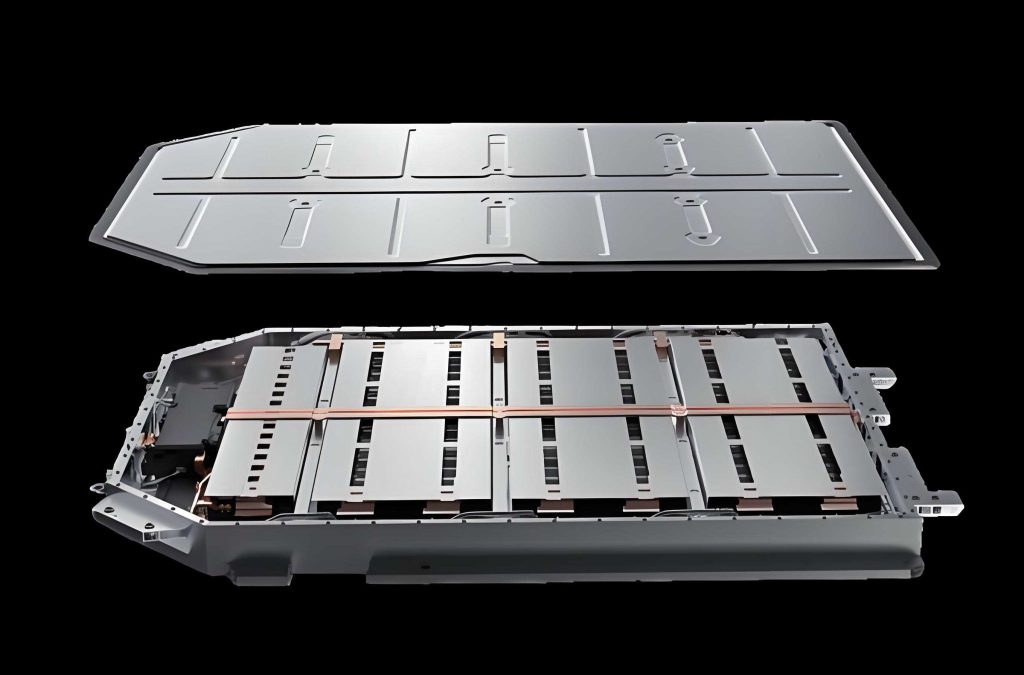
I define an electric vehicle battery pack as the integrated energy storage system installed in an electric vehicle. It typically includes cells, modules, a battery management system, thermal management components, electrical connections, and protective housing. In trade and regulatory terms, an electric vehicle battery pack is often classified under lithium-ion battery categories, but its regulatory identity is broader than its customs classification. It is a product, a data carrier, a hazardous goods item, a recyclable resource, and a strategic industrial asset.
I define technical barriers to trade as the full set of technical regulations, standards, and conformity assessment procedures that affect trade. I summarize their main forms and effects in Table 1.
| Instrument | Typical Form for an Electric Vehicle Battery Pack | Trade Effect |
|---|---|---|
| Technical regulation | Mandatory carbon footprint declaration, recycled content threshold, battery passport | Market access condition; non-compliance excludes the electric vehicle battery pack |
| Standard | Testing method for capacity, safety, cycle life, carbon accounting | Raises fixed compliance cost; favors firms with standard-setting influence |
| Conformity assessment | Third-party certification, laboratory recognition, factory inspection | Creates delay, cost, and data disclosure risk for an electric vehicle battery pack |
| Labeling and marking | Chemical symbols, separate collection symbol, carbon class label | Affects packaging, traceability, and consumer information |
| Lifecycle information | Battery passport, supply chain due diligence, recycled material share | Exposes sensitive technical and supply chain data of the electric vehicle battery pack |
I also rely on the WTO principles of non-discrimination, transparency, and avoidance of unnecessary obstacles to trade. These principles do not eliminate technical barriers to trade. They discipline them. In practice, however, the boundary between a legitimate measure and a protectionist measure is contested. I therefore treat technical barriers to trade as a governance arena in which scientific evidence, legal interpretation, industrial capacity, and diplomatic negotiation interact.
3. The Electric Vehicle Battery Pack Industry and Trade Context
I observe that the electric vehicle battery pack industry has become a leading strategic emerging industry. Global demand for electric vehicles has expanded rapidly, and the electric vehicle battery pack sits at the center of this expansion. The production scale of lithium-ion batteries has grown to world-leading levels, and exports have become a new growth point. The electric vehicle battery pack is not only a component of exported vehicles; it is also exported directly as a battery product for overseas assembly, energy storage, and replacement markets.
I identify three structural factors that shape the vulnerability of the electric vehicle battery pack industry. First, key raw materials are highly dependent on imports. Lithium, nickel, and cobalt are concentrated in a small number of producing countries. For an electric vehicle battery pack, this means that supply security is a continuous concern. Second, cross-border transport is constrained. Railway transport of lithium batteries is limited by dangerous goods rules, while maritime and air transport are expensive or capacity-constrained. Third, end-of-life recycling remains difficult. A large share of retired electric vehicle battery packs does not enter formal recycling channels, and cross-border return of retired batteries is restricted by solid waste import rules. These factors are summarized in Table 2.
| Factor | Manifestation for an Electric Vehicle Battery Pack | Governance Implication |
|---|---|---|
| Raw material dependence | High import reliance for lithium, nickel, cobalt | Need resource diplomacy, recycling, and material substitution |
| Transport constraint | Rail rules limit lithium battery shipments; sea and air costs are high | Need interagency transport standards and international rule alignment |
| Recycling gap | Informal channels dominate; cross-border return is restricted | Need lifecycle regulation, traceability, and import standards |
| Carbon data gap | Low-carbon electricity certificates and carbon factors are not fully recognized | Need mutual recognition and domestic methodology development |
| Information disclosure risk | Battery passport may reveal core supply chain and technical data | Need data security review and intellectual property protection |
I argue that these factors transform a technical barrier to trade into a systemic challenge. If a foreign regulation requires a carbon footprint declaration for an electric vehicle battery pack, the exporter must trace emissions across mining, refining, cell production, module assembly, pack assembly, and transport. If a foreign regulation requires recycled content, the exporter must secure certified recycled materials. If a foreign regulation requires a battery passport, the exporter must create a digital record that can be audited. None of these tasks can be completed by a single firm alone, and none can be completed by a single government department alone.
4. Evolution of Technical Barriers to Trade
I identify four drivers of the evolution of technical barriers to trade: geopolitical competition, industrial policy, environmental objectives, and technological change. Geopolitical competition encourages importing countries to use technical rules to reduce dependence on foreign suppliers. Industrial policy encourages governments to design technical rules that favor domestic production. Environmental objectives, especially zero-carbon goals, provide legitimacy for lifecycle regulation. Technological change makes new forms of verification possible, such as digital product passports and remote auditing.
The European Union Battery Regulation is a representative case. I treat it as a signal of the next generation of technical barriers to trade for an electric vehicle battery pack. It converts a directive into a regulation, creates a separate category for electric vehicle batteries, and introduces mandatory requirements on carbon footprint, recycled content, battery passports, due diligence, labeling, and waste management. The timeline matters because it creates staged compliance pressure. I summarize the core requirements in Table 3.
| Requirement | Indicative Timing | Implication for an Electric Vehicle Battery Pack |
|---|---|---|
| Carbon footprint declaration | From the mid-2020s | Must calculate lifecycle greenhouse gas emissions |
| Carbon footprint performance class | After declaration | Creates reputational and market differentiation |
| Maximum carbon threshold | Later stage | Non-compliant electric vehicle battery pack may be excluded |
| Battery passport | By 2027 | Requires digital disclosure of materials, composition, and performance |
| Recycled content | From 2031 and later | Requires minimum shares of cobalt, lithium, nickel, and lead |
| Collection and recycling efficiency | Progressive | Requires producer responsibility and formal recycling channels |
| Due diligence | Progressive | Requires supply chain risk management for an electric vehicle battery pack |
I use a simple carbon footprint identity for an electric vehicle battery pack:
$$CF = \sum_{i=1}^{n} E_i \cdot EF_i$$
where \(CF\) is the carbon footprint in carbon dioxide equivalent, \(E_i\) is the activity data for lifecycle stage \(i\), and \(EF_i\) is the emission factor for that stage. For an electric vehicle battery pack, the stages include raw material extraction, refining, cell manufacturing, module and pack assembly, distribution, use, and end-of-life treatment. I note that the largest share of emissions often lies upstream in the supply chain. Therefore, a carbon footprint requirement for an electric vehicle battery pack is effectively a supply chain governance requirement.
I also use a recycled content condition:
$$RC_j \geq R_j^{min}$$
where \(RC_j\) is the recycled content share of material \(j\), and \(R_j^{min}\) is the minimum required share. For an electric vehicle battery pack, this condition applies to cobalt, lithium, nickel, and lead. It creates demand for certified recycled materials and formal recycling networks. If domestic recycling channels are weak, the electric vehicle battery pack industry faces a compliance bottleneck even if its manufacturing technology is advanced.
I further define a compliance gap for an electric vehicle battery pack as:
$$G_{compliance} = \max(0, R_j^{min} – RC_j) + \max(0, CF – CF_{max}) + \max(0, D_{required} – D_{available})$$
Here, \(D\) represents required data or documentation, such as battery passport information. This formula helps me explain why an electric vehicle battery pack can face simultaneous pressure from material, carbon, and information requirements.
5. Weaknesses in the Electric Vehicle Battery Pack Industry
I identify three main weaknesses. The first is carbon footprint capability. Many firms lack a complete, internationally accepted carbon accounting system for an electric vehicle battery pack. Low-carbon electricity certification is incomplete, green certificate trading is not fully traceable, and the national electricity carbon factor is not universally recognized by major importing markets. This creates a recognition gap. I express it as:
$$CF_{declared} = CF_{actual} + \Delta_{method} + \Delta_{data} + \Delta_{recognition}$$
where \(\Delta_{method}\) is methodological difference, \(\Delta_{data}\) is data quality difference, and \(\Delta_{recognition}\) is the gap caused by non-recognition of certificates or factors. For an electric vehicle battery pack, even a genuinely low-carbon product may be treated as high-carbon if the methodology is not accepted.
The second weakness is recycling and recycled material supply. The electric vehicle battery pack contains valuable metals, but formal recycling is not yet dominant. Retired batteries may flow into informal workshops, making it difficult for legitimate manufacturers to obtain sufficient recycled feedstock. Cross-border return of retired electric vehicle battery packs is also constrained by solid waste import rules. I summarize the recycling challenge as:
$$S_{recycled} = Q_{retired} \cdot \eta_{collection} \cdot \eta_{formal} \cdot \eta_{recovery}$$
where \(S_{recycled}\) is the supply of recovered material, \(Q_{retired}\) is the quantity of retired electric vehicle battery packs, \(\eta_{collection}\) is the collection rate, \(\eta_{formal}\) is the share entering formal channels, and \(\eta_{recovery}\) is the material recovery efficiency. I argue that policy should raise \(\eta_{collection}\) and \(\eta_{formal}\), not only \(\eta_{recovery}\).
The third weakness is information disclosure. The battery passport requirement means that an electric vehicle battery pack must carry digital information about materials, composition, carbon footprint, performance, and recycling. This creates a data security and intellectual property risk. If the exporter must disclose sensitive supply chain data, it may lose bargaining power. I therefore treat information governance as a core part of technical barrier response. I summarize the weaknesses in Table 4.
| Weakness | Effect on an Electric Vehicle Battery Pack | Governance Need |
|---|---|---|
| Carbon footprint methodology | Risk of non-recognition and higher declared emissions | Mutual recognition, domestic methodology, low-carbon electricity traceability |
| Lifecycle data | Difficulty tracing upstream emissions and materials | Supply chain data platform and standards |
| Recycling | Insufficient certified recycled content | Formal recycling, traceability, import standards for retired batteries |
| Battery passport | Core data disclosure and compliance cost | Data security review, third-party certification, intellectual property protection |
| Transport | Rail restrictions and high logistics cost | Dangerous goods rule revision and international alignment |
6. Current Public-Sector Response
I now turn to the public-sector response. I find that multiple actors are involved, but their roles are not always clearly integrated. Customs authorities operate the national inquiry point and the technical barrier notification system. Commerce departments handle WTO affairs, foreign negotiations, and export technical guides. Market regulation agencies manage standardization, certification, and accreditation. Industry and information technology departments support industrial standards, technical upgrading, and sector development. Industry associations and leading firms participate in standard-setting, notification comments, and specific trade concerns. International organizations, especially the WTO TBT Committee, provide a forum for discussion and dispute settlement.
I summarize the main public actors and their functions in Table 5.
| Actor | Core Function in Technical Barrier Response | Limitation I Observe |
|---|---|---|
| Customs and inquiry point | Notification, consultation, comment collection, early warning | Limited administrative rank;兼职-style operation; fragmented information channels |
| Commerce department | Foreign negotiation, WTO dispute settlement, technical guides | Technical depth varies by industry; guide updates lag |
| Market regulation | Standards, certification, accreditation, conformity assessment | Weak alignment with foreign carbon and battery passport rules |
| Industry and information technology | Industrial policy, technical upgrading, standard system | Incentives not fully linked to technical barrier response |
| Industry associations | Standards, data collection, industry coordination | Limited authority and resources; uneven participation |
| Firms | Compliance, innovation, feedback, specific trade concerns | Short-term cost pressure; collective action problems |
| International organizations | Rules forum, transparency, dispute settlement | Enforcement depends on member state action |
I identify the main response measures as identification and consultation, notification comment, specific trade concerns, and foreign consultation. I find that these measures are necessary but insufficient. They are largely reactive. They are triggered after a draft regulation is notified or after an electric vehicle battery pack has encountered a market access problem. They do not systematically build domestic capacity, align standards, or prepare the supply chain in advance.
I also observe that the existing response lacks a permanent coordinating body. The inter-ministerial joint conference system exists, but it is not a standing operational network. Participants often hold multiple responsibilities. Funding is not stable. Administrative supervision and incentive mechanisms are weak. As a result, the response to a technical barrier for an electric vehicle battery pack depends on ad hoc mobilization rather than institutionalized collaboration.
7. Problems in the Collaborative Governance Response
I identify three major problems. The first is insufficient holistic response. The technical barrier challenge for an electric vehicle battery pack cuts across carbon, recycling, information, transport, standards, and foreign affairs. No single department can solve it. Yet the current system often treats the problem as a notification comment task or a customs inspection issue. This leads to a whole-of-government gap. I express the coordination gap as:
$$D_{coordination} = \sum_{k=1}^{m} w_k |O_k – E_k|$$
where \(O_k\) is the observed coordination level for dimension \(k\), \(E_k\) is the expected coordination level, and \(w_k\) is the importance weight. For an electric vehicle battery pack, dimensions include carbon methodology, recycling standards, data security, transport rules, and foreign negotiation. A high \(D_{coordination}\) means that the response is fragmented.
The second problem is that the response lags behind the Belt and Road Initiative. The Initiative calls for policy, rule, and standard connectivity. However, technical barrier cooperation with partner countries remains uneven. Many partner countries still impose cumbersome technical requirements. Mutual recognition of certification and accreditation is incomplete. For an electric vehicle battery pack, this means that new markets may be open in principle but difficult in practice.
The third problem is weak awareness of embedding technical barriers to trade into regional trade agreements and free trade agreements. I observe that earlier agreements often included only general TBT language. Newer agreements, such as the Regional Comprehensive Economic Partnership, include more TBT cooperation. However, the electric vehicle battery pack sector still lacks systematic TBT embedding. Standards, conformity assessment, carbon footprint mutual recognition, and battery passport data rules are not sufficiently integrated into trade agreement negotiations. I express the embedding gap as:
$$E_{gap} = \frac{TBT_{potential} – TBT_{embedded}}{TBT_{potential}}$$
where \(TBT_{potential}\) is the set of technical barrier issues relevant to an electric vehicle battery pack, and \(TBT_{embedded}\) is the set actually addressed in trade agreements. A high \(E_{gap}\) indicates that trade agreements are not yet used as strategic tools for electric vehicle battery pack market access.
I summarize the problems and manifestations in Table 6.
| Problem | Manifestation for an Electric Vehicle Battery Pack | Governance Consequence |
|---|---|---|
| Insufficient holistic response | Carbon, recycling, data, transport handled separately | Slow, incomplete, and reactive compliance support |
| Lag behind Belt and Road requirements | Certification and standard mutual recognition incomplete | New markets remain difficult despite political cooperation |
| Weak RTA/FTA embedding | Battery standards and carbon rules not systematically negotiated | Lost opportunity to shape rules before they become barriers |
8. Empirical Verification Through Surveys and Interviews
I designed two questionnaires to verify these problems. The first targeted electric vehicle battery pack manufacturers and related exporters. The second targeted government departments involved in technical barrier response. I received 160 valid firm responses and 105 valid government responses. I also conducted follow-up interviews with industry and government personnel. The findings support my diagnosis.
From the firm survey, the main export markets were the European Union, the United States, and ASEAN. The main technical barrier encounters were reported in the European Union, ASEAN, and the United States. The European Union Battery Regulation had a strong perceived impact. A large majority of firms reported that the regulation would require further upgrading. The most influential elements were carbon footprint, battery recycling, and battery passport. I summarize the survey findings in Table 7.
| Survey Item | Firm Response | Government Response | My Interpretation |
|---|---|---|---|
| Main technical barrier source | European Union, ASEAN, United States | European Union, United States, United Kingdom | Perception gap; government may underweight ASEAN |
| EU Battery Regulation impact | High impact for most firms | Recognized but less quantified | Firms feel market pressure more directly |
| Most affected factors | Carbon footprint, recycling, battery passport | Standards and conformity assessment | Firms focus on operational compliance; government focuses on rules |
| Need for interdepartmental coordination | Very high | High but less urgent | Firms demand a one-stop response for an electric vehicle battery pack |
| Perceived coordination quality | Mostly average or weak | Mixed | Collaborative governance deficit |
| Preferred improvement | Unified platform, technical guides, funding, standard mutual recognition | Legal system, standards, notification comments | Shared direction but different priorities |
I also calculated a simple perception gap between firms and government for each issue:
$$PG_i = |P_i^{firm} – P_i^{gov}|$$
where \(P_i^{firm}\) is the firm perception score for issue \(i\), and \(P_i^{gov}\) is the government perception score. A large \(PG_i\) indicates that policy attention may be misaligned. In my survey, the largest gaps appeared in ASEAN technical barriers, battery passport data risk, and the need for a unified public information platform. These gaps matter because an electric vehicle battery pack exporter needs predictable, coordinated support.
9. Causes of the Response Deficit
I trace the response deficit to three causes. The first is unclear value orientation. Public actors and private actors do not share a clear common value framework. Government departments emphasize safety, stability, and regulatory compliance. Firms emphasize market access, cost, and competitiveness. Industry associations emphasize member interests. Research institutions emphasize technical accuracy. Without a shared value orientation that balances safety and development, collaboration becomes difficult. I express value alignment as:
$$VA = 1 – \frac{\sum_{i=1}^{n} |v_i – \bar{v}|}{n \bar{v}}$$
where \(v_i\) is the value priority of actor \(i\), and \(\bar{v}\) is the mean value priority. A low \(VA\) means that actors are not aligned. For an electric vehicle battery pack, value alignment must combine environmental safety, data security, industrial development, and open trade.
The second cause is ambiguous collaborative governance mechanisms. There is no permanent lead agency with sufficient authority. There is no stable funding stream. There is no administrative supervision system. There is no incentive mechanism for non-governmental actors. The inter-ministerial joint conference is useful but not sufficient. For an electric vehicle battery pack, this ambiguity means that no actor is fully accountable for the entire response chain.
The third cause is governance fragmentation. Standards, certification, carbon accounting, recycling, transport, and foreign negotiations are managed by different units. Information systems are separate. Expert resources are dispersed. Firms do not know where to submit comments. Government departments do not share data in real time. I express the fragmentation index as:
$$F = \frac{N_{systems} + N_{overlaps} + N_{gaps}}{N_{actors}}$$
where \(N_{systems}\) is the number of separate information systems, \(N_{overlaps}\) is the number of overlapping responsibilities, \(N_{gaps}\) is the number of unassigned tasks, and \(N_{actors}\) is the number of actors. A high \(F\) indicates fragmented governance. I summarize the causes in Table 8.
| Cause | Manifestation | Effect on an Electric Vehicle Battery Pack |
|---|---|---|
| Unclear value orientation | Safety, development, market, and technical values diverge | Weak collective action; inconsistent policy signals |
| Ambiguous mechanisms | No standing lead body, no stable funding, weak supervision | Ad hoc response; delayed action on carbon and recycling rules |
| Fragmented governance | Separate systems, overlapping tasks, unassigned gaps | High compliance cost and uncertainty for an electric vehicle battery pack |
10. Comparative Lessons from the European Union and the United States
I compare the European Union and the United States because both have developed relatively mature collaborative governance systems for technical barriers to trade. In the European Union, the Directorate-General for Internal Market, Industry, Entrepreneurship and SMEs coordinates notification and comment work, while the Directorate-General for Trade manages market access information and trade help platforms. The Access2Markets platform provides tariff, rules of origin, market access, and technical requirement information. The Single Entry Point allows firms and associations to report trade problems and receive expert assessment. The European Union also uses technical assistance programs to export its standards and conformity assessment practices to partner regions.
In the United States, the Department of Commerce and the International Trade Administration lead technical barrier response. The National Institute of Standards and Technology serves as the notification inquiry point. The Trade Agreements Compliance Program collects comments and specific trade concerns. The Market Development Cooperator Program provides funding and technical support to firms, industry associations, and standards bodies. An interagency working group coordinates cross-department action. The United States also uses foreign diplomatic and commercial channels to negotiate technical rules.
I summarize the comparative lessons in Table 9.
| Dimension | European Union | United States | Lesson for an Electric Vehicle Battery Pack |
|---|---|---|---|
| Lead coordination | DG Grow and DG Trade | Department of Commerce and ITA | Need a single lead body with authority |
| Unified information portal | Access2Markets and Single Entry Point | Trade Agreements Compliance Program | Need one-stop information and problem submission |
| Funding | Technical assistance programs | Market Development Cooperator Program | Need stable funding for compliance and upgrading |
| Standard export | ACP-EU TBT Programme | Technical assistance and diplomatic channels | Need proactive standard and conformity assessment export |
| Interagency coordination | Commission-wide coordination | Interagency working group | Need permanent network, not ad hoc meetings |
I conclude that the most important lesson is not the specific institutional design. It is the principle that technical barrier response must be organized as a continuous public service for an electric vehicle battery pack. It must combine information, funding, technical support, foreign negotiation, and standard-setting. It must be proactive rather than reactive.
11. A Collaborative Governance Framework for an Electric Vehicle Battery Pack
I propose a collaborative governance framework with three pillars: value concept synergy, institutional mechanism synergy, and governance technology synergy. I express the overall governance performance as:
$$G = \alpha V + \beta I + \gamma T + \delta R + \epsilon$$
where \(G\) is governance performance, \(V\) is value alignment, \(I\) is institutional coordination, \(T\) is technology-enabled coordination, \(R\) is resource adequacy, and \(\epsilon\) is the error term. I argue that improving only one term is insufficient. For an electric vehicle battery pack, a strong information platform without institutional authority will not resolve market access problems. A strong mandate without value alignment will not motivate firms and associations to participate.
11.1 Value Concept Synergy: Balancing Safety and Development
I argue that the first step is to build a shared value orientation that balances safety and development. Safety includes product safety, environmental safety, data security, and supply chain security. Development includes industrial competitiveness, export growth, innovation, and green transition. For an electric vehicle battery pack, these values are not opposites. They can be integrated. A high-safety, low-carbon, recyclable electric vehicle battery pack is more competitive in the long run. A purely protectionist response that blocks imports may harm the domestic industry by reducing access to advanced technology.
I propose a value alignment formula for policy design:
$$V_{policy} = \lambda S + (1-\lambda) D$$
where \(S\) is safety performance, \(D\) is development performance, and \(\lambda\) is the policy weight. I recommend that \(\lambda\) be set through multi-stakeholder consultation rather than by a single department. The consultation should include firms, industry associations, research institutes, environmental groups, and consumer representatives. For an electric vehicle battery pack, the consultation should specifically address carbon footprint methodology, battery passport data fields, recycled content verification, and transport safety rules.
11.2 Institutional Mechanism Synergy
I propose a permanent national coordination mechanism for technical barrier response. It should have a clear lead agency, a standing secretariat, stable funding, and a legal mandate. It should include representatives from customs, commerce, market regulation, industry and information technology, environmental protection, transport, foreign affairs, and standardization. It should also include non-governmental actors such as industry associations, research institutes, testing and certification bodies, and leading firms. For an electric vehicle battery pack, this mechanism should have dedicated working groups on carbon footprint, recycling, battery passport, transport, and foreign negotiation.
I also propose administrative supervision and incentive mechanisms. Administrative supervision should assess the timeliness, quality, and impact of technical barrier response. Incentives should reward departments and non-governmental actors that contribute to successful notifications, comments, specific trade concerns, standard mutual recognition, and compliance cost reduction. I express the incentive design as:
$$U_i = \theta_1 Q_i + \theta_2 T_i + \theta_3 I_i – \theta_4 C_i$$
where \(U_i\) is the utility of actor \(i\), \(Q_i\) is the quality of contribution, \(T_i\) is timeliness, \(I_i\) is impact on an electric vehicle battery pack export, and \(C_i\) is the cost of participation. \(\theta_1\) to \(\theta_4\) are policy weights. I argue that without such incentives, firms and associations will free ride and government departments will prioritize their routine tasks.
I further propose that the institutional mechanism should include a legal framework for the electric vehicle battery pack lifecycle. This framework should cover carbon footprint accounting, recycled content, battery passport, end-of-life collection, cross-border return of retired batteries, and data security. It should be consistent with international rules and should be developed through collaborative standard-setting. I summarize the institutional proposals in Table 10.
| Institutional Element | Proposed Function | Relevance to an Electric Vehicle Battery Pack |
|---|---|---|
| Permanent lead body | Coordinate strategy, resources, and foreign negotiation | Ends ad hoc response to carbon and recycling rules |
| Standing working groups | Address carbon, recycling, passport, transport, standards | Builds deep expertise for an electric vehicle battery pack |
| Stable funding | Support research, testing, certification, and upgrading | Reduces compliance cost and uncertainty |
| Administrative supervision | Assess performance and accountability | Prevents delay and inaction |
| Incentive mechanism | Reward contributions by departments and firms | Encourages collective action |
| Legal framework | Set lifecycle, data, and recycling rules | Creates predictable environment for an electric vehicle battery pack |
11.3 Governance Technology Synergy: A Unified Public Information Platform
I propose a unified public information platform for technical barriers to trade, with a dedicated module for an electric vehicle battery pack. The platform should integrate notification information, regulations, standards, conformity assessment, early warning, expert analysis, and problem submission. It should be the single entry point for firms, associations, and government departments. It should use automated translation, keyword matching, and targeted push notification. It should allow firms to register their product categories and export markets so that relevant technical barrier information reaches them quickly.
I define platform effectiveness as:
$$PE = \frac{I_{shared}}{I_{total}} \times \frac{T_{standard}}{T_{response}} \times \frac{N_{participants}}{N_{target}}$$
where \(I_{shared}\) is the amount of information shared on the platform, \(I_{total}\) is the total relevant information, \(T_{standard}\) is the standard response time, \(T_{response}\) is the actual response time, \(N_{participants}\) is the number of active participants, and \(N_{target}\) is the target number of participants. A high \(PE\) means that the platform is effective. For an electric vehicle battery pack, the platform should include carbon footprint calculators, recycled content verification tools, battery passport templates, transport rule guides, and a directory of testing and certification bodies.
The platform should also serve as a think tank interface. It should connect to a database of experts in battery chemistry, lifecycle assessment, standardization, trade law, and international negotiation. It should support rapid expert consultation during the notification comment period. It should maintain a case library of previous technical barrier responses for an electric vehicle battery pack. It should publish simplified summaries for small and medium-sized enterprises.
I summarize the platform functions in Table 11.
| Function | Description | Benefit for an Electric Vehicle Battery Pack |
|---|---|---|
| Information sharing | Notifications, regulations, standards, conformity assessment | Reduces search cost and uncertainty |
| Early warning | Targeted alerts by product and market | Allows proactive compliance planning |
| Expert think tank | Rapid analysis and comment drafting | Improves quality of notification comments |
| Problem submission | Single entry point for firms and associations | Ensures specific trade concerns are collected |
| Carbon and recycling tools | Calculators, templates, verification guides | Directly supports technical barrier compliance |
| Case library | Past responses and outcomes | Builds institutional memory |
| Data security | Access control and confidentiality protection | Protects sensitive information of an electric vehicle battery pack |
12. My Implementation Roadmap
I propose a phased implementation roadmap. In the short term, the priority is to establish the unified platform and the standing coordination secretariat. The platform should initially focus on the European Union Battery Regulation because it is the most immediate technical barrier for an electric vehicle battery pack. In the medium term, the priority is to develop domestic carbon footprint methodology, recycled content standards, and battery passport rules. These should be aligned with international best practices while protecting domestic data security. In the long term, the priority is to embed technical barrier cooperation into regional trade agreements, free trade agreements, and Belt and Road cooperation. The goal is to shape rules before they become barriers.
I express the sequencing logic as:
$$Priority_t = \arg\max_{a \in A} \left( \frac{Impact_a \times Feasibility_a}{Cost_a} \right)$$
where \(Priority_t\) is the priority action at time \(t\), \(Impact_a\) is the expected impact on an electric vehicle battery pack export, \(Feasibility_a\) is the implementation feasibility, and \(Cost_a\) is the resource cost. This formula helps me avoid recommending actions that are theoretically attractive but practically infeasible.
13. Conclusion
In this article, I have argued that the technical barrier challenge facing an electric vehicle battery pack is a collaborative governance challenge. The rise of carbon footprint rules, recycled content mandates, battery passports, and lifecycle disclosure requirements means that market access depends on the coordinated action of government, industry, research institutions, and international actors. I have shown that the current response system suffers from insufficient holistic response, a lag behind Belt and Road requirements, and weak embedding in regional and free trade agreements. I have traced these problems to unclear value orientation, ambiguous collaborative governance mechanisms, and fragmented governance.
I have proposed a three-pillar framework. The first pillar is value concept synergy that balances safety and development. The second pillar is institutional mechanism synergy with a permanent lead body, stable funding, administrative supervision, and incentives. The third pillar is governance technology synergy through a unified public information platform. I have also drawn comparative lessons from the European Union and the United States, emphasizing the need for a single lead body, a unified portal, stable funding, proactive standard export, and permanent interagency coordination.
For the electric vehicle battery pack sector, the practical implication is clear. Compliance with foreign technical barriers cannot be left to individual firms. It must be organized as a public-private collaborative service. The earlier the collaboration begins, the lower the compliance cost and the greater the chance to shape the rules. I therefore conclude that a collaborative governance approach is not merely desirable. It is necessary for the sustainable internationalization of the electric vehicle battery pack industry.
In future work, I intend to deepen the quantitative evaluation of collaborative governance performance and to extend the framework to other strategic export products. I also see value in comparing how different importing jurisdictions design carbon footprint and battery passport rules, because those rules will determine the next generation of technical barriers to trade for an electric vehicle battery pack.