
As an instructor and curriculum designer working with new energy vehicle technology, I have seen how quickly the electric vehicle battery pack and battery management system, or BMS, have become central to both industrial practice and student learning. The electric vehicle battery pack is no longer a simple energy storage component; it is a complex system that integrates electrochemical cells, thermal management, electrical protection, sensing, communication, and diagnostic logic. When I teach the course New Energy Vehicle Power Battery and BMS Maintenance, I must prepare students for work that demands safe high-voltage operation, accurate data interpretation, systematic fault diagnosis, and disciplined maintenance behavior. In my view, informatization-enabled teaching reform is not simply the addition of an online platform. It is a redesign of curriculum content, instructional processes, digital resources, school-enterprise collaboration, and assessment so that the electric vehicle battery pack and BMS become authentic objects of inquiry rather than abstract textbook topics.
My reform work begins from a practical problem. The electric vehicle battery pack evolves rapidly, and the BMS algorithms, communication protocols, diagnostic trouble codes, and service procedures change with each generation. Traditional course materials often lag behind industry. I therefore treat the electric vehicle battery pack as a living curriculum resource. Real maintenance orders, measured data streams, fault cases, and safety standards from enterprise partners become the raw material of instruction. I use informatization to connect the classroom, the laboratory, the enterprise workshop, and the student’s mobile device into one continuous learning environment. The goal is not to replace hands-on practice with digital content but to make practice more precise, more reflective, and more closely aligned with professional work.
1. Context and Rationale for Reform
In my teaching context, students must develop competence in several overlapping domains: electrical safety, electrochemical principles, BMS operation, data analysis, mechanical disassembly, thermal management, and professional communication. The electric vehicle battery pack is the physical and conceptual center of these domains. If students only memorize cell types or read circuit diagrams, they cannot diagnose a real electric vehicle battery pack. If they only perform isolated measurements without understanding the BMS logic, they cannot explain why a fault appears. I designed the reform around a competency vector that treats knowledge, skill, attitude, and professional behavior as integrated outcomes.
$$ C = [K, S, A, P] $$
$$ C_{weighted} = \alpha K + \beta S + \gamma A + \delta P $$
In the equations above, K represents conceptual knowledge, S represents operational skill, A represents safety and quality attitude, and P represents professional literacy and teamwork. The weights satisfy the condition below.
$$ \alpha + \beta + \gamma + \delta = 1 $$
I use this weighted competence model because the electric vehicle battery pack and BMS maintenance course cannot be reduced to a single examination score. The electric vehicle battery pack is dangerous when handled incorrectly, so attitude and professional behavior must be measured alongside knowledge and skill. The BMS is data-rich, so diagnostic reasoning must be measured through process evidence, not only through final answers.
| Industrial Change | Implication for the Electric Vehicle Battery Pack | Teaching Response I Adopted |
|---|---|---|
| Higher energy density and integrated pack designs | The electric vehicle battery pack requires more careful thermal and structural diagnosis | Added integrated pack inspection tasks and thermal imaging analysis |
| Advanced BMS algorithms and cloud data | Fault diagnosis depends on data streams, state estimation, and event logs | Introduced data interpretation workflows and remote enterprise guidance |
| Stricter high-voltage safety standards | Every task around the electric vehicle battery pack requires documented safety procedure | Embedded safety checklists and standardized operation scoring |
| Faster model updates and service bulletins | Course content must be updated continuously | Used modular digital resources and enterprise case updates |
| Stronger demand for fault analysis capability | Students must explain symptoms, data, causes, and repair decisions | Adopted project-based diagnosis reports and peer review |
The rationale for my reform is therefore both pedagogical and industrial. Pedagogically, I want students to move from passive listening to active problem solving. Industrially, I want graduates to enter a workshop and recognize the electric vehicle battery pack as a system with measurable states, predictable failure modes, and documented service procedures. Informatization allows me to orchestrate this transition across time and space.
2. Problems I Identified in the Original Course
Before redesigning the course, I analyzed existing teaching materials, student performance, laboratory observations, and enterprise feedback. I identified four recurring problems. These problems are not unique to one institution, but I describe them here as I experienced them in my own teaching practice.
2.1 Curriculum Content Lagged Behind Industry Technology
The electric vehicle battery pack is developing through cell-to-pack, cell-to-body, blade-cell, and advanced thermal management architectures. The BMS increasingly uses model-based state estimation, cloud-edge collaboration, and over-the-air updates. However, parts of the original course still emphasized basic structure recognition and simple voltage measurement. Students could identify a cell module but could not interpret an insulation fault, analyze cell voltage divergence, or evaluate a thermal anomaly in the electric vehicle battery pack. I found that the gap between course content and enterprise practice reduced student confidence during internships.
2.2 School-Enterprise Collaboration Was Not Deep Enough
Although partnerships existed, enterprise participation often focused on site visits, internship placement, and occasional lectures. Enterprise engineers rarely participated in curriculum standards, project design, resource development, or assessment. As a result, the electric vehicle battery pack cases used in class were sometimes simplified versions of real work. Students did not see complete maintenance orders, safety risk assessments, or quality acceptance criteria. The collaboration was visible but not fully embedded in teaching and learning.
2.3 Informatization Resources Were Underused
Learning platforms were available, but many resources consisted of slides, short videos, and question banks. These resources supported preparation and review, but they did not fully connect to the electric vehicle battery pack as a diagnostic object. I observed that students could watch a video about BMS data but still struggle to interpret live data from a physical electric vehicle battery pack. The platform was used as a storage space rather than as a dynamic bridge between theory, enterprise practice, and assessment.
2.4 Assessment Was Not Tightly Aligned with Job Competence
Traditional assessment emphasized final examinations and laboratory results. It did not sufficiently capture process safety, diagnostic reasoning, teamwork, or professional discipline. In real maintenance work on the electric vehicle battery pack, a correct answer without safe procedure is unacceptable. A student might calculate a voltage deviation but fail to apply lockout-tagout, verify insulation, or document the measurement. I therefore needed an assessment system that valued both product and process.
| Problem Area | Observable Symptom | Consequence for Learning | Reform Direction |
|---|---|---|---|
| Content lag | Old examples, limited new pack architectures | Weak transfer to enterprise tasks | Modular, task-based content with enterprise cases |
| Shallow collaboration | Enterprise input mostly outside class | Limited exposure to real standards | Joint design, co-teaching, remote guidance, joint evaluation |
| Underused informatization | Platform used mainly for files and quizzes | Limited diagnostic practice and feedback | Data-driven resources, analytics, virtual simulation, remote support |
| Assessment misalignment | Overemphasis on final tests | Safety and process behavior undervalued | Multi-source process and competency assessment |
3. Reform Design
I designed the reform as a system. The electric vehicle battery pack and BMS are not taught as separate topics; they are connected through work processes. I used the following design principles: post competency orientation, authentic work tasks, blended learning, digital resource integration, school-enterprise co-teaching, and multi-dimensional evaluation. Each principle is expressed in concrete course decisions.
3.1 Competency-Oriented Course Objectives
I rewrote the course objectives around what graduates should be able to do with an electric vehicle battery pack and BMS. The objectives are divided into knowledge, skill, and professional literacy, but they are assessed in integrated tasks. For example, a student must know the purpose of insulation monitoring, perform an insulation resistance test, interpret the result, and document the safety decision. This integration prevents the fragmentation of learning.
| Objective Domain | Specific Outcome | Evidence I Collect |
|---|---|---|
| Knowledge | Explain the structure, electrochemical behavior, and thermal characteristics of the electric vehicle battery pack | Concept maps, oral defense, online quizzes |
| Knowledge | Describe BMS functions including monitoring, protection, balancing, state estimation, and communication | Data interpretation reports |
| Skill | Safely perform high-voltage isolation and verification on an electric vehicle battery pack | Safety checklist, observed operation |
| Skill | Read BMS data streams and diagnose cell voltage, temperature, insulation, and communication faults | Diagnostic log, fault tree, repair plan |
| Professional literacy | Follow standards, communicate clearly, collaborate in teams, and maintain quality records | Peer evaluation, enterprise mentor rating, process portfolio |
I also use a competency mapping formula to check whether each learning task contributes to the intended outcomes. Let m be the number of course outcomes and n be the number of learning tasks. The contribution matrix M has entries mij indicating how strongly task j supports outcome i.
$$ M = [m_{ij}]_{m \times n} $$
I require every outcome to have at least two supporting tasks and every task to support at least one outcome. This avoids decorative activities that do not serve competence development.
3.2 Work-Task-Based Content Reconstruction
I reconstructed the content into modules based on typical enterprise tasks involving the electric vehicle battery pack. Each module includes a theoretical foundation, an enterprise case, a hands-on task, a data analysis component, and a safety standard. The modules are not ordered by textbook chapter but by work process logic.
| Module | Core Task | Electric Vehicle Battery Pack Focus | BMS Focus | Digital Resource |
|---|---|---|---|---|
| 1. Safety and system cognition | Identify high-voltage components and establish safe work zone | Pack enclosure, service disconnect, connectors | Voltage sensing and protection logic | Interactive safety map and video |
| 2. Pack inspection and measurement | Inspect pack condition and measure key parameters | Insulation, voltage, temperature, sealing | Sensor data acquisition | Virtual multimeter and data sheet |
| 3. BMS data analysis | Read and interpret live data streams | Cell group behavior and thermal distribution | State of charge, state of health, balancing | Data dashboard and case library |
| 4. Fault diagnosis | Diagnose voltage, temperature, insulation, and communication faults | Localized faults in modules and connections | DTC reading, freeze-frame data, event logs | Fault simulation and decision tree |
| 5. Maintenance and repair | Perform module replacement, connector service, and thermal system checks | Mechanical and electrical integrity of pack | Calibration and function verification | Work order and repair video |
| 6. Comprehensive assessment | Complete an integrated diagnostic and maintenance project | Whole electric vehicle battery pack system | BMS performance verification | Portfolio and rubric |
To evaluate whether a task is sufficiently authentic, I use an authenticity index. Let R represent real work order presence, C represent case complexity, S represent alignment with occupational standards, and F represent feedback from enterprise mentors. The weights sum to one.
$$ A_{task} = w_1 R + w_2 C + w_3 S + w_4 F $$
$$ w_1 + w_2 + w_3 + w_4 = 1 $$
In my practice, I aim for an authenticity index above a threshold that I set with enterprise partners. Tasks below the threshold are revised or replaced. This prevents the course from drifting into artificial exercises that do not resemble work on an electric vehicle battery pack.
3.3 Blended Teaching Model
I adopted a blended model with three phases: before class, during class, and after class. The electric vehicle battery pack is present in all three phases, but the mode of engagement changes. Before class, students acquire foundational knowledge. During class, they apply knowledge to an electric vehicle battery pack task. After class, they consolidate through reflection, extension, and transfer.
| Phase | Instructor Role | Student Activity | Enterprise Role | Informatization Support |
|---|---|---|---|---|
| Before class | Design micro-lectures and diagnostic questions | Watch, read, answer, submit questions | Provide case background and standards | Learning platform, analytics, discussion board |
| During class | Facilitate project, coach safety, correct reasoning | Analyze, measure, diagnose, repair, report | Co-teach, give expert feedback, review decisions | Live data display, simulation, digital checklist |
| After class | Review evidence, assign extension, provide feedback | Reflect, revise report, complete transfer task | Evaluate selected work, suggest improvements | Portfolio, online rubric, remote consultation |
I model the learning path as a function of preparation, in-class practice, post-class reflection, and enterprise exposure.
$$ L_{ij} = f(P_{pre}, P_{in}, P_{post}, E) $$
Here, Lij is the learning gain of student i on outcome j. Ppre is preparation performance, Pin is in-class performance, Ppost is post-class reflection quality, and E is enterprise exposure. I do not treat these as independent; they interact. A student who prepares well but does not practice safely on the electric vehicle battery pack will not achieve the outcome. A student who practices well but cannot reflect on BMS data will struggle to transfer knowledge.
3.4 Digital Resource Development and School-Enterprise Collaboration
I built digital resources around actual service activities. The resource library includes courseware, micro-lectures, laboratory guides, enterprise maintenance cases, diagnostic videos, measurement data sets, work orders, safety standards, and question banks. The electric vehicle battery pack is the recurring subject. For example, when students learn insulation diagnosis, they examine a real data set from an electric vehicle battery pack, compare resistance values, and decide whether the pack can be returned to service.
| Resource Type | Purpose | Electric Vehicle Battery Pack Example | Informatization Function |
|---|---|---|---|
| Micro-lecture | Introduce concepts before class | Structure of a high-voltage electric vehicle battery pack | Video with embedded questions |
| Work order | Frame authentic tasks | Customer complaint of reduced range and power limitation | Editable digital work order |
| Data set | Develop analytical skill | Cell voltages, temperatures, and insulation values | Spreadsheet and dashboard |
| Diagnostic video | Model expert practice | BMS fault code reading on an electric vehicle battery pack | Annotated video with pause prompts |
| Simulation | Practice risky procedures safely | Virtual high-voltage isolation and fault insertion | Interactive simulation |
| Rubric | Make expectations transparent | Integrated maintenance project on an electric vehicle battery pack | Online scoring and feedback |
| Case library | Build diagnostic reasoning | Intermittent communication fault caused by connector vibration | Searchable case database |
I measure the value of the digital resource collection as a weighted sum of quality and usage. Let qi be the quality rating of resource i, and let ui be its usage frequency or learning impact.
$$ V_{res} = \sum_{i=1}^{n} q_i u_i $$
This formula helped me identify resources that were well designed but rarely used, as well as resources that were frequently used but needed improvement. For example, a detailed video on electric vehicle battery pack disassembly was initially underused because it was too long. I divided it into short diagnostic segments and linked each segment to a specific BMS fault symptom. Usage increased, and the resource became more valuable.
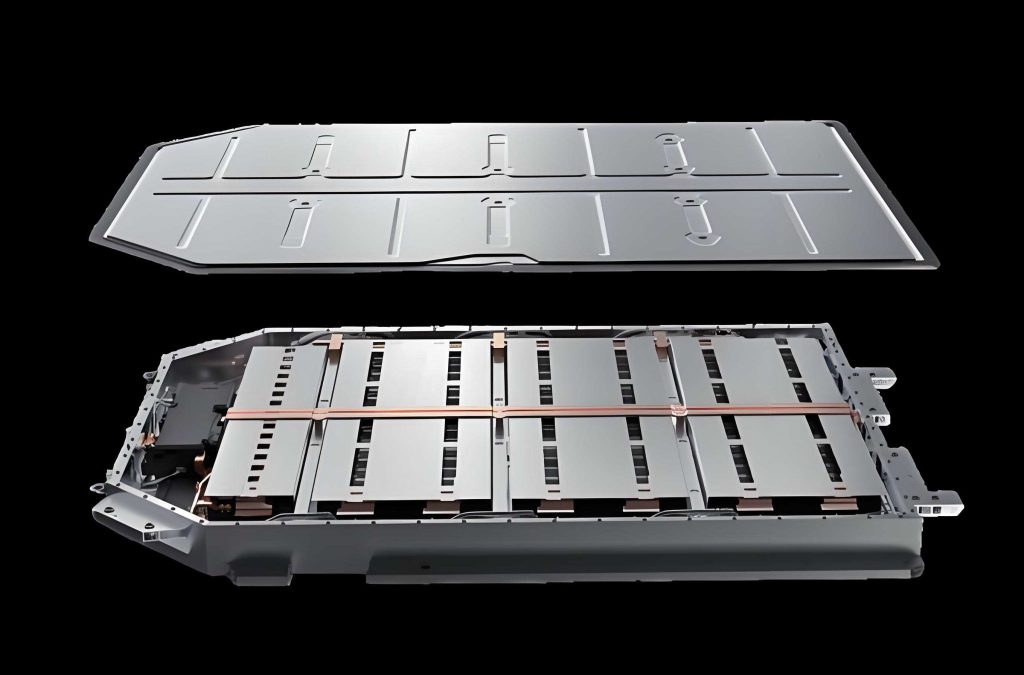
Enterprise collaboration is essential because the electric vehicle battery pack is subject to proprietary designs, service bulletins, and safety requirements. I invited enterprise engineers to help select cases, review digital resources, co-deliver online lectures, and evaluate student projects. The platform made participation easier because engineers could contribute without being physically present for every class. They reviewed student diagnostic reports, answered questions in discussion forums, and joined live sessions for critical topics such as insulation faults and thermal runaway prevention.
3.5 Multi-Dimensional Evaluation
I replaced a narrow assessment scheme with a multi-dimensional system. The final score combines theory, practice, process, and enterprise evaluation. The weights reflect the importance of safe and professional performance when working with an electric vehicle battery pack.
$$ S_{final} = \omega_1 S_{theory} + \omega_2 S_{practice} + \omega_3 S_{process} + \omega_4 S_{enterprise} $$
$$ \omega_1 + \omega_2 + \omega_3 + \omega_4 = 1 $$
| Assessment Dimension | Weight | Evidence | Focus for the Electric Vehicle Battery Pack |
|---|---|---|---|
| Theory | 0.25 | Quizzes, concept maps, oral defense | Principles of cells, BMS, safety, and diagnosis |
| Practice | 0.30 | Observed operation, measurement accuracy, repair result | Safe testing and maintenance of the electric vehicle battery pack |
| Process | 0.25 | Checklists, data logs, reflection, peer review | Procedure, documentation, teamwork, and reasoning |
| Enterprise | 0.20 | Mentor rating, project review, professional behavior | Alignment with real service standards for the electric vehicle battery pack |
I use rubrics that describe observable behavior. For example, a high score in high-voltage safety requires the student to verify absence of voltage, use appropriate personal protective equipment, apply lockout-tagout, and document the result. A high score in BMS diagnosis requires the student to state a hypothesis, select relevant data, interpret the trend, and justify the repair. The electric vehicle battery pack is not only a test object; it is the context in which professional judgment is evaluated.
4. Implementation Process
I implemented the reform in stages. Each stage had a specific deliverable, and I used student and enterprise feedback to adjust the next stage. The electric vehicle battery pack and BMS remained the central context throughout.
| Stage | Main Actions | Deliverable | Feedback Source |
|---|---|---|---|
| Preparation | Analyze job tasks, interview enterprise mentors, map outcomes | Competency map and module outline | Enterprise engineers, graduates |
| Resource development | Collect cases, record videos, build data sets, design rubrics | Digital resource library | Peer review, platform analytics |
| Pilot teaching | Run blended modules in one class | Lesson observations and student work | Students, co-teachers |
| Refinement | Shorten videos, add safety drills, clarify BMS tasks | Revised modules and assessments | Student feedback, mentor review |
| Full implementation | Apply reform across target classes | Complete course package | Examination, project, enterprise evaluation |
| Evaluation | Compare pre- and post-reform performance | Improvement analysis and action plan | Quantitative and qualitative data |
4.1 Example Project: Voltage Divergence in an Electric Vehicle Battery Pack
One representative project asks students to diagnose voltage divergence in an electric vehicle battery pack. The task begins with a customer complaint: reduced range and a power limitation warning. Students receive a work order, a BMS data log, and access to a training electric vehicle battery pack. They must follow safety procedures, read fault codes, analyze cell voltages, inspect connectors, and recommend a repair.
I teach students to calculate the mean cell voltage and the deviation of each cell from the mean.
$$ \bar{V} = \frac{1}{n}\sum_{i=1}^{n} V_i $$
$$ \Delta V_i = |V_i – \bar{V}| $$
The BMS may trigger a fault when a deviation exceeds a threshold.
$$ \Delta V_i \gt \epsilon $$
Students then examine whether the deviation is caused by a weak cell, a sensing error, a connection resistance problem, or an imbalance issue. They compare the voltage data with temperature data, insulation data, and event logs. The electric vehicle battery pack becomes a system to be interpreted, not merely a component to be replaced.
| Diagnostic Step | Student Action | Data or Evidence | Safety Requirement |
|---|---|---|---|
| 1. Prepare | Review work order and vehicle status | Complaint, DTC list, service history | Confirm high-voltage qualification |
| 2. Isolate | Disconnect service plug and verify no voltage | Voltage measurement, lockout tag | Use insulated tools and PPE |
| 3. Read data | Capture BMS cell voltage and temperature streams | Data log, freeze-frame data | Do not bypass safety interlocks |
| 4. Analyze | Calculate deviation and identify outliers | Mean voltage, deviation table | Keep clear of exposed conductors |
| 5. Inspect | Check connectors, harness, and sense lines | Resistance, visual evidence | Reconfirm isolation before contact |
| 6. Decide | Determine root cause and repair plan | Fault tree, justification | Follow enterprise repair standard |
| 7. Verify | Reassemble, clear codes, test operation | Post-repair data, functional test | Document final safety check |
During this project, I also introduce state estimation concepts so that students understand how the BMS interprets the electric vehicle battery pack. State of charge can be approximated by integrating current over time.
$$ SOC(t) = SOC(0) – \frac{1}{Q_{nom}}\int_0^t I(\tau)\,d\tau $$
State of health reflects capacity fade and resistance growth.
$$ SOH = \frac{Q_{current}}{Q_{nominal}}\times 100\% $$
Insulation resistance is a critical safety parameter for the electric vehicle battery pack.
$$ R_{ins} = \frac{V_{test}}{I_{leak}} $$
Balancing current can be simplified as a function of voltage difference and balancing resistance.
$$ I_{bal} = \frac{V_i – V_{min}}{R_{bal}} $$
These formulas are not taught as isolated mathematics. Students apply them to data from an electric vehicle battery pack and explain what the result means for safety, performance, and maintenance. In my experience, this approach strengthens both conceptual understanding and diagnostic confidence.
4.2 Example Project: Thermal Anomaly and BMS Protection
A second project focuses on thermal anomalies. Students analyze temperature sensor data from an electric vehicle battery pack and determine whether a high temperature reading indicates a real thermal issue, a sensor fault, or a cooling system problem. They inspect coolant flow, check for blockage, review BMS thermal protection thresholds, and recommend corrective action. The electric vehicle battery pack is treated as a coupled electrochemical, thermal, and electronic system.
| Symptom | Possible Cause | BMS Evidence | Student Diagnostic Action |
|---|---|---|---|
| Localized high temperature | Poor cooling contact or cell internal resistance | Temperature sensor deviation, power derating | Compare adjacent sensors and inspect cooling path |
| All temperatures high | Coolant flow or ambient load issue | System-level thermal trend | Check coolant level, pump, and operating condition |
| Single sensor abnormal | Sensor or harness fault | Implausible value, open-circuit code | Measure sensor resistance and inspect connector |
| Temperature oscillation | Intermittent connection or control instability | Noisy data stream | Review trend, check grounding and communication |
I ask students to write a short diagnostic argument: claim, evidence, reasoning, and safety decision. This structure helps them connect BMS data to action. The electric vehicle battery pack is not merely repaired; the reasoning behind the repair is made visible and assessable.
4.3 Example Project: Insulation Fault Diagnosis
Insulation faults are among the most safety-critical issues in an electric vehicle battery pack. Students learn how the BMS monitors isolation, how to interpret insulation resistance values, and how to locate a fault without compromising safety. They practice using a megohmmeter in a controlled setting and analyze enterprise cases. The electric vehicle battery pack is isolated, tested, and documented according to a strict sequence.
| Phase | Key Question | Measurement or Evidence | Decision Criterion |
|---|---|---|---|
| Initial assessment | Does the BMS report an insulation fault? | DTC, insulation resistance value | Compare with manufacturer threshold |
| Isolation | Is the electric vehicle battery pack safely disconnected? | Voltage verification, lockout tag | Zero voltage confirmed |
| Section testing | Which section has low resistance? | Sectional resistance measurements | Identify abnormal section |
| Root cause | Is the cause moisture, damage, contamination, or component failure? | Visual inspection, insulation test | Evidence supports one cause |
| Repair | What repair restores insulation? | Replacement, cleaning, sealing | Compliance with service standard |
| Verification | Does the electric vehicle battery pack pass final test? | Insulation resistance, functional test | Value above threshold and no DTC |
5. Results and Analysis
After implementing the reform, I compared student performance, engagement, and enterprise feedback with earlier cohorts. I used both quantitative and qualitative evidence. The electric vehicle battery pack and BMS remained the common context across all measures.
5.1 Quantitative Indicators
I calculated improvement rates for key indicators using the following formula.
$$ IR = \frac{M_{post} – M_{pre}}{M_{pre}}\times 100\% $$
I also considered effect size to avoid overinterpreting small changes.
$$ d = \frac{\bar{X}_{post} – \bar{X}_{pre}}{s_p} $$
| Indicator | Pre-Reform Mean | Post-Reform Mean | Improvement Rate | Observation |
|---|---|---|---|---|
| Theory assessment | 72.4 | 81.6 | 12.7% | Better understanding of BMS and safety principles |
| Practical operation | 70.8 | 84.2 | 18.9% | More standardized work on the electric vehicle battery pack |
| Diagnostic report quality | 66.5 | 80.1 | 20.5% | Clearer evidence and reasoning |
| Safety checklist completion | 75.0 | 92.5 | 23.3% | Stronger safety discipline |
| Class participation | 68.0 | 86.0 | 26.5% | More active preparation and discussion |
| Enterprise mentor rating | 70.2 | 82.8 | 17.9% | Better alignment with workplace expectations |
5.2 Qualitative Findings
I observed several qualitative changes. Students asked more diagnostic questions rather than simply asking for the correct answer. They referred to BMS data when explaining symptoms. They treated the electric vehicle battery pack with greater caution and respect. During team projects, they distributed roles more systematically: one student managed safety, one recorded data, one analyzed BMS signals, and one prepared the repair recommendation. This role differentiation resembled real workshop practice.
| Theme | Student Comment Pattern | My Interpretation |
|---|---|---|
| Authenticity | Real cases made the electric vehicle battery pack easier to understand | Context supports transfer |
| Safety | Checklists slowed work but increased confidence | Process discipline became valued |
| Data | BMS graphs revealed relationships not visible in text | Visual analytics improved reasoning |
| Collaboration | Team roles clarified responsibility | Professional skills developed alongside technical skills |
| Feedback | Online feedback helped before the next practice | Formative assessment supported improvement |
5.3 Enterprise Collaboration Outcomes
Enterprise mentors reported that students were better prepared to discuss the electric vehicle battery pack during internships. They knew how to read a work order, ask for missing information, and document measurements. Mentors also noted that students were more willing to follow safety procedures without being reminded. This outcome is important because safety behavior around a high-voltage electric vehicle battery pack cannot be treated as an optional add-on.
| Collaboration Dimension | Before Reform | After Reform |
|---|---|---|
| Case contribution | Occasional examples | Structured case library with tags and data |
| Teaching involvement | Guest lectures | Co-teaching, remote sessions, project review |
| Assessment involvement | Limited | Mentor ratings and joint rubrics |
| Resource updating | Irregular | Periodic review and version updates |
| Student exposure | Mostly internship | Continuous across the course |
6. Discussion
My reform experience suggests that informatization is most effective when it is embedded in a coherent instructional design. The electric vehicle battery pack and BMS are ideal content for this approach because they generate data, require safety discipline, and connect to rapidly changing industry practice. However, technology alone does not guarantee learning. I found that the following conditions matter most.
| Success Factor | Why It Matters | How I Applied It |
|---|---|---|
| Clear competency model | Prevents content from becoming a random collection of topics | Mapped outcomes to tasks and assessments |
| Authentic tasks | Builds transfer to real work on the electric vehicle battery pack | Used enterprise work orders and data sets |
| Active safety culture | Protects students and develops professional habits | Required checklists, verification, and documentation |
| Continuous feedback | Improves performance before final assessment | Used platform analytics and mentor comments |
| Enterprise partnership | Keeps content current and relevant | Co-designed cases, rubrics, and remote sessions |
| Resource maintenance | Prevents digital resources from becoming outdated | Set review cycles and version control |
I also encountered challenges. Enterprise engineers have limited time, so remote participation must be carefully scheduled and supported. Some students initially preferred passive learning and needed time to adapt to project-based work. Digital resources require ongoing maintenance, and videos can become outdated when the electric vehicle battery pack design changes. Assessment of process skills takes more time than grading a final examination. These challenges are real, but they are manageable when the course team shares responsibility and uses data to prioritize improvements.
To support continuous improvement, I use a simple updating model. Let Qn be the current quality of the course, Dind be the current industry demand, and λ be the responsiveness coefficient.
$$ Q_{n+1} = Q_n + \lambda (D_{ind} – Q_n) $$
When λ is too small, the course lags behind industry. When λ is too large, the course may change without sufficient validation. I aim for a balanced value informed by enterprise review cycles, student feedback, and resource development capacity. This formula is a planning aid rather than a precise prediction, but it reminds me that the electric vehicle battery pack and BMS course must evolve deliberately.
7. Limitations and Future Improvements
I recognize several limitations in my reform. First, the number of enterprise cases is still limited compared with the variety of faults that can occur in an electric vehicle battery pack. Second, simulated data cannot fully reproduce the noise, thermal behavior, and mechanical complexity of a real pack. Third, assessment of teamwork and professional literacy remains partly subjective, even with rubrics. Fourth, some students need more scaffolding to analyze BMS data confidently.
| Limitation | Impact | Planned Improvement |
|---|---|---|
| Limited case variety | Students see fewer rare faults | Expand searchable case library with enterprise partners |
| Simulation fidelity | Virtual tasks may feel simplified | Combine simulation with physical electric vehicle battery pack training |
| Subjectivity in soft-skill assessment | Potential inconsistency | Use behaviorally anchored rubrics and multiple raters |
| Data analysis difficulty | Some students struggle with interpretation | Provide layered data tasks and automated hints |
| Resource maintenance burden | Materials can become outdated | Establish version control and annual review |
| Enterprise scheduling | Limited live expert availability | Use asynchronous video review and scheduled remote clinics |
In future iterations, I plan to strengthen virtual simulation for high-risk operations, add more diagnostic data from real electric vehicle battery pack service events, and develop micro-credentials that recognize specific competencies such as insulation testing, BMS data analysis, and thermal fault diagnosis. I also plan to involve students in maintaining case notes, which can deepen their understanding while contributing to the resource library.
8. Conclusion
My experience with informatization-enabled reform confirms that the electric vehicle battery pack and BMS course can become more relevant, rigorous, and engaging when content, teaching, resources, collaboration, and assessment are aligned. I began with a problem: the electric vehicle battery pack changes quickly, while traditional courses change slowly. I responded by using enterprise tasks, digital data, blended learning, and multi-source evaluation to bring the electric vehicle battery pack into the center of every instructional decision. The results show improved knowledge application, practical operation, safety discipline, diagnostic reasoning, and enterprise readiness.
The most important lesson I learned is that informatization should serve competence, not replace it. A video about the electric vehicle battery pack is useful only when it helps students make a better measurement, ask a sharper diagnostic question, or follow a safer procedure. A data dashboard is valuable only when it helps students interpret the BMS and justify a repair. An online platform is meaningful only when it connects students, teachers, and enterprise mentors around authentic work. When these conditions are met, the electric vehicle battery pack becomes more than a teaching aid; it becomes a model of the professional world that students are preparing to enter.
I will continue to refine the course by updating cases, improving rubrics, expanding remote enterprise participation, and integrating simulation with hands-on practice. The electric vehicle battery pack and BMS will remain the core context because they embody the technical, safety, and professional demands of new energy vehicle service. By keeping the electric vehicle battery pack at the center of learning and using informatization as an enabling layer, I can help students develop the knowledge, skill, and discipline required for meaningful careers in this field.