
MOSCOW — The Russian government has formally approved a new Automobile Industry Development Strategy, setting a clear route for the country’s automotive sector over the next decade. The strategy aims to lift annual domestic vehicle production to about 2.8 million units by 2035, raise the market share of domestically produced vehicles to 80%, leave only 20% of the new-car market to imports, strengthen weak links in auto parts, secure intellectual property rights for complete vehicles, and rebuild an autonomous local automotive industrial system.
The plan places China technology at the center of Russia’s revival path. Data cited in the strategy debate show that Chinese brands already accounted for 54.6% of Russia’s new-car market in the first half of 2026. The Volga K50 recently test-driven by President Vladimir Putin is a model assembled locally after localization modifications based on a Chinese automaker’s platform. Russian brands such as Tenet and Moskvich have also achieved mass production on technology platforms supplied respectively by Chery and JAC. From wholly owned plants to KD kit assembly and technology licensing, Chinese automakers are becoming deeply embedded in Russia’s vehicle manufacturing system.
- Strategic blueprint sets production, localization and technology targets
The new strategy follows a period of severe disruption. After external sanctions in 2022, European, American, Japanese and South Korean automakers withdrew from Russia in succession, creating a vacuum in the market and causing a sharp decline in production capacity. The government then introduced a series of support policies to promote gradual recovery. The new plan now sets quantified development goals across three dimensions: market size, localization level and operational efficiency.
Two hard indicators—local manufacturing output and domestic market share—are written explicitly into the strategy. First Deputy Prime Minister Denis Manturov said Russia plans to raise annual vehicle output to about 2.8 million units by 2035. By comparison, Russia’s total vehicle output in 2025 was about 830,000 units, only about 30% of the 2035 target, leaving an arduous industrial expansion task.
The strategy also stresses that Russia must firmly master intellectual property rights and design documents for complete vehicles and components, raise the local parts matching rate, and increase technological autonomy. By 2030, the technological autonomy level for passenger cars is targeted at 80%, while that for light commercial vehicles, trucks and buses is to rise to 90%. The plan seeks to close the long-standing gap created by dependence on imported components, advance automation and digitalization of production lines, and support research and development of advanced driver assistance and autonomous driving technologies.
In addition, Russia requires domestically produced models to account for 80% of its new-car market by 2035. At present, Chinese brands account for about half of Russia’s new-car sales, and most of those vehicles are imported. The new strategy therefore marks a significant shift from import-led market recovery toward local production and technology absorption.
| Indicator | Current or 2025 level | 2030 target | 2035 target |
|---|---|---|---|
| Annual vehicle production | About 830,000 units in 2025 | — | About 2.8 million units |
| Domestic vehicle share of new-car market | Chinese brands about 54.6% in first half of 2026; many imported | — | 80% |
| Import share of new-car market | — | — | 20% |
| Passenger car technological autonomy | — | 80% | — |
| Light commercial vehicle, truck and bus technological autonomy | — | 90% | — |
| Combined annual output of all derivatives on one platform | — | — | More than 500,000 units |
| Electric vehicle and hybrid share of passenger car output | — | — | About 25% |
| Battery electric vehicle and plug-in hybrid share of new passenger car sales | 4.3% in 2025 | — | — |
From an industrial background perspective, mainstream automakers from Europe, the United States, Japan and South Korea have withdrawn from the Russian market since the 2022 conflict, leaving a large number of idle factories. Speaking about the new automobile strategy, Manturov said Russia already has a vehicle manufacturing capacity base of more than 3 million units. The core task at present is to activate idle production lines and fill capacity.
The new strategy takes production platform integration and cross-model standardization as core efficiency paths. In the future, Russia will push vehicle platformization and use the same platform to develop sedans, SUVs, wagons and other body styles, reducing research and development and manufacturing costs. For each production platform, the combined annual output of all derivative models must reach more than 500,000 units, so that scale effects can dilute fixed costs in research and development and production and improve the overall economic efficiency of the industry.
- Electric vehicle transition follows a phased technology route
On technology routes, the strategy defines a phased evolution rhythm. Before 2035, internal combustion engine models will remain the main body of market supply, while the share of electric vehicle models will gradually increase. Manturov said that by 2035, hybrid and electric vehicles will account for about 25% of Russia’s total passenger car output.
At present, Russia’s electric vehicle market is still in an early stage of development. Vast territory, severe cold weather and a limited charging network have long constrained market growth. According to statistics from the Russian market analysis agency Autostat, battery electric vehicles and plug-in hybrids combined accounted for 4.3% of Russia’s new passenger car sales market in 2025.
It is worth noting that in 2026, Ukraine repeatedly struck Russian refining facilities, causing fuel supply shortages in many parts of Russia and unexpectedly heating up the Russian electric vehicle market. Chinese brands became the biggest beneficiaries. BYD, Changan, Zeekr, Voyah and other brands have introduced electric vehicle models in Russia through imports or semi-knocked-down assembly.
Zabelin, founder of ENCars, a Russian company mainly selling Chinese brands, previously said that demand for electric vehicles in the Russian market has multiplied this year, with Russian consumer interest rising for both economy models and high-end models. The company previously sold only two to three electric vehicles per month. After the fuel shortage crisis broke out, single-day sales could reach the previous monthly sales volume, indicating a significant increase in market demand.
Data from Autostat and the Russian Ministry of Industry and Trade show that in the Russian passenger car market from January to May 2026, about 24,600 plug-in hybrids were sold, up 125% year on year, while 4,460 battery electric vehicles were sold, up 19% year on year. The figures suggest that, with charging infrastructure still incomplete, consumers are more inclined toward a fuel-and-electric compromise. Autostat head Udalov also said that intensified fuel shortages in June further pushed more Russian consumers to buy electric vehicles. From June to August 2026, combined sales of battery electric and plug-in hybrid passenger cars in Russia reached 26,543 units, higher than 12,187 units in the same period of 2025, and most of those models were produced in China.
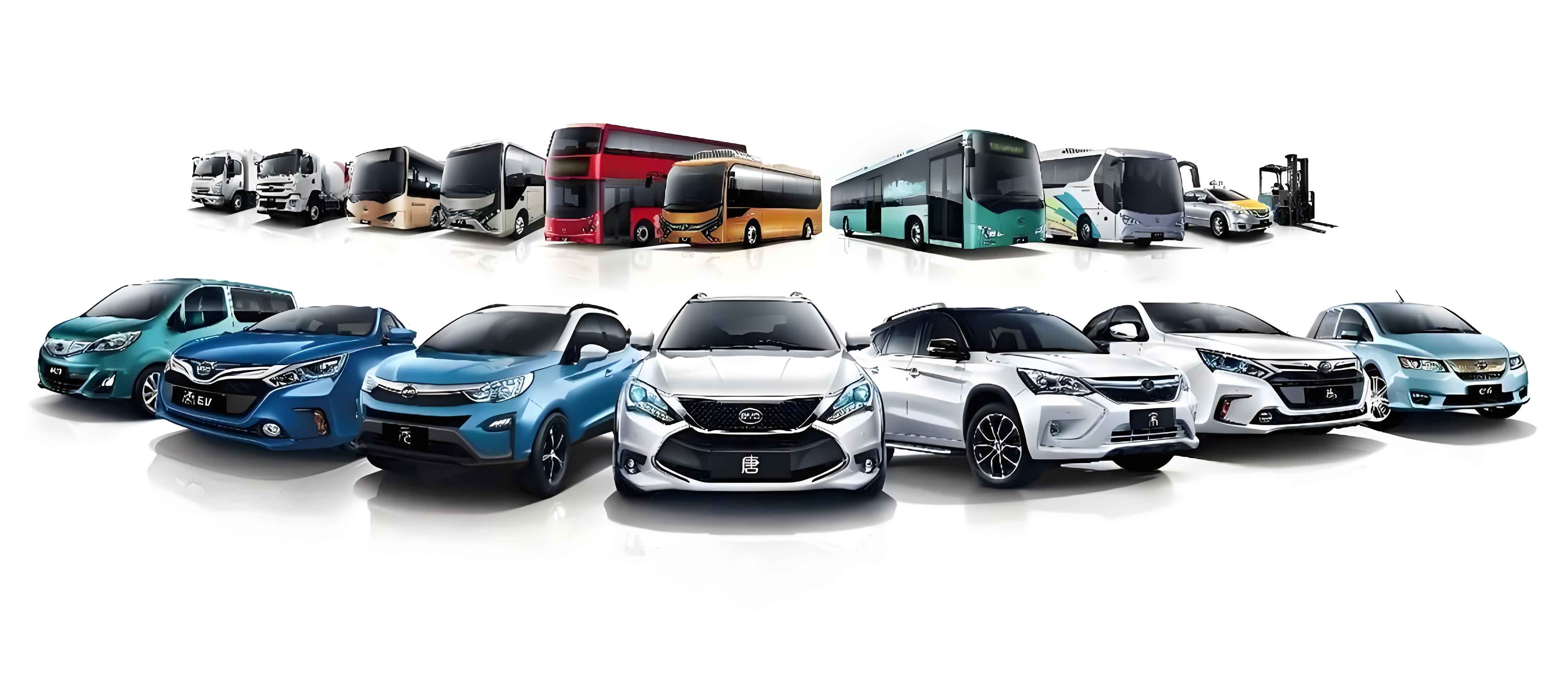
The strong sales of electric vehicles have also driven Chinese brands to a strong performance in the Russian car market. Autostat data show that from January to August 2026, cumulative sales in Russia’s new-car market reached 845,000 units, up 9.3% year on year. By brand, Russia’s domestic Lada sold 208,400 units and remained first, but its market share fell from 27.33% in the same period of 2025 to 24.66%. Haval sold 114,300 units, up 22.8% year on year, and its market share rose to 13.52%, ranking second. Third place went to Tenet, a new Russian local brand created by Russia’s AGR Group in cooperation with Wuhu Defetoo Automotive Technology Co., Ltd. of China. It is essentially a localized rebadged brand based on Chery technology.
Geely and Changan ranked fourth and fifth respectively. Sixth place went to Belgee, a joint passenger car brand between Belarus and Geely, produced at a local factory in Belarus and exported in large volumes to Russia through the trade advantages of the Eurasian Economic Union. Core models under the Belgee brand are rebadged Geely vehicles. The Belgee X70 is based on the Geely Boyue Pro, with chassis and cold-region configuration adaptations for the Commonwealth of Independent States market. Another hot-selling model, the Belgee X50, is based on the Geely Binyue. The Belgee S50 sedan, which went into production at the end of 2024, is based on the fourth-generation Geely Emgrand.
Seventh place went to Jetour, a brand under Chery. Mazda and Toyota, which entered Russia through parallel imports, ranked eighth and ninth respectively. Tenth place went to Jeland, also a new Russian local brand. Like Tenet, Jeland belongs to Russia’s AGR Group and also cooperates technically with China’s Defetoo. Its model prototypes also come from Chery. The Jeland J6 is based on Chery’s Jaecoo J5, while the Jeland J7 is a rebadged version of the Jaecoo J7.
It can be seen that, apart from Lada, Mazda and Toyota, the other seven places in Russia’s top 10 new-car brand sales ranking from January to August 2026 are either Chinese brands or brands backed by Chinese technology. This underscores how deeply Chinese platforms, components and engineering capabilities have entered Russia’s passenger vehicle ecosystem, including the emerging electric vehicle segment.
| Rank | Brand | Sales, January-August 2026 | Year-on-year change | Market share | Technology or production note |
|---|---|---|---|---|---|
| 1 | Lada | 208,400 | — | 24.66%, down from 27.33% | Russian domestic brand |
| 2 | Haval | 114,300 | Up 22.8% | 13.52% | Great Wall brand produced locally in Russia |
| 3 | Tenet | — | — | — | Russian local new brand under AGR Group; based on Chery technology |
| 4 | Geely | — | — | — | Chinese brand; technology also underpins Belgee and Volga models |
| 5 | Changan | — | — | — | Chinese brand with local assembly cooperation |
| 6 | Belgee | — | — | — | Belarus-GEELY joint brand; rebadged Geely models |
| 7 | Jetour | — | — | — | Brand under Chery |
| 8 | Mazda | — | — | — | Parallel imports |
| 9 | Toyota | — | — | — | Parallel imports |
| 10 | Jeland | — | — | — | Russian local new brand under AGR Group; based on Chery technology |
- Volga K50 becomes a visible sample of technology-led localization
Before the strategy was approved, on August 28, Putin visited the Gorky Automobile Plant in Russia’s Nizhny Novgorod automotive cluster and test-drove the Volga K50 SUV. After the test drive, Putin gave an assessment, saying the vehicle drove smoothly, the cabin was quiet and the handling experience was good.
Volga was the most representative premium sedan brand of the former Soviet era. After the dissolution of the Soviet Union in 1991, however, large numbers of used foreign cars poured in and the brand’s halo collapsed. In 2010, the brand completely stopped passenger car production and remained silent for more than a decade. In April 2026, at the former Volkswagen plant in Nizhny Novgorod, Volga was revived, with the K50 SUV and C50 sedan officially rolling off the line. The underlying complete vehicle platform, powertrain and electronic architecture of both models come from Geely. The K50 is based on the Geely Xingyue L, and the Russian side only completed localization adaptations for Russia’s severe cold environment and modified exterior badges.
Putin’s test drive was not only a recognition of Chinese complete vehicle technology strength but also a public signal of Russia’s industrial route: relying on mature external technology to quickly cultivate local automotive brands and complete local capacity building is an important path for Russia’s automotive industry revival at the current stage. After all, to quickly rebuild a complete automotive industrial chain and develop vehicle platforms, engines and transmission systems from scratch would require huge investment and a long cycle. Russia hopes to raise annual vehicle output to about 2.8 million units by 2035. Against that background, introducing mature external complete vehicle technology for localization has become a realistic choice for Russia to quickly restart its automotive industry. The Volga K50 test-driven by Putin is a typical sample of this model. Tenet and Jeland, launched by Russia’s AGR Group with the help of Chinese automaker technology, are equally typical cases.
- Chinese automakers deepen localization through multiple models
Chinese automakers continue to deepen their presence in the Russian market. In addition to direct complete vehicle exports, Chinese automakers are laying out localization through self-built vehicle plants, KD kit assembly, technology licensing and rebadged production, and other models. Among them, Great Wall’s plant in Tula Oblast is a wholly owned complete vehicle project built by a Chinese automaker in Russia, with a localization rate of about 65%. The company has carried out targeted modifications for the local extreme cold environment, including chassis and low-temperature starting adaptations, and produces Haval and Tank series models. Chery adopts an asset-light KD/CKD assembly model. It has not only joined with Russian companies to launch local brands Tenet and Jeland but also assembles group brand models at the Avtotor plant in Kaliningrad. Changan, BAIC and other automakers also use Avtotor or Russian partner companies for local semi-knocked-down assembly.
The new strategy may profoundly reshape the China-Russia automotive industry cooperation landscape. In the short term, Russia’s local capacity expansion will continue to release huge dividends in technology cooperation and parts supporting. From a medium- and long-term perspective, Russia’s all-out effort to raise the market share of domestic models will create competitive pressure on China’s direct vehicle export business to Russia, forcing Chinese automakers to accelerate their shift toward localized production.
It can be seen that, with Russia’s industrial policy adjustments over the past two or three years, Chinese automakers have begun to respond, moving from vehicle exports in the past toward deep industrial cooperation based on platforms, components and technology coordination. The electric vehicle dimension is likely to be central to that shift. Russia’s strategy does not abandon internal combustion engines before 2035, but it does create a growing space for electric vehicle production, electric vehicle assembly and electric vehicle technology partnerships. For Chinese automakers, the opportunity is not only to sell electric vehicle units but also to supply platforms, electronic architectures, powertrains and localized electric vehicle manufacturing capabilities.
- Electric vehicle demand exposes both opportunity and policy risk
The Russian strategy’s 80% domestic market share target by 2035 is ambitious. It implies that imported vehicles, including many Chinese electric vehicle models, will face gradual pressure to move into local assembly or local production. At the same time, the 20% import share leaves room for specialized electric vehicle imports, premium electric vehicle models and niche electric vehicle products that cannot yet be localized economically.
The electric vehicle market data illustrate why this balance matters. In 2025, battery electric vehicles and plug-in hybrids combined held only 4.3% of Russia’s new passenger car market. By the first five months of 2026, plug-in hybrid sales reached about 24,600 units, up 125% year on year, while battery electric vehicle sales reached 4,460 units, up 19%. From June to August 2026, combined electric vehicle and plug-in hybrid passenger car sales reached 26,543 units, compared with 12,187 units in the same period of 2025. Most of those vehicles were produced in China. The electric vehicle market is therefore small in absolute share but growing quickly under fuel supply stress.
| Electric vehicle indicator | Period | Volume or share | Year-on-year change |
|---|---|---|---|
| Plug-in hybrid sales | January-May 2026 | About 24,600 units | Up 125% |
| Battery electric vehicle sales | January-May 2026 | 4,460 units | Up 19% |
| Battery electric vehicle and plug-in hybrid combined sales | June-August 2026 | 26,543 units | Compared with 12,187 units in same period of 2025 |
| Battery electric vehicle and plug-in hybrid share of new passenger car sales | 2025 | 4.3% | — |
| Electric vehicle and hybrid share of passenger car output | 2035 target | About 25% | — |
The fuel shortage crisis showed how quickly the Russian electric vehicle market can react to external shocks. It also showed the limits of that reaction: charging infrastructure remains incomplete, the climate is severe in many regions and the overall electric vehicle base is still low. That is why plug-in hybrids have gained ground alongside battery electric vehicles. Consumers are choosing models that can run on fuel and electricity, reducing range anxiety while still offering electric vehicle driving in urban use.
For Chinese automakers, this creates a dual-track opportunity. One track is to supply battery electric vehicles and plug-in hybrids through imports, especially where local production is not yet available. The other track is to localize electric vehicle assembly, electric vehicle platform supply and electric vehicle component production in Russia. The new strategy’s emphasis on technological autonomy, local parts and intellectual property means that simple vehicle exports will face increasing limits over time. Chinese automakers that bring platforms, engineering support and local supply chains are better positioned to capture the next phase of growth.
The strategy’s platform consolidation rule also matters for electric vehicles. Russia wants each platform’s derivative models to reach more than 500,000 units of combined annual output. That scale requirement could favor large, flexible platforms that can support internal combustion engine, hybrid and electric vehicle variants. Chinese automakers with multi-energy platforms and electric vehicle engineering experience may find opportunities to support Russian partners in meeting that scale and localization requirement.
- Local brands rely on Chinese platforms and engineering
The rise of Tenet, Jeland, Belgee and Volga illustrates a broader pattern. Russia is not simply importing finished vehicles; it is using Chinese platforms, powertrains and electronic architectures to rebuild local brands and local production. Tenet and Jeland are Russian local new brands under AGR Group, built with Defetoo and based on Chery technology. Belgee is a Belarus-GEELY joint brand that produces rebadged Geely models in Belarus and exports to Russia through Eurasian Economic Union trade advantages. Volga has been revived at a former Volkswagen plant with Geely-based platforms.
This pattern is central to Russia’s 2035 plan. The strategy requires Russia to master intellectual property rights and design documentation for complete vehicles and components. It also requires local parts matching rates to rise and technological autonomy to reach 80% for passenger cars and 90% for light commercial vehicles, trucks and buses by 2030. Those targets cannot be met through imports alone. They require platform transfer, engineering collaboration, supplier development and local validation, especially for cold-climate electric vehicle operation and electric vehicle charging compatibility.
The Volga K50 case shows how quickly a local brand can be revived when a mature platform is available. The K50 is based on the Geely Xingyue L, with local adaptation for severe cold and exterior badge changes. The C50 sedan shares the same underlying technology logic. Putin’s test drive gave the model high visibility and signaled that Russian policymakers see external technology as a practical bridge to local capacity. That bridge is not limited to fuel-powered models; it can also support hybrid and electric vehicle production as the market develops.
At the same time, Russia’s 80% domestic market share target means that Chinese brands relying mainly on imports will face a changing policy environment. The first half of 2026 showed Chinese brands at 54.6% of the new-car market, but many of those vehicles were imported. As local production rises, the market may reward companies that assemble locally, transfer technology and develop local suppliers. The electric vehicle segment will be especially sensitive to this shift because electric vehicle imports can be replaced by local electric vehicle assembly if volumes justify investment.
- Outlook: from vehicle exports to platform and electric vehicle cooperation
The new Russian strategy sets a clear direction: higher local production, higher domestic market share, stronger technological autonomy and a gradual electric vehicle transition. It also makes China technology a core foundation for that direction. The Volga K50, Tenet, Jeland, Belgee and locally assembled Haval models all show that Chinese platforms and engineering are already part of Russia’s industrial rebuild.
For Chinese automakers, the short-term opportunity lies in technology cooperation, parts supply and local assembly support as Russia seeks to activate idle capacity and raise output from about 830,000 units in 2025 toward 2.8 million units by 2035. The medium- and long-term challenge lies in policy-driven localization. Direct vehicle exports, including electric vehicle exports, will face increasing competition from domestically produced models. The response is already visible: Chinese automakers are moving from complete vehicle exports toward platform supply, component localization, technology licensing and local electric vehicle assembly.
The electric vehicle market will remain a key test. Fuel supply disruptions have shown that electric vehicle demand can rise quickly when conventional fuel availability is constrained. But the market’s long-term growth depends on charging infrastructure, cold-climate performance and affordable models. Chinese automakers with electric vehicle technology, plug-in hybrid experience and localized production capability are well placed to serve that demand. The same companies, however, will need to adapt to Russia’s 80% localization goal and its push for technological autonomy.
In sum, Russia’s new automobile strategy is both an industrial revival plan and a localization mandate. It opens space for Chinese technology, parts and platforms, while gradually narrowing the room for simple imports. The electric vehicle segment reflects that dual reality: rapid demand growth, strong Chinese brand presence and a policy environment that increasingly favors local production. How Chinese automakers balance exports, assembly and technology cooperation in Russia—especially in the electric vehicle and plug-in hybrid segments—will shape their position in one of the world’s most closely watched automotive markets over the next decade.