
China’s power battery recycling sector is undergoing a fundamental reconstruction after the Ministry of Industry and Information Technology issued Announcement No. 20 of 2026 in late July, abolishing the “cascading utilization” provisions in the 2024 edition of the industry规范 conditions for the comprehensive utilization of retired new energy vehicle power batteries. The announcement also ended the enterprise announcement management system for cascading utilization, bringing to a close a policy framework that had operated for 14 years. The shift is widely described by industry experts as more than a routine policy adjustment. It is a systemic response to more than a decade of industrial practice and a deep rethinking of how retired power battery resources should be recovered, supervised and returned to manufacturing.
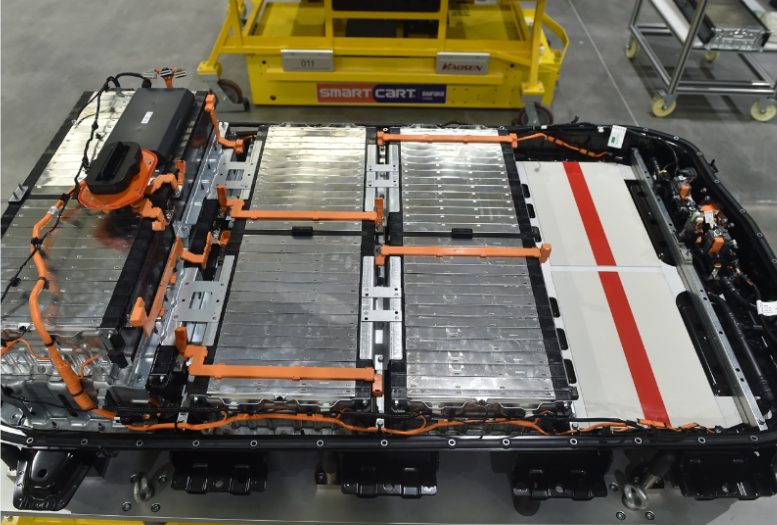
The decision carries immediate significance for the entire power battery value chain. For years, cascading utilization was presented as a preferred route for extracting remaining value from retired electric vehicle power batteries before final dismantling and recycling. Under the policy concept, retired power battery packs would be tested, classified, dismantled and reassembled into battery products for applications such as backup power for communication base stations. The idea was to maximize the residual value of power battery systems and avoid resource waste caused by direct dismantling. However, market practice gradually diverged from that original intention, and the gap between policy design and operational reality became increasingly difficult to ignore.
The retirement of the cascading utilization policy does not mean that the recovery of retired power batteries has become less important. On the contrary, it places the power battery recycling industry under a more unified, more safety-oriented and more traceable regulatory framework. The change redefines the boundary between “utilization” and “recycling,” reshapes the responsibility of vehicle and battery manufacturers, and directs investment toward direct recycling, high-purity material recovery and closed-loop power battery manufacturing. For companies across the power battery supply chain, the new framework requires a reassessment of technology routes, business models, compliance systems and long-term resource strategies.
1. Policy Announcement Ends 14-Year Cascading Utilization Framework
The concept of cascading utilization first entered China’s policy agenda in 2012, when the State Council issued the Energy-Saving and New Energy Vehicle Industry Development Plan for 2012-2020. At that stage, the power battery industry was still in its early phase of development. The strategic intention was to explore ways to recover remaining value from retired power battery packs, reduce resource waste and build a green circular system covering production, use and recovery. The policy established a resource utilization priority described as “cascading first, recycling second,” giving early industry players a direction for exploration and practice.
In 2021, the Ministry of Industry and Information Technology and four other departments jointly issued the Measures for the Management of Cascading Utilization of Power Batteries for New Energy Vehicles. That document introduced systematic requirements for cascading utilization products and enterprises for the first time. It represented an effort to bring a rapidly expanding but loosely organized segment of the power battery recovery market into a more formal regulatory framework. The measures were designed to support the development of a power battery circular economy while addressing safety, quality and traceability concerns.
Yet the policy environment continued to evolve. At the end of 2025, six departments, including the Ministry of Industry and Information Technology, the National Development and Reform Commission, the Ministry of Ecology and Environment, the Ministry of Transport, the Ministry of Commerce, and the State Administration for Market Regulation, jointly issued the Interim Measures for the Management of the Recovery and Comprehensive Utilization of Retired Power Batteries from New Energy Vehicles. The interim measures provided a new definition of “comprehensive utilization,” limiting it to resource recovery activities such as dismantling, crushing, sorting and smelting. In other words, comprehensive utilization now refers to recycling and regeneration, and it no longer includes cascading utilization.
The 2026 announcement completed this policy transition. By abolishing the cascading utilization clauses in the 2024 edition of the industry规范 conditions and ending the enterprise announcement management system for cascading utilization, the Ministry of Industry and Information Technology removed the special policy category that had existed for 14 years. The change is not simply a withdrawal of support for a particular business model. It is a reclassification of retired power battery disposal within a stricter whole-chain safety and environmental management system.
| Date or Year | Policy or Action | Key Relevance to Power Battery Recycling |
|---|---|---|
| 2012 | The State Council issued the Energy-Saving and New Energy Vehicle Industry Development Plan for 2012-2020, introducing the concept of cascading utilization. | Provided an early strategic direction for recovering remaining value from retired power battery packs and building a green circular system. |
| 2021 | The Ministry of Industry and Information Technology and four other departments issued the Measures for the Management of Cascading Utilization of Power Batteries for New Energy Vehicles. | Introduced systematic requirements for cascading utilization products and enterprises and strengthened formal management of power battery recovery. |
| 2024 | The 2024 edition of the industry规范 conditions for comprehensive utilization of retired new energy vehicle power batteries was issued. | Provided the regulatory context later modified by the 2026 announcement. |
| End of 2025 | Six departments issued the Interim Measures for the Management of the Recovery and Comprehensive Utilization of Retired Power Batteries from New Energy Vehicles. | Redefined comprehensive utilization as dismantling, crushing, sorting and smelting, excluding cascading utilization. |
| Late July 2026 | The Ministry of Industry and Information Technology issued Announcement No. 20 of 2026. | Abolished cascading utilization clauses and ended enterprise announcement management for cascading utilization, completing the policy shift. |
2. Safety Incidents and Market Distortion Drive Policy Reassessment
The policy change comes against a background of frequent electric bicycle fire accidents in many parts of the country. According to available data, about 33 percent of electric bicycle fire accidents are caused by illegal battery modification, and many of the cells involved come from retired electric vehicle power batteries. This linkage between informal power battery reuse and public safety has become a central concern. When retired power battery cells are not properly tested, graded and managed, they can enter high-risk applications without adequate safety guarantees.
The formal cascading utilization process requires rigorous testing, classification, dismantling and reassembly. These steps carry significant safety costs. In practice, however, many small workshops have bypassed complete testing procedures and performed only simple dismantling and reassembly. With low operating costs, they have been able to outbid formal enterprises in the competition to acquire retired power batteries. As a result, a large volume of retired power batteries has flowed into informal channels, weakening the intended safety and environmental controls of the cascading utilization system.
Gao Chengyuan, deputy secretary-general of the Guangdong Provincial Social Policy Research Association, said the core of the adjustment is a fundamental change in regulatory logic. Cascading utilization is no longer treated as a special category subject to separate rules. Instead, it is brought under the strict supervision framework applied to general battery production. In his view, the main reason for abolishing the cascading utilization policy is that the concept was blurred by some enterprises in practice. Retired power battery products that had not undergone sufficient safety testing were sold as “second-hand” products at a downgraded price, and some were even illegally used in high-risk fields such as electric bicycles, creating safety hazards.
Gao added that abolishing cascading utilization can push the industry away from low-cost assembly and toward a technology-driven path centered on precise recycling and smelting. This is expected to significantly raise industry concentration and safety standards. For the power battery sector, the message is clear: the remaining value of retired power batteries cannot be pursued at the expense of safety, traceability and environmental protection. The power battery recovery chain must be managed as an integrated system rather than as a collection of loosely supervised secondary markets.
The safety argument is closely connected to the resource argument. In the early stage of the power battery industry, cascading utilization was seen as a way to extend the service life of battery materials and reduce pressure on raw material supply. As the industry matures, however, the limitations of that approach have become more apparent. Retired power battery cells experience uneven degradation, and their internal states become increasingly dispersed after long vehicle use. Even after screening and reassembly, long-term operational risks in non-vehicle applications are difficult to cover through standardized processes. A policy framework that treats all retired power batteries under a unified lifecycle management system is therefore better suited to controlling systemic risk.
3. From Three-Stage Flow to Closed-Loop Power Battery Circularity
The abolition of cascading utilization has reconfigured the underlying logic of the power battery recycling industry. Yuan Shuai, co-founder and initiator of the Xinzhipai New Quality Productive Forces Reception Hall, said the announcement fundamentally reconstructs the entire battery recycling industry. It breaks the previous three-stage resource flow framework of “vehicle use—cascading utilization—dismantling and recycling” and establishes a new closed-loop cycle of “whole vehicle use—directed recovery—direct recycling—material return to manufacturing.”
This new logic anchors full lifecycle responsibility for the power battery on vehicle and battery manufacturers. Through the full implementation of the extended producer responsibility system, companies are expected to consider the subsequent recovery and recycling pathway from the very beginning of battery design and production. Material selection and structural design must reserve space for efficient dismantling and efficient recycling. The previous industrial design approach, which placed heavy emphasis on use and comparatively little attention on recovery, is no longer compatible with the new regulatory and market environment.
The shift also has implications for technology routes, business models and supervision systems across the power battery industry. A closed-loop system requires better data continuity, clearer responsibility boundaries and more integrated coordination among vehicle manufacturers, battery producers, recycling enterprises and material suppliers. The power battery is no longer simply a product that passes through a linear value chain. It becomes a resource carrier whose entire lifecycle must be planned, recorded and managed.
| Dimension | Previous Three-Stage Framework | New Closed-Loop Framework |
|---|---|---|
| Resource flow | Vehicle use, cascading utilization, dismantling and recycling. | Whole vehicle use, directed recovery, direct recycling, material return to manufacturing. |
| Responsibility anchor | Responsibility was distributed across multiple stages, with unclear boundaries in some cascading utilization links. | Full lifecycle responsibility is anchored on vehicle and battery manufacturers through extended producer responsibility. |
| Design priority | Greater emphasis on use, with comparatively limited consideration for later recovery. | Material selection and structural design must support efficient dismantling and efficient recycling. |
| Safety supervision | Cascading utilization was treated as a distinct category with separate requirements. | Retired power battery disposal is unified under stricter whole-chain lifecycle management. |
| Recycling focus | Remaining value extraction through testing, classification, dismantling and reassembly. | Direct recycling, high-purity material recovery and return of strategic metals to power battery manufacturing. |
The new framework also changes the economics of power battery recovery. In the past, cascading utilization created an intermediate market in which retired power batteries could be redirected into secondary applications. That market provided an additional revenue stream, but it also created opportunities for regulatory arbitrage. Under the new approach, the value proposition of power battery recycling is increasingly tied to the efficiency and purity of material recovery. Companies that can recover high-value metals and return them to battery manufacturing are better positioned to capture long-term value.
For vehicle and battery manufacturers, the closed-loop model creates a stronger incentive to design power batteries with recyclability in mind. Battery packs that are easier to dismantle, with clearer material composition and better data records, can reduce the cost and complexity of recovery. The integration of power battery design, production, use and recycling is therefore not only a compliance requirement but also a source of competitive advantage. The power battery industry is moving from a model in which recovery is treated as an afterthought to one in which recovery considerations are embedded in the product lifecycle from the outset.
4. Extended Producer Responsibility Anchors the New Power Battery Regime
Extended producer responsibility is central to the new power battery recovery framework. The new logic places full lifecycle responsibility on vehicle and battery manufacturers, requiring them to consider recovery and recycling pathways from the design and production stage. This changes the previous pattern in which responsibility could become fragmented across different stages of the power battery value chain. Under the new approach, the producer is expected to remain engaged beyond the point of sale and throughout the retirement and recycling process.
The responsibility shift has practical consequences. Vehicle manufacturers and battery producers must work with recycling enterprises, battery swapping operators and recovery networks to build compliant channels. They must also ensure that power battery data is recorded and shared across the lifecycle. The integration of production, vehicle use, scrapping, dismantling and recycling requires a level of coordination that was not always present in the earlier cascading utilization model.
Bai Wenxi, vice chairman of the China Enterprise Capital Alliance, outlined several directions for the future development of the power battery recycling industry. First, traceability should be strengthened. The national power battery traceability platform and the “one battery pack, one code” system should connect production, vehicle use, scrapping, dismantling and recycling. Second, standards should be implemented. Recycled products must meet equivalent quality and safety requirements, and red lines in restricted areas should be firmly established. Third, producer responsibility should be extended. Vehicle manufacturers, battery plants and battery swapping or recovery outlets should jointly build compliant channels, using models such as “battery swapping and recovery integration” and “waste material for raw material” to improve economic viability. Fourth, resources should be concentrated in leading compliant enterprises with wet recycling, directed circularity and high recovery rates for nickel, cobalt and lithium, while preventing the “white list” from becoming an empty formality and cracking down on illegal dismantling and illegal resale.
| Pillar | Focus | Expected Effect on the Power Battery Sector |
|---|---|---|
| Traceability | Use the national power battery traceability platform and the “one battery pack, one code” system to connect production, vehicle use, scrapping, dismantling and recycling. | Strengthens data continuity and accountability across the power battery lifecycle. |
| Standards | Require recycled products to meet equivalent quality and safety requirements and firmly establish red lines in restricted areas. | Raises safety and quality standards for recycled power battery materials and products. |
| Extended producer responsibility | Encourage vehicle manufacturers, battery plants and battery swapping or recovery outlets to jointly build compliant channels and adopt models such as battery swapping and recovery integration and waste material for raw material. | Improves the economic viability of compliant power battery recovery and reduces reliance on informal channels. |
| Resource concentration | Concentrate resources in leading compliant enterprises with wet recycling, directed circularity and high recovery rates for nickel, cobalt and lithium. | Supports higher recovery efficiency and prevents the white list from becoming a formality while combating illegal dismantling and resale. |
The emphasis on traceability is particularly important for the power battery industry. A power battery pack contains valuable materials and carries safety risks if it enters an uncontrolled secondary market. A robust traceability system allows regulators and enterprises to know where a retired power battery came from, how it was used, where it was sent for recovery and what happened to its materials. This visibility is essential for enforcing producer responsibility and for preventing retired power batteries from being diverted into illegal modification or high-risk applications.
The standard-setting pillar addresses a long-standing weakness in the recovery market. If recycled materials and remanufactured products are not held to clear quality and safety requirements, compliant enterprises face unfair competition from lower-cost, lower-standard operators. By requiring recycled products to meet equivalent quality and safety requirements, the new framework aims to create a level playing field in which safety and environmental performance are not sacrificed for short-term cost savings. For the power battery sector, this supports the development of a trusted secondary materials market and strengthens confidence among manufacturers that use recycled content.
5. Experts Outline Four Pillars for Power Battery Recycling
The four pillars described by Bai Wenxi provide a practical framework for understanding how the power battery recycling industry may evolve under the new policy environment. They also reflect the broader shift from a fragmented recovery market toward an integrated, traceable and technology-driven system.
- Strengthen traceability across the power battery lifecycle. The national power battery traceability platform and the “one battery pack, one code” system should connect production, vehicle use, scrapping, dismantling and recycling. This creates a data chain that supports accountability, safety management and resource planning for every power battery pack.
- Implement standards for recycled power battery products. Recycled products must meet equivalent quality and safety requirements, and red lines in restricted areas must be firmly established. Clear standards help prevent low-quality recycled materials from undermining safety and fair competition in the power battery market.
- Extend producer responsibility through compliant channels. Vehicle manufacturers, battery plants and battery swapping or recovery outlets should jointly build compliant recovery channels. Models such as “battery swapping and recovery integration” and “waste material for raw material” can improve the economic viability of formal power battery recycling.
- Concentrate resources in leading compliant enterprises. Resources should flow toward enterprises with wet recycling, directed circularity and high recovery rates for nickel, cobalt and lithium. At the same time, regulators should prevent the “white list” from becoming an empty formality and crack down on illegal dismantling and illegal resale of power batteries.
These pillars are interconnected. Traceability provides the data foundation for standards and responsibility. Standards create the quality and safety framework within which compliant power battery recycling can operate. Extended producer responsibility ensures that the parties who design and produce power batteries remain engaged in their end-of-life management. Resource concentration supports economies of scale and technological upgrading in the recovery sector. Together, they point toward a power battery recycling system that is more formal, more transparent and more closely integrated with manufacturing.
The focus on wet recycling, directed circularity and high recovery rates for nickel, cobalt and lithium reflects the resource logic of the new framework. Power batteries contain strategic metals that are valuable and environmentally significant. Recovering these materials at high purity and returning them to battery manufacturing reduces the need for primary raw materials and lowers the resource losses associated with intermediate transfer steps. As the native material supply system gradually improves, direct recycling technologies are expected to achieve higher-purity material recovery and compress the resource losses caused by intermediate circulation. This allows scarce strategic metals to flow more smoothly back into the power battery manufacturing system and creates a more compact industrial loop.
6. Regulatory Shift Unifies Power Battery Safety Standards
The regulatory shift is not limited to the definition of recycling. It also changes how safety is managed across the power battery lifecycle. Gao Chengyuan noted that the adjustment brings cascading utilization under the strict supervision framework for general battery production rather than treating it as a separate category. This reduces the possibility that different application scenarios will produce different standards and regulatory blind spots.
Yuan Shuai said that as the new energy and new energy vehicle industries mature, the technology routes, application scenarios and safety standards of power batteries have undergone profound changes. The original cascading utilization clauses are no longer able to meet the core requirements of high-quality industrial development. Continuing to apply the old rules could create hidden obstacles in safety control, resource circulation and responsibility allocation. The core purpose of the adjustment is to build a solid safety bottom line across the entire chain.
Retired power batteries have undergone long-term vehicle use, and the dispersion of their internal states continues to increase. Even after screening and recombination, the long-term operational risks in subsequent non-vehicle scenarios are difficult to fully cover through standardized processes. By removing the dedicated regulatory category for cascading utilization at the policy level, all retired power battery disposal pathways can be brought into a stricter full-lifecycle management framework. This helps avoid regulatory blind spots caused by differences in standards across application scenarios. It also responds to the internal need for higher resource recycling efficiency.
| Risk Area | Previous Gap | New Direction Under the Unified Framework |
|---|---|---|
| Informal workshops | Some small workshops bypassed complete testing, performed simple dismantling and reassembly, and used low costs to win bids for retired power batteries. | Stricter whole-chain supervision and stronger enforcement against illegal dismantling and resale of power batteries. |
| Electric bicycle misuse | Unqualified retired power battery products could be sold as second-hand products and used in high-risk applications such as electric bicycles. | Cascading utilization is no longer treated as a special category, reducing the scope for regulatory arbitrage in high-risk applications. |
| Discrete cell states | Retired power battery cells have uneven degradation and dispersed internal states after long vehicle use, making long-term operational risks difficult to cover through standardized screening. | All retired power battery disposal pathways are brought into a stricter full-lifecycle management framework. |
| Unclear responsibility | Responsibility boundaries in some cascading utilization links were blurred, creating accountability gaps. | Extended producer responsibility and traceability systems clarify the roles of vehicle manufacturers, battery producers and recovery entities. |
The unified framework also supports the development of a more coherent safety culture in the power battery industry. When all retired power batteries are subject to the same core safety expectations, enterprises cannot rely on category differences to avoid scrutiny. This is particularly important for power batteries that may have been exposed to accidents, extreme temperatures, overcharging or other stress conditions during vehicle use. The condition of these batteries must be assessed with appropriate testing and data records before any recovery or recycling step.
From a regulatory perspective, the change reduces the complexity of managing multiple parallel standards for similar battery products. It also aligns the power battery recovery system with the broader direction of battery safety management. The goal is not to suppress recovery activity but to ensure that recovery activity takes place within a controlled, traceable and accountable system. For the power battery industry, this means that compliance capabilities and safety management systems will become increasingly important competitive factors.
7. Direct Recycling and Resource Efficiency Reshape Power Battery Economics
The new policy environment favors direct recycling and high-efficiency resource recovery. As the native material supply system gradually improves, direct recycling technology is expected to achieve higher-purity material recovery and significantly compress the resource losses caused by intermediate circulation. This allows scarce strategic metals to return more smoothly to the power battery manufacturing system and supports a more compact industrial loop.
The economics of power battery recycling are therefore shifting. In the past, cascading utilization offered an additional revenue path for retired power batteries, but it also introduced intermediate steps that could increase safety risks and resource losses. Under the new framework, the value of a retired power battery is increasingly realized through the recovery of high-value materials and their return to battery production. This requires investment in dismantling, crushing, sorting, smelting and material purification technologies, as well as stronger quality control for recycled materials.
Yuan Shuai noted that the adjustment guides the industry to invest more research and development resources in direct recycling technology upgrades. This is expected to push the entire recovery and utilization system toward a safer, more efficient and more intensive direction, providing underlying support for the long-term healthy operation of the new energy industry. The power battery sector is thus linked more directly to the broader goals of resource security, industrial resilience and environmental sustainability.
The shift also affects business model innovation. Battery swapping and recovery integration can create a more controlled pathway for retired power batteries because the swapping operator has direct access to the battery pack and its usage data. The “waste material for raw material” model can connect recycling enterprises with battery material producers, allowing recovered materials to re-enter manufacturing more efficiently. These models are not simply commercial arrangements. They are mechanisms for closing the loop and ensuring that power battery materials remain within a managed industrial system.
For enterprises, the new economics of power battery recycling require a careful assessment of collection networks, logistics, storage safety, testing capacity and material recovery yields. The most successful players are likely to be those that can combine scale with technology and compliance. Smaller operators that rely on low-cost assembly and informal channels will face increasing pressure as standards are tightened and enforcement is strengthened. The power battery recycling market is therefore expected to become more concentrated, with leading compliant enterprises playing a larger role.
8. Industry Implications and Outlook
The retirement of the cascading utilization policy marks a turning point for the power battery industry. It signals that the recovery of retired power batteries is no longer a secondary activity that can be managed through loosely defined categories. It is becoming an integral part of the power battery lifecycle, with clear responsibility, traceability and safety requirements. The change affects vehicle manufacturers, battery producers, recycling enterprises, battery swapping operators, material suppliers and regulators.
For vehicle and battery manufacturers, the new framework reinforces the need to design power batteries for recyclability. Material selection, structural design, data recording and end-of-life planning must be considered together. The extended producer responsibility system means that manufacturers cannot treat recovery as an issue for downstream operators alone. They must build compliant channels and work with recovery partners to ensure that retired power batteries are directed into formal recycling pathways.
For recycling enterprises, the policy shift creates both opportunities and challenges. The opportunities lie in the growing volume of retired power batteries and the increasing demand for high-purity recovered materials. The challenges lie in stricter safety, environmental and quality requirements. Enterprises that invest in testing capacity, clean production processes and high-efficiency recovery technologies are better positioned to benefit. Those that rely on informal practices or low-cost assembly will find it increasingly difficult to operate.
For regulators, the task is to ensure that the new framework is implemented consistently across regions and sectors. Traceability systems, standards, producer responsibility and enforcement must work together. The “white list” mechanism should be supported by effective supervision so that it does not become an empty formality. Illegal dismantling and illegal resale of power batteries must be addressed through coordinated enforcement. The goal is to create a market in which compliant enterprises can compete fairly and in which safety and environmental performance are rewarded.
The broader significance of the policy change lies in its contribution to the long-term health of the new energy industry. Power batteries are a strategic component of the new energy vehicle system. Their production, use and recovery have implications for resource security, industrial competitiveness and environmental quality. A well-functioning power battery recycling system reduces dependence on primary raw materials, lowers the environmental burden of battery production and supports the development of a circular economy. The retirement of cascading utilization is therefore not an endpoint but a step toward a more mature and integrated power battery recovery system.
As the industry adjusts to the new framework, several trends are likely to shape its development. First, traceability will become more comprehensive, connecting every power battery pack to its production, use and recovery history. Second, standards for recycled materials will become more rigorous, supporting the use of recovered materials in new power battery production. Third, producer responsibility will deepen, encouraging manufacturers to integrate recovery considerations into product design and business planning. Fourth, resources will concentrate in leading compliant enterprises with advanced recycling technologies and high recovery rates.
These trends point toward a power battery recycling industry that is more closely aligned with manufacturing, more dependent on technology and data, and more accountable to safety and environmental standards. The transition will not be uniform across all regions and enterprises. Some will adapt quickly, while others will face pressure to upgrade or exit. But the direction is clear. The power battery sector is moving from a model of fragmented secondary use toward a model of closed-loop material circulation.
The decision to abolish cascading utilization reflects a deeper understanding of the power battery lifecycle. It recognizes that the remaining value of a retired power battery cannot be separated from the safety, environmental and responsibility questions that surround its entire life. It also recognizes that the most valuable long-term outcome is not the extension of secondary use at any cost, but the efficient recovery of strategic materials and their return to manufacturing. For the power battery industry, this is a fundamental shift in both policy and industrial logic.
With the policy framework now clarified, the focus will shift to implementation. Traceability platforms, standards, producer responsibility mechanisms and enforcement systems must be strengthened in parallel. Enterprises must invest in technology and compliance. Regulators must ensure consistent supervision. Industry organizations must support the sharing of best practices. The power battery recycling system will be tested by how well these elements work together. The coming years will determine whether the new closed-loop framework can deliver the safety, resource efficiency and industrial resilience that its designers intend.
The retirement of the cascading utilization policy is therefore best understood as a reconstruction rather than a retreat. It closes a 14-year chapter in which power battery recovery was organized around a three-stage flow. It opens a new chapter in which power battery recovery is organized around a closed-loop system of directed recovery, direct recycling and material return. For the power battery industry, the task now is to turn that policy vision into an operational reality that meets the highest standards of safety, efficiency and accountability.