
The latest policy document for the intelligent connected vehicle industry has placed a new institutional foundation at the center of the power battery agenda: a digital identity system for automotive power batteries, stronger recycling and utilization capacity, orderly carbon footprint management, and more active participation in international standards and rules for carbon emissions and carbon accounting. For the power battery sector, the message is clear. The next stage of development is not only about manufacturing and selling more power batteries. It is also about ensuring that every power battery has an identity, can be traced, can be circulated, can be accounted for, and can connect with international rules in a practical way.
The policy signal is already moving from document language into technical and regulatory practice. Before the plan was released, Xin Guobin, vice minister of the Ministry of Industry and Information Technology, said that during the 15th Five-Year Plan period, relevant administrative regulations would be studied and drafted, joint enforcement actions would be carried out, the order of recycling and utilization would be further standardized, and a power battery digital identity management system would be implemented so that sources can be traced and destinations can be checked. One week later, at the 2026 World Power Battery Conference, Ouyang Minggao, an academician of the Chinese Academy of Sciences, identified full-chain artificial intelligence as one of the three major trends for China’s power battery industry. In his view, the artificial intelligence revolution will change the research and development paradigm, production methods and usage models of power batteries. Artificial intelligence-enabled intelligent design, intelligent manufacturing and intelligent management will reshape the power battery industry across the entire technology chain, industrial chain and value chain.
Policy-side digital identity and technology-side full-chain artificial intelligence are together outlining a new picture of digital and intelligent governance for the power battery sector. This picture is also a highly representative sample of the broader零部件 agenda during the 15th Five-Year Plan period. The power battery is no longer simply a component to be produced and installed. It is becoming a data-bearing asset whose lifecycle must be governed, verified and optimized.
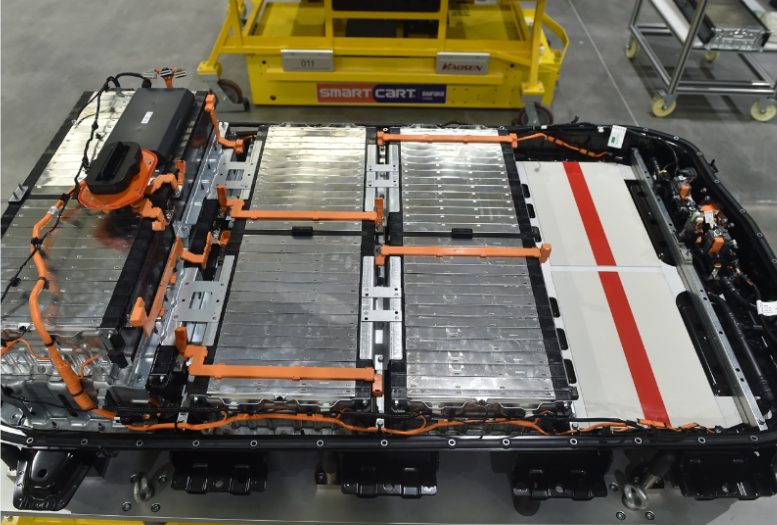
- Policy Signals Put the Power Battery Digital ID at the Center of Industrial Governance
The policy direction is not isolated. It connects traceability, recycling, carbon footprint management and international rule-making into one framework for the power battery. The digital identity system is expected to serve as a data foundation. Without credible identity information, recycling operators cannot accurately identify the source, condition and residual value of a power battery. Without full lifecycle data, carbon footprint accounting cannot be verifiable and traceable. The power battery digital ID therefore has a dual role. It is a regulatory tool, and it is also a data base for recycling and carbon management.
This is why the power battery digital ID is more than a label or a code. It is an attempt to create a continuous data chain for the power battery from production to retirement. The system is being designed to answer basic but difficult questions. Where was the power battery produced? Which vehicle was it installed in? Was it swapped, repaired or transferred? When did it retire? What happened during recycling and dismantling? For a power battery, these questions are not administrative details. They determine safety, value, environmental performance and market confidence.
The policy framework also reflects a broader shift in industrial governance. The power battery industry has grown rapidly, and the scale of production and installation has made fine-grained management a necessity rather than an option. As the number of power batteries in use continues to rise, the ability to trace each power battery through its lifecycle becomes essential for safety supervision, recycling efficiency and carbon footprint management. The digital identity system is therefore not a peripheral add-on. It is part of the infrastructure for the next phase of power battery development.
- The Architecture of the Power Battery Digital ID Takes Shape
When a power battery completes its journey from the production line to end-of-life, how deep is the digital footprint it leaves behind? The digital identity system under construction is gradually revealing a clear outline. It includes 96 data items, comprising 54 basic information items, 24 operation and maintenance information items and 18 recycling information items. A 24-digit code runs through the entire lifecycle of the power battery, from production and vehicle installation to battery swapping, maintenance, retirement and dismantling.
The system is not starting from zero. According to Peng Haili, deputy director of the System Data Division at the Equipment Industry Development Center of the Ministry of Industry and Information Technology, China began implementing power battery coding and filing management in 2018. On December 31, 2025, six departments including the Ministry of Industry and Information Technology jointly issued interim measures for the recycling and comprehensive utilization of retired power batteries from new energy vehicles. The measures took effect on April 1, 2026. They explicitly propose establishing a national traceability information platform for new energy vehicle power batteries and a digital identity management system. The national traceability platform was officially launched on April 1, 2026, using power battery digital identity information as its core carrier to achieve chain-based tracing of power battery flows.
This arrangement echoes the requirements of the plan. The power battery digital ID is not only a supervisory tool. It is also a data foundation for recycling and carbon footprint management. The logic is straightforward. If a retired power battery cannot be reliably identified, its source, status and residual value cannot be accurately assessed. If lifecycle data is incomplete, carbon footprint calculation cannot be verified or traced. The digital identity system therefore creates the minimum data continuity needed for both regulatory and market functions.
Data access is designed around the principle of minimum necessity. The power battery digital ID sets different access permissions for the public, industry chain stakeholders and regulatory authorities. The public can access basic information. Industry chain stakeholders can obtain corresponding data according to their functions. Regulatory authorities have higher-level access permissions. This layered approach is intended to balance transparency, commercial confidentiality and regulatory needs. For the power battery industry, such a balance is critical because the data involved spans manufacturing, vehicle operation, maintenance, battery swapping, recycling and resource recovery.
- From Source Traceability to Whole-Chain Governance
The power battery digital ID is designed to move governance beyond source traceability toward whole-chain management. Source traceability answers where a power battery came from and where it went. Whole-chain governance asks whether every stage of the power battery lifecycle can be monitored, verified and improved. The difference matters. A power battery may be produced by one company, assembled into a pack by another, installed in a vehicle by a third, serviced by a fourth, and eventually recycled by a fifth. If data breaks at any point, the chain becomes incomplete.
This is why the digital identity system is described as a chain-based traceability mechanism rather than a simple registration database. The 24-digit code is intended to connect the power battery across production, vehicle installation, battery swapping, maintenance and retirement dismantling. The 96 data items are intended to capture basic information, operation and maintenance information, and recycling information. Together, they create a structured record of the power battery lifecycle. The system’s value depends on whether these records remain complete, accurate and accessible to authorized users.
The power battery digital ID also has implications for carbon footprint management. Carbon accounting requires data on energy consumption, emissions and logistics across the value chain. If the power battery identity system can provide reliable lifecycle data, it can support carbon footprint calculation and decarbonization decisions. If the data chain is fragmented, carbon accounting becomes an exercise in estimation rather than verification. The plan’s call to orderly advance carbon footprint management therefore depends on the same data foundation as recycling and traceability.
- Data Gaps and Data Security Are Two Thresholds That Must Be Crossed
For the power battery digital ID to truly operate, two thresholds must be crossed. The first is the data gap. Sun Chenglin, senior manager at Contemporary Amperex Technology Co., Limited, said that digitalization is relatively advanced in battery production and vehicle manufacturing, but data gaps remain in raw material supply chains, after-sales maintenance and recycling and reuse. Yin Zihang, director of the Institute of Industrial Internet and Internet of Things at the China Academy of Information and Communications Technology, argued that a power battery digital identity is not simply a code or a QR label attached to a battery. From cells, modules and packs to vehicles, and then to recycling, dismantling, recombination and resource circulation, every link depends on digital identity.
The second threshold is data security. Hu Xuemei, ESG value chain lead at EVE Energy Co., Ltd., said that not all underlying data needs to be moved outside. Different use scenarios require different depths and granularities of information. Chen Weifen, senior director of the Sustainability Center at Sunwoda Electronic Co., Ltd., introduced that the company has built a multi-matrix data permission management system to make fine-grained distinctions about who can produce, view, update and use data. This reflects a practical reality. The power battery digital ID must be open enough to support traceability, recycling and carbon management, but controlled enough to protect commercial secrets, personal information and security-sensitive data.
These two thresholds are interconnected. Data gaps undermine the credibility of the power battery digital ID. Data security concerns can slow down data sharing and create reluctance among enterprises. A workable system therefore needs both technical standardization and governance rules. It needs common data fields, interfaces and verification mechanisms. It also needs clear permissions, audit trails and accountability. Without these elements, the power battery digital ID risks becoming a registration exercise rather than a functioning lifecycle governance system.
- From Identity Mutual Recognition to Rule Coordination With the EU Battery Passport
The digital identity system addresses the question of where a power battery comes from and where it goes. For power battery companies preparing to export to the European market, the domestic system must also answer another practical question: how will it connect with the battery passport being introduced by the European Union? This is not only a compliance issue for individual exporters. It is a rule-level coordination issue for the global power battery trade.
In August 2023, the European Union’s Battery and Waste Battery Regulation came into effect. It is described as the world’s first regulation that manages batteries from cradle to grave. According to the timetable, from February 18, 2027, electric vehicle batteries, light means of transport batteries and industrial batteries with a capacity above 2 kWh placed on the EU market or put into service must be equipped with an electronic battery passport. The passport can be accessed through a QR code on the battery body. It covers information such as model, composition, carbon footprint and supply chain. The data must be machine-readable, continuously updated and accessible according to permissions.
China’s power battery digital ID and the EU battery passport are not identical. Peng Haili explained that both systems serve safety and green supply chain development, but the EU passport places greater emphasis on consumers’ right to know, while China’s power battery digital ID currently focuses more on building a trusted and secure data governance foundation. In terms of data management architecture, the EU adopts distributed data management, with data stored at the enterprise end. China leans toward centralized data aggregation through a government platform. These architectural differences directly affect how China and the EU will recognize, exchange and verify data.
| Dimension | China’s Power Battery Digital ID | EU Electronic Battery Passport |
|---|---|---|
| Core purpose | Build a trusted, secure data governance foundation for traceability, recycling and carbon footprint management | Provide lifecycle information to consumers and market actors, including model, composition, carbon footprint and supply chain data |
| Data structure | 96 data items: 54 basic information items, 24 operation and maintenance items and 18 recycling items, connected by a 24-digit code | Machine-readable, continuously updated and permission-based data accessible through a QR code on the battery |
| Data architecture | More centralized data aggregation through a government platform | Distributed data management, with data stored at the enterprise level |
| Access model | Minimum necessity principle, with different permissions for the public, industry chain stakeholders and regulators | Permission-based openness, with emphasis on consumer information rights |
| Timeline | Coding and filing management began in 2018; the national traceability platform launched on April 1, 2026 | The regulation took effect in August 2023; the passport is required from February 18, 2027 for specified batteries |
The table shows why the connection between the two systems is complex. The power battery digital ID and the EU battery passport both aim to support safety and green supply chains, but they differ in data architecture, access philosophy and primary regulatory focus. The challenge is not simply translating data fields. It is building mutual recognition, data verification and architecture conversion mechanisms. For the power battery industry, this is where technical work meets trade policy.
Wang Xiaojian, director of the Technical Management Department at SAIC Motor, acknowledged that the ultimate test is whether products can be sold. He noted that domestic regulations on cross-border data flows have top-level design, but implementation rules are not yet fully in place, and companies face approval pressure under a case-by-case approach. For power battery exporters, this means that the digital identity system must be designed with international interoperability in mind from the outset. Otherwise, compliance costs may rise and market access may be delayed.
Xu Jichang, head of the TRN business line at TUV SUD in Germany, said that at least three levels of issues need to be resolved between China and the EU: mutual recognition of identity systems, alignment of data verification mechanisms, and conversion between different data architectures. He also emphasized that the EU battery passport and China’s power battery digital ID are not two things that are set against each other or competing with each other. In the future, they are more likely to move toward mutual recognition and connection. This view is important because it frames the relationship as a governance interoperability challenge rather than a zero-sum standards contest.
- The Power Battery Industry Faces Practical Export and Compliance Questions
For companies, the debate over power battery digital identity and the EU battery passport quickly becomes a set of practical questions. Which data fields must be collected? Who is responsible for verification? How can data be updated after the battery is installed in a vehicle or transferred to a new user? How can a company prove that its data is accurate without exposing sensitive business information? These questions matter for every power battery that enters international trade.
The power battery digital ID can help companies organize their internal data. It can create a common language for production, quality, maintenance and recycling teams. But it can also add administrative and technical burdens if the system is not well integrated with existing enterprise systems. The article’s emphasis on data gaps and data security reflects this tension. The power battery industry needs a system that is rigorous enough for regulators and flexible enough for companies. It also needs a system that can connect with the EU battery passport without forcing companies to maintain duplicate data silos.
This is why the policy document’s call to participate in international standards and rules for carbon emissions and carbon accounting is significant. The power battery is a global product. Its carbon footprint, supply chain and recycling performance are increasingly subject to cross-border scrutiny. If China’s power battery digital ID can support credible data verification and mutual recognition, it can reduce friction for exporters. If it remains a domestic-only system, companies may face additional compliance costs when they enter markets with different data requirements.
- Full-Chain AI Helps Lifecycle Data Come Alive
The digital identity system opens up the data chain across the power battery lifecycle. To make that data truly useful, full-chain artificial intelligence is needed. The digital identity system addresses the governance question of whether a power battery can be traced. Artificial intelligence addresses the economic question of how each power battery can maximize efficiency throughout its lifecycle. The two are complementary. Without data, artificial intelligence has little to work with. Without artificial intelligence, data remains underused.
Ouyang Minggao predicted that the next five years will be a critical window for power battery design to shift toward artificial intelligence-based research and development platforms. All-solid-state battery technology is extremely difficult, and its technical breakthroughs and industrialization are highly dependent on artificial intelligence research and development platform support. Based on supply chain and manufacturing big data, using large artificial intelligence models for full lifecycle quality management has become an inevitable trend. This view places artificial intelligence at the center of the next stage of power battery innovation.
Sun Chenglin said that artificial intelligence can address the data challenges facing the power battery digital ID from three directions. First, artificial intelligence programming can reduce the cost of information system development and quickly fill the system construction gaps in data-break links. Second, large language model capabilities can accelerate data governance and structuring. Third, big data technologies can deeply mine the value of data across the entire industrial chain, covering the whole process from production monitoring and operation monitoring to recycling evaluation. These three directions show how artificial intelligence can support the power battery digital ID not only as a reporting tool but as an active management system.
Under the plan’s requirements to improve recycling and utilization capacity and orderly advance carbon footprint management, the value of artificial intelligence becomes more prominent. In the recycling stage, artificial intelligence can assist with power battery residual value assessment, dismantling path optimization and echelon utilization matching. In carbon footprint management, artificial intelligence can analyze energy consumption, emissions and logistics data across the entire chain, providing support for carbon accounting and decarbonization decisions. For the power battery industry, these applications can turn lifecycle data into operational insight.
Fu Jinguo, chairman of Nanjing Fuchuang Big Data Industry Development Co., Ltd., proposed that the fundamental difference between the artificial intelligence era and the digital era lies in a paradigm shift, from people operating apps to intelligent agents receiving goals, planning systems and calling tools to complete tasks. But the prerequisite for this shift is to do two things well: data governance and knowledge governance. He emphasized that without data governance, the industrial field can basically be understood as having no artificial intelligence application. This statement captures the challenge facing the power battery sector. The digital identity system is not only about collecting data. It is about making data governable, verifiable and usable.
- From Regulatory Traceability to Enterprise Competitiveness
When the digital identity system provides a full lifecycle data foundation and artificial intelligence injects a full-chain intelligent engine, their integration is bringing systemic changes to the power battery industry, from regulatory methods to enterprise competitiveness. The power battery is becoming a test case for how data governance and artificial intelligence can reshape an industrial sector.
From the regulatory perspective, the power battery digital ID allows supervision to move from after-the-fact accountability toward whole-process traceability. Yao Zhizhi, deputy director of the Equipment Industry Development Center of the Ministry of Industry and Information Technology, said that the implementation of the digital identity system cannot be separated from data co-construction, data sharing and business collaboration among upstream and downstream players in the industrial chain. This is a recognition that the power battery lifecycle involves many actors. No single company or agency can build a complete data chain alone.
From the enterprise perspective, the combination of the power battery digital ID and artificial intelligence is reshaping competitiveness. Sunwoda’s self-developed battery passport digital platform has integrated five core technologies, including trusted supply chain data traceability, carbon footprint assessment algorithms and intelligent passport generation. EVE Energy has assigned a unique digital identity ID to each power battery, covering more than 200,000 data nodes across the industrial chain. Nanjing Fuchuang, relying on a data plus artificial intelligence dual-wheel strategy, has built a systematic technology system covering power battery digital passports, digital research and development, and artificial intelligence digital and intelligent applications. These examples show that the power battery digital ID is not only a compliance requirement. It can become part of enterprise product strategy and operational capability.
From the industrial perspective, this system is supporting China’s power battery industry in moving from scale leadership toward governance leadership. The continued expansion of industrial scale makes fine-grained management not an option but a mandatory task. When the power battery digital ID meets the EU battery passport, and when full-chain artificial intelligence connects with full lifecycle data, every node of the power battery can be seen, understood and optimized. As recycling and utilization capacity improves, carbon footprint management advances in an orderly manner, and China participates more actively in international standards and rules for carbon emissions and carbon accounting, the power battery industry is expected to move from scale leadership toward governance leadership and rule leadership.
- A Governance Model for the Next Stage of Power Battery Development
The significance of the power battery digital ID lies in its ability to connect several previously separate agendas. It connects traceability with recycling. It connects recycling with carbon footprint management. It connects domestic governance with international rule coordination. It also connects policy requirements with enterprise digital systems. For the power battery sector, this is a substantial change in how the lifecycle is managed.
The EU battery passport adds another layer. It shows that the power battery is not only a product but also a data object in global trade. The ability to provide machine-readable, verifiable and permission-based lifecycle information will become part of market access. The power battery digital ID can help Chinese companies prepare for this requirement, but only if it is designed with interoperability in mind. The article’s emphasis on mutual recognition, data verification and architecture conversion points to the work ahead. The goal is not to create two disconnected systems. The goal is to create a practical pathway for data exchange and trust.
Artificial intelligence adds a further dimension. The power battery digital ID creates the data foundation. Artificial intelligence can help fill data gaps, structure data and extract value from data. It can support quality management, residual value assessment, dismantling optimization, echelon utilization matching and carbon accounting. But artificial intelligence depends on data governance. Without clean, complete and trustworthy data, artificial intelligence applications in the power battery sector will be limited. This is why the digital identity system and data governance must advance together.
For the power battery industry, the next phase will be defined by execution. The policy framework is in place. The national traceability platform has been launched. The digital identity system has a clear data structure. The EU battery passport has a clear timetable. Enterprises are building platforms and assigning digital identities to power batteries. The remaining challenges are data gaps, data security, cross-border interoperability and the practical integration of artificial intelligence. How these challenges are addressed will determine whether the power battery digital ID becomes a genuine governance infrastructure or a fragmented reporting system.
The power battery is a strategic component of the new energy vehicle industry. Its lifecycle now spans manufacturing, vehicle use, battery swapping, maintenance, recycling and resource recovery. The digital identity system gives each power battery a continuous record. The EU battery passport gives the global market a framework for lifecycle information. Artificial intelligence gives the industry a tool to optimize the use of that information. Together, these developments point toward a new model for power battery governance, one that is traceable, data-driven and internationally connected. As the 15th Five-Year Plan period begins, this model is likely to become one of the most closely watched directions for the power battery industry.