
The 2026 World Power Battery Conference will hold its application-themed session in Yibin on September 4 under the theme “Diversified Applications and Industrial Integration of Power Battery.” As one of the 8 thematic sessions of the conference, the meeting places the power battery industry at a decisive transition point. The sector has already moved from a phase of catching up and following to a phase of local leadership in technology and industrial capacity. The next question is whether that local lead can be converted into broader, sustainable and commercially viable growth across multiple application scenarios.
Ahead of the session, Xu Yanhua, secretary-general of the China Automotive Power Battery Industry Innovation Alliance, discussed the direction of industrial innovation, the bottlenecks facing multi-scenario application, and the commercialization prospects of emerging fields. The exchange focused on a central challenge for the power battery industry: how to maintain technological momentum while removing the technical, regulatory, standards-related and ecosystem barriers that stand between laboratory progress and large-scale deployment.
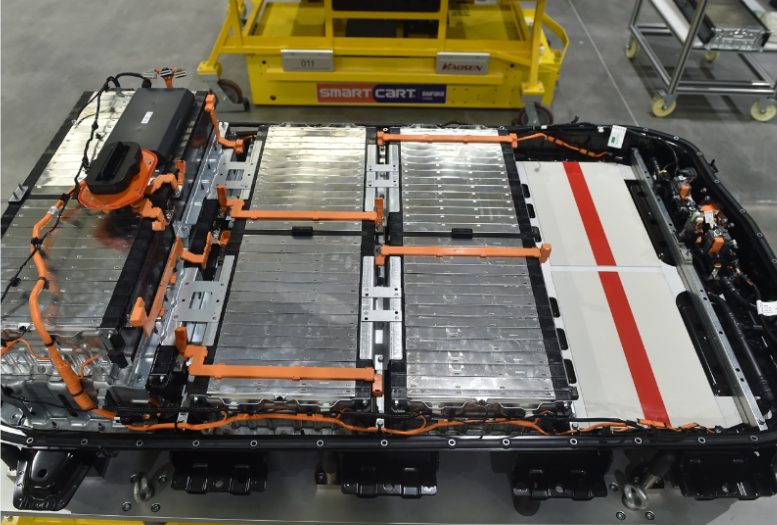
The message is clear. The power battery industry cannot depend on a single technology route, a single product form or a single application market. The local lead already achieved by the power battery sector must be defended through basic research, new materials, next-generation battery design, sodium battery development and parallel technology routes. At the same time, the shift from vehicle electrification toward the electrification of low-altitude equipment, robots, ships, construction machinery and agricultural machinery will not follow one common path. Each field has its own technical requirements, commercial logic, infrastructure conditions and regulatory environment. The power battery industry must therefore combine systemic innovation with scenario-specific problem solving.
1. A Local Lead Is Not a Final Destination: The Power Battery Industry Must Advance Systemic Innovation
The power battery industry in China has entered a new stage. It is no longer simply following established international technology paths. In several areas, the power battery sector has reached a position of local leadership. That position, however, is not permanent. Xu Yanhua emphasized that maintaining and expanding the local lead requires systematic innovation across multiple dimensions rather than isolated breakthroughs in a single component or a single product category.
The first dimension is basic innovation. The power battery industry must deepen its understanding of material structures, electrochemical reaction mechanisms and the underlying scientific principles that determine battery performance, safety and lifetime. In particular, theoretical research on the relationship between structural dynamics and interface properties must achieve further breakthroughs. This kind of research may appear distant from immediate product launches, but it is the foundation for next-generation power battery technologies. Without progress at the basic research level, the power battery industry risks limiting itself to incremental improvements and losing the long-term initiative in global competition.
The second dimension is the innovation and application of new materials. The industrialization of high-performance lithium-rich manganese-based materials, high-nickel cathode materials, silicon-carbon anodes and lithium metal anodes must be accelerated. At the same time, critical materials such as ultra-thin base films, composite current collectors and solid electrolytes must achieve faster breakthroughs. These materials are not peripheral details. They directly affect the energy density, safety, cycle life and cost potential of the power battery. The power battery industry must therefore strengthen the connection between material innovation and battery system design, so that laboratory advances can be transformed into reliable, manufacturable and competitive products.
The third dimension is battery design innovation. The Ministry of Industry and Information Technology has just released the Industrial Green and Low-Carbon Development Plan for the Fifteenth Five-Year Period, which explicitly calls for accelerating the development of high-capacity, high-safety, all-climate and long-life lithium batteries. This policy direction gives the power battery industry a clear signal: product development must serve a wider range of operating conditions and a wider range of application environments. For that reason, next-generation battery systems such as solid-state batteries, anode-free batteries, lithium-sulfur batteries and lithium-air batteries must continue to be explored. These systems may not replace existing technologies overnight, but they represent important options for the future power battery industry.
The fourth dimension is sodium battery development. Xu Yanhua suggested that the industry should continue to advance material upgrades for sodium batteries and expand their application in low-temperature scenarios and energy storage scenarios. Sodium batteries may not compete with lithium batteries in every market, but they can complement lithium-based power battery solutions in specific environments. This complementarity is valuable because it allows the power battery industry to serve more diverse needs and reduce dependence on a narrow set of technology routes.
Behind these dimensions is a broader strategic principle: multiple technology routes must proceed in parallel. The power battery industry cannot afford to concentrate all resources on one chemistry, one design concept or one application market. Parallel development is not a sign of uncertainty. It is a form of strategic resilience. It allows the power battery sector to maintain the initiative in global competition while adapting to different cost structures, safety requirements, climate conditions and customer expectations.
Table 1: Innovation priorities identified for the power battery industry
| Innovation dimension | Key priorities identified | Significance for the power battery industry |
|---|---|---|
| Basic innovation | Deepen research on material structure, electrochemical reaction mechanisms and the relationship between structural dynamics and interface properties. | Provides the scientific foundation for next-generation power battery technologies and long-term competitiveness. |
| New materials | Accelerate industrialization of high-performance lithium-rich manganese-based materials, high-nickel cathodes, silicon-carbon anodes and lithium metal anodes; advance ultra-thin base films, composite current collectors and solid electrolytes. | Supports improvements in energy density, safety, cycle life and the commercial potential of the power battery. |
| Battery design | Develop high-capacity, high-safety, all-climate and long-life lithium batteries; explore solid-state, anode-free, lithium-sulfur and lithium-air systems. | Expands the operating envelope of the power battery and prepares the industry for diversified application requirements. |
| Sodium batteries | Continue material upgrades and expand use in low-temperature and energy storage scenarios. | Adds a complementary technology route and broadens the power battery industry’s market coverage. |
| Technology strategy | Maintain parallel development across multiple technology routes. | Strengthens resilience and helps the power battery industry retain initiative in global competition. |
The innovation agenda outlined above is layered rather than isolated. Basic research creates the conditions for new materials. New materials enable new battery designs. New battery designs, in turn, make new application scenarios possible. The power battery industry must therefore manage these layers as an integrated system. A single breakthrough in one material or one battery system cannot solve all the bottlenecks facing multi-scenario deployment. The local lead of the power battery sector will depend on whether these innovation layers can be connected into a coherent industrial capability.
2. Multi-Scenario Deployment Requires the Power Battery Industry to Address Interlocking Bottlenecks
From technical breakthrough to scenario landing, the power battery industry faces a complex set of challenges. Multi-scenario application is not simply a matter of adapting an existing battery product to a new device. It requires the power battery industry to work across technology, standards, regulations, infrastructure and ecosystem development. Xu Yanhua used the low-altitude application field as an example to illustrate how multiple layers of bottlenecks can interlock.
The first layer is battery technology itself. Low-altitude aircraft have extremely demanding requirements for high safety, high specific energy and high power. The power battery must deliver sufficient energy for flight while maintaining strict safety margins and reliable power output. These requirements are not easily satisfied by simply modifying a battery designed for ground vehicles. The power battery industry must develop solutions that are tailored to the unique operating conditions of low-altitude equipment.
The second layer is management and regulation. A power battery installed on an aircraft must fully follow air traffic control procedures. At present, the standards and regulatory system for such applications is not yet complete. This means that even if a power battery technology is technically ready, it may not be able to enter the market without a clear regulatory pathway. The power battery industry must therefore engage with standards bodies and regulators at an early stage rather than treating certification and approval as an afterthought.
The third layer is the ecosystem. The power battery industry must consider how its products fit into the broader low-altitude economy. At present, a mature path for this integration has not yet been formed. The ecosystem includes not only the battery itself but also maintenance, charging, safety management, data monitoring, emergency response and coordination among multiple industrial players. If any of these links is missing, the entire application may remain at the demonstration stage.
Xu Yanhua described these factors as different staves of a barrel. Technology, standards, regulations and ecosystem are all part of the same system. Any missing link can become the short board that limits the overall level of deployment. This is why the power battery industry cannot rely solely on technological progress. It must simultaneously address the institutional and ecosystem conditions that determine whether a technology can be used at scale.
The policy direction, however, is already clear. The Industrial Green and Low-Carbon Development Plan for the Fifteenth Five-Year Period explicitly calls for expanding the application of high-performance lithium batteries in low-altitude equipment, intelligent robots, electric ships, electric construction machinery and new energy agricultural machinery. This policy signal is important for the power battery industry because it defines a broad set of application directions and encourages coordination across sectors. The next step is for the industrial chain, government departments and standards organizations to work together and systematically remove the bottlenecks.
Table 2: Application scenarios and bottlenecks for power battery deployment
| Application field | Opportunity for the power battery industry | Main bottlenecks or requirements | Commercialization signal |
|---|---|---|---|
| Low-altitude equipment | Policy support for high-performance lithium batteries in low-altitude equipment. | Extremely demanding requirements for high safety, high specific energy and high power; incomplete standards and regulatory system; air traffic control procedures; immature ecosystem integration. | Policy direction is clear, but deployment depends on coordinated progress in technology, regulation and ecosystem development. |
| Mobile robots | High specific energy batteries are a rigid demand in the mobile robot field. | Need for battery solutions that can support high specific energy requirements and adaptation to robot applications. | Many high specific energy batteries are already being adapted for use; progress is worth attention. |
| Construction machinery | Electrification is already advancing in the construction machinery field. | Many product varieties, complex working conditions, differences in power output, range and environmental adaptability; need for customized solutions. | Full electrification remains challenging, but application-specific power battery solutions are needed. |
| Inland electric ships | Pilot projects have been carried out for inland electric ships. | Large onboard capacity, with a single vessel reaching 6000 to 7000 kilowatt-hours; extremely high requirements for safety and cost. | Pilot deployment provides experience, but safety and cost remain central challenges for the power battery industry. |
| Agricultural machinery | Policy support for new energy agricultural machinery and electrification of diverse equipment. | Many varieties, strong seasonality and prominent field charging or refueling problems; different equipment types require different technical routes. | Large machinery may prioritize hybrid systems, while small machinery may be more suitable for pure electric paths. |
The table illustrates why the power battery industry cannot treat multi-scenario application as a simple market expansion exercise. Each field has a different set of technical requirements and a different set of non-technical constraints. The power battery sector must develop a portfolio approach: advanced lithium batteries for high-performance applications, sodium batteries for selected low-temperature and storage applications, solid-state and other next-generation systems for long-term options, and customized designs for machinery, ships, robots and low-altitude equipment. The power battery industry’s ability to manage this portfolio will determine how quickly diversified applications move from pilot projects to commercial scale.
3. From Vehicle Electrification to Electric Drive Everything: The Power Battery Industry Must Find the Balance Point
The power battery industry is now moving from vehicle-centered electrification toward a broader vision of electric drive everything. Low-altitude equipment, embodied intelligence and robots, electric ships, construction machinery and other fields are all actively advancing electrification. However, the challenges differ from field to field, and the pace of commercialization will also differ. The power battery industry must therefore avoid the assumption that one successful vehicle battery model can be transferred unchanged to every new application.
In the mobile robot field, high specific energy batteries are a rigid demand. This is a significant signal for the power battery industry because it shows that demand is not limited to electric vehicles. Many high specific energy batteries are already being adapted for use in mobile robots, and the progress in this area deserves attention. The power battery industry should monitor this field closely because robots may require different form factors, safety designs and usage patterns from vehicles, even when the underlying battery chemistry is similar.
The construction machinery field has already begun to advance electrification, but full electrification still faces considerable challenges. Construction machinery includes many product varieties and operates under complex working conditions. Different models have very different requirements for power output, range and environmental adaptability. A power battery solution that works for one type of construction machinery may not work for another. The power battery industry must therefore provide customized solutions rather than a single standardized product. This increases the complexity of product development and supply chain management, but it also creates opportunities for power battery companies that can work closely with equipment manufacturers.
Inland electric ships have already entered the pilot stage. However, the battery capacity required by these vessels is very large. A single ship can reach 6000 to 7000 kilowatt-hours. This places extremely high requirements on safety and cost. The power battery industry must address not only the energy capacity needed for vessel operation but also the safety management, thermal management and cost control associated with large-scale onboard battery systems. The ship application demonstrates that the power battery industry cannot focus only on energy density. It must also consider system-level safety, lifetime cost and operational reliability.
The agricultural machinery field is even more specific. Agricultural machinery includes many varieties, and its operation is strongly seasonal. The problem of charging or refueling in fields and at field edges is very prominent. For large agricultural machinery, hybrid power systems may be prioritized. For example, combine harvesters may be more suitable for hybrid systems. For small agricultural machinery, individual application and multi-scenario use are more common, and a pure electric path may be more suitable. This differentiation is important for the power battery industry because it shows that electrification is not a single linear process. Different equipment types may require different degrees of electrification and different power battery configurations.
The common thread across these fields is the need to find a balance point. Each field has its own unique commercial logic and bottleneck. In some fields, the key constraint is battery energy density. In others, it is cost, safety, standards, charging infrastructure or seasonal usage patterns. Whoever can find the balance among technology, cost, standards and infrastructure first will be able to achieve scale first. The power battery industry must therefore develop a nuanced understanding of each application rather than assuming that a single breakthrough will unlock every market.
The policy environment has already pointed the direction. The Industrial Green and Low-Carbon Development Plan for the Fifteenth Five-Year Period identifies low-altitude equipment, intelligent robots, electric ships, electric construction machinery and new energy agricultural machinery as important application areas for high-performance lithium batteries. The remaining task is for the industrial world to solve the specific problems in each field. This is not a simple task, but it is the necessary next step for the power battery industry as it seeks to move beyond a local lead and build a broader industrial base.
4. The Power Battery Industry’s Next Step: Parallel Routes, Coordinated Standards and Scenario-Specific Solutions
The interview points toward several practical priorities for the power battery industry. These priorities are not separate from one another. They form a coordinated agenda for turning multi-scenario demand into sustainable commercial growth.
- Keep basic research and materials innovation aligned. The power battery industry must continue to invest in the underlying science of materials, interfaces and electrochemical reactions while accelerating the industrialization of new materials. Basic research without industrialization can remain distant from market needs, while industrialization without basic research can limit long-term competitiveness. The power battery sector needs both.
- Treat standards and regulations as part of product development. In fields such as low-altitude equipment, the standards and regulatory system is still incomplete. The power battery industry cannot wait until a product is fully developed before engaging with regulators and standards bodies. Early coordination can reduce uncertainty and shorten the path from demonstration to deployment.
- Build application-specific power battery solutions. Construction machinery, ships, robots and agricultural machinery have different requirements. The power battery industry must move beyond a one-size-fits-all approach and develop customized solutions that match the operating conditions, safety requirements and commercial logic of each field.
- Use multiple technology routes to cover multiple scenarios. Lithium batteries, sodium batteries, solid-state batteries and other next-generation systems should not be viewed as mutually exclusive choices. The power battery industry needs a portfolio of technologies to serve different markets, climates and cost requirements.
- Coordinate the ecosystem. The power battery industry cannot succeed alone in multi-scenario applications. Charging infrastructure, maintenance networks, safety management, data monitoring and emergency response all require coordination among equipment manufacturers, energy providers, regulators and service providers. A strong power battery product is necessary but not sufficient for scale deployment.
These priorities reflect a broader shift in the power battery industry. In the early stage of electric vehicle development, the central challenge was to improve battery performance and reduce cost. In the multi-scenario stage, the challenge is more complex. The power battery industry must simultaneously manage technical performance, safety, standards, infrastructure and commercial viability across very different markets. This does not mean that the power battery sector should slow down. It means that the sector must become more systematic in how it translates innovation into application.
5. Conclusion: The Power Battery Industry Must Turn a Local Lead into a Multi-Scenario Advantage
The 2026 World Power Battery Conference’s application-themed session will bring together participants from across the power battery industry and related sectors. The discussion is timely because the power battery sector is at a point where technical leadership must be matched by application leadership. A local lead in battery technology and manufacturing is a valuable asset, but it is not the end of the journey. The power battery industry must continue to advance basic research, new materials, next-generation battery design and sodium battery development. It must also remove the standards, regulatory and ecosystem bottlenecks that limit multi-scenario deployment.
The low-altitude field shows that technical performance alone is not enough. The mobile robot field shows that new demand can emerge quickly when high specific energy batteries become available. The construction machinery field shows that complex operating conditions require customized solutions. The inland electric ship field shows that large-capacity power battery systems place extreme demands on safety and cost. The agricultural machinery field shows that different equipment types may require different electrification paths. Together, these examples demonstrate that the power battery industry’s future will be shaped by its ability to adapt to diverse requirements.
Ultimately, the power battery industry must find balance. It must balance basic research with industrial application, technology performance with cost, safety with energy density, and standardization with customization. It must balance the need for multiple technology routes with the need for focused investment. It must balance the ambition of electric drive everything with the practical requirements of standards, infrastructure and commercial viability. The power battery sector that can find these balance points will be the one that turns today’s local lead into a durable multi-scenario advantage.
The policy direction is already clear. The power battery industry now faces the harder task of implementation. That task will require coordinated efforts across the industrial chain, government departments, standards organizations and application sectors. It will require the power battery industry to treat multi-scenario application as a systemic challenge rather than a series of isolated market opportunities. And it will require continued innovation in the power battery itself, because the foundation of every application scenario remains a safe, reliable, high-performance and cost-competitive power battery.