
China’s power battery industry continued to expand in the first three quarters of 2026, supported by growing new energy vehicle demand, rising battery capacity per vehicle, and strong export momentum. Data released on October 15 by the China Automotive Power Battery Industry Innovation Alliance showed that domestic power battery installations reached 87.2 GWh in September, up 10.4% from the previous month and up 14.7% from the same month a year earlier.
For the first three quarters, China’s cumulative power battery installations reached 576.3 GWh, representing year-on-year growth of 16.7%. The alliance said the expansion was supported by growth in new energy commercial vehicles and higher battery capacity per new energy vehicle. Pure electric trucks and pure electric special-purpose vehicles played a particularly visible role in driving power battery installations during the period.
The data also showed that in the first three quarters, China’s output and sales of power and energy storage batteries both exceeded their full-year 2025 totals, maintaining stable growth. In addition, cumulative exports of power and energy storage batteries reached 302.9 GWh in the first three quarters, up 51.6% year on year. Supported by growth in vehicle exports and the gradual commissioning of automakers’ overseas plants, exports of power battery products grew faster than exports of energy storage batteries.
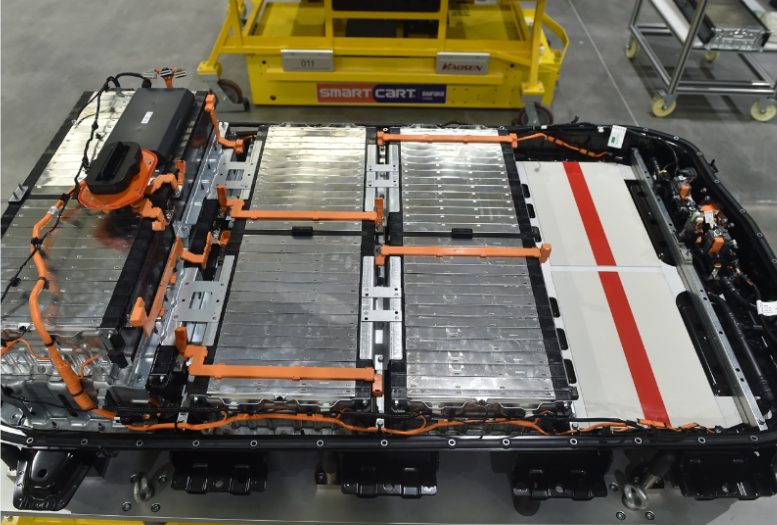
Industry participants said the figures reflect a power battery market that remains on a growth track, but the structure of that growth is changing. Demand is no longer driven only by the overall expansion of new energy vehicle sales. It is also being shaped by vehicle segmentation, battery capacity per vehicle, export patterns, technology choices, and the shifting economics of the upstream supply chain.
At the same time, the development of the power battery industry is bringing structural effects to upstream materials. High-end cathode materials with high compaction density and high fast-charging performance are expected to maintain a scarcity premium, while low-end excess capacity is expected to be cleared at a faster pace. The pricing logic for lithium carbonate is increasingly influenced by forward supply expectations, and cost advantages among resource-side companies are seen as a core barrier for navigating price volatility.
1. September power battery installations and cumulative growth remain positive
The September figures provided a clear snapshot of the current phase of China’s power battery market. Domestic power battery installations reached 87.2 GWh, an increase of 10.4% month on month and 14.7% year on year. The month-on-month gain indicates that demand remained active after the seasonal patterns of the previous months, while the year-on-year gain shows that the power battery market continues to expand compared with the same period a year earlier.
The cumulative figure is equally important for understanding the direction of the industry. In the first three quarters, power battery installations totaled 576.3 GWh, up 16.7% year on year. For suppliers across the power battery value chain, this level of growth supports production planning, capacity utilization, and long-term investment decisions. However, the data also suggest that growth is not evenly distributed across all product segments or all participants.
The alliance attributed part of the cumulative growth to new energy commercial vehicles and to the increase in battery capacity carried by each new energy vehicle. This means that the power battery market is being supported not only by the number of vehicles sold but also by the amount of battery capacity installed per vehicle. As vehicle ranges, operational requirements, and commercial applications evolve, the power battery requirements of different vehicle categories are becoming more diverse.
Pure electric trucks and pure electric special-purpose vehicles were identified as important contributors to power battery installations. These vehicle categories often require substantial battery capacity and have specific requirements for durability, charging performance, and operational reliability. Their contribution to power battery demand highlights how electrification is spreading beyond passenger vehicles into commercial and specialized applications.
| Indicator | Reported figure | Change |
|---|---|---|
| September domestic power battery installations | 87.2 GWh | Up 10.4% month on month; up 14.7% year on year |
| First three quarters cumulative power battery installations | 576.3 GWh | Up 16.7% year on year |
| First three quarters power and energy storage battery exports | 302.9 GWh | Up 51.6% year on year |
| First three quarters power and energy storage battery output and sales | Both exceeded full-year 2025 totals | No additional change rate provided in the released data |
For the power battery sector, the table illustrates two parallel realities. On the domestic side, power battery installations continue to rise, and the growth is being supported by both passenger and commercial vehicle electrification. On the export side, power and energy storage battery shipments are expanding rapidly, with power battery exports benefiting from vehicle exports and overseas production arrangements by automakers.
The data do not suggest that every power battery supplier is experiencing the same level of demand. Instead, they point to a market in which volume growth coexists with structural differentiation. Suppliers with strong technology, reliable delivery, and cost discipline are better positioned to capture demand, while less competitive capacity faces increasing pressure.
2. Commercial vehicle electrification and higher battery capacity per vehicle support demand
The role of new energy commercial vehicles in power battery demand is becoming more evident. The alliance said that growth in new energy commercial vehicles and the increase in battery capacity per new energy vehicle supported cumulative power battery installations in the first three quarters. This indicates that the power battery market is benefiting from both volume growth and the increasing size of battery packs used in certain vehicle categories.
Pure electric trucks and pure electric special-purpose vehicles are particularly relevant to the power battery industry because they often operate under demanding conditions. They may require larger battery packs, robust thermal management, long service life, and efficient charging. These requirements can raise the technical bar for power battery suppliers and increase the importance of product quality, safety, and after-sales support.
As electrification extends into commercial transportation and specialized vehicle applications, the power battery market is likely to become more segmented. Different vehicle categories may prioritize different battery characteristics. Some may emphasize range and energy density, while others may prioritize durability, fast charging, cycle life, or cost per kilometer. This segmentation is expected to influence product development and supply-chain planning across the power battery industry.
The increase in battery capacity per vehicle also has implications for upstream materials. Higher capacity per vehicle means more demand for cathode materials, anode materials, separators, electrolytes, and other power battery components. However, the mix of materials may vary depending on battery chemistry and performance requirements. As a result, the growth of power battery installations does not automatically translate into uniform demand growth for every material category.
For power battery manufacturers, the commercial vehicle segment can offer opportunities for differentiation. Suppliers that can provide durable, safe, and efficient power battery systems for trucks and special-purpose vehicles may find new growth space. At the same time, they must manage cost, warranty obligations, and the operational requirements of commercial fleet customers.
3. Export growth adds another dimension to power battery development
China’s power and energy storage battery exports reached 302.9 GWh in the first three quarters, up 51.6% year on year. The alliance said that growth in vehicle exports and the gradual commissioning of automakers’ overseas plants supported power battery exports, and that power battery export growth was higher than energy storage battery export growth.
The export data add an important dimension to the power battery story. Domestic installations reflect the strength of China’s new energy vehicle market, while exports reflect the integration of China’s power battery supply chain into global vehicle production and energy storage projects. For power battery suppliers, export demand can provide additional volume and diversification, but it also requires compliance with different standards, logistics capabilities, and customer service systems.
Automakers’ overseas plants are particularly relevant to power battery exports. As vehicle manufacturers establish production facilities outside China, they may continue to source power battery products from established suppliers or develop localized battery supply arrangements. The commissioning of overseas plants can therefore influence the timing and direction of power battery trade flows.
Vehicle exports also create pull-through demand for power battery products. When vehicles are exported, the power battery embedded in those vehicles becomes part of the export flow. In addition, some power battery products may be exported separately for use in overseas vehicle assembly or other applications. The combination of vehicle exports and battery exports supports the internationalization of China’s power battery industry.
At the same time, export growth requires power battery companies to pay close attention to market access rules, safety standards, and customer requirements in destination markets. The ability to meet diverse regulatory and technical requirements is becoming part of the competitive landscape for power battery suppliers.
4. Multiple demand engines support the power battery industry
Zhang Xiang, a visiting professor at Huanghe University of Science and Technology, said in an interview that growing new energy vehicle sales, rising battery capacity per vehicle, and improving driving range are driving demand for power battery products. He also noted that the development of the photovoltaic industry and the construction of artificial intelligence and computing centers are supporting the development of energy storage batteries.
These comments highlight the dual demand structure behind China’s battery industry. On one side, the power battery market is linked to the electrification of transportation. On the other side, the energy storage battery market is linked to the build-out of renewable energy and digital infrastructure. Although the two markets have different requirements, they share common supply-chain foundations and contribute to the overall scale of China’s battery industry.
For the power battery sector, the transportation link remains central. New energy vehicle sales growth supports the number of vehicles requiring power battery systems. Rising battery capacity per vehicle increases the amount of power battery capacity installed per unit. Improving driving range can also influence battery pack size and technology choices. These factors together create a demand environment in which power battery volumes can grow even when vehicle sales growth fluctuates.
Zhang also said that China’s power battery industry has prominent advantages. Among the global top ten battery manufacturers, companies from China account for a large proportion. This position provides a foundation for further development of the power battery industry and supports the global reach of China’s battery supply chain.
The strength of China’s power battery industry is not limited to scale. It also includes a broad supplier base, experience in large-scale manufacturing, and the ability to serve both domestic and international customers. These advantages can help power battery companies respond to changing demand patterns, but they also mean that competition within the industry remains intense.
5. Scale growth coexists with uneven capacity utilization
Zhai Dan, president of Xinhuo Private Investment Fund, said in an interview that while China’s power battery industry achieved strong development in the first three quarters of 2026, it is also necessary to note that capacity utilization in the industry remains polarized and that profit distribution along the industrial chain is unbalanced.
The observation points to an important feature of the power battery market. Overall installation and export figures can show growth, but the benefits of that growth may not be evenly shared. Some power battery manufacturers and material suppliers may operate at high utilization rates and maintain stronger bargaining power, while others may face idle capacity, price pressure, or weaker profitability.
Capacity utilization polarization can arise from differences in technology, product quality, customer relationships, and cost structures. Power battery customers often require consistent quality, reliable delivery, and compliance with safety and performance standards. Suppliers that meet these requirements may secure higher utilization, while suppliers with less competitive products may struggle to fill capacity.
Profit distribution along the industrial chain is another critical issue. The power battery supply chain includes raw materials, battery materials, cells, modules, packs, and recycling. Each segment has different capital intensity, technical barriers, and bargaining power. When demand is strong, some segments may capture more value, while others may face margin pressure due to competition or cost volatility.
For the power battery industry, addressing these imbalances is part of the transition from rapid scale expansion to more sustainable development. Companies may need to focus on technology differentiation, cost control, customer service, and supply-chain coordination. The ability to improve quality and efficiency, rather than simply adding capacity, is likely to become more important for power battery suppliers.
6. Technology stratification and scenario segmentation shape the next phase
Gao Chengyuan, dean of Tiaoyuan Influence Research Institute, said that the industry trend will shift from scale expansion to technology stratification and scenario segmentation. He said that large cells for energy storage and high-energy-density power cells will develop in parallel, and that demand for fourth-generation lithium iron phosphate materials is expected to double. A tight supply-demand balance is expected to support the bargaining power of high-end material companies.
The shift toward technology stratification suggests that the power battery market is becoming more sophisticated. Different applications may require different battery chemistries, formats, and performance characteristics. High-energy-density power cells may be prioritized for applications where range and weight are important. Large cells for energy storage may be prioritized for applications where cost, cycle life, and safety are central.
Scenario segmentation is also becoming more visible. Passenger vehicles, commercial vehicles, special-purpose vehicles, and energy storage systems each have distinct requirements. Within each category, there may be further segmentation based on vehicle type, operating conditions, charging infrastructure, and customer expectations. For power battery suppliers, understanding these scenarios is essential for product planning and customer targeting.
The expected increase in demand for fourth-generation lithium iron phosphate materials reflects the continuing importance of lithium iron phosphate technology in the battery market. The supply-demand balance for high-end materials can affect pricing and bargaining power. If demand grows faster than high-quality supply, high-end material suppliers may be able to maintain stronger pricing. At the same time, low-end excess capacity may face faster clearing as customers prioritize performance and reliability.
For the power battery industry, technology stratification does not mean that scale is no longer important. Scale can still support cost efficiency and supply security. However, scale alone may not be enough. Power battery companies may need to combine scale with technology, quality, and scenario-specific solutions to remain competitive.
7. Upstream materials face structural effects from power battery growth
The development of the power battery industry is bringing structural effects to upstream materials. Gao said that high-end cathode materials with high compaction density and high fast-charging performance will maintain a scarcity premium, while low-end excess capacity will be cleared at an accelerated pace. He also said that the pricing logic for lithium carbonate is increasingly influenced by forward supply expectations, and that cost advantages among resource-side companies will become a core barrier for navigating price fluctuations.
These comments point to a supply chain in which the quality and performance of materials matter more than ever. High-end cathode materials are not interchangeable with low-end products. They must meet specific requirements for energy density, charging performance, safety, and consistency. As power battery customers demand higher performance, the gap between high-end and low-end material capacity may become more pronounced.
High compaction density and high fast-charging performance are particularly relevant to power battery applications. Higher compaction density can support higher energy density, which is important for vehicle range and pack design. High fast-charging performance can support shorter charging times, which is important for consumer acceptance and commercial vehicle operations. Materials that can deliver these characteristics may command a premium in the market.
At the same time, low-end excess capacity is expected to face faster clearing. When demand shifts toward higher-performance power battery products, suppliers of low-end materials may find it harder to secure customers. Price competition in low-end segments can intensify, and less efficient capacity may be phased out or consolidated.
The lithium carbonate market is also affected by changing pricing logic. The source said that lithium carbonate pricing is increasingly influenced by forward supply expectations. This means that market participants are not only looking at current supply and demand but also at expected future supply, project development, and resource availability. For resource-side companies, cost advantages are seen as a core barrier for navigating price volatility.
For power battery manufacturers, upstream material strategy is becoming more important. Secure access to high-quality materials, stable supplier relationships, and cost management can influence competitiveness. Companies may need to balance long-term supply agreements with flexibility to respond to market changes. They may also need to invest in material technology and supplier development to ensure that their power battery products meet evolving performance requirements.
8. High-end material scarcity and low-end clearing reshape competition
The structural effects on upstream materials are likely to reshape competition across the power battery supply chain. High-end material suppliers with proven performance and reliable delivery may gain stronger bargaining power. Low-end suppliers may face pressure as customers become more selective and as excess capacity weighs on prices.
This does not mean that every high-end material supplier will automatically benefit. Customers in the power battery industry require consistent quality, scale, and technical support. Suppliers must be able to demonstrate that their materials can meet performance requirements in real-world applications. They must also manage production costs and capacity expansion in line with customer demand.
For power battery manufacturers, the availability of high-end materials can affect product performance and customer acceptance. If high-end materials are in tight supply, manufacturers may need to secure long-term contracts or develop alternative supply sources. If low-end materials are abundant, manufacturers may have more choices in cost-sensitive segments, but they must still ensure that quality and safety requirements are met.
The clearing of low-end excess capacity can also affect the broader industrial chain. As less competitive capacity exits or consolidates, the remaining suppliers may operate at higher utilization rates. This could improve efficiency in some segments, but it could also create adjustment pressures for local economies and employment. The transition toward higher-quality capacity is therefore not only a market issue but also an industrial development issue.
For the power battery industry, the key challenge is to align material supply with the changing structure of demand. If high-end demand grows faster than high-end supply, scarcity premiums may persist. If low-end capacity remains abundant, price competition may continue in those segments. The balance between these forces will influence profitability and investment decisions across the supply chain.
9. Cost discipline and technology capability become core competitive factors
The source comments suggest that cost discipline and technology capability are becoming core competitive factors in the power battery supply chain. For resource-side companies, cost advantages are seen as a core barrier for navigating price volatility. For material suppliers, high-end product performance is seen as a source of bargaining power. For power battery manufacturers, the ability to integrate technology, cost, and supply-chain management is likely to determine competitiveness.
Cost discipline does not mean simply reducing expenses. It includes managing raw material costs, improving production efficiency, reducing waste, and optimizing logistics. It also includes making investment decisions that align with demand and technology trends. In a market with structural differentiation, cost discipline must be combined with technology capability to create sustainable advantages.
Technology capability is particularly important in the power battery industry because product performance requirements continue to evolve. Higher energy density, faster charging, longer cycle life, and improved safety are ongoing areas of development. Companies that can advance these areas may secure stronger customer relationships and better pricing. Companies that lag behind may face pressure as customers shift to more advanced products.
The interaction between cost and technology is not always straightforward. Advanced technology can require higher investment and more expensive materials. However, it can also create value through improved performance, lower total cost of ownership, and stronger customer loyalty. Power battery companies must therefore evaluate technology investments in the context of market demand and supply-chain economics.
For upstream material companies, technology capability is also important. High-end cathode materials require precise control of composition, particle size, and processing conditions. Lithium iron phosphate materials require consistent quality and performance. Resource-side companies need to manage extraction, processing, and cost efficiency. Across the supply chain, technology and cost discipline are becoming intertwined.
10. Outlook points to quality growth in the power battery industry
The first three quarters of 2026 show that China’s power battery industry continues to grow in volume, with domestic installations reaching 576.3 GWh and exports of power and energy storage batteries reaching 302.9 GWh. The data also show that growth is being supported by new energy commercial vehicles, higher battery capacity per vehicle, vehicle exports, and overseas plant development.
At the same time, the industry faces structural challenges. Capacity utilization remains polarized, and profit distribution along the industrial chain is unbalanced. The shift from scale expansion to technology stratification and scenario segmentation is likely to change competitive dynamics. High-end materials may remain tight, while low-end excess capacity may be cleared. Lithium carbonate pricing may be increasingly influenced by forward supply expectations, and cost advantages may become more important for resource-side companies.
For the power battery industry, the next phase of development is likely to be defined less by simple capacity expansion and more by quality, technology, and supply-chain resilience. Power battery manufacturers will need to align product development with specific application scenarios, manage material supply and cost, and maintain strong customer relationships. Upstream material suppliers will need to focus on high-end performance and reliable delivery while managing cost pressures.
The growth of China’s power battery industry also has global implications. Strong domestic demand, expanding exports, and the presence of Chinese companies among the world’s leading battery manufacturers provide a foundation for international cooperation and competition. As power battery supply chains become more global, companies will need to navigate different standards, customer requirements, and market conditions.
Overall, the data for the first three quarters of 2026 present a power battery industry that remains dynamic and full of opportunities, but also one that is undergoing structural change. The ability to combine scale with technology, cost discipline, and scenario-specific solutions is likely to separate leading power battery companies from the rest. The upstream material segment will be a key battleground, as high-end scarcity and low-end clearing reshape the economics of the supply chain. The power battery industry’s next stage will depend on how effectively companies turn volume growth into quality growth and how well they manage the structural effects that are now emerging across materials, capacity, and profitability.