
DALIAN, Aug. 26 – A fleet-scale study of real-world electric vehicle operation has quantified how a small number of faster-aging cells can constrain the health, usable energy, lifetime, power capability and full-life energy resource utilization of an entire power battery pack. The research, conducted by teams from the Dalian Institute of Chemical Physics under the Chinese Academy of Sciences, Chalmers University of Technology, Beijing Institute of Technology and Zeekr Technology Europe, establishes a cell-level aging diagnosis and pack-level performance evaluation framework for power battery fleets and provides a quantitative basis for improving power battery utilization and lifetime management.
The findings were recently published in Nature Energy. The study focuses on a familiar but difficult-to-measure problem in power battery engineering: even when cells are produced for the same pack, differences in raw materials, manufacturing processes, grouping and matching, local temperature distribution and actual operating conditions can cause individual cells to age at different rates. Over time, this inconsistency produces a “wooden barrel effect” in the power battery pack, in which the performance of the whole system is limited by its weakest cell.
During charging, the cell with the smallest capacity reaches the upper voltage limit first. During discharging and high-power operation, the cell with the highest internal resistance reaches the safety boundary first. When the fastest-aging cell reaches its retirement threshold, the entire power battery pack often has to exit service earlier than its average cell health would suggest. The new study moves this phenomenon from a general engineering concern to a measured fleet-level effect, showing how the weakest cell can influence the performance and resource efficiency of the whole power battery system.
-
A fleet-scale diagnosis reveals how one weak cell can shape an entire power battery pack. The research team developed a framework for diagnosing cell aging and evaluating whole-pack performance at the fleet scale. Rather than relying only on laboratory cycling or average pack-level indicators, the framework uses long-term real-world operating data to identify how individual cells diverge within power battery packs and how that divergence affects pack-level outcomes. The approach is designed to connect cell-level aging behavior with system-level consequences, including state of health, usable energy, service life and power capability.
The significance of this framework lies in its ability to examine power battery performance under conditions that are difficult to reproduce fully in controlled tests. Real vehicles experience varied temperatures, charging patterns, discharge demands, duty cycles and operating environments. These conditions can accelerate or amplify cell-to-cell differences. By analyzing fleet data, the study provides a more realistic picture of how power battery packs age in service and how the weakest cell can become the limiting factor for the entire system.
The study also places the issue within the broader context of full-life energy resource utilization. A power battery pack is not only a technical component but also a carrier of energy and material resources. When a pack retires early because of a weak cell, the energy and resource potential embedded in the remaining healthy cells is not fully used. The fleet-scale diagnosis therefore links cell inconsistency not only to performance loss but also to resource efficiency across the life cycle of the power battery.
This systems perspective is important for vehicle manufacturers, battery suppliers, fleet operators and researchers working on power battery lifetime management. The weakest-cell effect cannot be understood by looking at average degradation alone. It requires identifying outlier cells, assessing their impact on pack behavior and designing strategies that account for the spread of aging across the power battery pack.
-
Real-world operating data anchor the power battery analysis. The research team analyzed long-term real-world operating data from electric passenger vehicles equipped with ternary lithium power battery packs and electric buses equipped with lithium iron phosphate power battery packs. The vehicles in the study operated for more than three years, and the highest cumulative mileage of a single vehicle reached 300,000 kilometers. This data foundation allowed the researchers to examine power battery aging under actual service conditions rather than under a single idealized test profile.
The use of two vehicle categories and two power battery chemistries strengthens the practical relevance of the analysis. Electric passenger vehicles and electric buses differ in duty cycles, daily utilization, charging behavior and operating environments. Ternary lithium and lithium iron phosphate power battery systems also have different characteristics. By studying both in real operation, the research team was able to examine the weakest-cell effect across different power battery applications and to evaluate full-life energy resource utilization at the fleet level.
The data window is especially relevant because cell-to-cell inconsistency often becomes more visible as a power battery pack accumulates service time and mileage. Early in life, cells within a pack may appear relatively uniform. Over time, small differences in materials, manufacturing, thermal exposure and operating history can grow. The study’s long-term real-world dataset provides an opportunity to observe when and how those differences begin to matter at the pack level.
The research also highlights the value of fleet-scale evidence for power battery management. A single vehicle may provide useful information, but fleet data can reveal patterns that are not visible in individual cases. When many vehicles are observed over years of operation, the emergence of accelerated aging in individual cells and its consequences for the whole power battery pack can be analyzed more systematically. This supports the development of diagnostic tools and evaluation methods that are closer to real operating conditions.
-
The weakest-cell effect appears after a mileage threshold in passenger vehicles. In the studied passenger vehicle fleet, the research team found that cell health differences were generally small at lower mileage stages. This is consistent with the expectation that a new power battery pack may behave relatively uniformly before accumulated operating exposure amplifies cell-to-cell variation. However, when cumulative mileage exceeded about 170,000 kilometers, individual cells in many vehicles began to enter an accelerated aging phase, and the differences among cells expanded noticeably.
This observation is important because it identifies a stage at which the power battery pack may begin to show stronger divergence in cell health. The finding does not imply that every vehicle reaches a sharp turning point at exactly the same mileage, nor does it suggest that all cells age uniformly after that point. Rather, it indicates that in the studied fleet, the period beyond about 170,000 kilometers was associated with a visible increase in cell-to-cell differences and the emergence of faster-aging cells in many vehicles.
For power battery management, this kind of mileage-related observation can inform inspection strategies, warranty analysis, state-of-health assessment and lifetime planning. If the spread of cell aging begins to widen after a certain operating stage, fleet operators and manufacturers may need to pay closer attention to the weakest cells in the power battery pack. The challenge is not only to estimate average degradation but also to detect the outlier behavior that can determine when the pack as a whole approaches retirement.
The passenger vehicle results also show why average pack-level indicators can be misleading. A power battery pack may appear to have acceptable average health while a small number of cells are aging much faster. Because the pack must operate within safety and performance limits, those weak cells can force conservative operating strategies or earlier retirement. The study’s fleet-scale diagnosis helps reveal this hidden constraint and provides a basis for quantifying its impact on the usable performance and lifetime of the power battery.
-
Quantifying lost energy resource utilization across vehicle fleets. The research team further calculated the combined effects of early retirement and state-of-charge inconsistency on full-life energy resource utilization. For electric passenger vehicles and electric buses, the full-life energy resource utilization of the power battery pack was only 80.7 percent and 72.9 percent, respectively. In other words, when the weakest cell forced the entire power battery pack to reach retirement conditions, about 19.3 percent and 27.1 percent of the potential energy resource remained underutilized.
These figures provide a direct measure of the resource cost associated with the weakest-cell effect. The loss is not simply a matter of inconvenience or reduced driving range in the final stage of service. It represents a gap between the energy resource potential of the power battery pack and what is actually used over its full life. The fact that the gap differs between the passenger vehicle fleet and the bus fleet also shows that the weakest-cell effect and its resource consequences depend on the application, power battery chemistry, duty cycle and operating conditions.
The study’s quantification is valuable because it translates a technical phenomenon into a fleet-level resource metric. Decision-makers can use such metrics to compare power battery designs, operating strategies and lifetime management approaches. They can also use them to evaluate the benefits of improved cell consistency, better thermal management, more accurate state-of-charge control and more effective early diagnosis of accelerated aging in power battery packs.
Reported power battery pack utilization metrics in the fleet-scale study Metric Electric passenger vehicles with ternary lithium power battery packs Electric buses with lithium iron phosphate power battery packs Full-life energy resource utilization of the power battery pack 80.7% 72.9% Potential energy resource not fully utilized when the weakest cell forces pack retirement 19.3% 27.1% 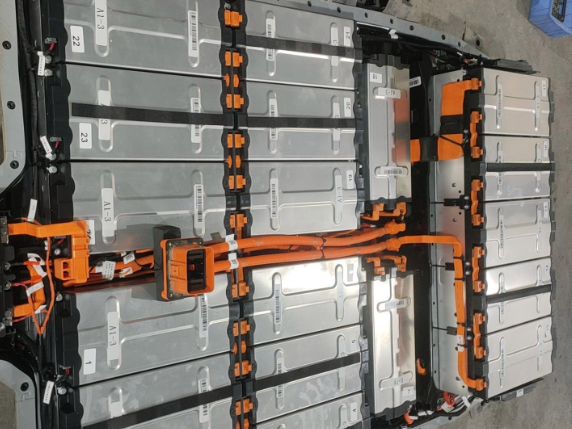
The table summarizes the reported utilization results without adding assumptions beyond the study’s findings. It shows that the weakest-cell effect can leave a measurable share of energy resource potential unused in both passenger vehicle and bus applications. The difference between the two fleet categories underscores the need for application-specific power battery management and system-level design.
The calculation also clarifies why the weakest-cell effect matters for the energy transition. As electric vehicles become more widely used, the efficiency of power battery use across the full life cycle becomes increasingly important. Reducing premature retirement and improving the utilization of healthy cells can contribute to better resource use, lower life-cycle costs and more sustainable power battery deployment.
-
Why cell-to-cell inconsistency is a systems problem for power battery packs. A power battery pack is not a simple collection of independent cells. It is an integrated system in which cells interact through electrical connections, thermal pathways, sensing and control. Cell-to-cell inconsistency affects this system in several ways. Capacity differences influence charging and discharging limits. Internal resistance differences influence heat generation and high-power capability. State-of-charge differences influence balancing requirements and usable energy. Aging differences influence the pack’s overall state of health and retirement timing.
These effects can reinforce one another. A cell that ages faster may have higher internal resistance, generate more heat or reach voltage limits earlier. Local temperature differences can further accelerate aging in weaker cells. Over time, the power battery pack may require more conservative operation to stay within safety and performance boundaries. The result is a system that may carry more energy resource potential than it can effectively use because the weakest cell constrains the operating envelope.
The study’s fleet-scale framework helps connect these mechanisms to measurable outcomes. By diagnosing cell aging and evaluating pack-level performance, the research team provides a way to assess how inconsistency affects state of health, usable energy, lifetime and power capability. This is a more complete view than average degradation alone and supports a systems approach to power battery design and management.
The systems view also has implications for balancing and control strategies. A power battery management system must manage cells with different capacities, resistances and aging states. If the control strategy focuses only on average behavior, it may miss the outlier cell that limits performance. Improved diagnosis of weak cells can support more targeted balancing, thermal management, charging control and maintenance decisions, helping extend the useful life of the power battery pack and improve resource utilization.
In this sense, the weakest-cell effect is not a minor deviation from average behavior. It is a structural feature of real power battery operation that must be addressed through system-level design, data-driven diagnosis and lifetime management. The study’s findings reinforce the need to treat cell consistency as a central performance and resource variable in power battery development.
-
Implications for lifetime management and system-level design of power battery systems. The research findings suggest that the performance and lifetime of a power battery pack are not determined solely by the average aging level of its cells. They may be significantly constrained by a small number of accelerated-aging cells. This has direct implications for lifetime management. If weak cells can be identified early, operators may be able to adjust charging strategies, thermal conditions or maintenance actions to slow further divergence and avoid premature pack retirement.
For system-level design, the results point to the value of reducing cell-to-cell variation and improving robustness to outlier behavior. Design choices related to cell selection, grouping and matching, thermal management, sensing and control can influence how inconsistency develops and how it affects the power battery pack. The study does not prescribe a single design solution, but it provides a quantitative framework for evaluating how different choices affect full-life energy resource utilization.
The findings also support the development of fleet-level health monitoring. A fleet operator can use real-world data to track the emergence of accelerated aging in individual cells and to assess the risk of early pack retirement. This can inform warranty decisions, replacement planning, second-life assessment and resource recovery strategies. By quantifying the weakest-cell effect, the study provides a basis for making these decisions more transparent and data-driven.
For manufacturers, the ability to evaluate power battery performance at the fleet scale can complement laboratory testing. Real-world data can reveal patterns that controlled tests may not capture, including the effects of local temperature distribution, varied operating conditions and long-term use. This can help improve power battery design, validate lifetime predictions and support the development of more resilient power battery systems.
The study also highlights the importance of state-of-charge consistency. The reported full-life energy resource utilization accounts for both early retirement and state-of-charge inconsistency. This means that efforts to improve power battery utilization must consider not only how long the pack lasts but also how effectively its usable energy is managed throughout service. Better state-of-charge estimation, balancing and operating strategies can help reduce the resource gap associated with inconsistency.
-
Expert perspective links the measured drag effect to practical decision-making. Chen Zhongwei, a researcher at the Dalian Institute of Chemical Physics under the Chinese Academy of Sciences, said the research shows that the performance and lifetime of electric vehicle power battery packs are not determined only by the average aging level of cells, but may be significantly constrained by a small number of accelerated-aging cells. Quantifying this “weakest cell” effect under real operating conditions can provide a basis for improving battery utilization, optimizing lifetime management and advancing system-level design.
This perspective connects the study’s fleet-scale metrics to practical decisions. For a vehicle manufacturer, the weakest-cell effect can influence warranty risk, pack design and state-of-health algorithms. For a fleet operator, it can influence maintenance planning, charging management and replacement scheduling. For a researcher, it provides a measurable target for improving cell consistency and pack-level robustness. For a policy or resource analyst, it highlights the resource value of extending power battery service life and using healthy cells more fully.
The expert comment also emphasizes the importance of real operating conditions. Laboratory tests are essential, but they cannot fully represent the diversity of real-world power battery use. By quantifying the weakest-cell effect with long-term vehicle data, the study provides evidence that is closer to the conditions in which power battery packs actually operate. This makes the findings relevant to both engineering practice and fleet management.
The study’s publication in Nature Energy further indicates the international research interest in power battery degradation and resource utilization. The collaboration among institutions in China and Sweden, together with industry participation, reflects the cross-disciplinary and cross-sector nature of power battery research. Addressing the weakest-cell effect requires expertise in materials, cell design, pack engineering, data analysis, control systems and fleet operation.
-
A measured path toward higher power battery utilization. The new study provides a quantitative foundation for improving power battery utilization by revealing how the weakest cell can drag down the performance and lifetime of the entire pack. The reported full-life energy resource utilization of 80.7 percent for the studied passenger vehicle fleet and 72.9 percent for the studied bus fleet shows that a meaningful share of potential energy resource remains underused when the weakest cell forces retirement. These findings are not projections or laboratory estimates; they are derived from long-term real-world operation data covering more than three years and vehicles with cumulative mileage up to 300,000 kilometers.
The research also shows that the weakest-cell effect can emerge after a period of relatively uniform cell health. In the passenger vehicle fleet, cell health differences were generally small at lower mileage stages, but after cumulative mileage exceeded about 170,000 kilometers, individual cells in many vehicles began to enter an accelerated aging phase and cell-to-cell differences expanded noticeably. This kind of observation can help the industry move from reactive pack retirement toward earlier diagnosis and more proactive lifetime management.
For the power battery industry, the study’s framework offers a way to evaluate performance beyond average degradation. It connects cell-level aging diagnosis with pack-level outcomes and full-life resource utilization. This can support better design choices, more precise health monitoring and more effective operating strategies. It can also help align technical decisions with resource efficiency goals, which are increasingly important as electric vehicle fleets grow and power battery life-cycle management becomes a larger system challenge.
The findings do not suggest that cell inconsistency can be eliminated entirely. Real power battery packs will always face some degree of variation due to materials, manufacturing, thermal conditions and use. The key is to measure, manage and design for that variation. By quantifying the weakest-cell effect, the study provides a common basis for comparing approaches and for identifying where improvements can deliver the greatest benefit in terms of usable energy, lifetime, power capability and resource utilization.
As electric vehicles continue to enter diverse operating environments and as power battery fleets age, fleet-scale diagnosis will become increasingly valuable. The study demonstrates how real-world data can be used to build a more complete picture of power battery degradation and to support decisions that extend useful life. The weakest cell may still constrain the pack, but with better measurement and management, the drag effect can be reduced and the full-life value of the power battery can be more fully realized.
In practical terms, the research points toward a management philosophy for power battery systems that combines cell-level insight, pack-level evaluation and fleet-level learning. The aim is not simply to know when a pack reaches retirement, but to understand why it reaches retirement, which cells are driving the outcome and how much energy resource potential remains unused. This understanding can inform design, operation and resource recovery decisions across the life cycle of the power battery.
The study’s contribution therefore extends beyond a single set of utilization percentages. It provides a method for quantifying the weakest-cell effect in real power battery fleets and a framework for connecting that effect to performance, lifetime and resource use. For an industry seeking higher efficiency, longer service life and more sustainable power battery deployment, such measurement is an essential step toward improvement.