
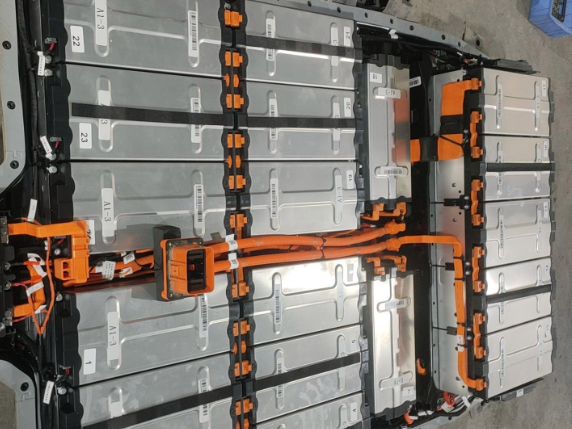
As new energy vehicles move from early adoption into large-scale fleet operation, the power battery has shifted far beyond its original role as a single energy supply component. It now sits at the centre of vehicle range, power output, safety redundancy, warranty cost and second-life value. How accurately a battery management system can perceive the operating state of a power battery, evaluate its health and plan its remaining service life has therefore become a foundational capability for both on-board control and intelligent maintenance. Among the many algorithms inside a battery management system, state of health (SOH) estimation and remaining useful life (RUL) prediction are widely regarded as the two core functions, because they convert raw sensor readings from a power battery into decisions that drivers, fleet operators and service networks can act upon.
Research in this field has already produced several distinct technical routes, including mechanism-based modelling, feature engineering, conventional machine learning, deep learning and hybrid data-driven approaches. Each route has demonstrated value under controlled laboratory conditions. The difficulty emerges when those methods are transferred to real vehicle operation, where temperature, charge and discharge rate, driver behaviour, thermal management strategy and cell-to-cell inconsistency all act together to change the degradation path of a power battery. A model that relies only on a single time-domain waveform is easily disturbed by changes in operating conditions; a model that relies on a small set of statistical indicators struggles to describe local curve shape and multi-scale variation; and a model that relies entirely on deep networks to learn features automatically suffers from limited physical interpretability and high deployment cost. Closing that gap is the practical motivation behind time-frequency feature fusion for power battery health management.
The central argument advanced by researchers working on this problem is deceptively simple: fusion is not the same as adding more input dimensions. Time-domain dynamics, frequency-domain structure and explicit degradation indicators carry complementary information about a degrading power battery, and that information must be organised according to the target of the task rather than simply concatenated. When the organisation is done well, a single modelling architecture can support both recognition of the current health state and extrapolation of the future degradation trend, including the boundary at which the power battery reaches end of life.
1. Why Power Battery Health Management Has Become a Strategic Priority
The commercial logic behind power battery health management is straightforward. Range anxiety remains one of the dominant concerns among new energy vehicle buyers, and the usable capacity of a power battery declines gradually with cycling. A vehicle that delivered a given range when new will deliver less range after several hundred cycles, and the rate of that decline differs from vehicle to vehicle depending on climate, charging habits and duty cycle. Without reliable SOH estimation, a battery management system cannot accurately report available energy, cannot set conservative but usable power limits, and cannot warn the driver before a sudden loss of performance.
Safety is the second driver. Degradation in a power battery is not limited to capacity fade. Internal resistance grows, polarisation intensifies and the discharge plateau shifts downward, all of which change the thermal and electrical stress experienced during fast charging and high-power delivery. A health management function that tracks these changes can adjust thermal management strategy and power limits before the operating envelope of the power battery is exceeded.
Cost and residual value form the third driver. Warranty provisioning depends on an accurate estimate of how many cycles a power battery will deliver before reaching its end-of-life threshold. Second-life valuation, in which retired vehicle batteries are redeployed into stationary storage, depends on a defensible assessment of remaining capability. Both applications require more than a single capacity reading; they require a model that can describe the trajectory of degradation and quantify the uncertainty around the end-of-life boundary of the power battery.
Finally, the data environment has changed. Modern new energy vehicles generate continuous streams of voltage, current, temperature, timestamp and capacity information from each power battery pack. The bottleneck is no longer data availability but the ability to convert heterogeneous, noisy and condition-dependent signals into stable health representations. That conversion is exactly where time-frequency feature fusion contributes.
2. Degradation Mechanisms Inside a Power Battery
A lithium-ion power battery is composed of a positive electrode, a negative electrode, an electrolyte, a separator and current collectors. Charging and discharging depend on the repeated intercalation and de-intercalation of lithium ions between the two electrodes. As cycling proceeds, several mechanisms act simultaneously: loss of active lithium, loss of active material, growth of the solid electrolyte interphase film, increase in internal resistance and intensification of polarisation. Externally, these mechanisms appear as capacity decline, a downward shift of the discharge plateau, a change in the slope of the curve and an earlier onset of the cut-off stage.
An important subtlety is that capacity decline in a power battery is not strictly monotonic. Capacity regeneration, rest recovery, temperature disturbances and measurement noise all cause the capacity trajectory to show local rebounds or short-term fluctuations. This has a direct modelling consequence: health assessment and life prediction cannot be built on a single capacity point. Degradation information must be extracted at several levels at once, from the waveform of an individual cycle, through trend behaviour across cycles, to the distinctive behaviour observed near the end of life of the power battery.
The formal definitions used in this line of work are worth restating because they clarify why the two tasks diverge. State of health is typically defined as the ratio of the current cycle discharge capacity to the rated capacity of the power battery. The end-of-life threshold, commonly abbreviated as EOL, is conventionally set at the point where capacity has faded to 80 percent of rated capacity. Remaining useful life is then the number of cycles remaining from the current cycle until the power battery first reaches that threshold.
Viewed from the perspective of task attributes, SOH estimation is a regression problem that maps the observed state of the current cycle to a health scalar, and it therefore depends heavily on information contained within a single cycle. RUL prediction is an extrapolation problem that maps a historical degradation sequence to a future life boundary, and it therefore depends more heavily on cross-cycle trend modelling and on accurate identification of the termination point. SOH and RUL share the same data source, yet they differ in input granularity and in what counts as success.
3. Public Datasets That Support Power Battery Fusion Modelling
Reproducible validation of SOH estimation and RUL prediction for a power battery rests on public datasets. Three datasets appear most frequently in the literature: CALCE CS2, NASA PCoE and Oxford. They differ in sampling density, test conditions, degradation span and observed variables, and together they cover the range from single-cycle waveform analysis to cross-cycle life prediction for a power battery.
| Dataset | Typical samples | Key characteristics | Applicable tasks |
|---|---|---|---|
| CALCE CS2 | CS2_35, CS2_36, CS2_37, CS2_38 | Rated capacity of approximately 1 100 mA·h with a LiCoO2 cathode chemistry; long cycling span; relatively complete degradation stages | Both SOH estimation and RUL prediction for a power battery |
| NASA PCoE | B0005, B0006, B0007, B0018 | Multi-variable observation covering voltage, current, temperature, time and capacity; pronounced local fluctuation | Single-cycle SOH estimation and waveform feature analysis |
| Oxford | Battery_Cell1, Battery_Cell2 and others | 740 mA·h pouch cells tested at an ambient temperature of 40 °C under dynamic driving profiles with relatively sparse sampling | RUL prediction under short-sequence and sparse-sampling conditions |
When capacity data from these three sources are converted to a common state-of-health retention scale, the differences become visible immediately. The datasets diverge in cycling span, degradation rate, local fluctuation and the shape of the decay curve near end of life. That divergence carries a clear warning for anyone building a model of a power battery: a method that depends on a single time-domain curve or a handful of statistical features will be strongly influenced by the sampling protocol and the specific degradation shape of whichever dataset it was trained on. Time-frequency fusion is a route to representations that are less sensitive to those dataset-specific artefacts.
4. The Case for Time-Frequency Fusion in Power Battery Modelling
Each of the three mainstream signal representations has a characteristic weakness when applied to a degrading power battery. A purely time-domain signal preserves the continuous variation of voltage, current and temperature over time, but provides no explicit separation between local disturbance, frequency content and noise source. Statistical health indicators are highly interpretable, yet they compress the local shape and the stage-dependent changes of the curve. Deep network features are expressive, but they are sensitive to sample size, data distribution and training strategy.
The single-cycle discharge curve illustrates both what is gained and what is lost. As ageing progresses, the discharge plateau of a power battery shifts downward, the discharge duration shortens and the terminal voltage falls more rapidly. In the time domain these changes appear as continuous dynamic differences; in the frequency domain they correspond to shifts in low-frequency trend and in local high-frequency disturbance. Neither view alone captures the full picture.
The three families of features can be characterised as follows.
- Time-domain dynamic features describe how voltage, current, temperature and capacity of a power battery evolve with time or cycle number, and are well suited to capturing plateau migration, earlier cut-off and capacity fade.
- Frequency-domain structural features use Fourier transforms, wavelet transforms and variational mode decomposition to separate long-term trend, local fluctuation and noise components in the signal of a power battery, making them suitable for characterising non-stationary degradation.
- Explicit health factors built from plateau voltage, curve slope, discharge duration, capacity change rate, smoothed trend and proximity to the end-of-life threshold provide a physically grounded and interpretable basis for the model.
5. Unifying Front-End Data Before Any Fusion Takes Place
Effective fusion presupposes a unified front end. For SOH estimation of a power battery, single-cycle discharge curves should be resampled to a common length, and channels covering voltage, current, temperature and time interval should be normalised so that cycles recorded under different conditions share a consistent input dimension. For RUL prediction, capacity sequences require outlier correction, feature standardisation and sliding-window construction, so that local jumps and unit-scale differences do not interfere with trend learning.
Once the front end is unified, feature organisation must follow the principle of task adaptation. SOH estimation takes the single-cycle waveform as its core and should preserve fine-grained dynamics inside the curve. RUL prediction takes the cross-cycle sequence as its core and should emphasise the long-term degradation trend, local capacity recovery and behaviour near end of life. Cycle-level features extracted from CALCE CS2 and from Oxford display visibly different degradation shapes, which underlines that feature construction and feature selection must account for dataset differences and for the generalisation ability of the resulting model of a power battery.
6. Time-Frequency Fusion for Power Battery SOH Estimation
The core of SOH estimation is to identify the health state of a power battery from the observed signals of the current cycle. The recommended fusion path contains three parallel branches.
- The time-domain encoding branch applies convolutional networks, recurrent networks, temporal convolutional networks or state-space models to extract continuous dynamic features from the discharge plateau, the terminal response and the time interval information.
- The frequency-domain fingerprint branch applies fast Fourier transform, wavelet transform or spectral weighting to the voltage and current curves of the power battery in order to extract multi-scale frequency structure.
- The health-factor encoding branch encodes explicit indicators such as plateau voltage, curve slope, cut-off voltage, discharge duration and curvature.
The way these three branches are combined can be chosen according to model complexity. Simple concatenation suits scenarios with limited sample size where parameter count must be controlled. Attention-based fusion allows the model to allocate different weights to different feature sources depending on the individual sample. Gated fusion can raise the contribution of key degradation information in the low-SOH region. Residual fusion helps preserve the stable information contained in the original waveform of the power battery. Compared with purely time-domain modelling, these strategies exploit the continuous evolution of the discharge process, the differences in spectral structure and the interpretable health indicators at the same time, which improves the stability of SOH estimation for a power battery.
7. Time-Frequency Fusion for Power Battery RUL Prediction
RUL prediction imposes a stricter requirement than SOH estimation. It is not enough for the capacity point estimate to be accurate; the long-term recursive process must also avoid trend drift. Fusion for RUL therefore revolves around the cycle-level degradation sequence of the power battery. The recommended procedure has three steps.
- Frequency-domain decomposition or multi-scale transformation is used to separate the long-term fading trend, local capacity regeneration and measurement noise.
- A local time-domain module captures the short-term rate of change between adjacent cycles.
- A lightweight global sequence modelling structure learns long-range dependencies across the entire window.
Two further design choices matter at the output and training stages. At the output stage, a current-state residual path is recommended, in which the raw or normalised capacity at the end of the window is passed directly to the prediction layer so that a deep network does not over-smooth critical state information about the power battery. At the training stage, additional weight can be assigned to the low-capacity region, or a trend-consistency constraint can be added, so that the model pays more attention to end-of-life samples and to the direction of change between adjacent prediction points. This approach does not force the capacity trajectory of the power battery to be strictly monotonic, yet it reduces non-physical oscillation during multi-step extrapolation.
8. A Unified Time-Frequency Fusion Framework for Power Battery Management Systems
For deployment in the battery management system of a new energy vehicle, the time-frequency fusion concept can be organised into four layers. The data acquisition layer collects voltage, current, temperature, timestamps and capacity information from the power battery. The unified front-end layer performs resampling, normalisation, outlier correction, window construction and feature selection. The task modelling layer serves SOH estimation and RUL prediction separately. The decision application layer supports safety warning, thermal management, power limiting, maintenance decisions and second-life assessment for the power battery.
| Element | Focus for SOH estimation | Focus for RUL prediction | Engineering concern |
|---|---|---|---|
| Data input | Single-cycle multi-channel waveforms and health factors of the power battery | Cross-cycle feature sequences | Data completeness and sampling consistency |
| Feature level | Time-domain dynamics, frequency-domain structure and curve-level health factors | Capacity trend, local fluctuation and proximity to the life boundary | Feature interpretability and computational cost |
| Model objective | Regression of the current health state | Extrapolation of the future capacity trajectory and EOL position | Sensitivity in the low-SOH region and to end-of-life samples |
| Deployment evaluation | Estimation error, stability and cross-cell generalisation | RUL error, trend stability and long-term reliability | Lightweight design, robustness and real-time response |
9. Technical Challenges and Development Trends
9.1 From Empirical Concatenation to Mechanism-Constrained Fusion
Many current time-frequency fusion methods remain at the level of concatenation, in which time-domain features, frequency-domain features and health factors are joined and fed into a model. The approach is simple to implement, but it does not explain why the feature families are complementary, nor how their roles change across degradation stages of a power battery. Fusion design should start from degradation mechanisms: capacity fade corresponds to long-term trend, intensified polarisation corresponds to plateau migration and terminal response, capacity regeneration corresponds to local fluctuation, and noise together with operating-condition disturbance corresponds to high-frequency instability.
Future methods can introduce mechanism constraints at the feature construction stage. Plateau voltage, local slope, discharge duration and capacity loss rate can serve as explicit health indicators of a power battery; low-frequency components can be mapped to long-term decline; mid- and high-frequency components can be used to identify local disturbance and regeneration. This preserves the expressive power of data-driven models while preventing purely implicit features from losing physical grounding when a power battery is transferred across operating conditions.
9.2 From Single-Layer Fusion to Hierarchical Multi-Scale Fusion
SOH estimation and RUL prediction need degradation information at different scales. SOH estimation is more concerned with local detail inside a single-cycle waveform, while RUL prediction is more concerned with the overall trend and the life boundary across cycles. If features are concatenated once at the model input, information at different scales is mixed in a single space, and local waveform detail may be smoothed away while long-term trend is disturbed by local noise. A more reasonable direction is a hierarchical multi-scale structure: shallow layers retain raw waveforms and local features, middle layers fuse spectral components, curve-level health factors and cycle-level statistics, and deep layers adapt to the SOH or RUL objective of the power battery. For SOH, a parallel arrangement of time-domain encoding, frequency-domain fingerprinting and health-factor encoding is appropriate; for RUL, a series-parallel structure combining trend decomposition, local temporal modelling and global sequence modelling fits better.
9.3 From Fixed Fusion to Sample-Adaptive Fusion
Fixed-weight fusion tends to ignore sample-level differences. Across different cells, operating conditions and life stages of a power battery, the contributions of time-domain, frequency-domain and explicit indicators are not constant. In the early degradation stage, plateau voltage and discharge duration change only slightly, and local fluctuation may better reflect capacity regeneration and measurement disturbance. In the mid and late stages, low-frequency trend, capacity loss rate and proximity to end of life become more informative. Under complex operating conditions, changes in temperature and rate further alter the credibility of each feature family.
Several adaptive mechanisms are available.
- Attention mechanisms can learn the importance of different feature sources.
- Gating mechanisms can adjust the contribution of time-frequency features according to the SOH interval or degradation stage.
- Residual mechanisms can retain raw capacity or waveform information and prevent over-smoothing by deep layers.
- Uncertainty estimation can down-weight noisy or low-confidence features of a power battery.
9.4 From Single-Task Optimisation to Coordinated SOH and RUL Fusion
Although SOH estimation and RUL prediction have different objectives, they describe the same degradation process of a power battery. SOH estimation supplies the current health state, and RUL prediction depends on extrapolating that state into the future. If the two tasks are modelled in complete isolation, the current state estimate and the future trajectory prediction may become inconsistent: SOH may be locally accurate while RUL extrapolation drifts, or the RUL boundary may be accurate while the intermediate degradation trajectory lacks physical consistency.
A coordinated framework would use the curve-level health representation produced by SOH estimation as a state prior for RUL prediction, and would use trend-consistency constraints from RUL prediction to constrain SOH estimation in return. At the loss-function level, point prediction error, trend consistency, end-of-life boundary error and uncertainty range could be considered jointly, so that a fusion model becomes both accurate in estimation and stable in extrapolation for a power battery.
9.5 From Offline High Accuracy to On-Board Lightweight and Trustworthy Fusion
The battery management system of a new energy vehicle operates under constraints on computing resources, response latency, safety specification and data quality. A model cannot be judged solely by its peak accuracy on a public dataset. If a deep network for a power battery has too many parameters, takes too long to infer or produces outputs without explanation, direct deployment becomes impractical. Time-frequency fusion should follow lightweight principles during engineering: front-end features should come from signals the battery management system can already obtain, frequency transforms should be computationally economical, model structures should avoid excessive stacking, and outputs should include an error range or a confidence indication.
10. Outlook for Power Battery Health Management
For the health management of a power battery in a new energy vehicle, SOH estimation and RUL prediction correspond to current-state identification and future-life extrapolation respectively. The two tasks share voltage, current, temperature and capacity data, but differ clearly in input granularity, feature level and model objective. The necessity of time-frequency feature fusion follows from three limitations: a single time-domain waveform cannot fully represent multi-scale degradation of a power battery, a small number of statistical health factors cannot cover complex curve morphology, and purely implicit deep representations may lack physical explanation and deployment stability.
The practical conclusion is that SOH estimation is best served by joint modelling of multi-channel time-domain waveforms, frequency-domain fingerprints and curve-level health factors, while RUL prediction is best served by multi-scale fusion of capacity本体, smoothed trend, local variation and end-of-life proximity at the cycle level. The essence of time-frequency fusion is not to increase the number of features but to organise information from different degradation scales around the task objective, so that the model acquires the ability to recognise the current state, extrapolate the trend and judge the life boundary of a power battery at the same time.
The development of feature fusion is therefore not a matter of adding ever more features or ever more complex models, but of finding the best balance among limited features, limited computing power and complex operating conditions. Viable paths include collaboration between lightweight edge models and cloud-side large models, online incremental updating, cross-vehicle transfer learning, the combination of physical constraints with data-driven models, and robust fusion strategies for abnormal operating conditions of a power battery. Further work will need to address real on-board operating conditions and to strengthen cross-scenario generalisation, lightweight deployment, physical interpretability and uncertainty assessment, so that health management for a power battery can move from laboratory accuracy to dependable field performance.