
A small battery is becoming a core foundation of the new energy industry. It is the power source of electric vehicles, supporting green travel and safe driving ranges, and it is also an energy warehouse for storage stations, holding surplus green electricity from wind and solar power and releasing it during peak demand. As the scale of China’s new energy industry continues to expand, the market is placing higher demands on the performance, safety, and industrial support capacity of new energy batteries.
Recent visits to Zaozhuang and Heze in Shandong showed that intelligent workshops are giving the power battery new sensing capabilities, long-duration storage batteries can discharge continuously for 4 hours, and upstream and downstream enterprises are accelerating their clustering around industrial parks. Shandong, a long-established industrial province, is using the power battery as a pivot to build a more coordinated and higher-quality new energy manufacturing system.
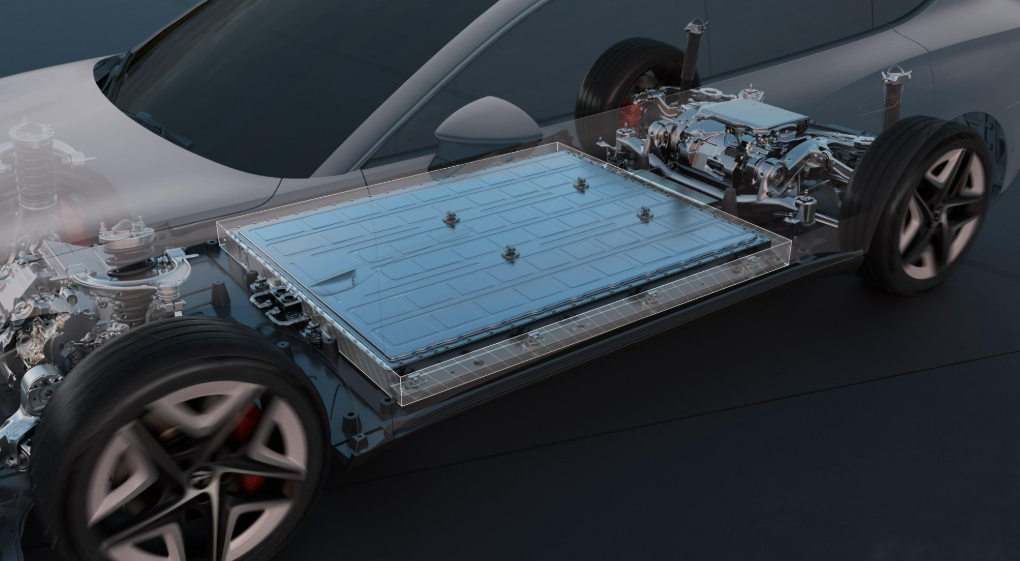
1. A Power Battery Becomes the Core of a New Energy System
The power battery sits at the center of several connected transitions. In transportation, it determines the safety, range, and reliability of electric vehicles. In the power system, battery storage helps smooth the intermittency of renewable energy and supports the balance between generation and consumption. In manufacturing, the power battery chain pulls together materials, equipment, electronics, software, recycling, and logistics. The result is not simply a single product category but an industrial system with wide economic reach.
Shandong’s advantage lies in its ability to combine established industrial foundations with new energy investment. The province has been building a chain that includes key materials, cells, modules, systems, applications, and recycling. The power battery is therefore more than an export product or a factory output. It is a link between energy security, industrial upgrading, and green development.
In Zaozhuang, the focus is on intelligent manufacturing and the power battery supply chain. In Heze, the focus is on long-duration storage and the full-chain layout around battery materials, electric control systems, connectors, cells, and system integration. Together, these two locations illustrate how a power battery cluster can emerge when leading projects are matched with local supply capacity, efficient government services, and coordinated investment.
The development path also reflects a broader shift in China’s new energy sector. The early phase of the market was defined by rapid capacity expansion. The next phase is defined by reliability, safety, long life, system efficiency, and supply-chain resilience. For the power battery industry, competition is moving from single-product performance toward full-life-cycle capability. Companies must prove that their power battery products can be manufactured consistently, monitored intelligently, integrated efficiently, and recovered responsibly.
Shandong’s experience shows that the power battery is not an isolated high-tech sector. It depends on local suppliers, specialized equipment, testing capacity, skilled workers, and stable public services. When these elements are present, a leading power battery project can become the anchor for a broader industrial cluster.
2. Artificial Intelligence Makes the Power Battery Smarter and Safer
At the intelligent workshop of Shandong Xinwangda New Energy Co., Ltd. in the Zaozhuang High-tech Zone, automated production lines run at high speed. Raw materials enter the production process from the warehouse area through connected corridors and pass through mixing, coating, baking, rolling, slitting, and stacking before power battery cells roll off the line one after another. The entire production line extends more than 800 meters, with only more than 200 workers per shift, and the automation rate exceeds 95 percent.
The power battery produced here is mainly used in new energy vehicles. As the number of new energy vehicles continues to rise, the safety and quality of the power battery have attracted increasing attention. Improving battery safety and reliability has therefore become an important direction for technological innovation. Shandong Xinwangda’s approach is to introduce artificial intelligence into cell-state management.
A cell is the basic energy-storage unit of a battery. Traditional battery management systems mainly collect parameters such as voltage, temperature, and current to evaluate cell status. These systems find it difficult to capture hidden changes inside the cell precisely, so they have limitations in early warning. Shandong Xinwangda’s intelligent cell integrates self-developed sensing chips that can collect multi-dimensional data, including impedance spectra, charge-discharge swelling force, and internal gas pressure. The cell is no longer only a container that stores and releases energy. It becomes an intelligent unit that can continuously output information about its own condition.
The application of artificial intelligence also extends to the power battery manufacturing process. Before mass production, Shandong Xinwangda uses artificial intelligence digital twin technology to simulate the full life-cycle operating status of the cell in advance, verify the feasibility of mass production, and avoid design and process defects. In the front-end process of the production line, deep learning technology is used for defect detection, and the detection rate for defects such as bubbles and scratches reaches 99.7 percent. In the back-end process, artificial intelligence-driven capacity sorting compresses the time required for capacity classification by 30 percent and uses real-time data monitoring to effectively intercept defective products.
“We need to ensure the scientific nature and stability of the battery structure at the research and development end, and we also need to strictly control production processes and equipment at the manufacturing end, so as to improve the service life and reliability of the power battery in an all-round way,” said Li Wenming, chief engineer of Shandong Xinwangda. “Artificial intelligence is becoming an important tool for battery quality management.”
This approach has implications beyond a single factory. As power battery systems become larger and more complex, the ability to sense, transmit, and analyze cell-level data becomes a foundation for safety. Intelligent cells can support earlier warnings, more precise maintenance, and better system-level management. They also create new requirements for chips, sensors, algorithms, data platforms, and testing. The power battery thus becomes a platform for cross-sector innovation.
Technological innovation is not only improving battery performance. It is also opening broader new energy application scenarios for the power battery and related storage products. The same emphasis on data, simulation, and intelligent production can be applied to storage batteries, recycling, and grid interaction. In this sense, the intelligent power battery is a step toward a more connected energy system.
3. Long-Duration Storage Moves from Laboratory to Mass Production
On August 7, inside the Hithium Shandong long-duration storage integrated industrial park in the Luxi New Area of Heze, the world’s first 6.25 MWh long-duration storage system built around a 1,175 Ah long-duration storage cell officially rolled off the production line. The event marked an important step in the shift from 2-hour storage products toward longer-duration systems.
Storage, in simple terms, means saving surplus electricity and releasing it when needed. For wind and solar power, which are variable, storage is not only about “keeping electricity.” It is about maintaining the balance between generation and consumption and solving the challenge of renewable energy consumption. At present, mainstream storage systems can generally meet around 2 hours of dispatch demand at full power. Shandong Hithium Energy Storage Technology Co., Ltd. has focused from the beginning of its project construction on long-duration storage scenarios of 4 hours or more.
The need for longer storage is closely tied to the daily pattern of renewable generation. Solar power peaks during the day. In the evening, solar output falls, but residential and industrial demand remains high. The core value of long-duration storage is to store electricity generated during the day and keep it available for longer. As wind and solar installed capacity continues to expand, the intermittency and volatility of renewable generation will become more prominent. Long-duration storage will therefore become an important stabilizing component of the new power system.
According to Huang Xuantian, general manager of Shandong Hithium Energy Storage, the 6.25 MWh storage system equipped with the 1,175 Ah long-duration storage cell can store 6,250 kWh of electricity, enough to meet the daily electricity demand of an ordinary household for 2 years. The very large storage capacity is supported by a breakthrough in cell capacity technology.
Previously, storage cells were generally designed around 2-hour products. To achieve long-duration storage, more cells and connecting components had to be integrated. This was like building a high-rise with a large number of small bricks. The approach was theoretically feasible, but the number of bricks and connection points would increase sharply, raising costs and creating safety risks. The 1,175 Ah long-duration storage cell was designed specifically for long-duration storage scenarios of 4 hours or more. Its energy density exceeds 180 Wh/kg, and its cycle life exceeds 11,000 cycles.
Larger cell capacity brings new technical challenges. As cell capacity increases, controlling the uniformity of internal temperature fields, flow fields, and stress distribution becomes more complex. Shandong Hithium Energy Storage redesigned the module integration structure. By optimizing spatial layout and reducing the share of structural components, the 6.25 MWh long-duration storage system increased volume utilization by 30 percent and reduced overall system weight by 20 percent.
The mass production of large-capacity cells also placed new demands on manufacturing processes. Shandong Hithium Energy Storage worked with suppliers on collaborative innovation, independently developed specialized production equipment, and built a fifth-generation long-duration storage intelligent manufacturing line. A single production line now has a capacity of more than 15 GWh, and production efficiency has increased by 200 percent. This year, the industrial park’s capacity has been fully booked, with production plans scheduled through the first quarter of 2027.
The journey of a battery from the laboratory to the mass production line tests more than a company’s own technology and manufacturing capability. It also requires a more complete industrial support system. For the power battery and storage battery sectors, this means close coordination across materials, equipment, components, testing, logistics, and application engineering. The long-duration storage project in Heze demonstrates how a single large battery product can drive demand for an entire chain.
4. Chain Collaboration Turns a Power Battery Project into a Cluster
In Shandong, the accelerated development of the new energy battery industry is not the “single-unit advance” of individual enterprises. It is a cluster breakthrough led by leading companies and supported by chain-wide collaboration. The power battery industry in particular depends on close coordination between cell makers and material suppliers, equipment providers, connector manufacturers, and recycling companies.
After the Xinwangda project landed in Zaozhuang, 12 upstream and downstream supporting enterprises, including Kedali and Haoliwei, moved in one after another. Local companies such as Zhongcai Lithium Film and Yienke Tianrun simultaneously improved quality and expanded capacity. Local lithium battery industry support capacity gradually improved. “Several major materials for cell production can be sourced locally in Zaozhuang, greatly reducing logistics costs and supply cycles,” Li Wenming said.
As power battery products gradually enter the stage of large-scale retirement, Zaozhuang has also filled the “last mile” of the industry. The Xinwangda waste lithium battery recycling project, with total investment of RMB 1.2 billion, settled in Tengzhou. Its first phase has recently been fully commissioned, with an annual processing capacity of 50,000 tonnes of retired lithium batteries.
Zaozhuang now hosts 280 upstream and downstream new energy enterprises. From January to May this year, the city’s new energy enterprise revenue grew by 35 percent year on year, and lithium battery industry revenue increased by 53 percent. These figures show how a leading power battery project can generate a wider industrial effect, drawing in suppliers and creating a denser local division of labor.
The city has also built a coordination mechanism to strengthen the chain. “Around leading enterprises such as Xinwangda, we have established a ‘chain leader plus chain master’ dual-traction mechanism, implemented full-process project task force services, formulated investment measures, and provided precise services for enterprises,” said Zhai Jun, secretary of the Zaozhuang Municipal Party Committee. Through supply-demand matching activities in the industrial chain, Zaozhuang has encouraged 64 new energy enterprises to establish intra-city supply-demand cooperation relationships. Since 2025, cooperation value has reached nearly RMB 900 million, enabling resource sharing and collective development.
For the power battery sector, recycling is not a peripheral issue. It is part of the full-life-cycle value chain. Retired batteries contain valuable metals and other materials, and proper recycling can reduce environmental pressure while improving resource security. The combination of power battery manufacturing, local material supply, and recycling creates a more closed-loop system. It also makes the local cluster more resilient when market conditions change.
The Zaozhuang model shows that a power battery cluster cannot be built by attracting one factory alone. It requires a deliberate approach to supplier recruitment, local quality upgrading, logistics efficiency, recycling capacity, and government coordination. When these elements align, the power battery becomes a platform for broader industrial upgrading.
5. Heze Builds a Full Chain Around Storage and Power Battery Applications
Heze has also been adding to its industrial chain. Before the Hithium storage project landed, Heze had already carried out a full-chain layout around the new energy industry. It precisely attracted leading cathode material company Longpan Technology, electric control system enterprises Jingjin Electric and Yingboer Electric, and cell connection component company Yilian Technology.
In October 2024, the Hithium Shandong long-duration storage integrated industrial park, with total investment of more than RMB 13 billion, landed in Heze. The park focuses on cell manufacturing and system integration. With the official mass production of the park, Heze has built a new energy full industrial chain covering materials, batteries, equipment, and applications.
“At present, the number of above-scale enterprises in the Luxi New Area has reached more than 20, and the new energy and storage equipment characteristic industry has been selected as a characteristic industrial cluster for small and medium-sized enterprises in Shandong,” said Wang Feng, director of the Heze Luxi New Area Economic Development Bureau.
The rise of an industrial cluster is inseparable from a high-quality business environment. Huang Xuantian said that from project construction to production, Heze formed a service task force and introduced a “parallel pre-review plus tolerant acceptance” approval model. The planning and construction “double permits” were completed in 1 day, and 15 procedures were completed in more than 10 working days. Efficient government services led the company to adjust its plan decisively, starting two production lines that had originally been planned for phased construction at the same time. The overall commissioning time was advanced by two full years compared with the initial plan.
This kind of coordination matters for the power battery and storage battery industries because large projects involve complex approvals, utilities, land, environmental requirements, and equipment installation. Delays at any stage can affect the timing of mass production. A service model that reduces procedural friction can therefore have a direct impact on investment decisions and cluster formation.
Heze’s full-chain approach also shows how storage and power battery applications can reinforce each other. Cathode materials, electric control systems, connectors, cells, and system integration are not isolated links. They form a chain in which local suppliers can respond faster to the needs of cell and system manufacturers, and manufacturers can work more closely with suppliers on design and process improvements. The result is a more integrated industrial base.
The power battery economy in Shandong is therefore developing through multiple routes. Zaozhuang emphasizes intelligent power battery manufacturing, local material supply, and recycling. Heze emphasizes long-duration storage cells, system integration, and full-chain coordination. Both routes contribute to the province’s broader new energy battery capacity and both depend on the same underlying principle: a leading project must be connected to a wider ecosystem to generate lasting value.
6. Shandong’s Power Battery Economy Moves to Scale
From the landing of a leading project to the formation of a complete industrial chain and then to the rise of an industrial cluster, “chain-based development” has become a core driver of the quality and speed of Shandong’s new energy battery industry. The power battery is the most visible product in this system, but the industrial effect extends across materials, equipment, electronics, recycling, and application markets.
Data show that in 2025, Shandong had more than 200 key enterprises across the lithium battery full industrial chain. Revenue from the new energy battery industry exceeded RMB 120 billion, with growth of more than 20 percent. In the first half of this year, the province’s lithium battery product output increased by 193.6 percent year on year. These figures reflect the scale effect of the cluster and the rapid expansion of the power battery and storage battery supply chain.
The power battery is now linked to a trillion-yuan-level industrial system and is also accumulating new momentum for Shandong’s green and low-carbon development. As national policies related to the 15th Five-Year Plan for the new energy system and the 15th Five-Year Plan for renewable energy development are implemented, China’s new energy industry will enter a new stage of expansion, quality improvement, and reliable substitution. The question of green and low-carbon transformation remains a long-term task, and Shandong is continuing to respond through industrial practice.
For the power battery industry, the next stage will require more than capacity. It will require consistent quality, intelligent safety management, long-duration storage capability, efficient system integration, a resilient supplier network, and responsible recycling. The province’s experience suggests that these goals are more likely to be achieved when enterprises, suppliers, and public services operate as a coordinated chain rather than as isolated actors.
The rise of the power battery cluster in Shandong also offers a wider lesson for the new energy sector. A competitive power battery industry is not built only on cell chemistry or factory scale. It is built on the ability to connect innovation with manufacturing, manufacturing with supply chains, supply chains with applications, and applications with recycling. When these connections are strong, a small battery can support a large industrial system and contribute to a more stable, cleaner energy future.
7. Selected Indicators in Shandong’s Power Battery and New Energy Battery Chain
| Category | Indicator | Figure |
|---|---|---|
| Intelligent power battery manufacturing | Automation rate at the Shandong Xinwangda workshop | More than 95 percent |
| Intelligent power battery manufacturing | Production line length | More than 800 meters |
| Intelligent power battery manufacturing | Workers per shift | More than 200 |
| Quality control | Defect detection rate for bubbles and scratches | 99.7 percent |
| Quality control | Compression of capacity sorting time | 30 percent |
| Long-duration storage | Long-duration storage cell capacity | 1,175 Ah |
| Long-duration storage | Storage system capacity | 6.25 MWh |
| Long-duration storage | Electricity stored by the system | 6,250 kWh |
| Long-duration storage | Energy density | More than 180 Wh/kg |
| Long-duration storage | Cycle life | More than 11,000 cycles |
| System integration | Volume utilization improvement | 30 percent |
| System integration | Overall system weight reduction | 20 percent |
| Manufacturing line | Single-line capacity | More than 15 GWh |
| Manufacturing line | Production efficiency improvement | 200 percent |
| Zaozhuang cluster | Upstream and downstream supporting enterprises attracted after the Xinwangda project | 12 |
| Zaozhuang cluster | New energy upstream and downstream enterprises | 280 |
| Zaozhuang cluster | New energy enterprise revenue growth from January to May | 35 percent |
| Zaozhuang cluster | Lithium battery industry revenue growth from January to May | 53 percent |
| Recycling | Total investment in the Xinwangda waste lithium battery recycling project | RMB 1.2 billion |
| Recycling | Annual processing capacity of retired lithium batteries in the first phase | 50,000 tonnes |
| Supply-demand cooperation | New energy enterprises in Zaozhuang establishing intra-city cooperation | 64 |
| Supply-demand cooperation | Cooperation value since 2025 | Nearly RMB 900 million |
| Heze project | Total investment in the Hithium Shandong long-duration storage integrated industrial park | More than RMB 13 billion |
| Heze cluster | Above-scale enterprises in the Luxi New Area | More than 20 |
| Government service | Completion time for the planning and construction double permits | 1 day |
| Government service | Procedures completed | 15 procedures in more than 10 working days |
| Provincial scale | Key enterprises across the lithium battery full industrial chain in 2025 | More than 200 |
| Provincial scale | New energy battery industry revenue in 2025 | More than RMB 120 billion |
| Provincial scale | Growth of new energy battery industry revenue in 2025 | More than 20 percent |
| Provincial scale | Lithium battery product output growth in the first half of the year | 193.6 percent |
8. Outlook: A Power Battery Chain Built for Scale and Quality
The development of Shandong’s new energy battery industry shows that the power battery is both a product and an industrial organizer. It brings together advanced manufacturing, artificial intelligence, materials science, system engineering, recycling, and public services. It also connects the province’s industrial base with the national goals of energy transition and reliable renewable energy use.
In Zaozhuang, the power battery chain is being strengthened through intelligent manufacturing, local supplier development, and recycling. In Heze, long-duration storage and full-chain coordination are creating a new base for storage cells and system integration. At the provincial level, the scale of the lithium battery industry and the rapid growth of output demonstrate the momentum of the cluster.
The next phase of power battery development will be shaped by several priorities. Safety and reliability will remain central as electric vehicles and storage systems become more widespread. Long-duration storage will become more important as renewable energy accounts for a larger share of electricity generation. Recycling and full-life-cycle management will become more closely integrated with manufacturing. Digital technologies will continue to move from auxiliary tools to core parts of quality control and operation management.
Shandong’s experience also suggests that industrial policy and business environment matter. Efficient approval processes, supply-demand matching, task force services, and cluster coordination can reduce project delays and help enterprises make faster investment decisions. These factors are especially important for power battery projects, which involve large capital investment, complex equipment, and long supply chains.
As China’s new energy industry enters a stage of expansion, quality improvement, and reliable substitution, the power battery will remain a key link between green electricity, green transportation, and green manufacturing. The small battery that powers a vehicle or stores solar electricity for later use is also a symbol of a larger shift. It represents the move from isolated projects to connected chains, from rapid expansion to quality-driven growth, and from single-product competition to full-system capability.
Shandong is continuing to build that system. The power battery cluster in Zaozhuang, the long-duration storage base in Heze, and the province-wide network of materials, equipment, recycling, and application enterprises together form a practical answer to the green and low-carbon transition. A small battery is releasing large energy, and the power battery chain is helping Shandong turn industrial foundations into new momentum for a cleaner and more resilient energy future.