
At the 2026 Power Battery Conference, Liu Jincheng, chairman of EVE Energy, used the word “joyful” to describe the atmosphere across the power battery industry in 2026. “Most companies in the industry have done very well in their half-year reports. This is a very rare moment,” he said. At a closed-door meeting, an executive from another battery company also said with relief that the company had begun to make a profit this year.
The half-year financial reports of the power battery sector support that judgment. In the first half of 2026, many power battery companies reported higher revenue and higher profit. CATL, the leading power battery maker, reported profit that was higher than the combined profit of several automakers. That is one reason why “automakers are working for battery makers” has become one of the most frequently repeated complaints in the automotive industry in recent years. Deng Chenghao, chairman of Deepal Automobile, said directly at the Power Battery Conference that profit distribution across the entire industrial chain is seriously unbalanced and that it is necessary to optimize the profit distribution pattern of the chain.
Yet the “joyful” side of the power battery industry in 2026 has another face. Over the past decade, the sector has passed through a full cycle: from a power battery shortage to a capital boom, from structural overcapacity to repeated shifts in technology routes. In earlier years, the industry did not have an easy time. In the previous two years in particular, profit continued to fall, and overcapacity and price involution pushed the industry into a deep downturn. For some battery makers outside the leading group, survival remains a long battle.
At the same time, non-rational competition in the power battery industry has not been eliminated. Cost-reduction pressure from downstream automakers is being transmitted upstream, and price involution persists within the battery sector. The product-quality risks created by that pressure are still latent. The power battery industry therefore enters 2026 with better earnings, clearer technology routes and a stronger anti-involution consensus, but also with unresolved questions about profit distribution, capacity discipline and quality assurance.
1. A Rare Year for the Power Battery Industry
Liu Jincheng attributed the “joyful” mood in the power battery industry to 3 main factors. First, corporate operations have improved, and most power battery companies delivered strong half-year reports. Second, technology routes are gradually becoming clearer: large cylindrical batteries have begun mass production and are expected to become a representative direction for standardized, high-energy-density power batteries, while large prismatic storage cells have become an industry consensus and are helping energy storage systems reduce cost and improve efficiency. Third, an anti-involution consensus has taken shape, and the industry has recognized that blind expansion will bring operating risks.
- Corporate performance improved, with most power battery companies reporting stronger half-year results in 2026.
- Technology routes became clearer, as large cylindrical power batteries moved into mass production and large prismatic storage cells gained industry consensus.
- An anti-involution consensus formed, with the power battery industry acknowledging that blind capacity expansion creates operating risk.
For the power battery industry, 2026 is a rare moment. After a period of cyclical adjustment, the sector is gradually moving toward a more stable direction. That stability, however, was not achieved overnight. The early stage of China’s power battery industry attracted a large number of battery companies. Over the past several years, the market has gone through repeated adjustments. As the new energy vehicle industry developed, power battery companies began to expand capacity, and the investment scale of many companies reached the level of tens of billions of yuan. Around 2017, the power battery industry began to face a reshuffle, and investment started to contract.
The reason was that, in the earlier period, against the background of new energy subsidies, power battery companies continued to emerge. Some companies pursued subsidies with rough manufacturing and failed to make breakthroughs in core technologies, which caused a large volume of low-end products to flow into the market. In addition, as new energy vehicles grew, some companies blindly expanded low-end capacity and ultimately became burdened with debt and went bankrupt. That phase left a lasting lesson for the power battery industry: capacity without technology and quality does not create sustainable growth.
After a deep reshuffle, the rapid development of new energy vehicles in 2021 created strong demand for power batteries. At that stage, the power battery industry once experienced a “battery shortage.” Some automakers sent staff to wait at battery plants in order to secure supply. At that time, battery makers could capture more market as long as they had capacity. Power battery companies began to expand one after another, and capital enthusiasm returned to the sector. But the structural contradiction of insufficient high-end capacity and excess low-end capacity persisted, and the speed of capacity expansion far exceeded the growth of demand.
From the end of 2022, the power battery industry changed again. Under overcapacity, the industry as a whole entered a destocking phase, while lithium carbonate prices went through a roller-coaster cycle, rising from about 40,000 yuan per tonne in early 2021 to nearly 600,000 yuan per tonne at the end of 2022. That created operating pressure for power battery companies. Mistakes in strategic choices of technology routes also brought operating challenges to some battery plants.
An industry executive said in an interview that the excess capacity is mainly old-generation battery products that were close to standard products for previous vehicle models. As vehicle models are upgraded and batteries are upgraded, the previous generation of products becomes overcapacity. At the same time, upgraded battery products are in short supply. Companies that have not laid out next-generation products, or that have chosen the wrong route, will fall behind. That assessment captures a central feature of the power battery industry: overcapacity and shortage can coexist when product generations shift.
As the industry destocked, the mismatch between supply and demand in the power battery sector eased somewhat. After the reshuffle and industry changes, the battery companies that remained began to improve from 2025. According to iFinD data, 111 listed companies in the lithium battery industry reported total net profit attributable to shareholders of 112.335 billion yuan in 2025, up 80.7% year on year. Partly because of that performance recovery, 2026 is a rare time for the power battery industry.
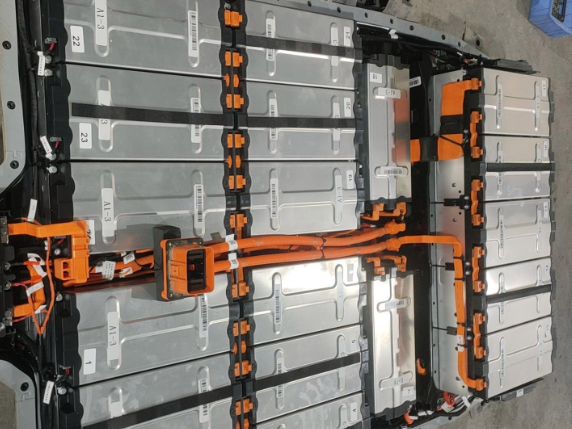
The improvement in the power battery industry is therefore real. It is supported by stronger earnings, a clearer technology outlook and a more cautious attitude toward expansion. But the word “rare” also implies fragility. A single good year does not erase the structural problems that produced the previous downturn. The power battery industry still needs to manage the relationship between growth and capacity, between cost and quality, and between battery makers and automakers.
2. Profit Recovery Is Real, but the Power Battery Profit Pool Is Uneven
The power battery industry is highly concentrated. CATL and BYD occupy a high share of the market, and their combined installed volume accounts for more than 60% of the market. As the industry reshuffled, orders for the remaining second-tier power battery companies began to increase rapidly from last year, and their overseas and energy storage businesses rose quickly. Companies such as CALB, Gotion High-tech and EVE Energy have developed rapidly, but their respective installed vehicle shares are all below 10%, while the share of other power battery companies is below 5%.
From the perspective of profit performance, the gap between second-tier power battery companies and the leading companies remains large. On the other hand, profit in the battery supply chain is flowing back upstream. Although power battery companies reported higher profit in the first half of 2026, overall gross margins are trending downward. That combination matters: the power battery industry may look profitable at the aggregate level, but the profit pool is not evenly distributed, and many companies are still squeezed between upstream material costs and downstream automaker bargaining power.
Dong Yang, an automotive industry expert, wrote that although the profit of the power battery industry is clearly higher than that of the automotive industry, after excluding CATL, the average profit of the industry is not high. The supply price of power batteries has increased because raw material prices have risen too fast. Compared with last year, the prices of lithium carbonate and lithium iron phosphate have more than doubled, electrolyte prices have nearly doubled, and nickel, cobalt, copper and aluminum have all risen to varying degrees. Driven by these increases, power battery prices have risen by 25% to 30%.
Dong Yang also noted that although higher power battery prices have transmitted significant pressure to the automotive industry, the power battery industry has absorbed most of the pressure from rising upstream materials. He said that under the condition that the power battery industry is generally profitable, research on new technologies and development of new products have been safeguarded, and safety has generally improved. That is an important guarantee for the healthy development of the new energy vehicle industry. If the power battery industry were to suffer a large-scale quality decline and a fall in safety, as the photovoltaic industry once did, it would be a disaster for new energy vehicles.
A research report published by Soochow Securities shows that from the perspective of cost differences, there is a gap between CATL and second-tier power battery companies. First, in raw materials, lower usage and lower procurement prices can reduce cost by 0.01 yuan per Wh. Second, manufacturing cost is 0.01 yuan per Wh lower, supported by larger single-line capacity, lower labor costs and lower depreciation. Third, higher yield and higher capacity utilization can contribute a cost advantage of 0.03 yuan per Wh. The report said that this cost leadership will exist for a long time and will be difficult for second-tier power battery companies to catch up with.
| Power Battery Indicator | Reported Figure | Industry Significance |
|---|---|---|
| Total net profit of 111 listed lithium battery companies in 2025 | 112.335 billion yuan, up 80.7% year on year | Shows the power battery and broader lithium battery chain recovered strongly from the previous downturn |
| Combined installed share of CATL and BYD | More than 60% | Confirms the high concentration of the power battery market |
| Installed share of leading second-tier power battery companies | Each below 10% | Shows the scale gap between second-tier players and the top 2 |
| Installed share of other power battery companies | Each below 5% | Indicates intense pressure on smaller power battery makers |
| Lithium carbonate price cycle | About 40,000 yuan per tonne in early 2021; nearly 600,000 yuan per tonne at the end of 2022 | Illustrates the raw-material volatility that shaped power battery profitability |
| Power battery price increase | 25% to 30% | Shows upstream cost pressure being transmitted through the power battery chain |
| CATL cost advantage versus second-tier power battery companies | Raw materials: 0.01 yuan per Wh; manufacturing: 0.01 yuan per Wh; yield and capacity utilization: 0.03 yuan per Wh | Explains why scale, procurement and process execution matter in the power battery industry |
The table above helps explain why the power battery industry can report better profit while many companies still feel pressure. The leading power battery maker benefits from procurement scale, manufacturing efficiency, yield and capacity utilization. Second-tier power battery companies may increase shipments and revenue, but they often lack the same cost structure. Smaller power battery companies face an even sharper disadvantage. In a market where automakers demand lower prices, that cost gap can become a survival gap.
The profit recovery in the power battery industry is therefore not a uniform recovery. It is a recovery led by scale, technology, customer relationships and cost control. The leading companies have the resources to invest in new technology and new products. Some second-tier power battery companies have room to grow in overseas markets and energy storage. But companies with weak technology routes, limited quality systems or fragile finances remain exposed. For them, the “rare year” is not a guarantee of safety; it is a window in which to repair their position before the next cycle turns.
3. Price Competition Leaves Quality Risks Beneath the Power Battery Boom
Over the past several years, with capacity supply exceeding demand, competing for orders from vehicle manufacturers became the core means for power battery companies to maintain shipment scale and market position. Some companies continuously lowered quotations, trading price for volume. Some even hoped to take orders at a loss in the early stage and then dilute costs through scale ramp-up later. Under the cost-reduction demands of automakers, some battery companies provided low-priced products, but quality risks remained.
That risk is now being discussed more openly. Zeng Yuqun, chairman of CATL, said at the conference that some power battery products have experienced batch failures, and the situation is shocking. He said the industry is competing on speed, parameters and price, and development cycles are becoming shorter and shorter, at the cost of product quality and consumer trust. The warning is significant because it comes from the largest power battery company in the market, and it points to a problem that affects the entire power battery chain.
Pan Xingxing, president of the Fujian Institute of Product Quality Inspection, said that the purpose of cost reduction and efficiency improvement is to improve processes, raise the yield of high-quality products and make supply-chain coordination smoother. Low-price involution, by contrast, effectively cuts safety redundancy, cuts reliability validation and even leads to the use of inferior materials. Cost can be reduced, he said, but safety redundancy and validation cannot be omitted.
The policy message is equally clear. Xiong Jijun, vice minister of the Ministry of Industry and Information Technology, said at the opening ceremony of the conference that China’s power battery industry has made considerable progress, but non-rational competition in the industry is also prominent. The ministry will strengthen monitoring of industry operations and dynamic early warning on production capacity, carry out quality improvement actions, strengthen supervision of product consistency and quality, guard the bottom line of product quality and safety, curb low-price competition and blind expansion, and promote a healthy and orderly market environment.
For the power battery industry, quality is not a secondary issue to be addressed after growth. The power battery is a safety-critical component. A failure in a power battery can affect vehicle safety, consumer confidence and the reputation of the entire new energy vehicle industry. When automakers press for lower prices, and when power battery companies compete for orders, the temptation to shorten validation or reduce safety margins can rise. The risk may not appear immediately in financial reports, but it can appear later in recalls, warranty costs and lost trust.
The power battery industry therefore faces a difficult balancing act. It must continue to reduce costs, because electric vehicles need more affordable power batteries. It must also protect quality, because the long-term credibility of electric vehicles depends on safe and reliable power batteries. The answer is not to reject cost reduction, but to ensure that cost reduction comes from process improvement, yield improvement, supply-chain coordination and scale efficiency rather than from cuts to safety redundancy and reliability validation.
4. What the Power Battery Industry Must Fix in a Rare Year
The power battery industry’s 2026 recovery provides an opportunity to address problems that were difficult to solve during the downturn. The first issue is profit distribution. Automakers have complained that they are working for battery makers, while battery makers argue that they have absorbed most of the pressure from rising upstream materials. Both perspectives contain part of the truth. The power battery chain needs a profit distribution pattern that allows automakers to invest in electrification, battery makers to invest in technology and quality, and upstream material suppliers to maintain reasonable returns. If one link takes too much of the profit for too long, the entire chain becomes unstable.
The second issue is capacity discipline. The power battery industry has suffered from structural overcapacity: low-end and old-generation capacity can be excessive, while high-end and next-generation capacity can be insufficient. Companies that expand without matching technology and customer demand can create trouble for themselves and for the industry. The anti-involution consensus mentioned by Liu Jincheng is important because it recognizes that blind expansion brings operating risk. Capacity planning should be based on real demand, technology roadmaps and quality capability, not simply on market excitement.
The third issue is technology route selection. The power battery industry is moving toward clearer routes, including large cylindrical batteries and large prismatic storage cells, but technology continues to evolve. Companies that choose the wrong route, or that fail to lay out next-generation products, can fall behind quickly. The power battery industry needs stable investment in research and development, not only in good years but also in down cycles. Profit recovery in 2026 should strengthen, not weaken, long-term technology investment.
The fourth issue is quality governance. The warnings from Zeng Yuqun and Pan Xingxing, together with the policy direction from MIIT, point to a simple principle: the power battery industry cannot treat safety redundancy and reliability validation as costs to be cut. Quality supervision, product consistency checks and dynamic capacity warnings can help prevent a race to the bottom. Industry self-discipline also matters. Power battery companies that win orders through low prices but compromise quality create risks for the entire sector.
- Profit distribution: The power battery chain needs a more balanced allocation of profit among automakers, battery makers and upstream material suppliers.
- Capacity discipline: The power battery industry should align expansion with real demand, technology readiness and quality capability.
- Technology investment: The power battery sector should use the 2026 recovery to support next-generation products and clearer technology routes.
- Quality governance: The power battery industry must protect safety redundancy and reliability validation even under cost pressure.
For second-tier power battery companies, the strategic challenge is especially sharp. They have opportunities in overseas markets, energy storage and new customer relationships, and some have grown rapidly. But they also face a cost disadvantage compared with the leading power battery maker and must invest in technology and quality without the same scale. Their best path is not to imitate the largest players in every segment, but to build differentiated capabilities, reliable delivery and strong quality systems. The power battery market is large enough for specialized players, but it is not forgiving to companies without clear advantages.
For automakers, the lesson is also clear. Pressing power battery suppliers for ever-lower prices may improve short-term costs, but it can weaken the supplier’s ability to invest in quality and technology. A healthy power battery supply chain requires reasonable margins across the chain. The automotive industry needs power battery suppliers that can survive, innovate and maintain safety. A power battery industry that is profitable but unstable, or low-cost but risky, is not a sustainable foundation for electrification.
The power battery industry in 2026 is therefore in a better place than it was during the previous downturn. Earnings have improved. Technology routes are clearer. The industry has recognized the danger of blind expansion and price involution. But the recovery is not a victory. It is a rare opportunity to correct structural problems before the next cycle. The power battery industry must use this year to strengthen quality, balance profit distribution, improve capacity planning and support long-term technology development.
The final test for the power battery industry is not whether one year’s profit is strong. The test is whether the industry can build a cycle in which power battery companies earn reasonable returns, automakers can access affordable and reliable power batteries, upstream suppliers can invest, and consumers can trust the safety of electric vehicles. If the power battery industry can meet that test, 2026 will be remembered not only as a rare year of better earnings but as a turning point toward more durable competition.