
China’s power battery recycling industry is moving toward a critical period as a large wave of retired electric vehicle batteries approaches. Industry executives, researchers and policy experts describe a sector that is growing quickly but still constrained by fragmented collection channels, incomplete data links, uneven dismantling practices and limited coordination across the life cycle of the power battery.
A general manager at a power battery recycling company said the difficulty begins at the design stage. Battery manufacturers and automakers prioritize vehicle safety when designing cells, and they have generally not incorporated easy dismantling into the design process. In practice, this means that convenience of disassembly has not been balanced against other engineering objectives. The result is a power battery recycling chain that must handle packs with different structures, different specifications and different levels of data availability.
The policy environment is changing. The Ministry of Industry and Information Technology’s Department of Science and Technology recently released a draft guide for the construction of a standards system for the power battery recycling industry. The draft proposes that by 2030, a standards system covering the entire industrial chain and the full product life cycle of the power battery should be basically established. It also calls for a standards system that supports efficient resource utilization, full industrial chain coverage and domestic and international coordination. Industry participants believe that the approaching retirement wave, combined with stricter supervision and a more complete standards system, can push the power battery recycling sector toward more standardized development.
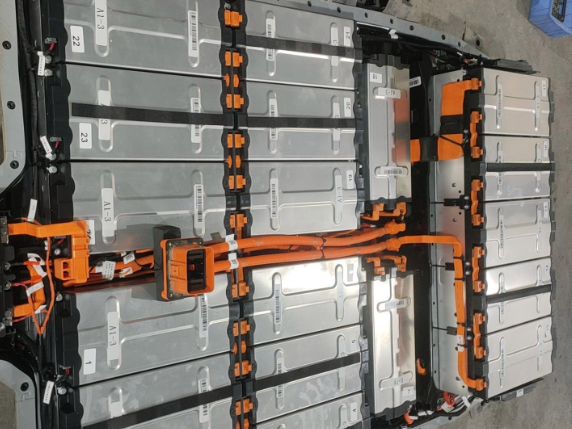
The scale of the challenge is significant. Early batches of new energy vehicles are gradually entering the end-of-life stage, and the volume of retired power batteries continues to rise rapidly. At the same time, the recycling industry still shows scattered and disorderly characteristics, and the entire industrial chain faces information islands and other shortcomings. Closing these gaps will take time, coordination and stronger implementation of standards for the power battery life cycle.
1. Retirement Wave Meets Stricter Compliance
Lithium-ion batteries have service-life limits. Consumer batteries generally last two to three years, while vehicle power batteries generally last five to ten years. When capacity decays below 80 percent, a vehicle power battery is considered to have exited use and entered the retirement stage, requiring recycling and treatment. Chen Zhongwei, a researcher at the Dalian Institute of Chemical Physics under the Chinese Academy of Sciences, outlined this life-cycle threshold as a key reference point for understanding the coming retirement wave.
As the first wave of new energy vehicles moves into the scrapping period, the amount of retired power battery material continues to grow. Data from the Ministry of Industry and Information Technology show that in 2025, China’s comprehensive utilization volume of retired new energy vehicle power batteries exceeded 400,000 tonnes, an increase of more than 30 percent over the previous year. Wang Pan, chief expert at the China Automotive Technology and Research Center, said that by 2030, annual retired power battery volume is expected to exceed 1.06 million tonnes.
From a resource perspective, retired lithium batteries are rich in lithium, cobalt, nickel, manganese and other key metals. They are therefore an important strategic resource. Major economies around the world have introduced recycling and utilization policies to reduce dependence on primary minerals and to build domestic circular supply chains. For China’s power battery industry, recycling is not only an environmental and waste-management issue but also a question of resource security and supply-chain resilience.
The compliance threshold for China’s power battery exports is also rising. Chen Zhongwei noted that the European Union introduced a new battery law in 2023, establishing a regulatory system covering the entire life cycle of batteries from production to scrapping. The law explicitly sets carbon footprint labeling requirements and requires a year-by-year increase in the minimum share of recycled materials. This approach is pushing the global power battery industry to upgrade recycling technologies and to improve the traceability and environmental performance of the power battery value chain.
In August this year, the European Union again issued a draft delegated act on the calculation and verification of recycled material content and on document formats. Wang Xiaodong, technical head of the safety center at the China Electronics Standardization Institute, said the requirements for recycled content in battery recycling have formally moved from technical discussion into the stage of legal text. For companies involved in power battery production, export and recycling, this means that recycled content is becoming a compliance issue rather than a voluntary sustainability claim.
| Indicator | Reported figure or threshold | Context |
|---|---|---|
| Consumer lithium-ion battery service life | 2 to 3 years | General reference for battery life limits |
| Vehicle power battery service life | 5 to 10 years | Power battery retirement begins when capacity falls below 80 percent |
| Retirement capacity threshold for vehicle power battery | Below 80 percent | Battery exits use and enters the recycling stage |
| China’s comprehensive utilization of retired new energy vehicle power batteries in 2025 | More than 400,000 tonnes | Up more than 30 percent year on year |
| Expected annual retired power battery volume in 2030 | More than 1.06 million tonnes | Projection cited by Wang Pan of the China Automotive Technology and Research Center |
The standards draft is important because it seeks to connect several parts of the power battery life cycle that are currently treated separately. A standards system covering the full industrial chain would need to address collection, storage, transportation, dismantling, material recovery, echelon utilization, safety and environmental protection. For the power battery sector, the challenge is to turn broad policy goals into operational rules that companies can follow at each stage of the value chain.
2. Safety-First Design Leaves Recycling Challenges
The first bottleneck in power battery recycling appears before a battery ever reaches a recycling facility. During the design of cells and packs, automakers and battery manufacturers focus primarily on vehicle safety. Easy disassembly is rarely a primary design objective. A power battery recycling company executive said that design for dismantling convenience has not been fully considered, which creates difficulties when retired power battery packs are later processed.
This design legacy has consequences across the recycling chain. Power battery packs vary widely in structure and specification. Pre-treatment processes are complex and consume significant labor and material resources. Recycling itself is constrained by technical bottlenecks, and the industry continues to face high costs and low recovery rates. These problems limit the scale-up of power battery recycling and make it harder for recycling companies to achieve stable operations.
Collection channels are another weak point. Chen Zhongwei noted that current power battery recycling channels are dispersed and disordered, which increases recycling costs. When retired power battery packs flow through multiple intermediaries, the cost of collection rises and the traceability of the battery material weakens. For comprehensive utilization enterprises, securing a stable supply of retired power battery packs remains difficult. Some companies face a situation in which they cannot receive enough retired power battery material to fully use their capacity.
The problem is not simply a shortage of batteries. It is also a structural problem in the collection system. Retired power battery packs may be generated through vehicle scrapping, repair and replacement, fleet operations, energy storage projects or other pathways. If these flows are not connected to formal recycling enterprises, batteries can move through informal channels. The result is that formal power battery recycling capacity may exist, while actual power battery material does not reach the facilities that are best equipped to handle it.
Industry executives also point to the need for better equipment and management in the utilization stage. Digitalization levels and overall operating efficiency need significant improvement. Power battery recycling is not only a chemical recovery process but also a data-intensive logistics and industrial process. Without reliable information on battery condition, chemistry, history and location, recyclers cannot optimize sorting, disassembly, echelon utilization or material recovery.
The design, collection and treatment stages are therefore closely linked. A power battery that is difficult to dismantle raises costs. A power battery that lacks reliable data reduces residual value. A power battery that enters a dispersed collection channel may never reach a formal recycler. Addressing one bottleneck without addressing the others is unlikely to produce a sustainable power battery recycling system.
3. Information Islands Undermine Traceability and Residual Value
The power battery recycling industry has made progress in traceability. In April this year, the national traceability information platform for new energy vehicle power batteries was officially launched. Li Junchao, deputy general manager of Sunwoda Recycling Materials Co., Ltd., described the platform as a milestone event for the industry. It provides a national-level foundation for tracking the flow of power battery material and for improving coordination among stakeholders.
However, data management remains a major obstacle. Many retired power battery packs still face data gaps. Some batteries have only physical codes, while online system data are missing. Some battery codes are damaged and cannot be identified. Some reassembled batteries have confusing coding logic, which raises recycling costs. These problems make it difficult to establish a complete and reliable record for every power battery throughout its life.
A research and development director at a power battery cell company said the entire power battery recycling industrial chain has not yet been fully connected. Data such as the remaining charge, internal resistance and state of health of battery packs are uploaded directly to automakers’ cloud systems. Battery manufacturers have difficulty obtaining vehicle-side data. Automakers do not open their data to outside parties. Recycling companies lack relevant data even more. The information island problem is therefore acute, and it makes echelon utilization difficult to realize. In many cases, the only option is scrapping and dismantling, which sharply reduces the residual value utilization of the power battery.
This data gap has both technical and commercial consequences. A power battery with a known health history may be suitable for a second-life application before final recycling. A power battery with incomplete data may need to be treated conservatively. If recyclers cannot verify the condition of a pack, they cannot safely assess its remaining value. The result is that more power battery packs are sent directly to dismantling, even when some could have been used in less demanding applications.
Hu Song, technical director of the power battery office at CATARC Data Co., Ltd., said that incomplete codes mainly involve products manufactured before 2018. At that time, a unified battery coding standard had not yet been implemented, and the number of such batteries is not large. The national traceability platform for new energy vehicle power batteries allows the code to be blank. Looking ahead, with the implementation of a battery identity system, information-sharing mechanisms across the industrial chain should continue to improve, helping to break the information island dilemma in the power battery recycling industry.
The traceability platform is a starting point, not a complete solution. A battery identity system can help, but it must be supported by consistent data definitions, clear access rules and practical incentives for automakers, battery manufacturers, recyclers and repair networks to share information. For the power battery sector, data sharing is not only a technical convenience. It is a precondition for safe echelon utilization, efficient material recovery and credible environmental reporting.
| Stage | Reported bottleneck | Implication for the power battery chain |
|---|---|---|
| Design | Safety-first cell and pack design; limited consideration of easy dismantling | Higher dismantling cost and complexity for retired power battery packs |
| Collection | Dispersed and disordered channels; multiple intermediaries | Higher collection costs and difficulty securing stable power battery supply |
| Pre-treatment | Large differences in pack specifications and complex processes | Heavy use of labor and material resources |
| Recycling | Technical bottlenecks, high costs and low recovery rates | Limits scale-up of formal power battery recycling |
| Data | Missing online records, damaged codes and confusing codes for reassembled packs | Raises recycling costs and weakens residual value assessment |
| Information sharing | Automaker cloud data not open; battery makers and recyclers lack vehicle-side data | Makes echelon utilization difficult and pushes more power battery packs toward dismantling |
4. Policy Tightening Targets Disorderly Channels and Echelon-Use Abuses
Policy for power battery recycling is being strengthened at multiple levels. The Interim Measures for the Management of the Recycling and Comprehensive Utilization of Retired Power Batteries from New Energy Vehicles, together with announcements that abolish and revise policies and standards related to echelon utilization of retired power batteries and regulate related industry activities, have been introduced. These measures aim to prevent the production and sale of substandard batteries under the name of echelon utilization.
The policy direction is to build a management system for power battery recycling that covers all channels, the entire chain and the full life cycle. This is a broad mandate. It implies that power battery recycling cannot be treated as an isolated end-of-pipe activity. Collection, storage, transportation, dismantling, echelon utilization, material recovery and final disposal must be addressed together. The power battery life cycle must be connected from production to retirement, and responsibilities must be clear across the chain.
Luo Xiaoli, deputy director of the Energy Conservation and Comprehensive Utilization Department at the Ministry of Industry and Information Technology, said at the 2026 World Power Battery Conference that the ministry will gradually improve the legal and standards system for power battery recycling and utilization. It will study administrative regulations for power battery recycling and utilization, strengthen supervision and management of collection, shredding, utilization and disposal, and regulate the order of the power battery recycling industry.
For companies in the power battery sector, this means that compliance will become more explicit. Collection without proper records, dismantling without safety and environmental controls, or echelon utilization without adequate testing may face stricter scrutiny. The policy is also intended to reduce the space for informal operators that can undercut formal recyclers by avoiding environmental and safety costs. If implemented effectively, stricter supervision can help formal power battery recycling enterprises obtain more material and operate at higher utilization rates.
At the same time, policy alone cannot solve the structural problems. Standards must be technically feasible and economically workable. Collection targets must be matched by convenient return channels. Echelon utilization rules must be based on reliable battery health data. Enforcement must be consistent across regions. For the power battery industry, the policy agenda is ambitious, but its success will depend on detailed implementation and coordination among automakers, battery manufacturers, recyclers, repair networks and local authorities.
5. European Rules Raise the Bar for Power Battery Circularity
The global dimension of power battery recycling is becoming more important. The European Union’s new battery law, introduced in 2023, establishes a life-cycle regulatory system for batteries. It includes carbon footprint labeling requirements and a requirement to increase the minimum share of recycled materials year by year. For Chinese power battery producers and exporters, these rules create new compliance obligations and new incentives to improve recycling technology.
In August this year, the European Union issued a draft delegated act on the calculation and verification of recycled material content and on document formats. Wang Xiaodong of the China Electronics Standardization Institute said the recycled content requirements for battery recycling have formally entered the stage of legal text. This development matters for the power battery supply chain because recycled content claims must be supported by reliable data and verifiable documentation.
The European framework is not only about the final recycling step. It touches the entire power battery value chain. Carbon footprint labeling requires information about production and supply-chain emissions. Recycled content requirements require a traceable flow of recovered materials. Verification and documentation requirements demand robust data management. For power battery manufacturers, recyclers and exporters, these rules raise the bar for transparency, process control and chain-of-custody systems.
Compliance pressure can also drive technology upgrading. If recycled content becomes a market requirement, power battery recycling must improve recovery rates and material quality. If carbon footprint labels become standard, power battery producers must pay more attention to energy use and emissions in production and recycling. If documentation must be verified, the power battery industry needs better traceability from the cell to the pack and from the pack to the recovered material.
The international dimension reinforces the need for domestic standards that are compatible with global requirements. A power battery standards system that covers the full industrial chain and the full product life cycle can help companies prepare for overseas rules. It can also support the development of a circular power battery supply chain that reduces reliance on primary minerals and improves resource efficiency.
6. Breaking the Deadlock: Design, Data and Direct Collection
Several practical steps emerge from the industry’s experience. The first concerns design. Power battery cells and packs need to be designed with recycling in mind, not only with vehicle safety in mind. This does not mean weakening safety standards. It means integrating disassembly, material separation and information marking into the design process so that retired power battery packs can be handled more efficiently and safely.
The second concerns data. A battery identity system can help link physical power battery packs to digital records. However, the value of such a system depends on data completeness and data access. Automakers, battery manufacturers and recyclers need clear rules for sharing battery health, usage and maintenance data. Without such rules, the information island problem will persist, and power battery residual value will continue to be lost.
The third concerns collection. Hu Song said that the core problem behind limited recycling channels and thin profits, which leaves some companies unable to receive enough material, lies in layer-by-layer resale by intermediate traders. He suggested compressing circulation links and promoting direct connections between comprehensive utilization enterprises and automakers or end-of-life vehicle recycling outlets. This approach would shorten the collection chain and improve traceability.
Direct collection links would also make it easier to verify the condition and history of retired power battery packs. If a recycler receives a power battery directly from an automaker, a repair network or a certified scrapping facility, the data chain is more likely to remain intact. If the same power battery passes through several intermediaries, codes may be damaged, records may be lost and the pack may be mixed with other batteries of uncertain origin. For the power battery recycling industry, reducing unnecessary circulation is therefore both an economic and a traceability measure.
The fourth concerns standards and supervision. The draft standards guide, the interim measures and the ministry’s planned administrative regulations all point in the same direction: a more formalized power battery recycling system. To be effective, standards must cover collection, storage, transportation, dismantling, testing, echelon utilization, material recovery and disposal. They must also define responsibilities and data requirements at each stage.
The fifth concerns scale and technology. Power battery recycling companies need stable feedstock to invest in better equipment and cleaner processes. Automakers and battery manufacturers need incentives to design for recycling and to share data. Local authorities need capacity to supervise collection and dismantling. Financial institutions and industrial partners need confidence that the power battery recycling market will be transparent and rule-based. These conditions are interconnected, and progress in one area can support progress in others.
7. Outlook: A Circular Power Battery Supply Chain Requires Coordinated Action
The coming retirement wave is large enough to change the scale of the power battery recycling industry. With annual retired power battery volume expected to exceed 1.06 million tonnes by 2030, the sector will need collection networks, treatment capacity, data systems and standards that can handle a much larger flow of material. The challenge is not only to build more recycling plants but also to build a functioning power battery circular supply chain.
A functioning chain would connect design, production, use, repair, collection, echelon utilization, recycling and material reuse. It would give automakers and battery manufacturers a reason to design for recycling. It would give recyclers access to reliable data and stable feedstock. It would give regulators a basis for enforcement. It would give markets confidence in the quality and origin of recycled materials. For the power battery sector, this is the deeper meaning of the standards upgrade and the policy tightening described by industry participants.
The problems are clear. Safety-first design has not yet fully incorporated easy dismantling. Collection channels remain dispersed. Some companies cannot receive enough retired power battery material. Pre-treatment is complicated by differences in pack specifications. Recycling faces cost and recovery-rate constraints. Data on remaining charge, internal resistance and state of health are held in separate systems. Damaged or missing codes raise costs. Echelon utilization is difficult without reliable information, so more power battery packs are sent directly to dismantling.
The policy response is also clear. The draft standards guide aims to establish a full-chain, full-life-cycle standards system for power battery recycling by 2030. The interim measures and related announcements target irregular echelon utilization and substandard battery sales. The Ministry of Industry and Information Technology plans to improve laws and standards, study administrative regulations and strengthen supervision over collection, shredding, utilization and disposal. The national traceability platform and the future battery identity system are intended to improve information sharing.
What remains is implementation. The power battery industry needs design rules that make recycling practical. It needs data rules that make battery health information available to authorized parties. It needs collection rules that reduce unnecessary intermediaries and connect retired power battery packs to formal recyclers. It needs standards that are consistent across regions and compatible with international requirements. It needs supervision that is strong enough to deter informal operators but flexible enough to support innovation.
Industry participants believe that the combination of a large retirement wave, stricter supervision and a more complete standards system can force the power battery recycling sector toward standardized development. That outcome is not automatic. It depends on whether automakers, battery manufacturers, recyclers, policy makers and regulators can coordinate across the full life cycle of the power battery. The next few years will determine whether retired power batteries become a well-managed source of strategic materials or remain a fragmented waste stream with unrealized value.
The power battery is central to the clean energy transition, but its life does not end when it leaves a vehicle. How the power battery is designed, tracked, collected, tested, reused and recycled will shape the sustainability of the entire electric vehicle supply chain. For China’s power battery industry, the task is to turn a looming retirement wave into a circular resource flow. That requires breaking information islands, closing collection gaps, raising recycling standards and ensuring that the power battery value chain works as one system rather than as a set of disconnected parts.