
I have followed the electric vehicle charging sector closely enough to recognize when a routine-looking regulatory notice is actually a structural signal. The June 30, 2026 announcement by the market regulator, covering quality supervision inspection implementation rules for 173 products, is one of those signals. Among the listed documents is the 2026 edition of the implementation rules for product quality supervision inspection of electric vehicle charging piles, including both alternating-current and direct-current equipment. The new document replaces the 2025 edition that appeared in the earlier 136-product announcement. In my reading, this is not merely a technical revision. It is a shift in how electric vehicle charging equipment is inspected, judged, purchased, certified, and admitted to the market.
I want to be precise about the scope because precision matters in electric vehicle charging compliance. The 2026 rules apply to electric vehicle alternating-current charging piles and direct-current charging piles, with the latter described as off-board chargers. The stated purpose is to further protect the safety performance of charging equipment. The inspection basis is built from two mandatory national standards and three recommended national standards, forming a full-dimensional safety inspection structure for both alternating-current and direct-current electric vehicle charging piles. That structure is important because it tells me the regulator is not treating electric vehicle charging as a single product category with one generic checklist. The inspection logic is differentiated by current type, circuit architecture, and the specific safety risks that appear in alternating-current and direct-current electric vehicle charging scenarios.
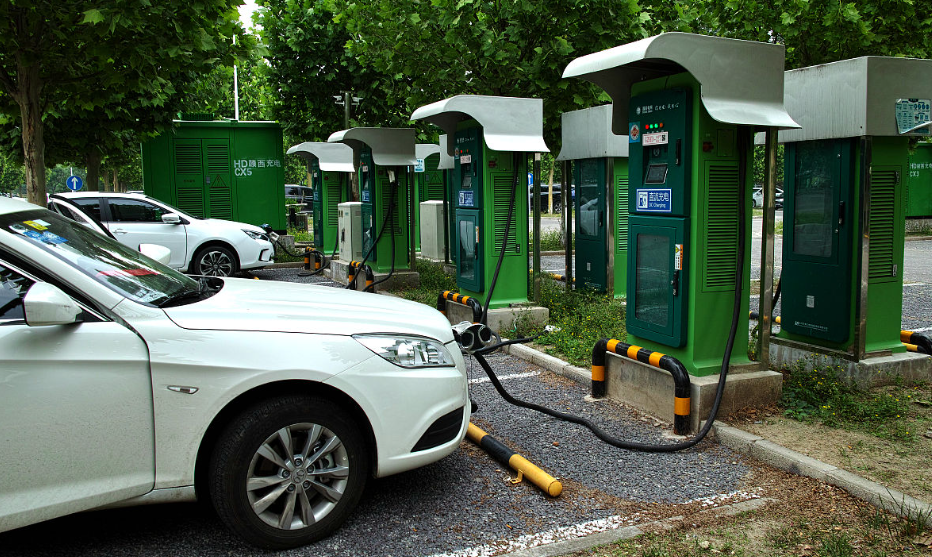
1. The Regulatory Timeline I Am Tracking
When I map the dates, I see a deliberate stacking of quality supervision, compulsory certification, and energy efficiency requirements. The June 30, 2026 publication of the new inspection rules is the first layer. The August 1, 2026 compulsory certification gate is the second layer. The November 1, 2026 energy efficiency requirement is the third layer. For electric vehicle charging manufacturers, importers, sellers, and operators, these dates are not isolated administrative milestones. They form a compliance window in which product design, test evidence, certification status, labeling, procurement verification, and energy performance all interact.
| Date or period | Instrument or event | What it changes for electric vehicle charging | My interpretation |
|---|---|---|---|
| June 30, 2026 | Announcement of quality supervision inspection implementation rules for 173 products, including the 2026 edition for electric vehicle charging piles | Replaces the 2025 edition and updates the inspection basis, test items, and judgment logic for alternating-current and direct-current electric vehicle charging equipment | The inspection sample is now aligned with newer mandatory safety standards and newer direct-current charging standards |
| August 1, 2026 | Compulsory certification enforcement point for electric vehicle power supply equipment | Equipment without a compulsory certification certificate and certification mark may not leave the factory, be sold, be imported, or be used in other business activities | Certification becomes a market access condition, not a voluntary quality signal |
| November 1, 2026 | Mandatory energy efficiency standard for electric vehicle power supply equipment | Introduces energy efficiency限定值 and energy efficiency grades, with direct-current charging equipment level 1 requiring efficiency above 96.5 percent | Electric vehicle charging performance is no longer only about safety; it is also about conversion efficiency and operating cost |
| First half of 2026 | Provincial supervision and enforcement activity | Local inspections, complaints handling, and cases involving unverified mandatory verification of electric vehicle charging piles | Enforcement is already active before the full national gate closes |
| 2026 | Provincial implementation rules in multiple locations | Local 2026 editions of electric vehicle charging pile product quality supervision inspection rules | National rules are being translated into regional procurement and inspection practice |
I treat the June 30 announcement as the technical turning point and the August 1 date as the commercial turning point. The November 1 energy efficiency date then becomes the operating-cost turning point. For anyone involved in electric vehicle charging, the safest interpretation is that all three layers apply cumulatively. A product that passes a quality inspection but lacks compulsory certification is still outside the market. A product that has certification but misses the energy efficiency threshold will face a different kind of exclusion. A product that meets both but has weak production consistency will remain exposed to supervision inspections and procurement audits.
2. Scope and Standards Architecture
I read the 2026 inspection rules as a scope statement first. The rules cover alternating-current electric vehicle charging piles and direct-current electric vehicle charging piles, the latter being non-vehicle-mounted chargers. This matters because alternating-current and direct-current electric vehicle charging equipment do not share the same failure modes. Alternating-current charging piles often sit closer to the vehicle onboard charger and involve control pilot signaling, residual current protection, contact current, insulation, and supply-network interaction. Direct-current charging piles involve higher power conversion stages, more complex control pilot communication, insulation coordination, output control, and grid-side disturbance behavior. A single undifferentiated inspection table would miss important differences. The 2026 rules avoid that mistake by setting differentiated test items for the two categories.
The inspection basis is described as two mandatory national standards and three recommended national standards. I do not need to treat the standard count as an abstract number. In practice, the count tells me that the inspection is anchored in mandatory safety requirements while using recommended standards to define test methods and detailed performance expectations. The known mandatory safety standards in the electric vehicle charging compliance stack include GB 39752-2024, the safety requirements for electric vehicle power supply equipment, and GB 44263-2024, the safety requirements for electric vehicle conductive charging systems. The 2026 inspection rules also refer to GB/T 18487.5-2024 for direct-current charging pile items, while removing old GB/T 18487.1-2015 items from the inspection basis. That combination is a strong signal that the regulator is aligning supervision testing with the newer safety and charging-system architecture.
| Standard or instrument | Role in the electric vehicle charging compliance stack | How I use it in a review |
|---|---|---|
| GB 39752-2024 | Mandatory safety requirements for electric vehicle power supply equipment | Check that the product safety file and test report reference the mandatory safety standard and its applicable clauses |
| GB 44263-2024 | Mandatory safety requirements for electric vehicle conductive charging systems | Check system-level safety evidence, including interface, protection, and charging-system interaction |
| GB/T 18487.5-2024 | Recommended standard used for direct-current electric vehicle charging pile items in the 2026 rules | Verify that direct-current charging test items and evidence are aligned with the 2024 direct-current standard |
| GB/T 18487.1-2015 | Older recommended standard whose items are removed from the 2026 inspection basis | Do not use it as the primary inspection reference for the 2026 rule, although historical reports may still mention it |
| GB 46519-2025 | Mandatory energy efficiency standard for electric vehicle power supply equipment, effective November 1, 2026 | Add energy efficiency grade and direct-current efficiency evidence to the procurement file |
| 2026 quality supervision inspection rules | Defines the sample inspection items, test basis, and judgment rule for electric vehicle charging piles | Use it as the inspection checklist for supervision readiness and supplier quality review |
I also pay attention to the wording “full-dimensional safety inspection.” In electric vehicle charging, safety is not a single measurement. It is a set of interacting conditions: the control pilot circuit must behave correctly, contact current must remain within limits, insulation resistance must be adequate, power-frequency withstand voltage and impulse withstand voltage must not break down, equipment-side control pilot circuit abnormal protection must act, and supply-network outage protection must prevent unsafe operation. When I review an electric vehicle charging product, I therefore treat the inspection table as a map of failure modes rather than a list of bureaucratic checkboxes.
3. The Test Item Matrix for Alternating-Current and Direct-Current Electric Vehicle Charging
The 2026 rules set eight inspection items for alternating-current electric vehicle charging piles and nine inspection items for direct-current electric vehicle charging piles. The named items include control pilot circuit, contact current, insulation resistance, power-frequency withstand voltage, impulse withstand voltage, equipment-side control pilot circuit abnormal protection, and supply-network outage protection. I use the term control pilot circuit deliberately because it is one of the most consequential interfaces in electric vehicle charging. The control pilot circuit coordinates the charging session, communicates available current or power, and supports protective behavior when the vehicle or equipment side is abnormal. A quality inspection that ignores control pilot behavior would miss a central safety function.
| Inspection area | Alternating-current electric vehicle charging | Direct-current electric vehicle charging | Why I care |
|---|---|---|---|
| Control pilot circuit | Included | Included | Verifies signaling, state coordination, and protective response |
| Contact current | Included | Included | Limits touch current risk under normal and abnormal conditions |
| Insulation resistance | Included | Included | Detects degradation that could lead to electric shock or breakdown |
| Power-frequency withstand voltage | Included | Included | Confirms insulation strength under power-frequency stress |
| Impulse withstand voltage | Included | Included | Confirms immunity to transient overvoltage events |
| Equipment-side control pilot circuit abnormal protection | Included | Included | Checks safe behavior when the control pilot circuit is abnormal |
| Supply-network outage protection | Included | Included, with the 2026 change explicitly adding a supply-network outage item | Prevents unsafe restart, unexpected output, or loss of protection after grid disturbance |
| Remaining items specified by the rule | Counted within the eight alternating-current items | Counted within the nine direct-current items | I require the full item list in the test report rather than relying on a summary table |
I use a simple pass-product formula to make the judgment logic explicit. Let \(p_i=1\) when inspection item \(i\) passes and \(p_i=0\) when it fails. For alternating-current electric vehicle charging with eight items, the product-level inspection indicator is:
$$P_{AC}=\prod_{i=1}^{8} p_i$$
For direct-current electric vehicle charging with nine items, the corresponding indicator is:
$$P_{DC}=\prod_{j=1}^{9} p_j$$
The judgment rule then becomes:
$$D=\begin{cases}
\text{No nonconformity found}, & P_{AC}=1 \text{ or } P_{DC}=1 \\
\text{Nonconforming}, & P_{AC}=0 \text{ or } P_{DC}=0
\end{cases}$$
This formula looks almost too simple, but that simplicity is exactly the point. The 2026 rule requires all inspection items to be qualified before the sample is judged as having no nonconformity. If one or more items fail, the judgment is nonconforming. In electric vehicle charging, a single failed protective function can invalidate the safety case even if the rest of the test table passes. I therefore do not average results, weight items, or trade off one test against another. I treat the inspection outcome as a logical AND, not a score.
4. What Changed Compared with the 2025 Edition
The changes from the 2025 edition are specific, and I think they deserve close attention because they reveal where the regulator sees redundancy and where it sees new risk. The 2026 rules remove items based on old GB/T 18487.1-2015. For alternating-current electric vehicle charging piles, the rules remove the output overcurrent protection test. For direct-current electric vehicle charging piles, the rules remove output overvoltage protection and output overcurrent protection, add a supply-network outage item, and add items based on GB/T 18487.5-2024. I read these changes as a rebalancing of the inspection sample, not a lowering of the safety bar. The mandatory safety standards and compulsory certification system now carry more of the baseline safety burden, while the supervision inspection sample focuses on items that are especially relevant to field safety and newer direct-current charging architectures.
| Change category | 2025 edition position | 2026 edition position | My practical consequence |
|---|---|---|---|
| Old standard basis | Included items from GB/T 18487.1-2015 | Removes old GB/T 18487.1-2015 items | Suppliers should update test plans and reports to the 2026 basis |
| Alternating-current output overcurrent protection | Included as an inspection item | Removed from the alternating-current inspection list | Do not assume it is irrelevant to safety; verify it through the mandatory safety file and design review |
| Direct-current output overvoltage protection | Included as an inspection item | Removed from the direct-current inspection list | Keep system-level overvoltage evidence in the technical file even if it is not a named 2026 inspection item |
| Direct-current output overcurrent protection | Included as an inspection item | Removed from the direct-current inspection list | Review converter control and protection logic as part of production consistency |
| Supply-network outage | Not added in the same way for direct-current electric vehicle charging | Added as a direct-current inspection item | Test safe behavior after grid loss and restoration, including no unexpected output |
| Direct-current standard alignment | Older basis | Adds items based on GB/T 18487.5-2024 | Direct-current electric vehicle charging evidence must reflect the 2024 standard architecture |
I emphasize one point to procurement teams: removal from a supervision inspection list is not the same as removal from the product safety case. The 2026 rules are inspection rules, not the complete universe of electric vehicle charging safety requirements. A responsible manufacturer still needs design controls, failure-mode analysis, production testing, and certification evidence for functions that are not named in the supervision sample. My own review logic is to separate “inspection sample items” from “market access evidence.” The inspection sample is what a regulator may test in a supervision exercise. Market access evidence is what the manufacturer must hold to demonstrate conformity across the applicable standards. The two sets overlap, but they are not identical.
5. Judgment, Sampling, and the Meaning of a Single Failure
The judgment rule is strict: all inspection items must be qualified for the conclusion “no nonconformity found in the inspected items”; any one or more failures lead to “nonconforming.” I like this rule because it avoids the ambiguity that can arise when a product has a mixture of pass and fail results. In electric vehicle charging, ambiguity is costly. A charge point that has a control pilot circuit fault, excessive contact current, inadequate insulation resistance, or a failed supply-network outage response is not “mostly safe.” It is nonconforming for the purpose of the inspection.
| Inspection result pattern | Rule outcome | My compliance interpretation |
|---|---|---|
| All named inspection items pass | No nonconformity found in the inspected items | The sample is acceptable for the inspection scope, but production consistency and certification still matter |
| One item fails | Nonconforming | Root cause analysis is required; the failure cannot be averaged away |
| Multiple items fail | Nonconforming | System-level design or production control problem is likely |
| Item not tested because of sample limitation | No positive pass conclusion for that item | I request additional evidence before treating the product as fully inspected |
When I look at local supervision data, I also keep sample size in mind. A small sample can reveal a serious defect, but it does not estimate the population failure rate with high precision. Suppose \(x\) nonconforming units are found in \(n\) inspected units. The observed sample proportion is:
$$\hat{p}=\frac{x}{n}$$
If five electric vehicle charging batches are inspected and one is nonconforming, the observed proportion is \(1/5=0.20\). I do not read that as a precise population failure rate. I read it as a warning signal that justifies deeper supplier audits, more incoming inspection, and tighter production controls. The probability of seeing at least one failure in a sample of size \(n\), assuming a true failure probability \(p\), is:
$$P(X\ge 1)=1-(1-p)^n$$
This formula is useful when I design a verification plan. If I want a high chance of catching a low-probability electric vehicle charging defect, I cannot rely on a very small sample. I need a risk-based combination of design review, routine production tests, periodic type tests, and field monitoring.
6. The Three-Pillar Compliance Stack: Quality Inspection, Compulsory Certification, and Energy Efficiency
I see the 2026 electric vehicle charging rules as one pillar of a three-pillar compliance stack. The first pillar is quality supervision inspection. The second pillar is compulsory certification, often referred to as 3C certification. The third pillar is energy efficiency. Each pillar has a different legal mechanism, but they reinforce one another. A manufacturer that treats them as separate projects will likely overpay for compliance and still miss market access. A manufacturer that integrates them into one product platform will have a much better chance of meeting the August and November 2026 dates.
| Pillar | Core requirement | Evidence I expect | Market consequence |
|---|---|---|---|
| Quality supervision inspection | 2026 inspection rules for electric vehicle charging piles, with eight alternating-current and nine direct-current items | Test report, item-by-item results, judgment conclusion, sample identity, and standard basis | Nonconforming products can be publicly identified and subjected to regulatory action |
| Compulsory certification | Certification certificate and certification mark for electric vehicle power supply equipment | Certificate, mark, factory inspection evidence, and production consistency records | From August 1, 2026, uncertified or unmarked equipment may not leave the factory, be sold, be imported, or be used in business activities |
| Energy efficiency | Mandatory energy efficiency standard for electric vehicle power supply equipment | Efficiency test report, energy efficiency grade, and direct-current conversion efficiency evidence | From November 1, 2026, energy efficiency限定值 and grades become a mandatory performance dimension |
I use a market-access indicator to make the interaction explicit. Let \(C_{3C}=1\) when the product has a valid compulsory certification certificate, \(L_{3C}=1\) when the certification mark is correctly applied, and \(E_{eff}=1\) when the product meets the applicable energy efficiency requirement. A simplified market-access screen is:
$$S_{market}=\begin{cases}
1, & C_{3C}=1 \land L_{3C}=1 \land E_{eff}=1 \\
0, & \text{otherwise}
\end{cases}$$
The quality inspection result adds another condition. Let \(Q_{2026}=1\) when the product passes the applicable 2026 inspection items. Then my internal release condition is:
$$R_{release}=Q_{2026} \land C_{3C} \land L_{3C} \land E_{eff}$$
This is deliberately conservative. I would rather hold a shipment for missing evidence than discover after the August 1 gate that a product cannot be sold or used. For electric vehicle charging, the cost of a delayed shipment is usually lower than the cost of a market-access failure, recall, or reputational damage.
7. Energy Efficiency and the 96.5 Percent Direct-Current Threshold
The energy efficiency pillar is especially important for direct-current electric vehicle charging. The mandatory standard GB 46519-2025 is scheduled to take effect on November 1, 2026, and it requires direct-current charging equipment level 1 energy efficiency to reach above 96.5 percent. I read that threshold as a design target, not a laboratory formality. Direct-current electric vehicle charging involves AC-to-DC conversion, power factor correction, transformer or isolation stages where applicable, output regulation, cooling, and control electronics. Losses accumulate across those stages. Achieving high efficiency requires careful selection of semiconductors, magnetics, control algorithms, thermal design, and standby management.
I express the direct-current energy efficiency requirement as:
$$\eta_{DC}=\frac{E_{out}}{E_{in}}\ge 0.965$$
where \(E_{out}\) is the useful direct-current energy delivered to the electric vehicle and \(E_{in}\) is the input energy drawn from the supply. In practice, I also want to see the measurement conditions, load profile, voltage range, temperature, and auxiliary power consumption. A single peak-efficiency number is not enough for electric vehicle charging procurement. I want a efficiency map across load points because real electric vehicle charging sessions spend time at partial load, not only at rated power.
| Energy efficiency review item | Why it matters for electric vehicle charging | Evidence I request |
|---|---|---|
| Rated-load efficiency | Establishes the headline performance of the charger | Test report with input and output measurements at rated conditions |
| Part-load efficiency | Real charging sessions often operate below rated power | Efficiency curve or table across multiple load points |
| Standby and no-load losses | Affects operating cost and energy waste during idle periods | Auxiliary power measurement and standby management description |
| Thermal derating behavior | High efficiency must be maintained without unsafe overheating | Thermal test data and derating strategy |
| Energy efficiency grade | Connects the product to the mandatory grading system | Declared grade and supporting test evidence |
I also connect energy efficiency to the quality inspection mindset. A product can pass a safety inspection and still be commercially weak if its conversion efficiency is poor. After November 1, 2026, electric vehicle charging operators will have a stronger reason to compare total cost of ownership, not just purchase price. A charger that wastes energy over a multi-year operating life can erase the savings of a lower initial price. This is why I treat the 96.5 percent direct-current threshold as a procurement variable, not only a regulatory checkbox.
8. Procurement and Operations Checklist
For sales and operations teams, I recommend a hard-gate procurement checklist. The 2026 rules and the compulsory certification deadline make informal supplier assurances insufficient. I want documentary evidence that can be traced to the specific model, production line, and certificate. The checklist should be completed before purchase order release and rechecked before acceptance.
| Procurement gate | Evidence to verify | Pass condition | My action if missing |
|---|---|---|---|
| Compulsory certification | Valid certificate for the electric vehicle charging model | Certificate scope matches the product and manufacturer | Do not release the purchase order |
| Certification mark | Mark applied to product, packaging, or required documentation | Mark is correct, legible, and traceable | Request corrected labeling before shipment |
| 2026 inspection basis | Test report referencing the 2026 quality supervision inspection rules | Item list covers the applicable alternating-current or direct-current requirements | Request a gap test or updated report |
| Mandatory safety standards | Evidence against GB 39752-2024 and GB 44263-2024 | Applicable clauses are covered with no unresolved nonconformity | Escalate to technical review |
| Direct-current standard alignment | Evidence against GB/T 18487.5-2024 for direct-current electric vehicle charging | Test items and design file reflect the 2024 standard | Reject the technical file as incomplete |
| Energy efficiency | Efficiency test report and declared grade | Meets the applicable mandatory energy efficiency requirement | Treat as noncompliant for post-November 2026 deployment |
| Production consistency | Factory inspection records and change-control evidence | No unapproved change to critical safety or efficiency components | Request a production audit |
| Field safety evidence | Complaint history, failure analysis, and corrective action records | No unresolved systemic defect | Increase incoming inspection or suspend approval |
I also apply a simple acceptance rule. Let \(G_k=1\) when procurement gate \(k\) is satisfied and \(G_k=0\) otherwise. With \(m\) gates, the procurement release indicator is:
$$A_{procure}=\prod_{k=1}^{m} G_k$$
If \(A_{procure}=0\), the product is not released for purchase. I do not allow a “pending” status to become an implicit pass. In electric vehicle charging, a missing certificate or a missing test item is a material gap because the product may be unable to enter service legally or may carry an unacceptable safety risk.
9. Manufacturer Economics and Pressure on Smaller Suppliers
I expect the 2026 rules to raise compliance costs for electric vehicle charging manufacturers. The cost increase is not only the price of an extra test. It is the cost of redesign, re-testing, certification, factory inspection, labeling, supplier qualification, and production consistency. Products must satisfy mandatory safety standards, compulsory certification requirements, and the forthcoming energy efficiency standard. For a manufacturer with strong technical accumulation, these requirements can be integrated into a platform strategy. For a smaller manufacturer with limited engineering depth, the same requirements can become an existential burden.
I model total compliance cost as:
$$C_{total}=C_{R\&D}+C_{test}+C_{cert}+C_{audit}+C_{label}+C_{supply}+C_{delay}$$
where \(C_{R\&D}\) is design and engineering cost, \(C_{test}\) is type-test and retest cost, \(C_{cert}\) is certification cost, \(C_{audit}\) is factory audit and quality-system cost, \(C_{label}\) is marking and documentation cost, \(C_{supply}\) is the cost of compliant components, and \(C_{delay}\) is the commercial cost of delayed market entry. The last term is often underestimated. Missing the August 1 or November 1 window can strand inventory and interrupt electric vehicle charging projects.
| Cost category | Typical driver | Why electric vehicle charging makes it larger | Management lever |
|---|---|---|---|
| Design and development | Safety architecture, control pilot circuit, insulation coordination, thermal design | Higher power and more complex protection logic in direct-current electric vehicle charging | Platform-based design and early standard mapping |
| Testing | Alternating-current and direct-current item coverage, retest cycles | Eight alternating-current and nine direct-current inspection items plus certification tests | Pre-compliance testing and design reviews |
| Certification | Certificate application, factory inspection, surveillance | Compulsory certification becomes a market access condition | Dedicated compliance owner and document control |
| Labeling and documentation | Certification mark, model identity, technical file | Traceability is required for sale, import, and business use | Controlled label process and change management |
| Supply chain | Compliant contactors, sensors, protective devices, power modules | Safety and efficiency both depend on component quality | Qualified supplier list and incoming inspection |
| Delay | Late discovery of nonconformity | Market gate dates are fixed | Start certification early and freeze critical design |
I use a simple exit screen for smaller firms:
$$Exit_{firm}=1 \text{ if } C_{total}>B_{expected} \text{ or } T_{cert}>T_{window}$$
where \(B_{expected}\) is expected commercial benefit and \(T_{window}\) is the available time before the market-access gate. This formula is not a prediction about any specific company. It is a way to explain why the electric vehicle charging sector is likely to consolidate. Firms that cannot absorb the fixed compliance cost or cannot complete certification in time will face pressure to exit, merge, or become suppliers to stronger platforms. That is not a small side effect. It changes the competitive structure of electric vehicle charging manufacturing.
10. Local Enforcement Signals and What They Tell Me
I pay close attention to provincial enforcement because national rules become real at the point of inspection, complaint handling, and procurement. In the first half of 2026, one provincial market regulator added new-energy vehicle charging piles to the provincial key industrial product quality safety supervision catalogue. The reported activity included five batches of provincial product quality supervision inspection, one nonconforming batch, fifteen complaint reports involving new-energy vehicle charging piles, and sixteen cases involving the use of new-energy vehicle charging piles without mandatory verification. I do not need the location name to see the pattern: electric vehicle charging is already a live enforcement category.
| Local signal | Reported figure | What I infer | Action for electric vehicle charging operators |
|---|---|---|---|
| Provincial supervision batches | 5 batches | Charging piles are included in key product supervision | Prepare model-level test evidence and traceability files |
| Nonconforming batches | 1 batch | Even a small sample can reveal a market problem | Increase incoming inspection and supplier audit frequency |
| Complaint reports | 15 cases | Field performance and service quality are visible to regulators | Maintain complaint logging and corrective action records |
| Unverified mandatory verification cases | 16 cases | Metrology and verification compliance is being enforced | Check verification status before putting electric vehicle charging equipment into service |
I also note that multiple provinces have published 2026 editions of electric vehicle charging pile product quality supervision inspection implementation rules. That means the national rule is not sitting in isolation. Local inspectors, laboratories, and procurement teams are translating it into regional practice. For a manufacturer selling across provinces, the practical implication is that the same technical file should be usable in multiple jurisdictions. Inconsistent model naming, missing test item tables, or outdated standard references will create friction in every region.
11. Risk Matrix for Electric Vehicle Charging Compliance
I use a risk matrix to connect inspection items to business outcomes. The matrix is not a substitute for the formal standard. It is a prioritization tool. I score each risk by the likelihood of a design or production issue and the impact if the issue reaches the field. The highest-priority risks receive design review, incoming inspection, routine production testing, and field monitoring.
| Risk area | Potential failure mode | Inspection or evidence link | Risk priority | Control I recommend |
|---|---|---|---|---|
| Control pilot circuit | Incorrect state transition or failure to stop charging | Control pilot circuit and equipment-side abnormal protection | High | Hardware-in-the-loop test and software state-machine review |
| Contact current | Touch current above limit | Contact current test | High | Grounding review, Y-capacitor selection, and production hipot test |
| Insulation resistance | Degraded insulation due to moisture, contamination, or aging | Insulation resistance test | High | Environmental conditioning and seal design validation |
| Power-frequency withstand voltage | Breakdown under power-frequency stress | Power-frequency withstand voltage test | High | Creepage and clearance review plus routine production test |
| Impulse withstand voltage | Transient overvoltage damage | Impulse withstand voltage test | Medium to high | Surge protective device coordination and PCB layout review |
| Supply-network outage | Unsafe restart or unexpected output after grid restoration | Supply-network outage protection item | High | Power-loss ride-through and restart-state validation |
| Energy efficiency | Direct-current efficiency below 96.5 percent level 1 target | Energy efficiency standard evidence | Medium to high | Loss budget, thermal design, and part-load efficiency mapping |
| Certification mark | Missing or incorrect compulsory certification mark | Compulsory certification evidence | High | Label control, packaging check, and shipment audit |
I use a qualitative risk score \(R=L\times I\), where \(L\) is likelihood and \(I\) is impact, each on a defined scale. For a more formal review, I use a weighted score:
$$R_{w}=\sum_{k=1}^{K} w_k s_k$$
where \(w_k\) is the weight for risk factor \(k\) and \(s_k\) is the factor score. The exact weights depend on the deployment context. A public fast-charging site with high utilization may weight supply-network outage and thermal performance more heavily. A residential alternating-current electric vehicle charging product may weight contact current and insulation resistance more heavily. The point is to make the prioritization explicit and auditable.
12. A Practical Test and Evidence Plan I Would Use
I would not wait for a supervision inspection to discover a gap. I would build a 2026 readiness plan with four phases: standard mapping, design review, pre-compliance testing, and production release. The plan should cover both alternating-current and direct-current electric vehicle charging products, even if a particular factory produces only one type, because the compliance stack and certification system are shared across the portfolio.
| Phase | Objective | Key activities | Output |
|---|---|---|---|
| Standard mapping | Convert the 2026 inspection rules into a model-specific checklist | Map eight alternating-current and nine direct-current items; identify mandatory safety standards; map energy efficiency requirements | Compliance matrix and gap list |
| Design review | Eliminate foreseeable failures before testing | Review control pilot circuit, insulation coordination, contact current path, supply-network outage behavior, and efficiency loss budget | Design review record and corrective actions |
| Pre-compliance testing | Reduce formal test cycles and certification risk | Run internal or external pre-tests for high-risk items; validate direct-current efficiency across load points | Pre-test report and margin analysis |
| Certification and release | Secure market access and production consistency | Complete compulsory certification, label control, factory inspection, and shipment audit | Certificate, mark, release record, and traceability file |
I also define a test margin policy. Passing a test at the exact limit is not a comfortable position for electric vehicle charging production. I want design margin because components vary, production processes drift, and field conditions are harsher than the laboratory. If a measured value is \(x\) and the limit is \(L\), I define the margin ratio as:
$$M=\frac{L-x}{L}$$
For a higher-is-better parameter such as insulation resistance, I use a different ratio:
$$M=\frac{x-L}{L}$$
The exact target depends on the parameter, but the principle is consistent: I want enough margin that normal manufacturing variation does not push a product into nonconformity. This is especially important for contact current, insulation resistance, withstand voltage, and energy efficiency because those parameters can shift with temperature, humidity, aging, and component tolerance.
13. How I Read the Industry Impact
The 2026 electric vehicle charging rules, combined with compulsory certification and energy efficiency, raise the industry threshold. I see four likely effects. First, safety and compliance become platform-level capabilities rather than project-level afterthoughts. Second, procurement becomes more evidence-based. Third, smaller manufacturers with limited technical accumulation face pressure to exit or consolidate. Fourth, electric vehicle charging operators gain a stronger basis for rejecting noncompliant equipment and comparing total cost of ownership.
| Industry effect | Mechanism | Who feels it first | My expected response |
|---|---|---|---|
| Higher fixed compliance cost | Testing, certification, factory audit, and documentation | Small and mid-sized manufacturers | Platform reuse, early certification, and supplier qualification |
| Stronger procurement gate | Compulsory certification mark and test evidence become mandatory checks | Sales and operations teams | Formal checklist and document control |
| Energy efficiency competition | Direct-current level 1 efficiency above 96.5 percent | Direct-current electric vehicle charging suppliers | Loss budgeting and part-load efficiency optimization |
| Consolidation pressure | Fixed costs and technical depth favor larger platforms | Firms without certification readiness | Partnership, merger, or exit decisions |
| Field reliability focus | Supervision inspections and complaint handling | Operators and maintenance teams | Condition monitoring, complaint analytics, and corrective action |
I do not view the higher threshold as a bad thing for the electric vehicle charging market. A market with weak safety and efficiency enforcement invites劣币驱逐良币, where low-cost noncompliant products undercut responsible manufacturers. A stronger inspection and certification system changes the competition. It rewards manufacturers that invest in control pilot circuit design, insulation systems, protective coordination, and efficient power conversion. It also protects operators from buying equipment that cannot be legally deployed or that creates unacceptable safety risk.
14. What I Would Tell a Manufacturer Today
If I were advising an electric vehicle charging manufacturer, I would start with a model-by-model conformity inventory. I would list every alternating-current and direct-current product, the applicable standards, the current test reports, the certification status, the energy efficiency grade, and the production location. Then I would mark every gap against the 2026 inspection items. I would not accept a generic report that covers a different model or a different hardware revision. Traceability is essential because the certification and inspection system is model-specific in practice.
| Manufacturer action | Immediate question | Evidence required | Deadline logic |
|---|---|---|---|
| Build a model inventory | Which electric vehicle charging models are in scope? | Model list, ratings, current type, and hardware versions | Complete before the next certification cycle |
| Map the 2026 items | Do we have item-by-item evidence for eight alternating-current or nine direct-current items? | Test report with clause mapping | Complete before shipment planning for the 2026 rule |
| Verify compulsory certification | Is the certificate valid for every model and factory? | Certificate, mark, and factory inspection record | Critical before August 1, 2026 |
| Verify energy efficiency | Does each direct-current model meet the required grade? | Efficiency report and declared grade | Critical before November 1, 2026 |
| Control production changes | Has any critical component changed since certification? | Change log and re-test assessment | Continuous |
| Prepare for supervision | Can we produce the technical file and sample on short notice? | Controlled document set and retained samples | Continuous |
I would also emphasize the difference between a certificate and a compliant production system. Compulsory certification is not a one-time paper exercise. It depends on production consistency, factory inspection, and change control. If a manufacturer changes a contactor, a sensor, a power module, or control software without evaluating the effect on electric vehicle charging safety and energy efficiency, the certificate may no longer represent the shipped product. The 2026 inspection rules increase the chance that such a gap will be discovered.
15. What I Would Tell an Operator or Buyer
For an operator or buyer, I would make electric vehicle charging procurement conditional on documentary evidence. The first question is not “What is the price per charger?” The first question is “Can this model be legally sold, imported, and used after the applicable dates?” The second question is “Does the technical file cover the 2026 inspection items and the mandatory safety standards?” The third question is “What is the energy efficiency grade and the part-load efficiency profile?” Only after those questions are answered would I discuss commercial terms.
| Buyer decision | Minimum evidence | Red flag | My recommended clause |
|---|---|---|---|
| Model acceptance | Certificate and 2026 inspection report | Certificate scope does not match the model | Acceptance conditional on valid certificate and report |
| Safety verification | Evidence for control pilot circuit, contact current, insulation resistance, and withstand voltage | Summary report without item-level results | Require item-level test data and clause mapping |
| Direct-current outage behavior | Supply-network outage test evidence | No restart-state or unexpected-output analysis | Require test and design description |
| Energy efficiency | Efficiency report and declared grade | Only a single peak-efficiency number | Require part-load efficiency data |
| Production consistency | Factory inspection and change-control records | Frequent undocumented component changes | Audit right and change notification clause |
I also recommend that buyers retain samples and test reports for the life of the deployment. If a field issue appears, the retained evidence helps determine whether the issue is a design defect, a production defect, an installation problem, or a maintenance problem. In electric vehicle charging, field failures can involve multiple parties: the charger manufacturer, the installer, the site operator, the vehicle manufacturer, and the grid connection. A clear evidence trail reduces finger-pointing and speeds corrective action.
16. Formula Summary for Compliance Reviews
I keep a compact formula sheet for electric vehicle charging compliance reviews. The formulas are not a replacement for the standards. They are a way to make the logic transparent when I brief engineering, procurement, and management teams.
| Purpose | Formula | Interpretation |
|---|---|---|
| Alternating-current inspection product | $$P_{AC}=\prod_{i=1}^{8} p_i$$ | All eight items must pass |
| Direct-current inspection product | $$P_{DC}=\prod_{j=1}^{9} p_j$$ | All nine items must pass |
| Judgment rule | $$D=\begin{cases}\text{No nonconformity found}, & \prod p=1\\ \text{Nonconforming}, & \prod p=0\end{cases}$$ | One failure makes the sample nonconforming |
| Direct-current energy efficiency | $$\eta_{DC}=\frac{E_{out}}{E_{in}}\ge 0.965$$ | Level 1 direct-current efficiency threshold |
| Market access | $$S_{market}=C_{3C}\land L_{3C}\land E_{eff}$$ | Certificate, mark, and efficiency must all be present |
| Procurement release | $$A_{procure}=\prod_{k=1}^{m} G_k$$ | Every procurement gate must be satisfied |
| Observed nonconforming proportion | $$\hat{p}=\frac{x}{n}$$ | Useful for local inspection data, with sample-size caution |
| Probability of at least one failure | $$P(X\ge 1)=1-(1-p)^n$$ | Helps design verification sample size |
| Test margin | $$M=\frac{L-x}{L}\text{ or }M=\frac{x-L}{L}$$ | Use the direction appropriate to the parameter |
The formula sheet helps me avoid a common mistake: treating compliance as a single pass or fail event. Electric vehicle charging compliance is a system of evidence. The inspection rule provides the sample logic. The mandatory standards provide the safety baseline. Compulsory certification provides the market access gate. Energy efficiency provides the operating performance dimension. Production consistency keeps the approved design and the shipped product aligned.
17. My Final Assessment
My final assessment is that the 2026 electric vehicle charging inspection rules are a meaningful upgrade in the supervision system. The move from the 2025 edition to the 2026 edition is not a cosmetic update. It changes the standards basis, differentiates alternating-current and direct-current electric vehicle charging items, removes old GB/T 18487.1-2015 items, removes selected output protection tests from the inspection sample, adds a supply-network outage item for direct-current equipment, and adds direct-current items based on GB/T 18487.5-2024. The judgment rule remains strict: all items must pass, and any failure leads to a nonconforming conclusion.
I see the greatest impact in the combination of quality supervision, compulsory certification, and energy efficiency. From August 1, 2026, electric vehicle power supply equipment without a compulsory certification certificate and mark faces a market access barrier. From November 1, 2026, the mandatory energy efficiency standard adds another barrier, with direct-current level 1 efficiency required to reach above 96.5 percent. These dates turn electric vehicle charging compliance into a board-level issue, not only an engineering issue. They affect product design, supplier selection, test planning, certification strategy, labeling, sales contracts, and field operations.
For manufacturers, I recommend early model mapping, pre-compliance testing, design margin, and strict change control. For buyers and operators, I recommend a documentary gate for certificate, mark, 2026 inspection evidence, mandatory safety standards, and energy efficiency. For the electric vehicle charging industry as a whole, I expect consolidation pressure, higher fixed costs, stronger procurement discipline, and better field safety. The transition will not be frictionless, but it moves electric vehicle charging toward a more mature compliance culture in which safety, efficiency, and traceability are treated as core product attributes rather than optional extras.