
As a researcher in the field of energy storage, I have witnessed the growing interest in all-solid-state lithium batteries as a next-generation technology that promises high energy density and enhanced safety. Among various solid electrolytes, garnet-type oxides, particularly Li7La3Zr2O12 (LLZO), stand out due to their high ionic conductivity, wide electrochemical window, and stability against lithium metal. However, several challenges hinder their industrialization, including surface instability, lithium dendrite penetration, and high production costs. In this article, I will explore the crystal structure and ion transport mechanisms of garnet oxides, discuss the formation and removal strategies for surface passivation layers, address the issue of lithium dendrite growth, and analyze cost-effective development approaches. By integrating tables and equations, I aim to provide a comprehensive overview that supports the advancement of solid state battery technologies.
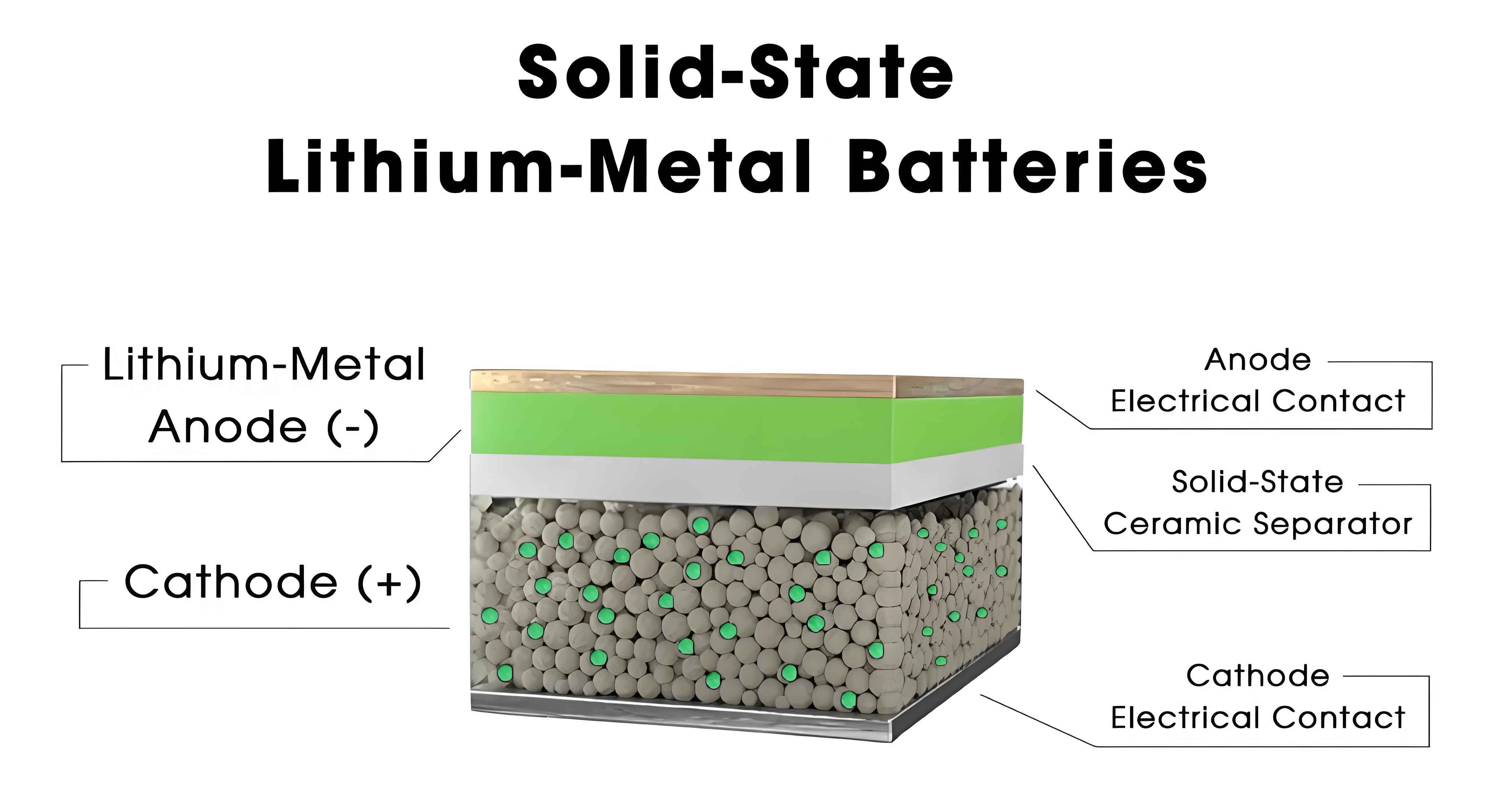
The pursuit of high-performance solid state batteries has accelerated globally, with major economies like the EU, Japan, and the US prioritizing them as strategic technologies. In China, initiatives such as the “14th Five-Year Plan” for new energy storage emphasize the development of all-solid-state batteries. Garnet-type solid electrolytes, with room-temperature ionic conductivities around 10−3 S·cm−1, offer a compelling solution due to their mechanical strength and compatibility with lithium metal anodes. Compared to other solid electrolytes—sulfides, halides, polymers, and composites—garnet oxides exhibit superior air stability and electrochemical performance, making them ideal candidates for solid state battery applications. However, issues like surface carbonate formation, dendrite propagation, and expensive raw materials must be overcome to enable widespread adoption.
Ion Transport Mechanisms in Garnet Oxide Solid Electrolytes
Garnet-type solid electrolytes, primarily based on LLZO, have been extensively studied since their discovery in 2007. The ionic conductivity of LLZO can reach up to 10−3 S·cm−1 at room temperature, with a wide electrochemical window of 0–5 V, which is crucial for high-voltage solid state batteries. The crystal structure of LLZO exists in two phases: tetragonal and cubic. The cubic phase, stabilized by doping, exhibits higher ionic conductivity due to disordered lithium occupancy and three-dimensional ion migration pathways. In contrast, the tetragonal phase has a more ordered structure with lower conductivity.
The ionic conductivity in garnet oxides follows the Arrhenius equation, which describes the temperature dependence of ion migration:
$$\sigma = A \exp\left(-\frac{E_a}{kT}\right)$$
where $\sigma$ is the ionic conductivity, $A$ is the pre-exponential factor, $E_a$ is the activation energy, $k$ is Boltzmann’s constant, and $T$ is the temperature. For cubic LLZO, the activation energy typically ranges from 0.2 to 0.3 eV, facilitating rapid Li+ ion movement through vacant sites in the crystal lattice. The conduction mechanism involves Li+ ions hopping between tetrahedral and octahedral sites within the garnet framework, composed of LaO8 dodecahedra and ZrO6 octahedra. Doping with elements such as Ta, Nb, or Ga enhances conductivity by stabilizing the cubic phase and creating additional lithium vacancies. For instance, the ionic conductivity of Li6.3La3Zr1.4Ta0.6O12 (LLZTO) can exceed 10−3 S·cm−1, as shown in Table 1.
| Material | Doped Elements | Ionic Conductivity (S·cm−1) | Activation Energy (eV) |
|---|---|---|---|
| Li6.3La3Zr1.4Ta0.6O12 | Ta | 1.1 × 10⁻³ | 0.25 |
| Li6.5La3Zr1.5Nb0.5O12 | Nb | 7.0 × 10⁻⁴ | 0.27 |
| Li6.75La3Zr1.75Ga0.25O12 | Ga | 2.06 × 10⁻³ | 0.22 |
| Li6.4La3Zr1.4Al0.6O12 | Al | 5.33 × 10⁻⁴ | 0.25 |
The cubic phase stabilization is often achieved through high-temperature sintering or doping, which introduces disorder in the lithium sublattice. The Li+ migration pathways can be described using the Nernst-Einstein relation, which links ionic conductivity to the diffusion coefficient:
$$\sigma = \frac{n q^2 D}{kT}$$
where $n$ is the charge carrier concentration, $q$ is the charge, and $D$ is the diffusion coefficient. In garnet oxides, the high Li+ mobility is attributed to the interconnected channels formed by the crystal structure, enabling efficient ion transport in solid state batteries.
Key Challenges in Garnet Oxide Solid Electrolytes
Air Stability and Surface Passivation
One of the primary challenges for garnet oxide solid electrolytes is their poor air stability. The surface of LLZO is lithium-rich, leading to reactions with moisture and CO2 to form Li2CO3 and LiOH passivation layers. These layers increase interfacial resistance and degrade performance in solid state batteries. The reactions can be summarized as:
$$\text{Li}_2\text{O} + \text{H}_2\text{O} \rightarrow 2\text{LiOH}$$
$$2\text{LiOH} + \text{CO}_2 \rightarrow \text{Li}_2\text{CO}_3 + \text{H}_2\text{O}$$
To mitigate this, several strategies have been developed. Acid etching or thermal treatment can remove surface carbonates, reducing interfacial resistance from over 900 Ω·cm2 to below 30 Ω·cm2. Alternatively, converting Li2CO3 into stable layers like Li3PO4 through molten salt reactions provides long-term air stability. Doping with elements such as Ta or Nb also improves intrinsic stability by reducing the thermodynamic driving force for carbonate formation. For example, Al-doped LLZTO exhibits slower carbonate growth compared to undoped LLZO, as confirmed by first-principles calculations.
In composite electrolytes, surface modification with silane coupling agents or polymers like polydopamine enhances dispersion in polymer matrices and prevents carbonate formation. This approach maintains high ionic conductivity (e.g., 2.31 × 10⁻⁴ S·cm−1) while improving compatibility with solid state battery components.
Lithium Dendrite Penetration
Lithium dendrite growth through garnet electrolytes is a critical failure mode in solid state batteries. Unlike liquid electrolytes, garnet oxides are susceptible to dendrite propagation along grain boundaries and defects, leading to short circuits. The dendrite initiation is influenced by interfacial inhomogeneities, localized electric fields, and electronic conductivity at grain boundaries. The critical current density (CCD) for dendrite formation can be modeled using the following equation:
$$J_c = \frac{\sigma \Delta V}{L}$$
where $J_c$ is the critical current density, $\sigma$ is the ionic conductivity, $\Delta V$ is the overpotential, and $L$ is the electrolyte thickness. To suppress dendrites, strategies focus on improving electrolyte densification and designing functional interfaces.
Constructing mixed ion-electron conducting interlayers, such as Cu3N-derived Li3N with embedded Cu nanoparticles, homogenizes lithium deposition and enhances interfacial stability. Similarly, electron-insulating layers like LiF or polymer-based coatings reduce electronic leakage and promote uniform Li+ flux. For instance, introducing a Li3Bi@Li3OCl composite interlayer via in situ reactions increases the CCD to 1.1 mA·cm−2 and extends cycle life to over 1,000 hours in symmetric cells.
Moreover, enhancing the mechanical properties of garnet electrolytes through high-density sintering reduces porosity and crack propagation. The fracture toughness $K_{IC}$ can be expressed as:
$$K_{IC} = Y \sigma \sqrt{\pi a}$$
where $Y$ is a geometric factor, $\sigma$ is the applied stress, and $a$ is the crack length. By minimizing defects, the risk of dendrite penetration in solid state batteries is significantly lowered.
| Strategy | Mechanism | Performance Improvement |
|---|---|---|
| Mixed Conducting Interlayers | Homogenizes electric field and Li deposition | CCD: 1.1 mA·cm−2; Cycle life: >1,000 h |
| Electron-Insulating Coatings | Reduces electronic leakage | Interfacial resistance: <50 Ω·cm2 |
| High-Density Sintering | Minimizes grain boundaries and defects | Fracture toughness increase by 30% |
| Polymer-Based Buffers | Accommodates volume changes | Stable cycling at 0.5 mA·cm−2 |
Cost-Effective Development
The high cost of garnet oxide solid electrolytes stems from expensive raw materials (e.g., Ta2O5) and energy-intensive sintering processes. To address this, researchers are exploring low-cost dopants like Al, Ca, and W, which stabilize the cubic phase and enhance ionic conductivity. For example, Ca and W co-doping reduces the sintering temperature to 1,150°C and increases conductivity by two orders of magnitude. The cost comparison of dopants is summarized in Table 3.
| Dopant | Raw Material Cost (USD/kg) | Ionic Conductivity (S·cm−1) |
|---|---|---|
| Ta2O5 | ~80 | 1.1 × 10⁻³ |
| Nb2O5 | ~25 | 7.0 × 10⁻⁴ |
| Ga2O3 | ~130 | 2.06 × 10⁻³ |
| Al2O3 | ~10 | 5.33 × 10⁻⁴ |
| WO3 | ~20 | 5.74 × 10⁻⁴ |
Advanced sintering techniques, such as microwave-assisted sintering, can reduce processing time from hours to seconds, minimizing lithium loss and energy consumption. The overall cost of solid state battery production can be optimized by integrating these methods, as described by the equation for manufacturing cost $C_m$:
$$C_m = C_{\text{materials}} + C_{\text{energy}} + C_{\text{environment}}$$
where $C_{\text{materials}}$ includes raw material costs, $C_{\text{energy}}$ accounts for sintering energy, and $C_{\text{environment}}$ covers waste management. By adopting low-cost dopants and efficient sintering, the total cost of garnet electrolytes can be reduced by up to 50%, making solid state batteries more economically viable.
Application Status of Garnet Solid Electrolytes
Garnet oxide solid electrolytes are increasingly being integrated into solid state battery designs, including composite electrolytes, cathode mixtures, and anode modifications. Companies like QuantumScape and Qingtao Energy have commercialized LLZO-based cells, achieving energy densities over 330 Wh·kg−1 in pilot scales. In composite electrolytes, garnet particles are dispersed in polymers like PEO or PVDF to form flexible membranes with ionic conductivities up to 2.1 × 10⁻⁴ S·cm−1. For example, vertically aligned LLZO structures templated by cellulose films enhance Li+ transport and mechanical strength, enabling stable cycling in LiFePO4/Li cells with 93% capacity retention after 200 cycles.
In cathodes, LLZO additives improve rate capability and cycle life by forming protective interfaces. For instance, LLZO-NMC811 composites exhibit enhanced performance due to LaNiO3 interlayers that facilitate Li+ diffusion and suppress side reactions. In anodes, interconnected LLZO networks in graphite composites increase ionic conductivity to 0.85 mS·cm−1 and capacity retention to 93.1% after 50 cycles. These applications demonstrate the versatility of garnet electrolytes in advancing solid state battery technology.
Summary and Outlook
In summary, garnet oxide solid electrolytes offer significant advantages for all-solid-state lithium batteries, but challenges in air stability, dendrite suppression, and cost must be addressed. Surface passivation layers can be managed through chemical conversion or doping, while dendrite growth is mitigated via interface engineering and densification. Cost reduction is achievable through low-cost dopants and efficient sintering. Future research should focus on in-situ characterization of surface reactions, development of robust interfaces, and scalable manufacturing processes. By overcoming these hurdles, garnet-based solid state batteries can achieve commercial viability, paving the way for safer and higher-energy-density energy storage systems. The continuous innovation in materials and processing will undoubtedly accelerate the adoption of solid state batteries in various applications, from electric vehicles to grid storage.