
As a researcher in the field of electrochemical energy storage, I have been deeply involved in addressing the critical challenges facing next-generation batteries. Solid-state lithium metal batteries represent a transformative technology with the potential to achieve energy densities exceeding 500 Wh/kg, which is essential for extending the driving range of electric vehicles beyond 800 km. However, the poor interfacial contact between the lithium metal anode and solid electrolytes, such as Li7La3Zr2O12 (LLZO), severely limits their cycle life and safety. In this study, I explore an innovative approach using a copper (Cu) thin film as an interfacial modification layer to mitigate volume strain and enhance stability. Unlike conventional highly electrochemically active interlayers like silver (Ag), the Cu modification layer exhibits low electrochemical activity, reducing interfacial phase volume changes and improving mechanical contact. Through comprehensive experiments, I demonstrate that this strategy significantly lowers interfacial resistance, increases capacity utilization, and extends cycle life in solid-state batteries.
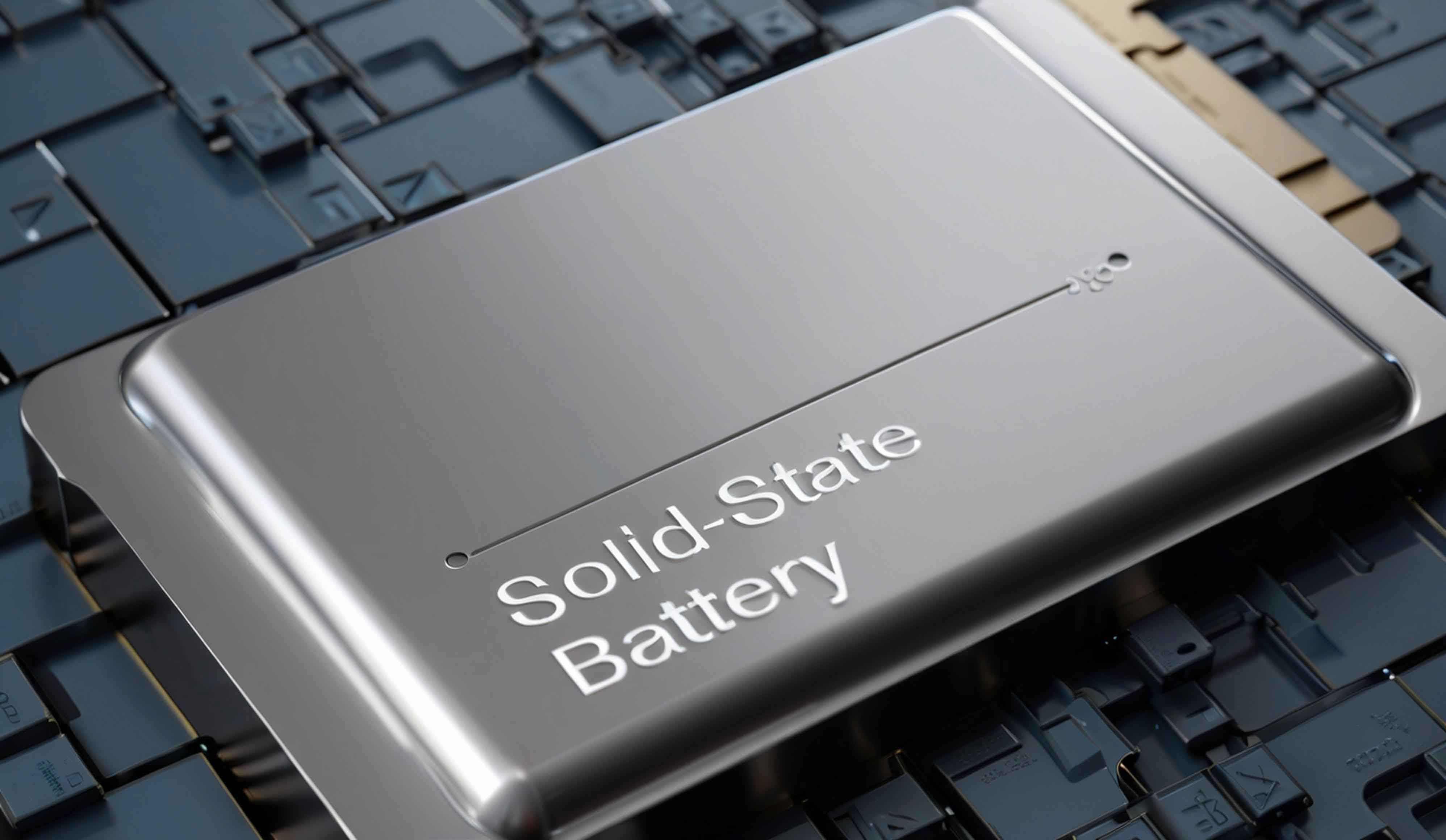
The development of solid-state batteries has gained momentum due to their inherent safety advantages over liquid electrolytes, such as non-flammability and suppression of lithium dendrite growth. Solid-state batteries leverage solid electrolytes with high Young’s moduli to mechanically inhibit dendrite penetration, but rigid interfaces often lead to poor contact and high impedance. In my work, I focus on the garnet-type LLZO solid electrolyte, which offers high ionic conductivity but suffers from interfacial incompatibility with lithium metal. The volume changes during cycling exacerbate interface degradation, causing increased resistance and capacity fade. By introducing a Cu thin film, I aim to create a stable interphase that minimizes strain and maintains intimate contact, thereby advancing the performance of solid-state batteries.
To fabricate the solid electrolyte, I employed a solid-state reaction method. Starting materials, including lithium carbonate, lanthanum oxide, and zirconium oxide, were mixed in stoichiometric ratios and subjected to high-energy ball milling at 500 rpm for 48 hours. The resulting powder was calcined at 900°C for 24 hours to form the LLZO phase. Subsequently, the powder was pressed into pellets under 400 MPa and sintered at 1200°C for 24 hours in an argon atmosphere, with excess LLZO powder used to prevent lithium loss. The sintered pellets were polished to ensure smooth surfaces and stored in an argon-filled glove box to avoid contamination.
For the Cu modification layer, I utilized magnetron sputtering deposition. The LLZO pellets were mounted with the deposition face oriented toward a Cu target at a distance of 15 cm. The sputtering process was conducted at a power of 100 W, with a base vacuum below 5×10⁻⁴ Pa and an argon pressure of 0.1 Pa. After 5 minutes of sputtering, the Cu film was annealed at 800°C for 5 minutes under high vacuum to enhance adhesion and uniformity. For comparison, an Ag modification layer was prepared using identical parameters. The thickness of the deposited films ranged from 2 to 4 μm, as confirmed by scanning electron microscopy (SEM).
I assembled symmetric Li|LLZO|Li cells to evaluate interfacial stability. Lithium foil with a thickness of 50 μm was cut into 10 mm diameter discs and attached to both sides of the LLZO pellets, with and without modification. The cells were heated at 200°C for 1 hour to promote interface formation. For full-cell tests, I prepared LiCoO2 (LCO) cathodes with a mass ratio of 8:1:1 for active material, Super-P conductive agent, and polyvinylidene fluoride binder. The cathode was wetted with 5 μL of ester-based electrolyte to improve interface kinetics, while the anode side was treated similarly to the symmetric cells. Soft-pack batteries with a capacity of 500 mAh were assembled under a pressure of 0.5 MPa, incorporating 15 wt% electrolyte to ensure cathode wetting.
Characterization included electrochemical impedance spectroscopy (EIS) to measure ionic conductivity and interfacial resistance, SEM for morphological analysis, and element mapping to examine distribution. Galvanostatic cycling tests were performed on symmetric cells and full cells using a battery testing system, with critical current density measurements conducted via step-current cycles. The data were analyzed to assess the impact of Cu modification on solid-state battery performance.
The interfacial contact between LLZO and lithium metal is a critical factor in solid-state batteries. Without modification, the rigid surface of LLZO leads to significant gaps, as shown in SEM cross-sections, with average gaps of approximately 400 nm initially, widening to 550 nm after 50 cycles. This deterioration results in high interfacial resistance. In contrast, the Cu modification layer facilitates alloying with lithium during heat treatment, filling these gaps and creating a seamless interface. Elemental mapping confirms a sharp interface between Cu and LLZO, with no interdiffusion, indicating chemical stability. The improved wettability reduces the contact angle of molten lithium below 90°, enhancing adhesion and reducing impedance.
EIS measurements reveal the effectiveness of Cu modification. The area-specific resistance (ASR) of the unmodified interface is 2030 Ω·cm2, while the Cu-modified interface achieves an ASR of 65 Ω·cm2, a reduction to 3.2% of the original value. This drastic decrease is attributed to the formation of a lithiophilic layer that promotes ion transport. The LLZO pellet itself exhibits an ionic conductivity of 0.35 mS/cm, with an ASR of 373 Ω·cm2. The Cu layer’s low electrochemical activity minimizes volume changes during cycling, maintaining stable contact and preventing resistance increase.
To quantify the volume strain effect, I consider the volume change ratio ΔV/V0 during alloying and dealloying processes. For an active interlayer like Ag, the reaction Ag + Li → LiAg involves a significant volume expansion, given by:
$$ \frac{\Delta V}{V_0} = \frac{V_{\text{LiAg}} – V_{\text{Ag}}}{V_{\text{Ag}}} $$
where VLiAg and VAg are the molar volumes of the alloy and pure Ag, respectively. Experimental data suggest that Ag-based interlayers can experience volume changes exceeding 50%, leading to mechanical stress and interface failure. In contrast, Cu exhibits minimal alloying with lithium under typical battery operating conditions, resulting in a much lower ΔV/V0. This reduction in strain is key to the enhanced stability observed in Cu-modified solid-state batteries.
Galvanostatic cycling of symmetric cells further demonstrates the benefits of Cu modification. At a current density of 0.1 mA/cm2, the unmodified cell shows a rapid increase in polarization voltage from 387 mV to 1212 mV before short-circuiting at 130 hours due to lithium dendrite penetration. The Ag-modified cell exhibits improved stability, with a gradual voltage rise over 1000 hours, indicating progressive interface degradation. However, the Cu-modified cell maintains a stable polarization voltage for over 2000 hours, with no significant increase, highlighting its superior interfacial integrity.
Critical current density tests reveal the dendrite suppression capability. The unmodified cell fails at 0.4 mA/cm2, while the Ag-modified cell reaches 0.8 mA/cm2. The Cu-modified cell achieves a critical current density of 1.2 mA/cm2, underscoring its ability to withstand higher currents without short-circuiting. This improvement is linked to the stable interphase that reduces localized current hotspots and inhibits dendrite nucleation.
In full-cell configurations with LCO cathodes, the Cu modification significantly enhances electrochemical performance. The initial charge-discharge curves show that the unmodified cell has a high polarization, resulting in a specific capacity of 116.2 mAh/g for LCO. The Ag-modified cell improves this to 130.2 mAh/g, while the Cu-modified cell achieves 145.3 mAh/g, comparable to liquid electrolyte systems. This capacity utilization is attributed to the reduced interfacial resistance and better ion transport. Rate performance tests further confirm the advantage of Cu modification, with the cell maintaining higher capacities at increased C-rates due to stable interface contact.
Long-term cycling stability is a crucial metric for solid-state batteries. The unmodified cell suffers from rapid capacity fade, retaining only 46.3% after 500 cycles at 0.33C. The Ag-modified cell shows better retention at 81.6%, but the Cu-modified cell excels with 93.5% capacity retention. This outstanding cycle life is a direct result of the minimized volume strain and maintained interfacial adhesion, which prevent degradation mechanisms such as contact loss and dendrite growth.
To summarize the key findings, I present the following table comparing the performance metrics of unmodified, Ag-modified, and Cu-modified solid-state batteries:
| Parameter | Unmodified | Ag-Modified | Cu-Modified |
|---|---|---|---|
| Interfacial ASR (Ω·cm2) | 2030 | 66 | 65 |
| LCO Capacity (mAh/g) | 116.2 | 130.2 | 145.3 |
| Critical Current Density (mA/cm2) | 0.4 | 0.8 | 1.2 |
| Capacity Retention after 500 cycles (%) | 46.3 | 81.6 | 93.5 |
| Cycle Life (hours in symmetric cell) | 130 | 1000 | 2000 |
The data clearly illustrate the superiority of Cu modification in enhancing the performance of solid-state batteries. The low electrochemical activity of Cu minimizes irreversible reactions and volume changes, leading to a more durable interface. This approach addresses one of the fundamental limitations in solid-state battery technology and paves the way for practical applications.
In conclusion, my research demonstrates that a Cu thin film modification layer effectively improves the interfacial stability of solid-state lithium metal batteries. By reducing volume strain and maintaining mechanical contact, the Cu layer lowers impedance, increases capacity, and extends cycle life. Compared to active interlayers like Ag, the Cu modification offers a more sustainable solution for high-energy-density solid-state batteries. Future work will focus on optimizing the thickness and microstructure of the Cu layer and exploring other inert materials to further advance solid-state battery performance. The insights gained from this study contribute to the ongoing development of reliable and efficient energy storage systems for electric vehicles and beyond.
The evolution of solid-state batteries relies on innovative interfacial engineering, and the use of Cu modification represents a significant step forward. As we continue to refine these systems, the goal of achieving 500 Wh/kg energy density becomes increasingly attainable, promising a future where electric vehicles can travel farther and safer. The integration of such modifications into large-scale manufacturing will be crucial for commercializing solid-state batteries and revolutionizing the energy landscape.