
Solid-state batteries have garnered significant attention in recent years due to their high energy density, enhanced safety, and superior thermal stability compared to conventional liquid electrolytes. However, the formation of lithium dendrites and the subsequent accumulation of dead lithium—electrochemically inactive lithium metal that loses contact with the electrode—remain critical challenges. Dead lithium reduces the cycling efficiency and lifespan of solid-state batteries, and in severe cases, can lead to internal short circuits. While solid-state electrolytes with high mechanical strength can suppress dendrite growth, incomplete dissolution during cycling promotes dead lithium formation. Understanding this phenomenon requires advanced modeling techniques that account for the complex interactions between mechanical, thermal, and electrochemical fields. In this study, we employ a phase field method to simulate lithium dendrite dissolution and dead lithium formation in solid-state batteries under multi-physics coupling. We investigate the effects of thermal and mechanical fields, as well as key electrochemical parameters, on dead lithium morphology and area. Our findings provide insights into optimizing solid-state battery design to mitigate dead lithium accumulation.
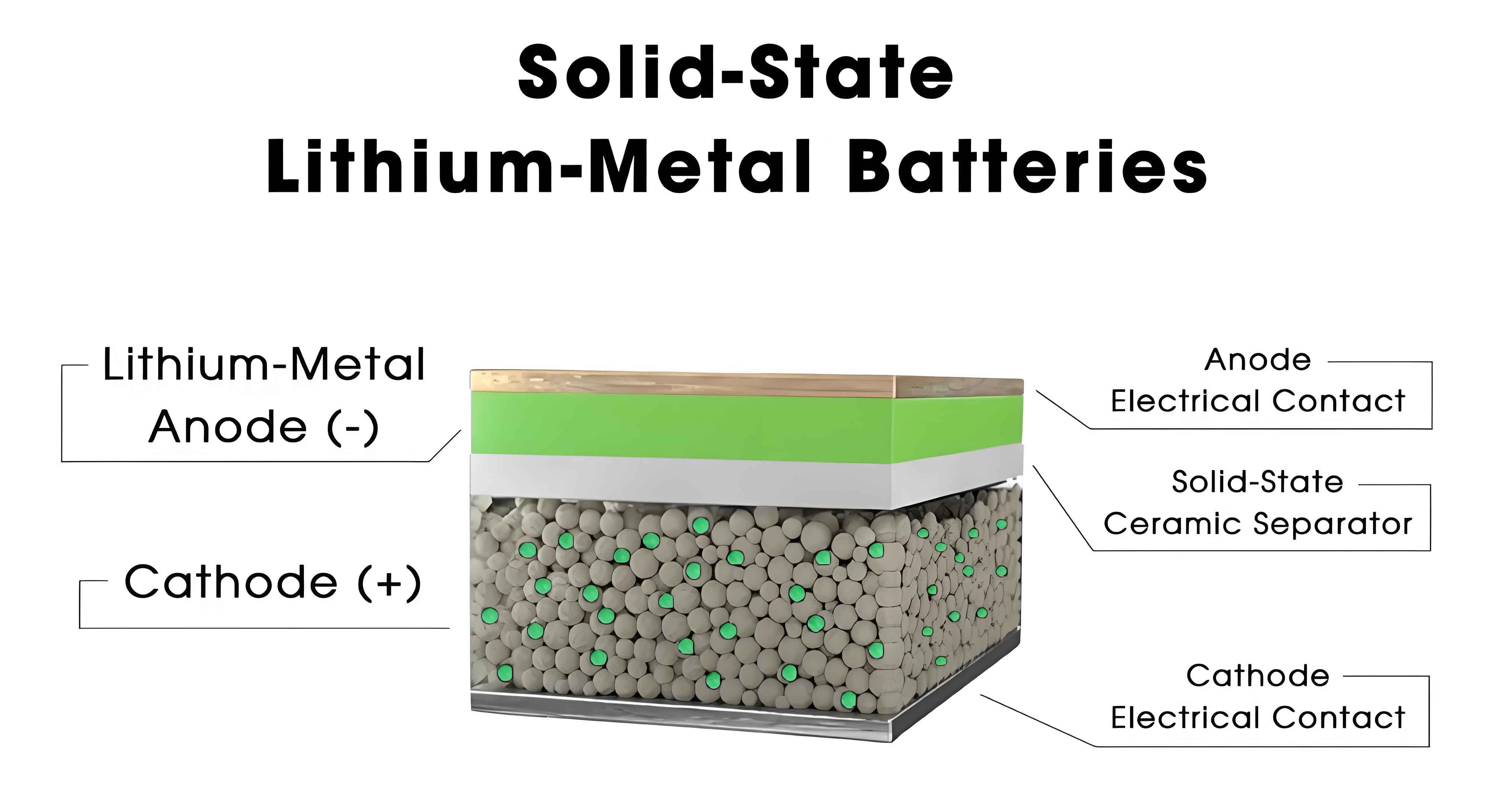
The phase field method is a powerful computational approach for modeling microstructural evolution in materials, making it ideal for studying lithium dendrite growth and dissolution in solid-state batteries. We develop a multi-physics model that couples mechanical, thermal, and electrochemical fields to capture the behavior of lithium in solid-state electrolytes. The model incorporates an order parameter $\xi$, where $\xi = 0$ represents the solid electrolyte phase and $\xi = 1$ represents the lithium metal phase. Intermediate values indicate the interface between phases. The Gibbs free energy of the system is defined as:
$$ G = \int_V \left[ f_{grad}(\xi) + f_{ch}(\xi, c_i) + f_{elec}(\xi, c_i, \varphi) + f_{els}(\xi) \right] dV $$
Here, $f_{grad}(\xi)$ is the gradient energy density, expressed as:
$$ f_{grad}(\xi) = \frac{1}{2} \kappa \nabla^2 \xi $$
where $\kappa = \kappa_0 [1 + \delta \cos(\omega \theta)]$ accounts for interfacial energy anisotropy, with $\kappa_0$, $\delta$, $\omega$, and $\theta$ representing the gradient energy coefficient, anisotropy strength, anisotropy mode number, and interface normal angle, respectively. The chemical free energy density $f_{ch}(\xi, c_i)$ is given by:
$$ f_{ch}(\xi, c_i) = g(\xi) + c_0 R T_0 \sum \frac{c_i}{c_{0i}} \ln \frac{c_i}{c_0} $$
where $g(\xi) = W \xi^2 (1 – \xi)^2$ is a double-well potential function with barrier height $W$, $c_0$ is the standard lithium concentration, $R$ is the gas constant, and $T_0$ is the ambient temperature. The electrostatic energy density $f_{elec}(\xi, c_i, \varphi)$ is:
$$ f_{elec}(\xi, c_i, \varphi) = \sum F c_i z_i \varphi $$
with $F$ denoting Faraday’s constant and $z_i$ the valence of species $i$. The elastic energy density $f_{els}(\xi)$ is formulated as:
$$ f_{els}(\xi) = \frac{1}{2} C_{ijkl} \varepsilon_{ij}^E \varepsilon_{kl}^E $$
where $C_{ijkl}$ is the elasticity tensor, derived from Young’s modulus $E$ and Poisson’s ratio $\nu$:
$$ C_{ijkl} = \frac{E}{2(1+\nu)} (\delta_{il}\delta_{jk} + \delta_{ik}\delta_{jl}) + \frac{E \nu}{(1+\nu)(1-2\nu)} \delta_{ij}\delta_{kl} $$
Here, $E = E_e h(\xi) + E_s [1 – h(\xi)]$ and $\nu = \nu_e h(\xi) + \nu_s [1 – h(\xi)]$, with $E_e$, $E_s$, $\nu_e$, and $\nu_s$ representing the Young’s moduli and Poisson’s ratios of the electrode and electrolyte, respectively. The interpolation function $h(\xi) = \xi^3 (6\xi^2 – 15\xi + 10)$ ensures smooth transitions. The elastic strain tensors $\varepsilon_{ij}^E$ and $\varepsilon_{kl}^E$ are defined as:
$$ \varepsilon_{ij}^E = \varepsilon_{ij}^T – \lambda_i h(\xi) \delta_{ij} $$
$$ \varepsilon_{kl}^E = \varepsilon_{kl}^T – \lambda_i h(\xi) \delta_{kl} $$
where $\varepsilon_{ij}^T$ and $\varepsilon_{kl}^T$ are total strains, and $\lambda_i$ is the Vegard strain coefficient.
The evolution of the phase field parameter $\xi$ is governed by:
$$ \frac{\partial \xi}{\partial t} = -L_\sigma \left( f_{ch}'(\xi) + f_{grad}'(\xi) + f_{els}'(\xi) \right) – L_\eta h'(\xi) \left\{ \exp \left[ \frac{(1-\alpha) n F \eta_\alpha}{R T_0} \right] – \frac{c_{Li^+}}{c_0} \exp \left[ \frac{-\alpha n F \eta_\alpha}{R T_0} \right] \right\} $$
where $L_\sigma$ and $L_\eta$ are the interface mobility and electrochemical reaction constant, $\alpha$ is the symmetry factor, $n$ is the charge transfer number, and $\eta_\alpha$ is the overpotential. The diffusion of lithium ions in the solid-state electrolyte follows Fick’s law:
$$ \frac{\partial c_{Li^+}}{\partial t} = \nabla \cdot \left[ D_{eff} \nabla c_{Li^+} + D_{eff} \frac{D_{eff} c_{Li^+}}{R T_0} n F \nabla \varphi \right] – \psi \frac{d\xi}{dt} $$
where $\psi$ is a constant representing the lithium ion reaction rate, and $D_{eff}$ is the effective diffusion coefficient, which incorporates thermal effects:
$$ D_{eff} = A \exp \left[ -r c_{Li^+} + \frac{E_\alpha}{R} \left( \frac{1}{T} – \frac{1}{T_0} \right) \right] $$
Here, $A$, $r$, and $E_\alpha$ are pre-exponential factor, activation energy, and fitting factor, respectively. The temperature $T$ is governed by heat transfer, with boundary conditions including convection and radiation. The electrostatic potential $\varphi$ is described by Poisson’s equation:
$$ \nabla \cdot (\sigma_{eff} \nabla \varphi) = F C_s \frac{\partial \xi}{\partial t} $$
where $\sigma_{eff} = \sigma_e h(\xi) + \sigma_s [1 – h(\xi)]$ is the effective electrical conductivity, with $\sigma_e$ and $\sigma_s$ being the electrode and electrolyte conductivities, and $C_s$ is the solid-phase lithium concentration.
We implement this model using finite element analysis in COMSOL Multiphysics 6.2, with an 8μm × 8μm domain. The bottom boundary serves as the lithium metal anode and dendrite nucleation site, while the top boundary has an initial voltage of 0.1 V and lithium ion concentration $c_0$. The simulation time is set to 90 s with a 1 s step size. Key parameters are summarized in Table 1.
| Parameter | Symbol | Value |
|---|---|---|
| Gradient energy coefficient | $\kappa_0$ | $1 \times 10^{-10}$ J/m |
| Anisotropy strength | $\delta$ | 0.1 |
| Anisotropy mode number | $\omega$ | 4 |
| Barrier height | $W$ | $3.75 \times 10^5$ J/m³ |
| Standard concentration | $c_0$ | $1 \times 10^3$ mol/m³ |
| Ambient temperature | $T_0$ | 293 K |
| Electrode Young’s modulus | $E_e$ | 7.8 GPa |
| Electrolyte Young’s modulus | $E_s$ | 1 GPa |
| Electrode Poisson’s ratio | $\nu_e$ | 0.42 |
| Electrolyte Poisson’s ratio | $\nu_s$ | 0.3 |
| Vegard strain coefficient | $\lambda_i$ | $-0.866 \times 10^{-3}$, $-0.773 \times 10^{-3}$, $-0.529 \times 10^{-3}$ |
| Interface mobility | $L_\sigma$ | $1 \times 10^{-6}$ m³/(J·s) |
| Reaction constant | $L_\eta$ | 0.5 s⁻¹ |
| Symmetry factor | $\alpha$ | 0.5 |
| Solid-phase Li concentration | $C_s$ | $7.64 \times 10^4$ mol/m³ |
| Electrode conductivity | $\sigma_e$ | $1 \times 10^7$ S/m |
| Electrolyte conductivity | $\sigma_s$ | 0.1 S/m |
| Electrode specific heat | $c_{pe}$ | 1200 J/(kg·K) |
| Electrolyte specific heat | $c_{ps}$ | 133 J/(kg·K) |
| Electrode thermal conductivity | $\lambda_e$ | 1.04 W/(m·K) |
| Electrolyte thermal conductivity | $\lambda_s$ | 0.45 W/(m·K) |
| Convective heat transfer coefficient | $h$ | 10 W/(m²·K) |
We first examine the impact of coupling the thermal field on dead lithium formation in solid-state batteries. Comparing simulations with and without heat transfer, we observe that the inclusion of thermal effects alters the von Mises stress distribution in lithium dendrites. Specifically, the stress difference between the primary trunk and lateral branches increases when the thermal field is coupled. During dissolution, the dissolution cutoff time decreases from 49 s to 43 s, and the dead lithium area increases by 61.1% (from 0.036 μm² to 0.058 μm²). This is attributed to faster dissolution and reduced root stress concentration, which delays fracture but leads to more incomplete dissolution. When external pressure is applied, the dead lithium area changes significantly. For instance, under 5 MPa pressure, the dead lithium area is 0.097 μm² without thermal coupling but reduces to 0.053 μm² with thermal coupling—a 45.3% decrease. This highlights the role of temperature in modulating mechanical behavior in solid-state batteries.
Further analysis of external pressure effects reveals that increasing pressure from 5 MPa to 20 MPa shortens the dissolution cutoff time (40 s, 32 s, and 30 s, respectively) and influences dead lithium area non-monotonically. At 5 MPa, the dead lithium area is 0.053 μm²; it increases to 0.073 μm² at 10 MPa due to enhanced root stress concentration, but decreases to 0.059 μm² at 20 MPa as denser dendrite morphology and slower剥离 promote more complete dissolution. These results underscore the complex interplay between mechanical stress and thermal fields in solid-state batteries.
Next, we investigate the effect of coupling the mechanical field on dead lithium. Without mechanical coupling, the dissolution cutoff time is 28 s, and the dead lithium area is 0.098 μm². With mechanical coupling, the cutoff time increases to 43 s, and the dead lithium area decreases by 40.8% to 0.058 μm². This is because mechanical fields slow down the剥离 rate, allowing more thorough dissolution. Additionally, the internal temperature in the coupled model is lower (299.5 K vs. 301.8 K), indicating that dead lithium accumulation exacerbates heat concentration. Varying the ambient temperature shows that higher temperatures reduce dead lithium area. At 353 K, the dead lithium area decreases to 0.041 μm² with mechanical coupling, compared to 0.064 μm² without. At 273 K, the area increases to 0.085 μm². However, the mechanical field stabilizes the dendrite structure, reducing sensitivity to temperature changes. We note that the root剥离 rate decreases significantly over time due to nucleation point constraints, limiting further dissolution.
We also explore the influence of electrochemical parameters on dead lithium in solid-state batteries. The diffusion coefficient $D_{eff}$ affects lithium ion migration. Increasing $D_{eff}$ accelerates dendrite growth, resulting in taller trunks and longer lateral branches. The dissolution cutoff time is 51 s, and the dead lithium area is 0.090 μm². Decreasing $D_{eff}$ promotes more secondary dendrites, leading to a shorter cutoff time of 33 s and a reduced dead lithium area of 0.044 μm²—a 24.1% decrease. This is because lower diffusion limits lithium deposition, minimizing residual dead lithium.
Interface mobility $L_\sigma$ governs the evolution rate of the lithium/electrolyte interface. Increasing $L_\sigma$ to $1 \times 10^{-5}$ m³/(J·s) results in uniform deposition and smooth dendrite surfaces, with a dissolution cutoff time of 68 s and a dead lithium area of 0.004 μm². Decreasing $L_\sigma$ to $1 \times 10^{-7}$ m³/(J·s) accelerates growth but increases secondary dendrites, yielding a cutoff time of 84 s and a dead lithium area of 0.024 μm². Both cases show reduced dead lithium compared to the baseline ($L_\sigma = 1 \times 10^{-6}$ m³/(J·s)), as higher mobility prevents fracture and lower mobility enables complete dissolution.
Anisotropy strength $\delta$ controls dendrite orientation. At $\delta = 0.15$, dendrites exhibit rapid primary trunk growth with numerous secondary branches. The dissolution cutoff time is 41 s, and the dead lithium area is 0.056 μm². At $\delta = 0.05$, growth is more isotropic, with a cutoff time of 45 s and a dead lithium area of 0.051 μm². Reducing anisotropy strength decreases dead lithium area by 12.0%, as it minimizes “weak points” prone to fracture. However, higher anisotropy increases lithium deposition but reduces root residue, slightly lowering dead lithium area by 3.4%.
In conclusion, our phase field study demonstrates that multi-physics coupling significantly influences dead lithium formation in solid-state batteries. Coupling thermal fields shortens dissolution time but increases dead lithium area, while mechanical fields slow down剥离 and reduce dead lithium. External pressure and temperature variations further modulate these effects. Electrochemical parameters like diffusion coefficient, interface mobility, and anisotropy strength also play crucial roles in dead lithium accumulation. These insights can guide the design of solid-state batteries with improved cycling performance and safety. Future work should address limitations such as root dissolution constraints and SEI layer changes at high temperatures.