
In recent years, the demand for advanced energy storage systems has surged, driven by the rapid growth of electric vehicles and portable electronic devices. Traditional liquid lithium-ion batteries face significant challenges, including safety risks due to flammable organic electrolytes and limitations in energy density. In contrast, all-solid-state batteries, which utilize solid-state electrolytes instead of liquid counterparts, offer enhanced safety and higher theoretical energy densities. Among various fabrication techniques, the tape casting process has emerged as a promising method for producing high-quality thin-film components for solid-state batteries. This paper explores the advancements in tape casting technology for all-solid-state battery applications, focusing on key process parameters, material systems, and innovative structural designs.
The tape casting process, also known as doctor blade casting, is a well-established technique for producing thin ceramic films. It involves several steps: slurry preparation, deaeration, casting, drying, and sintering. The process allows for precise control over film thickness and uniformity, making it suitable for large-scale production. A critical advantage of tape casting is its compatibility with multilayer structures, which is essential for optimizing the performance of solid-state batteries. For instance, the process enables the integration of gradient compositions and porous architectures, addressing issues such as interfacial resistance and ionic transport limitations.
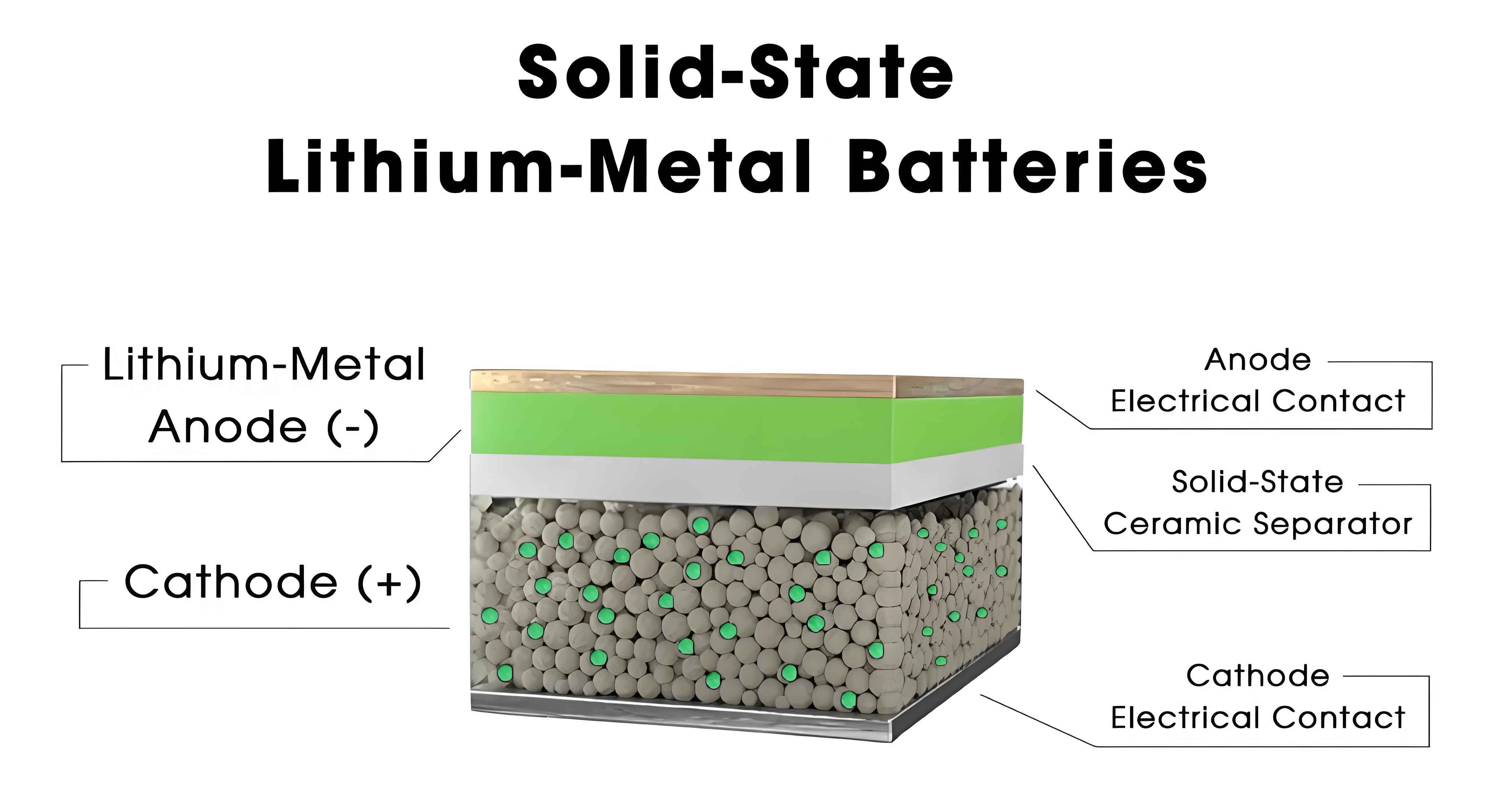
One of the key aspects of tape casting is the optimization of slurry properties. The slurry typically consists of active materials, binders, dispersants, and solvents. The rheological behavior of the slurry, characterized by its viscosity and shear-thinning properties, directly influences the quality of the cast film. For example, a viscosity range of 2000–3000 mPa·s is often targeted to ensure proper flow and leveling during casting. The relationship between process parameters and film thickness can be described by the following equation:
$$ D = \alpha \frac{h}{2} \left( \frac{\rho g H}{6 \eta l V_0} h^2 + 1 \right) $$
where \( D \) is the dried film thickness, \( \alpha \) is the shrinkage coefficient, \( h \) is the doctor blade gap, \( \rho \) is the slurry density, \( g \) is gravitational acceleration, \( H \) is the slurry height in the reservoir, \( \eta \) is the viscosity, \( l \) is the blade length, and \( V_0 \) is the casting speed. This equation highlights the importance of controlling parameters such as blade gap and casting speed to achieve desired film characteristics.
In the context of solid-state batteries, tape casting has been extensively applied to fabricate electrodes and solid-state electrolytes. For cathode materials, the process enables the production of porous and composite structures that enhance ionic and electronic conductivity. Similarly, for solid-state electrolytes, tape casting allows for the formation of dense, thin films with high ionic conductivity. The following sections delve into specific applications and innovations in tape casting for solid-state battery components.
Tape Casting of Cathode Materials for Solid-State Batteries
Cathode materials play a crucial role in determining the performance of solid-state batteries. Tape casting facilitates the fabrication of cathodes with optimized microstructures, such as porous or composite designs. For instance, porous cathodes fabricated via freeze tape casting exhibit lower tortuosity and improved electrolyte infiltration, leading to enhanced rate capability. The discharge capacity of such electrodes can be significantly higher than that of conventional cast electrodes, particularly at high current densities.
Composite cathodes, which combine multiple active materials, benefit from the homogeneous mixing achieved through tape casting. For example, a blend of lithium nickel manganese oxide (LNMO) and lithium iron phosphate (LFP) cast onto carbon-coated aluminum foil has demonstrated improved cycling stability and capacity retention. The table below summarizes the performance of tape-cast composite cathodes in all-solid-state batteries:
| Material Composition | Discharge Capacity (mAh/g) | Cycle Life (Capacity Retention) |
|---|---|---|
| LNMO/LFP Composite | 125 | 74% after 100 cycles |
| Pure LNMO | 95 | 44% after 100 cycles |
Three-dimensional (3D) cathode structures represent another innovative application of tape casting. By combining tape casting with laser ablation, it is possible to create microstructured scaffolds that accommodate active materials and solid electrolytes. These 3D designs reduce ion transport distances and increase active material loading, resulting in higher specific capacities and improved rate performance.
Tape Casting of Solid-State Electrolytes
Solid-state electrolytes are the core components of all-solid-state batteries, responsible for ion conduction between electrodes. Tape casting is particularly advantageous for producing thin, dense electrolyte films with high ionic conductivity. Various types of solid-state electrolytes, including oxide-based, polymer-based, and composite systems, have been fabricated using this technique.
Oxide-based electrolytes, such as Li1.5Al0.5Ti1.5(PO4)3 (LATP) and Li6.5La3Zr1.5Ta0.5O12 (LLZTO), require high sintering temperatures to achieve densification. The addition of sintering aids, such as amorphous silica, can lower the sintering temperature and improve densification. The ionic conductivity of tape-cast LATP films can reach values up to 10−4 S/cm, making them suitable for all-solid-state battery applications.
Polymer-based electrolytes, such as poly(ethylene oxide) (PEO) systems, offer flexibility and good interfacial contact with electrodes. Tape casting allows for the formation of thin PEO films with incorporated lithium salts. The addition of fluorinated lithium salt coatings further enhances interfacial stability and suppresses lithium dendrite growth, enabling long-term cycling stability in solid-state batteries.
Composite electrolytes, which combine inorganic fillers with polymer matrices, leverage the benefits of both materials. For example, tape-cast LABTP@PVB (bismuth-doped LATP with polyvinyl butyral) composite electrolytes exhibit high ionic conductivity and excellent compatibility with lithium metal anodes. The table below compares the properties of different tape-cast solid-state electrolytes:
| Electrolyte Type | Ionic Conductivity (S/cm) | Advantages |
|---|---|---|
| Oxide (LATP) | 10−4 | High stability, good ionic conductivity |
| Polymer (PEO) | 10−4 | Flexibility, good interfacial contact |
| Composite (LABTP@PVB) | 10−3 | Combined benefits of inorganic and polymer materials |
Innovative Tape Casting Techniques for Multilayer Battery Structures
Advanced tape casting techniques, such as layer-by-layer casting, gradient casting, and freeze casting, have been developed to address the challenges associated with multilayer battery structures. These methods enable the fabrication of integrated cells with optimized interfaces and reduced impedance.
Layer-by-layer tape casting involves the sequential deposition of electrode and electrolyte layers. This approach ensures intimate contact between layers, minimizing interfacial resistance. For example, a bilayer structure comprising a composite cathode and a solid polymer electrolyte has demonstrated stable cycling performance with a capacity retention of 80.6% after 150 cycles.
Gradient tape casting allows for the continuous variation of material composition or porosity within a single layer. By adjusting slurry composition and casting parameters, it is possible to create functionally graded electrodes or electrolytes. A bidirectional gradient casting technique has been used to produce double-layer gradient solid polymer electrolytes (DLGSPE), which exhibit improved wettability and mechanical strength. The discharge capacity of cells using DLGSPE reaches 121 mAh/g at 5C, representing a 35% improvement over homogeneous structures.
Freeze tape casting is another innovative method that utilizes controlled solidification to create aligned porous structures. This technique is particularly useful for fabricating electrodes with low tortuosity, which facilitates rapid ion transport. For instance, freeze-cast graphite anodes with aligned channels have shown a 20% increase in charging capacity at 5C rates compared to conventional electrodes.
The synergy between tape casting and other technologies, such as laser processing, further expands the possibilities for battery design. For example, the combination of tape casting and CO2 laser irradiation has been used to create binder-free silicon-graphite heterostructure anodes. These electrodes exhibit a 33% higher discharge capacity than traditional graphite anodes and maintain 91% capacity after 160 cycles.
Future Perspectives
The tape casting process holds great promise for the large-scale production of all-solid-state batteries. Future research should focus on optimizing process parameters, such as slurry rheology and drying conditions, to further improve film quality and performance. Additionally, the development of advanced sintering techniques, such as ultrafast high-temperature sintering (UHS), can address issues related to lithium volatilization and energy consumption.
Multilayer battery structures fabricated via tape casting offer significant advantages in terms of interfacial compatibility and stress management. However, challenges such as co-sintering densification and layer adhesion need to be addressed. The integration of in-situ monitoring and intelligent casting equipment could enable real-time adjustment of process parameters, leading to more consistent and reliable manufacturing.
In conclusion, the tape casting process is a versatile and scalable technique for producing thin-film components for all-solid-state batteries. Its ability to create complex multilayer structures and optimize material properties makes it an indispensable tool for advancing solid-state battery technology. Continued innovation in tape casting methodologies will play a critical role in realizing the full potential of solid-state batteries for next-generation energy storage applications.