
As an automotive technician specializing in electric vehicles, I have encountered numerous cases involving BYD car models, where complex electrical and communication systems can lead to intermittent faults. In this article, I will share my first-hand experience diagnosing two prevalent issues in BYD EV models: the inability to engage drive gear due to communication network failures and critical low-voltage battery malfunctions. These cases highlight the importance of systematic diagnostics, understanding advanced battery technologies, and leveraging data analysis tools. Throughout this discussion, I will emphasize the unique aspects of BYD EV designs, incorporating tables and formulas to clarify technical concepts. The goal is to provide a comprehensive guide for technicians working on these vehicles, ensuring accurate fault identification and resolution.
One common issue in BYD car models, such as the BYD Han EV, involves the vehicle failing to shift into drive mode, often accompanied by warning messages on the instrument cluster. In a recent case, the BYD EV exhibited symptoms where the “OK” indicator did not illuminate, and the gear selector remained stuck in park. Additionally, warnings like “Check ESP System” and “Check Electronic Parking System” appeared intermittently. Initial inspections revealed no blown fuses or obvious physical damage, pointing towards a communication fault within the vehicle’s network. Using a diagnostic scanner, I retrieved multiple historical trouble codes, all related to communication errors between the Vehicle Control Unit (VCU) and various modules. For instance, code U011187 indicated a VCU-BMS (Battery Management System) communication failure, while U029887 pointed to a VCU-DC converter issue. These codes suggested disruptions in the CAN bus network, which is critical for BYD EV operation.
To diagnose the fault, I employed an elimination method by disconnecting modules one by one from the powertrain CAN bus while monitoring the VCU communication. When I unplugged the electric air conditioning control module, the warning messages disappeared, and the system behavior normalized. Repeated testing confirmed that the air conditioning module was causing the communication breakdown. Replacing this module resolved the issue, allowing the BYD car to shift gears properly. This case underscores how a single faulty module can disrupt the entire network in a BYD EV, leading to operational failures. Below is a table summarizing the key trouble codes and their implications for BYD EV diagnostics:
| Trouble Code | Description | Affected System in BYD EV |
|---|---|---|
| U011187 | VCU-BMS Communication Fault | Battery Management |
| U029887 | VCU-DC Converter Communication Fault | Power Conversion |
| U016487 | Air Conditioning Communication Fault | Climate Control |
The communication network in a BYD EV relies on CAN bus protocols, where data integrity is crucial. The voltage levels on the CAN-H and CAN-L lines must adhere to specific thresholds for reliable operation. For example, the differential voltage $$ V_{diff} = V_{CAN-H} – V_{CAN-L} $$ should typically be around 2.5V during dominant states and close to 0V in recessive states. Faults can arise if modules introduce noise or resistance, disrupting this balance. In this BYD car case, the air conditioning module’s internal failure likely caused a voltage drop or short, leading to communication errors. The relationship can be modeled using Ohm’s Law: $$ V = I \times R $$ where an increase in resistance (R) due to corrosion or damage reduces voltage (V), affecting current (I) flow. Regular monitoring of these parameters is essential for maintaining BYD EV performance.
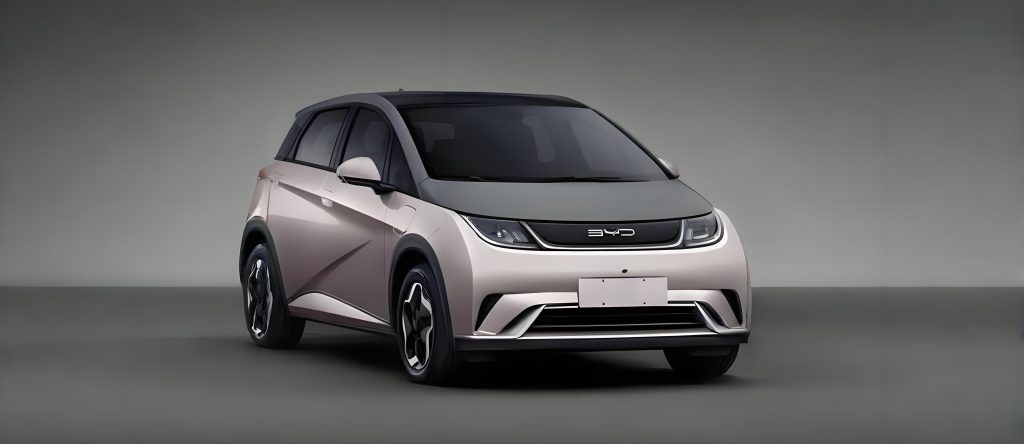
Another frequent issue in BYD EV models, like the BYD Song DM, involves the low-voltage lithium iron phosphate (LiFePO4) battery, which can discharge excessively during prolonged storage. In one instance, a BYD car owner reported that the vehicle’s remote key fob operated intermittently, followed by dimming instrument lights and a “Low Voltage Battery, Check Vehicle Status” message. The horn also faded, indicating severe battery depletion. Unlike traditional lead-acid batteries, the BYD EV uses a specialized LiFePO4 battery with three terminals and an 8-pin connector for smart functions. This battery features modes like “normal,” “sleep,” and “low-voltage protection” to conserve energy and extend lifespan. Attempting to replace it with a lead-acid battery is not advisable, as the BYD car’s system relies on the LiFePO4 battery’s communication capabilities and voltage characteristics.
Upon inspection, I measured the battery voltage at only 9.5V, well below the nominal 12.8V. Activating the battery via the left front door micro-switch initiated a smart charging cycle, raising the voltage to 11.9V. Using BYD’s VDS diagnostic tool, I analyzed the dynamic data stream during charging, which revealed that cells 1 and 3 were underperforming. Specifically, cell 1 voltage rose sluggishly to 2.6V, compared to the expected 3.1V, indicating cell degradation. The charging process can be described by the formula for battery state of charge (SOC): $$ SOC(t) = SOC_0 + \frac{1}{C} \int_0^t I(\tau) \, d\tau $$ where \( C \) is the battery capacity, and \( I \) is the charging current. For this BYD EV, the current was 43A, but the faulty cell impeded full recharge. Replacing the low-voltage battery assembly restored normal operation. The table below compares lead-acid and LiFePO4 batteries in BYD car applications:
| Parameter | Lead-Acid Battery | LiFePO4 Battery in BYD EV |
|---|---|---|
| Nominal Voltage | 12.6V | 12.8V |
| Weight | ~15kg | ~4kg |
| Lifespan | 3-5 years | 10+ years |
| Communication | None | CAN bus via 8-pin connector |
The low-voltage battery in a BYD EV is integral to the vehicle’s startup and auxiliary systems. Its 8-pin connector includes pins for CAN communication (pins 1 and 3), wake-up signals (pin 6), and charging control (pin 8). The wake-up function uses a low-current signal to transition the battery from sleep mode, which can be modeled as a switch in a circuit: $$ I_{wake} = \frac{V_{supply}}{R_{internal}} $$ where a low resistance path activates the battery. In the BYD car case, the damaged cell increased internal resistance, preventing proper activation. Additionally, the battery’s management system monitors cell balancing, which is critical for longevity. The voltage imbalance between cells can be expressed as $$ \Delta V = V_{max} – V_{min} $$ and if this exceeds a threshold (e.g., 0.2V), it triggers protection mechanisms. For BYD EV owners, avoiding jump-starts with other batteries is crucial to prevent damage to the LiFePO4 system.
Expanding on the diagnostic approach for BYD EV models, it’s important to consider environmental factors and usage patterns. For example, in the BYD Han EV gear engagement issue, temperature fluctuations could exacerbate communication faults. The resistance of CAN bus wires changes with temperature, following the formula $$ R = R_0 [1 + \alpha (T – T_0)] $$ where \( \alpha \) is the temperature coefficient. In cold conditions, increased resistance might weaken signals, leading to intermittent faults. Similarly, for the BYD Song DM battery, prolonged inactivity accelerates self-discharge, which can be quantified by the self-discharge rate $$ \frac{dSOC}{dt} = -k $$ where \( k \) is a constant dependent on battery health. Regular maintenance, including software updates and battery checks, is essential for BYD car reliability.
In both cases, data logging played a key role. For the BYD EV with gear issues, I recorded CAN bus traffic using a protocol analyzer, which showed dropped packets from the air conditioning module. The error rate can be calculated as $$ Error Rate = \frac{N_{errors}}{N_{total}} \times 100\% $$ where values above 5% often indicate hardware problems. For the battery issue, the VDS tool provided real-time data on cell voltages and currents, allowing me to identify outliers. This emphasizes the importance of specialized tools for BYD car diagnostics, as generic scanners may miss nuanced faults.
Furthermore, the integration of advanced driver-assistance systems (ADAS) in BYD EV models adds complexity. For instance, faults in the ESP or parking systems can cascade from communication errors. The control logic often involves PID controllers, where the output is given by $$ u(t) = K_p e(t) + K_i \int_0^t e(\tau) \, d\tau + K_d \frac{de}{dt} $$ and disruptions in sensor data (e.g., from the CAN bus) can lead to erroneous outputs. In the BYD Han EV, the “Driving Assist Limited” warning likely stemmed from such issues. Therefore, technicians must adopt a holistic view when diagnosing BYD car problems, considering interconnections between systems.
To prevent recurrence, I recommend BYD EV owners follow best practices, such as avoiding long periods of inactivity and ensuring regular system checks. For the low-voltage battery, using the door micro-switch to activate sleep mode can help preserve charge. Additionally, firmware updates for modules like the air conditioning controller can patch known bugs. The cost-benefit analysis of using genuine parts, though expensive, is justified by the longevity and compatibility they offer for BYD car systems.
In conclusion, diagnosing faults in BYD EV requires a deep understanding of their electronic architecture and battery technology. The cases of gear engagement failure and low-voltage battery issues demonstrate how communication networks and smart batteries are pivotal to BYD car operation. By applying systematic diagnostics, leveraging formulas for electrical analysis, and using tables to compare components, technicians can efficiently resolve these problems. As BYD EV models evolve, continuous learning and adaptation will be key to maintaining their performance and safety.