
As a researcher deeply involved in the advancement of new energy vehicles, I believe that the optimization of the Battery Management System (BMS) is pivotal for the sustainable growth of the automotive industry. With increasing global environmental awareness and escalating energy crises, the shift toward electric vehicles has become imperative. The battery management system serves as the brain of these vehicles, ensuring efficiency, safety, and longevity. In this article, I will explore comprehensive optimization strategies for the battery management system, addressing its core functions, technical challenges, and innovative solutions. My aim is to provide insights that enhance battery efficiency, extend lifespan, improve stability, and foster broader adoption of new energy vehicles. Throughout this discussion, I will emphasize the critical role of the BMS, using detailed analyses, tables, and formulas to summarize key points.
The battery management system, often abbreviated as BMS, is an integral component that monitors, protects, and optimizes battery performance in electric vehicles. From my perspective, a well-designed BMS can significantly impact vehicle range, reliability, and user experience. It operates by continuously tracking parameters such as voltage, current, and temperature across individual cells and the entire battery pack. By doing so, the BMS ensures optimal operating conditions, prevents hazardous situations, and maximizes energy utilization. In essence, the battery management system acts as a guardian, balancing the complex interplay between battery chemistry, electrical loads, and environmental factors. As I delve into this topic, I will refer to the BMS repeatedly to underscore its importance in the evolving landscape of new energy vehicles.
To understand the battery management system fully, let’s examine its basic architecture. The BMS typically consists of several key components, each with specific roles. Below is a table summarizing these elements and their functions:
| Component | Function |
|---|---|
| Main Controller | Serves as the central processing unit, executing control strategies for charging, discharging, and cell balancing. |
| Monitoring Circuit | Utilizes high-precision sensors to collect real-time data on voltage, current, and temperature from battery cells. |
| Data Processing Unit | Analyzes sensor data to estimate state-of-charge (SOC), state-of-health (SOH), and detect anomalies. |
| Communication Interface | Facilitates data exchange with vehicle controllers (e.g., via CAN bus) and external systems for remote monitoring. |
| Balancing Circuit | Equalizes charge across cells to prevent imbalances that reduce overall battery capacity and lifespan. |
| Protection Module | Implements safety measures like overcharge, over-discharge, short-circuit, and thermal protection. |
This architecture enables the BMS to perform critical functions. For instance, real-time monitoring allows for accurate SOC estimation, which I can express using a fundamental formula: $$SOC(t) = SOC(0) – \frac{1}{C_n} \int_0^t i(\tau) d\tau$$ where \( SOC(t) \) is the state-of-charge at time \( t \), \( SOC(0) \) is the initial SOC, \( C_n \) is the nominal battery capacity, and \( i(\tau) \) is the current at time \( \tau \). This equation highlights how the BMS integrates current over time to track energy usage. Additionally, the battery management system employs advanced algorithms for cell balancing, often based on voltage differences. A simple balancing model can be represented as: $$V_{cell, ideal} = \frac{V_{pack}}{N}$$ where \( V_{cell, ideal} \) is the ideal voltage per cell, \( V_{pack} \) is the total pack voltage, and \( N \) is the number of cells. By maintaining voltage uniformity, the BMS enhances overall battery performance.
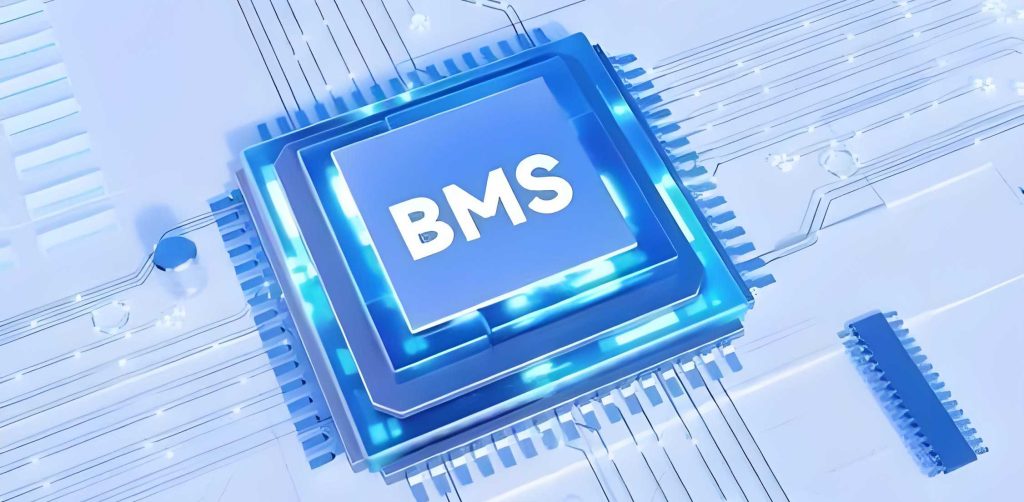
The image above provides a visual representation of a typical BMS setup, illustrating how components interconnect within a battery pack. As I analyze this, it’s clear that the battery management system must handle complex data flows and control actions. In practice, the BMS also incorporates fault diagnosis capabilities, identifying issues like sensor failures or communication errors. This proactive approach ensures that the battery management system can mitigate risks before they escalate into safety hazards. From my experience, a robust BMS design is essential for achieving the high standards required in modern electric vehicles.
Despite its importance, the battery management system faces several technical challenges that hinder optimal performance. I have identified four major areas of concern: low energy efficiency, short battery lifespan, stability and safety issues, and poor adaptability under complex conditions. Each of these challenges impacts the overall effectiveness of the BMS and, by extension, the vehicle. To elaborate, let’s consider a table that outlines these challenges and their implications:
| Challenge | Description | Impact on Vehicle |
|---|---|---|
| Low Energy Efficiency | Energy losses during charging/discharging, suboptimal BMS algorithms, and vehicle resistance reduce overall efficiency. | Decreased driving range, higher energy costs, and reduced environmental benefits. |
| Short Battery Lifespan | Degradation from charge cycles, temperature fluctuations, and increased internal resistance limits battery life. | Increased replacement costs, reduced resale value, and sustainability concerns. |
| Stability and Safety Issues | Risks like thermal runaway, short circuits, and overloading in extreme conditions compromise system integrity. | Potential safety hazards, vehicle downtime, and damage to brand reputation. |
| Poor Adaptability | Inaccurate SOC estimation and inadequate control strategies in varied driving scenarios (e.g., urban traffic, highway). | Unreliable driving information, suboptimal performance, and driver dissatisfaction. |
From my viewpoint, addressing these challenges requires a multifaceted approach. For example, energy efficiency in the BMS can be improved by minimizing parasitic losses. I can model the total energy loss \( P_{loss} \) as: $$P_{loss} = I^2 R_{internal} + P_{leakage}$$ where \( I \) is the current, \( R_{internal} \) is the battery’s internal resistance, and \( P_{leakage} \) represents leakage power. By optimizing the BMS to reduce these losses, we can enhance overall vehicle efficiency. Similarly, battery lifespan is closely tied to factors like depth of discharge (DOD) and temperature. A common aging model is: $$SOH = 1 – \alpha \cdot cycles^{\beta}$$ where \( SOH \) is the state-of-health (1 for new), \( \alpha \) and \( \beta \) are degradation coefficients, and \( cycles \) is the number of charge-discharge cycles. The battery management system must control operating conditions to slow this degradation.
Moving to optimization strategies, I propose several methods to enhance the battery management system. These strategies span hardware, software, system integration, intelligent control, and thermal management. Each area offers opportunities to refine the BMS and overcome the aforementioned challenges. In my analysis, I will detail these strategies with supporting tables and formulas to provide a comprehensive guide.
First, hardware optimization focuses on improving the physical components of the BMS. This includes selecting high-performance sensors, relays, and power semiconductors. For instance, using precision sensors with low error margins can enhance data accuracy. I can quantify sensor error \( \epsilon \) as: $$\epsilon = \frac{|V_{measured} – V_{actual}|}{V_{actual}} \times 100\%$$ where \( V_{measured} \) is the sensor reading and \( V_{actual} \) is the true voltage. By minimizing \( \epsilon \), the BMS achieves better monitoring. Additionally, thermal management hardware, such as cooling plates or liquid systems, is crucial. The heat dissipation rate \( Q \) can be expressed as: $$Q = h A (T_{battery} – T_{ambient})$$ where \( h \) is the heat transfer coefficient, \( A \) is the surface area, \( T_{battery} \) is battery temperature, and \( T_{ambient} \) is ambient temperature. Optimizing these parameters ensures the battery stays within safe limits. Below is a table summarizing key hardware optimization aspects:
| Aspect | Optimization Action | Expected Benefit |
|---|---|---|
| Component Selection | Use high-accuracy sensors and fast-switching semiconductors. | Improved data precision and reduced energy losses. |
| System Layout | Minimize wire lengths and group components to reduce EMI. | Enhanced signal integrity and reliability. |
| Thermal Design | Implement advanced cooling (e.g., liquid cooling) with smart controls. | Prevent overheating, extend battery life, and ensure safety. |
| Power Electronics | Optimize converter efficiency using high-frequency designs. | Higher energy conversion efficiency and reduced heat generation. |
Second, software optimization involves refining the algorithms and data processing within the BMS. From my experience, advanced control algorithms like dynamic programming and machine learning can revolutionize BMS performance. For SOC estimation, techniques such as Kalman filtering are widely used. The Kalman filter equations include: $$\hat{x}_{k|k-1} = F_k \hat{x}_{k-1|k-1} + B_k u_k$$ $$P_{k|k-1} = F_k P_{k-1|k-1} F_k^T + Q_k$$ where \( \hat{x} \) is the state estimate (e.g., SOC), \( F_k \) is the state transition matrix, \( u_k \) is the control input, \( P \) is the error covariance, and \( Q_k \) is process noise covariance. By implementing such algorithms, the BMS achieves more accurate SOC predictions, even under varying loads. Similarly, for cell balancing, software can adaptively adjust balancing currents based on real-time data. A balancing current \( I_{balance} \) might be calculated as: $$I_{balance} = k (V_{max} – V_{min})$$ where \( k \) is a gain factor, and \( V_{max} \) and \( V_{min} \) are the maximum and minimum cell voltages. This dynamic approach improves balancing efficiency and reduces energy waste.
Third, system integration optimization ensures the BMS works seamlessly with other vehicle systems. The battery management system must communicate effectively with the vehicle controller, motor controller, and charging infrastructure. Using protocols like CAN bus or Ethernet, data exchange can be optimized. I can model communication latency \( L \) as: $$L = \frac{D}{B} + \tau_{processing}$$ where \( D \) is data size, \( B \) is bandwidth, and \( \tau_{processing} \) is processing delay. Minimizing \( L \) allows for faster response times in the BMS. Additionally, cloud integration enables remote monitoring and predictive maintenance. The table below highlights integration strategies:
| Integration Area | Optimization Method | Benefit |
|---|---|---|
| Vehicle Network | Implement high-bandwidth communication (e.g., CAN FD) for real-time data sharing. | Improved coordination between BMS and vehicle controls, enhancing performance. |
| Cloud Connectivity | Use IoT platforms to upload BMS data for analytics and over-the-air updates. | Remote diagnostics, proactive maintenance, and algorithm improvements. |
| Charging System | Align BMS with smart chargers to optimize charging profiles based on battery state. | Faster charging, reduced stress on battery, and extended lifespan. |
| Energy Management | Integrate BMS with regenerative braking systems to maximize energy recovery. | Increased overall efficiency and extended driving range. |
Fourth, intelligent charging and discharge control leverages AI to optimize energy usage. As I see it, machine learning algorithms can predict driving patterns and adjust BMS strategies accordingly. For example, a neural network might predict power demand \( P_{demand} \) based on inputs like speed \( v \), acceleration \( a \), and route gradient \( g \): $$P_{demand} = f_{NN}(v, a, g)$$ where \( f_{NN} \) is a neural network function. The BMS can then pre-allocate battery power to meet this demand efficiently. Additionally, reinforcement learning can be used to optimize charge/discharge cycles. The reward function \( R \) might be defined as: $$R = w_1 \cdot efficiency + w_2 \cdot lifespan – w_3 \cdot stress$$ where \( w_1, w_2, w_3 \) are weights, and stress represents battery degradation. By maximizing \( R \), the BMS learns optimal policies. This intelligent approach ensures that the battery management system adapts to real-world conditions, boosting both performance and durability.
Fifth, adaptive temperature management uses smart controls to maintain optimal battery temperatures. Temperature greatly affects battery performance; for instance, low temperatures increase internal resistance, while high temperatures accelerate aging. The BMS can employ model predictive control (MPC) to regulate temperature. An MPC cost function might be: $$J = \sum_{k=0}^{N} (T_{battery}(k) – T_{target})^2 + \lambda \cdot P_{cooling}^2$$ where \( T_{target} \) is the desired temperature, \( P_{cooling} \) is cooling power, and \( \lambda \) is a penalty factor. Minimizing \( J \) balances temperature accuracy with energy consumption. Moreover, the BMS can use thermal models like: $$C \frac{dT}{dt} = I^2 R – h A (T – T_{ambient})$$ where \( C \) is thermal capacity. By solving this differential equation in real-time, the BMS can anticipate temperature changes and activate cooling or heating proactively. This adaptive capability is crucial for safety and longevity, making the battery management system more resilient.
To synthesize these optimization strategies, I have compiled a comprehensive table that compares their impacts on key BMS metrics. This table underscores how each strategy contributes to overall system improvement:
| Optimization Strategy | Impact on Energy Efficiency | Impact on Battery Lifespan | Impact on Stability/Safety | Impact on Adaptability |
|---|---|---|---|---|
| Hardware Optimization | High (reduces losses) | Medium (improves thermal management) | High (enhances component reliability) | Low (static improvements) |
| Software Optimization | Medium (better algorithm efficiency) | High (accurate SOC/SOH estimation) | Medium (faster fault detection) | High (adaptive algorithms) |
| System Integration | Medium (optimized energy flow) | Medium (better charging control) | High (improved communication) | High (real-time data exchange) |
| Intelligent Control | High (AI-driven optimization) | High (minimized degradation) | Medium (predictive safety) | Very High (context-aware) |
| Adaptive Thermal Management | Medium (energy for cooling) | Very High (temperature regulation) | Very High (prevents thermal runaway) | High (dynamic adjustments) |
From my perspective, implementing these strategies requires a holistic approach. The battery management system must evolve from a simple monitor to an intelligent coordinator. For instance, combining hardware and software optimizations can yield synergistic effects. Consider the overall system efficiency \( \eta_{system} \), which I can define as: $$\eta_{system} = \eta_{hardware} \cdot \eta_{software} \cdot \eta_{integration}$$ where each \( \eta \) represents efficiency from respective optimizations. By maximizing this product, the BMS achieves peak performance. Additionally, safety metrics like failure rate \( \lambda_{failure} \) can be reduced through redundancy and advanced diagnostics: $$\lambda_{failure} = \sum_{i} \lambda_{component, i} \cdot R_{redundancy, i}$$ where \( \lambda_{component, i} \) is the failure rate of component \( i \), and \( R_{redundancy, i} \) is the redundancy factor. These formulas guide engineers in designing robust BMS architectures.
Looking ahead, I envision continued innovation in battery management systems. Emerging technologies like solid-state batteries and wireless BMS communication will present new opportunities. The battery management system will need to adapt to higher energy densities and faster charging rates. Moreover, standardization across the industry could facilitate interoperability and cost reductions. As a researcher, I am excited by the potential of machine learning and digital twins to create self-optimizing BMS that learn from vehicle fleets. The ultimate goal is a battery management system that not only manages energy but also predicts and prevents issues, ensuring that new energy vehicles are reliable, efficient, and sustainable.
In conclusion, the optimization of the battery management system is a multifaceted endeavor critical to the success of new energy vehicles. Through hardware enhancements, software algorithms, system integration, intelligent control, and thermal management, we can address key challenges like efficiency, lifespan, stability, and adaptability. The BMS, as the core of electric vehicle powertrains, must continuously evolve to meet growing demands. By leveraging tables and formulas, I have outlined practical strategies that can guide developers and policymakers. As I reflect on this journey, it’s clear that the battery management system holds the key to a greener automotive future. With ongoing research and collaboration, we can unlock its full potential, driving forward the era of sustainable transportation.