
The rapid proliferation of electric vehicles has necessitated a robust and scalable framework for the mandatory verification of EV charging stations. As a key component of trade settlement, the accuracy of these stations is paramount to consumer trust and regulatory compliance. I have extensively investigated the current landscape of mandatory verification, identifying significant challenges and pioneering innovative solutions to enhance efficiency and reliability. This article delves into the complexities of EV charging station verification, explores novel methods such as online remote verification and specialized authorization, and provides actionable recommendations for widespread implementation. Through detailed analysis, including tables and mathematical formulations, I aim to demonstrate how these advancements can address existing bottlenecks and foster a more sustainable verification ecosystem.
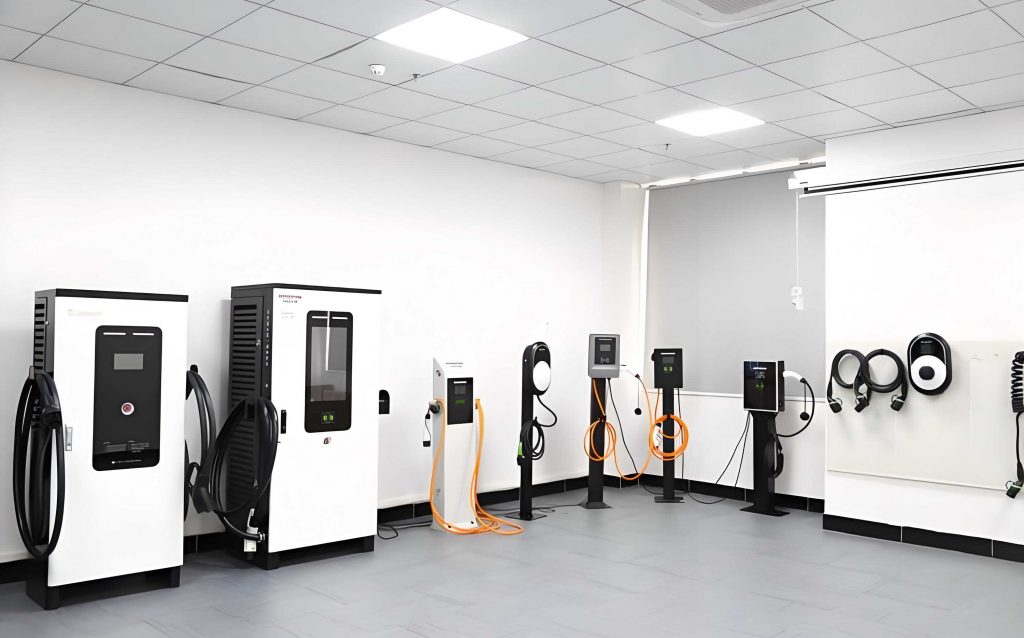
The exponential growth in EV charging station deployments has outpaced traditional verification methods, leading to operational inefficiencies and potential risks in measurement accuracy. Mandatory verification ensures that these stations adhere to strict metrological standards, safeguarding against discrepancies in energy billing. However, conventional on-site verification processes are labor-intensive, time-consuming, and ill-suited to the dispersed nature of EV charging station networks. In my research, I have observed that the cumulative number of EV charging stations continues to surge, with public and private installations expanding annually. This trend underscores the urgency for innovative verification strategies that can scale effectively. For instance, the verification error for an EV charging station can be modeled using the following formula: $$ E = \frac{W_m – W_r}{W_r} \times 100\% $$ where \( E \) represents the percentage error, \( W_m \) is the measured energy value, and \( W_r \) is the reference energy value. This formula highlights the critical need for precise measurements in EV charging station operations to minimize financial losses and maintain consumer confidence.
Current mandatory verification efforts face multifaceted challenges, as summarized in the table below. These issues stem from procedural inefficiencies, technological gaps, and regulatory ambiguities, which collectively hinder the comprehensive verification of EV charging station networks.
| Challenge Category | Specific Issue | Impact on Verification |
|---|---|---|
| Procedural Inefficiencies | Low verification efficiency under existing protocols | Prolonged verification cycles and backlog accumulation |
| Technical Limitations | High failure rate in nameplate inspections | Increased non-compliance and re-verification costs |
| Resource Constraints | Insufficient funding and equipment capabilities | Inability to cover high-power EV charging station models |
| Regulatory Gaps | Lack of uniform standards for nameplates and communication protocols | Inconsistencies in verification outcomes |
| Operational Risks | Difficulty in applying physical seals post-verification | Vulnerability to tampering and data manipulation |
The verification efficiency for an EV charging station is critically low under current protocols, primarily due to the manual nature of on-site inspections. Factors such as adverse weather conditions, limited accessibility, and interference from parked vehicles further exacerbate delays. Moreover, the absence of standardized type evaluation criteria for EV charging station manufacturers results in high variability in nameplate specifications. This leads to a significant proportion of EV charging station units failing initial外观 checks, necessitating repeated visits and corrections. The economic impact of these inefficiencies can be quantified using the formula: $$ C_v = N \times (T_v \times R_h + C_e) $$ where \( C_v \) is the total verification cost, \( N \) is the number of EV charging stations, \( T_v \) is the average verification time per station, \( R_h \) is the hourly rate of personnel, and \( C_e \) is the equipment cost per verification. This equation illustrates how escalating numbers of EV charging stations drive up verification expenses, emphasizing the need for cost-effective alternatives.
To address these challenges, I have pioneered an online remote verification model for EV charging stations. This approach leverages advanced metering infrastructure and real-time data analytics to perform verifications without physical presence. The core components include integrated verification modules attached to the EV charging station outputs and a centralized platform for data processing. The verification module continuously monitors parameters such as voltage, current, and energy consumption, transmitting data to the platform where errors are calculated dynamically. The error assessment for an EV charging station in this model is given by: $$ E_{online} = \frac{1}{n} \sum_{i=1}^{n} \left| \frac{W_{s,i} – W_{r,i}}{W_{r,i}} \right| \times 100\% $$ where \( E_{online} \) is the average online error, \( n \) is the number of charging sessions, \( W_{s,i} \) is the energy value recorded by the EV charging station, and \( W_{r,i} \) is the reference value from the verification module. This method not only reduces human resource demands but also enables continuous monitoring of EV charging station performance.
The following table compares traditional on-site verification with the online remote verification approach for EV charging stations, highlighting key performance metrics:
| Verification Aspect | Traditional On-Site Verification | Online Remote Verification |
|---|---|---|
| Time per EV Charging Station | 2-3 hours | Real-time (continuous) |
| Personnel Requirements | High (technicians on-site) | Low (remote monitoring) |
| Cost per Verification | $$ C_{traditional} = T_v \times R_h + C_t $$ | $$ C_{online} = \frac{C_m}{L} + C_p $$ |
| Coverage of High-Power EV Charging Stations | Limited (up to 250 kW) | Extensible (supports future upgrades) |
| Risk of Tampering | High (physical access required) | Low (encrypted data transmission) |
In the cost formulas, \( C_{traditional} \) includes travel costs \( C_t \), while \( C_{online} \) accounts for the module cost \( C_m \) over its lifespan \( L \) and platform maintenance costs \( C_p \). This comparison underscores the scalability and economic advantages of online verification for EV charging station networks.
Another innovative approach I have explored is specialized authorization, where EV charging station operators are empowered to conduct verifications under regulatory oversight. This model delegates verification responsibilities to trained personnel within operating entities, reducing the burden on public institutions. The authorization process involves establishing internal计量 standards and undergoing periodic audits to ensure compliance. The effectiveness of this model can be evaluated using the formula: $$ A_e = \frac{N_a}{N_t} \times 100\% $$ where \( A_e \) is the authorization efficiency, \( N_a \) is the number of EV charging stations verified under authorization, and \( N_t \) is the total number requiring verification. This approach fosters collaboration between regulators and operators, enhancing the overall verification throughput for EV charging stations.
For widespread adoption, I recommend prioritizing the following actions. First, comprehensive推广 of online verification models for EV charging stations should be incentivized through policy support and funding allocations. Second, standardizing type evaluation protocols will harmonize production standards and reduce nameplate-related failures. The mathematical representation for standardization benefits is: $$ B_s = \sum_{i=1}^{k} (F_{pre,i} – F_{post,i}) \times C_f $$ where \( B_s \) is the total benefit from standardization, \( k \) is the number of EV charging station models, \( F_{pre,i} \) and \( F_{post,i} \) are failure rates before and after standardization, and \( C_f \) is the cost per failure. Third, increasing financial investments in verification infrastructure is crucial to support technological upgrades and personnel training.
In conclusion, the mandatory verification of EV charging stations is at a pivotal juncture, where innovation is essential to meet growing demands. Through online remote verification and specialized authorization, significant improvements in efficiency, cost-effectiveness, and accuracy can be achieved. The integration of real-time monitoring and decentralized verification models not only addresses current limitations but also future-proofs the system against evolving technologies. As EV charging station networks continue to expand, these innovative approaches will play a critical role in ensuring reliable and fair trade practices, ultimately supporting the global transition to sustainable energy.