
As the global transition toward sustainable transportation accelerates, electric vehicles (EVs) have emerged as a cornerstone of this shift. Central to an EV’s performance is the power source: the EV battery pack. In this comprehensive analysis, I will delve into the fundamental circuit principles governing EV battery packs, explore their practical applications in diagnostics and maintenance, and discuss future innovations. The core thesis is that despite rapid technological evolution, the underlying electrical rules—such as series-parallel topology and low-voltage control of high-voltage systems—provide a universal framework for understanding, troubleshooting, and optimizing these complex energy storage systems. Throughout this discussion, I will emphasize the term “EV battery pack” to reinforce its critical role.
The significance of this topic is underscored by market data: in 2024, global EV sales reached staggering numbers, with China alone witnessing production and sales of over 12.8 million new energy vehicles. The associated power battery market surpassed 500 billion yuan, highlighting the economic and technical imperative to master EV battery pack intricacies. An EV battery pack is not merely a collection of cells; it is a sophisticated electrochemical and electrical system whose circuit design dictates overall voltage, capacity, safety, and longevity. By unpacking these circuit laws, we can develop standardized approaches to maintenance, enhance fault detection accuracy, and pave the way for next-generation designs. This article synthesizes principles from various EV battery pack architectures, including mainstream models, to establish a coherent analytical framework.
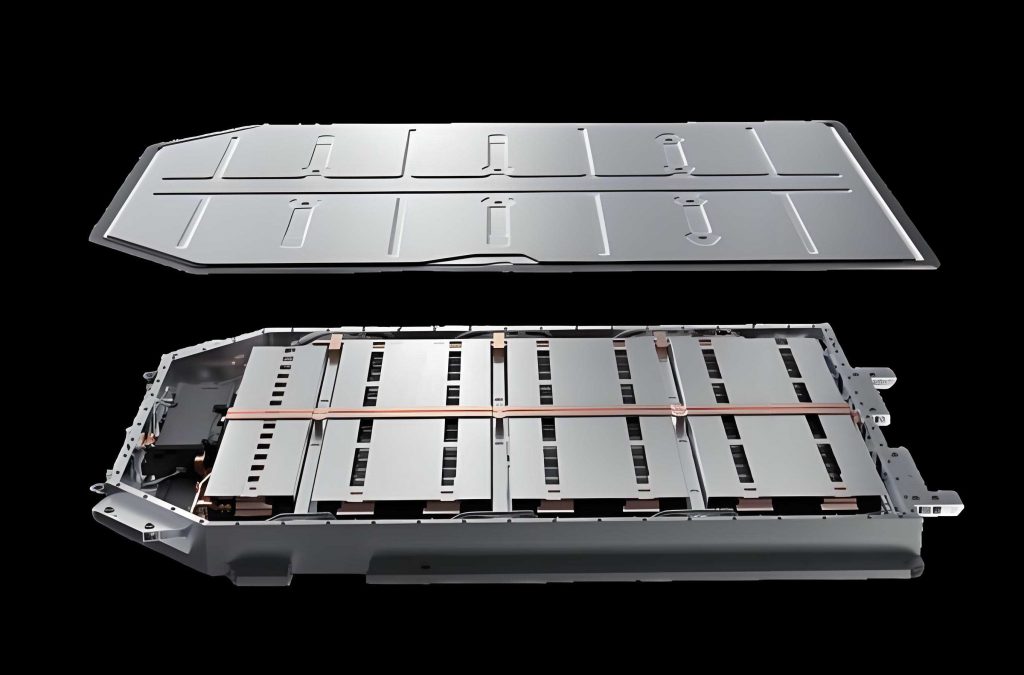
To begin, let’s establish a foundational understanding of EV battery pack circuitry. An EV battery pack is hierarchically structured, typically comprising three levels: the individual cell (or电芯), the module, and the complete pack. Cells are the basic units that store and release energy via reactions between anodes, cathodes, and electrolytes. Modules group multiple cells together using mechanical enclosures for support and protection, while the pack integrates modules with ancillary systems like thermal management, the Battery Management System (BMS), and electrical components. The BMS is the brain of the EV battery pack, continuously monitoring parameters such as voltage, current, and temperature for each cell or module. It executes critical functions: state-of-charge (SOC) estimation, state-of-health (SOH) assessment, thermal regulation, and most importantly, cell balancing and high-voltage circuit control via relays. The electrical system includes relays (main positive, pre-charge, and main negative), fuses, and current shunts, all orchestrated to ensure safe power delivery to the EV’s traction motor and other high-voltage loads.
The circuit principles within an EV battery pack can be distilled into three core concepts: series connection for voltage elevation, parallel connection for capacity augmentation, and the low-voltage control mechanism for high-voltage safety. These principles are mathematically expressible. For series connections, if \( n \) identical cells each with nominal voltage \( V_{cell} \) are connected in series, the total pack voltage \( V_{pack} \) is:
$$ V_{pack} = n \times V_{cell} $$
Conversely, for parallel connections, if \( m \) identical cells each with capacity \( C_{cell} \) (in ampere-hours, Ah) are connected in parallel, the total pack capacity \( C_{pack} \) is:
$$ C_{pack} = m \times C_{cell} $$
Most practical EV battery packs employ hybrid series-parallel topologies to achieve both desired voltage and capacity. For instance, a configuration denoted as \( mP nS \) indicates \( m \) cells in parallel and \( n \) such parallel sets in series. The total voltage and capacity then become:
$$ V_{pack} = n \times V_{cell}, \quad C_{pack} = m \times C_{cell} $$
and the total energy \( E_{pack} \) (in watt-hours, Wh) is:
$$ E_{pack} = V_{pack} \times C_{pack} = n \times V_{cell} \times m \times C_{cell} $$
These formulas are pivotal for designing and analyzing any EV battery pack. To illustrate common topologies, consider the following table summarizing configurations from representative models:
| EV Model | Battery Pack Topology | Nominal Voltage (V) | Nominal Capacity (Ah) | Total Energy (kWh) |
|---|---|---|---|---|
| Wuling Baojun E300PLUS | 6 modules in series, each module 2P6S (2 parallel, 6 series cells) | 115 | 226 | 26 |
| Tesla Model S (example variant) | 16 modules in series, each module 74P6S (74 parallel, 6 series cells of 18650 type) | ~400 (module dependent) | High (due to massive parallelization) | ~100 (varies) |
| BAIC EU5 | 24 modules in series, each module 4S (4 series cells) | ~365 | Depends on cell capacity | ~53 (typical) |
The second key principle is low-voltage control of high-voltage circuits, a safety cornerstone in every EV battery pack. When a driver initiates start-up, the Vehicle Control Unit (VCU) sends a command to the BMS. The BMS, powered by the low-voltage (typically 12V) auxiliary battery, first checks all cell parameters for safety. If conditions are met, it sequentially energizes relays: typically, the pre-charge relay closes to allow a controlled current through a resistor to charge the high-voltage bus capacitors, minimizing inrush current; then the main negative relay closes; finally, the main positive relay closes, enabling full high-voltage power flow. This sequence protects components from damage. The control logic can be represented as a state machine, but fundamentally, it embodies the rule that low-voltage signals (e.g., 5-12V from BMS) switch high-voltage paths (e.g., 400V from the EV battery pack). Additionally, fuses provide mandatory protection by physically opening the circuit during overcurrent events, acting as a fail-safe if electronic monitoring fails.
Building on these basics, the circuit规律 analysis reveals how the BMS ensures performance and safety. A critical aspect is cell balancing, which addresses inherent inconsistencies among cells due to manufacturing tolerances, temperature gradients, or aging. Without balancing, some cells in a series string may become overcharged or over-discharged, leading to capacity fade or thermal runaway. The BMS employs either passive or active balancing circuits to equalize cell voltages. In passive balancing, excess energy from higher-voltage cells is dissipated as heat through resistors, whereas active balancing transfers energy between cells using capacitors, inductors, or DC-DC converters. The balancing current \( I_{bal} \) and the voltage difference \( \Delta V \) between the highest and lowest cell in a series string are key metrics. A common target is to maintain \( \Delta V < 0.1 \, \text{V} \) during operation. The BMS continuously computes these values and activates balancing as needed, adhering to the circuit principle that series-connected cells must share the same current, thus their state-of-charge must be aligned for optimal EV battery pack life.
Moving to application, these circuit principles are immensely practical for fault diagnosis and repair. Let’s examine a case study: a BAIC EU5 EV exhibiting reduced range and entering “turtle mode” (severely limited power) below 40% SOC. Using an OBD-II scanner, technicians retrieved BMS fault code P118522 (cell voltage imbalance). Data stream analysis showed total pack voltage of 365.64V, but module M2 had a significant voltage drop: one cell measured 3.127V while others were around 3.752V. Applying the series principle, since cells in series carry identical current, a lower voltage indicates higher internal resistance or capacity loss in that cell. Following the standardized diagnostic workflow—data analysis → module disassembly → repair—the technicians isolated the faulty cell. Measurement confirmed its voltage was 2.9V, below 80% of its nominal 3.7V, warranting module replacement per safety standards like GB38031-2020. This process underscores how circuit规律, specifically voltage consistency in series strings, enables rapid fault localization in an EV battery pack.
The diagnostic workflow, derived from circuit principles, can be formalized into a universal procedure applicable to most EV battery pack issues. Below is a detailed table outlining the steps, tools, and acceptance criteria:
| Step | Action | Circuit Principle Applied | Tools/Parameters | Acceptance Criteria |
|---|---|---|---|---|
| 1. Data Stream Diagnosis | Read BMS fault codes and real-time data (cell voltages, temperatures, SOC). | Series voltage additivity; BMS low-voltage monitoring. | OBD-II scanner, diagnostic software. | Identify module with voltage deviation >0.1V or SOC outlier. |
| 2. Topology Verification & Safe Disassembly | Confirm pack topology (e.g., via schematics), then safely disconnect high-voltage using insulated tools. | Series-parallel laws; high-voltage safety protocols. | Multimeter, insulation gloves, service disconnect. | Pack voltage < 60V (safe touch voltage). |
| 3. Module-Level Inspection | Measure voltage of each cell within suspect module according to its connection pattern (e.g., 2P6S). | Ohm’s law; voltage division in series; current sharing in parallel. | High-impedance digital multimeter. | Locate cell(s) with voltage < 90% nominal or >20% capacity fade. |
| 4. Cell Testing | Perform internal resistance and capacity tests on flagged cells. | Cell impedance model: \( V = E – I \times R_{internal} \). | Battery analyzer, AC impedance meter. | Internal resistance < 80 mΩ; capacity fade < 20% for repair eligibility. |
| 5. Repair/Replacement | Replace faulty module with identical one; or perform balancing if cells are within limits. | Maintaining original series-parallel topology; balancing algorithms. | Balancing equipment, spot welder for connections. | Post-repair, all cell voltages within ±0.05V. |
| 6. Validation Testing | Conduct charge-discharge cycles (e.g., 0.5C rate) and simulated driving cycles. | Energy consistency: \( E = \int V(t) I(t) dt \); power stability. | Cycler, dynamometer, data logger. | Voltage spread < 0.05V; no BMS faults; range restored per specification. |
This procedure’s universality stems from the invariant nature of circuit laws. Whether dealing with a legacy EV battery pack or a latest model, the steps remain valid because they rely on fundamental electrical relationships. For example, in the Wuling Baojun E300PLUS EV battery pack, the 2P6S module design means that if one parallel pair degrades, it affects the entire series chain’s voltage—a pattern detectable via BMS data. Similarly, in Tesla’s complex 74P6S modules, a single failed cell among 74 in parallel may not drastically impact voltage but could cause current imbalances; advanced BMS algorithms detect such anomalies by monitoring temperature gradients or using shunt resistors for current sensing in parallel branches.
Despite these robust diagnostic methods, the EV industry faces ongoing technical challenges. Common issues include cell-to-cell performance divergence over time, thermal management inefficiencies leading to hotspots, and BMS sensor failures. For instance, lithium-ion cells in an EV battery pack experience capacity fade due to solid-electrolyte interphase (SEI) growth, described empirically by models like:
$$ C_{loss}(t) = \alpha \times \sqrt{t} + \beta \times t $$
where \( \alpha \) and \( \beta \) are degradation coefficients dependent on temperature, depth-of-discharge, and charge rate. This fading is non-uniform across cells, exacerbating voltage imbalances. Thermal gradients further complicate matters, as cell resistance \( R \) is temperature-dependent: \( R(T) = R_0 \exp\left(\frac{E_a}{k_B T}\right) \) for some materials, where \( E_a \) is activation energy, \( k_B \) Boltzmann’s constant, and \( T \) absolute temperature. Poor thermal design can cause localized overheating, accelerating degradation and posing safety risks.
Innovative solutions are emerging to address these challenges. A prime example is the Cell-to-Pack (CTP) technology, exemplified by BYD’s Blade Battery. This design eliminates the module tier, integrating long, flat “blade” cells directly into the pack. The circuit implications are profound: by removing module housings and busbars, the volume utilization of the EV battery pack increases from ~40% to over 60%, boosting energy density. Electrically, the Blade cells are connected in a hybrid series-parallel array within the pack. For a BYD Tang DM-i, the pack might integrate 112 blade cells in a configuration like 16S7P (16 series groups of 7 parallel cells), though exact topologies vary. The BMS must now monitor and balance many more individual cells, requiring enhanced communication buses and algorithms. The thermal system uses liquid cooling plates sandwiched between cells, with the BMS dynamically adjusting coolant flow based on temperature sensors, ensuring uniformity. This innovation leverages circuit principles—series for voltage, parallel for capacity—but with minimal intermediary resistance, reducing losses and improving efficiency of the EV battery pack.
Another advancement is in active balancing circuits. Traditional passive balancing wastes energy as heat. Modern active balancers, using bidirectional DC-DC converters, can transfer energy from higher-charged cells to lower-charged ones with efficiency \( \eta \) often above 90%. The power transfer during balancing can be modeled as:
$$ P_{bal} = \Delta V \times I_{bal} \times \eta $$
where \( \Delta V \) is the voltage difference between cells. Advanced BMS can perform this dynamically during charging or driving, minimizing imbalance and extending the EV battery pack cycle life. Furthermore, predictive algorithms use models like Kalman filters to estimate cell states more accurately, preemptively triggering balancing before large deviations occur.
Looking ahead, the future of EV battery packs will see further integration of circuit principles with new chemistries and smart systems. Solid-state batteries promise higher voltage platforms (e.g., >800V) due to their stable electrolytes, enabling new series configurations with fewer cells for the same pack voltage. The total voltage equation \( V_{pack} = n \times V_{cell} \) still holds, but with higher \( V_{cell} \), reducing \( n \) and simplifying management. Conversely, sodium-ion batteries, with lower cell voltage (~3.0V), may require more series cells or innovative parallel-heavy topologies to achieve desired pack voltages, emphasizing the “parallel for capacity” rule. For instance, a sodium-ion EV battery pack might use 150P10S topology to deliver high capacity and moderate voltage.
Intelligent BMS will evolve toward distributed architectures, with each cell or module having a local monitoring IC communicating via daisy-chained buses. This enhances the precision of low-voltage control over high-voltage switches. Moreover, machine learning techniques will be applied to fault prediction, analyzing historical voltage and temperature data to identify patterns preceding failures. The circuit规律 remain the foundation: for example, a sudden increase in internal resistance \( R_{internal} \) of a cell, detected via voltage sag under load \( V = E – I R \), can trigger early warnings.
In terms of safety, future EV battery packs will incorporate more redundant circuits and advanced fusing. Silicon carbide (SiC) relays may replace electromechanical ones, offering faster switching and better handling of high voltages. The pre-charge process could be optimized using adaptive RC timing constants based on bus capacitance \( C_{bus} \) and resistor \( R_{pre} \), with the pre-charge time \( \tau \) given by:
$$ \tau = R_{pre} \times C_{bus} $$
to ensure smooth engagement without spikes. These refinements all stem from a deep understanding of the basic electrical behaviors within an EV battery pack.
In conclusion, the circuit principles underlying EV battery packs—series-parallel topology, low-voltage control of high-voltage power, and mandatory protection mechanisms—constitute a universal language for analyzing performance and diagnosing faults. Through case studies and technical breakdowns, I have demonstrated how these principles enable standardized maintenance procedures that are highly adaptable across diverse EV battery pack technologies. The diagnostic workflow of data analysis, module inspection, and repair/balancing is effective because it is rooted in immutable electrical laws. As battery chemistries evolve from liquid lithium-ion to solid-state and sodium-ion, and as pack designs progress from modular to cell-to-pack, these circuit规律 will continue to guide innovation. They ensure that safety, efficiency, and reliability remain paramount. Ultimately, mastering the circuit principles of the EV battery pack is not just an academic exercise; it is a practical necessity for advancing the electric vehicle industry, reducing downtime, and extending the life of these critical energy systems. The future will likely see even tighter integration of these principles with digital twins and AI, but the foundational electrical rules will persist as the bedrock of EV battery pack engineering.