
As I reflect on the recent surge in electric vehicle (EV) fires during summer months, it becomes clear that the heart of the problem lies in the power source: the lithium-ion battery with liquid electrolytes. These incidents, often caused by thermal runaway due to overheating from high temperatures or fast charging, highlight a critical safety flaw. Data from 2011 to 2019 shows that over 50% of safety issues in new energy vehicles stem from thermal失控扩散, making battery safety a major bottleneck for the industry. In response, regulatory bodies have pushed for safety inspections, shifting focus from mere technological innovation to robust safety measures. Amidst this, the solid-state battery has emerged as a promising solution, offering a path to overcome the flammability issues of traditional batteries.
In my analysis, the solid-state battery represents a paradigm shift. By replacing the liquid electrolyte with a solid conductive material, such as lithium or sodium-based glass compounds, it addresses the inherent易燃性 of current systems. This not only enhances safety but also promises higher energy density, potentially extending EV range. The race to develop solid-state batteries is intensifying, with over 100 global entities, including automakers and battery manufacturers, investing heavily. However, despite the enthusiasm, the产业化 of solid-state batteries faces significant hurdles, from technical challenges like interface issues to cost barriers. In this article, I will delve into the intricacies of solid-state batteries, using tables and formulas to summarize key points, and explore whether they can truly bear the responsibility of powering the future of transportation.
The fundamental issue with liquid electrolyte batteries is their susceptibility to thermal runaway. When temperatures rise, the liquid electrolyte can ignite, leading to fires. The solid-state battery, in contrast, uses a solid electrolyte that is non-flammable, thereby mitigating this risk. The ionic conductivity in solid-state batteries is governed by factors like material structure and temperature. For instance, the ionic conductivity $\sigma$ can be expressed as:
$$ \sigma = n e \mu $$
where $n$ is the charge carrier density, $e$ is the elementary charge, and $\mu$ is the mobility. In solid electrolytes, $\mu$ is often lower than in liquids, posing a challenge for efficient ion transport. However, advancements in materials like sulfides or oxides aim to improve this. To compare, let’s look at energy densities, a critical metric for EV performance. The energy density $E_d$ of a battery is given by:
$$ E_d = \frac{\text{Energy Output}}{\text{Mass or Volume}} $$
Current liquid electrolyte batteries achieve around 297 W·h/kg for软包 cells. For solid-state batteries, the values vary based on the electrolyte type, as summarized in Table 1.
| Electrolyte Type | Energy Density (W·h/kg) | Notes |
|---|---|---|
| Liquid Electrolyte (软包电芯) | 297 | Current industry standard |
| Solid Electrolyte: PEO-LiTFSi | 301.5 | Polymer-based, slight improvement |
| Solid Electrolyte: LLZO | 186 | Inorganic, lower density |
| Solid Electrolyte: LAGP | 216.8 | Inorganic, moderate density |
| Solid Electrolyte: LLTO | 187 | Inorganic, similar to LLZO |
As I see it, the true potential of solid-state batteries unlocks when paired with advanced electrodes. For example, using a lithium metal负极 can boost energy density dramatically. The Battery 500 consortium projects that solid-state batteries with thin lithium metal anodes and high-nickel cathodes could reach 400-500 W·h/kg or more. This can be modeled by the specific energy formula:
$$ E_s = \frac{V \times C}{\text{mass}} $$
where $V$ is the cell voltage and $C$ is the capacity. With lithium metal, $C$ increases significantly, enhancing $E_s$.
The global push for solid-state batteries is led by major players. Automakers like Volkswagen and Toyota have invested billions, aiming for commercialization by the mid-2020s. In China, companies like Qing Tao and Wei Lan New Energy are advancing with风险资本 backing. Table 2 outlines some key players and their focuses.
| Entity Type | Examples | Key Focus | Estimated产业化 Timeline |
|---|---|---|---|
| Automakers | Volkswagen, Toyota | Sulfide electrolytes, full固态电池 | 2025 and beyond |
| Battery Manufacturers | Various traditional锂-ion firms | Hybrid approaches | 2023-2030 |
| Start-ups & Research | Qing Tao, Wei Lan | Semi-solid batteries, production lines | Near-term (2-3 years) |
In my view, the产业化 of solid-state batteries is hampered by several factors. Cost is a primary concern; semi-solid batteries currently cost 2.5-3元/Wh, which is 2-3 times that of conventional batteries. Given that batteries constitute nearly 40% of an EV’s cost, this poses a affordability challenge. The cost per kilowatt-hour $C_{kWh}$ can be expressed as:
$$ C_{kWh} = \frac{\text{Total Battery Cost}}{\text{Energy Capacity in kWh}} $$
For solid-state batteries, $C_{kWh}$ remains high due to expensive materials and manufacturing processes.
Technically, the interface between solid electrolyte and electrodes is a major hurdle. During charging and discharging, volume changes in electrode particles can degrade contact, reducing performance. The interfacial resistance $R_i$ plays a crucial role, affecting overall cell impedance $Z$:
$$ Z = R_{\text{bulk}} + R_i + R_{\text{charge transfer}} $$
In liquid electrolytes, $R_i$ is low due to good wetting, but in solid-state batteries, it can be significant, limiting power output. Moreover, with lithium metal anodes, dendritic growth can occur, leading to short circuits. This phenomenon relates to the current density $J$ and deposition kinetics, often described by models like the Sand’s equation for dendrite formation.
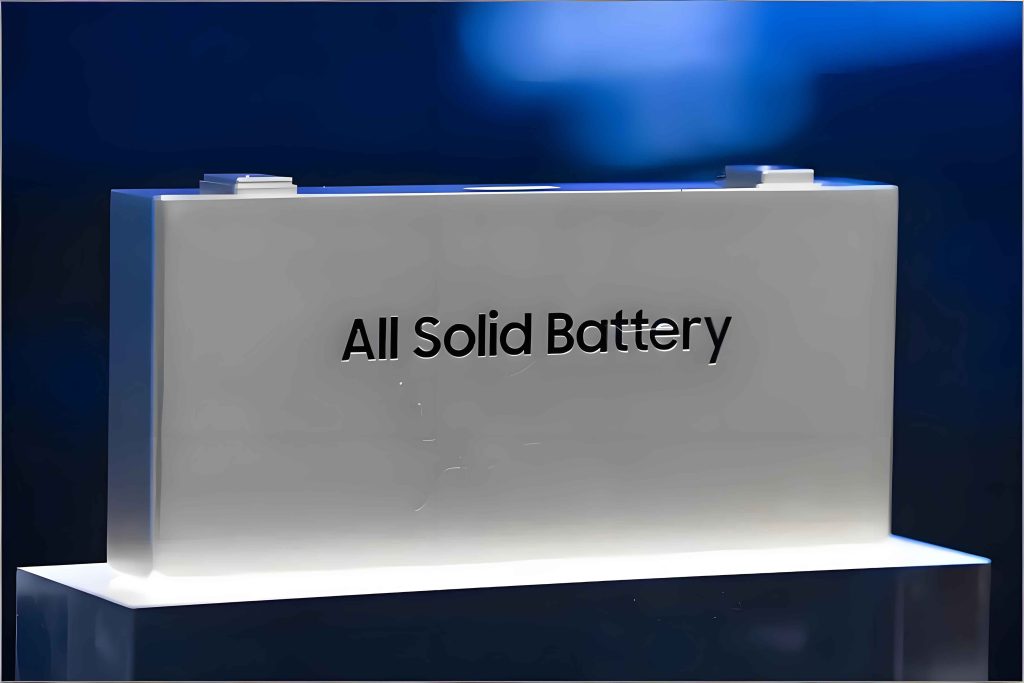
Looking ahead, I believe semi-solid batteries offer a viable过渡路线. By incorporating some solid components into liquid electrolytes, they balance safety and performance. The固液比例 is key; optimizing it requires careful engineering. For instance, the effective conductivity $\sigma_{\text{eff}}$ of a hybrid electrolyte can be approximated using mixture rules:
$$ \sigma_{\text{eff}} = \phi_s \sigma_s + \phi_l \sigma_l $$
where $\phi_s$ and $\phi_l$ are volume fractions of solid and liquid, and $\sigma_s$ and $\sigma_l$ are their respective conductivities. Companies like Qing Tao and辉能科技 have pilot lines for such batteries, aiming for near-term deployment.
Despite progress, full solid-state battery产业化 remains distant. Experts estimate that from prototype to mass production, it takes at least six years, with consumer electronics serving as a testing ground first. The timeline for adoption in EVs is uncertain, but the shift is inevitable. As I conclude, the solid-state battery holds immense promise for safer, higher-performance EVs, but overcoming technical and economic barriers will require sustained innovation and collaboration across the industry. The journey toward widespread use of solid-state batteries is long, but each step forward brings us closer to a revolution in energy storage.