
As a researcher and educator in higher vocational education, I recognize the transformative role of automotive electronic control and network technology in shaping the future of transportation. This course, integral to automotive engineering programs, delves into cutting-edge domains such as electronic control systems, network communications, and diagnostic methodologies, directly aligning with the rapid evolution of new energy vehicles and intelligent connected vehicles. In the smart manufacturing era, the ideological and political dimensions of this curriculum have expanded, demanding a holistic approach that blends technical expertise with value-based education. Through industry-education integration, we aim to foster a synergistic relationship between educational institutions and enterprises, facilitating resource sharing, complementary advantages, and mutual benefits, thereby bridging the gap between academic instruction and socio-economic needs. This article explores the imperative, challenges, and strategies for embedding ideological and political education within the automotive electronic control and network technology course, emphasizing the centrality of the motor control unit in modern automotive systems.
The motor control unit serves as the brain of vehicle propulsion and management systems, orchestrating precise control over electric motors in applications ranging from traditional engines to advanced electric vehicles. Its functionality can be modeled using control theory principles. For instance, the dynamics of a motor controlled by an MCU often involve torque generation proportional to current, expressed as:
$$T = K_t \cdot I$$
where \(T\) is the torque output, \(K_t\) is the motor torque constant, and \(I\) is the current supplied by the motor control unit. Furthermore, advanced MCUs employ algorithms like Proportional-Integral-Derivative (PID) control to regulate speed or position, given by:
$$u(t) = K_p e(t) + K_i \int_0^t e(\tau) d\tau + K_d \frac{de(t)}{dt}$$
Here, \(u(t)\) represents the control signal from the motor control unit, \(e(t)\) is the error between desired and actual states, and \(K_p\), \(K_i\), \(K_d\) are tuning parameters. Such mathematical foundations underscore the technical sophistication required in this field, while also offering avenues for integrating ethical considerations, such as precision and reliability, into teaching.
The integration of ideological and political education into this course is not merely an additive component but a fundamental necessity. Below, a table summarizes the core rationales for this integration, highlighting how each aspect contributes to holistic talent development.
| Necessity | Description | Key Ideological Elements |
|---|---|---|
| Fulfilling the Fundamental Task of Fostering Virtue and Talent | Higher vocational institutions must permeate socialist core values throughout the education process. This course, with its focus on前沿 technologies like the motor control unit, reflects contemporary innovations and embodies思政 elements that guide students in forming correct worldviews, outlooks on life, and values. | Patriotism, responsibility, mission-driven pursuit |
| Enhancing Student Professional素养 | Vocational education prioritizes comprehensive development, cultivating professional ethos and素养. The automotive industry, spanning manufacturing, maintenance, and services, demands high素养 from practitioners. Infusing思政 elements into teaching inspires dedication, integrity, and innovation. | Craftsmanship spirit, quality awareness, safety consciousness, collaboration |
| Serving Automotive Industry Transformation | Amidst supply-side structural reforms, the industry is shifting toward new energy and intelligent connected vehicles. Building a strong automotive nation requires breakthroughs in core technologies like those involving the motor control unit. Integrating思政 content encourages students to embrace national rejuvenation goals. | Innovation mindset, national pride, commitment to self-reliance and branding |
Despite its importance, current implementation faces significant hurdles. I have identified several persistent issues that hinder effective思政 integration, as outlined in the following table, which contrasts problems with potential solutions rooted in industry-education collaboration.
| Problem Area | Current Shortcomings | Proposed Solutions via Industry-Education Integration |
|---|---|---|
| Insufficient Recognition and Systematic Planning | Some institutions and teachers perceive思政 education as separate from professional training, leading to fragmented curricula without cohesive integration strategies for courses like automotive electronic control. | Develop unified frameworks through joint committees of educators and industry experts, ensuring思政 goals are embedded in syllabi. |
| Superficial Exploration of思政 Elements | Instructors often emphasize technical content over思政挖掘, missing opportunities to link topics like the evolution of the motor control unit to narratives of national innovation and resilience. | Curate industry case studies that highlight ethical and patriotic dimensions, deepening the contextual relevance of MCU technologies. |
| Inadequate Methodological Integration | Traditional lecture-based approaches dominate, limiting student engagement and failing to seamlessly blend思政 guidance with technical instruction on, for example, network protocols in motor control units. | Adopt active learning methods such as project-based learning, where students tackle real-world MCU challenges while discussing ethical implications. |
| Weak思政 Infusion in Practical Training | Hands-on sessions focus narrowly on skill acquisition, neglecting to instill values like honesty and sustainability during activities such as故障 diagnosis involving the motor control unit. | Establish校企合作实训 bases that simulate workplace ethics, embedding思政 reflections in every practical task. |
| Limited Teacher Competence in思政 Education | While technically proficient, many instructors lack training in Marxist theory or ideological guidance, struggling to connect MCU functionalities to broader societal values. | Provide professional development workshops and incentive structures to enhance teachers’ ability to weave思政 narratives into technical lessons. |
To address these challenges, we propose a multifaceted approach under the industry-education integration paradigm. Central to this is the motor control unit, a technology that exemplifies the convergence of hardware, software, and ethical considerations. For instance, in designing an MCU for electric vehicles, engineers must balance performance with energy efficiency, a concept that can be encapsulated in optimization formulas. Consider the power efficiency \(\eta\) of a motor control unit, defined as:
$$\eta = \frac{P_{\text{out}}}{P_{\text{in}}} \times 100\%$$
where \(P_{\text{out}}\) is the useful mechanical power delivered and \(P_{\text{in}}\) is the electrical input power. Maximizing \(\eta\) not only reduces energy consumption but also aligns with sustainable development goals—a思政 theme that can be emphasized in coursework. Additionally, network control in vehicles relies on protocols like Controller Area Network (CAN), where message prioritization can be modeled using scheduling algorithms. If we denote the priority of a message from a motor control unit as \(P_i\), and its transmission time as \(t_i\), a simplified scheduling rule might be:
$$\text{Transmit if } P_i > \theta$$
with \(\theta\) as a threshold. This introduces discussions on system reliability and safety, tying into professional ethics.
The motor control unit is a cornerstone of modern automotive systems, and its illustration helps contextualize these technical and ethical discussions. Below is a representative image of an MCU, showcasing its compact design and integration capabilities.
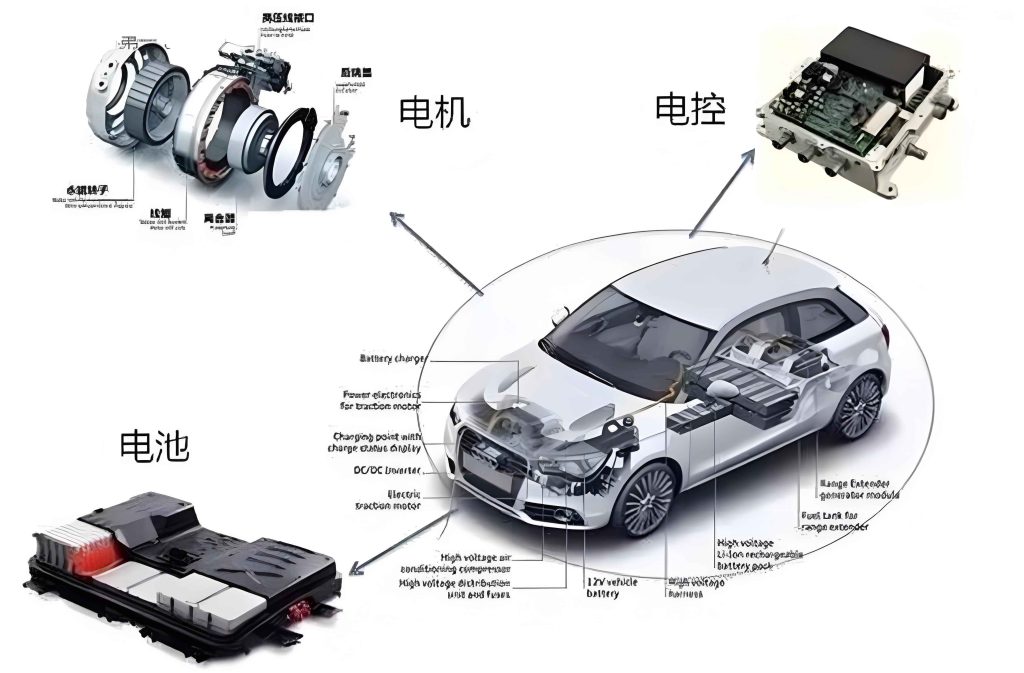
As depicted, the motor control unit encapsulates advanced electronics that govern motor operations, serving as a tangible example for students to explore both engineering principles and the工匠 spirit required for its manufacture and maintenance.
Building on this, we advocate for a structured pathway to思政 integration. The first step involves constructing a “platform + module” system. The platform refers to a collaborative教研 platform uniting思政 teachers, professional instructors, and industry experts to design cohesive resources. Modules are thematic units embedded within the course; for example, a module on “Motor Control Unit Ethics and Innovation” could combine technical lessons on MCU programming with case studies on domestic breakthroughs, fostering national pride. The table below delineates key modules and their思政 foci.
| Module Name | Technical Content | Ideological and Political Focus |
|---|---|---|
| MCU Fundamentals and National Progress | Basic principles of motor control units, including sensor interfaces and actuator drives. | Patriotism through stories of Chinese advancements in MCU technology, emphasizing self-reliance. |
| Network Protocols and Engineering Ethics | CAN, LIN, and Ethernet protocols for vehicle networks, with emphasis on data integrity and security. | Ethical responsibility in handling data,讨论 on privacy and safety in interconnected systems. |
| Fault Diagnosis and Craftsmanship | Diagnostic techniques for MCU-related issues, using tools like oscilloscopes and diagnostic software. | Cultivating meticulousness, honesty in reporting faults, and sustainable repair practices. |
| New Energy MCUs and Ecological Civilization | Design and optimization of motor control units for electric vehicles, focusing on efficiency algorithms. | Promoting environmental stewardship and alignment with carbon neutrality goals. |
Next, innovating a “case + project” teaching mode is crucial. We draw from real enterprise scenarios to develop cases that highlight思政 dimensions. For instance, a case study on a leading manufacturer’s development of a high-efficiency motor control unit can inspire innovation consciousness, while projects like “Designing an MCU for a Smart Vehicle” encourage teamwork and ethical problem-solving. The pedagogical effectiveness of such approaches can be partly quantified through learning gains. If we let \(K_{\text{pre}}\) and \(K_{\text{post}}\) represent student knowledge scores before and after a project on the motor control unit, the improvement \(\Delta K\) is:
$$\Delta K = K_{\text{post}} – K_{\text{pre}}$$
Similarly,思政 internalization can be assessed via surveys measuring value alignment, though qualitative metrics are equally important.
Establishing校企合作实践 platforms forms the third pillar. By co-building实训 centers with automotive firms, we immerse students in environments where corporate culture and思政 values intertwine. For example, in a实训 session on calibrating a motor control unit, instructors can stress precision and accountability, mirroring industry standards. Jointly developed textbooks can incorporate chapters on the socio-economic impact of MCU technologies, reinforcing the idea that technical skills serve broader societal goals. The synergy here can be expressed as a collaborative efficiency \(E_c\):
$$E_c = \frac{B_{\text{edu}} + B_{\text{ind}}}{C_{\text{joint}}}$$
where \(B_{\text{edu}}\) and \(B_{\text{ind}}\) are benefits to education and industry, respectively, and \(C_{\text{joint}}\) is the joint cost. Maximizing \(E_c\) underscores the mutual gains of industry-education integration.
Finally, optimizing a知行合一 evaluation mechanism ensures sustainability. We propose a multi-tiered assessment framework that includes institutional audits, teacher performance metrics, and student growth portfolios. For teachers, the impact of思政 integration can be modeled as a function \(f(I, T, S)\), where \(I\) is ideological input, \(T\) is teaching effort, and \(S\) is student feedback. Incentives can be tied to improvements in this function. For students, evaluation extends beyond technical quizzes to include ethical decision-making in scenarios involving the motor control unit, such as choosing between cost-cutting and safety in MCU design. A composite score \(C_s\) for a student might be:
$$C_s = \alpha \cdot S_{\text{tech}} + \beta \cdot S_{\text{思政}} + \gamma \cdot S_{\text{practice}}$$
with weights \(\alpha, \beta, \gamma\) reflecting balanced priorities.
In conclusion, as educators, we bear the responsibility of nurturing talent that is both technically proficient and ethically grounded. The motor control unit, as a pivotal element in automotive electronic control and network technology, offers a rich tapestry for integrating ideological and political education. Through industry-education integration, we can构建 comprehensive育人 systems that leverage platforms, innovative pedagogies, practical collaborations, and robust evaluations. By repeatedly engaging with the motor control unit across lectures, projects, and discussions, we instill values of innovation, integrity, and national service, ultimately contributing to the development of high-quality technical skills人才 for the automotive industry’s future. This holistic approach not only enriches the curriculum but also aligns with global trends toward sustainable and ethical engineering practices, ensuring that our graduates are prepared to lead with competence and conscience.