
In the context of global energy transition, environmental challenges and sustainable development have intensified the focus on electric energy substitution as a key pathway for revolutionizing energy consumption and optimizing energy structures. As China’s economy advances into a high-quality development phase, electric vehicles, as a core technology in electric energy substitution, have emerged as pivotal forces in driving energy structure transformation and reducing emissions. However, the widespread adoption of electric energy substitution technologies is not instantaneous; it is profoundly influenced by factors such as policy environment, market demand, and infrastructure development. Policy intensity, as a critical governmental tool for guiding and regulating energy transition, plays a major role in accelerating the diffusion of electric energy substitution technologies. This study delves into the impact mechanisms of policy intensity on the promotion of electric energy substitution technologies, specifically focusing on electric vehicles in China, to enhance understanding of policy-energy transition dynamics and support the construction of a more efficient, equitable, and sustainable energy policy framework.
Electric energy substitution refers to the process of replacing traditional fuels like coal, petroleum, and natural gas with electricity. As an efficient and clean energy form, this substitution fundamentally reshapes energy consumption structures, enabling diversification and cleaner energy use, reducing reliance on fossil fuels, and improving energy efficiency. In end-use sectors, electric energy substitution technologies include applications such as electric heating, geothermal heat pumps, industrial electric boilers, agricultural electric irrigation, and notably, electric vehicles, which are among the most recognized scenarios. The promotion of electric vehicles is crucial for advancing energy consumption revolution, implementing national energy strategies, and fostering clean energy development.
Policies play an indispensable role in the diffusion of electric energy substitution technologies. Well-designed policies provide necessary support and safeguards for the research, production, and application of these technologies, while also stimulating market enthusiasm and creativity through innovative mechanisms. Policy intensity, as a key determinant of policy effectiveness, significantly influences the promotion of technologies like electric vehicles. Variations in policy intensity manifest in the selection and combination of policy tools, enforcement rigor, regulatory mechanisms, and market responsiveness. Different policy strengths can alter resource allocation and marginal benefits, guiding production and consumption structures, as well as welfare distribution. For instance, incentive-based policies can enhance the market penetration of electric vehicles, with penetration rates rising as policy intensity increases. Additionally, policies that improve product usability, such as infrastructure development, can reduce barriers and boost adoption. In China, measures like carbon taxes and the dual-credit policy have been instrumental in accelerating electric vehicle promotion.
To quantitatively analyze the impact of policy intensity on electric vehicle promotion, I employ a system dynamics model, which excels in handling nonlinearities and complex systems. This approach allows for simulating different promotion scenarios—specifically, government-led promotion and natural diffusion—under varying policy intensities. The model incorporates key variables such as electric vehicle adoption rates, policy strength indicators, and consumer behavior factors, using differential equations to capture dynamic interactions.
Literature Review
Existing research highlights the significant role of policies in promoting electric energy substitution technologies. Studies have examined how different policy types, such as fiscal incentives and regulatory measures, affect the diffusion of technologies like electric vehicles. For example, empirical analyses in Chinese cities demonstrate that urban policies can effectively boost electric vehicle adoption, with infrastructure development being a critical enabler. Cross-country comparisons reveal that policy aggressiveness varies regionally, leading to disparities in electric vehicle promotion. Policy stability is another key factor; consistent, long-term policies foster market confidence and investment, whereas uncertainty can hinder progress. Furthermore, research on policy intensity indicates that stronger policies, such as high carbon taxes or stringent dual-credit systems, accelerate adoption rates. However, gaps remain in understanding how policy intensity differentially impacts promotion under government-led versus natural diffusion scenarios. This study addresses this by comparing these contexts using a system dynamics framework.
Theoretical Analysis of Policy Intensity in Electric Vehicle Promotion
Policy intensity influences electric vehicle promotion through multiple mechanisms. Firstly, it affects resource allocation via economic incentives. For instance, carbon taxes increase the cost of conventional vehicles, making electric vehicles more attractive. The relationship can be expressed as:
$$ C_{total} = C_{EV} + \tau \cdot E_{carbon} $$
where \( C_{total} \) is the total cost of vehicle ownership, \( C_{EV} \) is the cost of an electric vehicle, \( \tau \) is the carbon tax intensity, and \( E_{carbon} \) is the carbon emissions. Higher \( \tau \) reduces the cost advantage of internal combustion engine vehicles, boosting electric vehicle demand.
Secondly, policy intensity enhances product usability through infrastructure investments. Policies that expand charging networks reduce “range anxiety,” increasing consumer confidence. The adoption rate \( A \) can be modeled as:
$$ A = f(P, I, U) $$
where \( P \) is policy intensity, \( I \) is infrastructure coverage, and \( U \) is usability. Stronger policies correlate with higher \( I \) and \( U \), accelerating diffusion.
In China, policies like the 2016 “Guiding Opinions on Promoting Electric Energy Substitution” and the 2024 “Opinions on Implementing Renewable Energy Replacement” have bolstered electric vehicle promotion. By 2024, China’s new energy vehicle penetration exceeded 40%, with cities implementing high-intensity policies like tax incentives and traffic privileges achieving over 53% penetration. Charging infrastructure grew rapidly, with public and private charging points increasing by 34.3% and 56.4% year-on-year, respectively, underscoring the role of policy in shaping adoption.
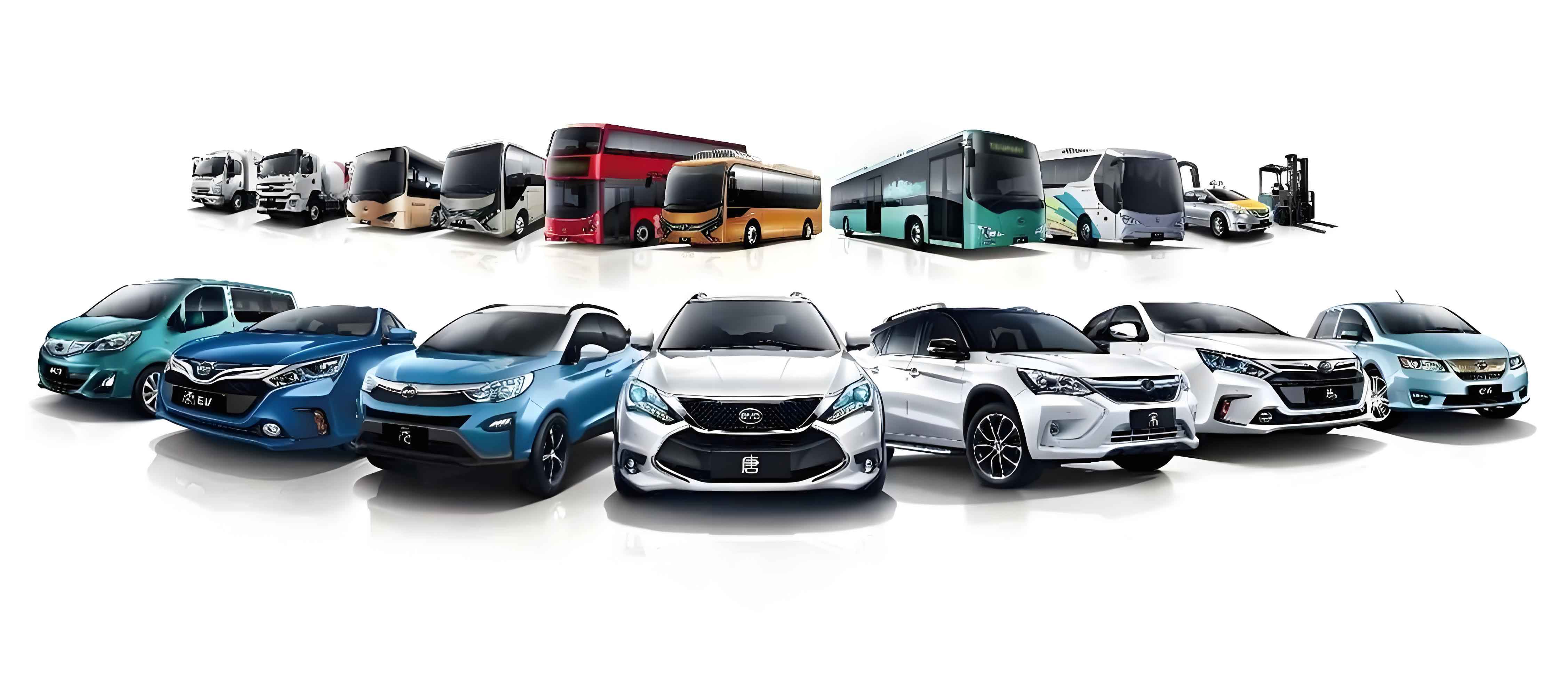
Model Construction: A System Dynamics Approach for Electric Vehicles
I develop a system dynamics model to simulate electric vehicle promotion under different policy intensities. The model comprises stock variables, rate variables, and auxiliary variables, with feedback loops capturing the interactions between policy, market, and consumer behavior. The overall structure is illustrated in the flow diagram, which includes key components like electric vehicle adoption progress and patent applications.
The model presets two promotion scenarios:
Government-led promotion: In this scenario, external factors are minimal, and the government drives rapid adoption through centralized efforts. The growth follows an unrestricted model (e.g., population explosion model), where the government continuously engages potential users. The adoption process is modeled as:
$$ \frac{dEV}{dt} = \alpha \cdot P \cdot (EV + \beta) $$
where \( EV \) is the electric vehicle adoption level (target: 1000 ‰), \( \alpha \) is the scenario coefficient, \( P \) is policy intensity, and \( \beta \) is a growth factor. Adoption is considered complete when \( EV \) reaches 1000 ‰.
Natural diffusion promotion: Here, adoption occurs organically through social interactions, with the government playing a supportive role. This is modeled using an information diffusion (virus-like) model:
$$ \frac{dEV}{dt} = \gamma \cdot P \cdot I \cdot (N – EV) $$
where \( \gamma \) is the diffusion coefficient, \( I \) is user interaction factor, and \( N \) is the maximum adoption level (800 ‰). Adoption is deemed complete at 800 ‰, as the model asymptotically approaches but never reaches 100%.
Key variables in the model include:
– Stock variables: Electric vehicle adoption progress (\( EV \)), patent applications (\( Pat \)).
– Rate variables: Electric vehicle growth rate (\( \frac{dEV}{dt} \)), patent increase rate (\( \frac{dPat}{dt} \)).
– Auxiliary variables: Electric vehicle purchase intention (\( PI \)), product usability (\( U \)), policy intensity indicators (e.g., carbon tax \( \tau \), dual-credit score \( DC \)).
Table 1 summarizes the variable assignments for the promotion scenarios.
| Scenario | Model Type | Adoption Target (‰) | Key Equations |
|---|---|---|---|
| Government-led | Unrestricted growth | 1000 | $$ \frac{dEV}{dt} = \alpha \cdot P \cdot (EV + \beta) $$ |
| Natural diffusion | Information diffusion | 800 | $$ \frac{dEV}{dt} = \gamma \cdot P \cdot I \cdot (N – EV) $$ |
The system dynamics flow diagram (not shown here due to text-based constraints) integrates these variables, with \( EV \) and \( Pat \) as stocks influenced by policy-driven rates. For example, patent growth accelerates with technological accumulation over time:
$$ \frac{dPat}{dt} = \delta \cdot t \cdot EV $$
where \( \delta \) is a time-dependent coefficient.
Constants and auxiliary variables are derived from empirical data and theoretical constructs. For instance, purchase intention \( PI \) is modeled based on the Technology Acceptance Model (TAM):
$$ PI = a \cdot U + b \cdot C + c \cdot P $$
where \( a, b, c \) are weights, \( U \) is usability, \( C \) is cost perception, and \( P \) is policy intensity. Cost perception compares electric vehicle and internal combustion engine costs:
$$ C = \frac{C_{ICE} – C_{EV}}{C_{ICE}} $$
where \( C_{ICE} \) is the cost of internal combustion engine vehicles.
Table 2 lists selected variable assignments.
| Variable | Type | Description | Base Value |
|---|---|---|---|
| \( EV \) | Stock | Electric vehicle adoption level | 0 ‰ |
| \( \frac{dEV}{dt} \) | Rate | Growth rate of electric vehicles | Scenario-dependent |
| \( PI \) | Auxiliary | Purchase intention | Function of policy and usability |
| \( \tau \) | Constant | Carbon tax intensity | 0.05 (base) |
| \( DC \) | Constant | Dual-credit policy intensity | 0.085 (base) |
Simulation Results: Analysis of Electric Vehicle Promotion under Policy Intensity Variations
I conduct simulations for six scenarios, varying carbon tax and dual-credit policy intensities in both government-led and natural diffusion contexts. The scenarios include single-variable and dual-variable changes, with policy strengths set at high, medium (base), and low levels.
Scenario Setup:
– Single-variable scenarios: Adjust one policy variable while holding others constant.
– Dual-variable scenarios: Simultaneously vary both policy variables.
Policy intensities are assigned as follows in Table 3.
| Policy Tool | Low Intensity | Medium Intensity (Base) | High Intensity |
|---|---|---|---|
| Carbon tax (\( \tau \)) | 0.02 | 0.05 | 0.10 |
| Dual-credit (\( DC \)) | 0.02 | 0.085 | 0.15 |
Single-Variable Results:
In government-led promotion, higher carbon tax intensity accelerates electric vehicle adoption. For example, with high carbon tax (\( \tau = 0.10 \)), adoption rates are approximately 50% faster than with low carbon tax (\( \tau = 0.02 \)). The adoption curve follows:
$$ EV(t) = EV_0 + \int_0^t \alpha \cdot \tau \cdot (EV + \beta) \, dt $$
where \( EV_0 \) is initial adoption. Similarly, in natural diffusion, carbon tax impacts are most pronounced in mid-term phases, with high intensity boosting rates by over 15% compared to low intensity.
For dual-credit policy, high intensity (\( DC = 0.15 \)) in government-led scenarios yields adoption rates about 60% faster than low intensity (\( DC = 0.02 \)). The purchase intention \( PI \) scales with \( DC \):
$$ PI = k \cdot DC \cdot U $$
where \( k \) is a constant. In natural diffusion, high dual-credit intensity improves diffusion rates by over 20%. Only high-intensity settings achieve the adoption targets (1000 ‰ for government-led, 800 ‰ for natural diffusion).
Dual-Variable Results:
Combining policies amplifies effects. For instance, high carbon tax and high dual-credit policy in government-led promotion achieve the 1000 ‰ target, whereas low-low combinations cause significant delays. The combined purchase intention is:
$$ PI_{combined} = a \cdot \tau + b \cdot DC + c \cdot (\tau \cdot DC) $$
where \( a, b, c \) are coefficients. In natural diffusion, high-high policy combinations increase adoption rates by over 50% compared to low-low scenarios. This underscores the superiority of policy tool combinations over single-policy approaches.
Table 4 summarizes adoption rates under different policy combinations for government-led promotion.
| Policy Combination | Adoption Rate (Relative to Base) | Target Achieved (1000 ‰) |
|---|---|---|
| Low \( \tau \), Low \( DC \) | 0.5x | No |
| Low \( \tau \), High \( DC \) | 1.2x | No |
| High \( \tau \), Low \( DC \) | 1.3x | No |
| High \( \tau \), High \( DC \) | 2.0x | Yes |
Overall, policy intensity effects are more sensitive in government-led scenarios, where centralized control maximizes impact. In natural diffusion, policies still enhance rates but with lower sensitivity due to organic user interactions.
Conclusion and Recommendations
This study demonstrates that policy intensity significantly influences electric vehicle promotion in China, with variations across government-led and natural diffusion scenarios. High carbon tax and dual-credit policy intensities accelerate adoption in both contexts, but government-led approaches more effectively unleash policy potential. Policy combinations outperform single tools, highlighting the importance of synergistic measures. Based on these findings, I propose the following recommendations to enhance electric vehicle promotion:
1. Enhance Product Usability to Foster Natural Diffusion: Improving the usability of electric vehicles is crucial for organic adoption. This involves advancing technological innovation to ensure electric vehicles offer high efficiency, low energy consumption, and user-friendly features. Key areas include:
– Developing extensive, responsive charging networks with smart management systems for seamless user experiences.
– Integrating electric vehicles with home and commercial energy systems to enhance convenience and economics.
– Optimizing vehicle design using lightweight materials and advanced driver-assistance systems to boost safety and comfort.
These steps can increase consumer confidence and drive natural diffusion, as modeled by the information diffusion equation:
$$ \frac{dEV}{dt} = \gamma \cdot P \cdot I \cdot (N – EV) $$
where enhanced usability raises \( I \), accelerating adoption.
2. Promote Policy Synergy for Accelerated Electric Vehicle Promotion: Policy coordination is essential to leverage complementary tools and create robust synergies. This requires:
– Integrating existing policies, such as fiscal incentives, market access, and innovation support, while aligning them with market needs.
– Assessing the strengths and weaknesses of each policy to avoid market distortions, such as data fraud from overly rigid regulations.
– Establishing dynamic monitoring mechanisms to track electric vehicle market expansion, technological progress, and产业链 development.
For example, combining carbon tax and dual-credit policies can yield multiplicative effects, as shown in the dual-variable simulations:
$$ PI_{combined} = a \cdot \tau + b \cdot DC + c \cdot (\tau \cdot DC) $$
This approach maximizes policy impact and supports sustainable energy transitions.
3. Formulate Tailored Policies for Electric Vehicle Promotion in Rural Areas: Customized policies are needed to extend electric vehicle adoption to rural regions, addressing unique consumption patterns and infrastructure gaps. Initiatives should focus on:
– Designing targeted promotion schemes that consider rural economic levels and habits, such as subsidies and awareness campaigns.
– Investing in charging infrastructure ahead of demand to alleviate range anxiety and improve usability.
– Building after-sales service networks to enhance user experience and trust.
Given the diversity in rural areas, policies must be adaptable and continuously refined based on local feedback. This aligns with China’s recent efforts to bridge urban-rural divides in electric vehicle access, leveraging policy intensity to drive inclusive growth.
In summary, the diffusion of electric vehicles in China is highly responsive to policy intensity, with government-led strategies offering greater leverage. By enhancing product attributes, fostering policy synergy, and tailoring rural initiatives, stakeholders can accelerate the transition to electric mobility, contributing to energy security and environmental goals. Future research could explore real-time policy adjustments using adaptive models to further optimize electric vehicle promotion pathways.